
1,128 Total Views
Most visitors to West Bengal think of Kolkata, the Sundarbans or Darjeeling. Far fewer know that in Bankura district, a few hours from Kolkata, stands a town whose red-brown Bishnupur temples are covered in carved clay panels depicting the Ramayana, the Mahabharata and the life of Krishna. Built by the Vaishnava Malla kings in the 17th and 18th centuries from local laterite and brick, they are among the most distinctive temples in Bengal and are on UNESCO’s tentative list for World Heritage status. This guide covers the best temples to see, a chronological temple list, a close look at the Madan Mohan temple, the history and architecture behind the town, the terracotta craft that still lives on, and practical notes on when and how to visit.
Best Bishnupur Temples
These five are the essential stops on any first visit, chosen for the quality of their terracotta work and their architectural variety.
Shyam Ray Temple: The Most Richly Carved
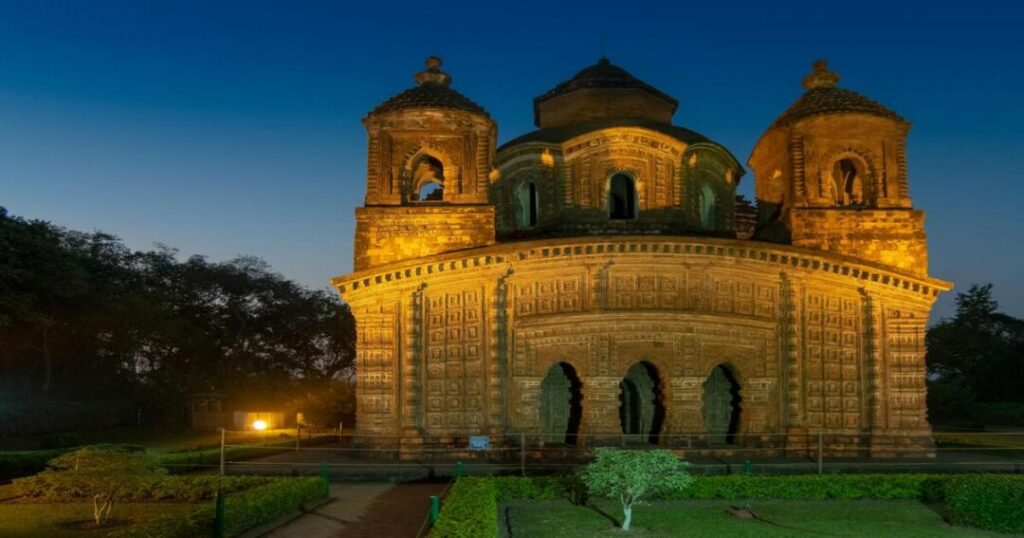
Built by King Raghunath Singha in 1643, the Shyam Ray Temple (also written Shyama Rai) is a Pancha-ratna, or five-tower, temple measuring about 11.4 metres square and 10.7 metres high. Its terracotta plaques show floral designs, scenes from Krishna’s life, Puranic stories, geometric patterns, and episodes from the Ramayana and Mahabharata. It remains an active shrine to Krishna (Shyam) and Radha, and one local guide calls it the most profusely carved temple in Bishnupur.
Jor Bangla (Keshta Rai) Temple: Two Huts, One Roof
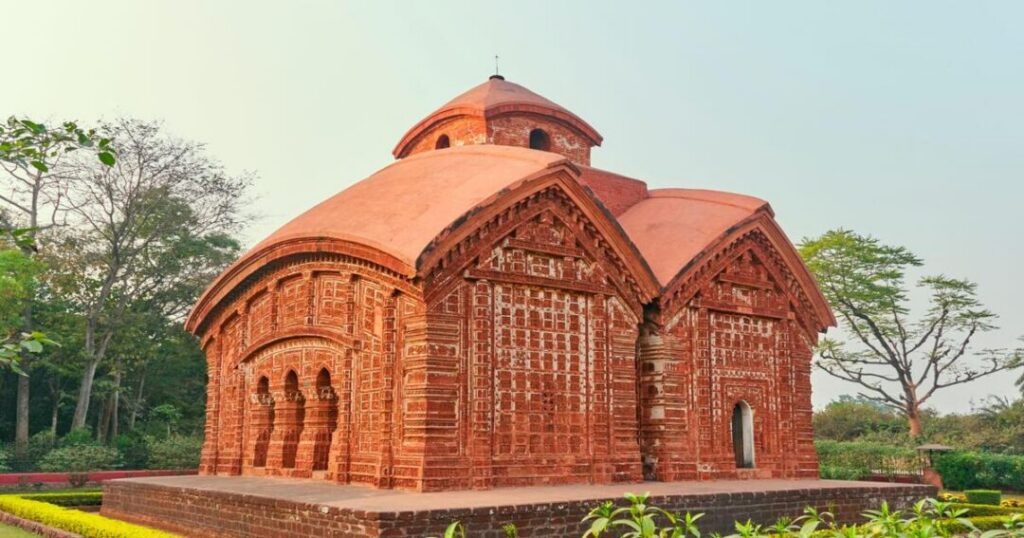
Dated to 1655 and also built by Raghunath Singha, the Jor Bangla Temple is described as the largest surviving Jor-Bangla temple and perhaps the best-known terracotta temple in Bengal. Its form resembles two traditional thatched do-chala village huts joined side by side, with a small ratna tower above the junction. It stands on a stone platform about 11.7 metres square and 10.7 metres tall.
Rasmancha: The Pyramid of Ras Festival
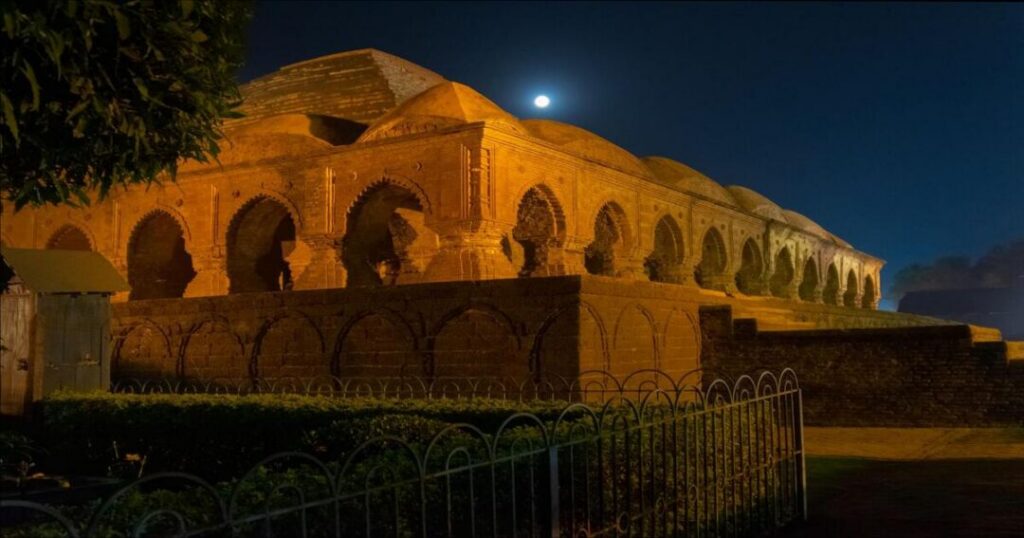
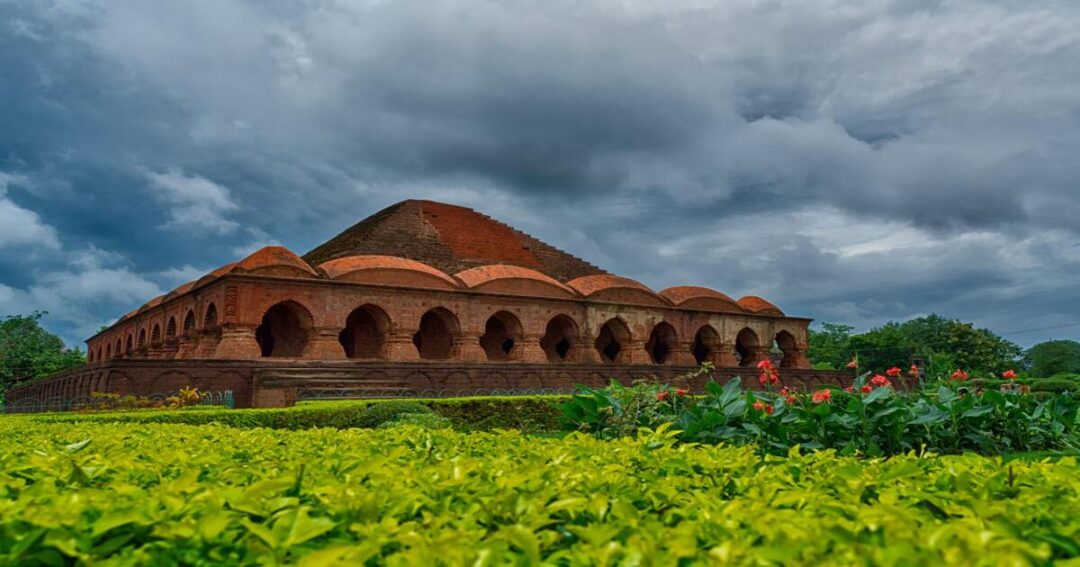
Built in 1600 by Malla king Hambir (Bir Hambir), the Rasmancha is one of the oldest and most unusual structures in town. A small central shrine sits inside three corridors of vaulted arches, topped by a pyramid-style roof, on a laterite plinth about 24.5 metres square and 12.5 metres high. It was used to display idols brought from other temples during the Ras festival; according to Wikipedia, the Radha-Krishna idols were brought here for community worship until 1932.
Kalachand Temple: The Early Ekaratna
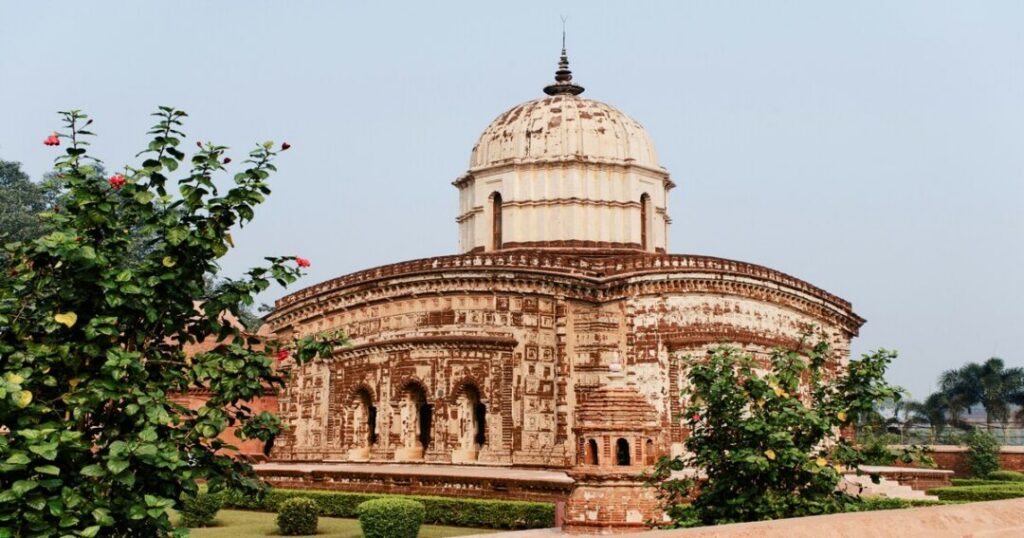
Built in 1656 by Raghunath Singha, the Kalachand Temple is described as probably the earliest of Bishnupur’s ekaratna (single-tower) temples. The laterite structure measures about 11.1 metres square and 9.2 metres high, and its low-relief carvings show Krishna-lila scenes alongside Puranic deities, ascetics and dancers.
Radha Madhab Temple: A Queen’s Gift
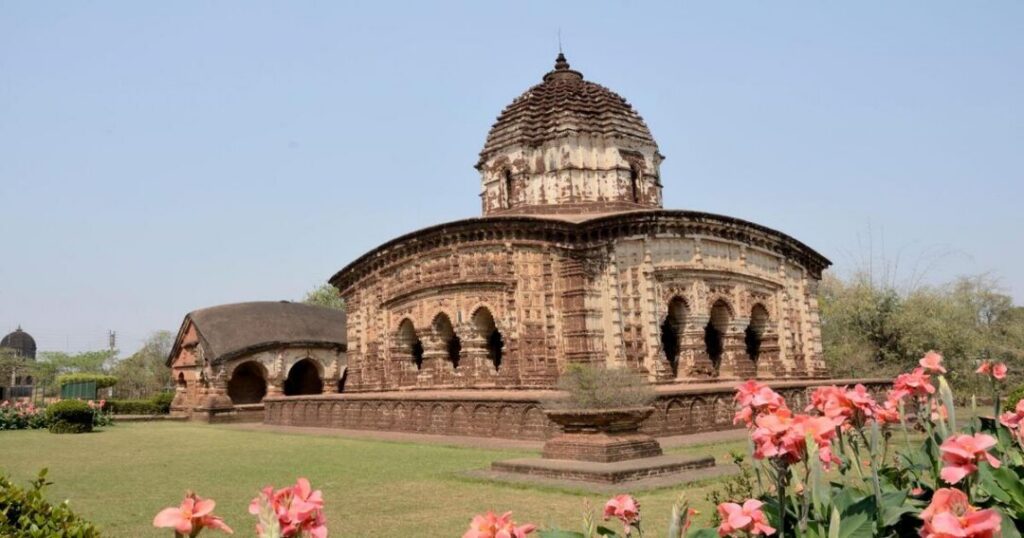
The Radha Madhab Temple dates to 1737 and was built by Churamoni Devi, wife of Bir Singha Dev. It is an ekaratna temple about 11.1 metres square and 9.2 metres high, with carved reliefs of Krishna-lila, Dashavatara and floral motifs on its walls, arches and pillars, and covered porches on all four sides according to one local guide. It is one of the later temples and shows how the style evolved.
Bishnupur Temple List: A Chronological Guide
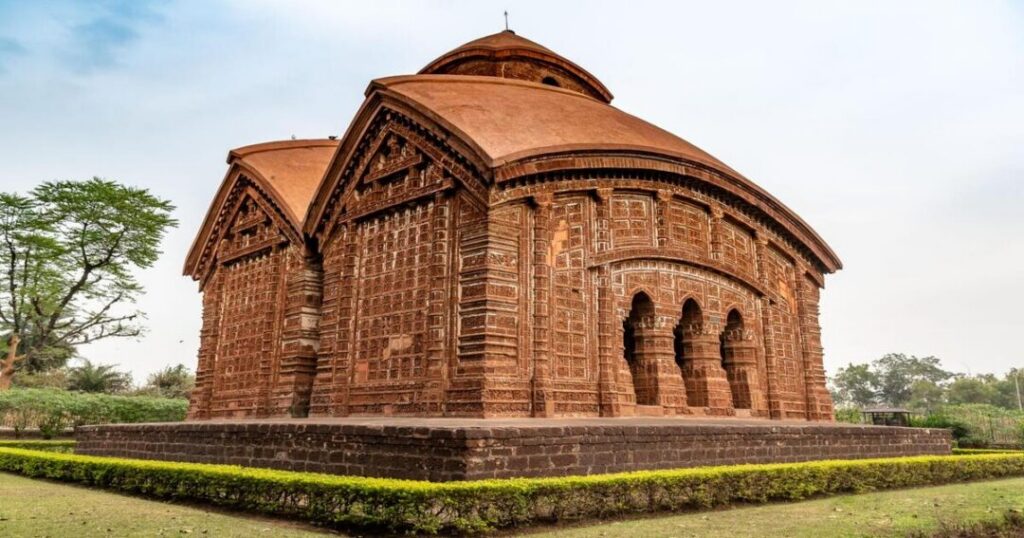
For anyone building a checklist, this bishnupur temple list runs in order of construction, with builder and style where sources agree. Dates vary by a year in some sources, and the dating of Mrinmoyee is traditional rather than documented.
- Mrinmoyee Temple (traditionally c. 997 AD): Described by a local tourism site as the oldest temple in Bishnupur, with a Durga Puja tradition of more than a thousand years; treat the date as local tradition.
- Rasmancha (1600): Built by Hambir Malla Dev; pyramid-style roof with vaulted corridors.
- Shyam Ray Temple (1643): Built by Raghunath Singha; Pancha-ratna style.
- Jor Bangla / Keshta Rai Temple (1655): Built by Raghunath Singha; chala style with a ratna.
- Kalachand Temple (1656): Built by Raghunath Singha; ekaratna, laterite.
- Lalji (Radha Lalji) Temple (1658): Built by Bir Singha Dev; ekaratna style, about 12.3 metres square and high.
- Madan Mohan Temple (1694): Built by Durjan Singha Dev; ekaratna (one local guide gives 1695).
- Jor Mandir (1726): A complex of three ekaratna temples — two large of equal size and one small — which also hosts a weekly craft market on Saturday afternoons.
- Radha Govinda Temple (1729): Notable for a chariot-like structure adjacent to the main temple.
- Radha Madhab Temple (1737): Built by Queen Churamoni Devi; ekaratna.
- Nandalal Temple (17th century): Ekaratna style, said to resemble the Radha Madhab temple.
Madan Mohan Temple Bishnupur: History, Design and Carvings
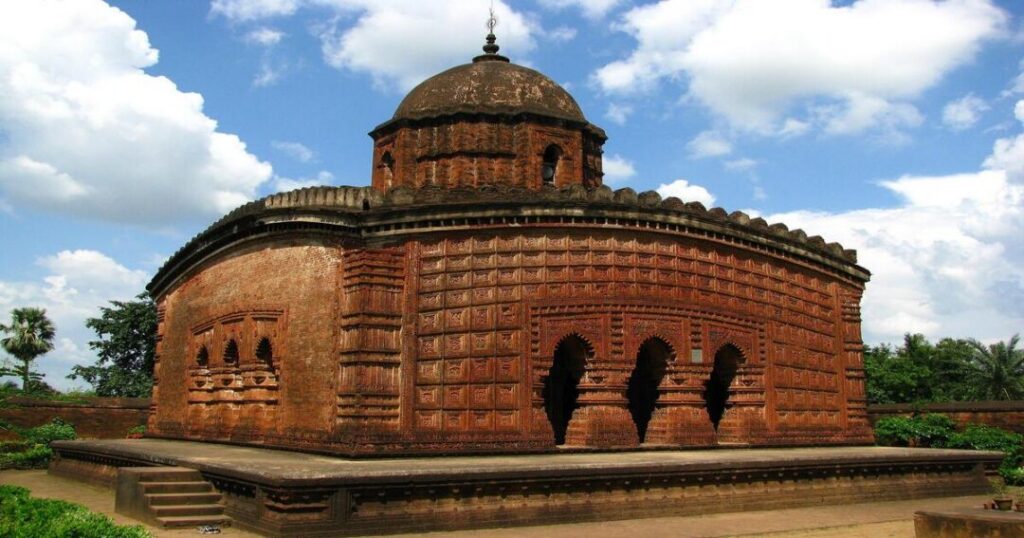
The Madan Mohan Temple Bishnupur is one of the ekaratna temples protected by the Archaeological Survey of India. It was built in 1694 CE (1000 in the Mallabda calendar) by King Durjan Singha Dev of Mallabhum and is dedicated to Madanmohana, a form of Krishna.
Structure and Size
It is an ekaratna temple: a square sanctum with curved roofs topped by a single ratna tower, set on a stone platform with a makra-stone plinth. The temple measures about 12.2 metres (40 feet) in length and width and 10.7 metres (35 feet) in height, with a floor area of roughly 148.84 square metres.
Terracotta Panels
Terracotta plaques cover its walls with Krishna-lila scenes, the Dashavatara (the ten avatars of Vishnu) and other mythological stories, making it a good place to study how narrative was organised across a wall.
Is It a Working Temple?
The Archaeological Survey of India preserves it as a Monument of National Importance. According to Wikipedia, worship of Madanmohana is not currently conducted there, so visitors should come for its architecture rather than for darshan; if prayers matter to you, the Shyam Ray Temple is an active shrine.
Terracotta Temples of Bishnupur and the Craft Behind Them
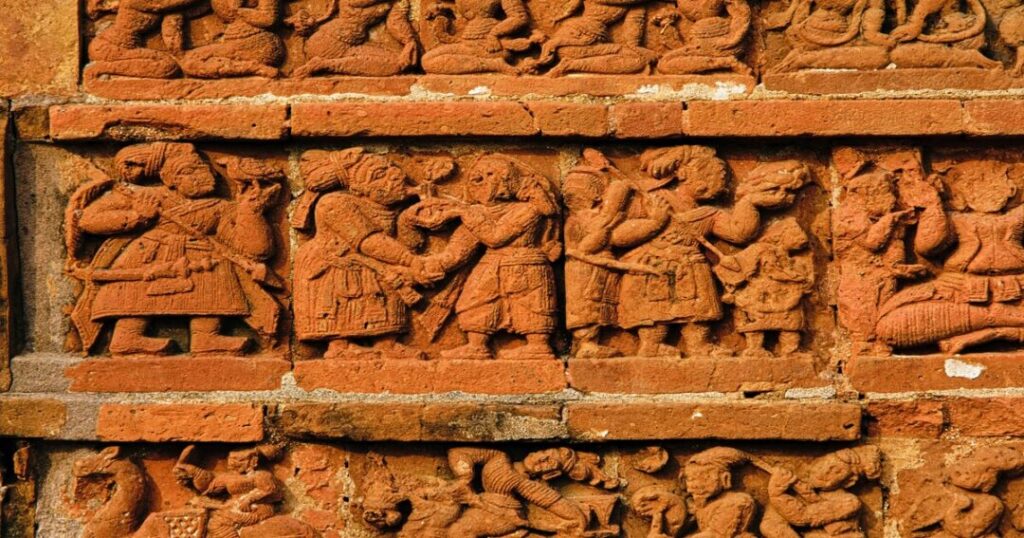
What sets the Terracotta Temples of Bishnupur apart is not their size but their surface. The structures are made of local laterite and brick, then covered with terracotta tiles carved or moulded with scenes from the epics, giving them a reddish hue and allowing remarkably detailed storytelling.
Bishnupur Terracotta Beyond the Temples
The craft did not stay on the walls. Modern Bishnupur terracotta includes handmade horses and elephants — the Bankura horse is the best-known — and a weekly market called Pora Matir Haat, held on Saturday afternoons at the Jor Mandir premises, is where local potters sell. The town is also known for Baluchari saris, woven in richly dyed silk with large pallus depicting episodes from the Ramayana and Mahabharata, so a visit can pair temple-hopping with a craft-shopping afternoon.
Other Stops: Cannon and Lakes
Beyond the temples, the Dalmadal cannon is a large wrought-iron cannon by the Malla kings, about 3.8 metres long; sources differ on whether it was cast in the 17th century or in 1742 by Raja Gopal Singh. Lalbandh, built in 1658, is one of seven lakes constructed in the town, and the nearby Lalgarh Eco-Park offers a watchtower view of it.
Also Read: Coastal Karnataka Tourism: Beaches, Temples, Food
Bishnupur Temple History: The Malla Kings and Their Patronage
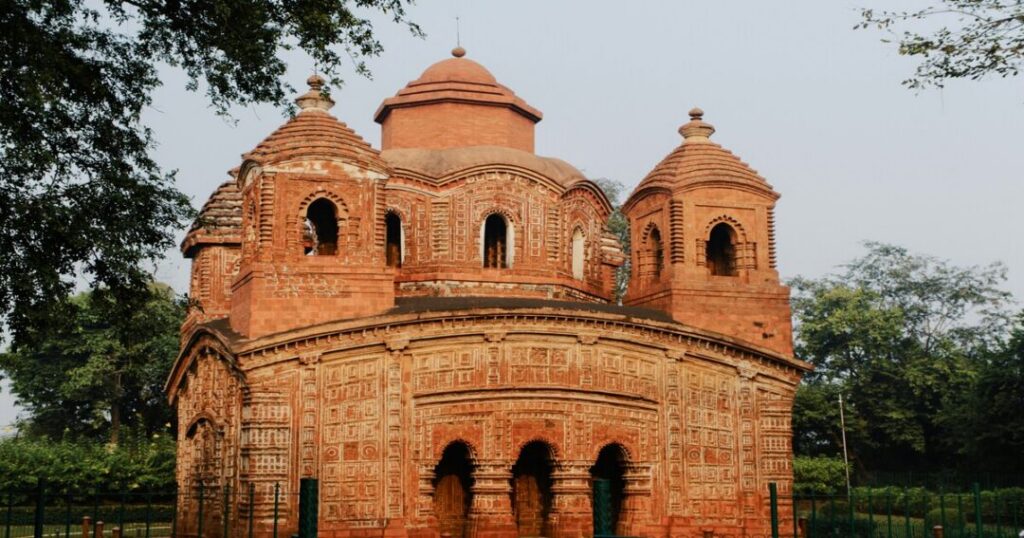
The Bishnupur temple history is inseparable from the Malla dynasty, who ruled Bishnupur as their capital for roughly a thousand years according to Wikipedia. The Mallas were Vaishnavites, and their patronage made the town one of the principal centres of culture in Bengal. The best-known rulers in the temple story are Bir Hambir, builder of the Rasmancha in 1600, Raghunath Singha, who built the Shyam Ray, Jor Bangla and Kalachand temples between 1643 and 1656, and Bir Singha Dev, associated with the Lalji temple and, through his wife Churamoni Devi, the Radha Madhab temple.
Culture in Bishnupur extended beyond stone and clay. The town gave its name to the Bishnupur gharana, a dhrupad-based vocal tradition that is described as the only vocal gharana in West Bengal, and Rabindranath Tagore’s teachers are said to have belonged to this tradition. The temples are protected by the Archaeological Survey of India as Monuments of National Importance and are on UNESCO’s World Heritage tentative list (sources give 1997 or 1998 as the year). They are not yet inscribed as a World Heritage Site.
The town also hosts the Bishnupur Mela, an annual fair of handicrafts and culture held from December 23 to 27 since 1988, which makes late December a lively time to visit.
Also Read: Places to Visit in Madurai: Temples and Landmarks Worth the Trip
Bishnupur Temple Architecture: Chala, Ratna and the Jor-Bangla
The bishnupur temple architecture can be understood through three recurring forms. Seeing one of each makes the rest of the town easy to read:
- Ekaratna (single tower): A square, flat-roofed sanctum with curved cornices and one ratna on top. Examples include Madan Mohan, Kalachand, Lalji and Radha Madhab.
- Pancha-ratna (five towers): A multi-tower version of the same idea, seen at the Shyam Ray Temple.
- Chala and Jor-Bangla: The curved hut roofs of rural Bengal translated into brick; at Jor Bangla two do-chala structures join into a single roof with a ratna above their junction.
A fourth form, the Rasmancha, uses a pyramid-shaped roof over vaulted corridors on a laterite plinth. Across all of them, the building materials are laterite and brick, and the terracotta plaques are set into the wall surface rather than being separate sculptures.
What is the Best Time to Visit Bishnupur?
Winter is the recommended season, with comfortable weather for walking between temples. Late December adds the Bishnupur Mela, from December 23 to 27, which is a good reason to time a trip then, although accommodation can fill quickly. A thorough visit takes one to two days.
How to Reach Bishnupur?
Bishnupur is in Bankura district, West Bengal. By train, about 31 trains connect Kolkata and Bishnupur, with roughly 199 km of rail distance and journeys of about three to four hours; services leave from Howrah, Santragachi and Sealdah, and the Rupashi Bangla Express is cited as the fastest. By road, one guide gives the distance as about 136 km from Kolkata, so the exact figure depends on the route you take. The town is small enough to explore by cycle-rickshaw or on foot between temple clusters.
Also Read: Places to Visit in Kumbhalgarh: Fort, Temples & Wildlife
Conclusion: Come for the Clay, Stay for the Craft
The best way to see the Bishnupur temples is to start at the Rasmancha and work forward in time: Shyam Ray and Jor Bangla for their carvings, Madan Mohan for its ekaratna proportions, and Radha Madhab to see how the style matured. Leave an afternoon for the Saturday craft market and a Baluchari sari, and visit in winter, ideally around the December mela, for the best experience.
Planning a heritage weekend in Bengal? Use the Explurger app to map your Bishnupur temple trail and travel with fellow explorers.
FAQs About Bishnupur temples
2. Is Bishnupur a UNESCO World Heritage Site?
Not yet. The Temples of Bishnupur are on UNESCO's World Heritage tentative list, with sources giving 1997 or 1998 as the year they were added. They are protected by the Archaeological Survey of India as Monuments of National Importance.
3. Who built the temples of Bishnupur?
The Malla kings of Mallabhum, who were Vaishnavites, including Bir Hambir (Rasmancha, 1600), Raghunath Singha (Shyam Ray, Jor Bangla, Kalachand), Bir Singha Dev (Lalji) and Durjan Singha Dev (Madan Mohan, 1694).
4. How far is Bishnupur from Kolkata?
By rail the distance is about 199 km, taking three to four hours; one guide gives about 136 km by road. Distances vary by route.
5. Is worship held at the Madan Mohan Temple?
According to Wikipedia, no worship is currently conducted there; it is preserved as an archaeological monument. The Shyam Ray Temple, by contrast, is an active shrine.
6. How many days do you need in Bishnupur?
One to two days is enough to see the main temples, the Dalmadal cannon and the craft market.