
614 Total Views
Dalhousie isn’t a place built for an hour-by-hour itinerary—it’s a colonial-era hill station where the appeal is mostly in slowing down. Still, knowing what’s actually worth your time changes the trip, so this guide covers the real things to do in Dalhousie, organized by experience rather than just a list of names, along with the practical planning notes (distances, honest time estimates, and what to pack) that most lists skip.
Things to Do in Dalhousie: Top Attractions & Experiences
Dalhousie Places to Visit for Waterfalls and Quiet Walks
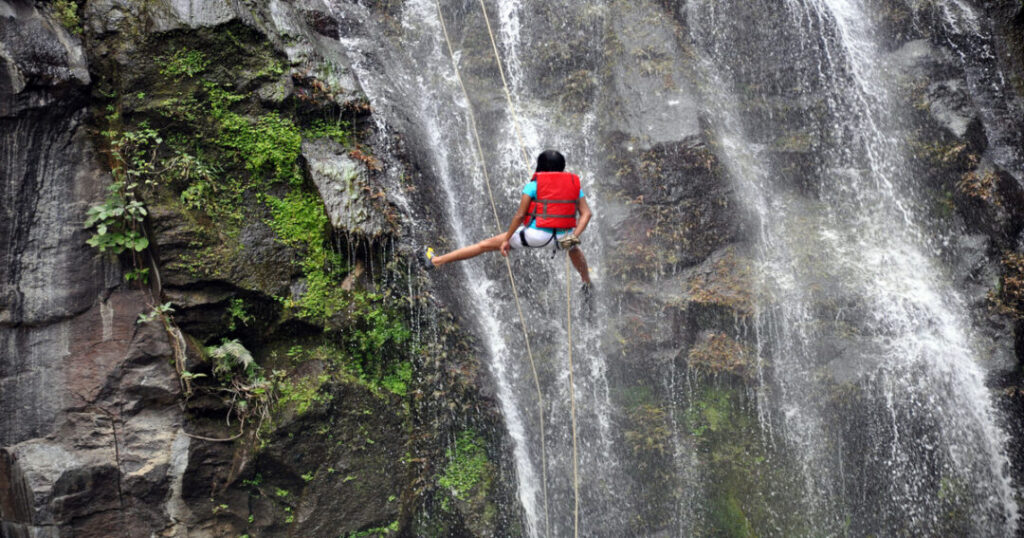
Start close to town. Panchpula, named for the point where five mountain streams converge, and nearby Satdhara Falls—whose spring water is locally believed to carry mildly medicinal properties from its mica content—sit about 3 km out and pair easily into one relaxed outing on foot or by a short drive. These are some of the easiest Dalhousie places to visit if you’re short on time, since neither needs more than an hour or two.
Two spots worth adding that don’t always make the standard list: Bara Pathar, a temple dedicated to Bhulwani Mata about 4 km from town, and Lakkar Mandi, a quiet village roughly 5 km out that also happens to double as one of the access points into the Kalatop forest area—useful to know if you’re deciding which side of Kalatop to approach from later in your trip. Both fold easily into the same half-day without needing separate planning.
Attractions Near Dalhousie: Chamera Lake and Kalatop Wildlife Sanctuary
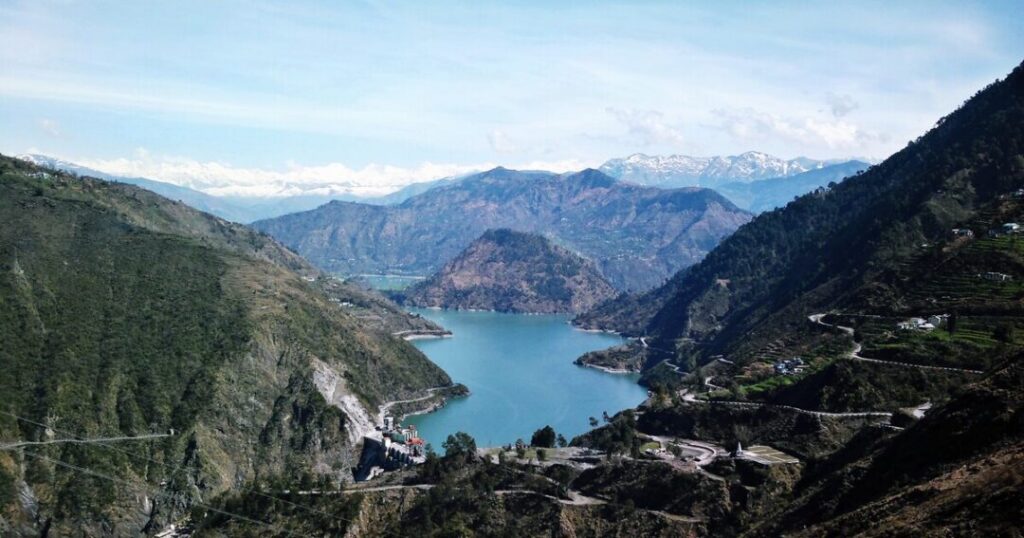
Chamera Lake, about 25-26 km out (45 minutes to an hour by road), is one of the more relaxed attractions near Dalhousie—a reservoir surrounded by forested hills where pedal boats and rowboats are available for hire, suitable for most ages, with the option to picnic on the banks afterward. It works best as a half-day trip on its own rather than squeezed in alongside something bigger.
Kalatop Wildlife Sanctuary is the harder one to pin down distance-wise: sources put it anywhere from 6 km to 12 km from Dalhousie depending on the exact entry point and route, generally a 30-45 minute drive. [STAT: Kalatop Wildlife Sanctuary’s distance from Dalhousie is cited inconsistently across sources, ranging from roughly 6km to 12km depending on route and entry point.] What’s consistent is what you’ll find there—a mix of easy-to-moderate marked trails through dense forest, with a real (if not guaranteed) chance of spotting barking deer, Himalayan birds, and occasionally Himalayan black bears.
Also read: Places to Visit in Dalhousie: 18 Scenic Spots, Hidden Gems & Day Trips
Near Dalhousie Tourist Places: Khajjiar, the Mini Switzerland of India
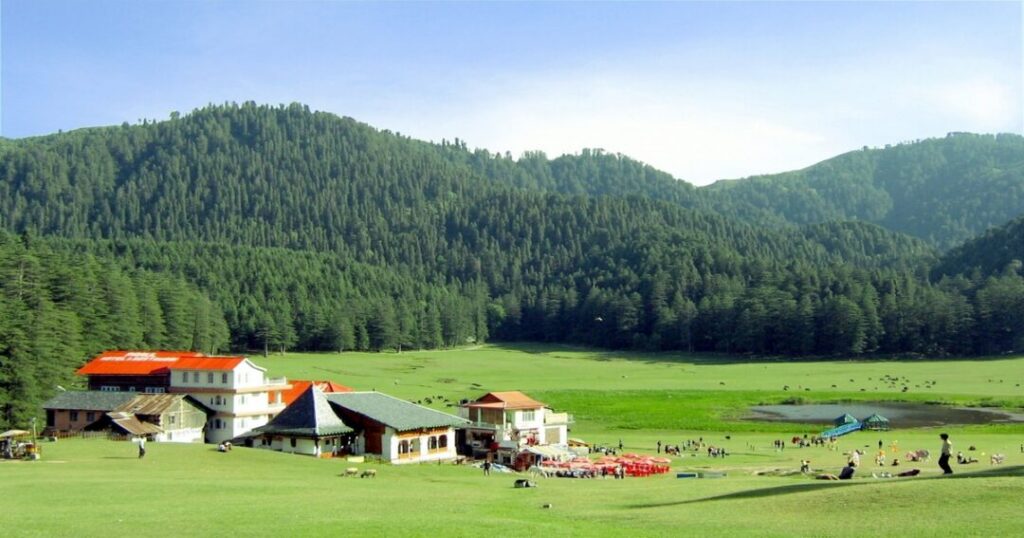
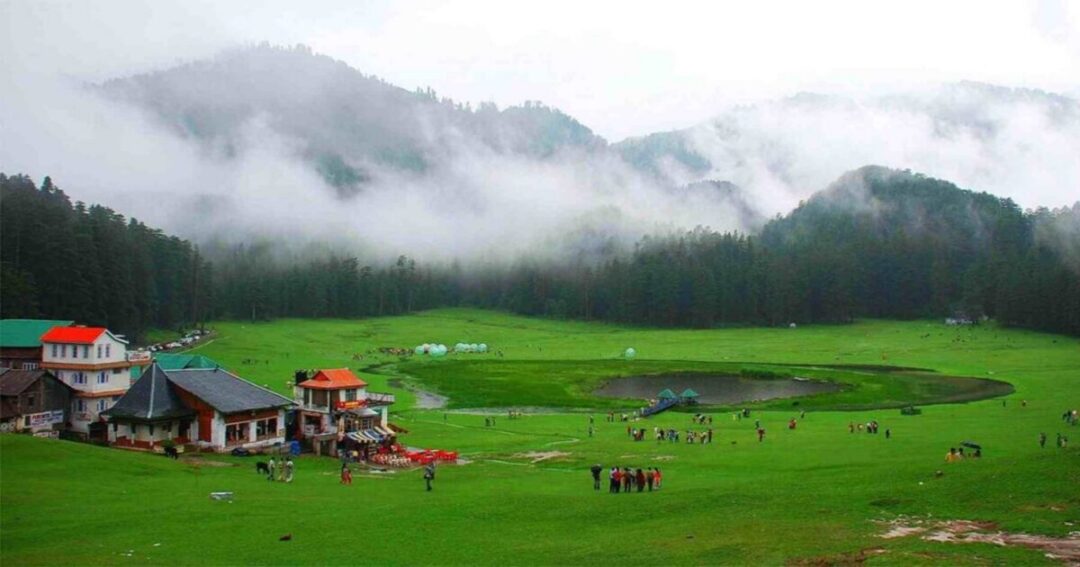
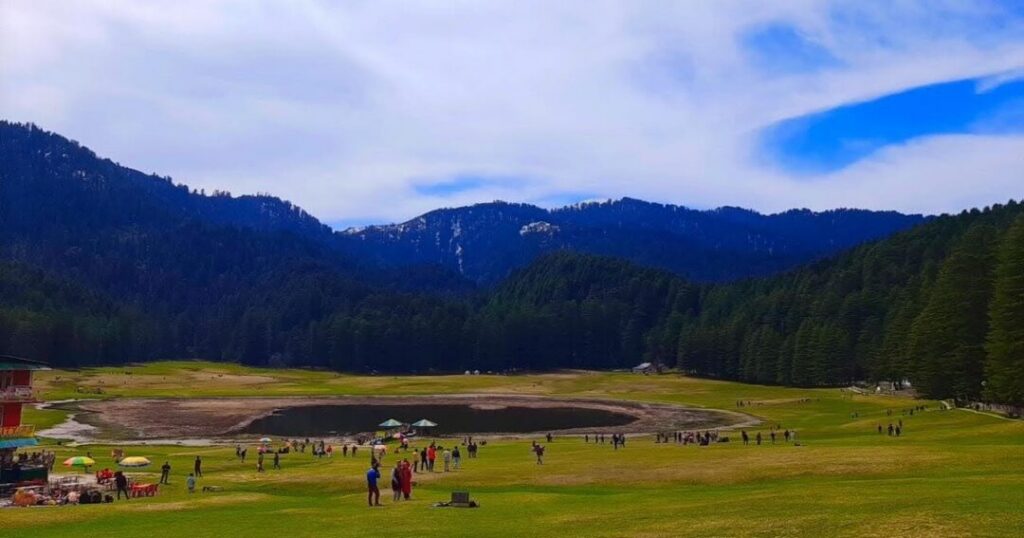
Khajjiar, roughly 21-24 km away (about an hour’s drive), is the most popular of the near Dalhousie tourist places and earns its “Mini Switzerland of India” nickname fairly—a wide meadow ringed by deodar and pine forest with a small lake at its center, dotted with wildflowers in spring and summer. Most of what there is to do here—walking the meadow, a look at the lake, optional activities like zorbing or pony rides—genuinely needs a few hours rather than a quick photo stop, so budget accordingly rather than treating it as a drive-by.
Since Lakkar Mandi functions as one of the access points into the Kalatop forest area, routing through it on the way to or from Khajjiar can save some backtracking if you’re combining both into a single full day, which is the most common way visitors structure their second day here.
Dalhousie Sightseeing: Trekking to Dainkund Peak and Ganji Pahadi
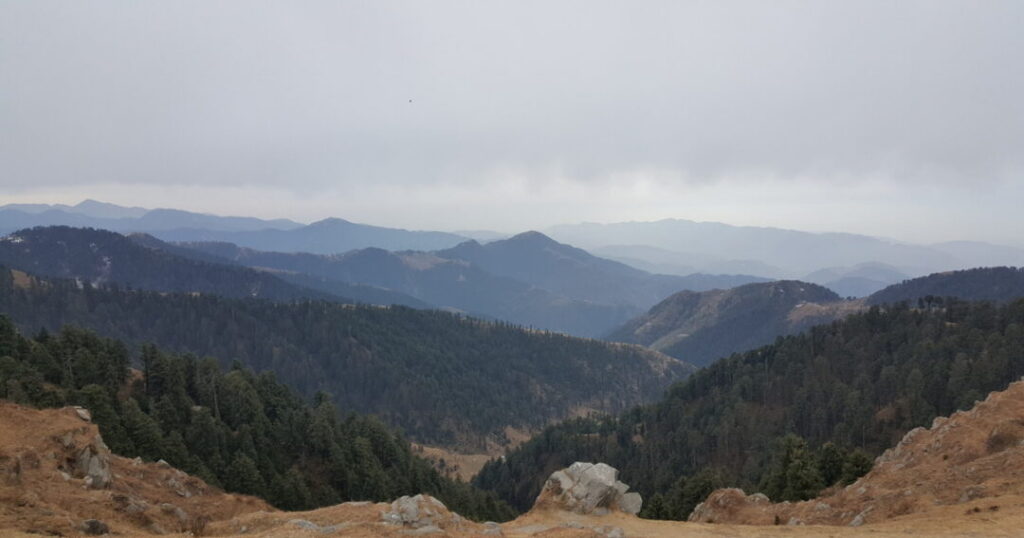
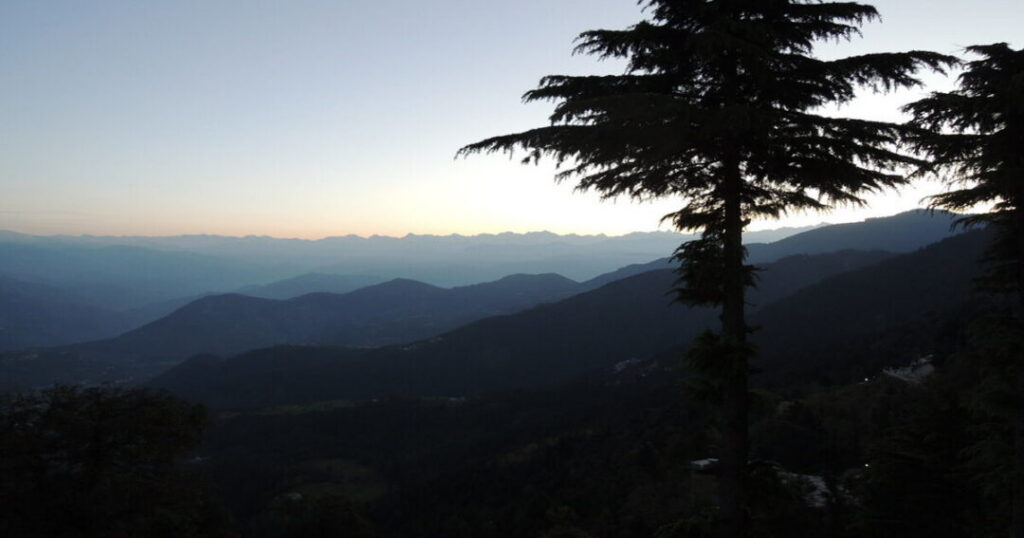
For the trekking side of Dalhousie sightseeing, two peaks are worth knowing about. Dainkund Peak, at roughly 2,755 m, is Dalhousie’s highest point and is nicknamed the “Singing Hill” for the sound wind makes moving through its pine and deodar forest. [STAT: Dainkund Peak stands at approximately 2,755m, the highest point in the Dalhousie area, and is popularly called the “Singing Hill.”] The trek there is moderate, roughly 45 minutes from town by road plus a shorter walk to the summit, and rewards you with views that stretch to the Dhauladhar and Pir Panjal ranges on a clear day.
Less commonly covered is Ganji Pahadi—”Bald Hill” in the local language, named for its bare, treeless slopes—about 5 km from town near Panchpula, with a 1-2 hour easy trek to a summit around 2,745 m. [STAT: Ganji Pahadi, “Bald Hill,” sits at roughly 2,745m and offers 360-degree views thanks to its near-total lack of tree cover.] The lack of foliage is actually the draw here: it gives genuinely unobstructed 360-degree views, and it’s a popular sunrise and sunset spot for anyone who wants a trek shorter and less crowded than Dainkund’s.
Best Places to See in Dalhousie’s Old Town: Churches, Markets, and Subhash Baoli
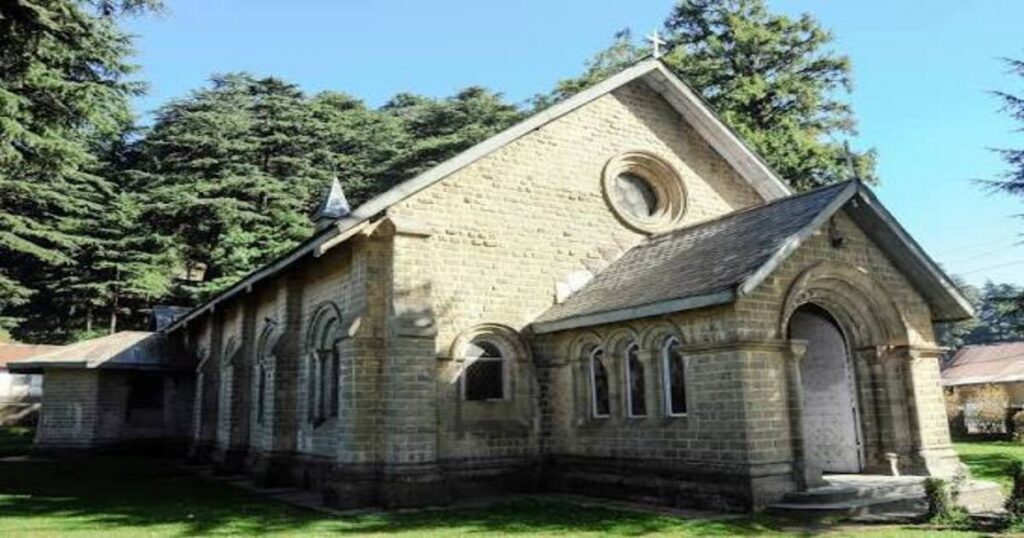
Among the best places to see in Dalhousie without leaving the town center, the colonial-era churches—St. John’s and St. Francis, among them—are worth an unhurried morning walk, best started early before the streets fill up. Gandhi Chowk and Subhash Chowk are the main shopping hubs, where local stalls sell Himachali shawls, handwoven scarves, miniature paintings, and local spices—reasonable places to pick up something that actually reflects the region rather than generic souvenirs.
Subhash Baoli, a natural spring wrapped in pine forest, has a specific and well-documented history: freedom fighter Netaji Subhash Chandra Bose spent roughly six months in Dalhousie in 1937 recovering from illness and reportedly walked to this spring daily to drink from and sit by its water, which locals credited with aiding his recovery. [STAT: Netaji Subhash Chandra Bose spent approximately six months in Dalhousie in 1937 while recuperating from illness, during which he regularly visited the spring now named Subhash Baoli in his honor.] It’s one of the quieter spots in town, worth a stop if you want a slower, less commercial half hour away from the market crowds.
Places Near Dalhousie to See on a Chamba Day Trip
Worth being honest about upfront: among places near Dalhousie to see, Chamba is the one that needs the most planning. It’s roughly 56 km away, 1.5-2 hours each way, meaning a same-day round trip eats 3-4 hours of driving before you’ve seen anything. If you want real time with Chamba’s 10th-century Laxmi Narayan temple complex and its Pahari miniature painting collection rather than a rushed look, splitting it into an overnight—or at minimum committing your whole day to it rather than also trying to fit in Khajjiar or Kalatop—makes for a genuinely better visit than cramming it into a half-day add-on.
Also read: Chandigarh Sightseeing Places: The Complete Guide to Hill Stations & Weekend Escapes Nearby
Places to See Near Dalhousie First: Travel Tips for a Slow Trip
A few practical notes before you start checking off every one of the places to see near Dalhousie on this list. Pack by season: summer needs layers for chilly evenings even though days are warm; monsoon (July-September) calls for a raincoat and sturdy shoes given the frequent rain and occasional landslide risk on remoter roads; and winter (December-February) needs proper warm layers since temperatures can drop below freezing and snow can temporarily close roads to Dainkund and Khajjiar.
On food: Himachali Sidhu—a steamed wheat bun with a filling of walnuts, almonds, or poppy seeds, eaten with ghee and lentils—and Madra, a Chamba-district curry of chickpeas simmered in a spiced yogurt gravy, are both worth seeking out over generic North Indian menu options. Note that Dalhousie’s cafes generally close by 8:30-9:30pm, so this isn’t a late-dinner town.
A sensible first-timer’s route: Dainkund Peak or Ganji Pahadi early for the clearest views before afternoon cloud builds up, Panchpula and Subhash Baoli for a midday forest walk, Khajjiar around midday when visibility tends to be best, and Kalatop by taxi or on foot for a mistier, quieter finish. The roads here are winding enough that travelers prone to motion sickness should carry something for it, and it’s worth building in an extra hour or two of buffer on travel days since hill traffic is unpredictable. Cash is useful to carry, since ATMs exist but can run out during peak season.
Conclusion: Things to Do in Dalhousie
Things to do in Dalhousie stop feeling like an overwhelming checklist once you group them by experience—a trek at sunrise, a forest walk at midday, a lake in the afternoon—instead of trying to see everything on a rigid schedule. Save the stops that matter to you on your Explurger Bucket List, and let your Automatic Travelogue keep the whole trip mapped once you’re there. Let Explurger help you turn this list into a trip that actually feels slow.
FAQs About Things to Do in Dalhousie
2. How far are the main attractions from Dalhousie?
Panchpula and Satdhara sit about 3 km out, Kalatop around 12 km, Khajjiar roughly 21-24 km, Chamera Lake about 25 km, and Chamba town around 56 km—each requiring progressively more of your day.
3. Can Khajjiar and Kalatop be combined in one day?
Yes—this is the most common full-day combination, since Lakkar Mandi functions as a shared access point into the Kalatop forest area on the way to or from Khajjiar.
4. Is Chamba worth a day trip from Dalhousie, or should I stay overnight?
A same-day round trip is possible but tight, given roughly 3-4 hours of driving alone. If you want real time at the temple complex and museum, dedicating a full day to Chamba specifically, or staying overnight, is the better call.
5. What are some lesser-known places near Dalhousie?
Lakkar Mandi, a quiet village that doubles as a Kalatop access point, and Bara Pathar, a temple dedicated to Bhulwani Mata about 4km from town, are both worth adding to a half-day near the town center.
6. What is the best season for Dalhousie sightseeing?
April through June and October through November offer the widest reliable access to Khajjiar, Kalatop, and Chamba together. Winter (December-February) brings dramatic snow to Dainkund and Khajjiar but can close access roads.
7. How much time should I plan for a Dalhousie trip overall?
Three to four days covers the town itself, a Khajjiar-Kalatop day, and a proper Chamba day trip without rushing. Two days is workable if you're willing to skip Chamba or treat it as a partial add-on.
8. Do I need a full day for Khajjiar alone?
Most visitors do need several hours there—the meadow, lake, and optional activities like zorbing or horse riding genuinely take time, so treating it as a quick photo stop tends to undersell the experience.