
51 Total Views
Meghalaya doesn’t do trekking the way the Himalayas do. There are no snow passes or summit pushes here — instead, the treks in Meghalaya wind through the wettest place on Earth, down stone staircases carved into limestone gorges, across bridges grown from living fig-tree roots over generations, and along a 19th-century colonial trade route still paved with its original stone. This guide covers five of the state’s best trails, goes deep on its single most famous and most photographed trek, breaks down what a trekking package in Meghalaya actually includes, and closes with a quick-reference list of everything else worth knowing about.
Best Treks in Meghalaya
These five routes, spread across the East Khasi Hills and Jaintia Hills, cover most of what makes Meghalaya’s trekking scene distinct — living architecture, colonial history, canyon views, and waterfall-fed swimming holes.
1. Double Decker Living Root Bridge Trek (Nongriat)
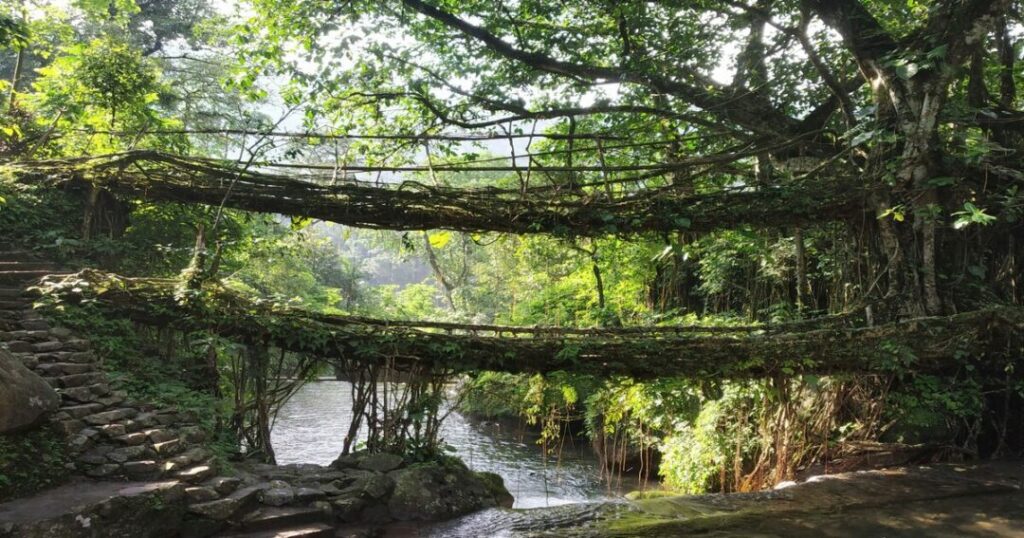
Starting at Tyrna village, about 12 km from Cherrapunjee (Sohra), this is Meghalaya’s signature trek: a steep descent of roughly 3,500 stone steps down to Nongriat village, home to the Umshiang Double-Decker Root Bridge, a pair of living root bridges grown one above the other by generations of Khasi villagers training rubber fig (Ficus elastica) roots across the gorge. The descent takes 1.5-2 hours, with the climb back up taking noticeably longer at 2.5-3 hours, and a further round trip of a few hours reaches Rainbow Falls, a waterfall named for the rainbow that forms at its base in direct sunlight. Most guides recommend an overnight stay in one of Nongriat’s homestays rather than rushing it as a single-day trip, not least because the viewpoints at Nongriat are closed on Sundays.
2. David Scott Trail
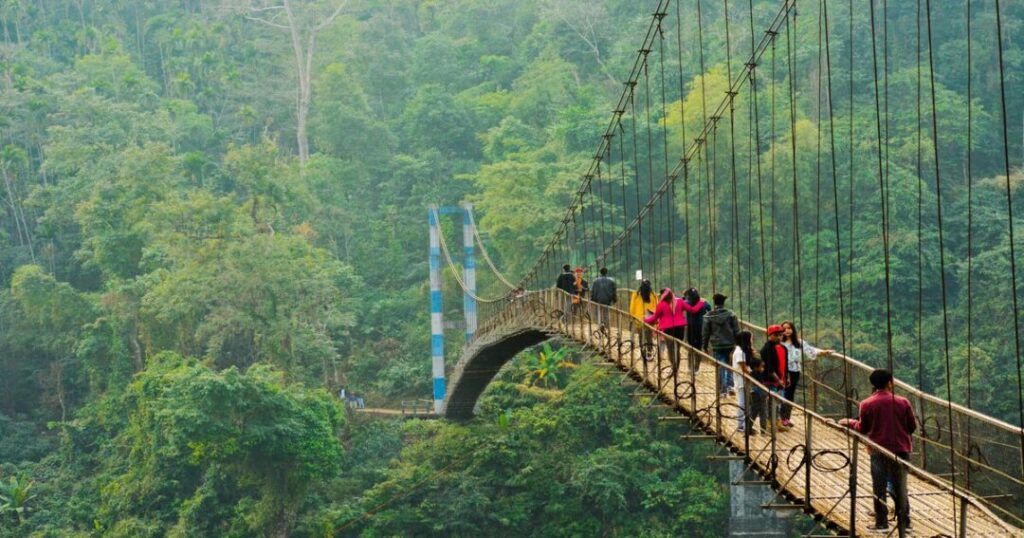
Named after a British administrator who helped establish it as a trade route nearly two centuries ago, this 16-km trail runs from Ladmawphlang to Mawphlang via Laitsohma village, much of it still over the original stone paving laid during the colonial period. It’s typically walked over 1 night and 2 days, climbing and descending gently between about 1,536 and 1,829 metres through open meadows, pine forest, rhododendron groves, and finally Mawphlang’s roughly 800-year-old sacred grove — making it one of the easiest-rated treks on this list despite its length and history.
3. Laitlum Canyon Trek
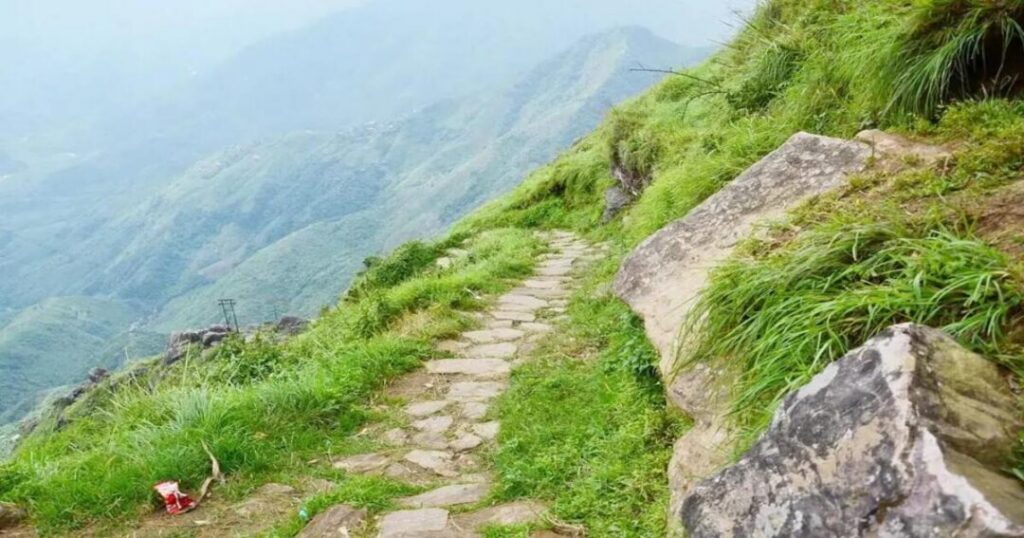
Barely an hour from Shillong, Laitlum (“end of hills” in Khasi) drops from a grassy plateau edge into a deep canyon dotted with villages, with a steep descent-and-return trail leading down to Rngain village at the canyon floor. It’s short enough to do in a half-day, making it one of the few entries here that works as an add-on to a Shillong city itinerary rather than a dedicated trip, and the plateau-edge viewpoint alone is worth the trip even for those who skip the descent.
4. Krang Suri Falls Trek
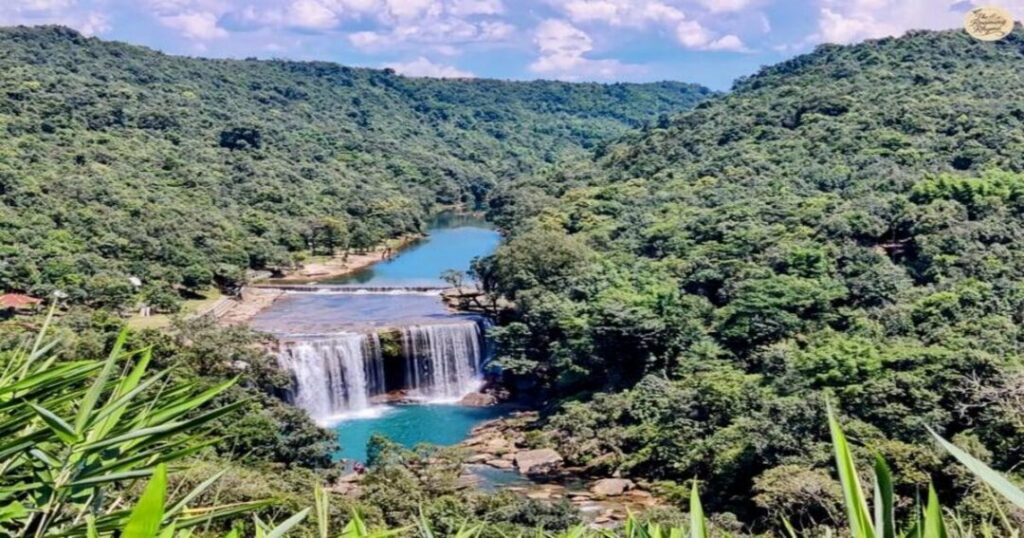
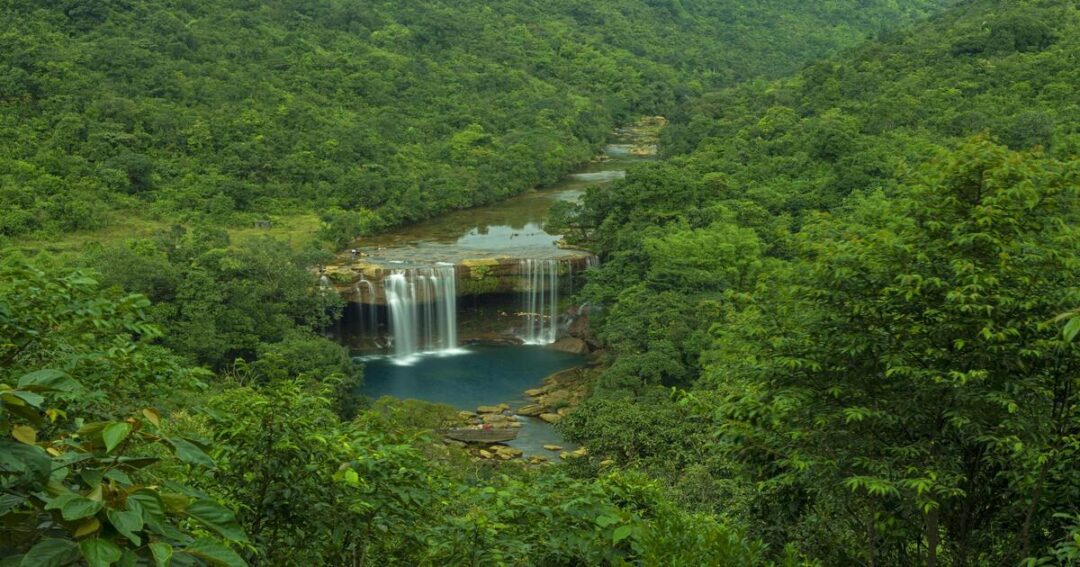
In the Jaintia Hills, a short forest walk leads to Krang Suri, a turquoise-blue waterfall and natural pool that’s become one of Meghalaya’s most photographed swimming spots. The walk itself is gentle compared to the other entries on this list, but the real draw is the destination: clear, mineral-blue water framed by forest, with a viewing platform above the falls and a swimming area below.
5. Nohkalikai Falls & Sohra Circuit
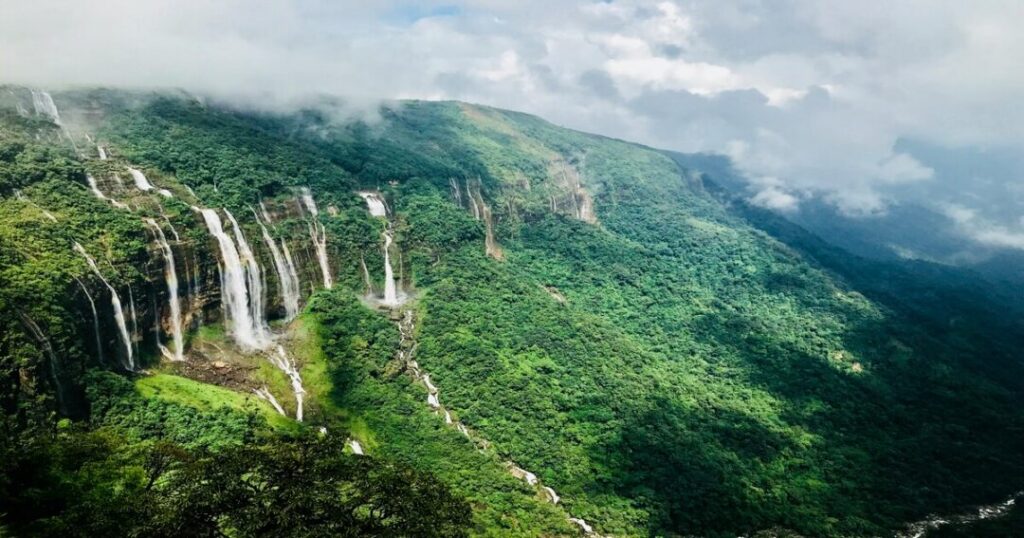
Near Cherrapunjee, a network of short walks connects viewpoints over Nohkalikai Falls — among India’s tallest waterfalls — with Mawsmai Cave’s limestone passages and the Thangkharang Park viewpoints toward Bangladesh. None of these individual walks is long, but strung together they make a full day of easy-to-moderate walking through the same plateau that holds the wettest-place-on-Earth rainfall records, with the payoff of some of the most dramatic gorge views in the state.
The Bamboo Trek: Mawryngkhang, Meghalaya’s “Great Wall”
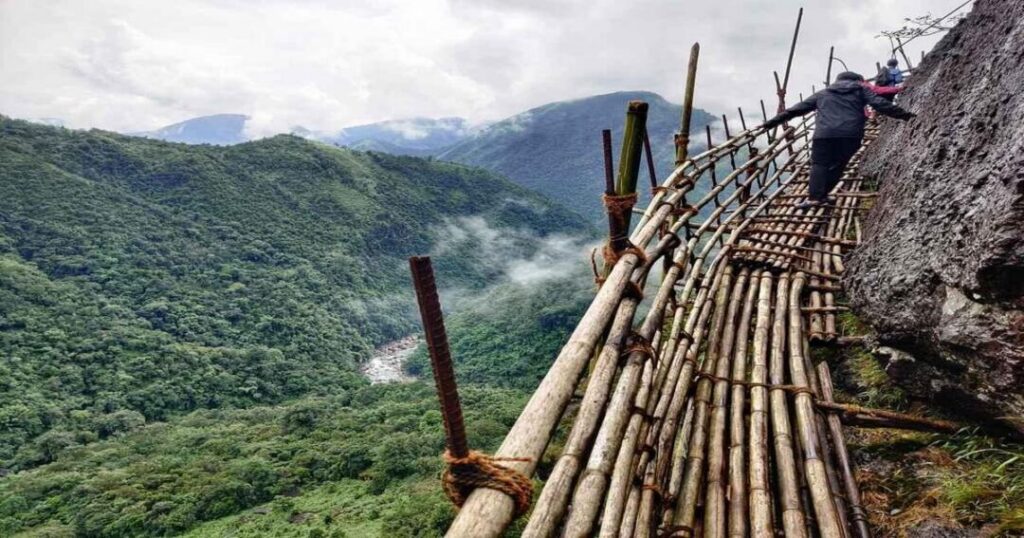
Ask any Khasi Hills guide about the bamboo trek meghalaya and they mean one specific trail: Mawryngkhang, a ridge-hugging route near Wahkhen village in the East Khasi Hills that’s earned the nickname “Meghalaya’s Great Wall” for the narrow bamboo walkway that runs along a knife-edge cliff. It’s also sold under a handful of near-identical names — bamboo trail meghalaya, bamboo trek in meghalaya, bamboo trekking meghalaya, and meghalaya bamboo trek — but they all point to the same place.
The trek covers about 3.54 km round trip, typically taking 3-5 hours depending on fitness (though local guides reportedly cover it in 45 minutes), and is rated medium difficulty. The route runs from Wahkhen village across the Wahrew River, up to Mawmoit viewpoint, and on to U Mawryngkhang itself, where the bamboo bridges and walkways — built entirely by villagers using bamboo, local timber, and cane rope, without government assistance — were opened to trekkers in 2016. Entry costs roughly ₹50 for adults and ₹20 for children. The trek’s most talked-about stretch, the Mawkhlieng Cliff section, runs along a near-vertical drop and is genuinely unsuitable for anyone with a fear of heights; sturdy trekking shoes, rain protection, and an early start before 1:00 PM are standard advice, since there are no shops or accommodation along the route. Winter months are considered the best window, when the trail is dry; the monsoon makes the bamboo surfaces notably more hazardous. There’s no public transport to Wahkhen, so most trekkers arrange a taxi from Shillong or Cherrapunjee.
Also Read: Best Villages to Visit in Northeast India
Meghalaya Trekking Packages: What to Expect
Most visitors don’t piece together a Meghalaya trip trek by trek — they book Meghalaya trekking packages that bundle several of the routes above with transport, homestays, and a local guide, which matters more here than in most trekking destinations since several trails (Mawryngkhang and Nongriat especially) have no public transport and benefit heavily from local route knowledge.
- What’s typically included: Shared or private transport from Shillong or Guwahati, homestay or guesthouse accommodation, a local guide for the trekking days, and meals — most multi-day itineraries combine two or three treks (commonly Double Decker, David Scott Trail or Laitlum, and a waterfall stop) rather than focusing on just one.
- Typical pricing: Multi-day Meghalaya packages from tour operators commonly start in the roughly ₹9,000-₹25,000 range per person, varying widely by trip length, group size, and whether transport originates in Shillong or further out in Guwahati; standalone single-trek day trips (Mawryngkhang or Krang Suri, for instance) cost considerably less when booked locally rather than as part of a packaged tour.
- Permits: Indian nationals need no special permit for these treks. Foreign nationals should carry a Protected Area Permit / Inner Line Permit requirement in mind for parts of the Northeast more broadly, though Meghalaya itself has eased many of its own entry formalities in recent years — this is worth confirming directly with a local operator or the Meghalaya Tourism office before travel, since Northeast India’s permit rules change periodically.
- Booking tip: Local Khasi Hills-based operators and homestay networks (particularly around Sohra/Cherrapunjee and Nongriat) tend to have the most current, ground-level information on trail conditions, Sunday closures, and seasonal hazards — worth cross-checking against whatever a Shillong- or Guwahati-based agency quotes.
Also Read: Seven Sisters Falls In Meghalaya: Complete Guide To Nohsngithiang Falls
More Meghalaya Trekking Places: Quick Reference
For anyone still comparing meghalaya trekking places beyond the five full write-ups above, here’s what else is worth building into an itinerary:
- Riwai & Mawlynnong Living Root Bridge Walk: A short, easy 300-metre forest walk from the parking area near Mawlynnong — often called Asia’s cleanest village — to a centuries-old living root bridge, some of which took around 50 years to fully form. It’s the gentlest entry on this list and pairs naturally with a Mawlynnong village visit.
- Nongkhnum River Island Trek: A walk around India’s second-largest river island, formed where the Kynshi River splits in two, with sandy riverbanks, a small waterfall, and swimming spots — a flatter, more relaxed alternative to the gorge and ridge treks above.
- Krem Mawmluh & Sohra Cave Circuit: Short walks into Meghalaya’s limestone cave systems near Sohra, including one of India’s longest surveyed caves — a good option for trekkers who want the region’s famous karst geology without a long walk-in.
- Dawki & Umngot River: Not a trek in the traditional sense, but the short walk down to the Umngot River’s famously clear water — often combined with a kayaking or boating stop — is a common rest-day addition to a Khasi Hills trekking itinerary.
Also Read: PLACES TO VISIT IN MEGHALAYA: A COMPLETE GUIDE
Conclusion: Trek Meghalaya for What’s Underfoot, Not Just the View
What sets the treks in Meghalaya apart isn’t altitude or distance — it’s what’s beneath your feet: centuries-old living roots, colonial stone paving, and hand-built bamboo bridges that villagers still maintain today. Pick one or two anchor treks, build in time for an overnight at Nongriat if it’s on the list, and the rest of the itinerary tends to fall into place around them.
Planning a Meghalaya trekking trip? Let the Explurger app help you string these trails together with the right homestays and guides along the way.
FAQs About treks in Meghalaya
2. What is the bamboo trek in Meghalaya?
It refers to the Mawryngkhang trek near Wahkhen village, a roughly 3.54-km round-trip route along a ridge with villager-built bamboo walkways and bridges, nicknamed "Meghalaya's Great Wall" and rated medium difficulty.
3. How difficult is the Double Decker Living Root Bridge trek?
It's moderately challenging, mainly because of roughly 3,500 stone steps each way between Tyrna and Nongriat, rather than any technical climbing — a reasonable base fitness level is enough, but the return climb is noticeably harder than the descent.
4. Is the David Scott Trail suitable for beginners?
Yes — it's rated easy despite being 16 km long, with gentle elevation change between about 1,536 and 1,829 metres, and is usually walked over 1 night and 2 days.
5. Do I need a guide for Meghalaya treks?
It's strongly recommended for routes like Mawryngkhang and Nongriat, which have no public transport and benefit from local knowledge of trail conditions, river crossings, and seasonal hazards; most trekking packages include one.
6. What is the best time to trek in Meghalaya?
Winter and the post-monsoon months (roughly October to April) offer the driest, least slippery trail conditions; the monsoon season brings Meghalaya's famously heavy rainfall, which makes stone steps and bamboo surfaces considerably more hazardous.