
60 Total Views
Each autumn, grounds, stadiums, housing societies, and temple courtyards across India fill with circles of dancers in bright clothes for nine nights. These Dandiya Nights belong to Navratri, the festival of nine nights honouring the goddess Durga, and they sit alongside garba, the circle dance of Gujarat, which UNESCO added to its Representative List of the Intangible Cultural Heritage of Humanity in December 2023. This year, Sharad Navratri began on October 11, 2026, so as this post is written the festival is on about its fourth night, with nine nights running to October 19 and Dussehra falling on October 20. That means roughly six nights remain, counting tonight. This guide covers where to find the best dandiya nights, how the nine nights are structured, how garba and dandiya differ, what to wear, how Gujarat keeps the tradition alive, how other regions celebrate and how to choose an event.
Best Dandiya Nights Across India
These five places are known for large organised garba and dandiya nights. The picks come from 2026 event listings and travel articles, not an official ranking, and organisers’ details change, so treat each as a lead to confirm.
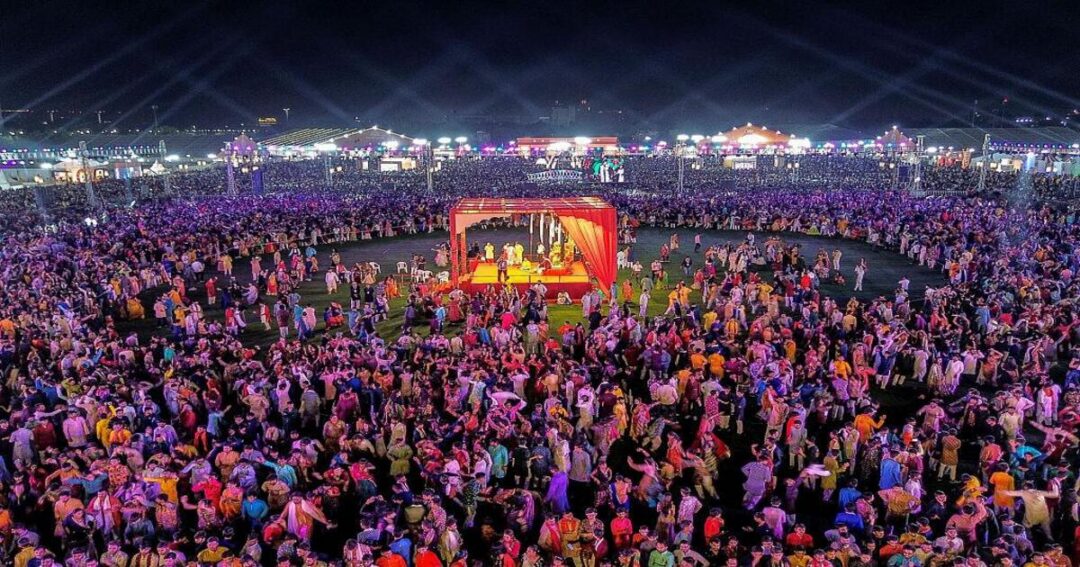
Ahmedabad is known for large-scale garba events. A 2026 article lists the Vibrant Navratri Festival at GMDC Ground with a programme from October 11 to 20, and a listings site notes that Gujarat Tourism’s own page still showed 2025 details, so confirm the entry arrangements with the organiser. Away from the dance floor, the same article points to Sabarmati Ashram, the old pols (heritage neighbourhoods), Adalaj Stepwell and the Calico Museum of Textiles.
2. Vadodara: United Way of Baroda Garba Mahotsav
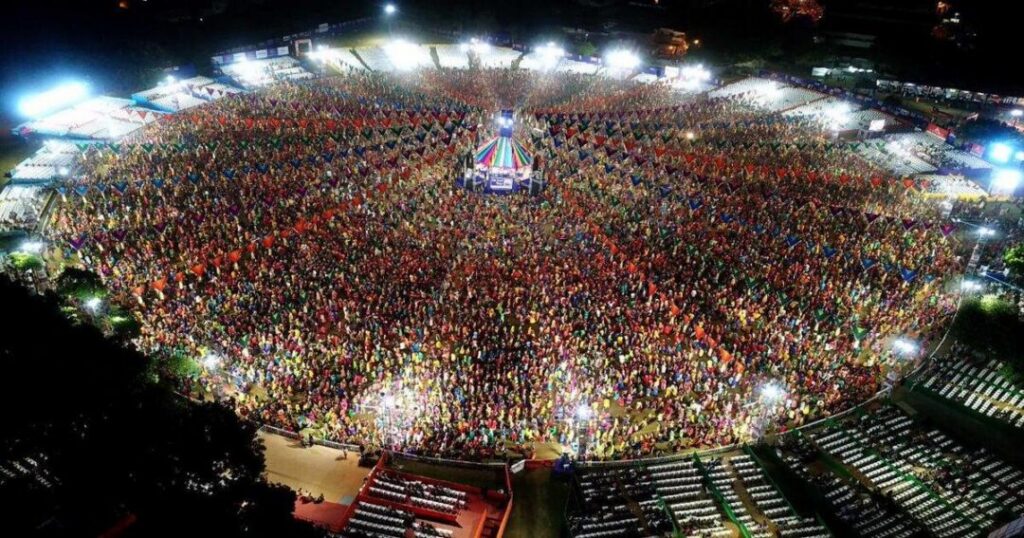
Vadodara has a long association with the dance, and the United Way of Baroda Garba Mahotsav is listed at M M Patel Farm in Atladara (another listing shortens it to M M Farm) for October 11 to 19, 2026. Traditional attire is reported as compulsory at this event. Traditional garba here is described as circles moving in step to folk songs, with clap patterns and a rhythm that builds gradually, and an evening centred on the aarti to Mataji. Other nights include a Western Vadodara Navratri Mahotsav, although that listing is on a single events site. Laxmi Vilas Palace and Sayaji Baug are nearby for daytime sightseeing.
3. Surat: Contemporary Ticketed Nights
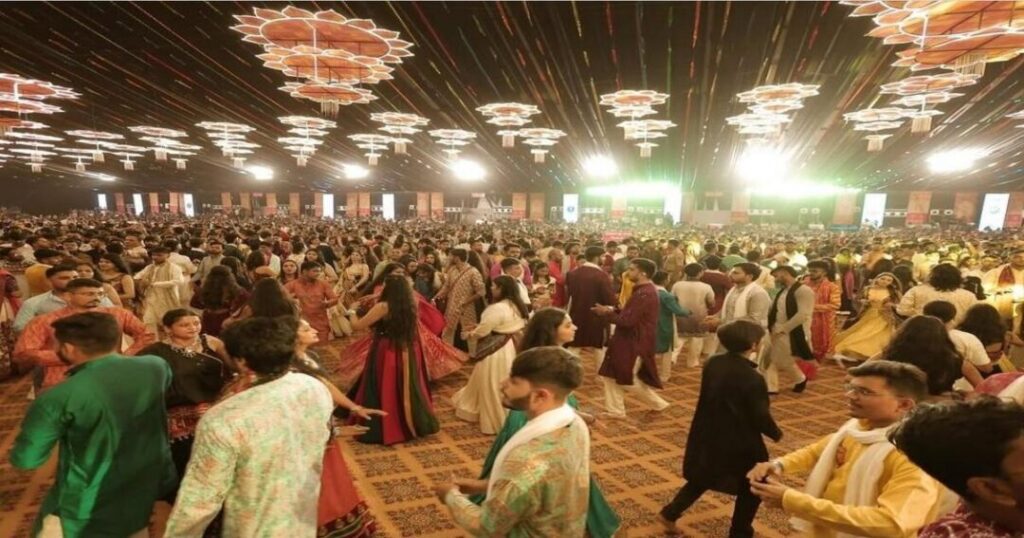
Surat is described as the place for contemporary, ticketed garba and dandiya nights that draw younger crowds, with organised nights around Vesu, Adajan and Piplod. Two examples from listings show how rules differ between events: Zankar Navratri at Nilgiri Ground requires ethnic attire, while Yashvi Navratri at CB Patel Stadium is listed as vegetarian-only with no alcohol. Surat’s end date is given as both October 20 and 21 in one source, so check before you book.
4. Mumbai: Garba Meets Bollywood
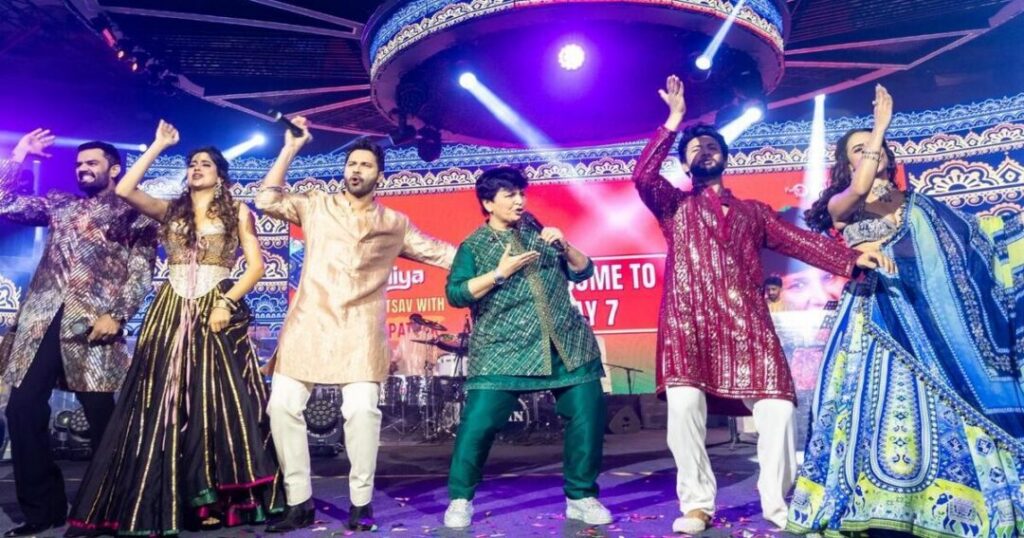
Mumbai’s dandiya and garba nights mix Gujarati folk music with Bollywood remixes, and Goregaon, Malad and Andheri are named as hotspots. Listings include Dome Dandiya Nites at Dome SVP Stadium and Chetna Navratri, an indoor event in Borivali, with most Mumbai, Thane and Navi Mumbai events running October 11 to 19 or 20.
5. Delhi NCR: A Weekend-Heavy Scene
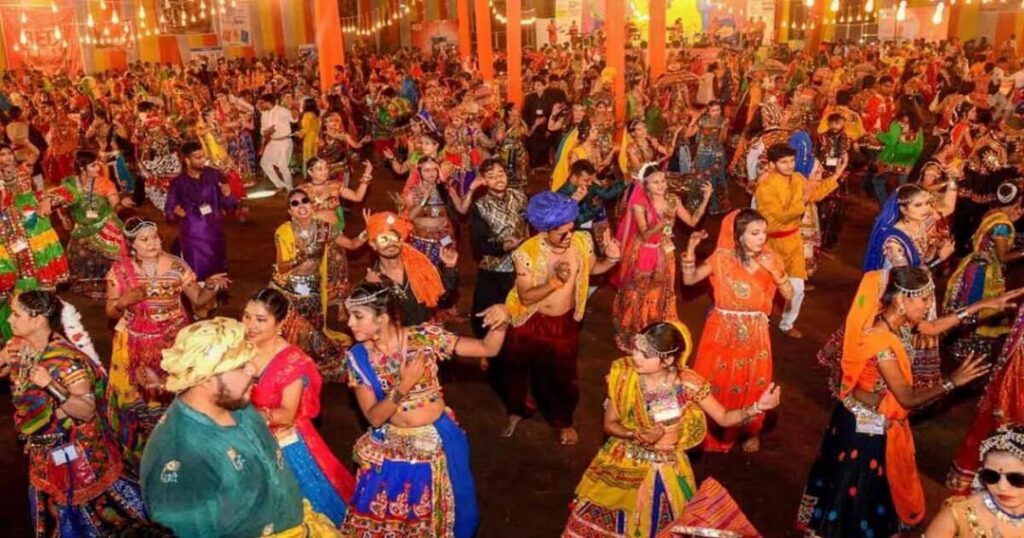
Outside Gujarat and Mumbai, a listings site says most events fall on the weekend of October 16 to 18, and it lists around 20 events in Delhi NCR, a self-reported figure. Delhi is also home to Ram Lila performances at Ramlila Maidan and the Red Fort grounds and to Bengali-style Durga Puja at Chittaranjan Park, so the city can combine dandiya with other Navratri traditions in one visit.
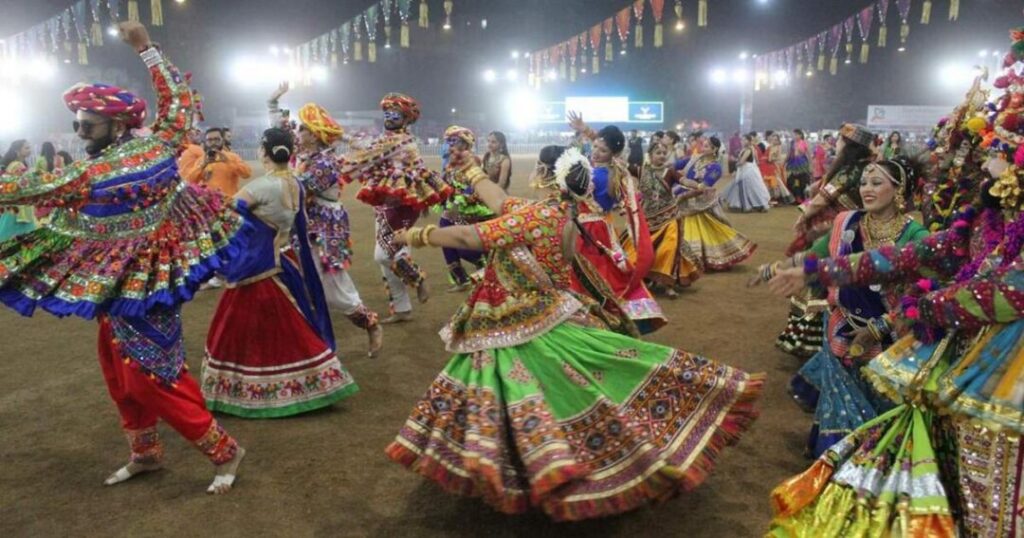
To understand Navratri Garba, it helps to know the festival’s calendar. Navratri means nine nights and is held in two main forms each year: Vasanta in March and April and Sharada in September and October, with Sharada the most widely celebrated. The festival honours Amba Mata, an incarnation of Durga, and each day is dedicated to one of her forms: Shailaputri, Brahmacharini, Chandraghanta, Kushmanda, Skandamata, Katyayani, Kalaratri, Mahagauri and Siddhidhatri. The link between navratri and garba is simple: garba is the nightly dance of the festival in Gujarat, performed after the aarti, and dandiya raas is usually danced at the end of each night.
The 2026 dates, from a Delhi-based calendar published October 11, are below.
- Start (Ghatasthapana): Sunday, October 11, 2026.
- Durga Ashtami: Sunday, October 18 per that calendar, although a Vadodara listing puts both Ashtami and Navami on October 19, so confirm locally.
- Maha Navami: Monday, October 19.
- Dussehra (Vijayadashami): Tuesday, October 20, marking the end of the festival.
These dates fall about three weeks later than last year’s. Sharad Navratri in 2025 ran from September 22 to October 2, so last year’s listings are no guide. Vijayadashami is the tenth and final day, when clay idols are immersed in processions in some places and effigies are burned in others.
Dandiya Garba: What Is the Difference?
People often say dandiya garba as if the two were one dance, and today they largely are, but they began as different forms. Garba is a counterclockwise circle dance in which large groups form concentric rings that move in opposite directions and gather speed as the dance goes on. The circle surrounds an earthen pot with a flame inside or an image of the goddess. Its name comes from the Sanskrit garbha, meaning womb, which points to life and gestation.
Dandiya raas is a sibling dance in which each player holds a stick in each hand and taps a rhythm with a partner. In the traditional Kaherva pattern, an eight-beat cycle, a dancer strikes their own sticks together, then right sticks with the partner and then left sticks. Dancers stand in two lines facing each other, the lines move clockwise and dancers pass to a new partner after each exchange. Raas comes from the Sanskrit rasa, an aesthetic idea tied to emotion. It is performed in Gujarat, in Saurashtra and in the Marwar region of Rajasthan, and Wikipedia says it was traditionally performed by men, whereas an Indian embassy press release on the UNESCO listing says garba is usually danced by women. Modern garba has been heavily influenced by dandiya raas, and the merger of the two produced the high-energy style seen at big events.
A third term, garba raas, describes a competitive style that combines mainly dandiya raas with some garba. It emerged through the Federation of Gujarati Associations of North America and was developed by Indian-American college students in the early 2000s, and the Raas All-Stars competition was established in 2009. Competitive teams of 12 to 16 dancers use varied formations on a full stage. The scholar Jessica Falcone argues it is becoming its own style, closer to a competitive sport than to an inclusive, ritual dance.
Decorative Garba: The Garbo, Costumes and the Festive Look
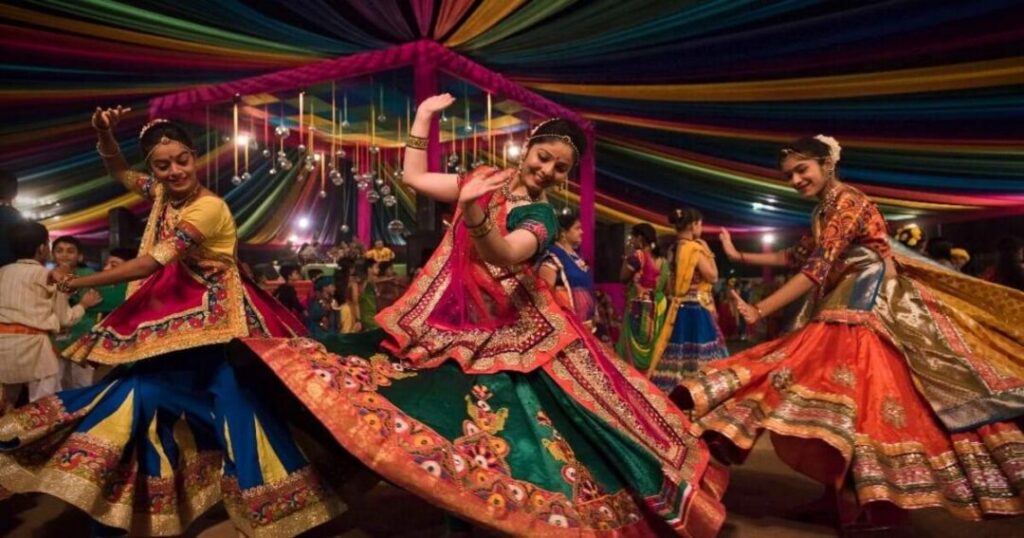
The most visual side of the festival is what some searches call decorative garba: the lamp at the centre of the circle and the clothes around it. The central object is the garbo, an earthen pot with holes in its sides and a flame inside. The flame symbolises the jiva, or soul, and one source says the pot has 27 holes. Where there is no pot, a picture or statue of Amba may stand at the centre instead. No source reviewed here describes how pots are decorated, so this section sticks to the documented parts.
Traditional clothing is part of the look. Men wear the kediyu, women wear the chaniya choli and young girls may wear the ghagra choli. Some events enforce this: the United Way of Baroda event is reported as requiring traditional attire, and Zankar Navratri in Surat requires ethnic wear. Traditional garba music uses the dhol and dholak drums, cymbals and the shehnai, with singing and, at some events, sitar.
Anyone looking for the heart of garba gujarati navratri should look at how the dance is celebrated at home. In Gujarat, garba and its song form, garbi, are danced in housing societies, old-city streets, temple courtyards and ticketed grounds alike. UNESCO inscribed Garba of Gujarat at the 18th meeting of its Intergovernmental Committee, held in Kasane, Botswana, in December 2023, as the 15th element from India on the list. The evaluation report said Garba was nominated for championing unity in diversity and social equality.
Beyond the big grounds, the tradition has devotional and local forms. Ambaji, in Banaskantha district near the Rajasthan border, offers a temple-centred Navratri of prayers and aarti rather than a dance ground. In Rajkot, community-led garba and folk traditions are described as a feature of the Saurashtra region, and a listings site mentions a traditional street garba in Jamnagar that uses no electronic instruments. In Saurashtra, a women’s version of raas called Raasda gives more weight to the music, while the men’s raas emphasises movement. Garba is also performed by Gujarati communities far beyond India, including in the United Kingdom.
Also Read: Bishnupur: Terracotta Temples and Bengal’s Craft Heritage
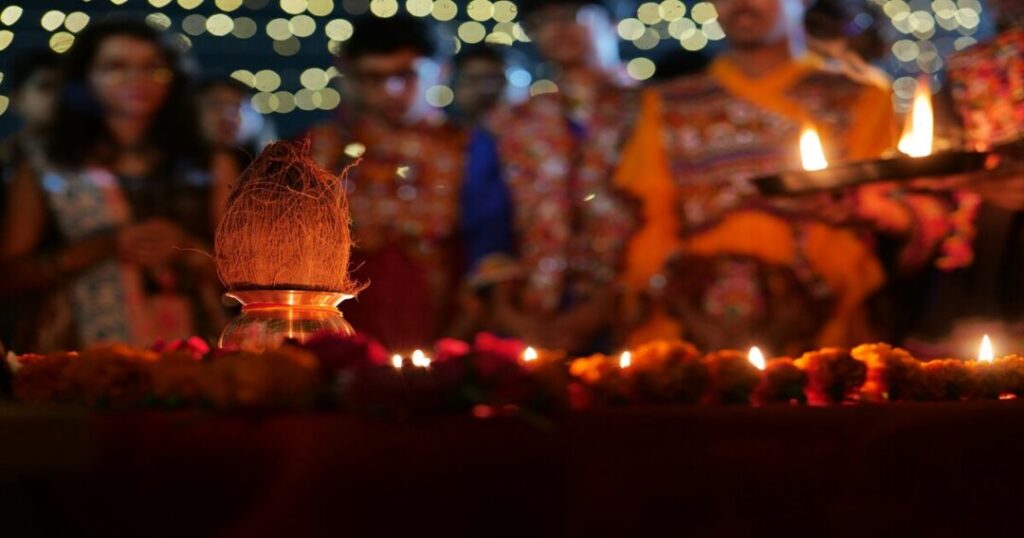
Garba is one of many ways India marks these nine nights. These are the main regional traditions.
- West Bengal: Durga Puja, with large pandals and idols crafted in Kolkata’s Kumartuli potters’ quarter, and Sindoor Khela on Vijayadashami.
- Karnataka: Mysuru Dasara, where the royal sword is worshipped on Mahanavami and an image of Goddess Chamundeshwari rides an elephant on Vijayadashami.
- Himachal Pradesh: Kullu Dussehra begins on Vijayadashami and runs for about a week, unlike most of India.
- Tamil Nadu and Andhra Pradesh: Families set up displays of miniature dolls, called Golu or Bommala Koluvu, and invite visitors to view them and exchange sweets.
- Telangana: Bathukamma flower stacks, followed by immersion.
- North India: Fasting, Devi temple visits, Kanya Pujan, Ram Lila performances and Ravan Dahan on Dussehra, including in Delhi and Varanasi.
Also Read: Here is Why Durga Puja 2026 is Something You Shouldn’t Miss
Best Garba: How to Choose a Night?
There is no official ranking, so the best garba for you depends on what you want: a huge ticketed ground, a neighbourhood circle or a devotional evening. Anyone searching for garba navratri garba listings should keep the following in mind, drawn from the sources above.
- Check the date: Event dates for 2026 conflict between sources, and some official pages still showed 2025 details.
- Buy passes from organisers: Large grounds sell daily or season passes through the event’s own page, and a listings site advises buying only from organisers. Prices are not given here.
- Read the rules: Some events require ethnic attire, some are vegetarian-only and alcohol-free, and some are held indoors. A few set age limits for children.
- Plan for late nights: Garba often runs until late, so arrange transport in advance and consider group travel. The same site advises keeping children in the outer circle.
- Ask before photographing: At temple-centred celebrations such as Ambaji, seek permission before photographing people or ceremonies.
- Free options exist: Society, temple and street garba are described as usually free for residents and devotees, and one source says Indore’s community garba welcomes visitors.
Also Read: India’s Most Unique Dussehra Festival Celebrations
Conclusion: Join a Circle, Even Just for One Night
The best Dandiya Nights combine devotion, music and a crowd moving as one, and with the festival still on until October 19, there is time to catch at least one. Check the date and the dress code, buy your pass from the organiser and arrive ready to learn the steps from the people around you.
Planning a festival trip? Use the Explurger app to find fellow travelers heading to Navratri celebrations in Gujarat, Mumbai and beyond.
FAQs About Dandiya Nights
2. What is the difference between garba and dandiya?
Garba is a circle dance around a lamp or an image of the goddess, danced without sticks. Dandiya raas uses a stick in each hand and a partner. Modern events blend the two.
3. When is Navratri 2026?
Sharad Navratri began on October 11, 2026 and runs for nine nights to October 19, with Dussehra on October 20. Confirm the Ashtami date locally.
4. Is Garba recognised by UNESCO?
Yes. Garba of Gujarat was inscribed on UNESCO's Representative List of the Intangible Cultural Heritage of Humanity in December 2023.
5. What should I wear to a garba night?
Traditional clothing is common: the kediyu for men and the chaniya choli for women. Some events, such as Zankar Navratri in Surat and the United Way of Baroda event, require traditional or ethnic attire.
6. Where can I experience garba in Gujarat?
Ahmedabad, Vadodara, Surat, Rajkot and Gandhinagar are named for organised events, and Ambaji offers a devotional Navratri. Confirm 2026 venues with organisers.