

53 Total Views
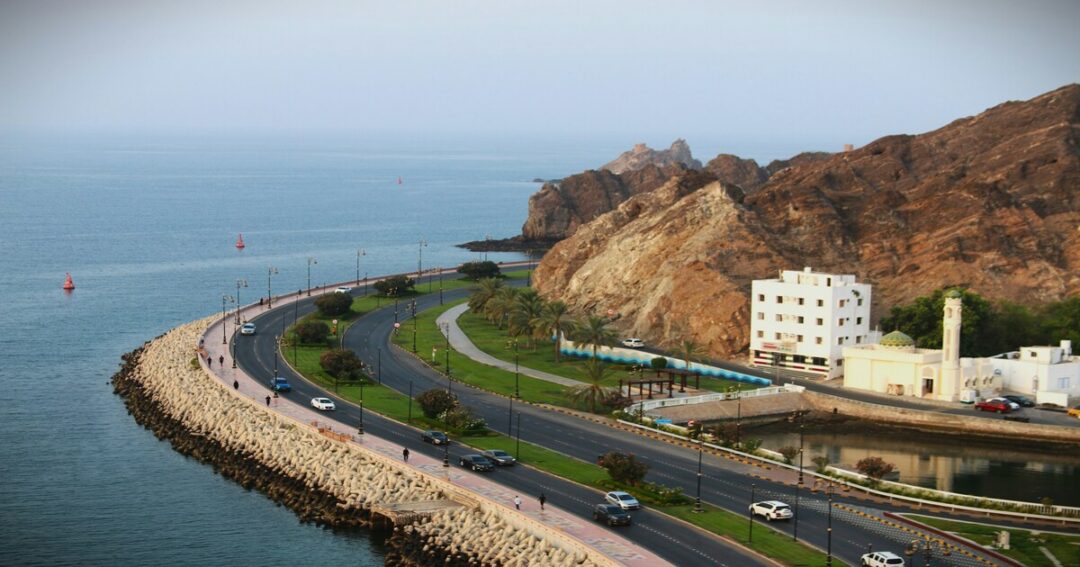
Oman rewards people who drive. Roads run from Muscat’s coast to turquoise wadis, from a sea of dunes in the Wahiba Sands to a turtle beach on the Arabian Sea, and up into mountain villages near Nizwa, with a long road south to Salalah for the committed. This guide to the Oman road trip covers five stops to build around, the licence and rental rules, the distances, a 10-day loop, the choice between a sedan and a 4×4, and the long drive to Dhofar. A timely point: the weather service expects more rain than usual in northern Oman this October and November, so check the forecast before you commit to a wadi or desert day.
Best Oman Road Trip Stops: From Wahiba Sands to the Sea
These five stops cover the route from the desert to the Arabian Sea coast. Distances and costs are from the blogs and guides listed at the end and may have changed.
1. Wahiba (Sharqiya) Sands
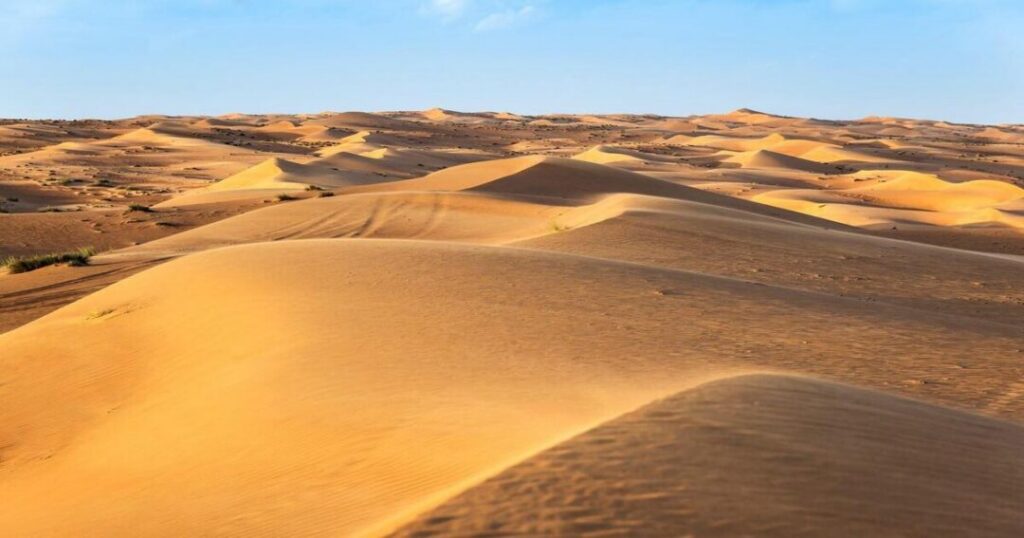
According to Wikipedia, the Sharqiya Sands cover about 12,500 square kilometres, roughly 180 km north to south and 80 km east to west, with northern dunes reaching up to 100 metres. Bedouin groups live in the area, and it takes its name from the Bani Wahiba tribe. For a first visit, the Wander-Lush 10-day itinerary parks the car at a petrol station in Bidiyah and takes a camp transfer into the desert, rather than driving on sand. Another blogger, Oman Wanderlust, crossed the desert on the sandy “Bedouin road”, which takes about 7 hours, has no phone signal and can trap vehicles, and recommends it only for experienced off-road drivers travelling with a second vehicle.
2. Wadi Shab and Bimmah Sinkhole
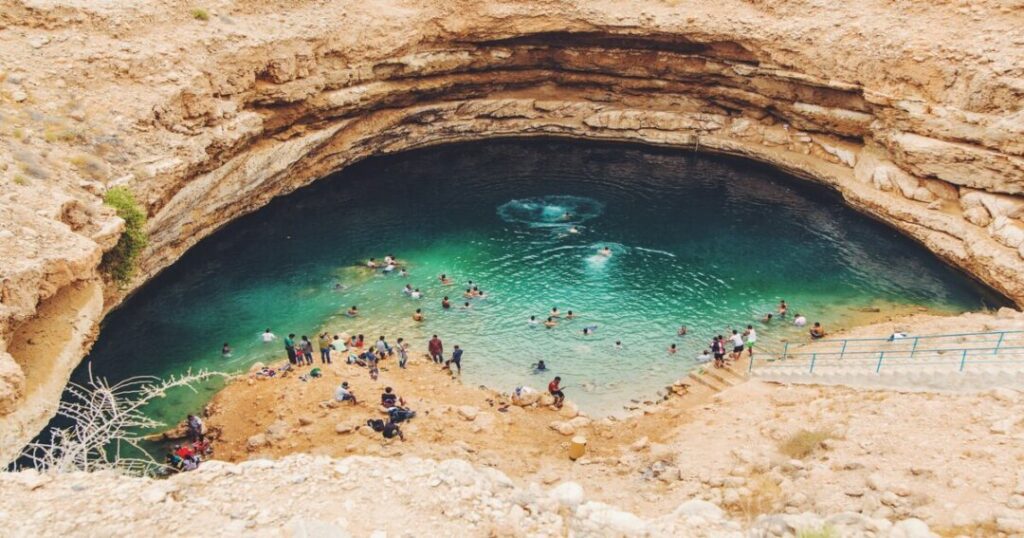
On the coast road from Muscat towards Sur, Wander-Lush suggests stopping at Bimmah Sinkhole, which opened at 9 am when the post was written, and Wadi Shab, which needs a short boat ride and a hike. Wadi Shab to Sur is about 78 km. Wadis can overflow in heavy rain, so check conditions on the day.
3. Ras al Jinz Turtle Reserve

The reserve sits on the Arabian Sea coast near Ras al Hadd, about 45 minutes from Sur according to Wander-Lush. Bradt Guides says there is no public transport, that places are limited and should be booked ahead, and that the evening tour cost OMR 8 per person for non-guests, gathering in the hotel lobby at about 21:00 with arrival advised before 20:30. The group walks about 1 km to the beach, and photography is not allowed on the evening tour. A pre-dawn visit starting around 04:45 may show hatchlings heading to the sea. Bradt’s prices are undated, so confirm them.
4. Nizwa and the Hajar Mountains
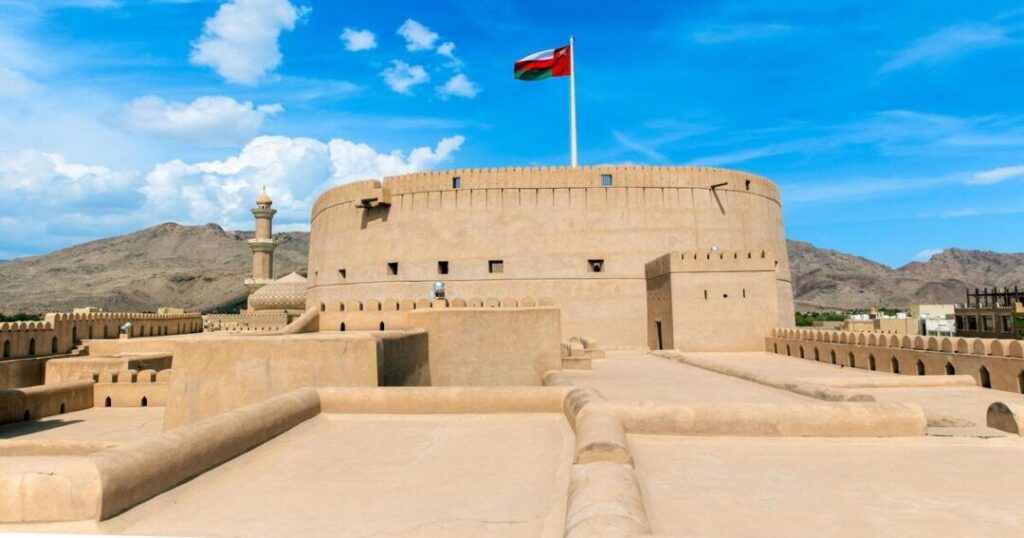
Nizwa is the inland base. Wander-Lush visits Nizwa Fort and Souq, Bahla Fort and Al Hoota Cave (7 OMR, reserve ahead in that post), and stays in a mud-house guesthouse in Misfat Al Abriyeen. The same post says Bald Sayt and Wakan require a 4WD.
5. Salalah and Dhofar

At the far end of Oman’s southern coast, Khaleej Times lists Wadi Darbat, Mughsail Beach and the Marneef Cave blowholes, Jabal Samhan, the Dhofar sinkholes including Kahf Teiq, and Al Husn Souq. Oman Wanderlust adds the MV Jernas wreck and Fazayah Beach, where some tracks need a 4×4. It is a 1,000 km drive from Muscat, so many travellers treat it as a separate trip.
Oman Travel by Road: Licences, Rules and Visas
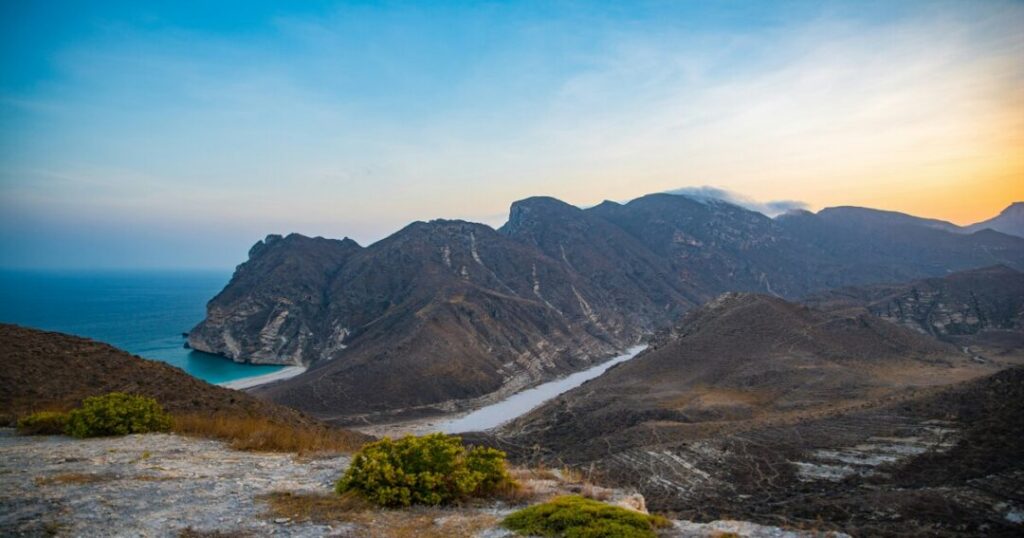
Anyone planning Oman travel by road as a visitor should sort out these basics before collecting the keys:
- Licence: Gulf News reported in November 2024 that the Royal Oman Police clarified that foreign tourists and transit travellers can drive with a valid home-country licence, or an international driving permit from a recognised body, for up to three months from the date of entry, if they hold a valid tourist visa and are at least 18. World Travel Guide, updated December 2025, recommends an international permit, especially if your licence is not in English or Arabic, and says to carry your licence and passport at all times. Wander-Lush was asked only for a passport and foreign licence, but advises checking with the rental company.
- Rental age: World Travel Guide says drivers generally need to be at least 21, or 25 for some car classes. This is a rental-company rule and differs from the licence rule above, so check with your company.
- Side of the road and speed: Traffic drives on the right. World Travel Guide gives about 40 to 60 km/h in cities and 100 to 120 km/h on highways, and says speed cameras are common and fines can be substantial.
- Visa: Khaleej Times (June 2026) says the tourist visa costs 5 Omani riyals and can be obtained online or on arrival. A commercial visa-information site lists e-visa options at 5 OMR for 10 or 30 days and 20 OMR for another 30-day type, plus a 50 OMR one-year multiple-entry visa, and says processing takes one to three working days. Confirm the fees and visa type on the Royal Oman Police e-visa portal.
- Deposit and cost: Wander-Lush paid about 185 USD for 10 days in an automatic sedan, with a 150 OMR (about 390 USD) card deposit held until return. The post dates from 2023, so treat these as a rough guide only.
- Fuel: World Travel Guide calls fuel inexpensive but notes that stations are less frequent in remote areas. Wander-Lush put it at about 50 US cents a litre and needed three or four fill-ups for the loop, in a post updated in 2023.
Oman by Road: Distances and Drive Times
Reading Oman by road means accepting long gaps between sights. These figures come from the two itineraries and should be treated as approximate:
- Muscat to Sur: about 200 km and 2 hours, with Bimmah Sinkhole and Wadi Shab on the way, according to Wander-Lush.
- To the Wahiba Sands: about 174 km and 2.5 hours, with a stop at Wadi Bani Khalid, for the same loop.
- Wahiba Sands to Misfat Al Abriyeen: about 230 km and 3 hours, the longest driving day in that itinerary.
- Towards Nizwa: about 82 km and 1 to 1.5 hours on the following leg.
- Nizwa back to Muscat: about 160 km and 1.5 hours.
- Muscat to Salalah by the interior route: Route 31 is about 1,020 km and can be done in under 10 hours non-stop, according to Oman Wanderlust.
- Muscat to Salalah by the coast: about 1,300 km, which that blog spread over 2.5 days. Its first day covered Muscat to Ras Madrakah, 616 km in about 7 hours.
- Salalah to Duqm, then Duqm to the Wahiba Sands: 670 km in about 7 hours, then 285 km in about 3.5 hours, on the return leg in the same blog.
For comparison, World Travel Guide says Muscat to Salalah takes about 12 hours by coach, while a domestic flight takes around 90 minutes. Wander-Lush gives about 860 km for its whole 10-day loop.
Oman Road Trip Itinerary: 10 Days from Muscat to Nizwa
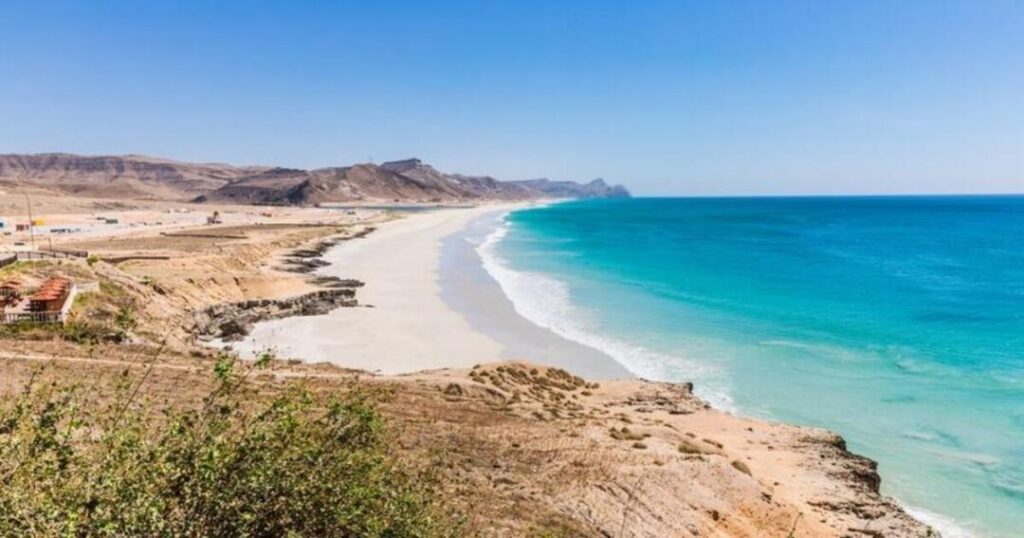
This is a day-by-day outline of a published oman road trip itinerary by Wander-Lush, an affiliate-supported blog, shortened by us. It is a sedan-friendly loop that never reaches Salalah:
- Day 1, Muscat: Arrive and settle in. A car is strongly recommended because the city is spread out.
- Day 2, Muscat: A second night in the capital. The highway down to Muttrah has few exits and is the hardest stretch to drive.
- Day 3, Muscat to Sur: About 200 km, with Bimmah Sinkhole and Wadi Shab on the way.
- Day 4, Sur and Ras al Jinz: Explore Sur, then take the night tour at the turtle reserve. The coast roads have few streetlights, so drive back carefully.
- Day 5, Wadi Bani Khalid and the Wahiba Sands: About 174 km, then park at Bidiyah and take a camp transfer into the dunes.
- Day 6, Misfat Al Abriyeen: About 230 km into the Hajar Mountains and a night in a mud-house guesthouse.
- Day 7, Nizwa area: About 82 km, then Al Hoota Cave and Bahla Fort.
- Day 8, Nizwa: Nizwa Fort and Souq.
- Day 9, Nizwa: A spare day. The author says the Nizwa stay could be shortened.
- Day 10, back to Muscat: About 160 km, roughly 1.5 hours.
Our own suggestion: if the Arabian Sea at Salalah is the goal, treat that as a separate trip rather than stretching this loop, because the drive each way is longer than the whole loop’s longest day.
Also Read: Best Roman Food to Try in Rome
Oman Self-Drive Itinerary: Sedan or 4×4?
The biggest decision in any Oman self-drive itinerary is the vehicle, and the sources disagree. World Travel Guide says a 4WD is strongly recommended if you plan to visit wadis, mountain villages or the Sharqiya Sands. Wander-Lush drove a sedan on its loop, did not drive on sand and says a 4WD is only needed for dune driving or serious off-road trips. A reader comment on that post also says Jebel Akhdar requires a 4WD because of a checkpoint, which we could not confirm. Oman Wanderlust says Fazayah Beach and the Bedouin road need off-road capability. Three practical ways to choose:
- Paved loop only: A sedan matches the Wander-Lush route, with a camp transfer at Wahiba, and roads described as new and well maintained.
- Wadis, mountain villages and tracks: Take a 4WD for Bald Sayt, Wakan and unpaved wadi routes, and for a careful look at conditions after rain, as World Travel Guide advises.
- Driving the dunes: Only with an experienced driver, a second vehicle and a GPS app that works offline.
Other tips from Wander-Lush: Google Maps with a local SIM worked well throughout, parking was generally easy except in dense areas such as Muttrah, and no toll roads were met, though the author advises carrying cash. The main safety caution was driving at night on rural roads. The author drove with a partner and had no problems.
Also Read: Places to Visit in Yelagiri: 12 Best Spots for Every Kind of Trip
Oman Salalah Road: Driving from Muscat to Dhofar
The Oman Salalah Road is a different kind of drive from the northern loop. According to Oman Wanderlust, the interior route is long and dull, with heat haze, a single lane, lorries that make overtaking risky and speeding drivers, while the coast road through Ras Madrakah, Ash Shuwaymiyyah and the Samhan mountains is slower but scenic. Tips from that blog and from Khaleej Times:
- Refuel early: Remote petrol stations are spread out, and the blog advises refuelling below half a tank.
- Carry basics: Water and snacks are sold at stations, but toilets may need a key from the attendant, so bring toilet paper and hand sanitiser.
- Respect the cameras: They are regularly spaced and the 120 km/h limit is enforced.
- Watch for camels: Herds appear on roads and beaches, especially on Route 42 and at Fazayah Beach, and often halt traffic in Dhofar.
- Slow down in the hills: Khaleej Times warns that Dhofar mountain roads can be dangerous in heavy fog, with sharp turns and steep inclines, and that drizzle makes roads slippery. That article was about the khareef, which ran from June 21 to September 21, 2026.
Season note: According to Oman Observer on October 17, 2026, the National Multi-Hazard Early Warning Centre expects El Niño to strengthen from September 2026 to May 2027, peaking in November and December. Northern Oman is forecast to get above-average rain in October and November, December rain should be close to average overall, and Arabian Sea coastal areas are expected to see below-average rain in October. Temperatures are expected to stay above normal through December, and tropical weather systems are possible in the Arabian Sea from October to December. The centre says heavy rain could make wadis overflow, and that seasonal forecasts are not predictions of individual storms. A separate Oman Observer report said the Civil Aviation Authority expected a trough to boost rain clouds over northern Oman from October 19 to 21, and that a depression moving towards the Horn of Africa should have no direct impact, though clouds linked to it could bring scattered rain to parts of Dhofar and Al Wusta from October 21. Check official bulletins before wadi, mountain and long-distance days.
Also Read: A Road Trip Through Jordan: Petra, Wadi Rum and the Dead Sea
Conclusion: Pick Your Stretch of Road
The best Oman road trip depends on how much road you want: a 10-day loop of Muscat, Sur, the Wahiba Sands and Nizwa fits a sedan and about 860 km, while the run to Salalah and the Arabian Sea adds more than 1,000 km each way. Sort out your licence and visa, choose the car for the roads you plan to take, book the Ras al Jinz tour early and keep an eye on the rain forecast.
Planning a road trip through Oman? Open the Explurger app to find travelers heading to Muscat, Nizwa or Salalah and share routes and tips.
FAQs About Oman Road Trip
2. How long does it take to drive from Muscat to Salalah?
Oman Wanderlust says the interior Route 31, about 1,020 km, can be done in under 10 hours non-stop, though the author found it long and dull. The coast route is about 1,300 km and that blog spread it over 2.5 days. World Travel Guide gives about 12 hours by coach.
3. Do I need a 4x4 for an Oman road trip?
Not for the paved loop through Muscat, Sur, the Wahiba Sands by camp transfer and Nizwa, according to Wander-Lush, which drove a sedan. World Travel Guide strongly recommends a 4WD for wadis, mountain villages and the Sharqiya Sands, and Bald Sayt, Wakan and the Bedouin road need off-road capability.
4. How many days do you need for an Oman road trip?
Wander-Lush's northern loop takes 10 days and about 860 km. Oman Wanderlust's Muscat to Salalah round trip took 8 days and 2,606 km, which is much more driving per day.
5. How much is an Oman tourist visa?
Khaleej Times (June 2026) gives 5 Omani riyals, available online or on arrival. A commercial site lists 5 OMR for 10 or 30 days, 20 OMR for another 30-day type and 50 OMR for one-year multiple entry. Confirm with the Royal Oman Police e-visa portal.
6. Is it safe to drive at night in Oman?
Wander-Lush calls Oman safe and tourist-friendly, with night driving on rural roads as the main caution. It notes that coast roads near Ras al Jinz have few streetlights, and camels may be on the road in Dhofar.