
44 Total Views
Most treks near Mumbai and Pune climb toward a fort or a peak. The sandhan valley trek goes the other way — down into a narrow, water-carved canyon in the Sahyadris so deep and tight that direct sunlight barely reaches its floor, earning it the name “Valley of Shadows” and, in countless trekking blogs, a reputation as one of Asia’s largest canyons (a claim worth treating as popular lore rather than settled geography, more on that below). It’s as much an adventure sport destination as a trek, combining boulder-hopping, stream crossings, and rock-face rappelling in a single outing. This guide covers the trek’s route and highlights, breaks down the two main ways to do it, goes deep on the rappelling and camping that make it famous, and closes with practical notes on timing and getting there.
Best of the Sandhan Valley Trek
Here’s what actually makes up a Sandhan Valley outing, from the village where it starts to the multi-day combination serious trekkers add onto it.
Samrad Village: The Trek’s Starting Point
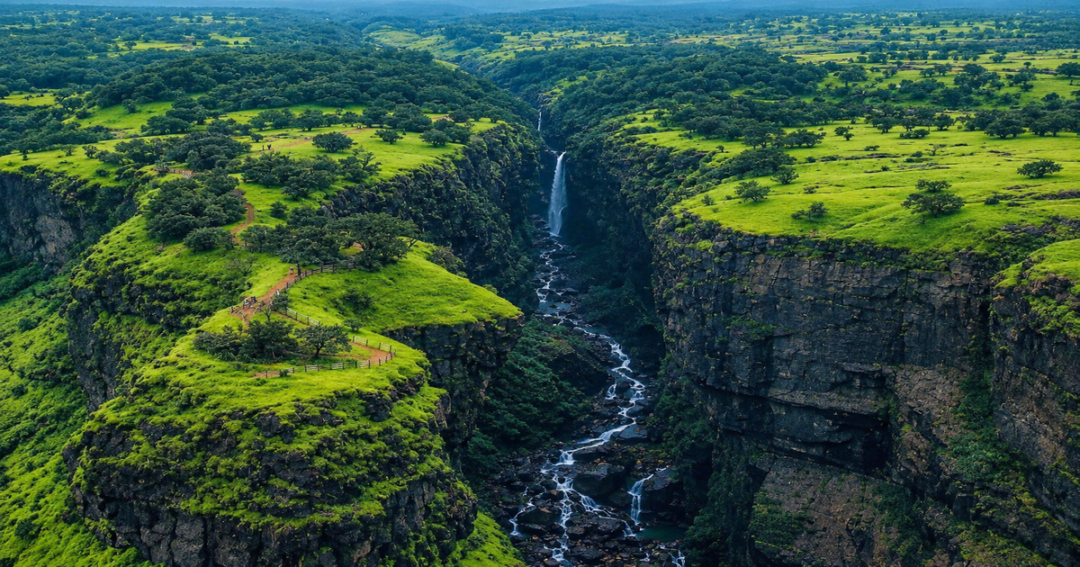
Nearly every Sandhan Valley trek begins at Samrad, a small village in Akole taluka, Ahmednagar district, roughly 180-190 km from Mumbai and about 200 km from Pune. Most groups arrive the evening before and camp overnight near the village, since the trek itself is best started early in the morning before the canyon floor gets crowded and before the day heats up.
The Valley of Shadows: Canyon Geology
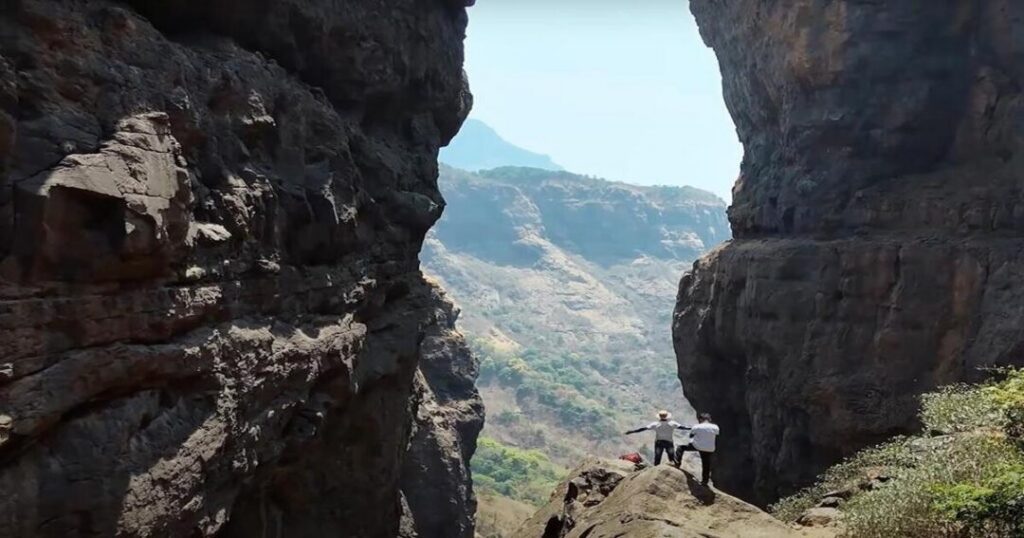
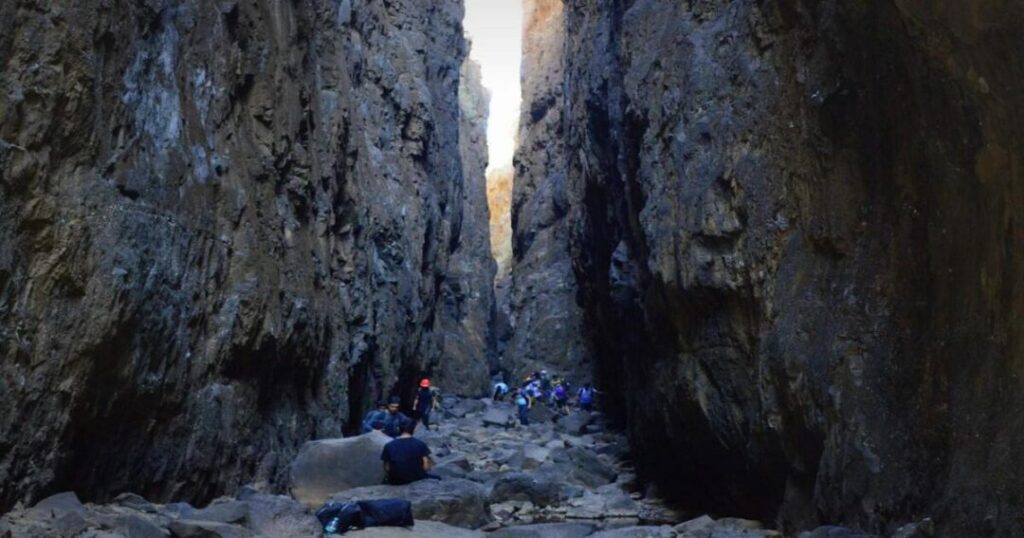
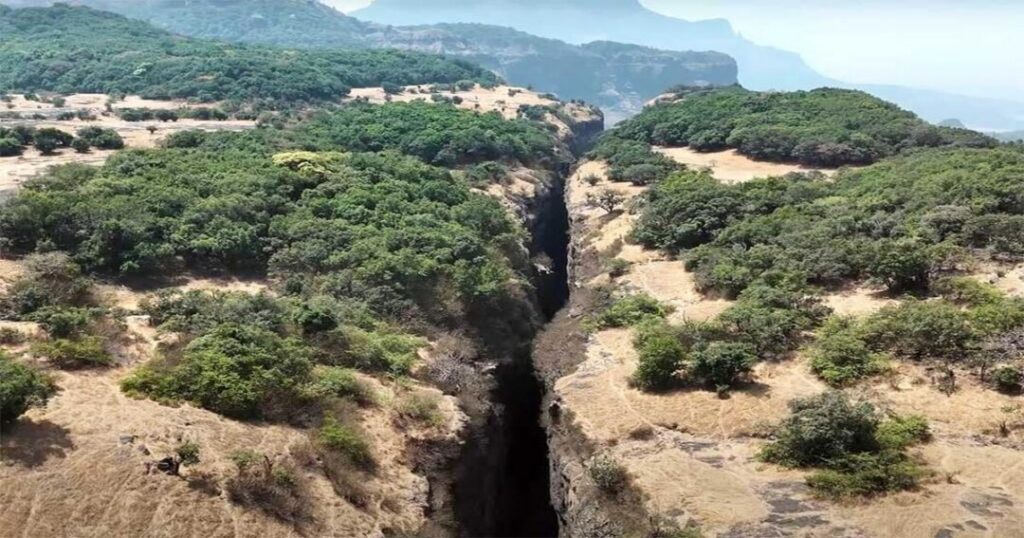
The canyon’s defining feature is its narrowness: in multiple sections the walls close in so tightly, and rise so steeply — commonly cited at around 200 feet deep — that sunlight only reaches the floor for a short window each day, which is exactly where the “Valley of Shadows” name comes from. It’s a water-carved formation, cut over time by a seasonal stream, and its combination of depth and narrowness is what makes it feel unlike any other trek in the Sahyadris.
The Trek Route: Boulders, Streams, and Narrow Crevices
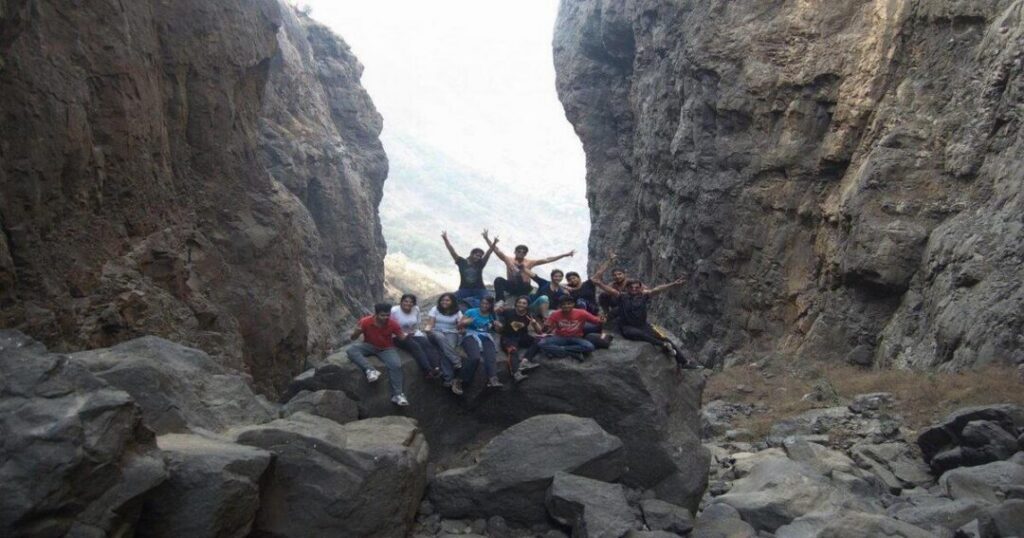
The route covers roughly 8-9 km through the canyon, involving boulder-hopping, several stream crossings (some via small boats arranged by local guides), and at least one narrow rock crevice squeeze before the rappelling sections. It’s rated medium difficulty but demands real physical endurance — one trekking-guideline source puts it at 3.7 out of 5 — and having an experienced trekker or local guide along is strongly advised given the technical sections and lack of mobile signal through much of the canyon.
Alang-Madan-Kulang (AMK) Range Combo
Serious trekkers often extend the trip into a 3-day combination: Sandhan Valley on day one, followed by the Alang-Madan-Kulang (AMK) range trek from the Ghatghar dam area on days two and three. The AMK leg covers roughly 18 km across three peaks, including overnight cave camping on Alang and a high point around 4,900 feet, and is rated hard difficulty — not recommended for beginners, unlike the more moderate Sandhan descent itself.
Firefly Season: A Different Kind of Sandhan Trek
Outside the main November-to-February window, a smaller but dedicated crowd treks to the Sandhan area in May and early June specifically for the firefly season, when synchronized fireflies light up the forest after dark — a completely different experience from the canyon-focused day trek, and one worth planning around separately if it’s the draw.
Sandhan Valley Trekking: Half Descend vs. Full Descend Itineraries
Once you’ve decided to go, sandhan valley trekking comes down to picking one of two route structures, which most local operators list explicitly when you book.
Half Descend (Samrad to Samrad)
The shorter option: trekkers descend partway into the canyon, do the main rappelling sections, and climb back out the way they came, returning to Samrad the same day. It’s the more common choice for day-trippers and first-timers, typically wrapped up in 3-5 hours including the rappelling.
Full Descend (Samrad to Dehne)
The complete traverse: trekkers go all the way through the canyon and exit at Dehne village on the far side, requiring a vehicle transfer back to Samrad or onward transport afterward. This version covers more ground and generally takes longer, and many operators pair it with an overnight camp at Samrad either before or after the crossing, making it a 2-day, 1-night itinerary rather than a single-day outing.
Which to Choose
First-timers and groups short on time generally do well with the Half Descend; the Full Descend is worth the extra logistics mainly for trekkers who want the complete canyon experience or are combining it with the AMK range trek afterward, since Dehne and Ghatghar are both reachable from the same general area.
Rappelling in Sandhan Valley
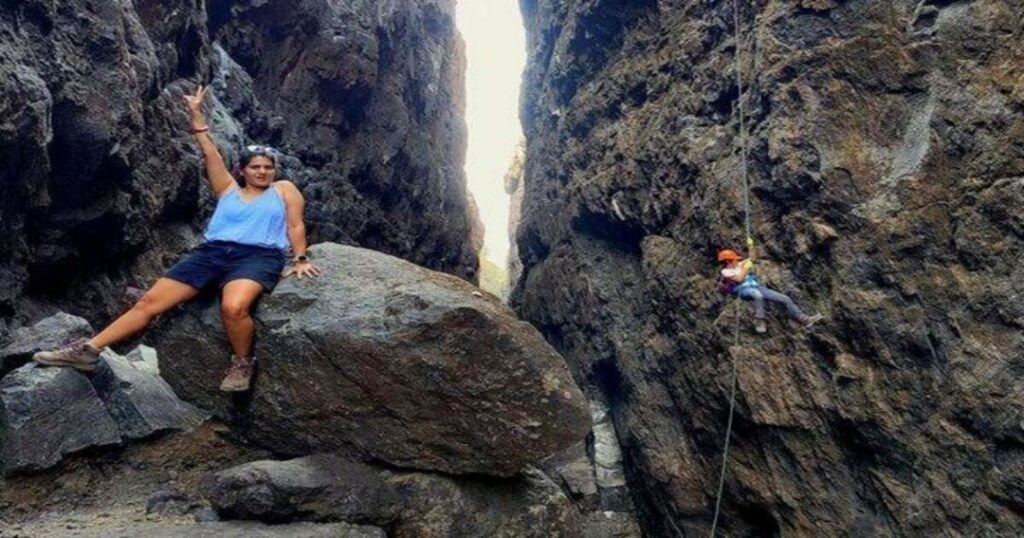
The sandhan valley rappelling sections (sometimes searched the other way round, as rappelling sandhan valley) are the single biggest reason this trek has built such a following. At least one of the canyon’s rock patches requires a rappel of around 45 feet, and depending on the route and water levels, trekkers may face more than one rope-assisted descent through the narrowest sections. Helmets and proper rappelling gear are mandatory, and every credible operator insists this is done only under trained, professional guidance rather than attempted independently — the rock faces are wet, narrow, and unforgiving of mistakes. Most local guides handle the rope work themselves, with trekkers wearing a harness and following direct instruction rather than setting up their own systems. Guide charges for the full experience, including rappelling assistance and stream crossings, commonly run around ₹600-800 per person, with a small additional fee (around ₹20) for boat-assisted crossings at deeper stream sections.
Also Read: Best Treks in Karnataka for Adventure & Mountain Views
Camping in Sandhan Valley, Including Hanging Tents
Because there’s no lodging at the valley itself, sandhan valley camping is effectively mandatory for anyone doing the Full Descend or combining the trek with AMK — trekkers bring or rent their own tents, sleeping bags, and mats, and pitch at Samrad before or after the canyon crossing. A dry-pit toilet tent is sometimes available if arranged with the operator in advance, but otherwise facilities are minimal, so packing in what you need is standard practice.
A more unusual option, hanging tent sandhan valley camping, has also become a signature (if niche) experience here: specialized tents suspended off a cliff face using climbing-grade anchors and ropes, letting campers sleep literally hanging above the canyon. It’s been offered by a handful of adventure operators since around 2018 and remains one of the few places in India to try it, though it’s a separate, often pricier booking from standard ground camping, generally requires advance reservation, and depends on which operator is currently running it in a given season.
Also Read: 10 Best Treks in Ladakh for Adventure Seekers
More Ways to Plan Your Trek to Sandhan Valley
For anyone still figuring out the logistics of a trek to sandhan valley, or just searching for a sandhan trek in general, here’s what else is worth knowing:
- Book through a trekking group: Given the technical sections and remote location, most trekkers — especially first-timers — join an organized group trek rather than arranging guides independently; this also typically bundles transport, camping gear, and rappelling equipment into one booking.
- Combine with Bhandardara: The Bhandardara dam and hill station area sits close enough to Samrad that many itineraries pair a Sandhan Valley day with a night near Bhandardara’s lake and viewpoints.
- Combine with Harishchandragad: For a longer multi-trek trip, some operators combine Sandhan Valley with the Harishchandragad fort trek, another major Sahyadri destination within reasonable driving distance.
- Carry cash: Local guide fees, boat crossings, and village-based camping arrangements are typically cash transactions, since there’s no formal ticketing infrastructure at the valley itself.
What is the Best Time to Visit Sandhan Valley?
November through February is the standard window, with cool, dry conditions (roughly 15-25°C) and safe water levels for the stream crossings and rappelling sections. The valley is closed during the monsoon, broadly June through September, when flash-flood risk in the narrow canyon makes it genuinely dangerous — this closure is taken seriously by local operators and should never be worked around. May and early June offer the separate firefly-season experience mentioned above, though daytime heat is more intense that time of year.
How to Reach Sandhan Valley?
From Mumbai, the typical route runs via Kasara and Igatpuri, then by road through Rajur to Samrad village — roughly 180-190 km and about 4-5 hours by car. From Pune, it’s about 200 km, usually routed via Sangamner and Akole. There’s no direct train to Samrad itself; most trekkers take a train to Kasara or Igatpuri and arrange onward shared or private transport from there, which is why the vast majority of trekkers book through an organized group that handles this last-mile transport rather than self-driving the final stretch.
Also Read: Treks in Meghalaya: Best Trails, Routes, Difficulty & Best Time
Conclusion: Plan Around the Rappelling, Not Just the Canyon
What separates the Sandhan valley trek from a typical Sahyadri trek is that the canyon itself is only half the draw — the rappelling, the stream crossings, and (for those who book it) a tent hanging off a cliff face are what people actually remember. Pick your route structure, book an experienced operator, and go between November and February for the safest version of this adventure.
Planning an adventure trek in Maharashtra? Let the Explurger app help you find a reliable operator and the right season for Sandhan Valley.
FAQs About Sandhan Valley Trek
2. Is Sandhan Valley trek dangerous?
It involves genuine technical sections — rappelling up to around 45 feet and stream crossings — so it's rated medium difficulty with a high endurance requirement, and is considered unsafe during the monsoon due to flash-flood risk; doing it with an experienced guide is strongly recommended.
3. What is the best time to visit Sandhan Valley?
November through February offers the coolest, driest, and safest conditions; the valley closes during the monsoon (roughly June-September) due to flash-flood danger, and May-June draws a separate crowd for firefly season.
4. Is Sandhan Valley really Asia's second-largest canyon?
This claim appears widely across trekking blogs and tour listings, but it isn't backed by any authoritative geographic survey or ranking that could be independently verified — it's best treated as popular trekking lore rather than a confirmed fact.
5. How difficult is the rappelling at Sandhan Valley?
At least one rock patch requires a rappel of around 45 feet, with possibly more than one rope-assisted section depending on route and water levels; it should only be attempted under trained guidance, with helmets and proper gear.
6. Can I camp at Sandhan Valley?
Yes — there's no lodging at the valley itself, so camping at Samrad village is standard, and a niche hanging-tent (cliff-camping) option is also offered by a handful of adventure operators, usually as a separate, advance-booked experience.