
1,035 Total Views
Among the best places to visit in Northeast India, it’s the villages—not the cities—that tend to stay with travelers longest. This is a region where entire communities are still addressed by whistled tunes instead of names, where terraced rice fields double as a two-century-old conservation project, and where some homes are still built to float.
This guide covers one standout village (or village cluster) from each of the region’s eight states, plus the permit paperwork you’ll actually need to get there. Save the ones on your list to your Explurger Bucket List before you start planning routes.
Exploring the Best Places to Visit in Northeast India
Mawlynnong and Kongthong: Meghalaya’s Best Places to See in Northeast India
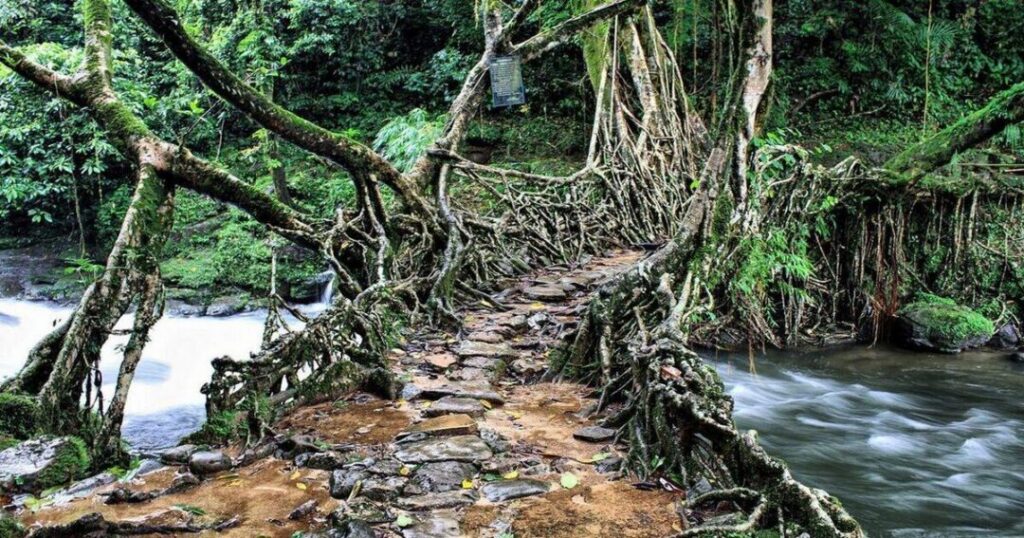
Among the best places to see in Northeast India, Meghalaya’s East Khasi Hills hold two villages that couldn’t be more different from each other. Mawlynnong has been called “the cleanest village in Asia” for years, known for its spotless bamboo-lined lanes, community-enforced no-litter rules, and a living root bridge woven from rubber tree roots nearby. A short drive away, Kongthong takes things further into the genuinely unusual: residents are given a unique melodic whistle-tune at birth instead of relying solely on spoken names, a practice locals call jingrwai lawbei, used to call people across the surrounding forest and hills where shouting a name wouldn’t carry as well.
Also read: PLACES TO VISIT IN MEGHALAYA: A COMPLETE GUIDE
Khonoma: One of the Most Remarkable Places to See in Northeast India
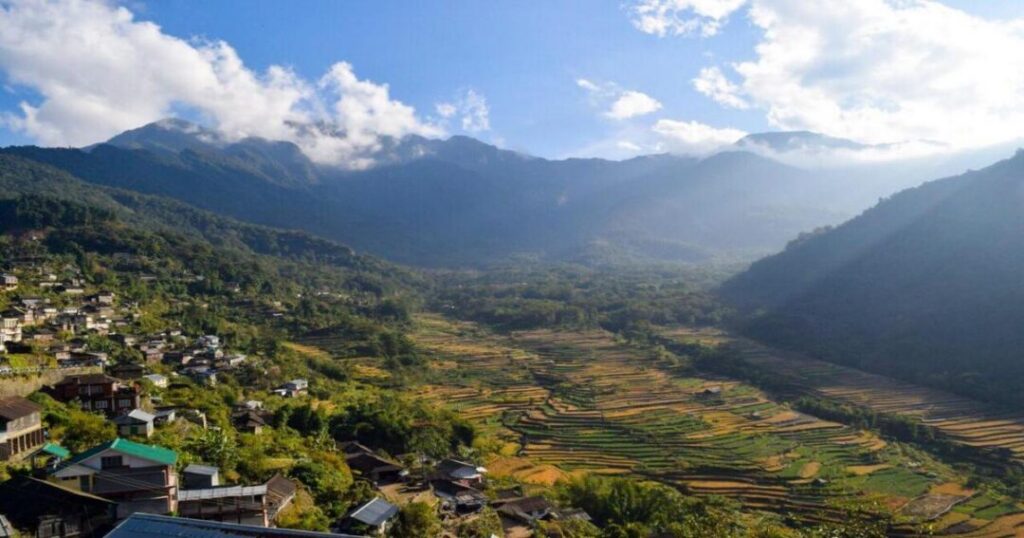
Khonoma, about 20 km from Kohima, ranks among the more meaningful places to see in Northeast India precisely because its story isn’t really about scenery first—it’s about a community-led conservation turnaround. The Angami Naga village banned hunting and logging across its surrounding forest more than two decades ago, turning what had been a hunting ground into the Khonoma Nature Conservation and Tsungrem Reserve, now recognized as India’s first “green village.” The terraced paddy fields cascading down the hillsides are the visible result of centuries of Angami farming knowledge, and the village itself still carries the memory of resisting British colonial forces in the 19th century.
Ziro Valley: Among the Top Northeast India Tourist Attractions
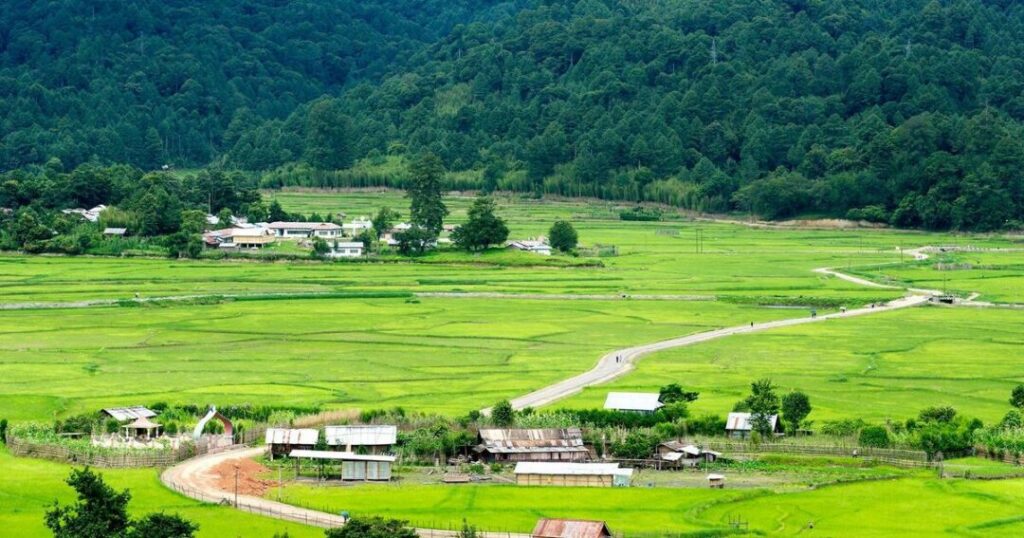
Ziro Valley, home to the Apatani tribe, is consistently ranked among the top North East India tourist attractions, and it earned that reputation the hard way — through one of the more remarkable indigenous agricultural systems anywhere in India. The Apatani practice a combined wet-rice and fish cultivation system that produces food without machinery or chemical inputs, a practice distinctive enough that the “Apatani Cultural Landscape” has been on UNESCO’s tentative World Heritage list since 2014.
The valley is also known, more somberly, for the older generation of Apatani women who still carry facial tattoos and large wooden nose plugs — a practice banned in the 1970s and, according to local accounts, originally adopted to make women less conventionally attractive to reduce the risk of being kidnapped by rival tribes. Only the last generation of older women still carries the marks, which means this is a living tradition that’s genuinely disappearing rather than a permanent cultural fixture.
Also read: ZIRO VALLEY- THE ULTIMATE DESTINATION FOR CULTURAL & SLOW TRAVELERS
Majuli: A Top Northeast India Tourist Destination
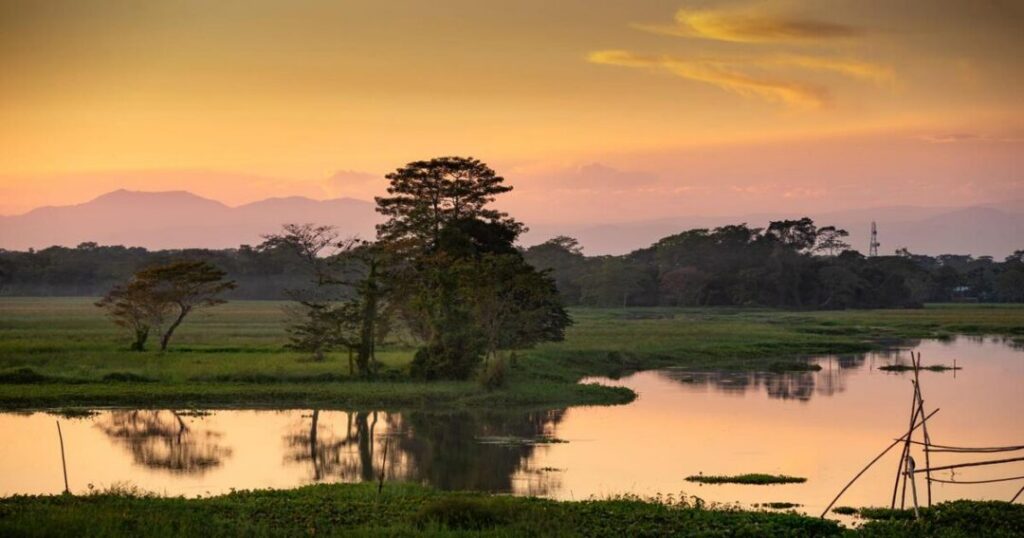
Majuli, sitting in the middle of the Brahmaputra in Assam, is often billed as one of the standout Northeast India tourist destinations for a specific reason: it’s frequently cited, including by Guinness World Records, as the world’s largest river island, and in 2016 it became the first island in India to be designated its own administrative district. It’s worth being honest about the fuller picture, though—Majuli has been eroding into the Brahmaputra for decades, having shrunk from roughly 1,250 sq km at the turn of the 20th century to well under half that area today. [STAT: Majuli has shrunk from approximately 1,250 sq km to less than 515 sq km over the past century due to ongoing riverbank erosion.] Some researchers estimate the island could be submerged within 15-20 years if current erosion rates continue, which makes visiting its Mishing tribal villages and centuries-old Vaishnavite satras (monasteries) feel less like a permanent bucket-list item and more like a genuinely time-sensitive one.
Loktak Lake’s Floating Villages: A Unique Northeast India Tourist Spot
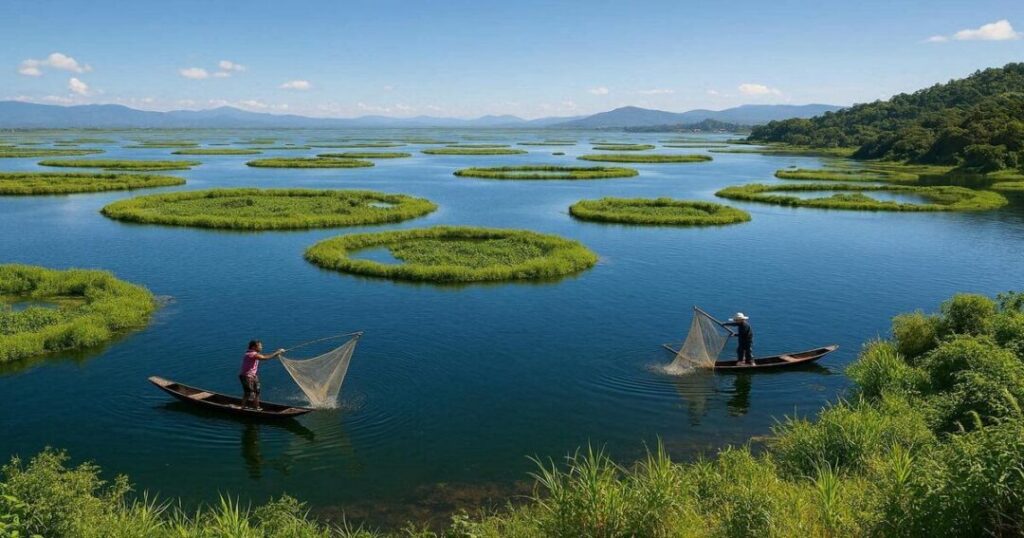
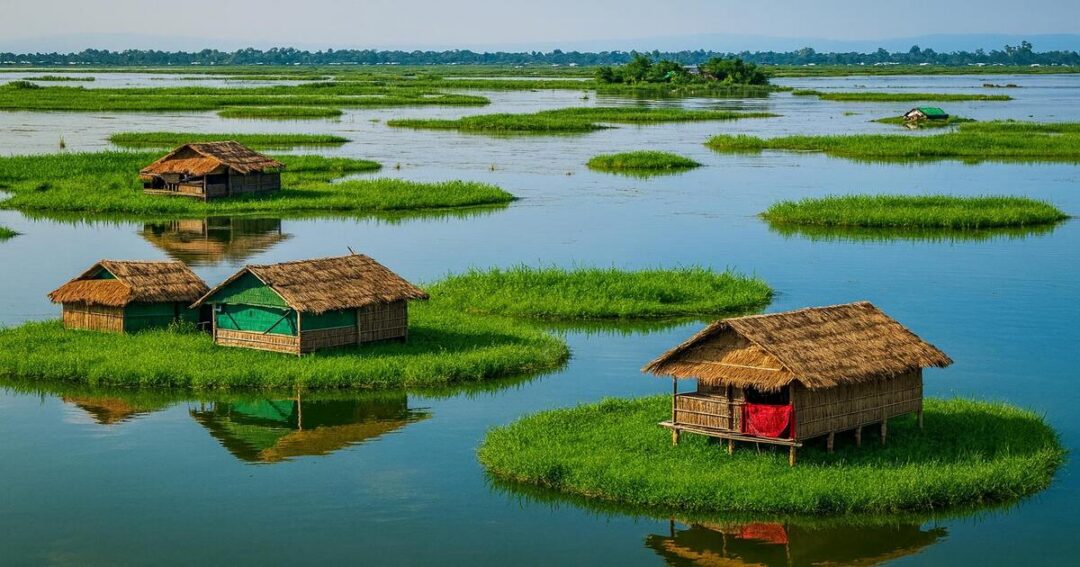
Loktak Lake, the largest freshwater lake in Northeast India, is home to one of the more genuinely unusual North East India tourist spots on this list: floating villages built on phumdis, thick mats of compressed vegetation that grow naturally on the lake’s surface. Champu Khangpok is the only officially recognized floating village, where fishing families live in huts called khangpoks built directly on phumdis strong enough to support a household of five or six.
It’s important to be direct about Manipur’s current situation before recommending a visit: the state has experienced significant ethnic unrest since 2023, and conditions have shifted over time depending on the district and period. Loktak Lake, in the Imphal Valley, is a genuinely beautiful and culturally unique destination, but anyone planning a trip should check current government travel advisories and local conditions closer to their travel dates rather than relying on this piece (or any single source) for up-to-the-minute safety information.
Reiek Heritage Village: An Underrated Place in Northeast India
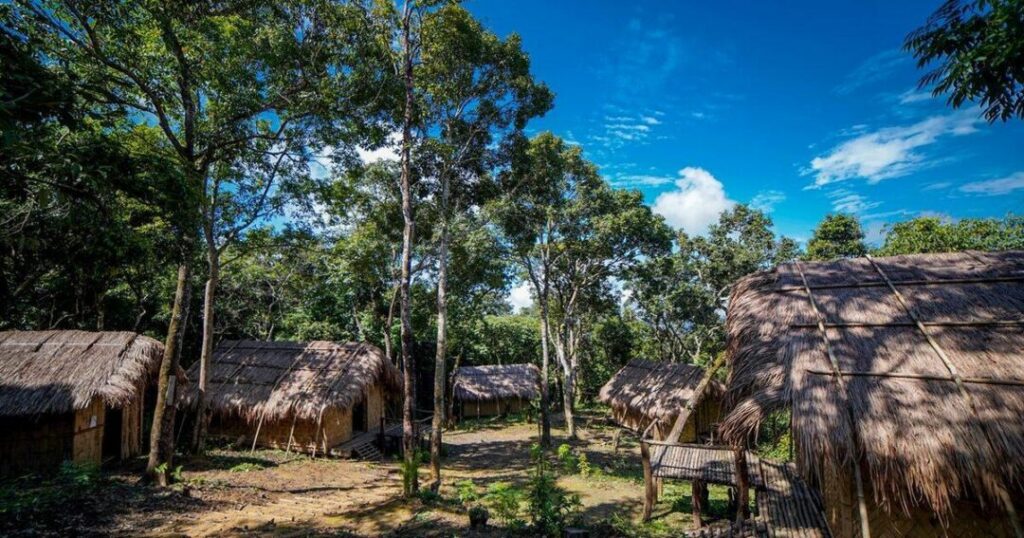
Among the lesser-known places in Northeast India, Reiek Heritage Village, about an hour from Aizawl in Mizoram, deserves more attention than it gets. Set at 1,465m on Reiek mountain, it’s a living-history model village displaying traditional huts from different Mizo sub-tribes, built from bamboo and thatch and furnished with genuine period artifacts. Its centerpiece is the Zawlbuk, a traditional bachelor’s dormitory that once functioned as the community’s center for education, defense training, and social life —a Mizo institution that shaped how young men were raised long before formal schools existed in the region.
Jampui Hills: A Village Escape Among the Places to Travel in Northeast India
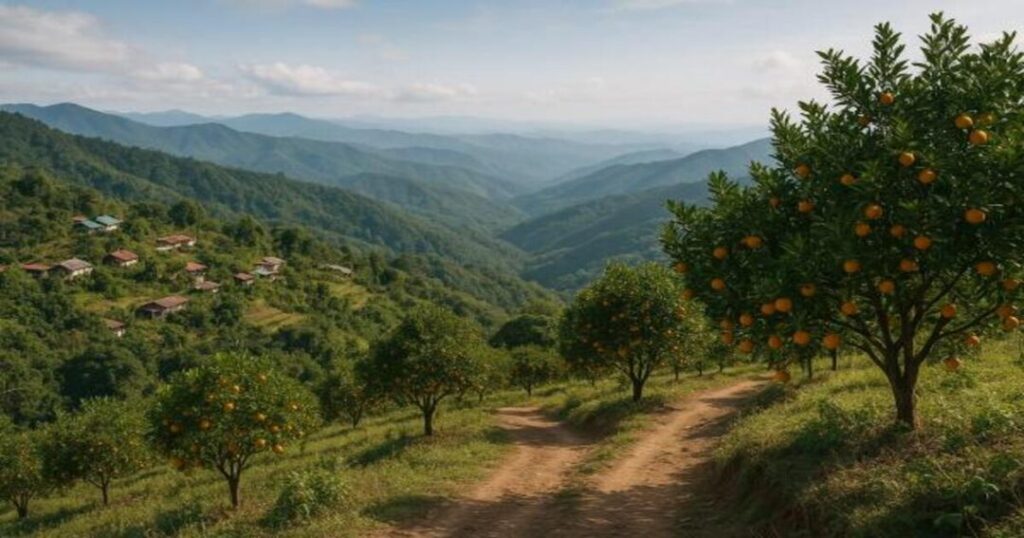
Jampui Hills, in North Tripura, is one of the more overlooked places to travel in North East India — a range of eleven villages inhabited primarily by Mizo (Lushai) and Reang communities, spread across hills known for cool weather and, somewhat unexpectedly, thriving orange orchards. The region holds an annual Orange and Tourism Festival each November, combining the harvest with traditional dance, music, and craft displays from the resident tribes — a genuinely local celebration rather than one built primarily for visitors.
Lachen and Lachung: Sikkim’s Postcard Villages to Visit in Northeast India
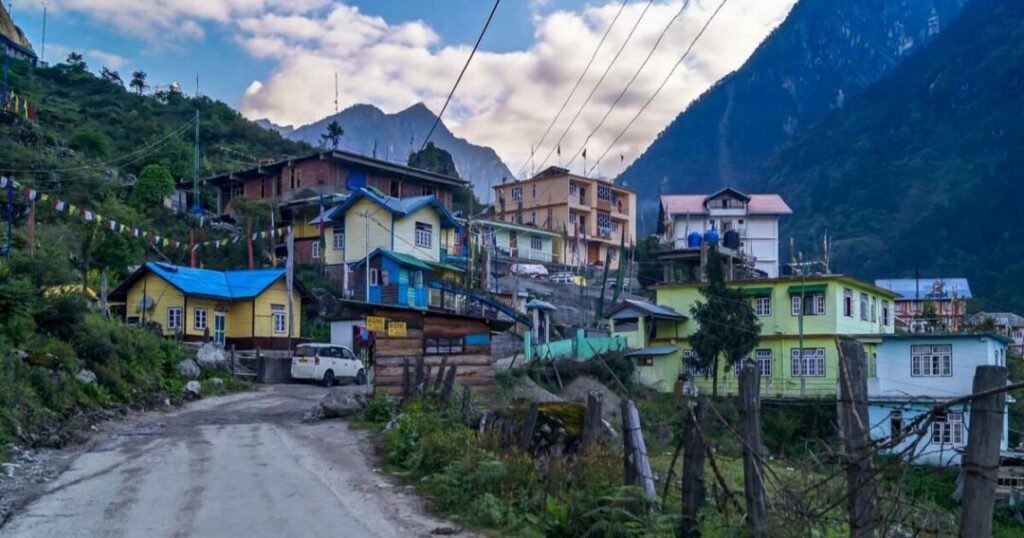
Rounding out the places to visit Northeast India list are Lachen and Lachung, two high-altitude villages in North Sikkim sitting at roughly 2,900m near the Indo-Tibetan border. Traditional wooden homes, Buddhist prayer flags, and views of snow-capped peaks define both villages, and Lachung’s monastery, built in 1880, is one of the older Buddhist religious sites in the state. Both villages serve as the practical gateway to Yumthang Valley and its rhododendron sanctuary, and to Gurudongmar Lake further north — making them as useful a base as they are a destination in their own right.
Best Places to Visit in Northeast India: Inner Line Permits Explained
This is worth real attention rather than a passing mention, because it genuinely affects whether you can reach several of the villages above. Arunachal Pradesh, Nagaland, Mizoram, and Manipur all require an Inner Line Permit (ILP) for Indian citizens who aren’t residents of that state — a rule extended to Manipur specifically in December 2019, making it the fourth state under this system. [STAT: Manipur became the fourth Indian state to require an Inner Line Permit for non-resident Indian citizens, following a presidential order in December 2019.] The permit is free for short-term visitors, valid for 15 days (extendable), and can usually be applied for online through each state’s dedicated ILP portal or in person at a Deputy Commissioner’s office.
Foreign nationals face a different system: Protected Area Permits (PAPs) are required specifically for Arunachal Pradesh and Sikkim, while foreigners visiting Manipur, Mizoram, or Nagaland are generally required to complete a simple police registration within 24 hours of arrival, often handled by a guesthouse or local guide on their behalf. Citizens of a small number of countries, including Pakistan, China, and Afghanistan, must obtain additional approval from the Ministry of Home Affairs regardless of destination. None of this is especially difficult to navigate, but it’s genuinely worth sorting out before you book flights rather than after, since processing — while usually fast — isn’t always instant.
Conclusion: Best Places to Visit in Northeast India
The best places to visit in Northeast India aren’t its cities — they’re villages like Khonoma and Kongthong, where centuries-old ways of living are still very much intact rather than staged for visitors. Add the ones that speak to you to your Explurger Bucket List, and let NIVU AI inside the app help you sequence a route across states and permit requirements without the logistics eating into your trip. Let Explurger App help you navigate Northeast India’s villages, permits, and all.
FAQs About Best Places to Visit in Northeast India
2. Do I need a permit to visit Northeast India?
Indian citizens need an Inner Line Permit for Arunachal Pradesh, Nagaland, Mizoram, and Manipur if they aren't residents of that state. Foreign nationals need a Protected Area Permit for Arunachal Pradesh and Sikkim, and generally need to complete police registration for Manipur, Mizoram, and Nagaland.
3. Is it safe to visit Loktak Lake in Manipur right now?
Loktak Lake is a genuinely beautiful destination, but Manipur has experienced significant ethnic unrest since 2023 with conditions varying by district and period. Check current government travel advisories and local conditions closer to your travel dates before planning a visit.
4. What is Mawlynnong known for?
Mawlynnong in Meghalaya is widely known as "the cleanest village in Asia," recognized for its community-enforced cleanliness rules, bamboo-lined lanes, and a nearby living root bridge woven from rubber tree roots.
5. Why is Kongthong called the "Whistling Village"?
Kongthong's residents are given a unique melodic whistle-tune at birth, known as jingrwai lawbei, used to call and identify people across the surrounding forest instead of relying only on spoken names.
6. Is Majuli really the world's largest river island?
Guinness World Records has recognized it as such, though the island has shrunk from roughly 1,250 sq km a century ago to under 515 sq km today due to ongoing erosion, with some researchers estimating it could be submerged within 15-20 years.
7. What makes Ziro Valley's Apatani culture unique?
The Apatani practice a combined wet-rice and fish farming system without machinery or chemical inputs, distinctive enough to be on UNESCO's tentative World Heritage list since 2014. Older Apatani women also carry facial tattoos and nose plugs from a now-banned tradition.
8. How long does it take to get an Inner Line Permit?
For Indian citizens, ILPs are generally free and processed quickly through each state's online portal, often within a day, though it's best to apply a few days ahead of travel rather than at the last minute.