
246 Total Views
Say “Amaravati” in Andhra Pradesh and you could mean two very different places. One is a quiet village on the Krishna River where a great Buddhist stupa once stood and where a 125-foot Buddha now gazes across the water. The other is the state’s new capital city, which has been planned, paused, revived and — since April 2026 — given statutory status as the sole capital. The best things to do in Amaravati mostly belong to the first: the ruined Mahachaitya, the site museum, the ancient Amareswara temple and the Dhyana Buddha statue. This guide explains what Amaravati is, what it is known for, what to see, how to plan a day with friends, and how to reach it from Vijayawada and Guntur.
Best Things to Do in Amaravati
These five stops cover the heart of the village and the nearby area, and they can be combined into one long day.
1. Amaravati Stupa (Mahachaitya)
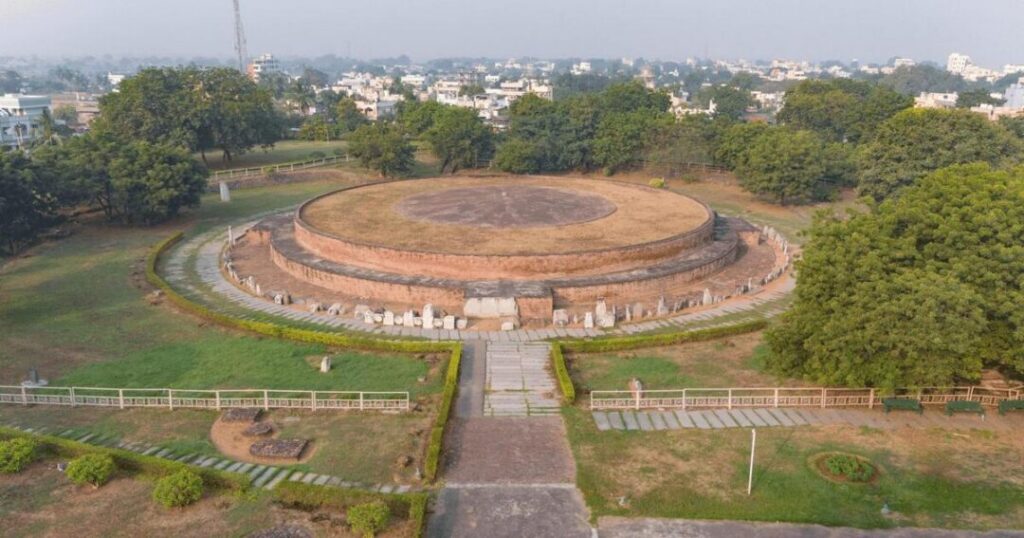
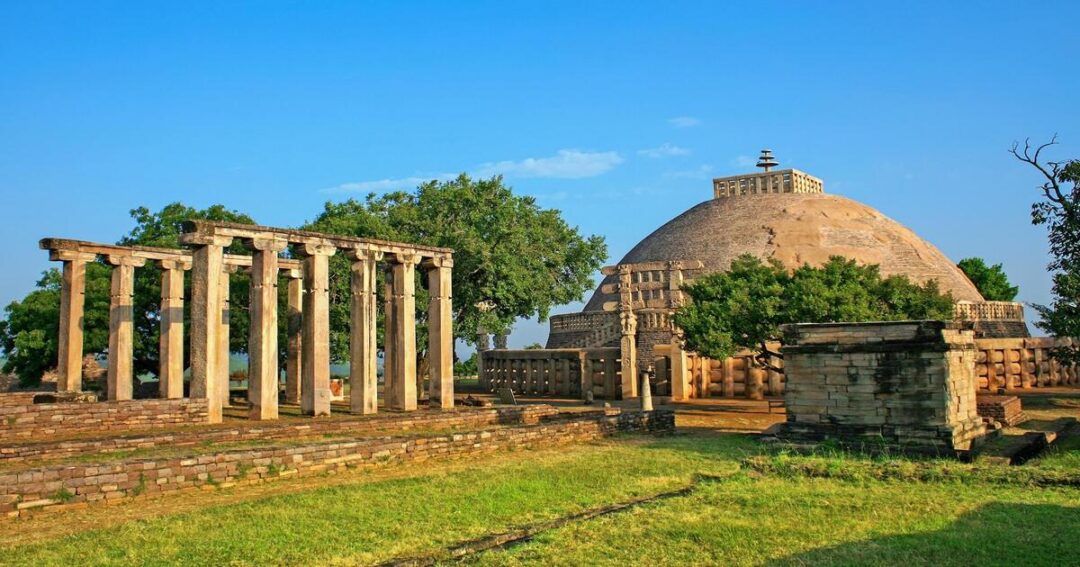
The stupa was probably built in phases between the 3rd century BCE and about 250 CE, with its earliest architectural remains from the 2nd century BCE. Ancient inscriptions called it the mahācetiya, or great sanctuary. Today only the base survives: Colin Mackenzie alerted Western observers to the ruins in 1797, and by his return in 1816 much of the structure had been destroyed by local excavation, with stones reused for houses. Walk the circular foundation and imagine the railings and carved panels that once surrounded it.
2. Amareswara Temple
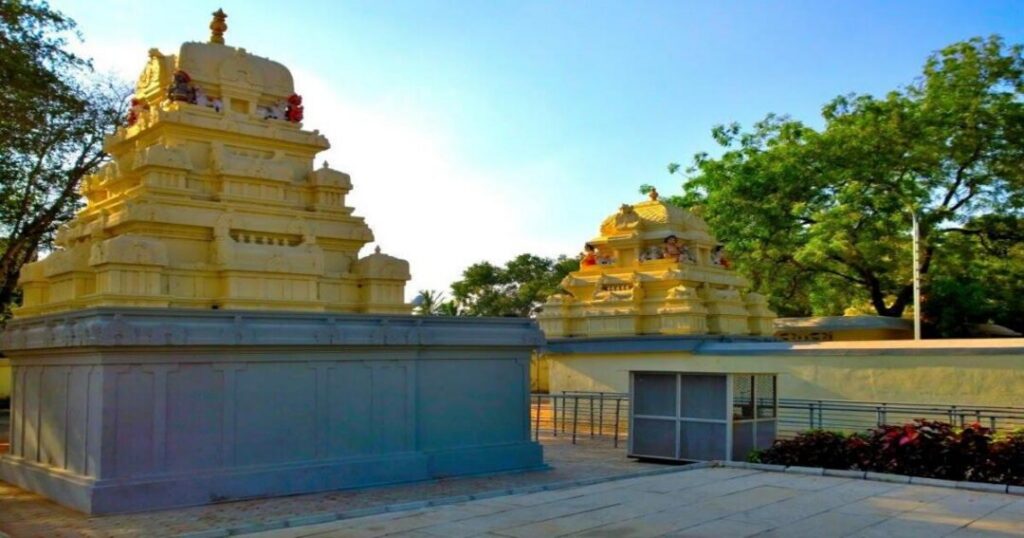
On the Krishna’s bank, the Amareswara Temple is a Shiva temple and one of the Pancharama Kshetras. It is believed to have been built around the 5th century and houses a lingam described as 15 feet tall and made of marble. It was renovated by Vasireddy Venkatadri Nayudu, the zamindar associated with the modern town. The temple is about 1.5 km from the bus station and is easily combined with the stupa.
3. Dhyana Buddha Statue
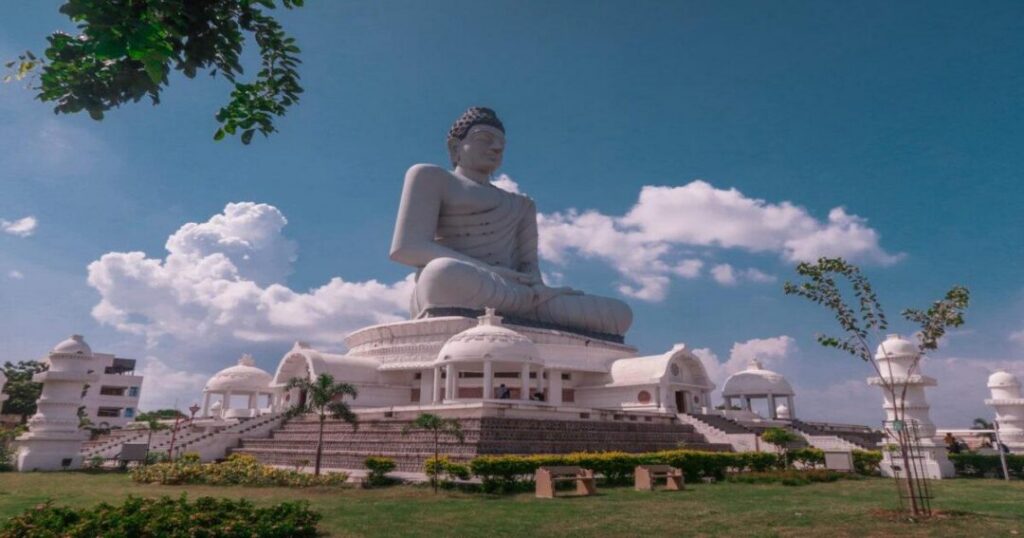
About 2 km from the bus station, this 125-foot concrete and stone statue sits on a 4.5-acre site facing the Krishna River. It was commissioned in 2003, completed in 2015, and is divided into zones representing the four noble truths. Because it faces the river, it works as a natural viewpoint.
4. Mangalagiri’s Lakshmi Narasimha Temple
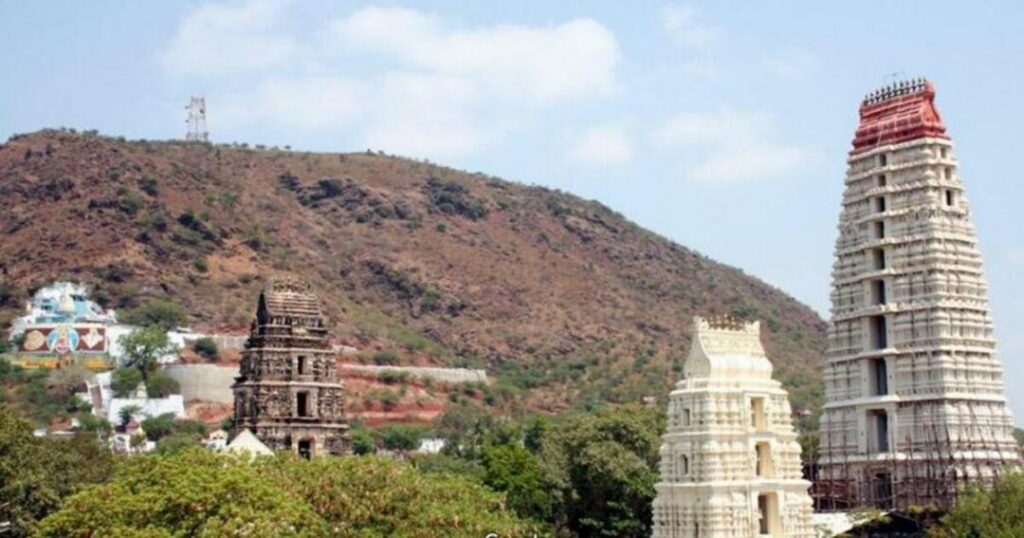
In the Vijayawada–Guntur belt near the capital region, the Lakshmi Narasimha Temple at Mangalagiri has an 11-storey, 153-foot (47 m) gopuram built by the Rajah of Amaravathi, Vasireddy Venkatadri Nayudu. It is one of three Narasimha temples linked to the hill there: this one at the base, the Panakala Narasimha temple on the hill, and the Gandalaya Narasimha at the top.
5. Undavalli Caves
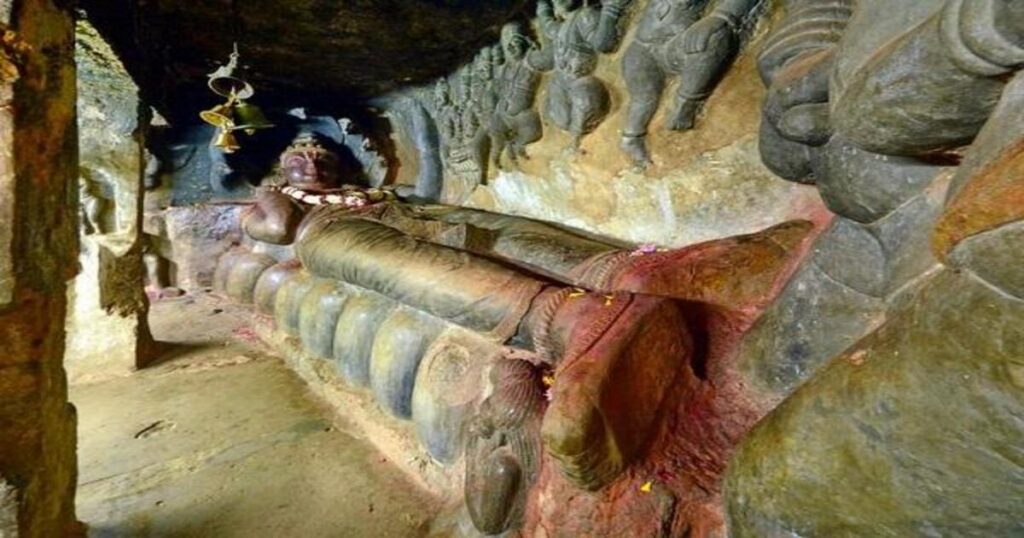
Southwest of Vijayawada, the Undavalli Caves are a rock-cut sandstone complex dated to the 4th–5th century CE, in the Vishnukundina era. The complex has multiple storeys and a reclining figure about 5 metres long carved from a single block on the second floor; one source notes scholars debate whether it depicts Vishnu or a Jain tirthankara. It is a centrally protected monument and can be reached by road, with APSRTC buses from Vijayawada, Guntur and Amaravati.
What Is Amaravati? Two Places, One Name
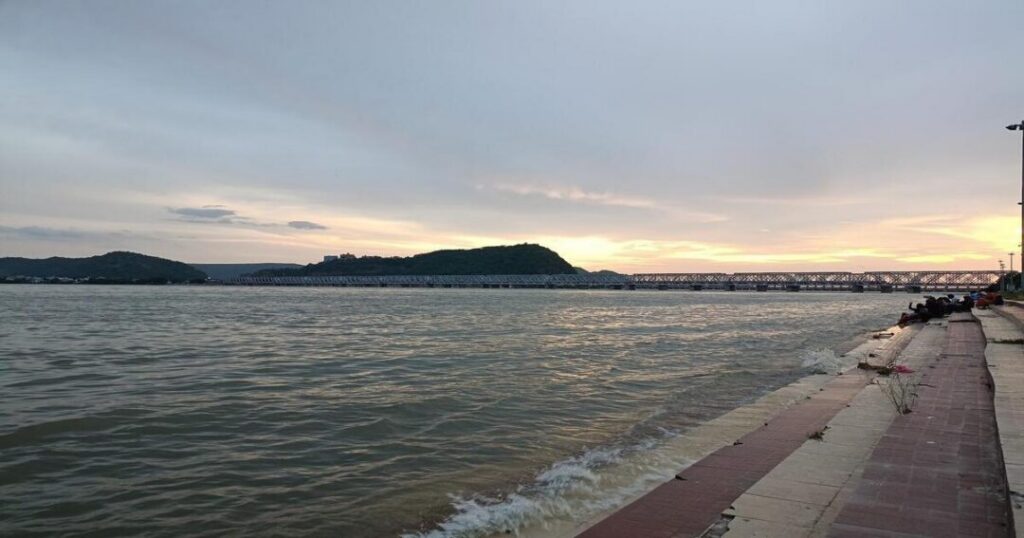
If you are asking what is amaravati, the short answer is: an ancient Buddhist and Shaiva centre, and a modern capital. The village of Amaravathi, in Palnadu district on the Krishna’s bank, is described as having at least 2,300 years of continuous history. It lies near Dhanyakataka (modern Dharanikota), a Satavahana capital, and became the dynasty’s eastern capital after the Satavahanas rose around 225 BCE.
The New Capital City
The planned capital shares the name and is located about 15 km southwest of Vijayawada and roughly 25 to 33 km from Guntur, spanning about 217 square kilometres across parts of the Thullur, Mangalagiri and Tadepalli mandals. Amaravati was selected as the capital after the 2014 bifurcation of Andhra Pradesh, foundation ceremonies were held in 2015, and a land-pooling scheme was used to acquire farmland. Work slowed between 2019 and 2024, when a three-capital approach was proposed and later withdrawn, and the High Court ruled in 2022 that Amaravati must remain the capital. Development restarted in June 2024.
On April 2, 2026, Parliament passed the Andhra Pradesh Reorganisation (Amendment) Bill, 2026, giving Amaravati statutory status as the state’s sole capital, and a later report says the President approved the bill. Phase I infrastructure is expected to be complete in late 2028, so visitors today should expect a construction-era capital, not a finished city; the heritage sites remain the main reason to come.
What Is Famous in Amaravati, Andhra Pradesh?
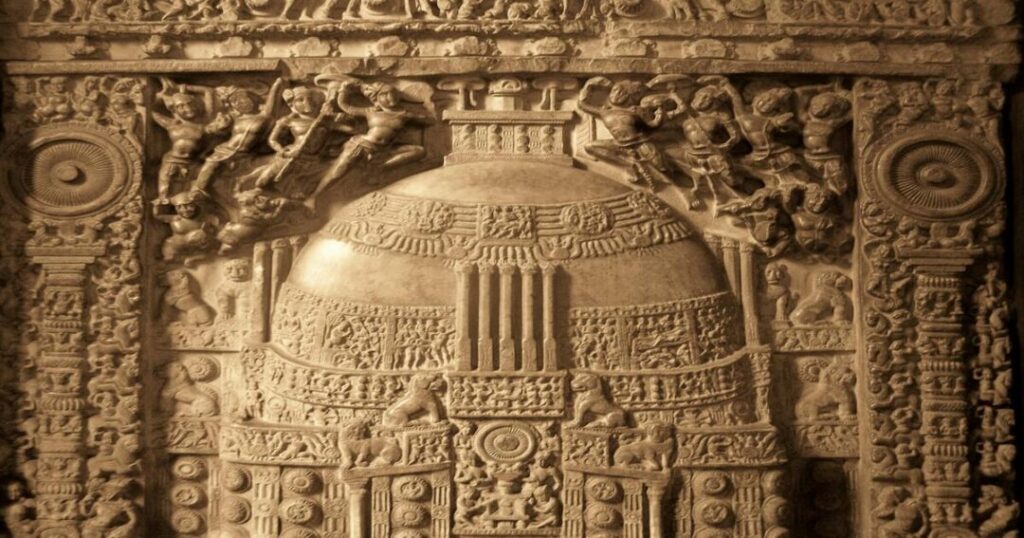
Travellers who ask what is famous in Amaravati Andhra Pradesh usually get four answers:
- The Amaravati Stupa (Mahachaitya): One of the largest stupas in India and the namesake of the Amaravati School of Art. It is a Monument of National Importance protected by the Archaeological Survey of India.
- The Amaravati sculptures: Carved reliefs from the stupa, known in collections as the “Amaravati Marbles,” are now spread across museums worldwide.
- Amareswara Temple: A Shiva temple and one of the Pancharama Kshetras, from which the village takes its name.
- The Dhyana Buddha statue: A 125-foot Buddha beside the Krishna River, commissioned in 2003 and completed in 2015.
Local guides also highlight its position as Andhra Pradesh’s capital city. One tourism page repeats a claim that Amaravati is Asia’s largest chilli market, but the same page also credits Guntur’s Mirchi Yard with that title, so the claim is left out here.
Also Read: Festivals in Andhra Pradesh: The Complete Guide to Telugu Celebrations & Culture
Amaravati Museum: What to Expect?
The Amaravati Museum is the archaeological museum next to the stupa. It has three galleries of artefacts spanning roughly the 3rd century BCE to the 12th century CE, and one source puts it about 500 metres from the stupa itself. The village also has the Amaravathi Heritage Centre and Museum, formerly the Kalachakra Museum.
Where the Original Sculptures Are
Set realistic expectations: many of the most famous sculptures are elsewhere. The largest Indian collection of Amaravati sculptures is at the Government Museum in Chennai, with a major collection at the British Museum in London, and some pieces in the Amaravati museum are casts. Many sculptures are considerably damaged, with marbles kept outside air-conditioned storage reportedly showing damage from atmosphere and salt.
Timings
One reference lists the museum as open from 10:00 am to 5:00 pm and closed on Fridays. Sources disagree on whether it is run by the Archaeological Survey of India or the state tourism board, and no ticket price was found, so confirm timings and fees locally before travelling.
Also Read: Lepakshi Temple: The Complete Guide to Andhra Pradesh’s Iconic Heritage Site
Things to Do in Amaravati Andhra Pradesh: A One-Day Itinerary
A common search is for things to do in Amaravati Andhra Pradesh, often to separate this city from Amravati in Maharashtra, a different city. Here is a practical way to cover the Andhra Pradesh Amaravati in a day, starting from Vijayawada or Guntur:
Morning: Stupa, Museum and Temple
Arrive early to beat the heat. Start at the Amaravati Stupa, cross the road to the museum, then walk or ride to the Amareswara Temple. Together these take about half a day.
Afternoon: Dhyana Buddha
Visit the Dhyana Buddha statue as the light softens, then head back toward the Vijayawada side for lunch, or the Mangalagiri temple on the way.
Evening: River and City
End with the Krishna River in Vijayawada. If you want to extend the trip, Undavalli’s caves or Kondaveedu Fort (58 km from Amaravati) can fill a second day.
Also Read: 10 Famous Andhra Pradesh Temples Beyond Tirupati
Things to Do in Amaravati With Friends
Anyone planning things to do in Amaravati with friends has several options that work well for a group:
- Split a taxi for the day: Local buses are cheap but slow, while taxis are faster for sightseeing and make it easy to fit in the stupa, temple, Buddha statue and Undavalli.
- Boat on the Krishna: The Andhra Pradesh Tourism Development Corporation operates boating in Vijayawada between Punnami Ghat and Bhavani Island. In July 2026 the state gave conditional permission for night-time cruising until 10 pm, though no night boating is allowed during the monsoon, floods, flood alerts or bad weather.
- Spend an afternoon at Bhavani Island: A roughly 133-acre river island near Vijayawada with boating, water-sports and picnic options, listed as open 9:00 am to 6:00 pm; confirm the current schedule.
- Do a temple-and-fort day: Combine Mangalagiri’s gopuram, Undavalli, and Kondaveedu Fort if your group likes history and photography.
- Watch the Krishna at sunset: The Dhyana Buddha site faces the river and works well for groups with cameras.
What is the Best Time to Visit Amaravati?
October to March is the most comfortable window, and one guide gives November to March. Daytime highs in December and January are around 32°C, while March to June is very hot, with temperatures peaking around 45°C in May. Heavy monsoon rain can disrupt plans, and river activities such as night boating are restricted during the monsoon.
How to Reach Amaravati?
The heritage village of Amaravathi has no rail connection and is reachable only by road. The nearest airport is Vijayawada’s Gannavaram, roughly 59 km away, and the nearest major station is Vijayawada Junction, about 32 km; Guntur is roughly 30 km away. APSRTC buses run to Amaravathi from Guntur’s NTR bus station, Vijayawada’s Pandit Nehru bus station, and Tenali, and taxis are available. The new capital city lies about 35 km east of the village, about 15 km southwest of Vijayawada.
Also Read: Places to Visit in Andhra Pradesh: The Ultimate 2026 Travel Guide
Conclusion: Come for the Stupa, Stay for the River
The best things to do in Amaravati are the ones that connect its 2,000-year-old Buddhist past with the river that has always defined it: the stupa and museum, Amareswara Temple, the Dhyana Buddha, and an evening on the Krishna. Visit between October and March, take a taxi if you are in a group, and treat the new capital as a work in progress rather than the main attraction.
Planning a heritage trip to Andhra Pradesh? Use the Explurger app to plan your Amaravati day and find travel companions heading to Vijayawada and Guntur.
FAQs About things to do in Amaravati
2. Is Amaravati the capital of Andhra Pradesh?
Yes. On April 2, 2026, Parliament passed a bill giving Amaravati statutory status as Andhra Pradesh's sole capital. The city is still under construction, with Phase I infrastructure expected in late 2028.
3. What can I see at the Amaravati museum?
The archaeological museum next to the stupa has three galleries of artefacts from the 3rd century BCE to the 12th century CE. Many of the most famous Amaravati sculptures are in Chennai and the British Museum, and some pieces on display are casts.
4. How far is Amaravati from Vijayawada?
The heritage village is roughly 31-38 km from Vijayawada depending on the source, while the new capital city is about 15 km southwest of Vijayawada.
5. Is Amaravati in Andhra Pradesh the same as Amravati in Maharashtra?
No. Amravati in Maharashtra is a different city. This guide covers Amaravati on the Krishna River in Andhra Pradesh.
6. What is the best time to visit Amaravati?
October to March, when the weather is mild. Summers from March to June are very hot, and monsoon rain can disrupt plans.