
907 Total Views
Any Andhra Pradesh temple list has to start by acknowledging the obvious: Tirumala Venkateswara Temple at Tirupati is the state’s most visited and most famous shrine, and nothing on this list competes with it for sheer scale. But Andhra Pradesh’s temple heritage runs far deeper than that one hill — the state holds a Jyotirlinga that doubles as a Shakti Peetha, a Shiva idol worshipped in human form rather than as a lingam, and a Ganesha idol locals say has been growing for over a century.
This list covers ten of those temples, organized district by district, with the mythology and history behind each one given real depth rather than a passing mention. Save the ones on your route to your Explurger Bucket List as you plan.
List of Famous Temples in Andhra Pradesh (District-Wise)
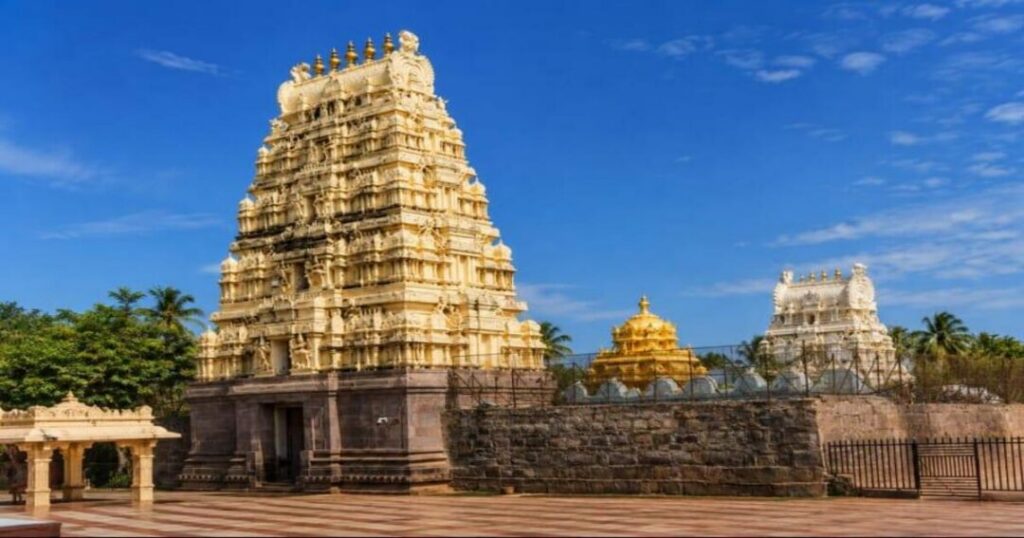
Because Andhra Pradesh’s major temples are spread across the state rather than clustered in one region, this famous temples in Andhra Pradesh district wise breakdown groups each entry by its district so you can plan a route rather than jumping around the map. The ten temples below span Nandyal, Visakhapatnam, NTR (Vijayawada), Konaseema, Tirupati, Guntur, and Chittoor districts — several of them close enough together to combine into a single multi-day pilgrimage circuit.
1. Srisailam (Nandyal District): The Jyotirlinga That’s Also a Shakti Peetha
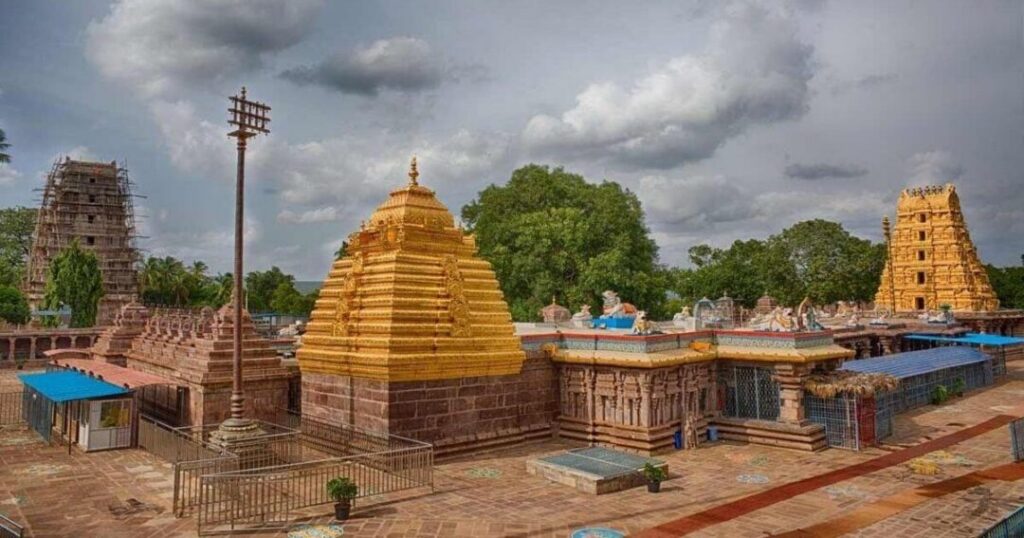
Srisailam holds a genuinely rare distinction in Hindu pilgrimage geography: it’s one of the twelve Jyotirlingas, representing Shiva as Mallikarjuna Swamy, and simultaneously one of the eighteen Shakti Peethas, home to Goddess Bhramaramba Devi — meaning both Shiva and Shakti are worshipped as self-manifested (swayambhu) deities under the same roof. According to legend, Bhramaramba took the form of a bee (bhramara) to destroy the demon Arunasura, which is how she earned her name. The pairing is considered symbolically significant precisely because it’s rare — most major Shiva and Shakti sites exist independently of each other, while Srisailam presents them as inseparable, equal halves of the same divine whole.
2. Simhachalam (Visakhapatnam District): A Deity Form Found Nowhere Else
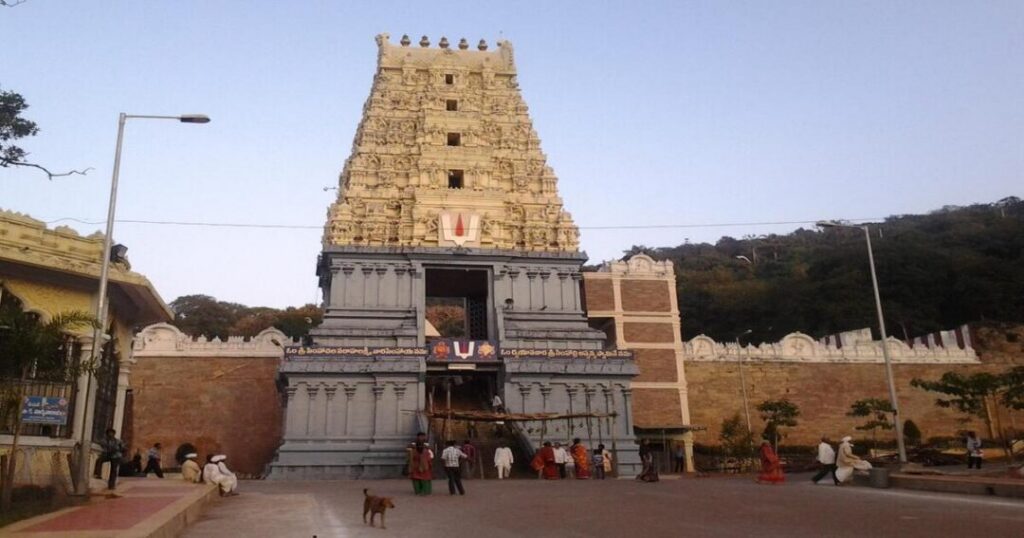
On a hill above Visakhapatnam, Simhachalam’s Varaha Lakshmi Narasimha Temple houses a deity form that exists at no other temple in India: a composite Varaha-Narasimha, blending the boar and man-lion avatars of Vishnu into a single idol, sometimes called Dwayavathara — the “two-avatar” form. The idol is kept covered year-round in a thick layer of sandalwood paste, which by tradition is removed only once a year, on Akshaya Tritiya, giving devotees a rare glimpse of the deity’s actual form for a single day. [STAT: The Simhachalam idol is covered in sandalwood paste for 364 days of the year, uncovered only once annually on Akshaya Tritiya.] Local tradition offers a couple of explanations for the practice — one legend traces it to King Pururava and the apsara Urvasi uncovering the idol underground, another holds that Narasimha’s form was originally too fierce and radiant for devotees to look upon directly, and the paste was applied specifically to cool and soften that intensity.
Also Read: Lepakshi Temple: The Complete Guide to Andhra Pradesh’s Iconic Heritage Site
3. Kanaka Durga Temple (NTR District, Vijayawada): Indrakeeladri’s Ancient Goddess
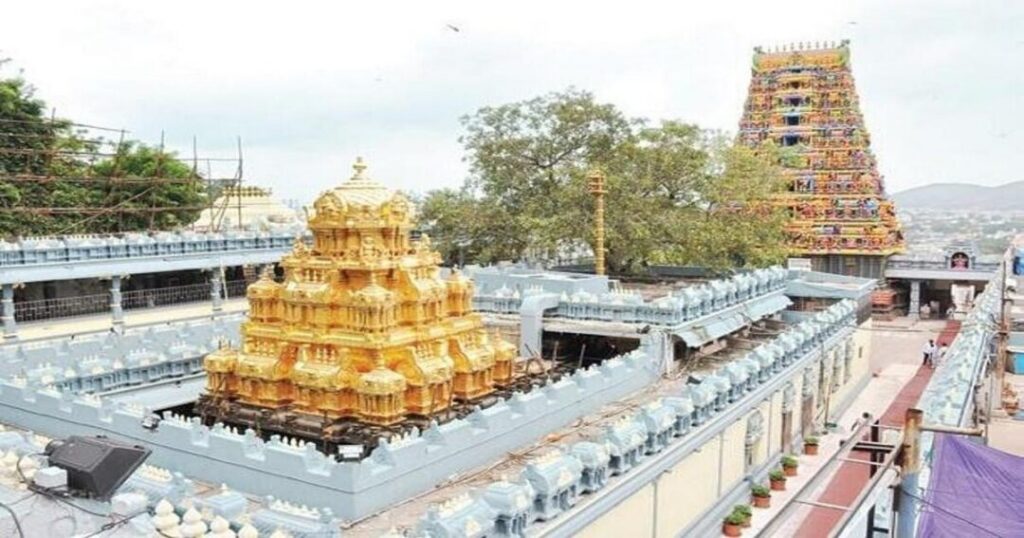
Perched on Indrakeeladri Hill above the Krishna River, the Kanaka Durga Temple is one of Andhra Pradesh’s largest and most historically documented shrines, visited by the Chinese traveler Xuanzang (Hiuen Tsang) in the 7th century and, according to tradition, by Adi Shankaracharya himself, who is said to have installed a Sri Chakra at the site. The temple’s precise founding date isn’t recorded — Kanaka Durga, like several deities on this list, is considered swayambhu, self-manifested rather than installed — but Chalukya-era records point to significant expansion of the temple complex by the 10th century.
The hill’s name carries its own layered mythology: one legend holds that Durga slew the demon Mahishasura and was enshrined here as Mahishasura Mardini, with Indra and the other gods subsequently worshipping her on what became known as Indrakeeladri. A separate legend ties the city’s name itself to this hill — Arjuna is said to have performed penance here to obtain the Pashupatastra from Shiva, who addressed him as “Vijaya,” giving rise to the name Vijayawada.
4. Srikalahasti (Tirupati District): The Vayu Lingam and the Devotee Who Offered His Eyes
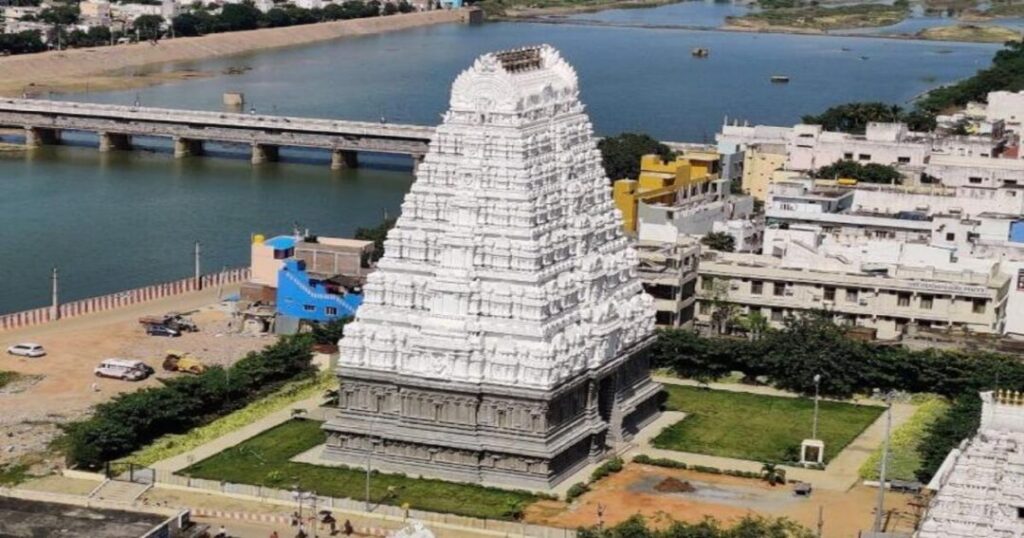
Just 36km from Tirupati itself, Srikalahasti holds a different kind of significance entirely — it’s one of the five Pancha Bhoota Sthalam, each representing one of the five classical elements, with Srikalahasti’s self-manifested lingam representing Vayu, or wind. The lingam is said to emit a faint, continuous breeze inside the sanctum, with legend holding that Vayu himself performed penance here and was granted permanent form as the lingam.
The temple’s best-known story, though, belongs to Kannappa, a tribal hunter devotee who — according to the legend — saw blood flowing from the lingam and, having nothing else to offer, plucked out his own eye to try to stop it. When the bleeding continued from the second eye, he prepared to offer that one too, at which point Shiva stopped him, restored his sight, and granted him liberation. Srikalahasti is also one of the few temples in India that remains open to devotees during solar and lunar eclipses, and it’s particularly known for Rahu-Ketu pooja, performed by visitors seeking relief from the astrological effects associated with those two points.
5. Draksharamam (Konaseema District): Where Sati’s Cheek Is Said to Have Fallen
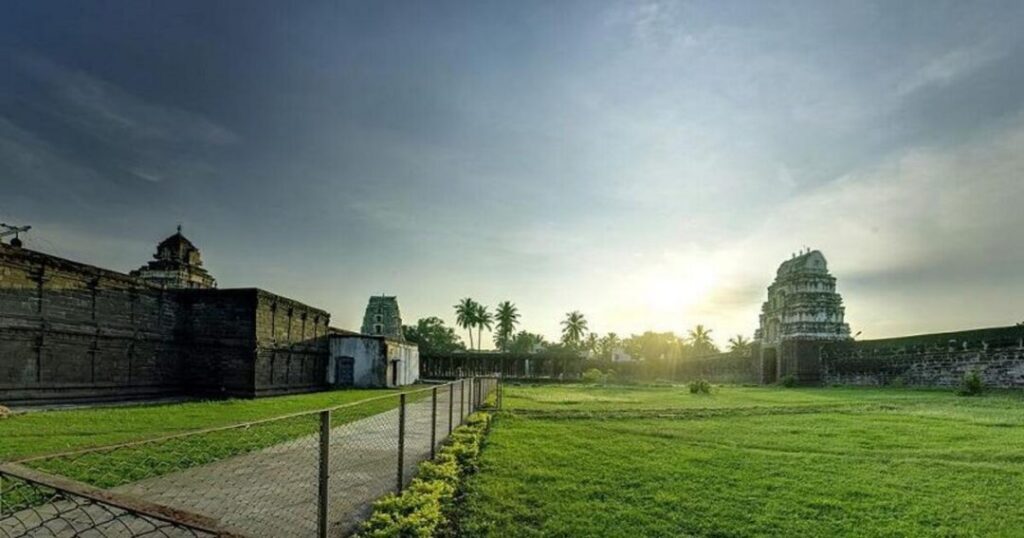
Draksharamam’s Bhimeswara Swamy Temple carries an unusually dense concentration of sacred status: it’s one of the Pancharama Kshetras — five temples said to enshrine fragments of a single cosmic Shiva lingam — and separately, the twelfth of the eighteen Shakti Peethas, with mythology holding that this is the spot where Sati’s left cheek fell. Combining Pancharama and Shakti Peetha status in one temple is unusual enough that Draksharamam is often mentioned alongside Srisailam as one of the state’s two temples where Shiva and Shakti mythology overlap this directly.
6. Amaravathi (Guntur District): The First of the Pancharama Kshetras
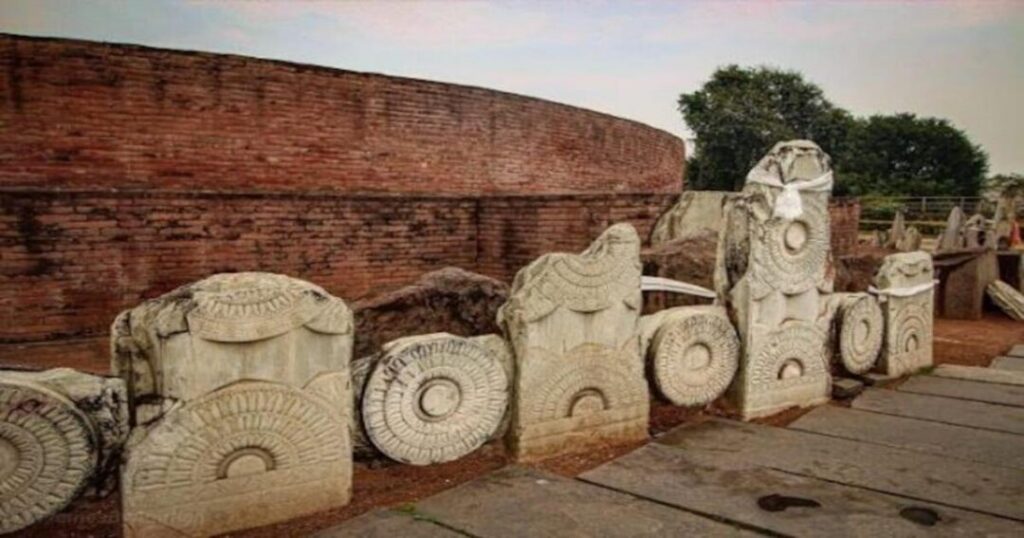
On the banks of the Krishna River in Guntur district, Amaravathi’s Amareswara Temple (also called Amaralingeswara) is considered the foremost of the five Pancharama Kshetras alongside Draksharamam — the shared legend across all five holds that when the demon Tarakasura was slain, fragments of the Shiva lingam he wore for protection scattered and were enshrined at five separate sites across the Godavari and Krishna river deltas, of which Amaravathi and Draksharamam are two.
7. Kanipakam (Chittoor District): The Ganesha Idol That’s Still Growing
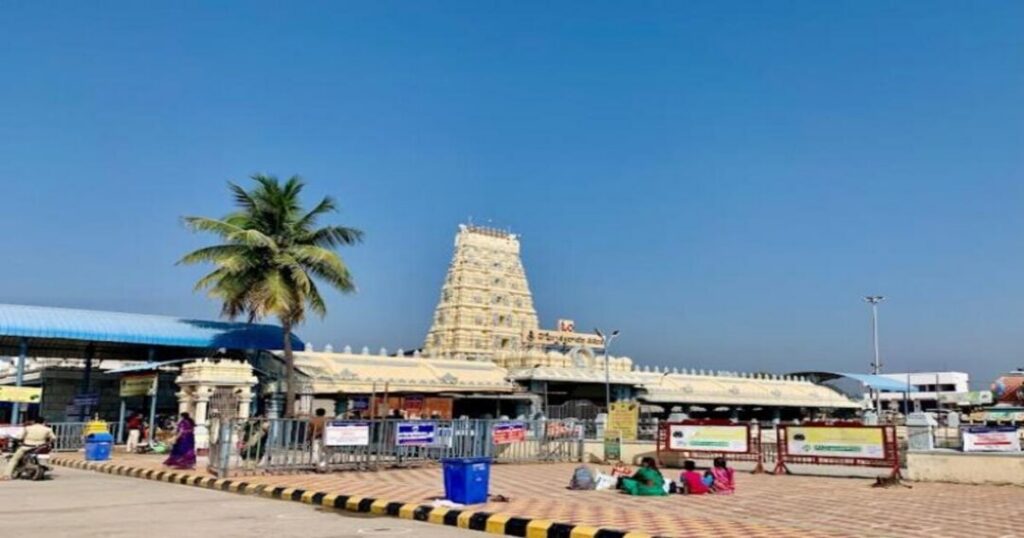
Kanipakam’s Varasiddhi Vinayaka Temple, first built in the 11th century under Chola king Kulothunga I and rebuilt by the Vijayanagara rulers in 1336, traces its origin to a genuinely unusual legend: three brothers — one mute, one deaf, one blind — were digging a well when their tool struck something solid, and blood appeared to seep from the stone. When villagers investigated, they found a self-manifested Ganesha idol seated in the well itself, and all three brothers reportedly regained their faculties. The temple that grew up around that well is sometimes called the “Shrine of Water” as a result.
What keeps drawing attention to Kanipakam today is a more literal claim: devotees say the idol has been slowly increasing in size for generations, citing ceremonial armor donated decades ago that no longer fits the deity. [STAT: Temple accounts describe armor offered to the Kanipakam idol roughly 50 years ago no longer fitting the deity today, cited as evidence of the idol’s gradual growth.] It’s a claim rooted entirely in devotional tradition rather than anything independently measured, but it’s become as central to Kanipakam’s identity as the well-origin legend itself.
Also Read: Places to visit in Andhra Pradesh: The Ultimate 2026 Guide to India’s Best-Kept Secret
8. Yaganti (Nandyal District): Shiva Without a Lingam, and a Nandi That Won’t Stop Growing
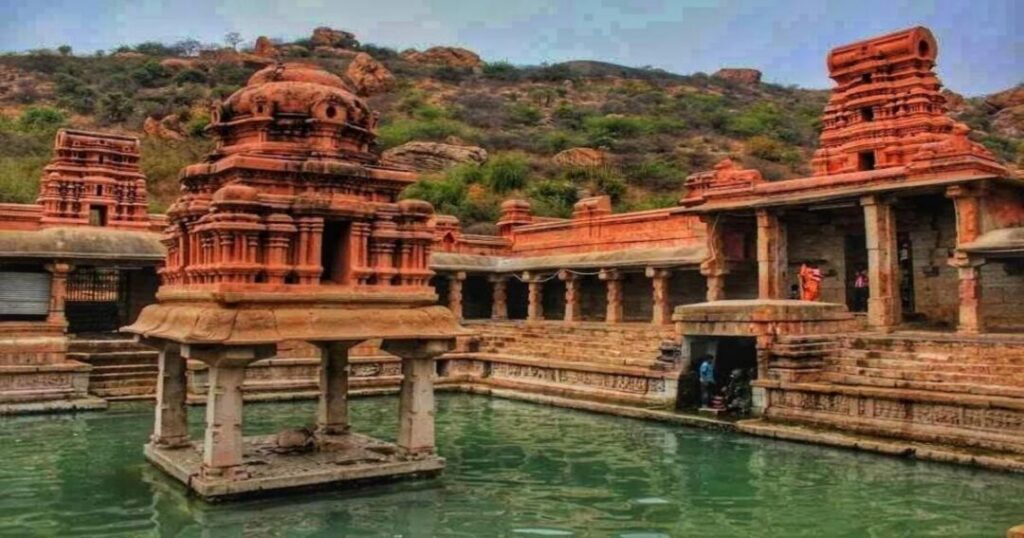
Yaganti’s Uma Maheswara Temple breaks from Shaivite convention in a way that’s genuinely rare: rather than a lingam, Shiva is worshipped here as Ardhanarishwara, a combined Shiva-Parvati form rendered as an actual idol — smeared with sacred ash on the Shiva half and turmeric on the Parvati half. It’s considered one of the only temples in India where this particular convention is followed.
Outside the sanctum sits the temple’s other famous feature: a large stone Nandi that devotees say has been growing by roughly an inch every twenty years, carved originally from a single rock. Pradakshina (ritual circling) around the statue used to be routine; today, the Nandi has reportedly grown large enough on all sides that circling it is no longer physically possible. Local tradition tied to the saint Pothuluri Veerabrahmendra Swamy holds that this Nandi will come alive and call out at the end of the current cosmic age — a prophecy that gives the statue’s slow growth a specifically eschatological weight beyond simple curiosity.
9. Lepakshi (Anantapur District): The Hanging Pillar Temple
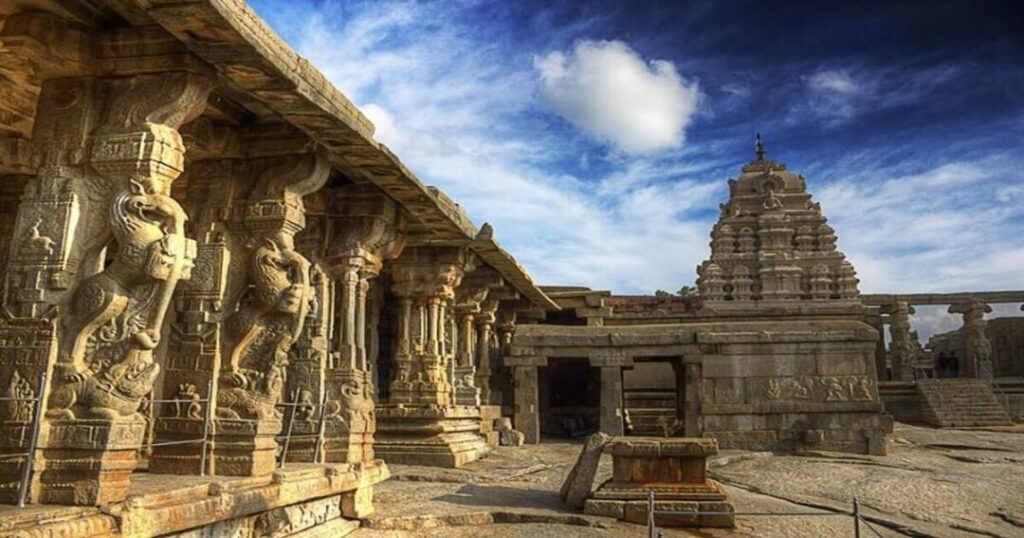
Lepakshi’s Veerabhadra Temple — famous for its hanging pillar, dramatic Virupanna legend, and Nandi statue — is significant enough to warrant its own dedicated coverage rather than a condensed summary here.
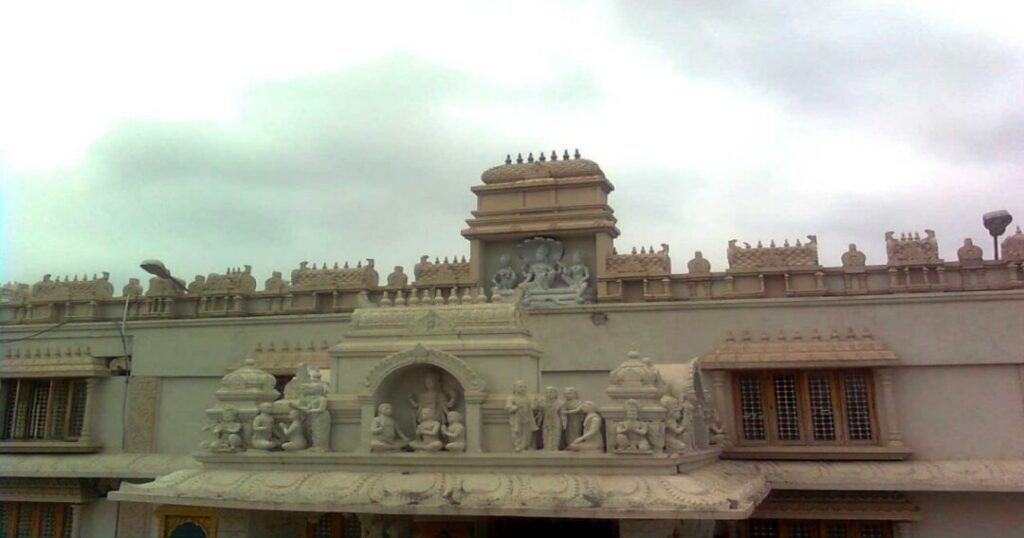
Annavaram’s Sri Veera Venkata Satyanarayana Swamy Temple sits on Ratnagiri hill, just 2km from Annavaram railway station, about 300 feet up with the Pampa River curling around the base. It’s consistently ranked as Andhra Pradesh’s second-most-visited pilgrimage site after Tirupati, and the temple most closely associated with popularizing the Satyanarayana Vratam — the Satyanarayana Puja many Hindu households observe on full moon days — well beyond the state’s borders.
The temple’s founding story is comparatively recent and well-documented for a South Indian shrine: in 1891, Raja Ramanarayana, the zamindar of the Gorsa and Kirlampudi estates, reportedly experienced a dream in which the deity instructed him to build a temple on the hill. He located and traced the idol himself, installed it at the current site, and the temple was subsequently rebuilt twice more, in 1933-34 and again in 2011-12. Architecturally, the main shrine is built in the shape of a chariot, with wheels set into each of its four corners — a detail that sets it apart visually from most Andhra Pradesh temples on this list.
Local legend traces the hill’s deeper mythology to Meru, lord of the hills, and his consort Menaka, who performed severe penance and were granted two sons — Bhadra and Ratnakara — by the grace of Vishnu, tying the hill’s name (Ratnagiri) directly into that story. The hill range has also played a role in more recent history: Krishnadevaraya of Vijayanagara is said to have used secret underground passages here during his campaign against Kalinga, and centuries later, the revolutionary Alluri Sitarama Raju reportedly used the same hill quarters while leading his rebellion against British rule — giving Annavaram a layered history that runs well past its religious significance alone.
Expanding to a Top 20 Famous Temples in Andhra Pradesh List
If you’re building a top 20 famous temples in Andhra Pradesh itinerary rather than stopping at ten, several more temples are worth researching in their own right: Mangalagiri’s Panakala Narasimha Swamy Temple (known for a deity said to drink offered panakam, sugarcane jaggery water, without ever overflowing), Ahobilam’s Nava Narasimha Kshetram (nine separate Narasimha shrines across one hill range), Bhavani Island and Undavalli Caves near Vijayawada, Vontimitta’s Kodandarama Temple, Penchalakona’s Narasimha Temple, Ammapalli’s temple complex, Bhimavaram and Palakollu (the remaining two Pancharama Kshetras alongside Amaravathi and Draksharamam), Samarlakota’s Kumararama Bhimeswara Temple (the fifth Pancharama site), Vijayawada’s Undavalli Caves, and Puttaparthi’s Sathya Sai Baba ashram complex. Each deserves its own research before visiting, but they round out a genuinely deeper tour of the state’s temple heritage beyond this top 10.
Also Read: Top 10 Beaches in Andhra Pradesh: A Complete Guide to the Coastline’s Hidden Gems
List of Famous Temples in Andhra Pradesh With Names: Quick Reference
For a fast list of famous temples in Andhra Pradesh with names and their districts, here’s the full top 10 at a glance:
- Srisailam (Mallikarjuna Swamy & Bhramaramba Devi) — Nandyal District
- Simhachalam (Varaha Lakshmi Narasimha) — Visakhapatnam District
- Kanaka Durga Temple — NTR District (Vijayawada)
- Annavaram (Satyanarayana Swamy) — East Godavari District
- Srikalahasti (Srikalahasteeswara) — Tirupati District
- Draksharamam (Bhimeswara Swamy) — Konaseema District
- Amaravathi (Amareswara Swamy) — Guntur District
- Kanipakam (Varasiddhi Vinayaka) — Chittoor District
- Yaganti (Uma Maheswara) — Nandyal District
- Lepakshi (Veerabhadra Swamy) — Anantapur District
Also Read: Festivals in Andhra Pradesh: The Complete Guide to Telugu Celebrations & Culture
Conclusion About Andhra Pradesh Temple
This Andhra Pradesh temple list makes the case that the state’s pilgrimage heritage extends well past its most famous hill — a Jyotirlinga sharing space with a Shakti Peetha, a Shiva idol with no lingam at all, and a Ganesha statue believers say is still growing. Save the temples that fit your route to your Explurger Bucket List, and let your Automatic Travelogue keep the whole circuit mapped once you’ve made the trip. Let Explurger help you plan an Andhra Pradesh temple route that goes well beyond Tirupati.
FAQs About Andhra Pradesh temple
2. Which Andhra Pradesh temple is both a Jyotirlinga and a Shakti Peetha?
Srisailam is one of the few sites in India where a Jyotirlinga (Mallikarjuna Swamy) and a Shakti Peetha (Bhramaramba Devi) are worshipped together under one roof.
3. Why is the Simhachalam idol covered in sandalwood paste?
Local tradition offers two explanations: one legend traces it to King Pururava and Urvasi uncovering the idol, while another holds that Narasimha's original form was too radiant and fierce for devotees to view directly. The paste is removed once a year, on Akshaya Tritiya.
4. What is the significance of Srikalahasti temple?
Srikalahasti is one of the five Pancha Bhoota Sthalams, representing the element of wind (Vayu), and is home to the legend of Kannappa, a devotee who offered his own eyes to stop a bleeding lingam.
5. What are the Pancharama Kshetras?
They're five ancient Shiva temples in Andhra Pradesh — including Amaravathi and Draksharamam — believed to enshrine fragments of a single cosmic Shiva lingam that scattered after the demon Tarakasura was slain.
6. Is it true that the Kanipakam Ganesha idol is growing?
It's a widely held devotional belief among visitors and temple accounts, often cited alongside stories of decades-old ceremonial armor no longer fitting the deity, though it isn't independently measured or verified.