
3,899 Total Views
Andhra Pradesh is a state where festivals are not calendar events; they are the rhythm of daily life. This is a state where the Telugu New Year (Ugadi) is greeted before sunrise with a ritual oil bath, a six-taste dish that philosophically accepts both joy and sorrow as equal parts of existence, and the public reading of the year’s almanac. Where the harvest festival (Sankranti) is called Pedda Panduga, the Big Festival, and is the single most important celebration in the rural calendar. The Tirumala Venkateswara Temple, the world’s most visited religious site, hosts a nine-day festival (Brahmotsavam) that draws millions of devotees and transforms the entire hill town of Tirupati into a devotional experience unlike anything else in South India.
The festivals in Andhra Pradesh span harvest traditions, Telugu identity, Vaishnava devotion, Buddhist heritage, and the specific coastal culture of a state that stretches from the Eastern Ghats to the Bay of Bengal. This guide covers the top 10 famous festivals of Andhra Pradesh, with dedicated sections on Ugadi and Diwali, and a seasonal reference to help plan your visit.
Top 10 Festivals in Andhra Pradesh in 2026
1. Sankranti (Pedda Panduga) — The Big Festival
When: January 14–17 (fixed solar calendar dates)
Where: Pan-Andhra Pradesh — rural regions of West Godavari, East Godavari, and Guntur, most celebrated
Significance: Harvest festival; thanksgiving to the Sun God, cattle, and the earth
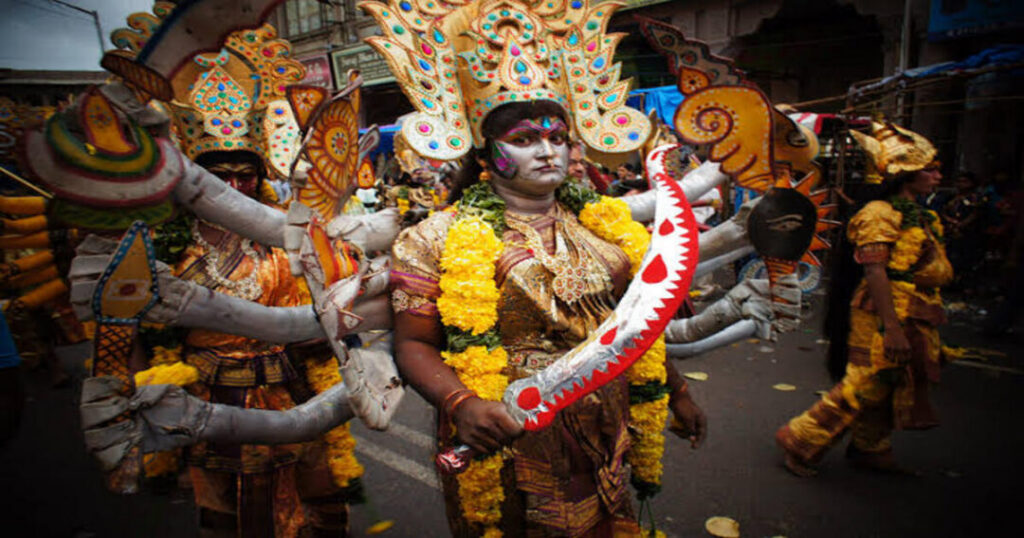
Sankranti is one of the two most significant festivals in Andhra Pradesh — called Pedda Panduga (literally “Big Festival”) in Telugu, a name that signals exactly how central it is to the state’s cultural identity. A four-day celebration marking the end of winter and the beginning of the harvest season, Sankranti is primarily an agrarian festival, the thanksgiving of farming communities across the Godavari delta, the Krishna River basin, and the coastal plains for the season’s rice and sugarcane crop.
The four days:
- Bhogi (Day 1): The first day is about clearing the old household items that are thrown into bonfires (Bhogi Mantalu) lit before dawn, symbolising the discarding of the past year and its troubles. Children are showered with regi pallu (Indian jujube berries), flowers, and coins
- Pedda Panduga / Makara Sankranti (Day 2): The main day — muggu (rangoli) designs are drawn at every doorstep from before dawn; Pongal (sweet rice cooked with jaggery and milk) is prepared outdoors in new clay pots; kite flying fills the Andhra sky
- Kanuma (Day 3): The cattle are honoured — bathed, decorated with garlands and paint, and fed special food; Kodi Pandalu (cockfights) are a controversial traditional practice associated with this day
- Mukkanuma (Day 4): The concluding day, dedicated to the worship of Lord Vishnu and family gatherings
What makes Andhra’s Sankranti distinct: The muggu (rangoli) tradition in AP involves extraordinarily intricate geometric patterns drawn with rice flour — a tradition that runs so deep that competitions are held across villages. The kite flying on the main day turns the sky above cities like Vijayawada and Visakhapatnam into rivers of colour.
Also Read: TOP PLACES TO VISIT IN ANDHRA PRADESH: TOURISM DESTINATIONS
2. Ugadi — The Telugu New Year
When: March or April (first day of the Chaitra month in the Hindu lunisolar calendar)
Where: Pan-Andhra Pradesh; most celebrated in Vijayawada, Guntur, and Visakhapatnam. Significance: Telugu New Year; beginning of a new era (Yuga Adi)
Ugadi is the Telugu New Year — the most philosophically rich of all festivals in Andhra Pradesh, built around the acceptance that life contains everything: joy, sorrow, anger, fear, surprise, and disgust in equal measure. The word Ugadi derives from Yuga Adi — “the beginning of a new era.” The festival falls on the first day of the Chaitra month, marking the onset of spring and the new year according to the Telugu lunisolar calendar.
The Ugadi rituals:
- Pre-dawn oil bath: Families wake before sunrise and take a ritual bath with herbal oils — the first cleansing of the new year
- Mango leaf toranalu: Fresh mango leaves and marigold flowers (thoranalu) are strung at doorways — their green fragrance filling the morning air
- Muggu (rangoli): Intricate kolam designs drawn at the entrance of every home
- Special puja: Prayers for the new year’s prosperity and protection
- Panchanga Sravanam: The public reading of the Telugu almanac (Panchang) — a forecast of the year ahead, its rains, harvests, and auspicious dates — broadcast on television and read in temples across the state
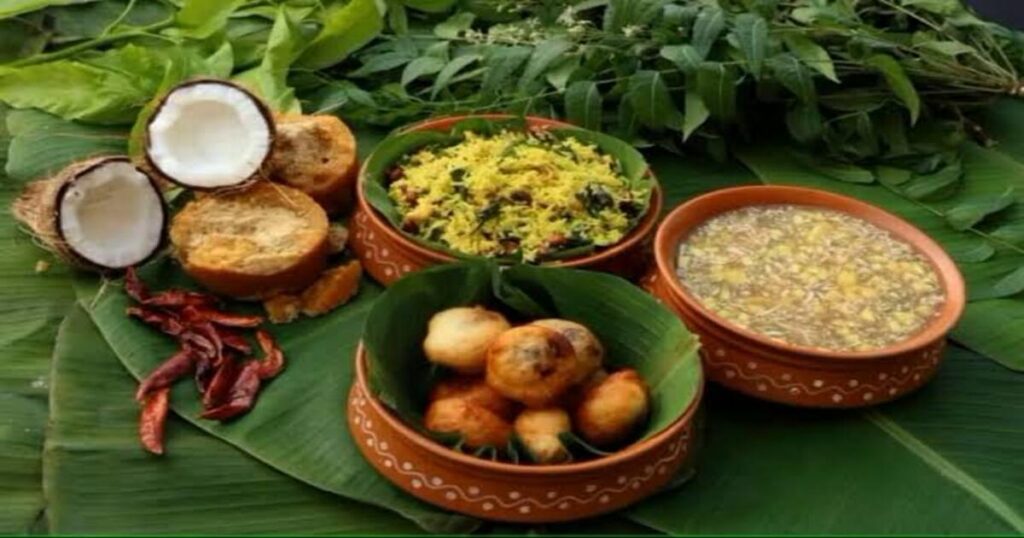
The defining ritual of Ugadi is the Ugadi Pachadi — a dish that no other Indian festival produces anything quite like.
The Ugadi Pachadi — Six Tastes, One Philosophy
Ugadi Pachadi is a chutney-like preparation of six ingredients representing the six flavours (shadruchulu) and the six emotional experiences of life:
| Ingredient | Taste | Emotion |
| Neem flowers | Bitter | Sadness |
| Jaggery | Sweet | Happiness |
| Tamarind | Sour | Surprise |
| Raw mango | Tangy (Vagaru) | Unpleasant/Disappointment |
| Green chilli | Spicy | Anger |
| Salt | Salty | Fear |
The Pachadi is consumed as prasad after the puja — the act of eating all six tastes simultaneously is itself the festival’s central philosophical statement: life is all of these things at once, and the new year asks you to accept all of them.
3. Tirupati Brahmotsavam — Nine Days of Divine Grandeur
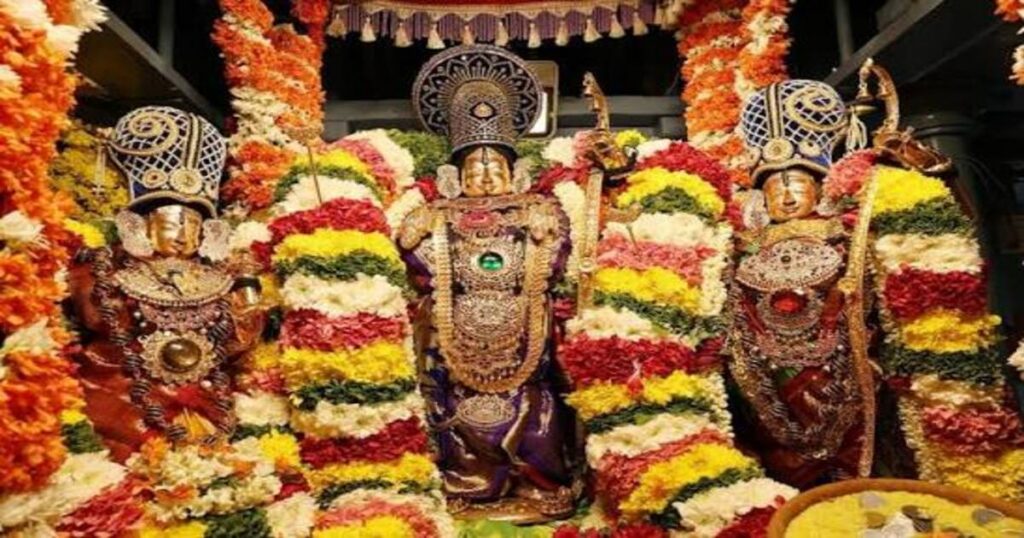
When: September or October (nine days; dates set by the temple’s lunar calendar)
Where: Tirumala Venkateswara Temple, Tirupati
Significance: The grandest temple festival in South India, it draws millions of devotees.
The Tirupati Brahmotsavam is the most spectacular of all festivals of Andhra Pradesh. It is a nine-day festival at the world-famous Tirumala Venkateswara Temple that draws millions of pilgrims from across India and the world. The name Brahmotsavam means “Lord Brahma’s festival”, and it is believed that Lord Brahma himself initiated this festival in honour of Lord Venkateswara (Balaji). Each of the nine days features a different Vahana Seva (vehicle procession) in which the idol of Lord Venkateswara is carried on a different ornate vehicle through the temple streets, accompanied by Vedic chants, music, and devotional crowds.
The festival’s centrepiece is the Rathotsavam, the chariot procession of Lord Venkateswara on the eighth day of the nine-day festival, which draws the largest crowds and creates an atmosphere of extraordinary collective devotion. The entire hill town of Tirumala, already the world’s most visited pilgrimage site, transforms during Brahmotsavam into something beyond its already-extraordinary daily reality.
4. Vinayaka Chaturthi — Ten Days of Ganesha
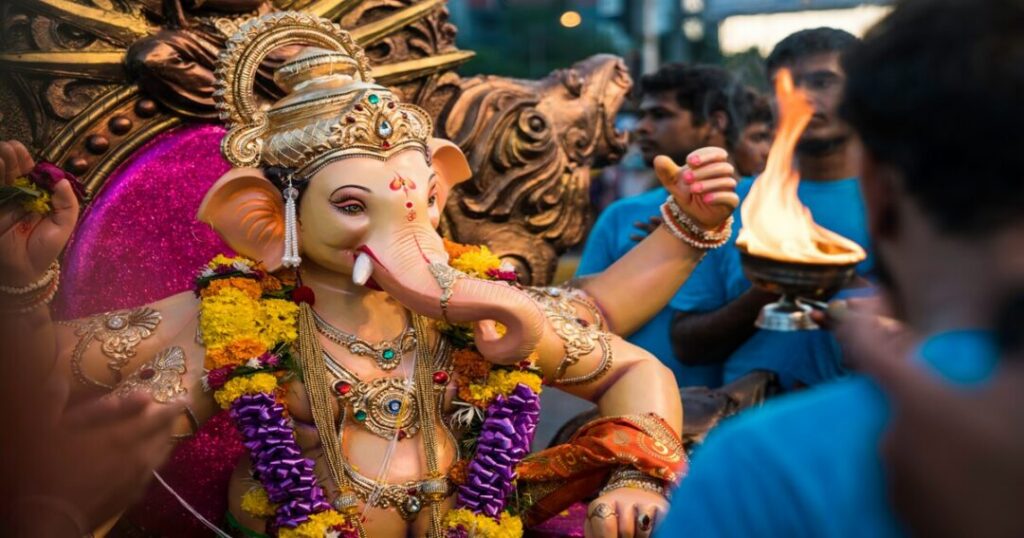
When: August or September (10 days; Ganesha Nimajjanam on the 11th day)
Where: Pan-Andhra Pradesh; Hyderabad, Vijayawada, Guntur most celebrated
Significance: Birth of Lord Ganesha; community celebration
Vinayaka Chaturthi (Ganesh Chaturthi in other states) is one of the most publicly celebrated Andhra Pradesh famous festivals, a ten-day festival marked by the installation of elaborately crafted clay Ganesha idols in homes and public pandals (pavilions), daily worship with flowers, fruits, payasam (sweet rice pudding), and modakam (sweet dumplings), and the final immersion (Nimajjanam) of the idols in rivers, tanks, or the sea. In Andhra Pradesh, the immersion processions, particularly in Hyderabad and Vijayawada, are massive community events with music, dance, and tens of thousands of participants.
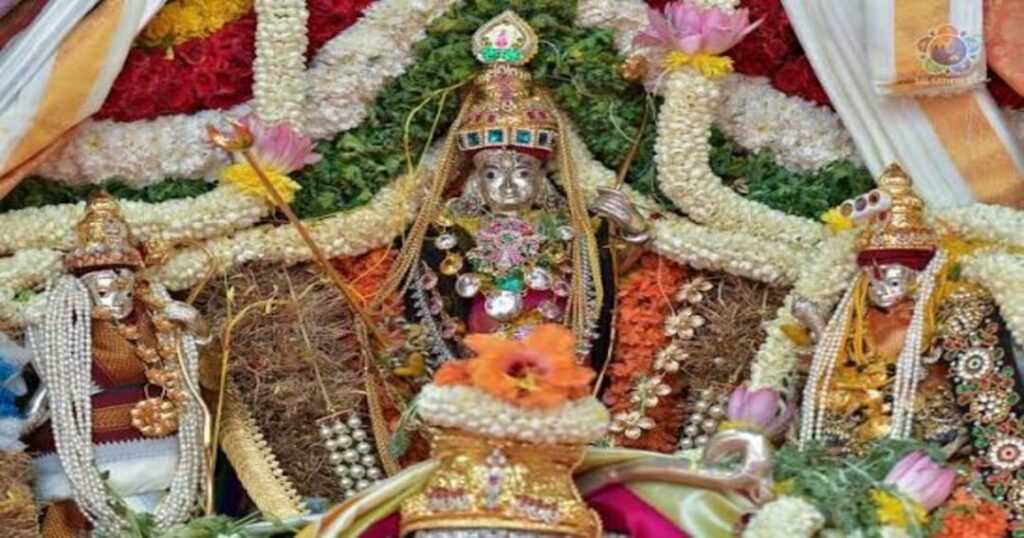
When: March or April (ninth day of Chaitra month — Chaitra Shukla Navami)
Where: Pan-Andhra Pradesh; Bhadrachalam, Nellore, and Vijayawada are most celebrated.
Significance: Birth of Lord Rama; Sita Rama Kalyanam (celestial wedding re-enactment)
Sri Rama Navami is one of the most distinctively celebrated festivals in Andhra Pradesh — the birth anniversary of Lord Rama, marked not merely as a puja but as a full re-enactment of the celestial wedding of Sita and Rama (Sita Rama Kalyanam). In the temple town of Bhadrachalam, where the Bhadrachalam Ramaswamy Temple is one of the most significant Rama temples in South India, the Kalyanam is performed with full Vedic ritual and broadcast across the state. The festival prasad is Panakam– a cooling drink of jaggery, cardamom, dry ginger, and pepper and Vada Pappu (soaked lentils with raw mango) distributed freely in temples.
6. Varalakshmi Vratham — The Women’s Festival of Wealth
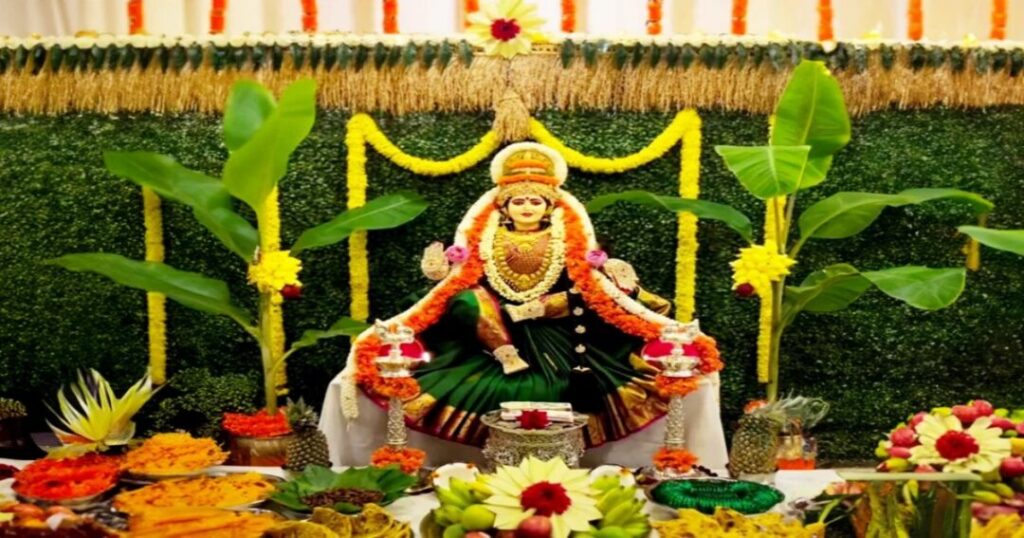
When: Second Friday before the full moon (Purnima) in the Shravana month (July/August).
Where: Pan-Andhra Pradesh; celebrated in virtually every Telugu household
Significance: Women’s festival; worship of Goddess Lakshmi for family prosperity
Varalakshmi Vratham is one of the most widely observed festivals in Andhra Pradesh — celebrated by married women who perform an elaborate puja to Goddess Varalakshmi (a form of Lakshmi, goddess of wealth and prosperity) for the well-being of their families. The idol of the goddess is decorated with saree, jewellery, and flowers; offerings of naivedyam (food — typically nine varieties of items including fruits, sweets, and cooked dishes) are made; and the vrata katha (the story of the festival’s origin and significance) is read. Neighbours visit each other, kumkum (vermilion) and turmeric are exchanged, and the day is one of the most socially vibrant of the AP festival calendar.
Also Read: Famous Festivals of India: Top 10 Celebrations You Need to Experience
7. Atla Taddi — The Telugu Karva Chauth
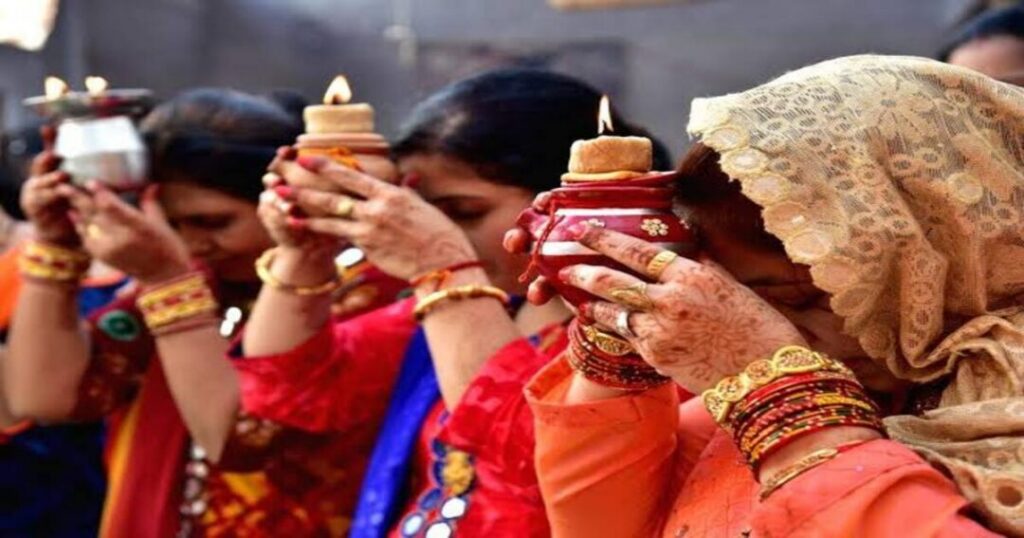
When: Third night after the full moon in Aswiyuja month (September or October)
Where: Pan-Andhra Pradesh
Significance: Women’s festival for the health and longevity of their husbands
Atla Taddi is a distinctively Telugu festival, the Andhra equivalent of North India’s Karva Chauth, observed by married women who fast through the day and worship the moon on the Aswiyuja Tritiya (third lunar day) for the health and long life of their husbands. Women gather at open spaces to view the moon, sing traditional Telugu songs (Atla Taddi paatalu), and break their fast after moonrise. The festival has no parallel in the same form in any other South Indian state — it is specifically and authentically Telugu.
8. Diwali — The Festival of Lights in Andhra Pradesh
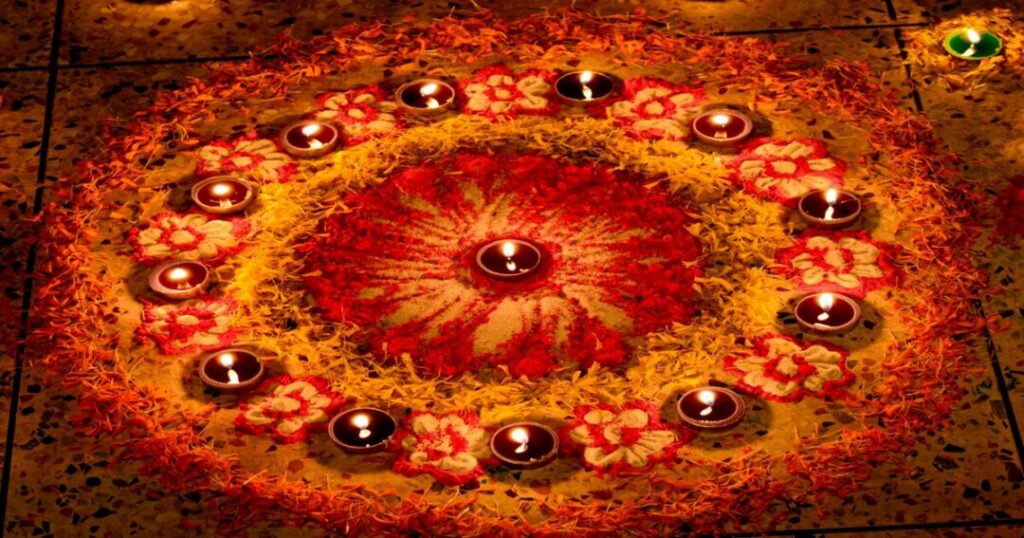
When: October or November (follows the Hindu lunar calendar)
Where: Pan-Andhra Pradesh; Vijayawada, Visakhapatnam, Nellore most celebrated
Significance: Festival of lights; Lakshmi Puja; Naraka Chaturdashi
The Diwali celebration in Andhra Pradesh carries the standard pan-Indian traditions: oil lamps, fireworks, and Lakshmi Puja, but with specific Telugu cultural additions:
Naraka Chaturdashi (the day before Diwali main day): In Telugu tradition, this is the more significant day, commemorating Lord Krishna’s defeat of the demon Narakasura (who was a tyrant king of the region believed to correspond to the ancient Pragjyotishpura). The ritual oil bath on the morning of Naraka Chaturdashi is one of the most widely observed practices in every Telugu household. Families wake before sunrise for the cleansing bath, followed by new clothes and sweets. The fireworks are typically heavier on this day than on the main night of Diwali.
Lakshmi Puja on the main Diwali night: Homes are cleaned, decorated with muggu and marigold garlands, oil lamps (diyas) line every surface, and Goddess Lakshmi is worshipped for the prosperity of the coming year. Sweet preparations specific to AP — bobbatlu (sweet flatbread stuffed with chana dal and jaggery), pala thalikalu (milk-based sweet), and murukku — are made at home and shared with neighbours.
9. Visakha Utsav — The Coastal Cultural Festival
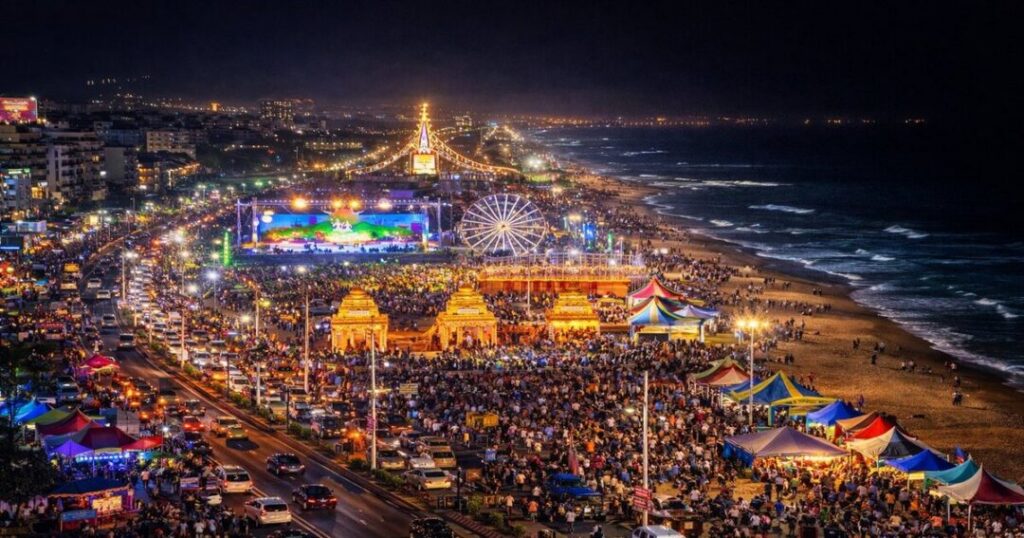
When: February (organised annually by the AP Tourism Development Corporation)
Where: Visakhapatnam (Vizag)
Significance: AP Tourism’s flagship cultural festival
Visakha Utsav is Andhra Pradesh’s premier state-organised cultural festival — held annually in Visakhapatnam by the Andhra Pradesh Tourism Development Corporation, showcasing the arts, crafts, music, dance, cuisine, and heritage of the state in a multi-day celebration. Cultural performances from classical Kuchipudi dance to folk traditions, handicraft exhibitions, heritage walks, flower shows, and sports events combine to make Visakha Utsav the most tourist-accessible of all festivals in Andhra Pradesh. The backdrop of Vizag’s coastline — the Bay of Bengal, the Dolphin’s Nose hill, and the port city’s specific character — makes it one of the most scenically distinctive festival settings in South India.
10. Lumbini Festival — Celebrating Buddhist Andhra Pradesh
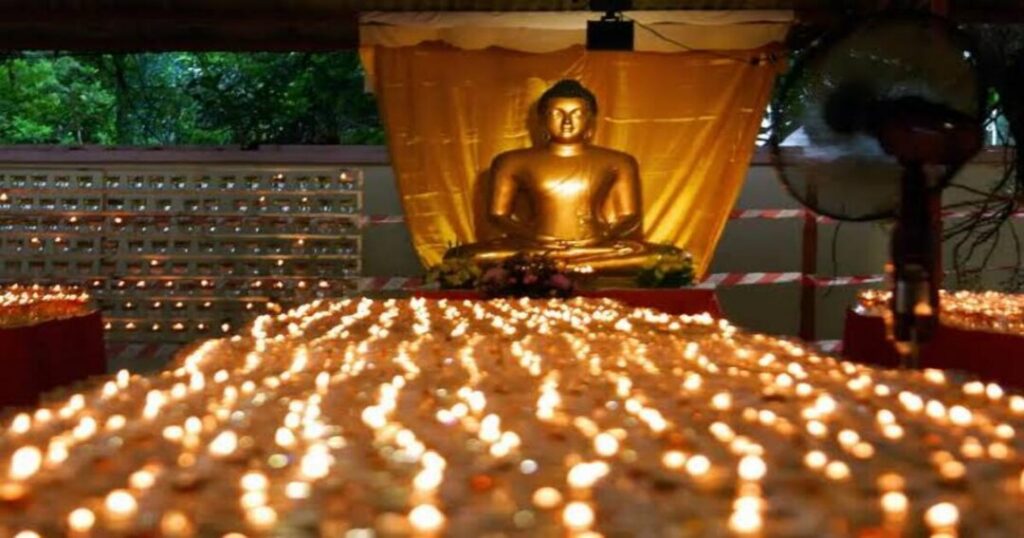
When: December (three-day festival starting on the second Friday)
Where: Nagarjunasagar and Hyderabad
Significance: AP’s Buddhist heritage; Nagarjunakonda excavations
The Lumbini Festival is the most historically distinctive of all Andhra Pradesh festivals; a celebration of the state’s extraordinary Buddhist heritage, organised by the AP Tourism Department at Nagarjunasagar. The Nagarjunakonda valley, now submerged beneath the Nagarjunasagar reservoir, was one of the most significant Buddhist centres in ancient India, with a university and monastery complex associated with the Buddhist scholar Nagarjuna (2nd century CE). The festival celebrates this heritage through cultural performances, Buddhist teachings, exhibitions, and the unique atmospheric setting of an archaeological legacy that most visitors to Andhra Pradesh never encounter.
Also Read: 10 Largest National Parks in India: Explore the Biggest Wildlife Sanctuaries
Festivals of Andhra Pradesh — Seasonal Reference
January — The Harvest Month
- Sankranti / Pedda Panduga (January 14–17) — the biggest festival of the year
March–April — The New Year Season
- Ugadi (March/April) — Telugu New Year; Ugadi Pachadi; Panchanga Sravanam
- Sri Rama Navami (March/April) — Sita Rama Kalyanam; Bhadrachalam
July–August — The Monsoon Season
- Varalakshmi Vratham (second Friday before Purnima in Shravana)
- Vinayaka Chaturthi (August/September — begins in August)
September–October — The Festival Peak
- Vinayaka Chaturthi concludes (Nimajjanam)
- Atla Taddi (September/October)
- Tirupati Brahmotsavam (September/October)
- Dussehra / Vijayadasami (October)
- Diwali / Deepavali (October/November) — Naraka Chaturdashi + Lakshmi Puja
November–December — The Heritage Season
- Karthika Masam (November) — month-long Shiva devotion
- Lumbini Festival (December) — Buddhist heritage, Nagarjunasagar
Conclusion About Festivals of Andhra Pradesh
The festivals of Andhra Pradesh are the most direct route to understanding Telugu culture, its philosophy of balance (the six tastes of Ugadi Pachadi), its agrarian roots (the four days of Sankranti), its devotional intensity (the nine days of Brahmotsavam), and its specifically coastal, rice-growing, river-delta character that distinguishes it from every other South Indian state.
Download the Explurger app to discover what travellers recommend for experiencing Andhra Pradesh’s festivals firsthand, find the most authentic local celebrations, and log every kite, lamp, and laddu on your AP festival journey.
The muggu is already being drawn at the doorstep. The Pongal is already on the fire. Andhra Pradesh’s festivals are always already beginning.
FAQs About Festivals of Andhra Pradesh
2. What is the Ugadi festival of Andhra Pradesh?
Ugadi is the Telugu New Year — one of the two most important festivals of Andhra Pradesh, celebrated on the first day of the Chaitra month (March or April). The word derives from Yuga Adi — "beginning of a new era." Key rituals: pre-dawn oil bath, mango leaf thoranalu at doorways, intricate muggu (rangoli) at entrances, special puja, and the Panchanga Sravanam (public almanac reading). The defining preparation is Ugadi Pachadi — a six-ingredient dish combining neem flowers (bitter/sadness), raw mango (sour/surprise), jaggery (sweet/happiness), tamarind (tangy/disgust), green chilli (spicy/anger), and salt (salty/fear) — consumed as prasad to philosophically accept that life contains all experiences equally.
3. What is the Diwali celebration in Andhra Pradesh?
The Diwali celebration in Andhra Pradesh has a specifically Telugu character. The more significant day is Naraka Chaturdashi (the day before the main Diwali) — commemorating Lord Krishna's defeat of the demon Narakasura, with a mandatory pre-dawn oil bath (abhyanga snanam) observed in virtually every Telugu household. Fireworks are heaviest on this day. The main Diwali night features Lakshmi Puja, muggu (rangoli) at doorways, oil lamps (diyas), and the preparation of traditional AP sweets, including bobbatlu (sweet stuffed flatbread) and murukku. Major Diwali celebrations in Andhra Pradesh are in Vijayawada, Visakhapatnam, and Nellore.
4. Which is the biggest festival in Andhra Pradesh?
The biggest festival in Andhra Pradesh is Sankranti — called Pedda Panduga ("Big Festival") in Telugu. Celebrated from January 14–17 each year, it is a four-day harvest festival that is the most universally observed celebration across all communities in the state. The festival includes Bhogi (burning the old), the main Sankranti day (kite flying, Pongal cooking, muggu), Kanuma (honouring cattle), and Mukkanuma (family gatherings). The second most significant festival is Ugadi (the Telugu New Year).
5. What is the Tirupati Brahmotsavam?
The Tirupati Brahmotsavam is a nine-day festival at the Tirumala Venkateswara Temple in Tirupati, the most famous Andhra Pradesh famous festival in terms of international recognition, drawing millions of devotees from across India and the world. Celebrated in September or October, it features daily Vahana Seva (processions of Lord Venkateswara on different decorated vehicles), culminating in the Rathotsavam (chariot procession). The name means "Lord Brahma's festival" — it is believed Lord Brahma initiated this celebration in honour of Lord Venkateswara. The Tirumala Venkateswara Temple is the world's most visited religious site, and the Brahmotsavam is its grandest annual event.