
51 Total Views
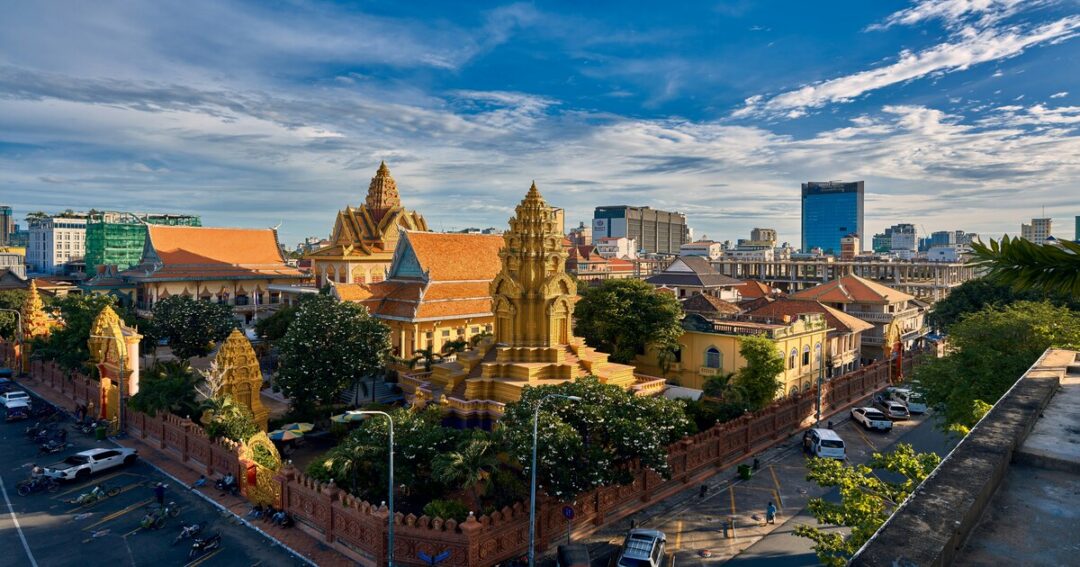
Phnom Penh doesn’t ease you in. Within a few blocks of each other sit a gilded royal palace, a riverside promenade lined with French colonial buildings, a sprawling market under a 1930s Art Deco dome, and a former high school turned torture prison that’s now a memorial to one of the 20th century’s worst atrocities. The places to visit in phnom penh range from celebratory to deeply sobering, often within the same afternoon, and that mix is exactly what makes Cambodia’s capital worth more than the day or two most itineraries give it. This guide covers the five sights every first-time visitor should prioritize, lays out a suggested day of sightseeing, rounds up what to do beyond the museums and temples, and closes with practical notes on timing and getting into the city — including a major change to how most travelers now arrive.
Best Places to Visit in Phnom Penh
Phnom Penh is a city that reveals itself slowly.
In the space of a single day, you can walk through the gilded courtyards of a royal palace, stand before centuries-old Khmer sculptures, confront some of Cambodia’s darkest history, and end the evening watching the rivers turn gold as the city lights come on.
The Cambodian capital isn’t a city you simply tick off a sightseeing list. Its story lives in its temples, markets, museums, riverside streets and, most importantly, in the layers of history that have shaped modern Cambodia.
If you’re wondering about the best places to visit in Phnom Penh, these five landmarks offer a powerful introduction to the city.
1. Royal Palace & Silver Pagoda
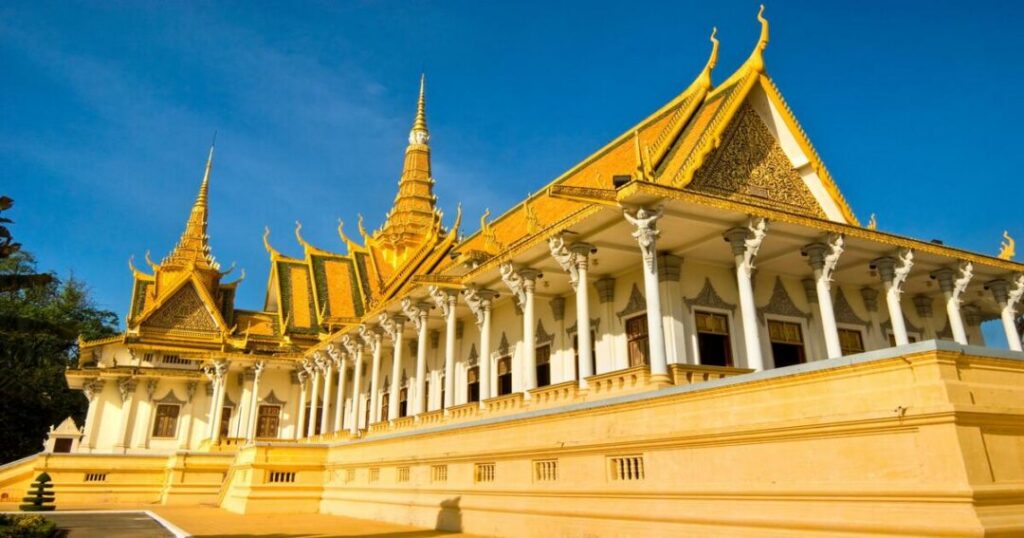
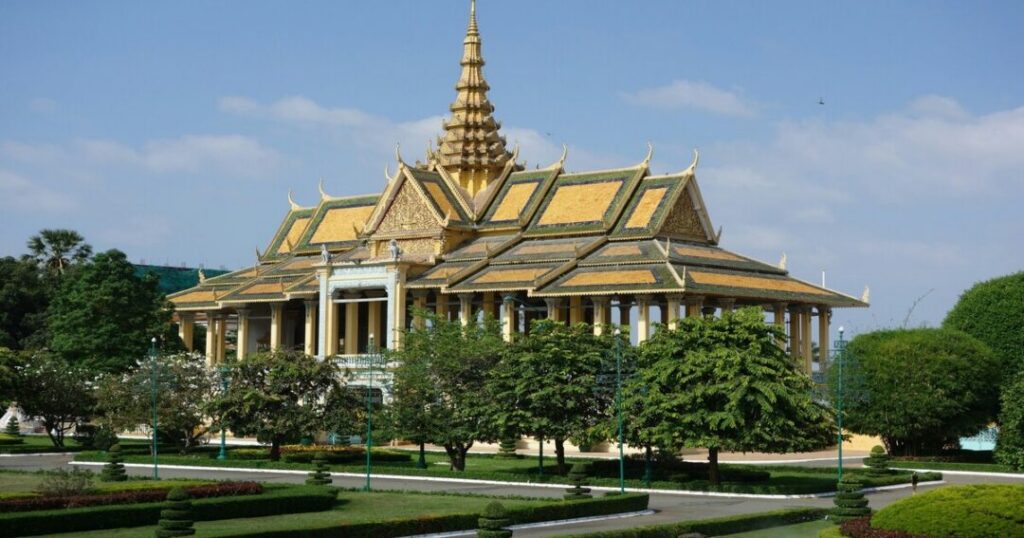
Begin with Phnom Penh at its most regal.
The Royal Palace rises behind its walls of ornate golden architecture, manicured gardens and traditional Khmer roofs. Construction began in 1865, after King Norodom moved the Cambodian capital to Phnom Penh, and the complex remains the official residence of the Cambodian king.
Inside the palace grounds sits the Silver Pagoda, or Wat Preah Keo Morakot, one of the city’s most important Buddhist sites. Its name comes from the more than 5,000 silver tiles that once covered its floor, while the pagoda houses some of Cambodia’s most revered Buddhist treasures.
The visit comes with a few practical rules. Entry is around $10 USD and is generally cash only, while opening hours are split between approximately 8am–11am and 2pm–5pm. Dress conservatively, with shoulders and knees covered. The dress code is enforced at the entrance, so it is better to arrive appropriately dressed rather than depend on a scarf or cover-up.
Tip: Go early. The softer morning light also makes the palace grounds particularly photogenic.
2. National Museum of Cambodia
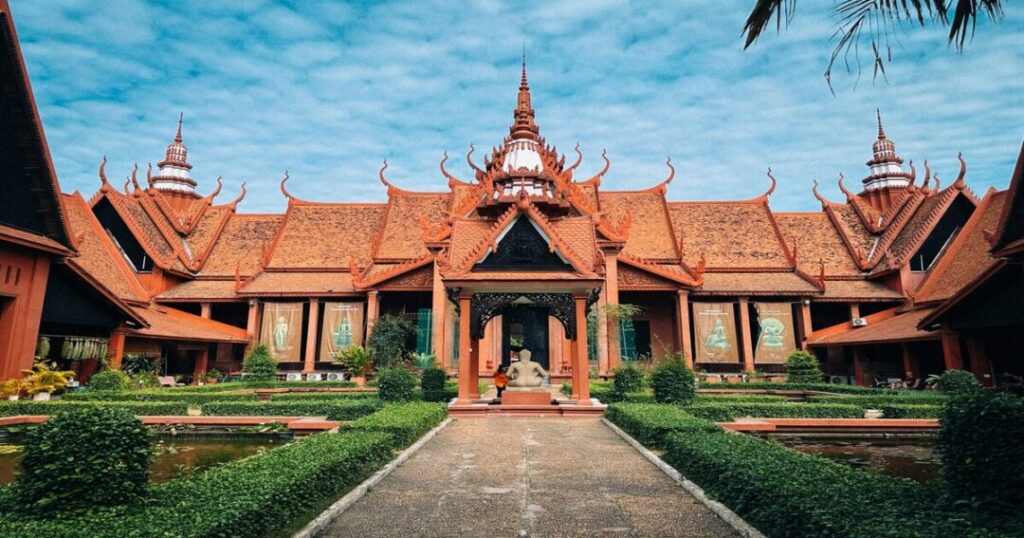
Just a short walk from the Royal Palace, the city’s colour palette shifts from gold to deep terracotta.
The National Museum of Cambodia occupies a striking traditional Khmer-style building inaugurated in 1920. Step inside, and the story stretches much further back — through prehistoric artefacts, ancient sculptures and an extraordinary collection of Khmer art connected to the Angkor era and beyond.
With more than 14,000 objects in its collection, the museum provides useful context for travellers heading onward to Angkor Wat. Suddenly, the stone faces, Hindu and Buddhist imagery and intricate carvings encountered in the temples of Siem Reap begin to tell a more complete story.
It is less about rushing from gallery to gallery and more about understanding what you are about to see elsewhere in Cambodia.
3. Tuol Sleng Genocide Museum (S-21)
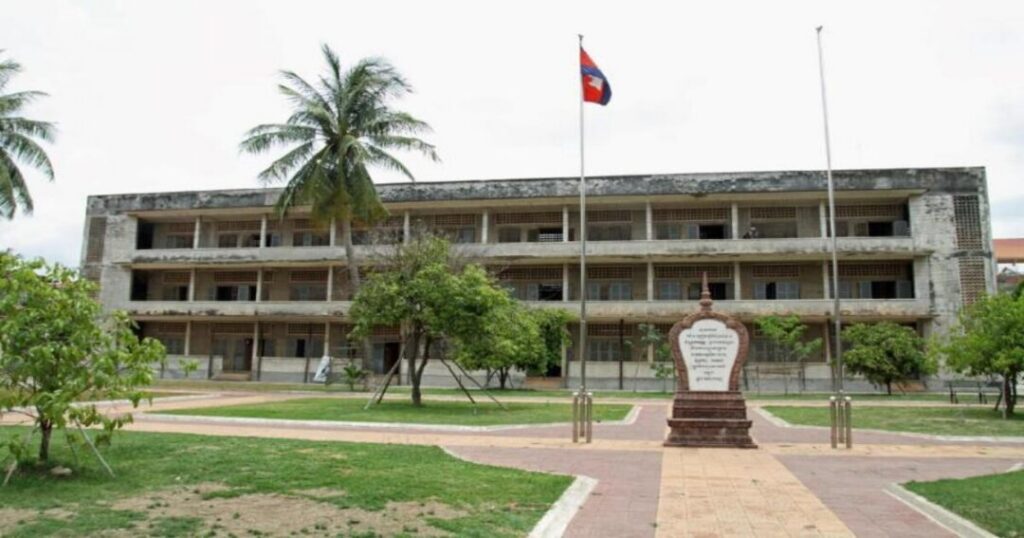
Then comes a very different Phnom Penh.
The former Tuol Svay Prey High School was transformed into Security Prison 21 (S-21) under the Khmer Rouge between 1975 and 1979. Today, it is preserved as the Tuol Sleng Genocide Museum, documenting the experiences of people detained, interrogated and tortured there.
The classrooms, photographs and preserved spaces make this a deeply difficult visit. It is not conventional sightseeing, and it should not be approached as such.
The museum is open daily from 8am to 5pm, with international adult admission around $5 USD and audio guides available in multiple languages. The museum itself advises that the content is not recommended for visitors aged 14 and under.
Give yourself time here. The significance of Tuol Sleng is not something to absorb quickly before moving to the next attraction.
4. Choeung Ek Killing Fields
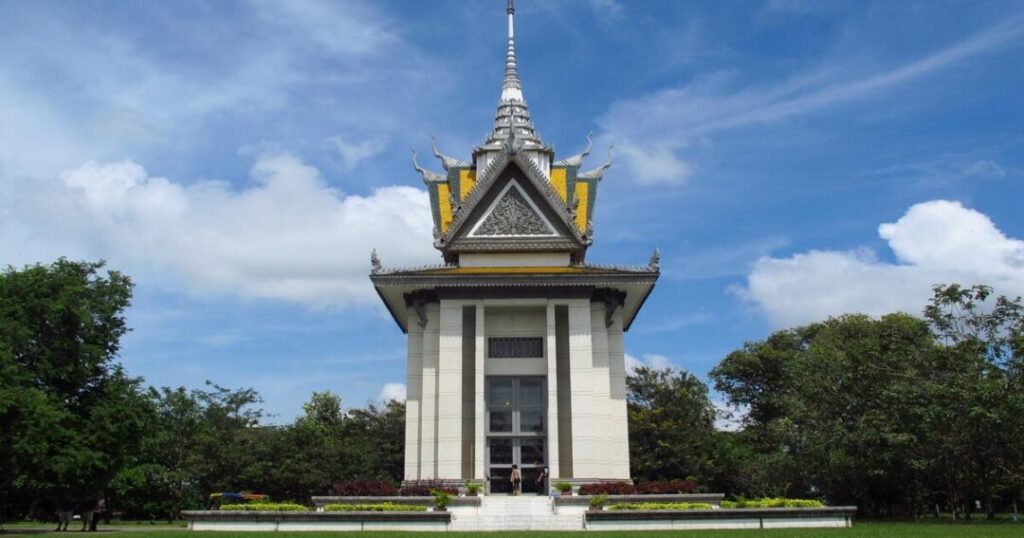
The story continues outside the city.
Around 11 km from central Phnom Penh, Choeung Ek is the best-known of the sites where prisoners from S-21 were taken and executed during the Khmer Rouge period.
Today, the site is a memorial and place of remembrance. A towering stupa contains thousands of recovered skulls, while many of the site’s mass graves remain untouched.
A multilingual audio guide accompanies visitors through the grounds, explaining what happened here and connecting the site to the wider history of the Khmer Rouge.
Many travellers visit Tuol Sleng and Choeung Ek together, following the historical journey from S-21 to the killing fields. Allow several hours rather than trying to squeeze both into a rushed itinerary.
These are places to visit slowly, respectfully and with time to process what you have seen.
5. Wat Phnom
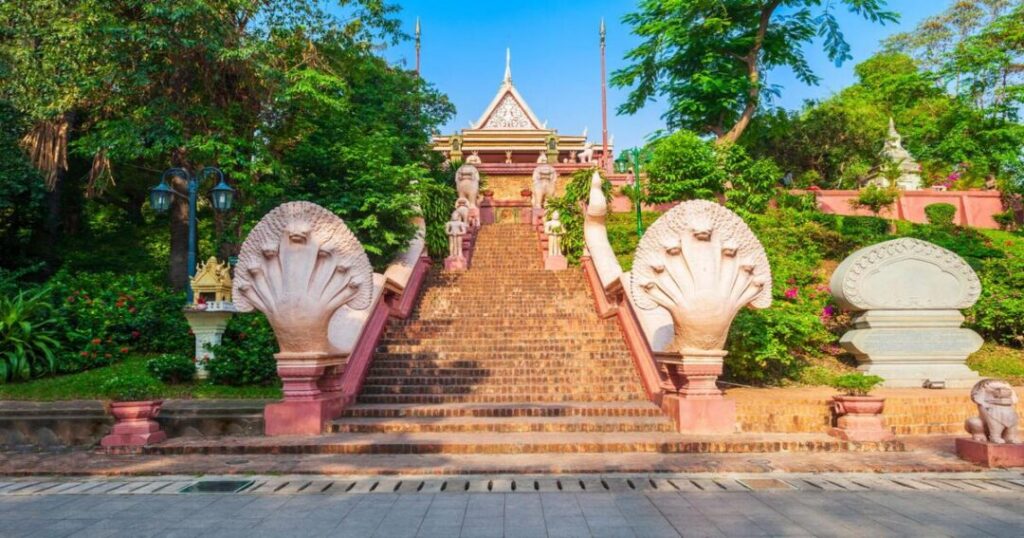
After the weight of Phnom Penh’s recent history, Wat Phnom offers a quieter change of pace.
Perched on a 27-metre-high hill, this temple is closely tied to the story of how Phnom Penh got its name.
According to local legend, a woman named Lady Penh discovered sacred Buddha statues that had been carried to shore in a koki tree after flooding. She built a shrine on the hill to house them, giving rise to the name “Phnom Penh” — broadly translated as “Penh’s Hill.”
The present temple complex has evolved over centuries, but the hill remains an important spiritual landmark in the heart of the city. The central stupa is traditionally associated with the ashes of King Ponhea Yat, who is credited with establishing Phnom Penh as a capital.
Entry is around $1, making Wat Phnom one of the easiest additions to a city itinerary.
A Perfect Day of Places to See in Phnom Penh
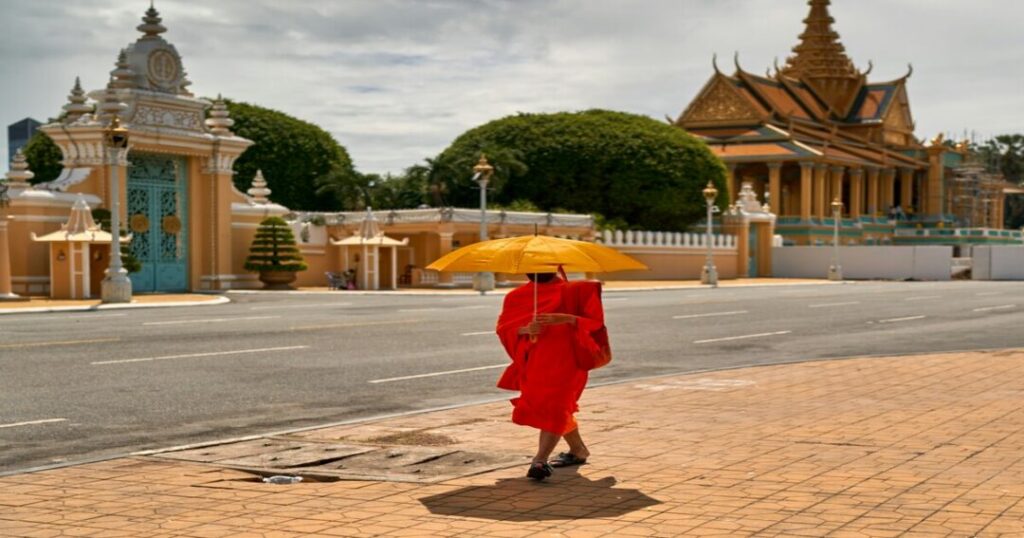
Phnom Penh is easier to experience when you let the day unfold rather than race between attractions.
Morning: Start with the Old Phnom Penh
Begin at Wat Phnom while the morning is still relatively cool. From here, make your way towards the Royal Palace and Silver Pagoda for the opening hours.
Once you’ve explored the palace grounds, walk towards the National Museum. The three stops create a natural introduction to Phnom Penh — its spiritual traditions, royal history and artistic heritage.
Take a proper lunch break before continuing. You’ll want the time and energy for the afternoon.
Afternoon: Understand the City’s Recent History
Set aside the afternoon for Tuol Sleng and Choeung Ek.
Visiting Choeung Ek first and Tuol Sleng afterward is possible, but many travellers prefer following the historical sequence from S-21 to the killing fields. Whichever order you choose, don’t treat these stops as quick photo opportunities.
This part of Phnom Penh is about listening, learning and remembering.
Evening: Return to the River
As the afternoon fades, return towards the Sisowath Quay riverfront.
After a day filled with history, the riverside offers a completely different rhythm. Watch boats move across the water, browse the streets around the waterfront or take a sunset cruise where the Mekong and Tonle Sap meet.
For dinner, explore Cambodia’s food scene — from fish amok and local street food to cafés tucked into the city’s older neighbourhoods.
It’s a gentler way to end a day that has taken you through so many chapters of the city.
Things to Do in Phnom Penh Beyond Sightseeing
Phnom Penh becomes even more interesting once you step away from the major landmarks.
Wander Through Central Market
The bright yellow dome of Psar Thmei, or Central Market, is hard to miss. Built in 1937 in an Art Deco style, its enormous central dome opens into four wings filled with jewellery, clothing, electronics, souvenirs and food.
Come for the architecture, stay for the atmosphere.
Explore the Russian Market
Psar Toul Tom Poung, better known as the Russian Market, is more crowded and maze-like. Its narrow aisles are packed with textiles, souvenirs, handicrafts, clothing and food stalls.
It is the kind of place where browsing is part of the experience.
Watch the Sunset from the River
A sunset cruise on the Mekong and Tonle Sap offers one of the easiest ways to see Phnom Penh from another perspective.
As the sun drops, the skyline, boats and riverside buildings begin to change colour — a welcome contrast to the intensity of the day’s historical sites.
Eat Your Way Through Phnom Penh
Food is another way into the city.
Try fish amok, a fragrant steamed coconut-based curry, alongside Khmer noodles, grilled dishes and street food. Phnom Penh’s growing café culture also offers plenty of places to slow down between sightseeing stops.
Explore by Bicycle or Cyclo
For travellers who want to see more than the main attractions, bicycle and traditional cyclo tours offer a slower way to move through Phnom Penh’s streets.
The French Quarter, older neighbourhoods and riverside areas reveal details that are easy to miss from inside a car.
Also Read: Top 10 Cheapest Countries to Visit From India (2026 Budget Guide)
More Phnom Penh Attractions
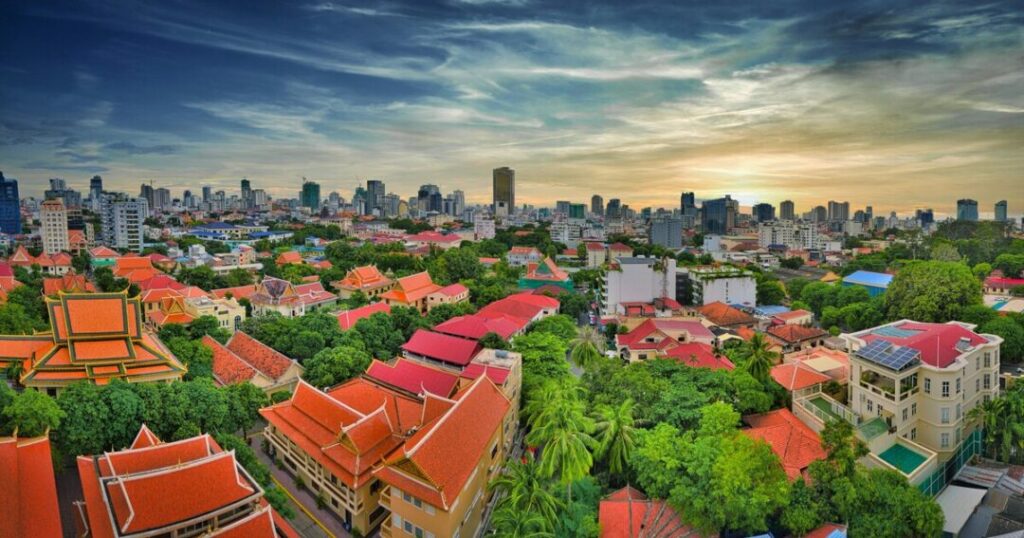
If you have more than a day, there is plenty more to discover.
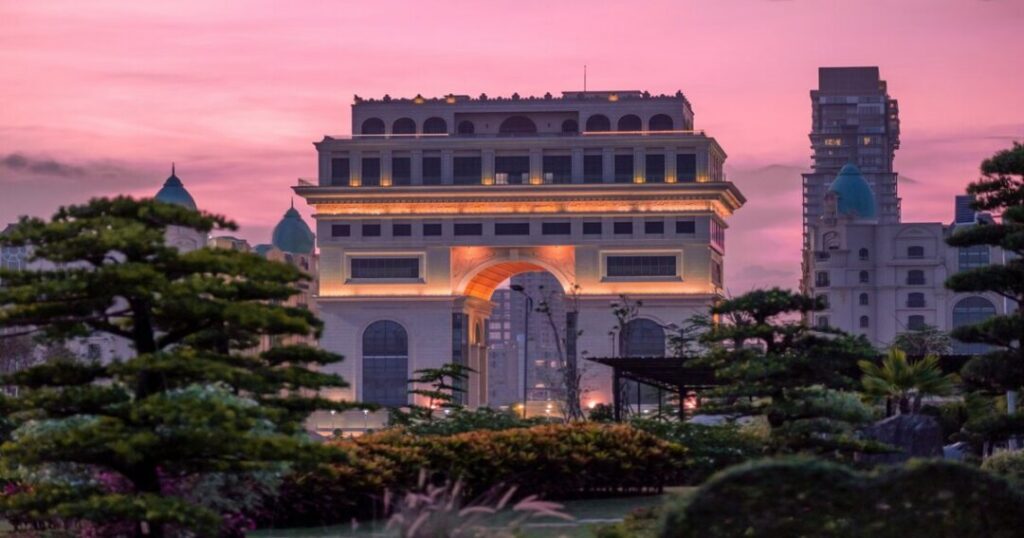
Independence Monument stands at the heart of the city as a symbol of Cambodia’s independence from France. Its lotus-inspired design draws from traditional Khmer architecture and becomes particularly striking when illuminated after dark.
Wat Ounalom, near the riverfront, is one of Phnom Penh’s oldest pagodas and an important centre of Cambodian Buddhism.
For a change of scenery, take a boat across the Mekong to Koh Dach, or Silk Island. Rural villages, traditional silk weaving and quieter roads make it feel far removed from the city’s busy streets.
And if you have another full day, Phnom Tamao Wildlife Rescue Centre, around 40 km from Phnom Penh, offers an opportunity to see rescued wildlife including elephants, sun bears and other animals.
Also Read: Festivals in Cambodia: A Complete Guide to the Country’s Most Celebrated Traditions
What is the Best Time to Visit Phnom Penh?
Phnom Penh is warm throughout the year, but the dry season from November to March is generally more comfortable for sightseeing.
December and January tend to bring the coolest conditions, although temperatures remain warm by most travellers’ standards.
April and May can be particularly hot before the southwest monsoon arrives. From June through October, rain and humidity increase, but showers are often concentrated in the afternoon rather than lasting all day.
That makes the wet season manageable if you plan intelligently — keep museums and indoor attractions for wetter periods and save riverfront walks and outdoor exploration for clearer stretches.
How to Reach Phnom Penh?
For international travellers, Techo International Airport is now the city’s main gateway. The airport began operations on September 9, 2025, replacing the former Phnom Penh International Airport for commercial and international flights.
Located south of the city, the airport is connected to Phnom Penh by road, taxis, ride-hailing services and public transport options.
Travellers can also reach Phnom Penh overland from destinations including Siem Reap and Sihanoukville, as well as from neighbouring Vietnam and Thailand.
Also Read: Best Things to Do in Cambodia: Temples, Islands, Culture & Adventure
Give Phnom Penh More Than a Day
Phnom Penh isn’t a city that fits neatly into a checklist.
One moment you’re standing beneath the golden roofs of the Royal Palace. A short walk later, ancient Khmer sculptures are telling stories that stretch back centuries. By afternoon, you’re confronting the painful history of the Khmer Rouge. And by sunset, the city has changed again — riverboats drifting past the waterfront as cafés and markets begin to come alive.
That’s what makes the places to visit in Phnom Penh so compelling. They don’t simply show you different attractions; they reveal different chapters of Cambodia.
If you’re planning a Cambodia trip, give Phnom Penh enough time to experience those chapters — and leave room for the city between the landmarks.
Planning your next journey? Explore Cambodia beyond the usual itinerary with Explurger — and discover places, experiences and stories worth stepping out for.
FAQs About places to visit in Phnom Penh
2. How many days do you need in Phnom Penh?
Two days is a more comfortable fit than the one day many itineraries allow — enough time to see the core historical sites without rushing straight from the Killing Fields to a flight or bus.
3. Which airport do I fly into for Phnom Penh?
Techo International Airport, which opened in September 2025 and took over all commercial and international flights from the older Phnom Penh International Airport (Pochentong); the older airport now handles only domestic flights, private jets, and military use.
4. Is it okay to visit Tuol Sleng and the Killing Fields on the same day?
Yes — most visitors combine both in a single morning or afternoon, since many S-21 prisoners were taken directly to Choeung Ek, but it's worth budgeting time afterward to process a genuinely heavy visit.
5. What is the dress code for the Royal Palace?
Shoulders and knees must be covered, with no hats or shoes in certain areas; the dress code is strictly enforced with checks after ticket purchase, and scarves are not accepted as a substitute for appropriate clothing.
6. What is the best time of year to visit Phnom Penh?
November through March, during the dry season, offers the most comfortable weather; April and May get hot, and June through October brings the southwest monsoon's heavier afternoon rain.