
392 Total Views
Gwalior, in northern Madhya Pradesh, about 300 km from Delhi, is built around a sandstone hill fort that Babur reportedly called the “pearl” amongst the fortresses of Hind. Around it sit a Victorian-era palace, medieval temples, Jain rock sculptures, the tomb of the musician Tansen, and a city that UNESCO named a City of Music in November 2023. The gwalior places to see are concentrated enough that most can be covered in two days, and the fort alone can fill a morning. The monsoon here runs from late June to early October, so this is a good moment to start planning. This guide covers the five best places to see, the attractions beyond the fort, a sample two-day plan, the music and museum angle, day trips, an evening show at the fort, and the practical details, including the best time to visit and how to reach Gwalior.
Top Gwalior Places to See
These five places give the best introduction to the city’s history. Four of them are inside the fort complex.
Gwalior Fort
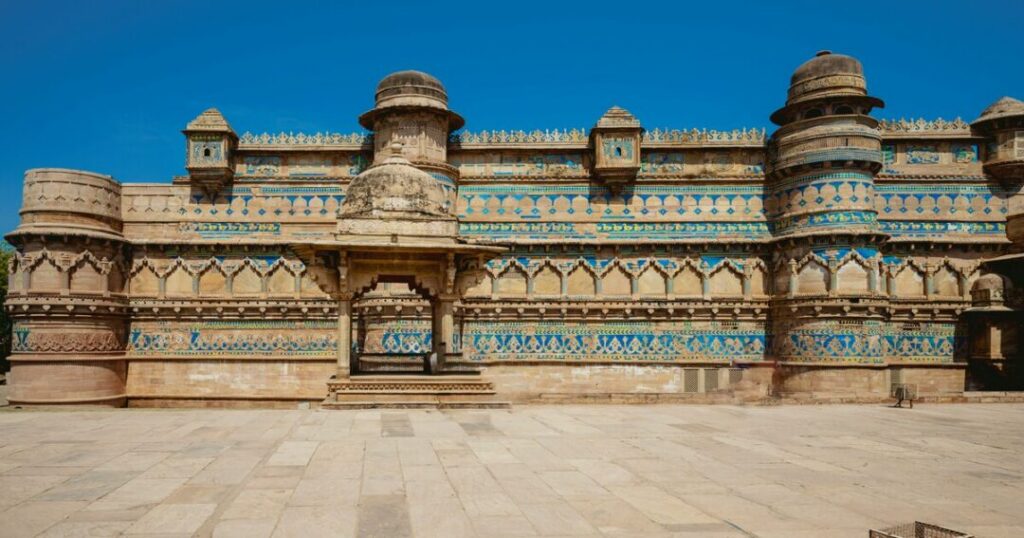
The fort stands on Gopachal, a long ridge of ochre sandstone capped with basalt that rises to about 104 meters at its highest point and runs about 2.4 km in length. Its founding date is uncertain: Wikipedia gives the 6th century, and it may be older. The fort has been fought over for centuries. Mahmud of Ghazni besieged it in 1022, the Tomars took it in 1398, and Man Singh Tomar ruled from 1486 to 1516. Babur took it in 1526, and Akbar in 1558. The Marathas held it in 1755 and 1756; the British captured it on August 3, 1780, and they handed it to the Scindias in 1886. The Government of India has held it since 1948. Ramparts follow the edge of the hill and are linked by six bastions, and the fort’s water tanks could supply a garrison of 15,000. Hathi Pol is the principal entrance, and the Urvahi gate side leads to the rock-cut Jain sculptures.
Two religious sites sit within the walls. The Chaturbhuj Temple carries an inscription that Wikipedia describes as the second-oldest known record of zero with place value, after the Bakhshali manuscript, while promotional pages claim it is the first. Gurudwara Data Bandi Chhor stands where Guru Hargobind was held, and Sikh tradition marks his release on Diwali, now called Bandi Chhor Divas. A popular story links his release to 52 Rajput kings, but Wikipedia says it has no historical basis.
Also Read: Madhya Pradesh Heritage Circuit: Discover India’s Timeless Legacy
Man Mandir Palace and Gujari Mahal
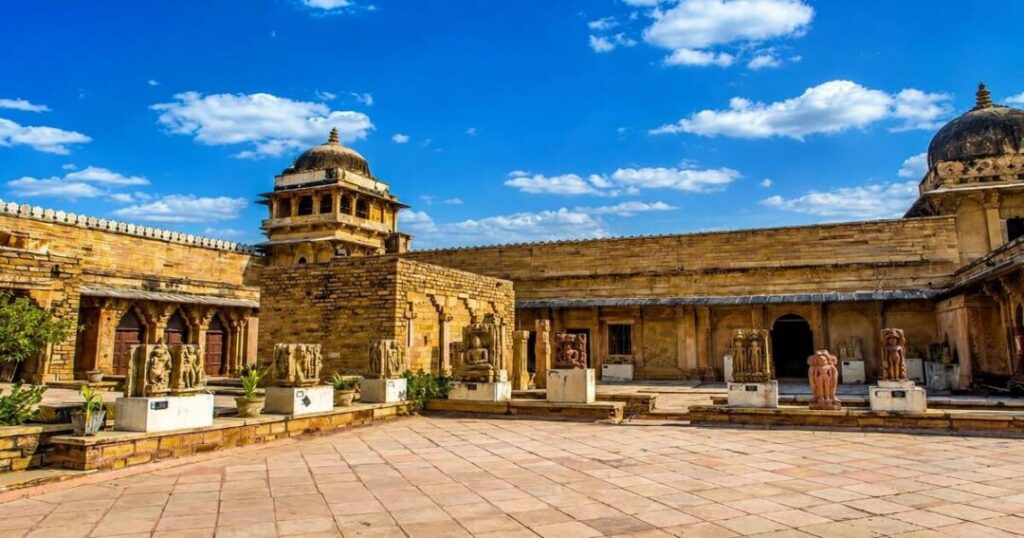
Man Mandir is the fort’s Painted Palace, built by Man Singh Tomar in the 15th century and refurbished in 1648, and known for its turquoise, green, and yellow tiles. Nearby, Assi Khambo Ki Baoli is a step-well with 80 pillars, built around 1500. Gujari Mahal was built by Man Singh Tomar for his wife Mrignayani, a Gurjar princess, and is now an archaeological museum. Its collection includes the Shalabhanjika statue.
Sas-Bahu and Teli ka Mandir
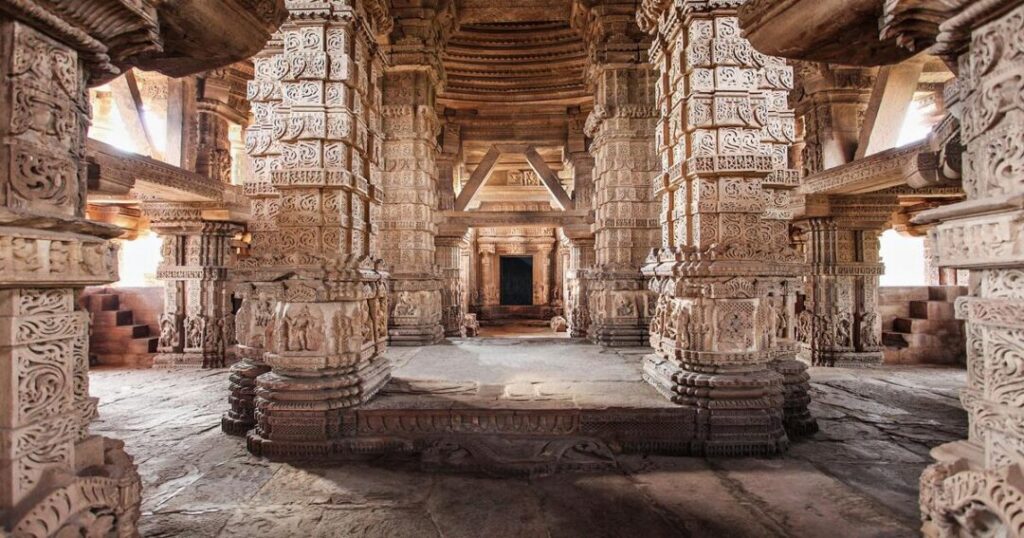
The Sas-Bahu temples were built in 1092 and 1093, according to Wikipedia. They are built of red sandstone, and sources disagree on whether they honor Vishnu or Shiva. Teli ka Mandir, built by the Pratihara emperor Mihira Bhoja, is described as the oldest part of the fort, a North Indian Nagara tower. Wikipedia says it was first a Shakti temple and later a Shiva temple, while Madhya Pradesh Tourism calls it a Vishnu temple. Its height is given as 25 m, 23 m, and about 100 feet in different sources, so treat it as roughly 25 m.
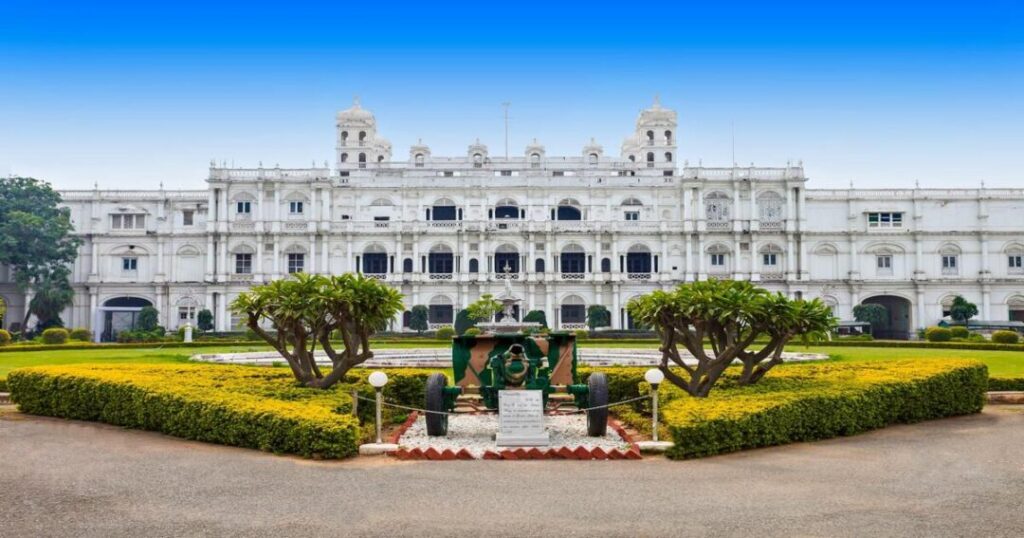
Jai Vilas Palace and the Scindia Museum
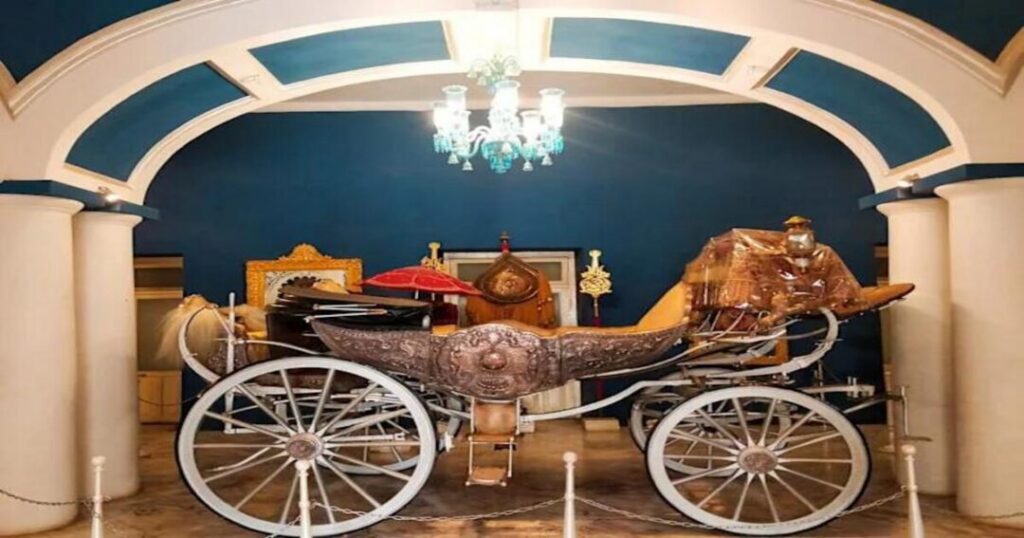
Jai Vilas Palace was built in 1874 by Jayajirao Scindia, and the architect was Lieutenant Colonel Sir Michael Filose. It blends Mughal and Medici architecture, with the three floors following Tuscan, Italian Doric, and Corinthian orders. The Durbar Hall is about 30 m long, 15 m wide, and 12 m high and holds two chandeliers, each about 12.5 m tall and 3.5 tonnes, said to be the largest pair in the world. Much of the palace is the Jiwajirao Scindia Museum, which opened to the public in 1964 and preserves rooms as the royal family left them, including the royal kitchen and a silver model train. Part of the palace is still a residence of Scindia descendants.
Gopachal Jain Sculptures
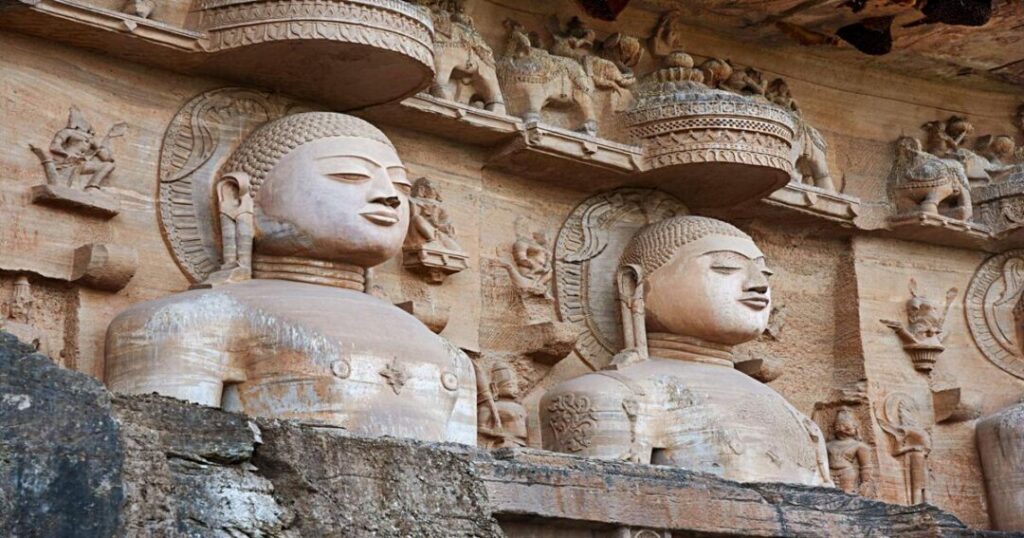
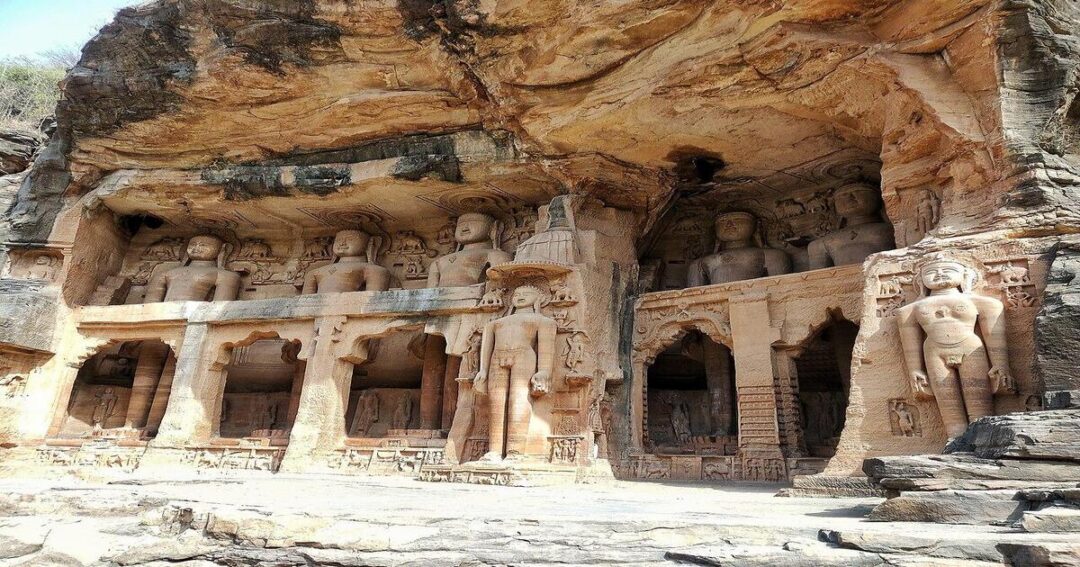
Around the fort’s walls are Jain rock-cut sculptures, dated between the 7th and 15th centuries. There are about 1,500 idols on Gopachal Hill. The tallest is Adinath at 17.78 m (58 ft 4 in). Babur’s army defaced statues here in 1527, and the marks are still visible on some figures.
Also Read: More Than Just Tigers: Places to Visit in Madhya Pradesh
Gwalior Places to See: Tourist Attractions Beyond the Fort
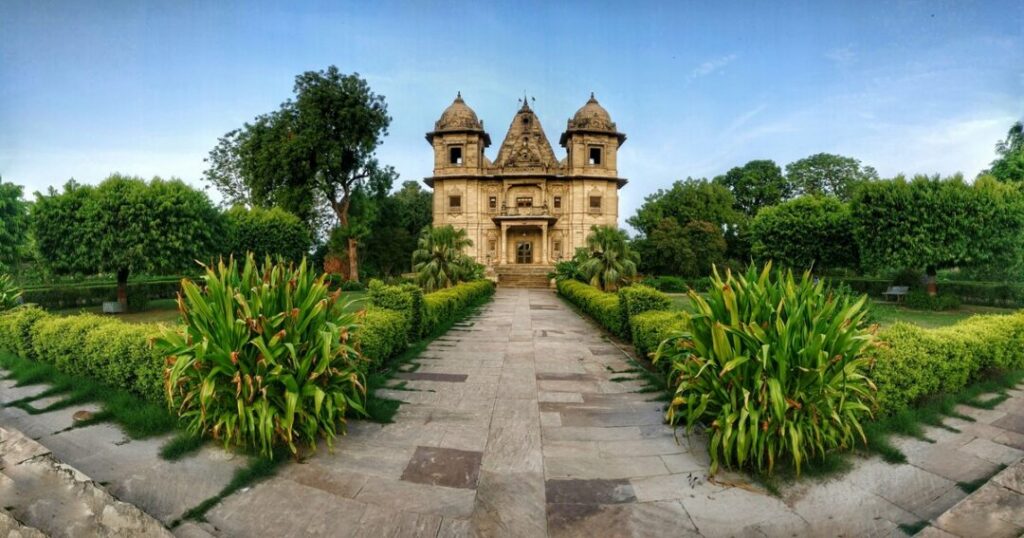
The fort is the headline, but the other Gwalior tourist attractions are spread across the city and are easy to reach by cab or auto. These are the main ones.
Tomb of Tansen and Muhammad Ghaus
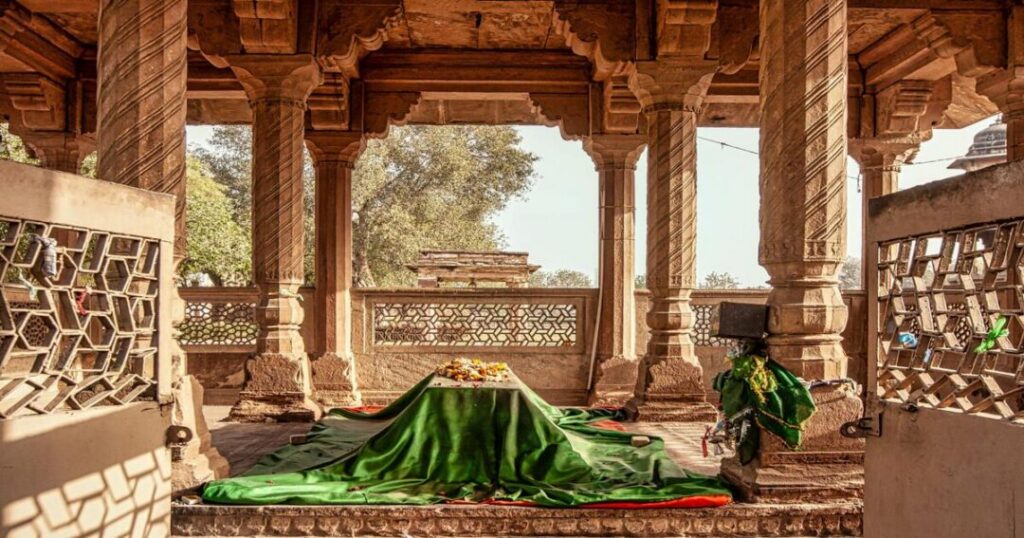
Tansen was born around 1493 (sources range up to 1506) and later served at Akbar’s court. His death is given as April 26, 1589, by the Akbarnama, although some historians say 1586. His remains are in the mausoleum complex of his Sufi master, Shaikh Muhammad Ghaus, whose 16th-century tomb is a landmark in its own right. The annual Tansen Samaroh music festival is held in December near the tomb.
Teli Ka Mandir
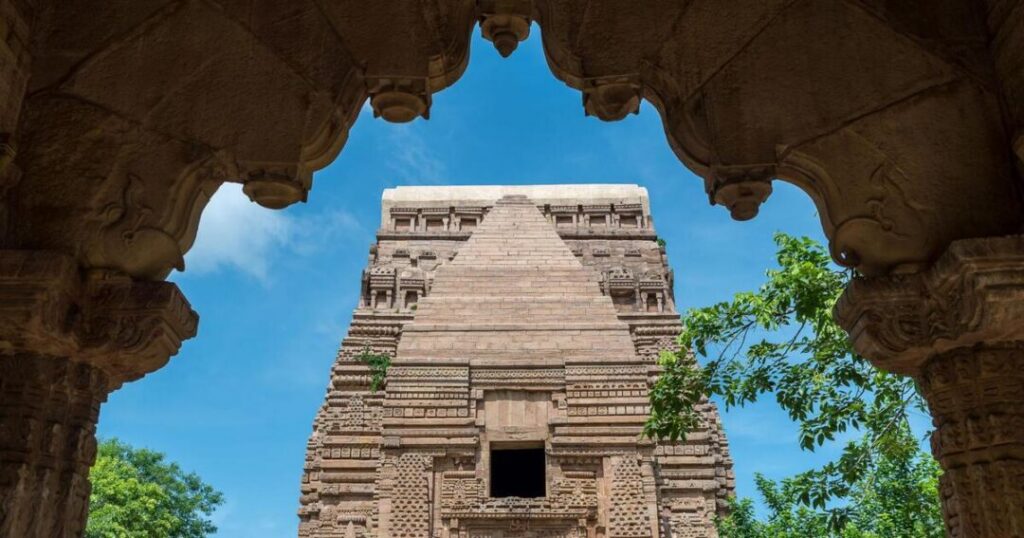
is one of the most distinctive landmarks within Gwalior Fort, known for its impressive architecture that blends North Indian Nagara and South Indian Dravidian styles. Dating back to the 8th or 9th century, this towering temple features intricate carvings, ornate doorways, and a striking roofline. It is a must-visit for history and architecture enthusiasts exploring Gwalior’s rich heritage.
Rani Lakshmibai Samadhi
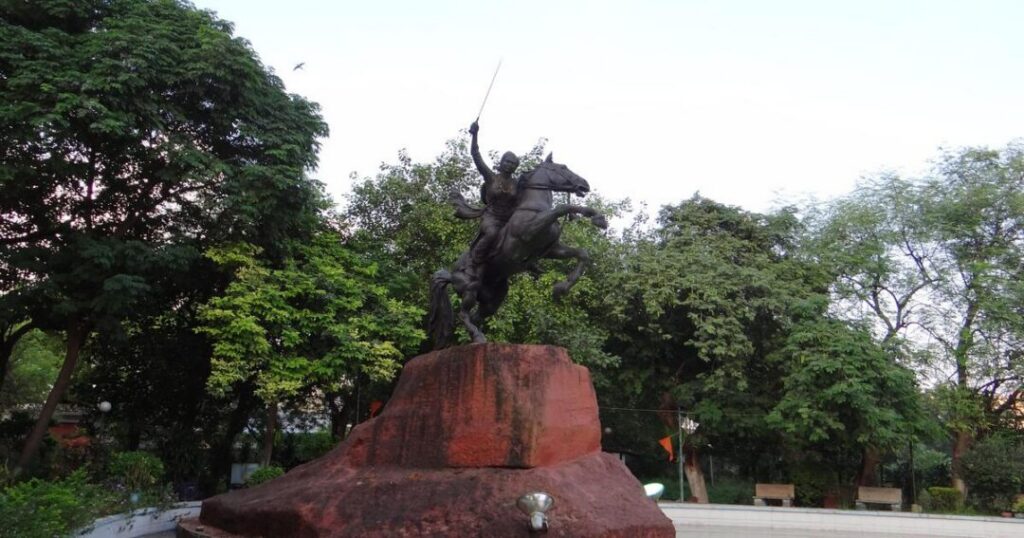
This memorial honours the queen of Jhansi, who died fighting near Gwalior in 1858. It features a metal statue about 8 m (26 feet) tall, and an annual fair is held in June.
Sun Temple
Built in 1988 by the industrialist G. D. Birla and modeled on the Konark Sun Temple It is a modern temple, not a medieval one.
Also Read: Places to Visit in Bhopal: Top Attractions in the City of Lakes
Gwalior Zoo and the Italian Garden
The Gwalior Zoo, officially the Mahatma Gandhi Zoological Park, was built by Madho Rao Scindia, opened by the Prince of Wales in 1922, and stands within the Phool Bagh area. Wikipedia says it is known for white tigers. The Italian Garden is another city-center stop.
Gwalior Places to See: A Sample Two-Day Sightseeing Plan
The Gwalior sightseeing places fall naturally into a fort day and a city day. This plan is our own suggestion and has not been timed.
Day 1: The Fort
Start early, enter through Hathi Pol, and see Man Mandir, Gujari Mahal, the Teli ka Mandir, the Sas-Bahu temples, and Gurudwara Data Bandi Chhor. Leave via Urvai Gate for the Jain sculptures, and come back after dark for the sound and light show if you can.
Day 2: Palaces, Music, and Memorials
Spend the morning at Jai Vilas Palace and the Scindia Museum, then visit the tomb of Tansen and Muhammad Ghaus, the Rani Lakshmibai Samadhi, and, if time allows, the Sun Temple or the zoo.
Music and History Lovers: Gwalior Places to See
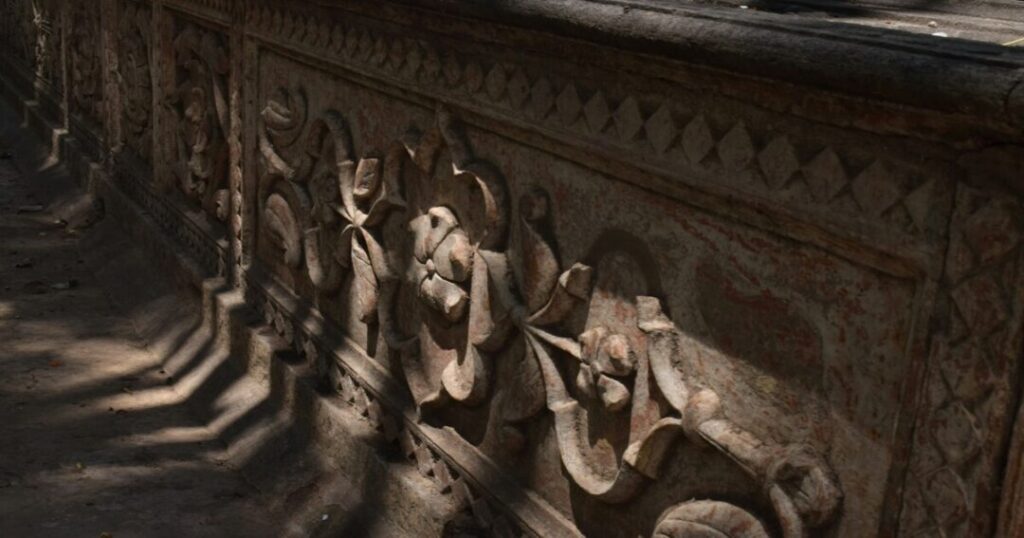
Among the places of interest in Gwalior, the music connection stands out. Gwalior was included in UNESCO’s Creative Cities Network as a City of Music in November 2023, and the Gwalior Gharana is described as the oldest khyal gharana in Hindustani music. Tansen’s tomb draws musicians every December for the Tansen Samaroh.
Day Trips: More Places to See in Gwalior’s Region
These places to see in Gwalior’s surroundings are worth a day each. Distances are approximate and from the city.
- Tighra Dam: About 23 km.
- Shanichara Temple (Aiti): About 25 km.
- Bateshwar temples: About 35 km.
- Chausath Yogini Temple (Mitaoli): About 40 km.
- Kakanmath Temple (Sihoniya): About 55 km.
- Madhav National Park and Kuno National Park: About 120 km and about 160 km, respectively.
Also Read: Things to Do in Jabalpur: Explore Madhya Pradesh’s Hidden Gem
Things to Do in Gwalior After Dark: The Sound and Light Show
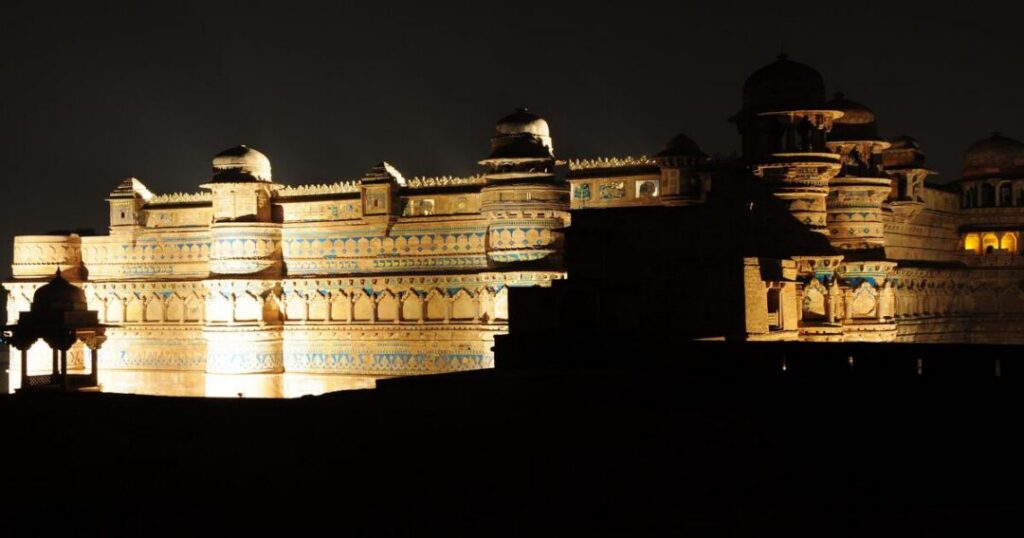
Among the best things to do in Gwalior in the evening is the sound and light show at the fort, told in separate Hindi and English sessions of about 35 minutes each. Madhya Pradesh Tourism lists two seasonal schedules: March to September, Hindi at 7:30 PM and English at 8:20 PM, and October to February, Hindi at 6:30 PM and English at 7:20 PM. The page does not say which day the schedule switches, and another tourism page still lists the summer times, so with today being October 15, confirm the start time before you go. Ticket prices are not given here.
Gwalior Places to See: Quick Reference
For anyone scanning the places to visit that Gwalior offers or the places to visit at the Gwalior Fort complex alone, here is the short version.
- Gwalior Fort: Ridge about 2.4 km long.
- Man Mandir and Gujari Mahal: Painted Palace and archaeological museum.
- Sas-Bahu and Teli ka Mandir: Temples of 1092–93 and an older Pratihara temple.
- Jai Vilas Palace: Built 1874, now partly a museum.
- Gopachal Jain sculptures: About 1,500 idols.
- Tomb of Tansen: Hazira, with the Tansen Samaroh each December.
- Rani Lakshmibai Samadhi and Sun Temple: Memorial and a 1988 temple.
Gwalior Places to See: Best Time to Visit
Gwalior has a humid subtropical climate. Summers are very hot, with a record high of 48.3°C in May and a mean daily maximum of about 42°C that month. The monsoon runs from late June to early October. Winters are mild and dry, and January is the coldest month. One commercial guide calls December to February the prime window and notes that air quality worsens from about October, with haze at its worst in January. Madhya Pradesh Tourism’s guide recommends October to March. The Tansen Samaroh in December is a draw, but it also brings crowds, so book ahead.
How to Reach Gwalior: Places to See and Travel Tips
Gwalior Airport, officially Rajmata Vijaya Raje Scindia Airport, is the largest in Madhya Pradesh and shares its site with an Indian Air Force base. Wikipedia lists daily flights to Delhi, Mumbai, Kolkata, Hyderabad, Bengaluru, Pune, Ahmedabad, Jaipur, Indore, Patna, and Jammu, although schedules change, so check current flights. Gwalior Junction is on the Delhi-Mumbai main line, with more than 180 trains stopping and about fifty a day running to New Delhi and Agra. The city is about 300 km from Delhi by road.
Conclusion: Gwalior Places to See
The best gwalior places to see reward a slow pace: a morning on the fort, an afternoon among palaces and tombs, and an evening under the lights. Check the show timings, confirm access to individual sites and go in the cooler months.
Heading to Madhya Pradesh? Use the Explurger app to plan your route and meet fellow travelers exploring Gwalior, Orchha and beyond.
FAQs About Gwalior Places to See
2. What is Gwalior famous for?
Its hill fort, its Scindia palaces and its music heritage. UNESCO named Gwalior a City of Music in November 2023, and Tansen is buried here.
3. How many days do you need in Gwalior?
Two days covers the fort and the main city sights. This is our own suggestion, not an official figure.
4. When is the Gwalior Fort sound and light show?
Madhya Pradesh Tourism lists Hindi at 6:30 PM and English at 7:20 PM from October to February, and 7:30 PM and 8:20 PM from March to September. Confirm before you go.
5. Where is Tansen buried?
In the mausoleum complex of his Sufi master, Shaikh Muhammad Ghaus, in Gwalior. The Tansen Samaroh festival is held there each December.
6. When is the best time to visit Gwalior?
Winter, roughly October to March, is mild and dry. Summers are very hot, and the monsoon runs from late June to early October.