
1,094 Total Views
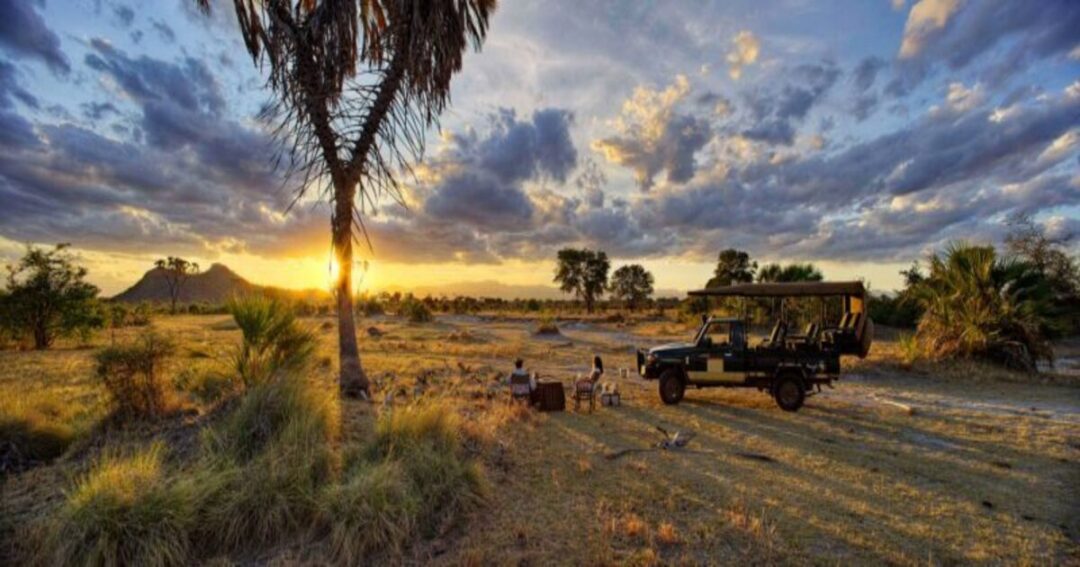
Imagine flying into Kenya, booking a safari, spotting the Big Five, and flying back convinced you’ve “done” the country. It’s a neat, photogenic version of travel. It’s also incomplete.
Because beyond the savannahs and game drives lies a different Kenya, one that doesn’t perform for the lens. A coastline shaped by centuries of global trade. Forests that are not just ecosystems but sacred archives. Landscapes so ancient they hold the earliest chapters of human history. If you really want to understand Kenya, you don’t start with wildlife. You start with what it has preserved.
8 UNESCO World Heritage Sites in Kenya That Go Beyond Wildlife Safaris
And that’s where its eight UNESCO World Heritage Sites come in. Not as a checklist, but as evidence of everything the country actually is.
1. FORT JESUS
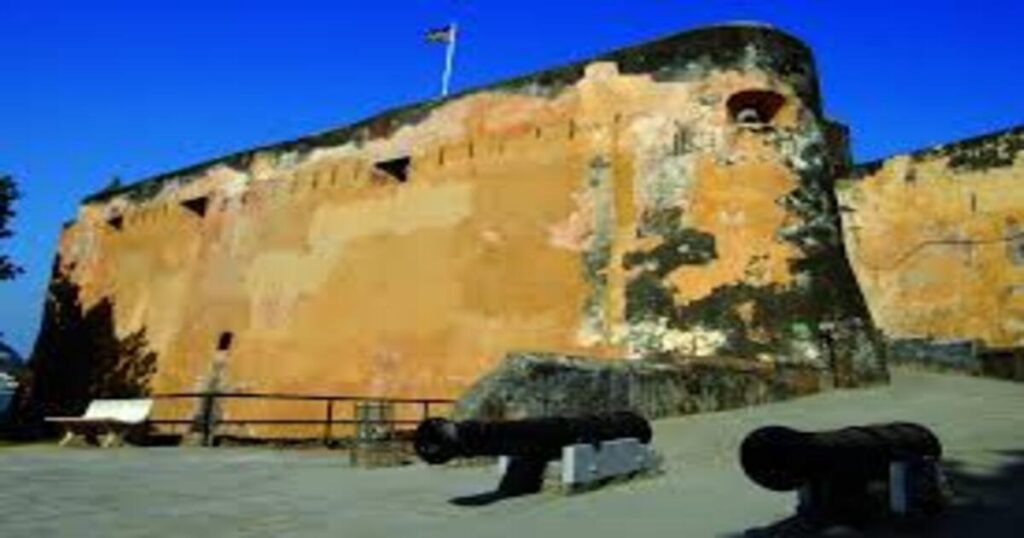
Type: Cultural | Inscribed: 2011
What it is:
A 16th-century Portuguese fort built to control trade routes along the Indian Ocean.
History:
Constructed in 1593 by the Portuguese under King Philip I. It changed hands multiple times between the Portuguese, Omani Arabs, and later the British. Each occupation modified the structure, making it a layered record of colonial conflict.
Why UNESCO selected it:
- Represents European military architecture adapted to East African conditions
- Demonstrates control of Indian Ocean trade routes
- Evidence of cultural interchange between Europe, Arabia, and Africa
- “…One of the most outstanding and well-preserved examples of 16th-century Portuguese military fortifications”.
When to visit:
- Best: November to March (dry, less humid)
- Avoid peak monsoon (April–May)
2. Lamu Old Town
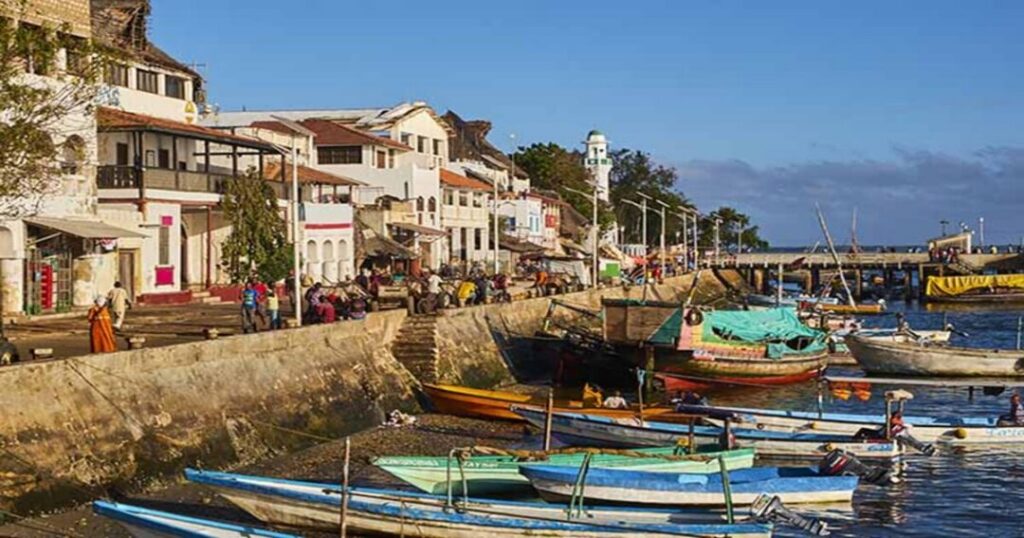
Kenya, Lamu island, Lamu town, February 12, Unesco world heritage, sea front with fishing boat
Type: Cultural | Inscribed: 2001
What it is:
The oldest continuously inhabited Swahili settlement in East Africa.
History:
Founded in the 14th century, Lamu grew as a major trading hub linking Africa with Arabia, India, and Persia. It retains original urban layout, coral stone buildings, and Swahili-Islamic culture.
Why UNESCO selected it:
- Best-preserved Swahili town
- Continuous cultural traditions (architecture, religion, language)
- Important evidence of Indian Ocean trade networks
When to visit:
- Best: December to March, July to October
- Avoid heavy rains: April–June
3. Sacred Mijikenda Kaya Forests
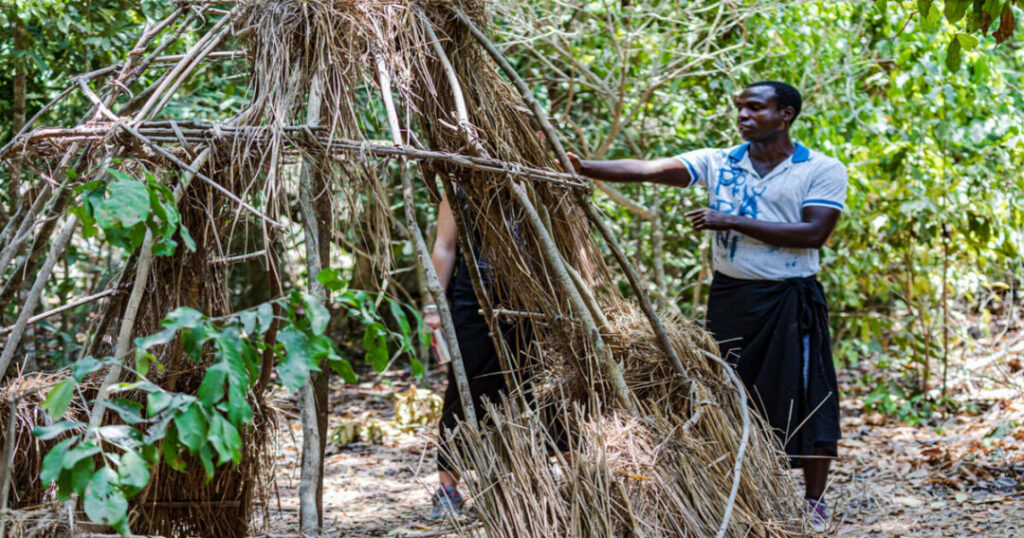
Type: Cultural | Inscribed: 2008
What it is:
A network of sacred forest sites that once served as fortified villages (kayās).
History:
Established between the 16th–19th centuries by the Mijikenda people after migrating inland. Over time, these settlements were abandoned but retained as spiritual and ritual centers.
Why UNESCO selected it:
- Strong link between culture and environment
- Living traditions, rituals, and governance systems
- Represents indigenous land-use and belief systems
When to visit:
- Year-round possible
- Best in dry seasons (Jan–March, July–October) for accessibility
4. Thimlich Ohinga Archaeological Site
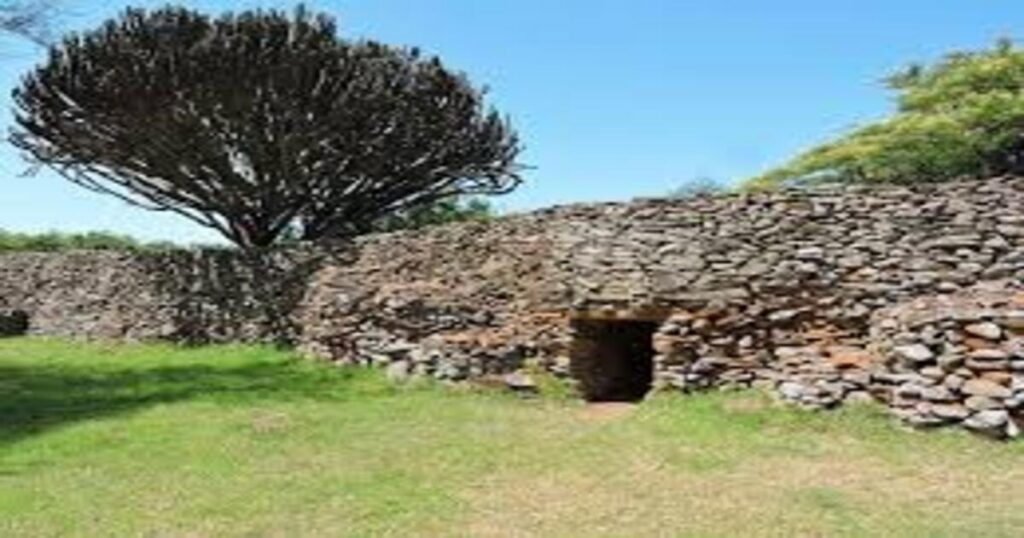
Type: Cultural | Inscribed: 2018
What it is:
A complex of dry-stone enclosures built without mortar.
History:
Dates back to around the 16th century. Built by pastoral communities (likely early Luo groups) for security and livestock management. Reflects organized settlement patterns.
Why UNESCO selected it:
- Exceptional example of dry-stone construction in East Africa
- Evidence of social organization and defense systems
- Challenges narratives of “stateless” pre-colonial Africa as propagated by the West
When to visit:
- Best: June to September, January to February
- Avoid heavy rains (roads become difficult)
5. Historic Town and Archaeological Site of Gedi
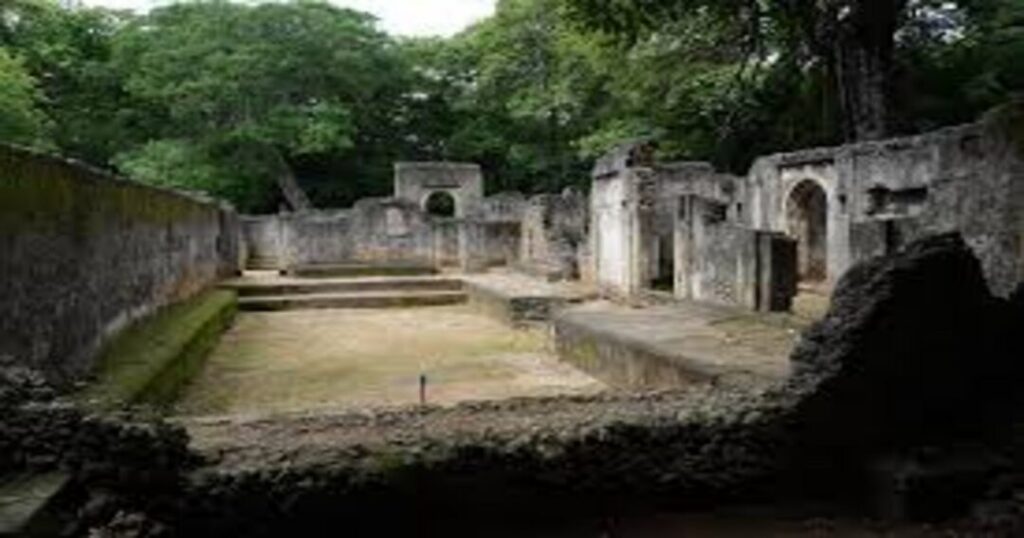
Type: Cultural | Inscribed: 2024
What it is:
Ruins of a medieval Swahili town hidden in coastal forest.
History:
Occupied from the 10th to 17th centuries. Gedi was a prosperous trade town with mosques, palaces, and houses. Abandoned suddenly, likely due to environmental or economic shifts.
Why UNESCO selected it:
- Well-preserved Swahili urban settlement
- Evidence of trade links with Asia and the Middle East
- Archaeological insight into coastal urban planning
When to visit:
- Best: December to March, July to October
- Early morning recommended (heat + humidity)
6. Lake Turkana National Parks
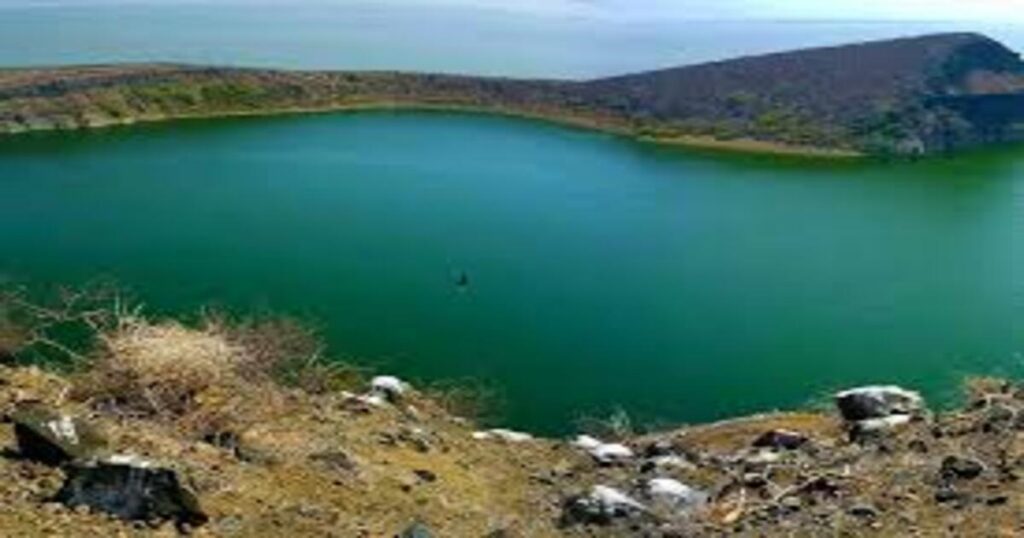
Type: Natural | Inscribed: 1997
What it is:
A group of protected areas around Lake Turkana (Africa’s largest saline lake), including fossil-rich zones. It was placed under the List of World Heritage in Danger in 2018 due to the Gilgel Gibe III Dam.
History:
The region has yielded some of the most important hominid fossils, contributing to understanding human evolution. Often called the “Cradle of Mankind.”
Why UNESCO selected it:
- Major paleoanthropological site
- Unique desert lake ecosystem
- Important for crocodile breeding and birdlife
When to visit:
- Best: June to July, and December to March
- Conditions are harsh year-round (heat, remoteness)
7. Mount Kenya National Park/Natural Forest
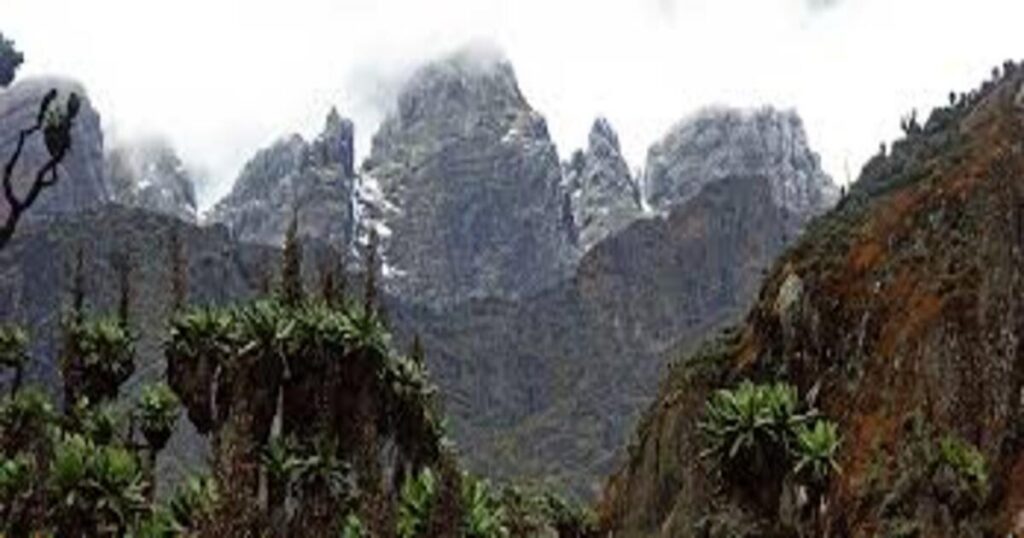
Type: Natural | Inscribed: 1997
What it is:
A high-altitude mountain ecosystem around Africa’s second-highest peak. The volcano is 3.1-2.6 million years old. In April 1978, the area was designated a UNESCO Biosphere Reserve. There are 12 remaining glaciers on the mountain and contributes to OUTSTANDING universal value.
History:
Formed by volcanic activity. The mountain has long-standing cultural significance for local communities (especially the Kikuyu).
Why UNESCO selected it:
- Exceptional biodiversity and altitudinal ecosystems
- Mount Kenya is also considered as a holy mountain by the communities who are living adjacent to it, i.e., Kikuyu and Meru.
- Important water catchment area
- Glacial and geological features
When to visit:
- Best trekking seasons: Jan–Feb, July–Oct
- Avoid rainy seasons
8. Kenya Lake System in the Great Rift Valley
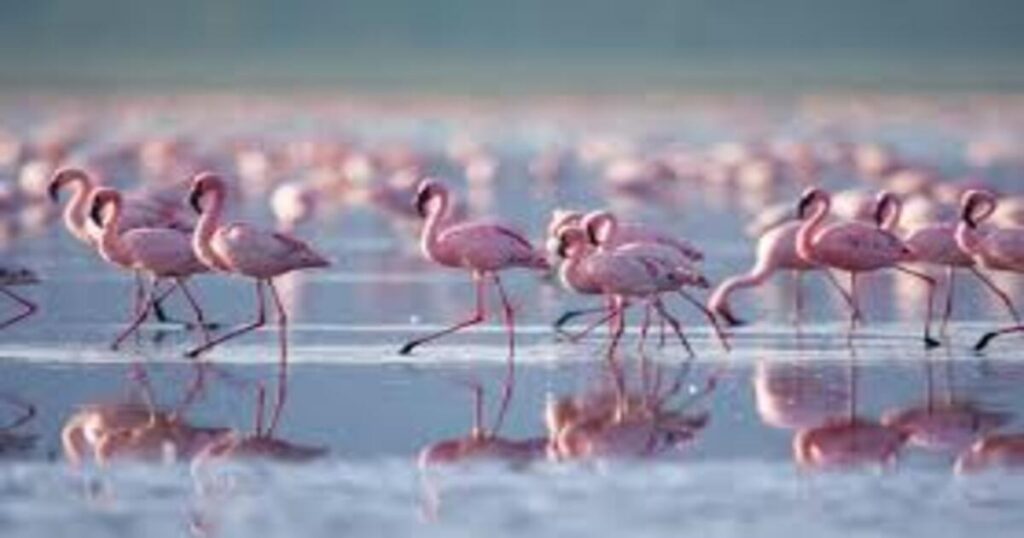
Type: Natural | Inscribed: 2011
What it is:
A system of three alkaline lakes: Elementaita, Nakuru, and Bogoria.
History:
Part of the Great Rift Valley formation. These lakes support large populations of flamingos and other migratory birds.
Why UNESCO selected it:
- Globally significant bird habitat
- High biodiversity
- Key ecological processes (migration, breeding)
When to visit:
- Best: dry seasons i.e., June to October or January to March
- Flamingo concentrations vary, but typically higher in dry seasons
Why Travelers Should Visit These Sites
These eight UNESCO sites are not just “places to see.” They give you context for the country you’re traveling through.
- First, they expand your understanding of Kenya beyond wildlife. A safari shows you ecosystems. Sites like Lamu Old Town or Fort Jesus show you historical connectivity, how East Africa was part of global trade networks for centuries. Without that, your view of the country stays incomplete.
- Second, they provide evidence of indigenous systems and societies. Places like Sacred Mijikenda Kaya Forests and Thimlich Ohinga Archaeological Site demonstrate structured communities, belief systems, and governance long before colonial intervention. This corrects a common gap in how African history is understood.
- Third, the natural sites ground you in deep time. At Lake Turkana National Parks, you are in a region central to human evolution. At Mount Kenya National Park/Natural Forest and the Kenya Lake System in the Great Rift Valley, you see ecological systems that are globally significant, not just locally scenic.
Finally, these sites offer variety in travel experience:
- Urban heritage (Lamu, Gedi)
- Archaeological exploration (Thimlich Ohinga)
- Sacred landscapes (Kaya forests)
- Extreme natural environments (Turkana, Mount Kenya)
For a traveler, this means Kenya becomes a multi-dimensional destination, not a single-theme trip.
What Sites to Visit Based on Traveler Type?
1. History & Architecture Focus
- Lamu Old Town
- Fort Jesus
- Historic Town and Archaeological Site of Gedi
Why:
These sites show urban planning, trade history, and layered cultural influence from African, Arab, and European interactions.
2. Archaeology & Anthropology Interest
- Thimlich Ohinga Archaeological Site
- Lake Turkana National Parks
Why:
Focus on early human history, settlement patterns, and material culture. Turkana is globally important for human evolution research.
3. Cultural & Indigenous Heritage Travelers
- Sacred Mijikenda Kaya Forests
- Lamu Old Town
Why:
Living traditions, religious practices, and continuity of cultural identity.
4. Nature & Wildlife Enthusiasts (Beyond Safari)
- Kenya Lake System in the Great Rift Valley
- Mount Kenya National Park/Natural Forest
- Lake Turkana National Parks
Why:
Bird migrations, alpine ecosystems, and unique desert-lake environments.
5. Offbeat & Remote Travel Seekers
- Lake Turkana National Parks
- Thimlich Ohinga Archaeological Site
Why:
Low tourist traffic, challenging access, and high experiential value.
Conclusion
Taken together, these eight UNESCO sites reposition how Kenya should be understood as a destination. They show a country shaped not just by wildlife, but by trade networks, indigenous systems, ecological significance, and early human history. For a traveler, this changes the objective. The goal is no longer just to see Kenya, but to understand what has shaped it. These sites provide that framework. They explain how communities lived, how landscapes function, and how the region connected to wider global systems over centuries.
A safari can show you movement and life in the present. These sites show you process and continuity over time. If the intent is to engage with the country beyond surface-level experience, they are not optional. They are essential.