
1,135 Total Views
Pune is a city that refuses to be summarized. It’s a Maratha Empire capital, a British cantonment, a university city, a tech hub, and a weekend getaway all at once—and each of those identities left something behind worth exploring. Within the city, you’ll find a 1732 Peshwa palace, Gandhi’s prison, a museum of 22,000 everyday Indian artifacts, and Osho’s ashram. Within an hour you’ll find a hill fort that defeated the Mughals, a lake ringed by the Sahyadri Hills, and the road to Lonavala. If you’re looking for the best things to do in Pune, you’ve landed in the right place.
Best Time to Visit Pune
October to February is the most comfortable window — temperatures between 15°C and 30°C, clear skies, and ideal conditions for hill forts and day trips. Pune’s elevation (~560 meters) keeps it noticeably cooler than Mumbai year-round. Monsoon (June–September) transforms the surrounding Sahyadri hills dramatically—Sinhagad Fort in the clouds and Mulshi Lake at full capacity are genuinely spectacular—but trails get slippery. March to May is warm but manageable; avoid peak afternoon heat by starting early.
How to Reach Pune
- From Mumbai (~150 km | 3 hours): By road via NH48 (Expressway); by train from CST or Dadar (Deccan Queen, Shatabdi—~3 hours); by bus from various terminals including Dadar
- By air: Pune International Airport (PNQ), Lohegaon — connected to major Indian cities
- By train: Pune Junction is a major railway station—well-connected to Delhi, Bengaluru, Hyderabad, Goa, Chennai
Also read: Andharban Trek: The Complete Beginner’s Guide to Maharashtra’s Dark Forest
Heritage & History — Pune India Tourist Attractions
1. Shaniwarwada — The Palace at the Heart of Pune
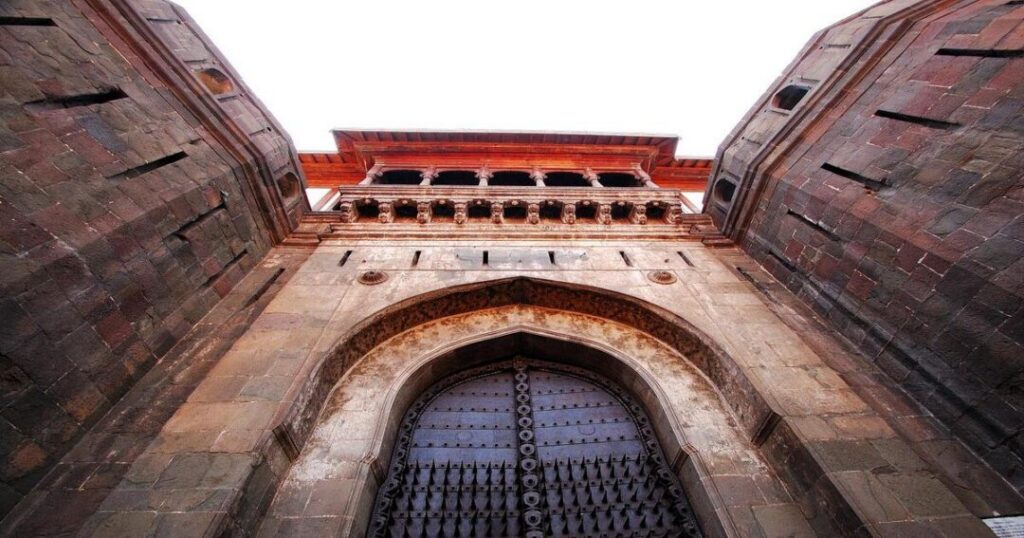
Shaniwarwada is the defining landmark of Pune — a massive 18th-century fortified palace built by Peshwa Bajirao I, who laid its foundation on Saturday, January 10, 1730. The opening ceremony was held on January 22, 1732 (also a Saturday, chosen as an auspicious day). The name comes directly from Shaniwar (Saturday in Marathi) and Wada (residence). It served as the seat of the Peshwas—the prime ministers of the Maratha Empire—until 1818, when the Peshwas surrendered to the British. A devastating fire in 1828 destroyed most of the interior, leaving the massive perimeter walls, bastions, and five gateways standing.
- The Hazari Karanje (Fountain of a Thousand Jets) inside was designed for the infant Peshwa Sawai Madhavrao; the five gates each have specific names and purposes—the main Delhi Darwaja is the primary entry for visitors
- The light and sound show held every evening brings the history of the Peshwas dramatically alive—worth attending even if you’ve already toured the complex by day
- Entry: ₹5 for Indians; the sound and light show runs separately in the evenings
Also read: Devkund Waterfall Trek: The Complete Guide to Maharashtra’s Secret Waterfall
2. Aga Khan Palace — Where Gandhi Was Imprisoned
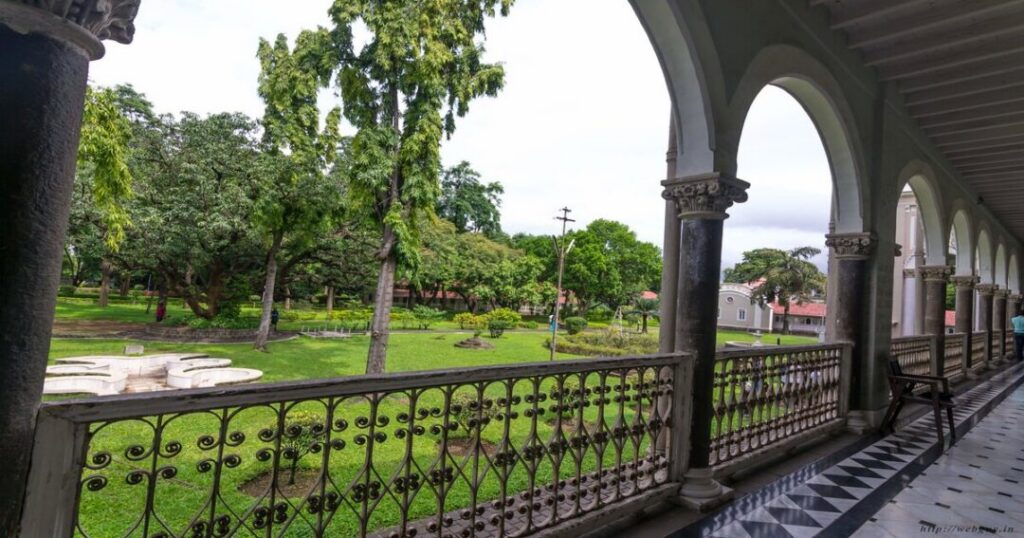
Built in 1892 by Sultan Mohammed Shah Aga Khan III as an act of charity — to provide employment to famine-affected people of the region — the Aga Khan Palace became one of the most significant sites in India’s freedom struggle half a century after its construction. Following the launch of the Quit India Movement on August 8, 1942, the British imprisoned Mahatma Gandhi, Kasturba Gandhi, Mahadev Desai, and Sarojini Naidu within its walls. Gandhi was held here from August 9, 1942, to May 6, 1944. Both Kasturba Gandhi (February 22, 1944) and Mahadev Desai (within days of their arrest in August 1942) died here during their imprisonment—their samadhis are within the palace grounds. Gandhi’s ashes are also kept here, in a memorial within the complex.
- In 1969, Aga Khan IV donated the palace to the Indian people as a tribute to Gandhi’s philosophy—it is now managed by the Gandhi National Memorial Society
- The palace is set on 7.7 hectares with beautifully maintained gardens; the Italian-arched façade and open lawns make it one of the most peaceful Pune, India, attractions.
- Entry: ₹25 for Indians, ₹300 for foreign tourists
3. Lal Mahal — Where Shivaji Grew Up
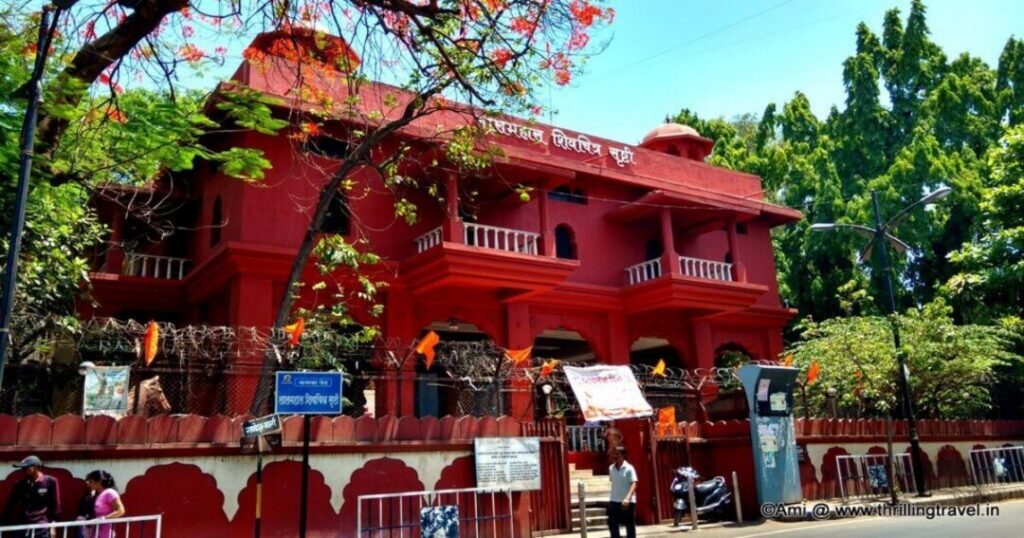
The Lal Mahal (Red Palace) was the childhood residence of Chhatrapati Shivaji Maharaj—built around 1630 by his father, Shahaji Bhosale, for his family’s stay in Pune. The current structure is a reconstruction; the original was destroyed long ago. It is the site of the famous encounter in which the young Shivaji is said to have cut off the fingers of Mughal commander Shaista Khan, who had occupied the palace.
- Located in the heart of old Pune, within walking distance of Shaniwarwada
- The museum inside traces Shivaji’s early life in Pune and his relationship with his mother Jijabai
- Best combined with Shaniwarwada and the Raja Dinkar Kelkar Museum as part of a full heritage day in old Pune
Museums & Art — Best Sightseeing Places in Pune
4. Raja Dinkar Kelkar Museum — Pune’s Greatest Treasure
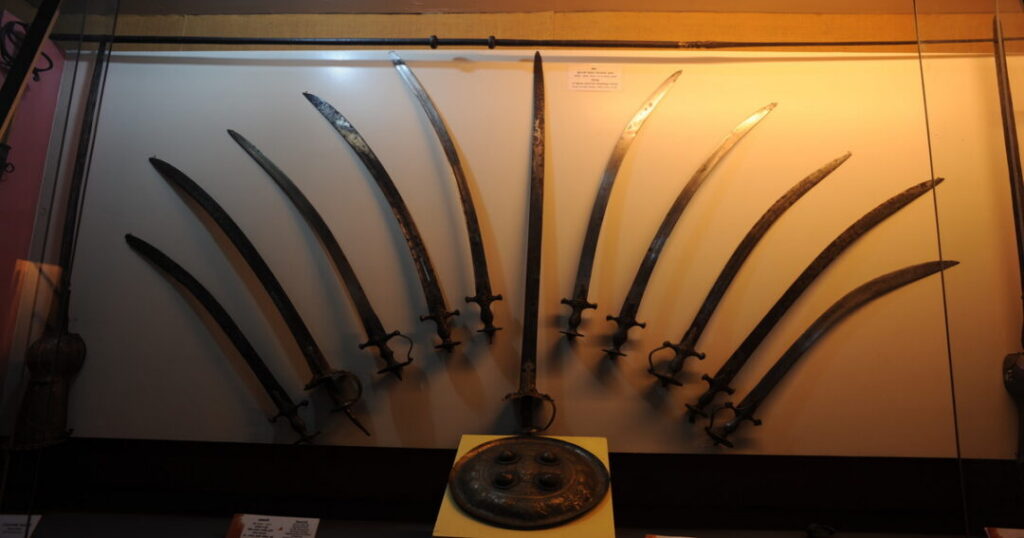
This is the museum that stops you mid-visit and makes you rethink what a museum can be. Dr. Dinkar Gangadhar Kelkar spent over 60 years traveling across India collecting everyday objects—locks, lamps, toys, musical instruments, weapons, kitchen utensils, puppets, carved doors, and textiles—beginning around 1920. He named the museum after his son Raja, who died young. The collection now holds over 22,000 artifacts, of which 2,500 are displayed across three floors. Established formally in 1962, it is considered one of the finest examples of a single individual’s curatorial vision anywhere in India.
- The Mastani Mahal within the museum—a reassembled section of a historical palace from Kothrud—is one of the most striking exhibition spaces in the building
- Look for the armour made from crocodile skin and fish scales—one of the most unusual pieces in any Indian museum
- Located on Bajirao Road, Shukrawar Peth; entry ₹100 for Indians; closed on Wednesdays
5. Osho Ashram (OSHO International Meditation Resort) — Koregaon Park
The Osho International Meditation Resort in Koregaon Park is a 28-acre urban ashram with marble paths, bamboo groves, an Olympic-sized meditation center, and an atmosphere utterly unlike anything else in Pune. Bhagwan Shree Rajneesh (Osho) established the ashram in Pune in 1974 and returned here after his time in Oregon. The campus continues to attract visitors and practitioners from across the world.
- Day visits require registration and a mandatory HIV test; the evening White Robe Brotherhood meditation is open to visitors who have completed registration
- The bookshop and café on campus are accessible without full registration
- Located in the upscale Koregaon Park neighborhood—the surrounding area has excellent cafés and restaurants worth exploring before or after
Nature & Outdoors — Places to Explore in Pune
6. Sinhagad Fort — The Trek Every Punekar Takes for Granted
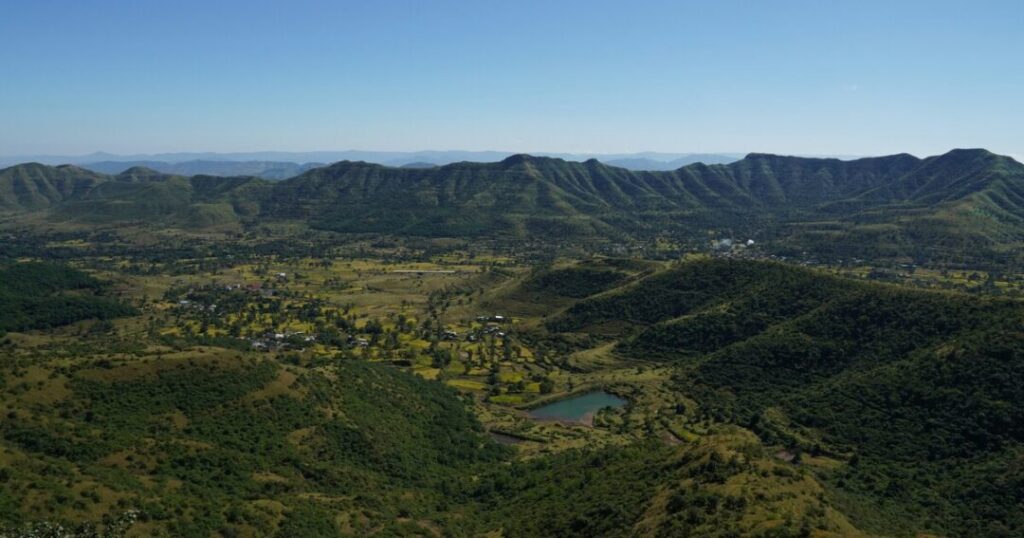
Sinhagad (“Lion Fort”) sits at 1,312 meters (4,304 feet), approximately 30 km southwest of Pune in the Sahyadri range. It is one of the most historically significant forts in Maharashtra—the site of the famous Battle of Sinhagad (February 4, 1670), in which Maratha commander Tanaji Malusare recaptured the fort from the Mughal-allied Udaybhan Rathod. Tanaji died in the battle; on hearing the news, Chhatrapati Shivaji Maharaj is said to have lamented, “Gad aala pan Sinh gela“ (“The fort is won but the lion is lost”). The fort was renamed Sinhagad in Tanaji’s memory.
- The paved road goes most of the way up; the trekking trail from the base village is approximately 2.7 km (one way) and takes about 45–60 minutes
- At the top: the ruins of Tanaji Samarak (memorial), the Devtaki temple, and panoramic Sahyadri views—on clear days the city of Pune is visible far below
- Famous for its fresh buttermilk (taak) and zunka-bhakar (gram flour curry with jowar flatbread) sold at small stalls on the fort—a Punekar institution
7. Mulshi Lake & Dam — The Drive and the View
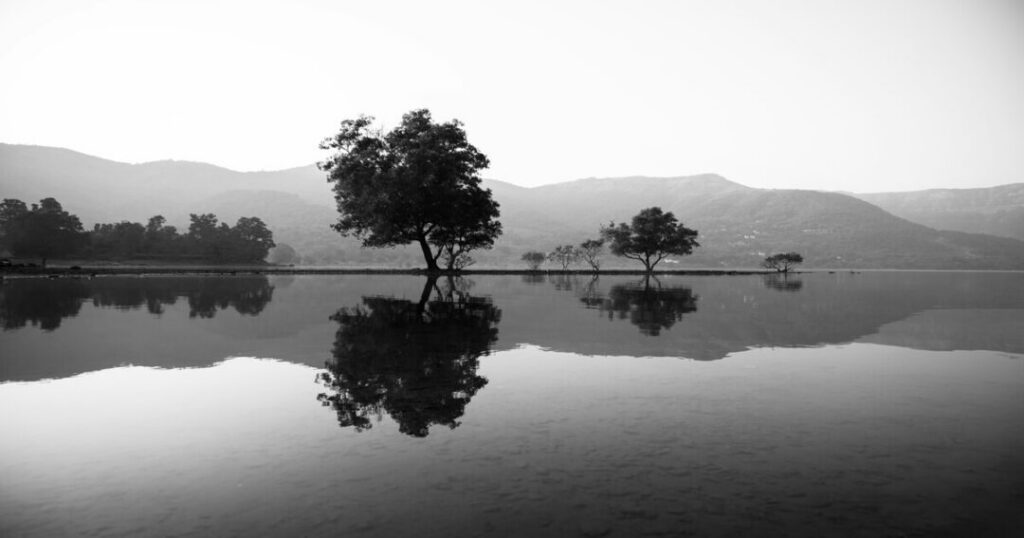
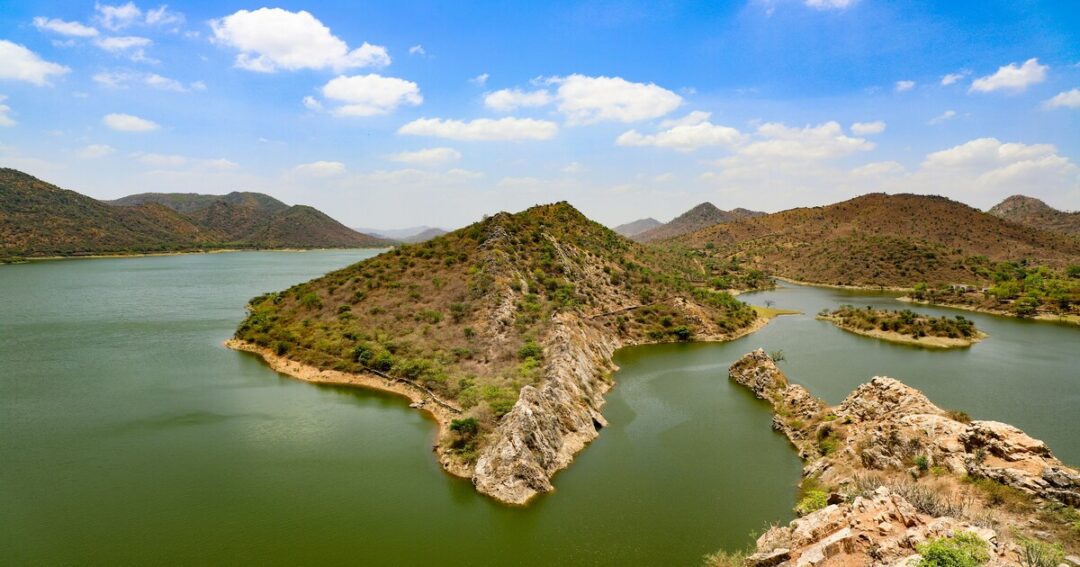
Mulshi Lake is a large reservoir formed by the Mulshi Dam on the Mula River, approximately 45 km from Pune via the scenic Tamhini Ghat road. The drive through the Western Ghats foothills is itself a significant part of the experience—particularly dramatic during and after the monsoon when the hillside waterfalls are active and the ghats are a vivid green.
- The area around the lake has several campsites and resorts—a popular one-day outing near Pune for families and groups
- Best visited between July and December when water levels are highest and the surrounding hills are most lush
- The Mulshi Dam itself releases water during heavy rains in monsoon—if you’re lucky with timing, the sight of water flowing over the dam is spectacular
8. Rajgad Fort — For Serious Trekkers
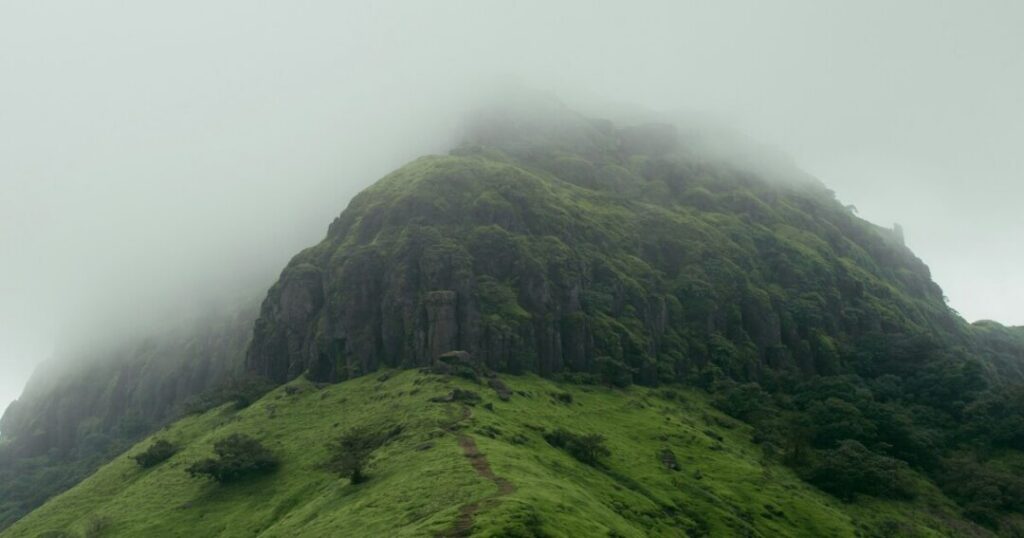
At 1,376 meters (4,514 feet), Rajgad (“King’s Fort”) was Chhatrapati Shivaji Maharaj’s primary capital for over 26 years before the capital was shifted to Raigad. One of the most complete surviving hill forts in Maharashtra—with three distinct ranges (machis) and a central citadel—Rajgad requires a serious trekking commitment: the standard ascent from Gunjavane or Pali village takes 2–3 hours one way.
- The fort has functioning water cisterns and tanks that have held water for centuries—a feat of Maratha civil engineering
- Best done as an overnight trek—camping on the fort plateau is permitted; sunrise from the central citadel is extraordinary
- Located ~50 km from Pune; combine with a visit to Torna Fort (the first fort Shivaji captured, at age 16) for a full historical circuit
Also read: Harishchandragad Trek: The Complete Guide to Maharashtra’s Most Dramatic Fort Trek
9. Pataleshwar Cave Temple — Pune’s Underground Secret
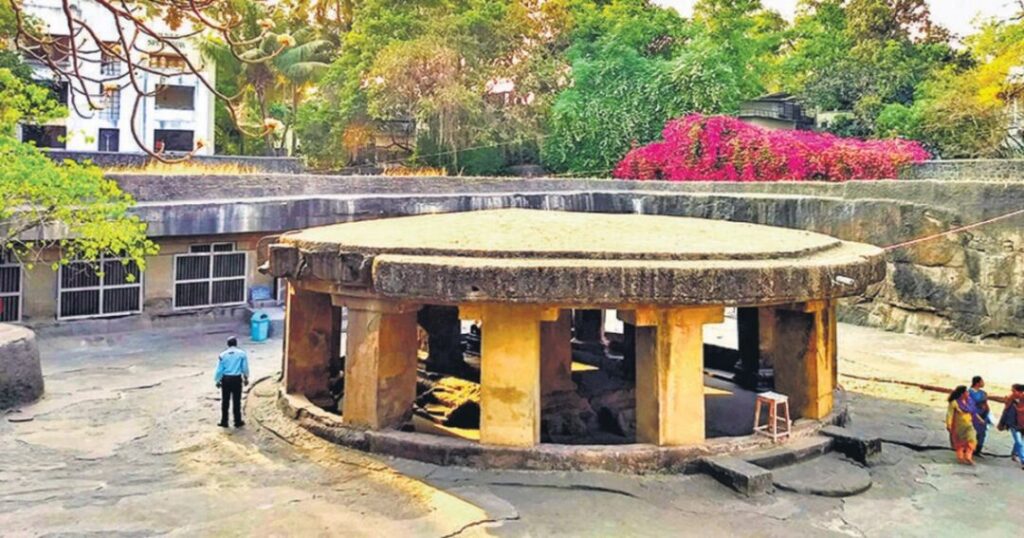
Carved directly into a basalt rock face on Jangli Maharaj Road, the Pataleshwar Cave Temple dates to the 8th century CE and is one of the most unexpected Pune sightseeing places—a functioning Shiva temple cut from solid rock, surrounded by a quiet garden, in the middle of one of Pune’s busiest streets. It is contemporary in style with the Ellora Caves and has strong similarities to the Elephanta Caves — though far less visited.
- Free entry; open daily; the circular Nandi Mandapa (bull pavilion) carved from a single rock is the most architecturally distinctive element
- The adjoining Jangli Maharaj Temple and its peaceful garden make this a genuinely restorative stop in the middle of city sightseeing
- Located in the Shivajinagar area — walkable from most central hotels
10. Pune’s FC Road & Camp Area — Food, Books, and Café Culture
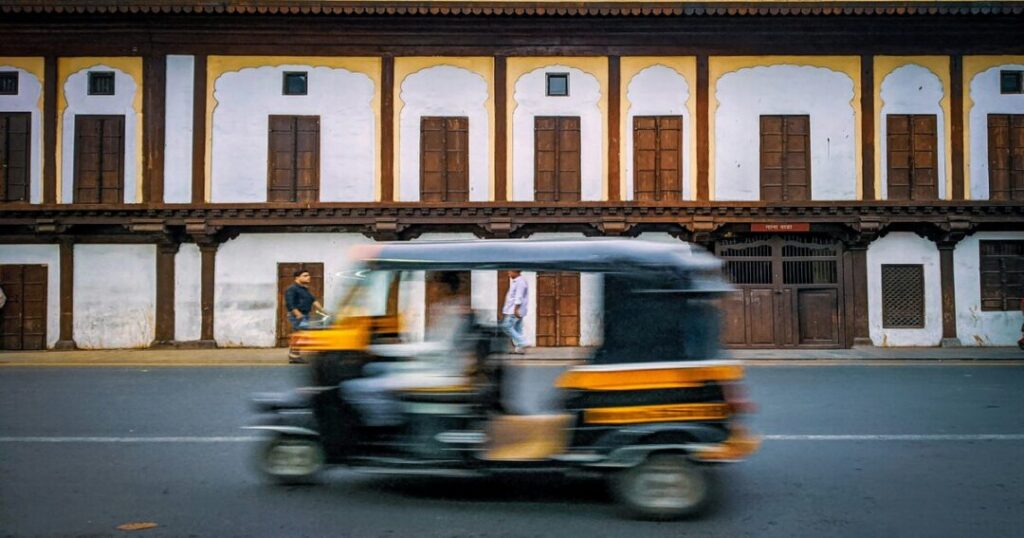
Fergusson College Road (FC Road) and the Camp (Cantonment) area represent two distinct flavors of Pune’s famous café culture. FC Road is the student-dominated strip—bookshops, street food stalls, juice bars, and cafés that have been running since the early days of the city’s university culture. Camp is the British-era cantonment grid—wide, tree-lined streets; heritage buildings; independent bookstores; and some of Pune’s oldest and most-loved bakeries.
- Vaishali on FC Road is one of Pune’s most iconic restaurants—South Indian breakfast served since 1960, consistently packed, always worth the wait
- German Bakery in Koregaon Park is a Pune institution—rebuilt after the 2010 bomb blast, it remains a landmark of the city’s cosmopolitan café culture
- Dorabjee’s in Camp is one of India’s oldest supermarkets—a genuinely interesting visit for its range and heritage
Best Day Trips Near Pune — One Day Outing Near Pune
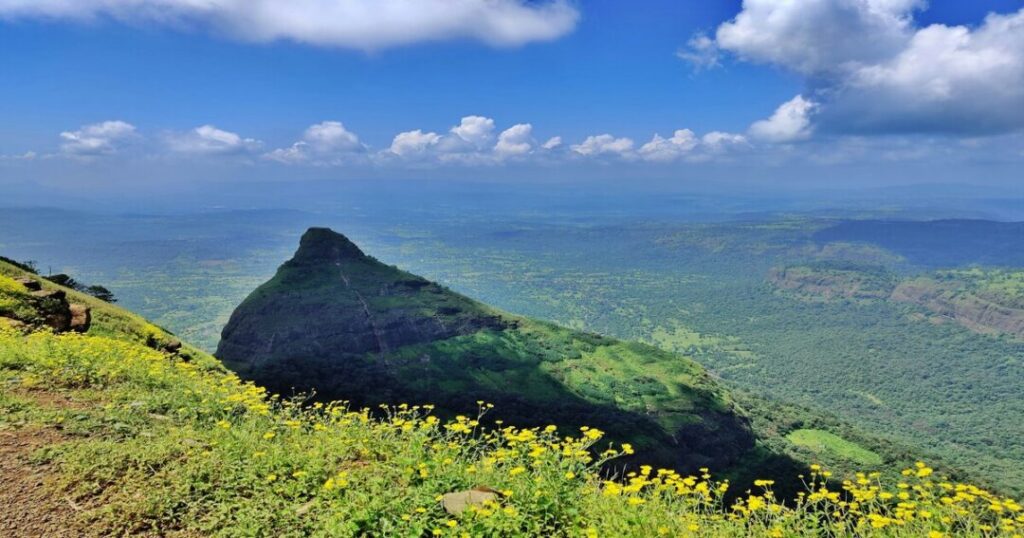
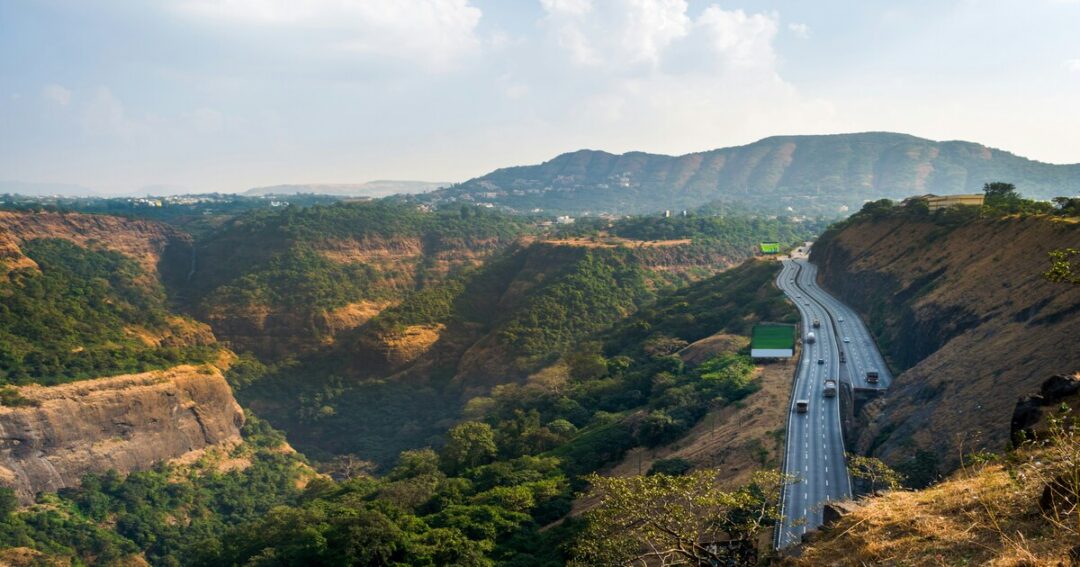
About 65 km from Pune on the Mumbai-Pune Expressway, Lonavala is the most popular one day outing near Pune—a hill station in the Western Ghats at approximately 625 metres elevation, famous for its chikki (a sesame-and-jaggery sweet), the Bhushi Dam, tiger point viewpoints, and the nearby Karla and Bhaja Caves (rock-cut Buddhist caves dating to the 2nd century BCE).
- The Karla Caves Buddhist shrine contains India’s largest surviving rock-cut chaitya (prayer hall) from the early Buddhist period
- Lonavala is best in monsoon (July–September) when the hills are impossibly green and the waterfalls are active—though the road gets crowded on weekends
- The Imagicaa Theme Park near Khopoli (on the Expressway) is a solid half-day addition if travelling with family
12. Mahabaleshwar — Strawberries and Sahyadri Views
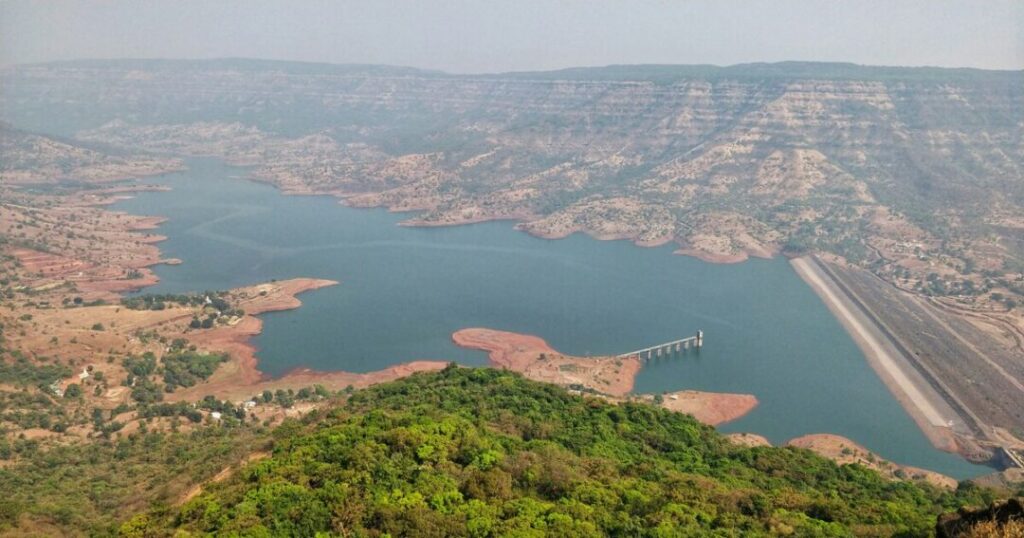
At an average elevation of 1,353 meters, Mahabaleshwar is Maharashtra’s most popular hill station—approximately 120 km southwest of Pune (2.5–3 hours by road). It’s famous for its strawberry farms, Arthur’s Seat viewpoint, Venna Lake, Wilson Point (the highest point on the plateau at 1,439 m), and the origin of five rivers, including the Krishna from the Mahabaleshwar plateau.
- Strawberry season runs from November to May—farmstay experiences, fresh strawberry juice, and cream are everywhere
- Pratapgad Fort (~23 km from Mahabaleshwar) is the site of the famous 1659 meeting between Shivaji and Afzal Khan—one of the most dramatic episodes of Maratha history
- Best combined with Panchgani (18 km from Mahabaleshwar)—Table Land, one of Asia’s largest plateaus, is worth the short detour
13. Lavasa—A Planned City Worth a Day Visit
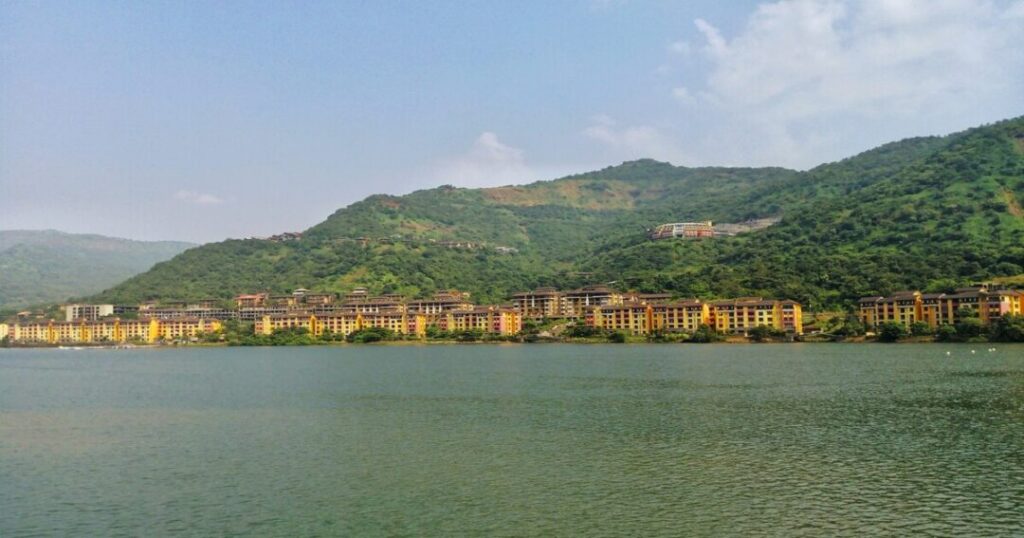
Lavasa is a planned hill city approximately 60 km from Pune—a privately developed township modeled on the Italian hillside town of Portofino, set along the shores of the Dasve Lake in the Sahyadri hills. The colorful architecture, the lakefront promenade, and the surrounding hills make it one of the most picturesque drives near Pune.
- Best visited as an early morning day trip—arrive by 9 AM for the lake mist and the promenade before it gets busy
- The lakefront restaurants and cafés are reliable; the town is walkable
- The drive via Temghar Dam and through the Sahyadri foothills is part of the appeal
Conclusion
Here’s the quick version of the best things to do in Pune:
- Heritage: Shaniwarwada (1732, light & sound show), Aga Khan Palace (1892, Gandhi’s prison), Lal Mahal (Shivaji’s childhood home)
- Museums: Raja Dinkar Kelkar Museum (22,000 artefacts, unmissable), Osho Ashram (28 acres, Koregaon Park)
- Nature: Sinhagad Fort (1670 battle site, 30 km southwest), Mulshi Lake (45 km, Sahyadri drive), Rajgad Fort (Maratha capital, serious trekking)
- Hidden gems: Pataleshwar Cave Temple (8th century, city centre), FC Road + Camp (Pune’s café culture)
- Day trips: Lonavala (65 km), Mahabaleshwar (120 km), Lavasa (60 km)
The best places to explore in Pune are often the ones that require either a bit of history to appreciate or a morning’s drive to reach. The city rewards curiosity — and it always has something left to show you.
Download the Explurger app to log your Pune experiences, discover what locals actually recommend, and find the best attractions in Pune that most travel guides skip entirely.
Pune is not a city you pass through. It’s a city you plan around.
FAQs About things to do in Pune
2. What are the best one day outings near Pune?
The strongest one day outing near Pune options: Lonavala (65 km, hill station, Buddhist caves, monsoon waterfalls), Sinhagad Fort (30 km, 1670 battle site, trek + fort), Mahabaleshwar (120 km, hill station, strawberries, five river origin), Mulshi Lake (45 km, reservoir + Sahyadri drive), and Rajgad Fort (50 km, 26-year Maratha capital, serious trekking). All five are within 3 hours of Pune city centre.
3. What are the best sightseeing places in Pune? [
The top Pune sightseeing places across categories: Heritage — Shaniwarwada (1732), Aga Khan Palace (1892, Gandhi connection), Lal Mahal (Shivaji's childhood home), Pataleshwar Cave Temple (8th century CE); Museums — Raja Dinkar Kelkar Museum (22,000 artefacts), Osho Ashram (28 acres, Koregaon Park); Nature — Sinhagad Fort (1,312 m, Battle of Sinhagad 1670), Mulshi Lake (45 km, Sahyadri reservoir + ghats drive), Rajgad Fort (Maratha capital, 1,376 m).
4. Is Pune worth visiting for a weekend trip from Mumbai?
Absolutely. Pune is one of the most rewarding weekend trips from Mumbai — 3 hours by road or train, a completely different atmosphere, a genuine city with its own cultural identity. The combination of Maratha history, British cantonment architecture, excellent food culture, Sahyadri hill forts, and day trips to Lonavala or Mahabaleshwar makes it genuinely difficult to run out of things to do in Pune. Two nights is the minimum; three is better.
5. What are the Pune India tourist attractions most visitors miss?
Three underrated Pune India tourist attractions: Pataleshwar Cave Temple (8th-century Shiva temple carved from basalt rock, in the middle of the city, almost always quiet), Rajgad Fort (Shivaji's capital for 26 years, more complete than Sinhagad but far less visited), and the Camp area's heritage buildings and independent bookshops (one of the finest examples of British cantonment urban planning in India). All three reward visitors who look past the standard itinerary.
6. What is the best time to visit Pune?
October to February is the most comfortable — temperatures between 15–30°C, clear skies, good conditions for hill forts and day trips. Monsoon (June–September) is spectacular for the Sahyadri scenery — Sinhagad and Mulshi Lake are transformed — but fort trails get slippery. Pune's elevation (~560 metres) makes it cooler than Mumbai year-round, and even summer (March–May) is manageable if you start early.