
730 Total Views
Before it was a parade, it was a protest. Before it was a costume, it was a mask worn to mock the people who held power. Before it was soca blasting from a float on a Toronto boulevard, it was the sound of enslaved people finding joy in a world that had stolen almost everything else from them. Caribbean festivals — the carnivals, the crop-overs, the junkanoos, the masquerades — are not primarily entertainment. They are acts of cultural memory, survival, and celebration woven together over centuries into something that has become one of the most extraordinary traditions in the world. Understanding what you’re watching when you stand on a street corner and watch the mas bands pass is understanding a history that runs much deeper than rhinestones and feathers.
This is the story of that tradition — and your complete guide to experiencing it.
The Roots: Where Caribbean Carnival Comes From
Every Caribbean carnival traces its origins to the same convergence: African spiritual and communal traditions, European Catholic pre-Lenten festival customs, and the specific genius of people who were enslaved finding ways to preserve their culture, assert their humanity, and eventually, celebrate their freedom.
In Trinidad — which produced the most globally influential carnival tradition — the history runs through two separate but eventually merging streams: the pre-Lenten masquerade celebrations of the French Catholic plantation owners (elaborate, exclusive, held indoors), and the Canboulay celebrations of the enslaved and later freed African population (Canboulay from the French Cannes brûlées — “burning cane” — a torchlit procession that commemorated the burning of sugar cane fields and the forced labour that followed). After emancipation in 1834, the freed population took carnival into the streets, bringing with them African drumming, masquerade traditions, stick fighting, and a musical culture that would eventually produce calypso, steelpan, and soca.
The British colonial government repeatedly tried to suppress these celebrations. In 1881, colonial police attempted to prevent the Canboulay procession from taking place in Port of Spain — triggering the Canboulay Riots across Port of Spain, San Fernando, and Princes Town. In that year, Captain Baker and his police force were repulsed by the crowd and confined to barracks. But the confrontations were not over: in 1884, riots broke out again in San Fernando and Princes Town, where police opened fire — killing two people. Despite the violence and sustained suppression, the tradition could not be extinguished. The colonial authorities ultimately recognised they could not stop the carnival — only regulate it. Carnival went on.
This is the root of every Caribbean festival that followed — the knowledge that these celebrations were not optional, not frivolous, not merely festive. They were the cultural inheritance of communities that survived one of history’s greatest crimes, and they were worth fighting for.
The Island Carnivals — The Original Celebrations
Trinidad and Tobago Carnival — The Grandparent of Them All
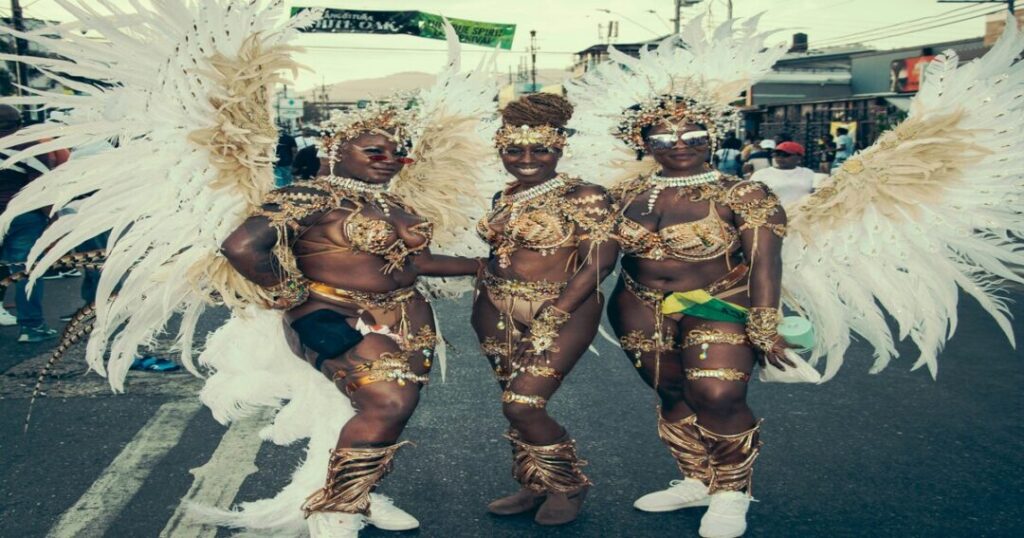
Trinidad Carnival is the largest and most internationally influential Caribbean carnival — two days of masquerade, soca, and steelpan in Port of Spain, culminating on the Monday and Tuesday before Ash Wednesday (the Christian Lent period). The period preceding these two days is filled with fetes (parties), Panorama (the national steelpan competition), the Dimanche Gras show, and the iconic J’ouvert — the pre-dawn celebration that begins at approximately 2 AM on Carnival Monday, when masqueraders covered in mud, paint, and powder take over the streets in a deliberately chaotic counterpoint to the elaborate costumes of the main parade.
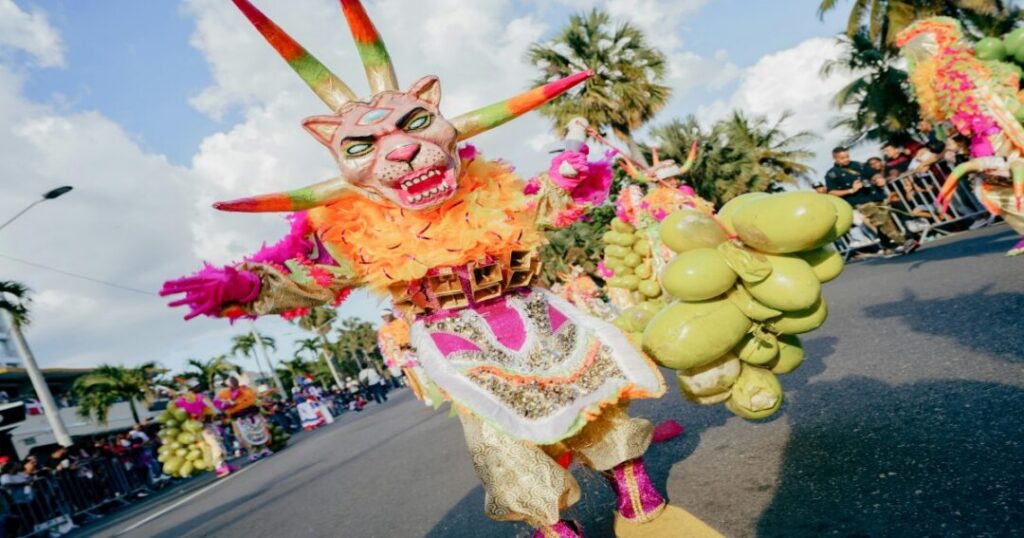
The costume tradition (playing mas, from masquerade) involves bands of thousands of players wearing coordinated, elaborate costumes — feathers, beadwork, rhinestones, and increasingly architectural headpieces — designed by mas bands that have been competing for artistic supremacy for decades. Winning the Band of the Year title is a significant cultural honour.
Steelpan — the only acoustic musical instrument invented in the 20th century, created in Trinidad in the 1930s and 1940s by musicians who fashioned melodic instruments from discarded oil drums — is the sonic heartbeat of Trinidad Carnival. The Panorama competition, held the Saturday before Carnival, is one of the most technically demanding musical competitions in the world.
- Trinidad Carnival dates shift annually — always the Monday and Tuesday before Ash Wednesday (typically February/March)
- J’ouvert begins before dawn on Monday and is the most visceral, raw, and historically resonant part of the celebration
- The main parade runs through Port of Spain on Carnival Monday and Tuesday
Crop Over — Barbados’s Harvest Festival
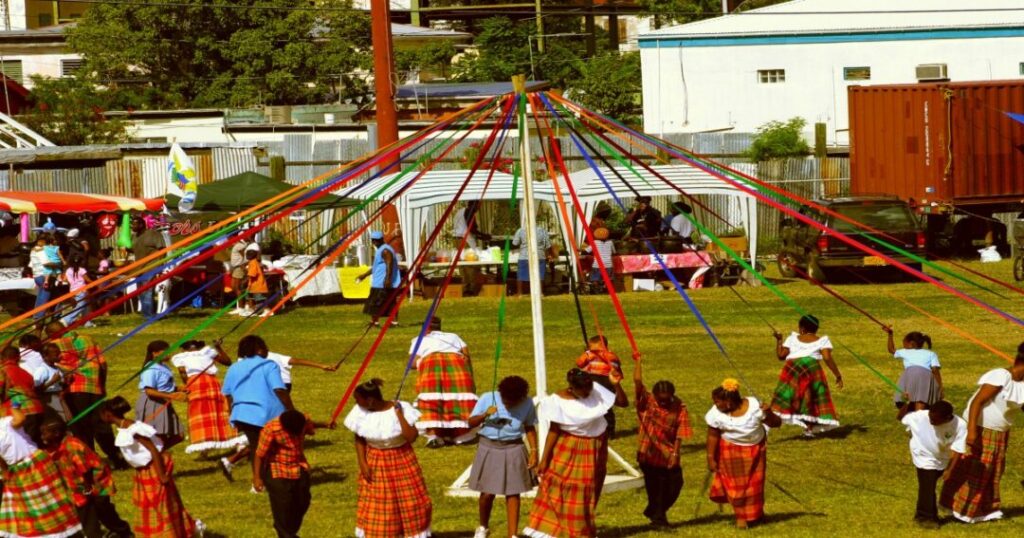
Crop Over in Barbados is considered the second-largest Caribbean carnival — a multi-week festival culminating in Grand Kadooment Day, traditionally held on the first Monday in August. The festival’s origins trace to 1687, when plantation owners organised celebrations to mark the end of the sugarcane harvest. The original tradition fell into decline after World War II and was officially launched as a festival in 1970, then formally designated a national festival in 1974 by the Barbados Tourist Board and local cultural stakeholders including Julian Marryshow and Flora Spencer.
The contemporary Crop Over is a full carnival in the Trinidad tradition — soca music, mas bands, elaborate costumes with feathers and beadwork, fetes throughout the season. But it retains its harvest roots: the Ceremonial Delivery of the Last Canes, the crowning of the King and Queen of Crop Over, and the burning of Mr. Harding (an effigy representing the plantation overseer) are all distinctly Barbadian elements that link the modern carnival to its agricultural and historical origins.
- Grand Kadooment Day 2026: August 3 (first Monday in August)
- The costume bands march along Spring Garden Highway toward the National Stadium
- Barbados in Crop Over season (approximately June to early August) is at its most culturally vibrant
Also Read: Top Winter Festivals Around the World in December: A Travel Guide for 2026
Junkanoo — The Bahamas’s African Heritage Parade
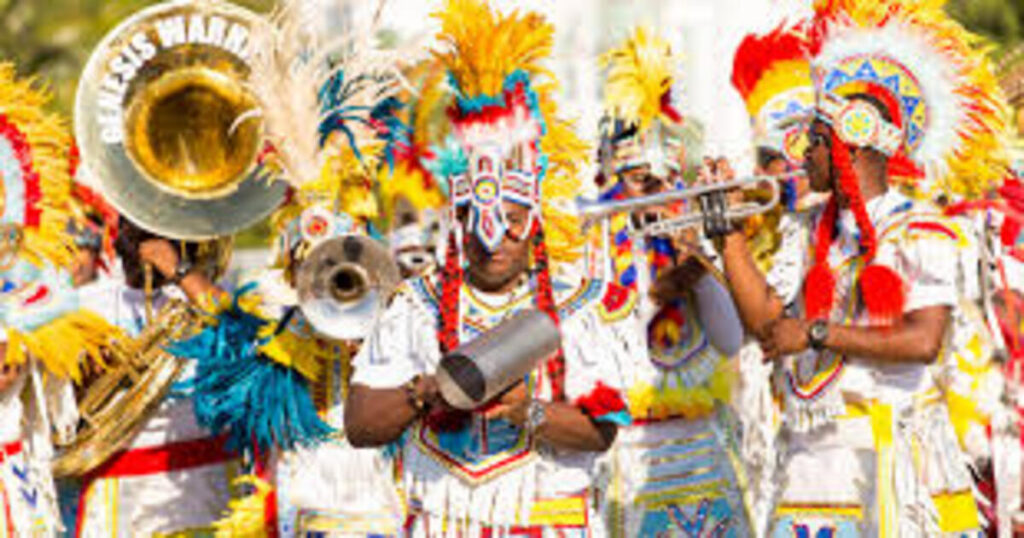
Junkanoo in the Bahamas is one of the oldest and most visually distinctive Caribbean festivals — a street parade celebrated on Boxing Day (December 26) and New Year’s Day in Nassau and across the islands. The festival’s origins date to the period of slavery, when enslaved people were given time off during the Christmas period and used it to celebrate with music, masquerade, and dance rooted in West African traditions. The name itself is of disputed origin — one theory links it to John Konnu, a West African leader whose spirit was honoured through masquerade.
Unlike the feather-and-rhinestone aesthetic of Trinidad and Barbados carnival, Junkanoo is built on elaborate costumes made from crepe paper and cardboard — intricate, sculptural, colourful structures that take months to create and are worn (and then retired) in a single night’s celebration. The music is provided by goombay drums, cowbells, and brass instruments in a sound unlike any other Caribbean tradition.
- Junkanoo 2026/2027: Boxing Day (December 26, 2026) and New Year’s Day (January 1, 2027) in Nassau
- The parade runs along Bay Street through the night; the competition between groups (shacks) is fiercely contested
- The National Art Gallery of the Bahamas preserves historical Junkanoo costumes as cultural artefacts
Caribana — The Diaspora Takes the Carnival North
What Is Caribana?
Caribana — officially the Toronto Caribbean Carnival since a name change following a legal dispute — is the largest Caribbean festival in North America, drawing over one million visitors to Toronto annually since its founding in 1967. The festival began as a one-time celebration of Canada’s Centennial, conceived by the Caribbean community in Toronto as a way to share their culture with the city during Canada’s 100th anniversary year. Trinidad and Tobago’s carnival tradition was chosen as the model at a planning meeting in a downtown Toronto firehouse in late 1966.
The first Caribana drew 50,000 people to Toronto’s waterfront. By 2026 — its 59th year — it draws over a million. What was once a three-day event has grown into three weeks of programming, with the official launch in mid-June and the core events culminating in the Caribana weekend in late July and early August.
The 2026 key dates:
- Official launch: approximately mid-June, Scarborough Town Centre
- King & Queen Showcase: approximately late July, Lamport Stadium
- Panorama steel band competition: approximately late July, Lamport Stadium
- Grand Parade: Saturday August 1, Exhibition Place and Lake Shore Boulevard W., 8 AM to 8 PM
- Pan in D’ Park: Sunday August 2, Neilson Park, Scarborough
The Caribana Experience — What Actually Happens
The Grand Parade is the centrepiece of the Caribana carnival — a procession along Lake Shore Boulevard in which mas bands of hundreds to thousands of masqueraders march, dance, and perform to music trucks carrying sound systems. The parade route runs from Exhibition Place along Lake Shore Boulevard W. — over a million spectators line the route, making it one of the largest annual events in North America.
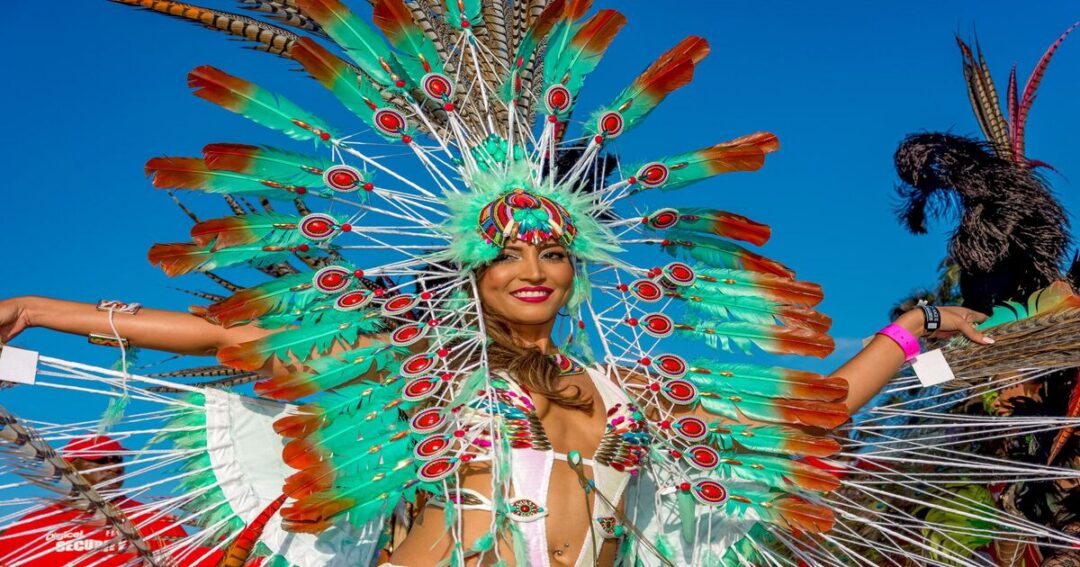
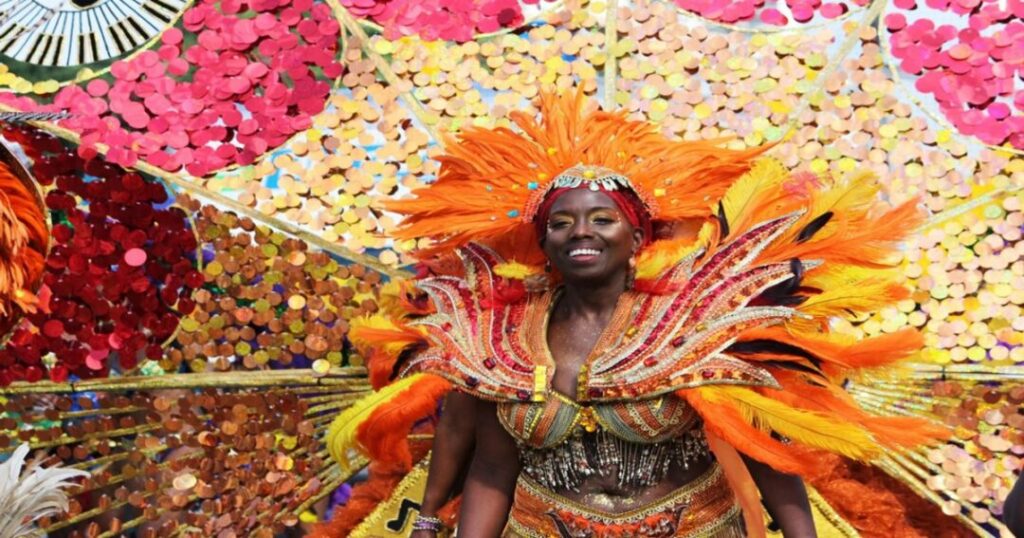
Caribana feathers are the defining visual of the Grand Parade. The elaborate Caribana costumes — engineered structures of feathers, beadwork, rhinestones, sequins, and wire — represent months of work by costume designers and mas band members. The largest and most elaborate pieces are the King and Queen costumes, which can reach several metres in height and width, worn by individual competitors in the King & Queen Showcase. A costume section for a masquerader playing in the parade typically includes a bikini-style base with attached beadwork, a headpiece, and backpack wings of layered feathers — the visual language of Trinidad carnival translated into a Toronto August.
Mas bands are the organisational structure of the parade — groups of masqueraders who march together under a single theme and aesthetic. To play mas (participate in the parade rather than watch), masqueraders register with a band, select a costume section, and march with their band on Carnival Saturday. This is the full Caribana event experience — being on the road rather than watching from the sideline.
Fetes — parties and events in the weeks surrounding the Caribana weekend — are as culturally important as the parade itself. Boat parties, pool parties, concert fetes, and themed events run throughout the three-week festival period, each with its own music, crowd, and energy. The Caribana music festival atmosphere pervades the entire city through July and into early August.
Caribana Food — What to Eat
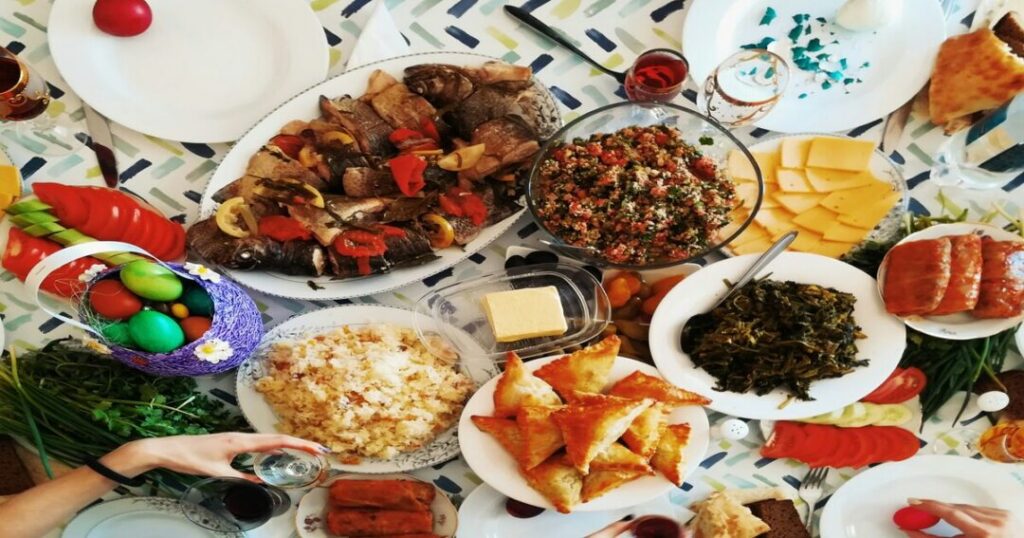
Caribana food reflects the full breadth of Caribbean culinary tradition — the vendors, food courts, and surrounding restaurants in the Exhibition Place area and along the Lakeshore during Carnival weekend serve the authentic cuisines of Jamaica, Trinidad and Tobago, Barbados, Haiti, Grenada, and across the region.
The essential Caribana food experiences:
- Jerk chicken — the Jamaican preparation of chicken marinated in scotch bonnet peppers, allspice, and thyme, then slow-grilled over pimento wood; the smoke and heat combination is irreplaceable
- Doubles — Trinidad’s most beloved street food: two fried bara (flatbreads) filled with curried chickpeas (channa) and topped with various chutneys
- Roti — a Trinidadian staple brought by the indentured Indian labourers who came to the Caribbean after emancipation; a flatbread wrap filled with curried meat or vegetables, dhalpuri (split pea-filled) or buss-up-shot (beaten flat) being the most common varieties
- Oxtail with rice and peas — the Sunday lunch of the Jamaican community, slow-cooked until falling off the bone with butter beans
- Pholourie — fried dough balls made from split pea flour, served with tamarind sauce; the unofficial snack of Trinidad Carnival
Caribana Tickets — How to Experience It
Caribana tickets cover different aspects of the festival:
- Grand Parade viewing — free from the public sidewalk along Lake Shore Boulevard; no ticket required to watch. Grandstand seating and VIP viewing areas require tickets — book well in advance as the festival sells out
- King & Queen Showcase — ticketed event at Lamport Stadium; some of the most extraordinary costume engineering visible anywhere in North America
- Panorama steelpan competition — ticketed; an extraordinary musical event that most visitors miss entirely but should not
- Fetes and events — individually ticketed; prices and availability vary widely; check the official Toronto Caribbean Carnival website and affiliated event listings
Accommodation: Toronto hotels within walking distance of the parade route and Exhibition Place sell out months in advance for the Caribana weekend. Book well ahead, particularly for the first weekend of August.
Taste the Caribbean Food Festival
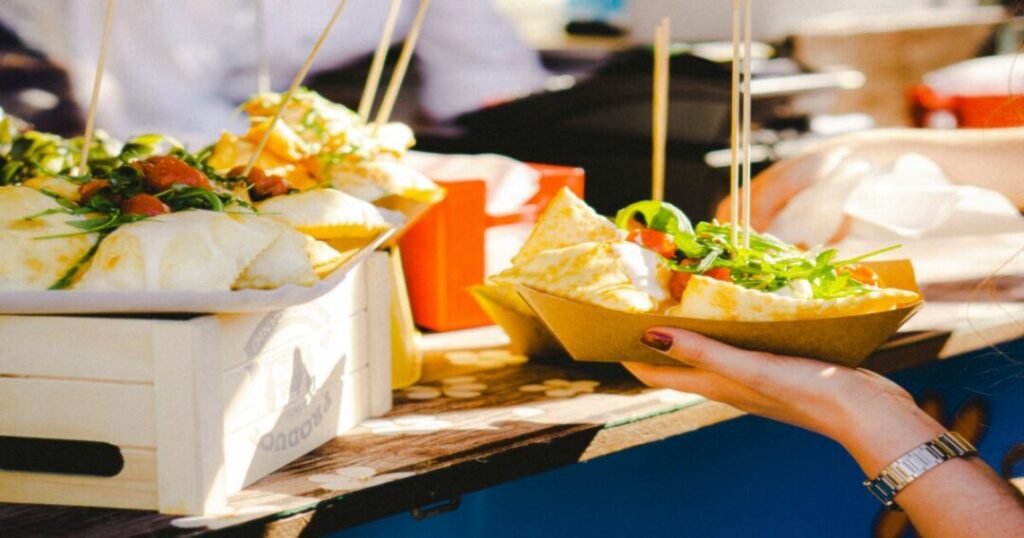
The Taste the Caribbean food festival — held in various North American cities with significant Caribbean diaspora populations — is a dedicated celebration of Caribbean cuisine that runs parallel to or independently of the carnival season. These events bring together chefs, food vendors, and cultural organisations to showcase the full range of Caribbean cooking: from Trinidadian curry and roti to Jamaican jerk and festival bread, Haitian griot (fried pork) to Barbadian cou-cou (cornmeal and okra), Guyanese pepperpot to Dominican sancocho.
The food festival format allows for deeper engagement with individual Caribbean food traditions than the carnival food courts — cooking demonstrations, tasting competitions, chef panels, and food market stalls create an environment where cuisine is treated with the same cultural seriousness as music and costume.
- Check local Caribbean community organisations and tourism boards for Taste the Caribbean food festival events in your city
- The festivals typically run annually in the summer months, often timed to the Caribbean carnival season
Also Read: Visa-Free Countries for Indians in 2026 | Budget International Travel Guide for Young Explorers
Caribbean Wine Festival
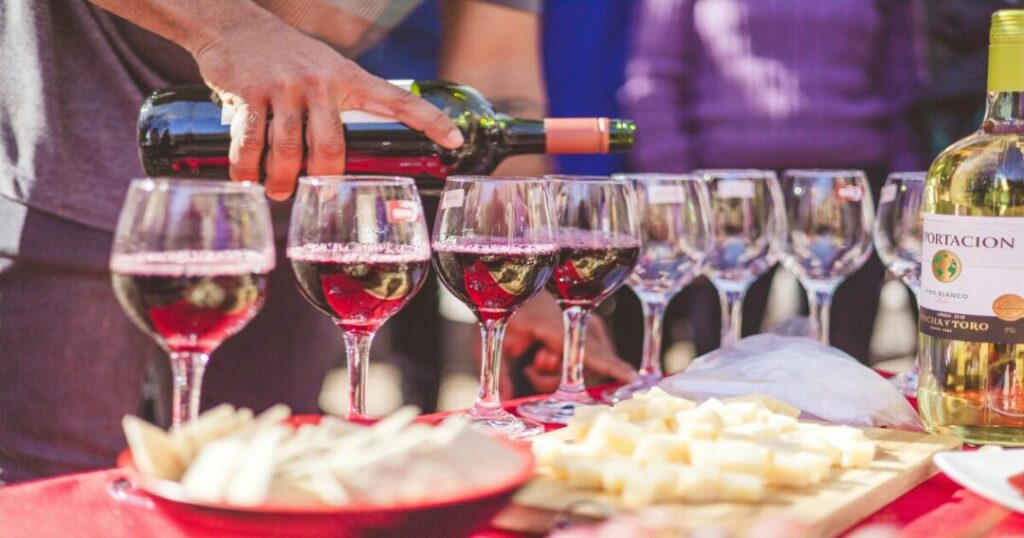
The Caribbean wine festival circuit covers a range of events across the Caribbean islands and diaspora communities — dedicated celebrations of the emerging Caribbean wine and spirits culture alongside traditional rum, sorrel, and fruit wine traditions.
Caribbean rum — produced across Jamaica, Barbados, Trinidad, Guyana, and St. Lucia — is the foundational spirits tradition of the region, with each island’s rum reflecting its specific terroir, sugarcane variety, and distillation method. Barbados is widely credited as the birthplace of rum, with production documented from the mid-17th century. Dedicated rum festivals in Barbados (typically around the Crop Over season) celebrate this heritage with tastings, distillery tours, and cocktail competitions.
Sorrel wine — a fermented beverage made from dried hibiscus flowers (Hibiscus sabdariffa), traditionally spiced with ginger, cloves, and cinnamon — is the definitive Caribbean Christmas and festival drink. Non-alcoholic in its traditional form, but fermented versions exist across the region.
The Caribbean wine festival format varies by location — some focus on rum and spirits, others include wine and non-alcoholic Caribbean beverages alongside traditional fermented drinks. Check event listings for festivals in your region.
Conclusion about Caribbean Festival
Caribbean festivals are not spectacles. They are living archives — of resistance, of joy, of a culture that survived the unsurvivable and then chose to celebrate. Every Caribana feather, every steelpan note, every J’ouvert reveller covered in mud, every Junkanoo costume made from crepe paper and months of labour is a statement that the people who built these traditions are still here, still celebrating, still making something extraordinary from the materials at hand.
Quick guide to the best Caribbean carnival experiences:
- Trinidad Carnival: February/March, Port of Spain — the original, the deepest, the most musically extraordinary
- Crop Over: June to August, Barbados — Grand Kadooment Day first Monday in August; origins 1687, revived as a festival in 1970/1974
- Junkanoo: December 26 and January 1, Nassau, Bahamas — crepe paper costumes, goombay drums, Boxing Day tradition
- Caribana/Toronto Caribbean Carnival: Mid-June to early August, Toronto — 59th year in 2026, Grand Parade August 1, over a million attendees
- Taste the Caribbean food festival: Summer, various cities — Caribbean cuisine celebrated independently of the carnival
- Caribbean wine festival: Various — rum and spirits heritage, sorrel wine, Caribbean fermented beverages
Download the Explurger app to discover Caribbean festival events near you, connect with the community planning the next Caribana weekend, and log every costume, plate of doubles, and steelpan note on your festival journey.
The music is already playing. The feathers are already being stitched. The road is waiting.
FAQs About Caribbean Festival
2. When is Caribana 2026?
Caribana 2026 (Toronto Caribbean Carnival) runs from approximately mid-June to early August 2026. The core Caribana weekend events are: King & Queen Showcase (approximately late July, Lamport Stadium), Panorama (approximately late July, Lamport Stadium), Grand Parade (Saturday August 1, Lake Shore Boulevard W., 8 AM–8 PM), and Pan in D' Park (Sunday August 2, Scarborough). The Grand Parade is the centrepiece — over a million spectators line the Lakeshore for the mas band procession.
3. What is the best Caribbean carnival?
The best Caribbean carnival depends on what you're looking for. Trinidad Carnival (February/March, Port of Spain) is the original and most historically significant — the birthplace of soca, steelpan, and the modern mas tradition. Caribana/Toronto Caribbean Carnival (late July to early August) is the largest in North America with over a million attendees. Crop Over (Barbados, culminating Grand Kadooment Day in early August) is the Caribbean island carnival most accessible to North American visitors. Junkanoo (Bahamas, Boxing Day and New Year's Day) is the most visually distinctive — elaborate crepe paper costumes and a completely different musical tradition.
4. What are Caribana feathers and costumes?
Caribana feathers are the defining visual of the Toronto Caribbean Carnival Grand Parade. Carnival costumes (mas costumes) are elaborate engineered structures of feathers, rhinestones, beadwork, sequins, and wire — designed by mas bands and worn by masqueraders in the parade. The King and Queen costumes can reach several metres in height and are competed for at the King & Queen Showcase before the Grand Parade. A standard masquerader's costume includes a bikini-style base, headpiece, and backpack wings of layered feathers. These costumes take months to design and produce.
5. What food is served at Caribana?
Caribana food represents the full breadth of Caribbean cuisine — jerk chicken (Jamaican, slow-grilled with scotch bonnet and allspice), doubles (Trinidadian fried bara with curried chickpeas), roti (Trinidadian flatbread wraps with curry), oxtail with rice and peas (Jamaican Sunday staple), pholourie (Trinidadian split pea fried dough balls), and a wide range of Caribbean desserts and drinks. Food vendors from across the Caribbean set up at Exhibition Place and along the Lakeshore during the carnival weekend.
6. How do I get Caribana tickets?
Caribana tickets are required for the King & Queen Showcase (Lamport Stadium), the Panorama steelpan competition, grandstand seating along the Grand Parade route, and individual fetes and events throughout the festival. The Grand Parade itself is free to watch from the public sidewalk along Lake Shore Boulevard — no ticket required. To play mas (march in the parade), masqueraders register with a mas band and purchase a costume section. Book accommodation and ticketed events well in advance — the Caribana event weekend sees the entire city at capacity.