
396 Total Views
Mark Twain wrote of Banaras: “It is older than history, older than tradition, older even than legend, and looks twice as old as all of them put together.” He was not exaggerating. Varanasi—also known as Kashi and Banaras, three names for the same ancient city on the western bank of the Ganges—is one of the oldest continuously inhabited cities on earth. Archaeological evidence places settlement here at least 3,000 years ago; Hindu tradition places its founding at the beginning of time itself, by Lord Shiva. By the 2nd millennium BCE, it was already a seat of Vedic religion and philosophy. When the Buddha gave his first sermon at nearby Sarnath in the 6th century BCE, Varanasi was already an ancient city.
Coming here is not like visiting a heritage destination. It is like entering a place that has been continuously alive—praying, burning, weaving, arguing, singing—for longer than almost any other place on the planet. The things to do in Varanasi are not sights to check off. They are experiences of a city that has never stopped being itself.
Best Seasons to Explore Things to Do in Varanasi?
October to March is the most comfortable window—temperatures between 8°C and 28°C, clear skies, and the city at its most active for festivals and pilgrimages. November brings the Dev Deepawali festival—when every ghat is lit with hundreds of thousands of lamps on the full moon of Kartik Purnima, making it one of the most visually extraordinary evenings in India. March brings Holi—celebrated with particular intensity in Varanasi, especially at the Masan Holi (Holi of the cremation grounds) at Manikarnika Ghat, where ash from the funeral pyres is used as color. Summer (April–June) is hot and humid, but the ghats are quieter. The monsoon (July–September) floods the lower ghats, but the city remains atmospheric.
Also read: TOP FOOD DESTINATIONS IN INDIA: THE UNDERRATED EDITION
How to Reach Varanasi?
- By air: Lal Bahadur Shastri International Airport (VNS), Babatpur — approximately 25 km from the city; connected to Delhi, Mumbai, Bengaluru, and major Indian cities
- By train: Varanasi Junction (BSB) is a major railway station — well-connected to Delhi (~8 hours), Mumbai (~24 hours), Kolkata (~12 hours), and most Indian cities. Mughal Sarai (now Pt. Deen Dayal Upadhyaya) junction nearby is an even larger railhead
- By road: ~320 km from Lucknow (~5 hours); ~820 km from Delhi (~13 hours)
The Unmissables — Brief, Because You Already Know
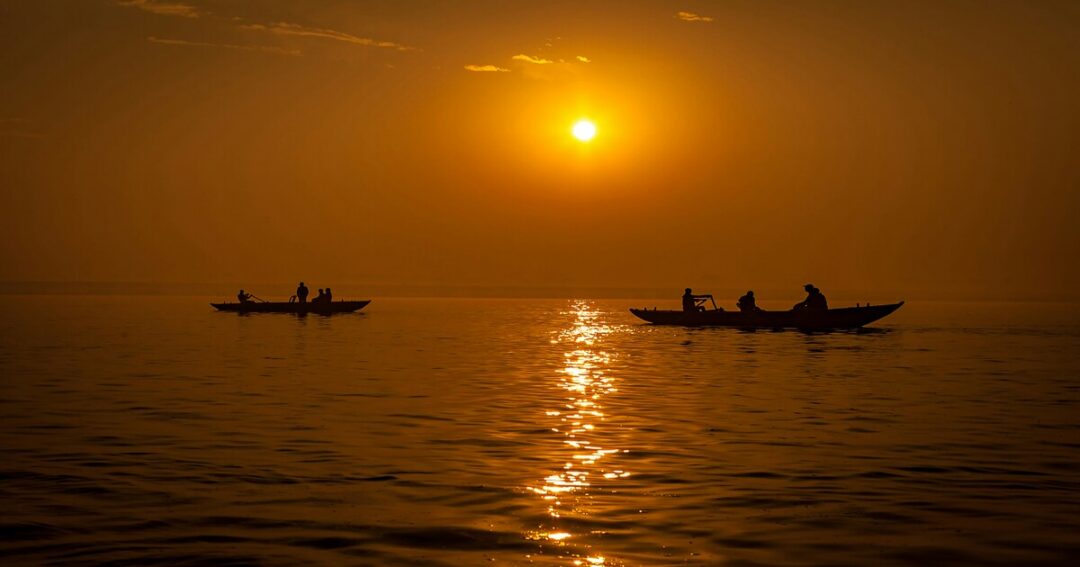
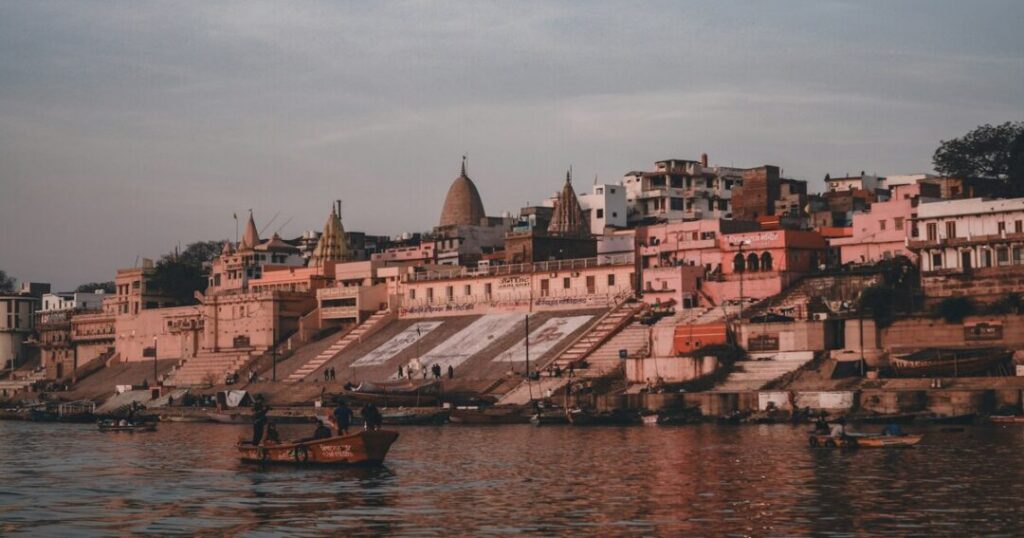
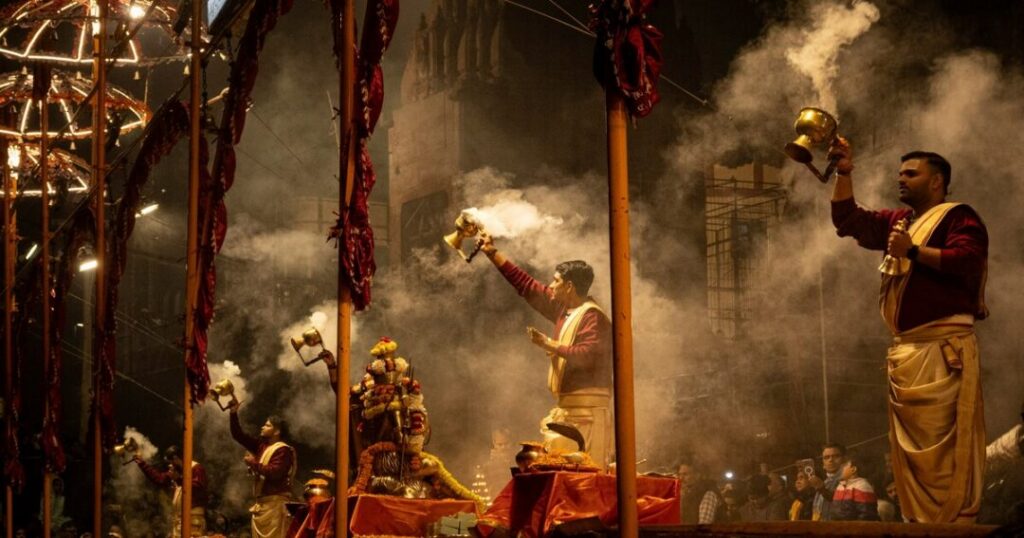
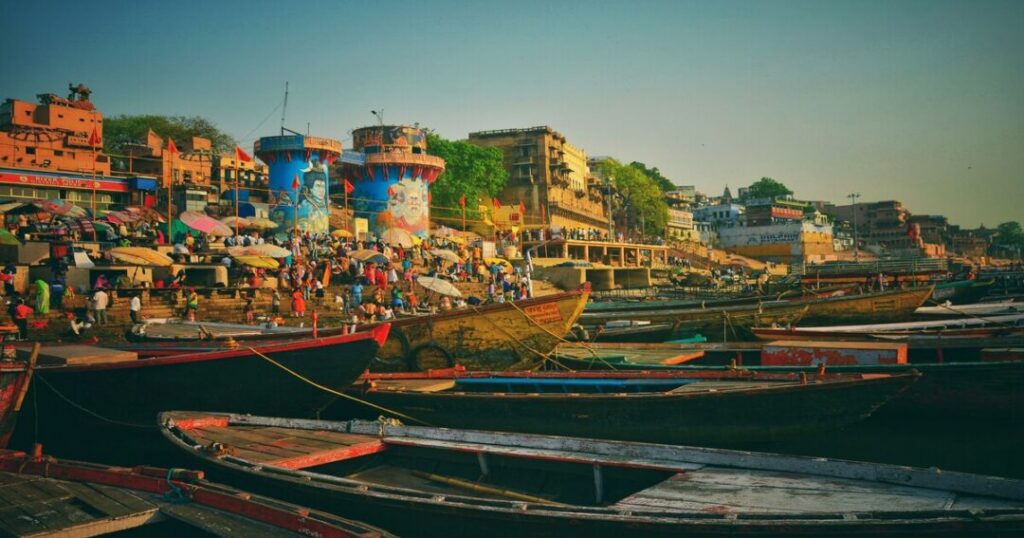
The Ganga Aarti at Dashashwamedh Ghat every evening—fire, incense, conch shells, and thousands of devotees—is the ritual that has been performed here for centuries and is genuinely one of the most extraordinary spectacles in India. The Manikarnika Ghat and Harishchandra Ghat — the cremation ghats where fires have burned without interruption for centuries — are confronting and profound in equal measure; Manikarnika is considered the holiest cremation ground in Hinduism. The Assi Ghat sunrise boat ride—watching the ghats light up from the river—is the standard introduction to Varanasi’s scale and its relationship with the Ganges.
These are the Varanasi sightseeing places that every guide covers. They are famous for very good reasons. This guide goes deeper.
Temples & Religious Sites — Beyond the Surface
Kashi Vishwanath Temple—The Jyotirlinga at the Centre of Everything
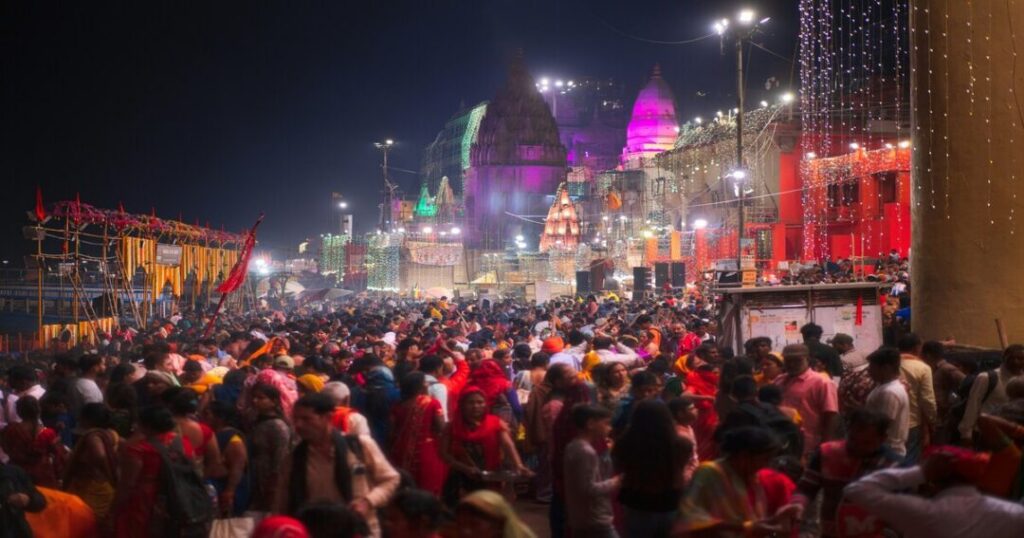
The Kashi Vishwanath Temple is the most sacred Shiva temple in India—one of the twelve Jyotirlingas (self-manifest columns of light, the holiest Shiva shrines in Hinduism) and the spiritual center around which Varanasi has organized itself for millennia. The current temple was built in 1780 by Maharani Ahilyabai Holkar of Indore after the original was destroyed by Aurangzeb in 1669—the Gyanvapi Mosque was built on part of the original temple’s site, a juxtaposition that sits at the center of one of India’s most contested heritage debates.
The Kashi Vishwanath Corridor, inaugurated in late 2021, has transformed access to the temple — widening the approach, creating a direct view of the temple from the Ganges, and displacing the labyrinthine lanes that previously made finding the temple itself an initiation. Opinions on the corridor among locals and pilgrims are mixed: some celebrate the accessibility; others mourn the lanes.
- Entry: Indian nationals with valid ID; queues can be long — arrive early morning or late evening for shorter wait times
- The inner sanctum is small and intense—the darshan (viewing of the deity) is brief but the atmosphere around the Shivalinga is extraordinary
- The newly cleared corridor gives the first direct river-to-temple sightline in the temple’s modern history
Also read: 12 Jyotirlinga Across India: A Complete Spiritual and Travel Guide
Sankat Mochan Hanuman Temple — The Temple of the Ordinary Devout
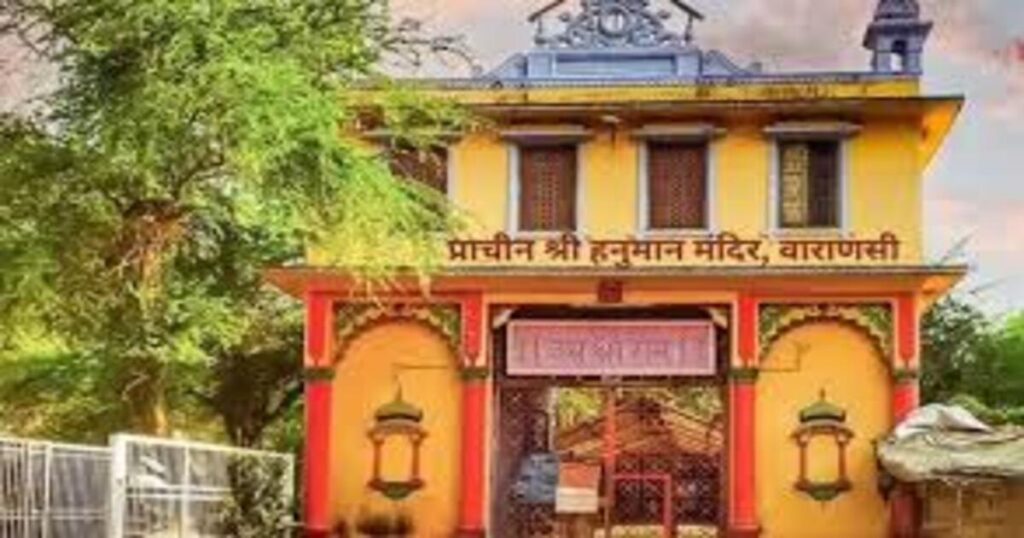
The Sankat Mochan Hanuman Temple—founded by the poet-saint Tulsidas in the 16th century—is one of the most beloved attractions in Varanasi and one of the least touristy. This is where Varanasi’s residents come daily to pray. The atmosphere is warm, unhurried, and entirely local — a working temple whose fame rests not on historical drama but on the consistent, centuries-long devotion of ordinary people. Hanuman (the monkey god, embodiment of devotion and strength) is the presiding deity.
- On Tuesdays and Saturdays (Hanuman’s sacred days), the temple is at its most vibrant—crowds, prasad, music
- The temple is set in a garden compound with large trees—one of the most peaceful spots in the old city
- Located near Banaras Hindu University; accessible by cycle rickshaw from the ghats
Durga Temple (Durga Kund Mandir) — The Monkey Temple
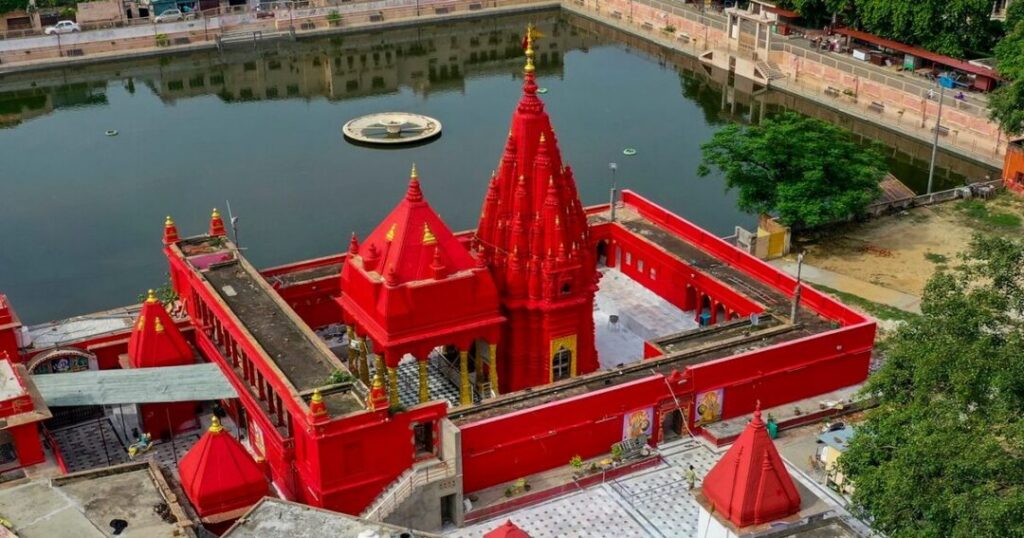
The Durga Temple, built in the 18th century in the Nagara architectural style, is known locally as the Monkey Temple—the compound and surrounding trees are home to a large troop of monkeys that have been associated with the temple for generations. The multi-tiered shikhara (tower) is painted a deep ochre-red, and the temple tank (Durga Kund) in front of it is surrounded by steps and small shrines. Non-Hindus are not permitted inside; the exterior architecture and the tank are themselves worth visiting.
- Best seen in the early morning when the tank reflects the sky and the temple is quieter
- Located near Sankat Mochan—combine both in the same southern Varanasi circuit
- The annual Nag Nathaiya festival and Navaratri celebrations at this temple are among the most spectacular in the city
Neighbourhoods & Culture — The Living City
Vishwanath Gali—The Lane That Holds the Chaos
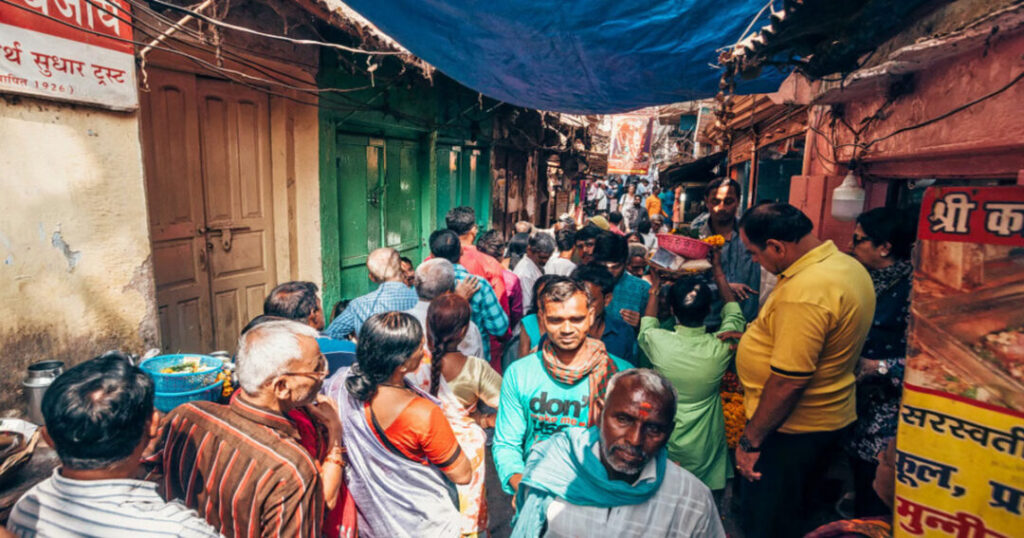
Vishwanath Gali is the main lane running from Dashashwamedh Ghat toward the Kashi Vishwanath Temple—approximately 500 meters of extraordinary sensory density. Flower sellers, prasad stalls, sweet shops, trinket vendors, saree traders, cows, pilgrims, tourists, priests, and the occasional motorcycle all share a lane barely wide enough for two people to pass comfortably. It is chaotic, fragrant, occasionally overwhelming, and entirely irreplaceable.
Walk it slowly. Do not hurry. The lane has been like this for centuries.
- The Bengalitola and Thatheri Bazaar areas adjacent to the gali are where traditional brass and bell-metal work has been produced for generations—the sound of hammering metal is one of Varanasi’s most distinctive ambient sounds
- The shops selling rudraksha beads, religious texts, and temple items are genuinely interesting even without devotional intent
- The best time to walk Vishwanath Gali is between 6 and 8 AM, before the day reaches full density
Silk Weaving — Banarasi’s Most Important Industry
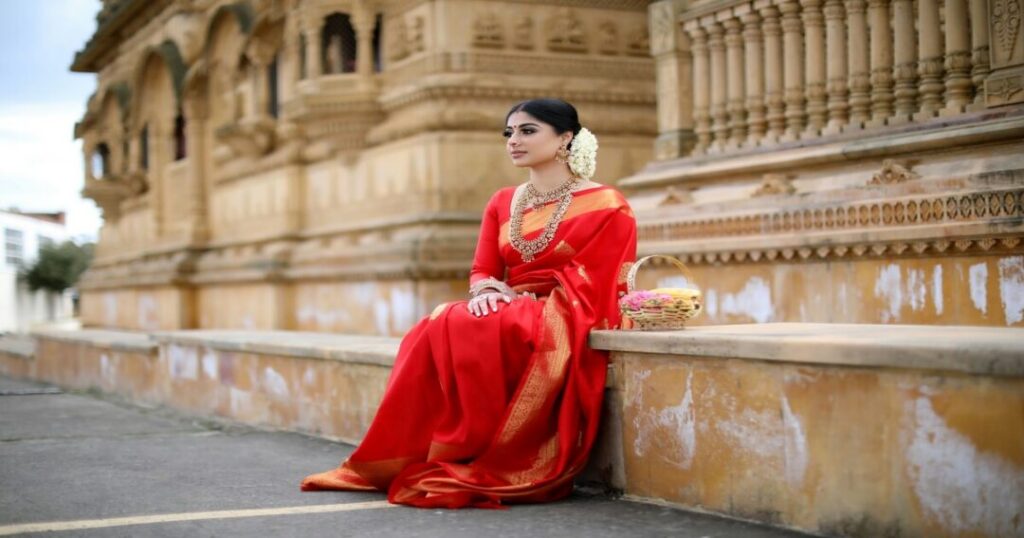
Banarasi silk — specifically the Banarasi sari, woven with gold and silver brocade — is one of the most technically sophisticated textile traditions in India, awarded a Geographical Indication (GI) tag. The weaving community (karigar) has lived and worked in the Madanpura, Lallapura, and Peeli Kothi areas of Varanasi for generations. Visiting a weaving workshop — watching the Jacquard loom translate a punched card pattern into brocade at remarkable speed — is one of the most genuinely educational things to see in Varanasi.
The weaving tradition has faced severe pressure from cheaper powerloom imitations and declining demand, and the master weavers (ustad karigar) are an increasingly fragile community. Buying directly from weavers, or from verified handloom cooperatives, matters economically.
- Ask at the textile heritage organisations and cooperatives in the Peeli Kothi area for workshop visits—most are happy to receive interested visitors
- A genuine handwoven Banarasi sari takes days to weeks to produce; the pricing reflects this; anything significantly cheaper is almost certainly powerloom
- The BHU campus (Banaras Hindu University) has a textile heritage museum worth visiting for the historical context
Ganga Ghats — The Ones Nobody Talks About
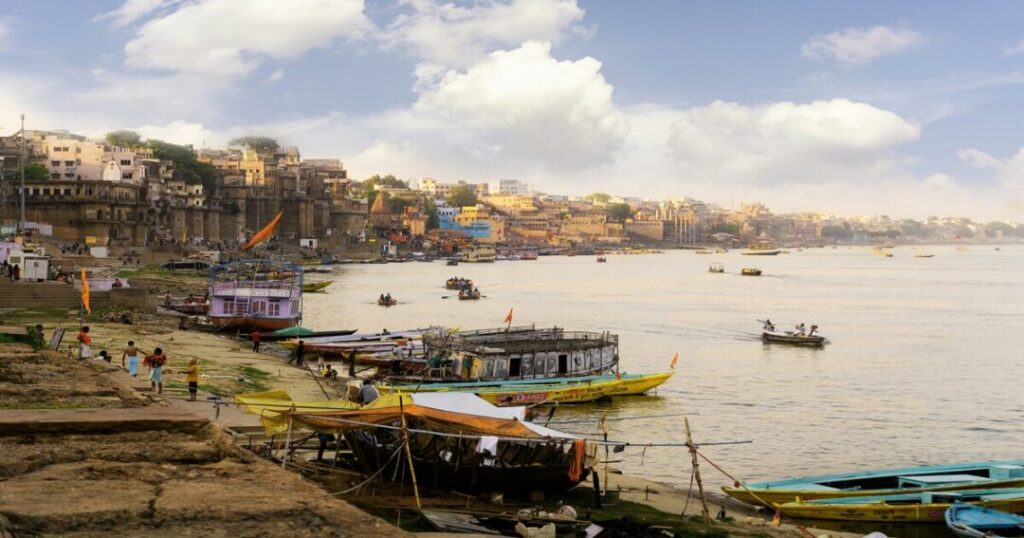
Everyone visits Dashashwamedh and Assi. Fewer people walk the 84 ghats that stretch for approximately 6.5 km along the Varanasi waterfront. The numbered sequence of ghats—from Assi in the south to Rajghat in the north—contains some of the finest architecture in the city, most of it belonging to the former princely states of India that built palace-ghats in Varanasi as their spiritual headquarters.
- Panchganga Ghat — where five sacred rivers are believed to converge beneath the Ganges; a significant pilgrimage point and the location of the Bindu Madhav Temple (one of Varanasi’s oldest Vishnu temples); relatively quiet by Varanasi standards
- Scindia Ghat—the half-submerged Shiva temple slowly sinking into the river here is one of the most photographed images in Varanasi; the ghat itself is architecturally remarkable
- Kedar Ghat—associated with South Indian pilgrims; the ghats here have a distinctly different visual character from the northern ghats and are far less crowded
Food in Varanasi — What to Eat, Where to Begin?
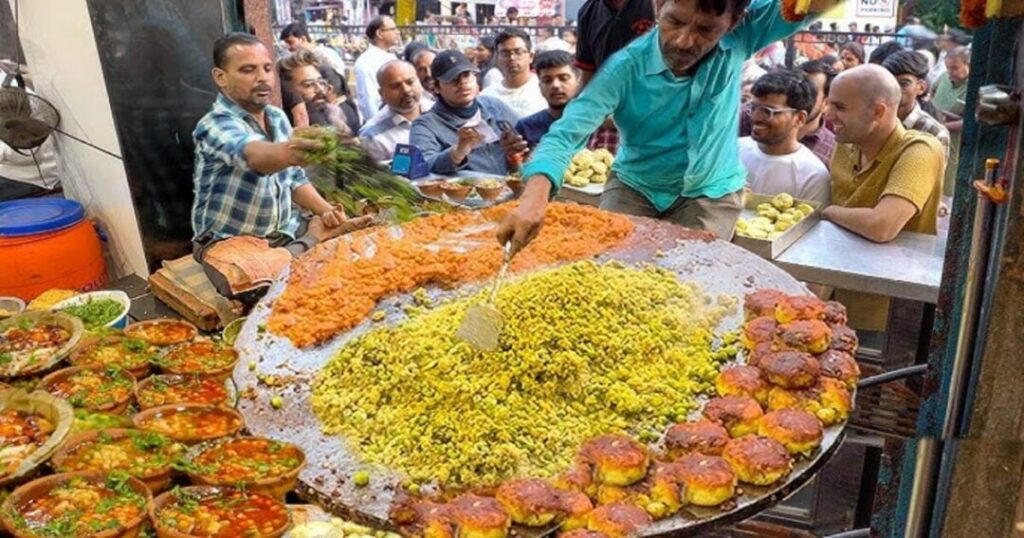
Varanasi’s food is an identity statement as much as a meal. The city’s culinary culture is built around a handful of preparations that have been made the same way for generations—at the same street corners, by the same families, with the same recipes.
The non-negotiable Varanasi food experiences:
- Kachori-sabzi — the definitive Banarasi breakfast: crisp, deep-fried kachori (stuffed pastry) served with a thin, intensely spiced potato-tomato curry. Eaten at street stalls from roughly 6 AM onwards. The version from the area around Kachori Gali (near the old city) is the most celebrated
- Tamatar chaat—a distinctly Banarasi preparation: boiled and spiced tomatoes served with crisp puri, sev, and chutney; the tomato base gives it a sourness unlike any other chaat
- Lassi—thick, cream-topped, served in earthen pots (kulhad) that are broken after use; the Varanasi lassi is among the finest in India, and the ritual of the clay pot is part of the experience
- Thandai—a cold drink made from milk, nuts, seeds, and spices; consumed particularly during Holi and the summer months; available in regular and bhang (cannabis-infused) versions; know which you’re ordering
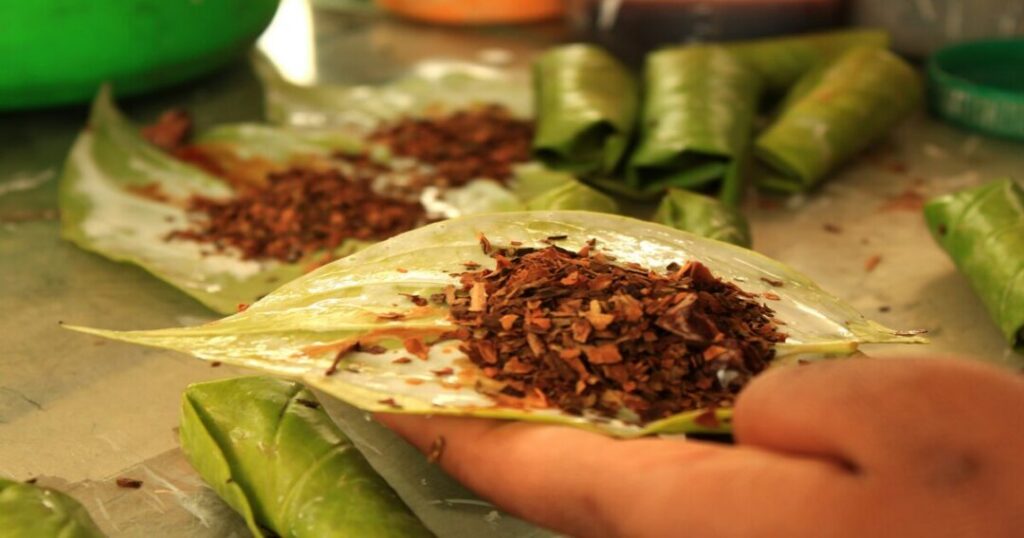
- Banarasi paan—the finishing ritual of every Varanasi meal; a betel leaf folded around areca nut, lime paste, and an extraordinary array of optional additions (gulkand rose jam, fennel, coconut, cloves); the making and consuming of paan is a Banarasi art form in its own right
Bharat Mata Mandir — India as Sacred Geography
The Bharat Mata Mandir (Mother India Temple) near Banaras Hindu University is one of the most unusual temples in India—inaugurated by Mahatma Gandhi in 1936, it contains no idol or deity. Instead, the main hall houses a large marble relief map of undivided India — every mountain, river, and plain carved in three dimensions into the marble floor. The temple treats the land itself as sacred. It is the only temple in India of this specific type.
- Free entry; very few tourists visit; the experience is quietly extraordinary
- Gandhi inaugurated it with the words that the temple was “for all the people of India, irrespective of caste, creed, or religion.”
- Located near BHU campus; combine with the BHU Vishwanath Temple (a larger, more accessible version of the Kashi Vishwanath) in the same visit
Ramnagar Fort & Museum — Mughal-Era Royalty Across the River
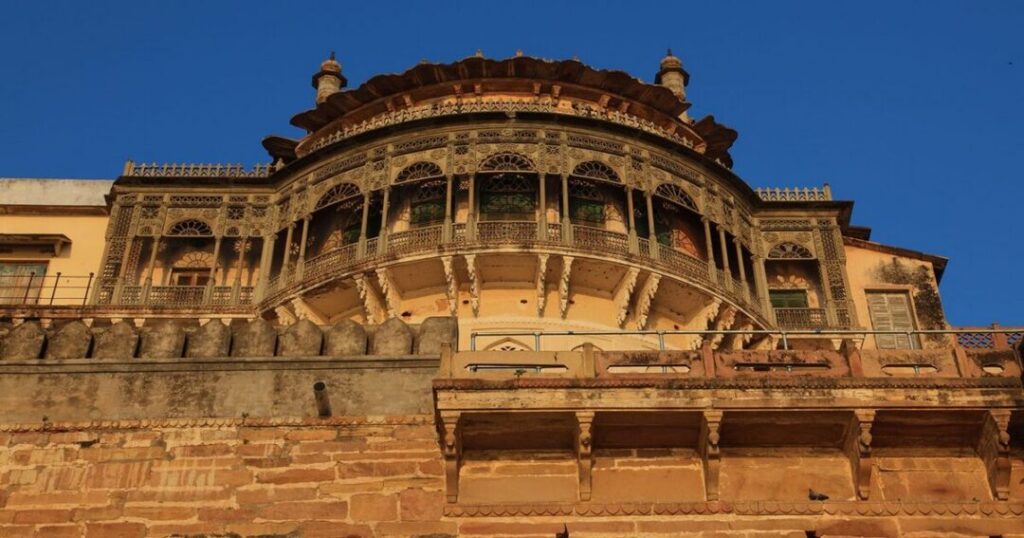
Ramnagar Fort, built in the early 18th century in Mughal architectural style, sits on the opposite bank of the Ganges from Varanasi—a cream-colored sandstone fort that was the seat of the Maharajas of Varanasi. The museum inside contains vintage automobiles, palanquins, astronomical instruments, arms, and manuscripts — an eclectic royal collection that is genuinely interesting if approached without expectation of polished curation. The fort is still the residence of the current royal family.
- A short ferry ride or bridge crossing from Varanasi’s ghats; accessible by auto from the city
- The Ramnagar Ramlila—a month-long theatrical performance of the Ramayana staged in and around the fort every autumn—is one of the most extraordinary folk performance traditions in India; it is UNESCO-listed as Intangible Cultural Heritage
- The museum is functional rather than pristine; the collection rewards patient browsing
Also read: Exploring India’s Lesser-Known Destinations for Diwali 2026 Celebrations
Kabir Math — Where the Weaver-Saint Lived
Kabir Chaura Math in the old city is the hermitage associated with the 15th-century poet-saint Kabir—the weaver, mystic, and philosopher whose dohas (couplets) cut through the distinctions of Hindu and Muslim, caste and status, with a directness that made him beloved to both communities and suspicious to both establishments. Kabir was born in Varanasi and reportedly died at Maghar (as an act of defiance against the belief that dying in Varanasi guaranteed liberation—Kabir refused the spiritual privilege). The math maintains his memory through recitations and a small museum.
- Free entry; a peaceful and philosophically resonant stop in a city full of devotional noise
- The handloom weaving demonstration at the mat connects Kabir’s craft identity to his philosophical one
- Located in the Kabir Chaura area of the old city; ask locally for directions—it is not signposted for tourists
Day Trips — Banaras Tourist Spots Beyond the City
Sarnath (~10 km | 30 minutes)
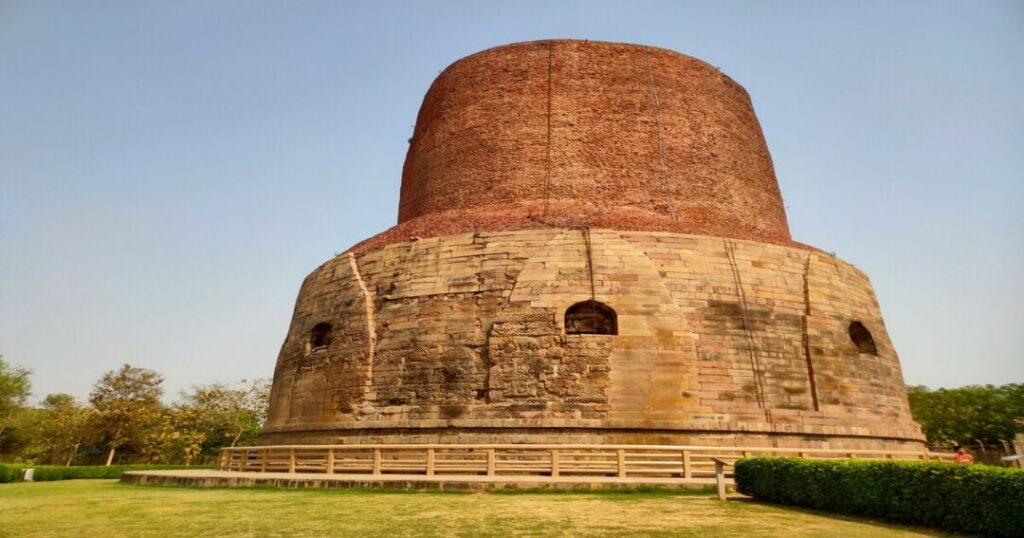
Sarnath is where the Buddha gave his first sermon after attaining enlightenment at Bodh Gaya—the Deer Park at Sarnath is where he taught the Dhammacakkappavattana Sutta (Setting in Motion of the Wheel of the Dhamma) to his first five disciples in approximately 528 BCE, establishing the Buddhist Sangha. The Dhamek Stupa—a massive cylindrical brick stupa standing 43.6 meters tall, built by the Maurya Emperor Ashoka and later enlarged in the Gupta period—is the most significant monument at the site. The Lion Capital of Ashoka found here is now the national emblem of India; the original is in the Sarnath Museum.
- The Archaeological Museum at Sarnath—one of the finest in India—houses the Lion Capital and an extraordinary collection of Gupta and Kushana-period Buddhist sculpture
- The Tibetan, Chinese, Japanese, and Sri Lankan Buddhist monasteries clustered around Sarnath represent the international community of Buddhist pilgrims who have been coming here for over 2,500 years
- Entry to the site is nominal; the museum charges separately; it is closed on Fridays
Chunar Fort (~40 km | 1 hour)
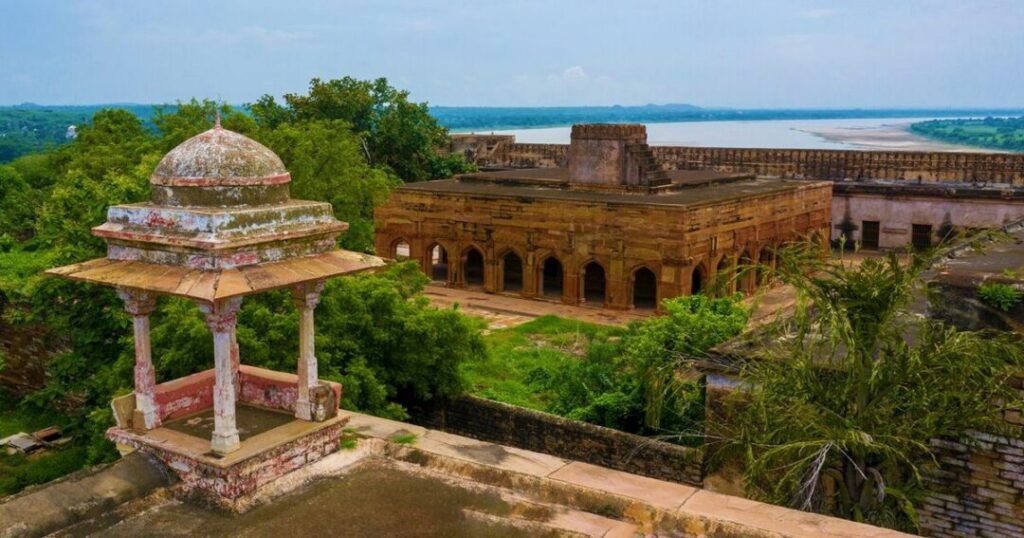
Chunar Fort, approximately 40 km south of Varanasi on the Ganges, is an almost entirely overlooked historical site that has been occupied continuously for at least 2,000 years. The fort sits on a strategic promontory of the Vindhya hills directly above the Ganges and was controlled at various times by the Chandela dynasty, Humayun, Sher Shah Suri, Akbar, and the British East India Company. The British used it as a treasury and later as a sanatorium. The site contains ruins from multiple historical periods, virtually no tourist infrastructure, and extraordinary views of the Ganges below.
- Best combined with a Ganges boat trip on the return—the view of Chunar Fort from the river is one of the most dramatic in Uttar Pradesh
- The fort is managed by the Archaeological Survey of India; verify opening hours before visiting
- The town of Chunar is also famous for its fine-grained sandstone (Chunar stone)—the raw material of Ashoka’s pillars and countless historical monuments across India
Conclusion About Things to Do in Varanasi
Varanasi does not need to try to be significant. It simply is by virtue of having been continuously significant for longer than almost any other place on the planet. The things to do in Banaras are not a checklist. They are an argument for slowing down: for sitting at a ghat at dawn when the mist is on the river, for drinking lassi from a clay pot that will be broken when you finish, and for watching the aarti fires reflected in the Ganges at dusk.
Quick guide to Kashi places to visit:
- Ghats: Dashashwamedh (aarti), Manikarnika (cremation), Scindia (sinking temple), Panchganga (five rivers)
- Temples: Kashi Vishwanath (Jyotirlinga, rebuilt 1780), Sankat Mochan (Tulsidas, 16th century), Durga Temple (18th century)
- Culture: Vishwanath Gali, Banarasi silk workshops, Kabir Chaura Math, Bharat Mata Mandir
- Food: Kachori-sabzi, tamatar chaat, lassi, thandai, paan
- Day trips: Sarnath (10 km, first sermon of the Buddha, Lion Capital), Ramnagar Fort (across the river, royal museum), Chunar Fort (40 km, 2,000 years of history on the Ganges)
Download the Explurger app to discover what travelers and pilgrims recommend in Varanasi, find experiences beyond the tourist trail, and log every ghat, temple, and bowl of kachori-sabzi on your journey.
The fires at Manikarnika have not gone out in centuries. The aarti begins again every evening. Varanasi is not waiting for you — but it will be there when you arrive.
FAQs About Things to Do in Varanasi
2. What are the best Varanasi sightseeing places beyond the ghats?
The most compelling Varanasi sightseeing places beyond the standard ghat circuit: Sankat Mochan Hanuman Temple (founded by Tulsidas in the 16th century — a living, local temple with no tourist performance), Bharat Mata Mandir (the only temple in India where the sacred object is a marble relief map of the country, inaugurated by Gandhi in 1936), Ramnagar Fort (Mughal-era fort with a fascinating eclectic museum, seat of the Varanasi royal family), Kabir Chaura Math (the hermitage of the 15th-century weaver-saint Kabir), and Chunar Fort (40 km south, 2,000+ year-old fort on the Ganges, almost entirely unvisited by tourists).
3. What is the best time to visit Varanasi?
October to March is the finest window—comfortable temperatures, clear skies, and the city at its most festive. November's Dev Deepawali (every ghat lit with hundreds of thousands of lamps on Kartik Purnima) is the single most spectacular event in Varanasi's calendar. March's Holi—particularly the Masan Holi at Manikarnika Ghat, where cremation ash is used as color—is one of India's most extraordinary and visceral festival experiences. Avoid peak summer (April–June) for comfort, but the ghats are quieter.
4. What is Sarnath and why is it visited from Varanasi?
Sarnath is the site where the Buddha delivered his first sermon to his five disciples in approximately 528 BCE—approximately 10 km from Varanasi, making it the most important Banaras tourist spot for Buddhist pilgrims and history travelers. The Dhamek Stupa (43.6 meters tall, Maurya-Gupta period) marks the location of the sermon. The Archaeological Museum at Sarnath houses the Lion Capital of Ashoka—the original of the symbol that appears on India's national emblem. The site is surrounded by Buddhist monasteries representing traditions from across Asia.
5. What is special about Banarasi silk?
Banarasi silk—specifically the Banarasi sari—is a GI-tagged textile tradition of extraordinary technical complexity, woven with gold and silver brocade by master weavers (karigar) in the Madanpura, Lallapura, and Peeli Kothi areas of Varanasi. A genuine handwoven Banarasi sari takes days to weeks to produce on a Jacquard loom. The tradition faces severe pressure from cheaper powerloom imitations. Visiting a weaving workshop is one of the most genuinely educational things to see in Varanasi — and buying directly from weavers or verified handloom cooperatives supports a heritage craft under serious economic threat.