
86 Total Views
Imagine standing inside a sandstone shelter where humans lived tens of thousands of years ago, looking at a bison, a hunter, or a dancing figure painted by someone who had no writing, no metal, and no farming. That is the experience waiting at the Bhimbetka rock shelters, one of the most remarkable prehistoric sites in the world, tucked into the Vindhya hills of Madhya Pradesh.
In this guide, you will learn the history of Bhimbetka, the stories behind its famous paintings, the best shelters to visit, and practical travel tips to plan your trip.
What Are the Bhimbetka Rock Shelters?
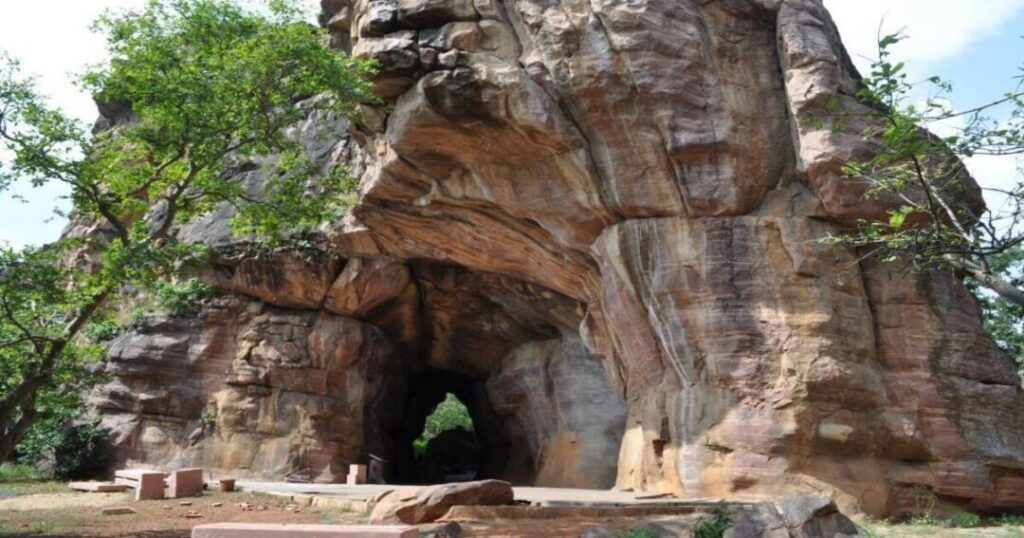
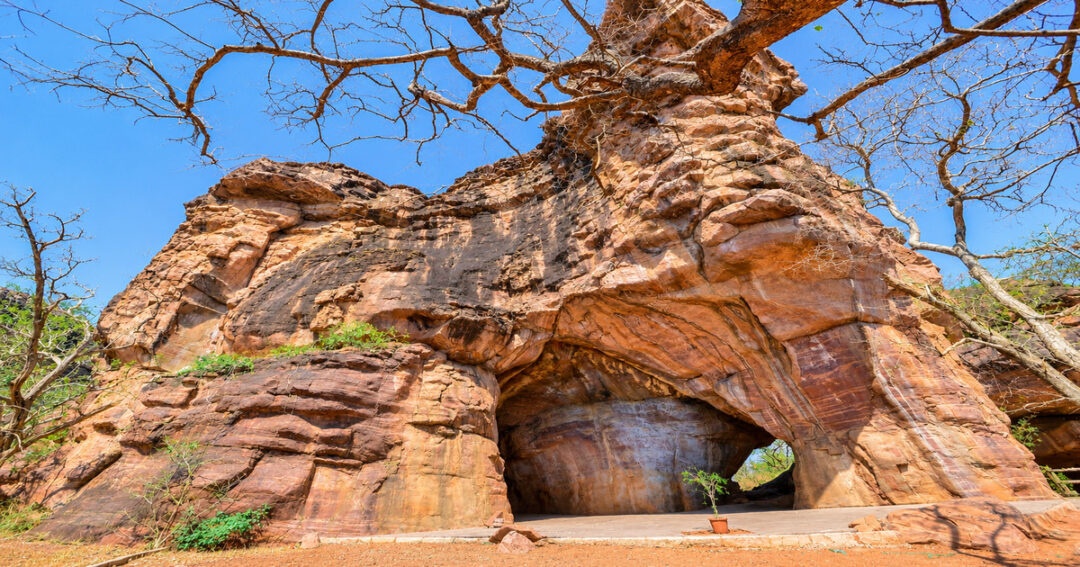
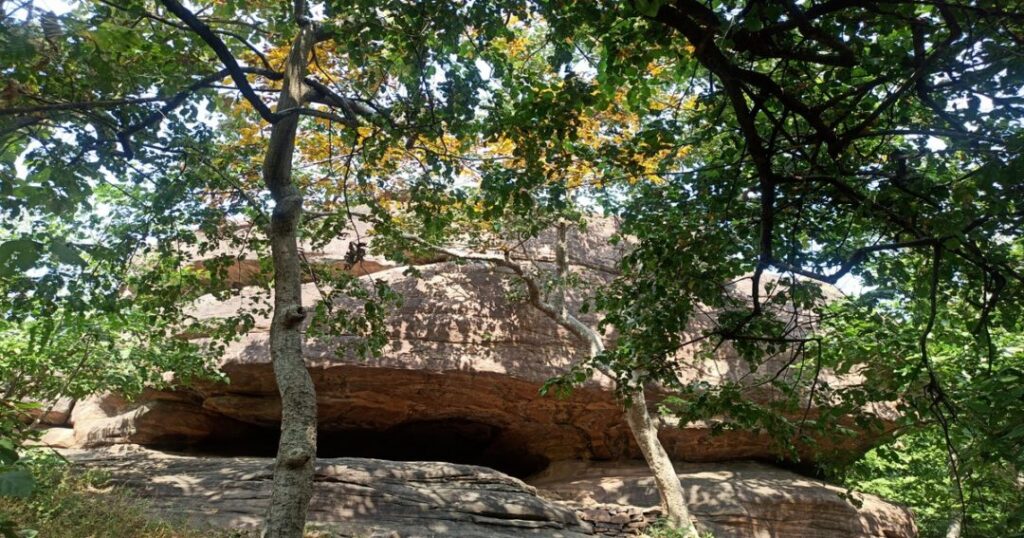
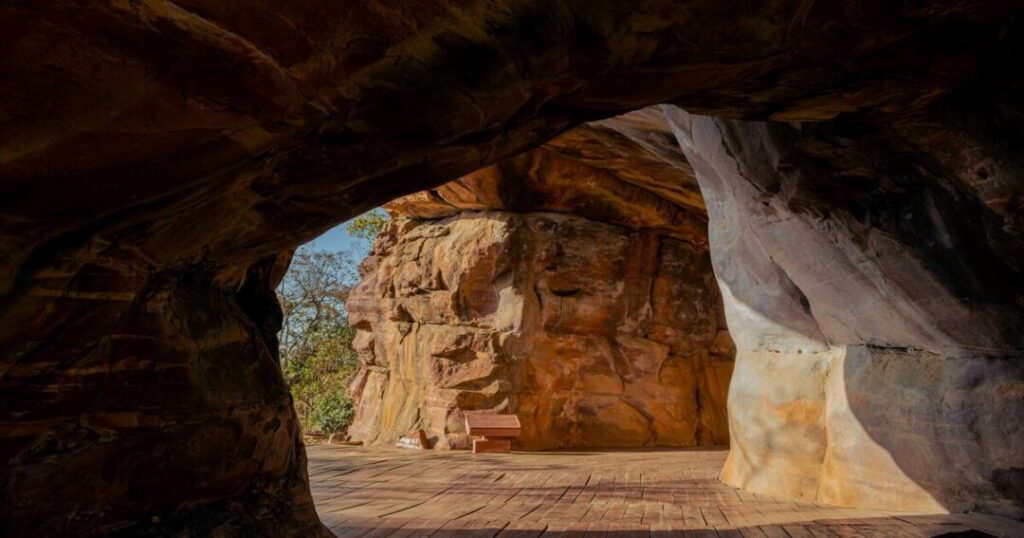
The Bhimbetka rock shelters are a cluster of natural sandstone shelters in the Raisen district of Madhya Pradesh, about 45 km south-east of Bhopal. Spread across forested hills at the edge of the Vindhya range, the site contains more than 750 shelters, of which roughly 400 hold ancient paintings.
The name is believed to come from Bhimbaithka, meaning “the sitting place of Bhima,” linking the site to the Pandava hero of the Mahabharata. Locally, the area has long been tied to legend and folklore.
In 2003, UNESCO inscribed Bhimbetka as a World Heritage Site, recognizing its outstanding evidence of early human life in South Asia. The site is also protected by the Archaeological Survey of India (ASI).
Quick Facts About Bhimbetka
- Location: Raisen district, Madhya Pradesh, India
- Distance from Bhopal: Around 45 km
- Number of shelters: 750+ (about 400 with paintings)
- Time span: From the Palaeolithic era to the medieval period
- UNESCO status: World Heritage Site since 2003
- Discovered by: Dr. V. S. Wakankar, in 1957
History and Discovery of the Bhimbetka Rock Shelters
The site came to wider attention in 1957 when archaeologist Dr. Vishnu Shridhar Wakankar noticed the landscape while travelling by train near Bhopal. It reminded him of rock-art regions he had seen in Spain and France. He explored the area and began systematic documentation, work that eventually revealed one of the richest rock-art concentrations in the world.
Excavations at Bhimbetka have uncovered stone tools from the Acheulean (Lower Palaeolithic) period onward, along with hearths, burial remains, and evidence of continuous habitation. Few places in India show such a long, unbroken record of human presence, from early hunter-gatherers to later settled communities.
Also Read: Madhya Pradesh Heritage Circuit: Discover India’s Timeless Legacy
Bhimbetka Rock Shelters: Cave Painting Themes, Colors, and Styles
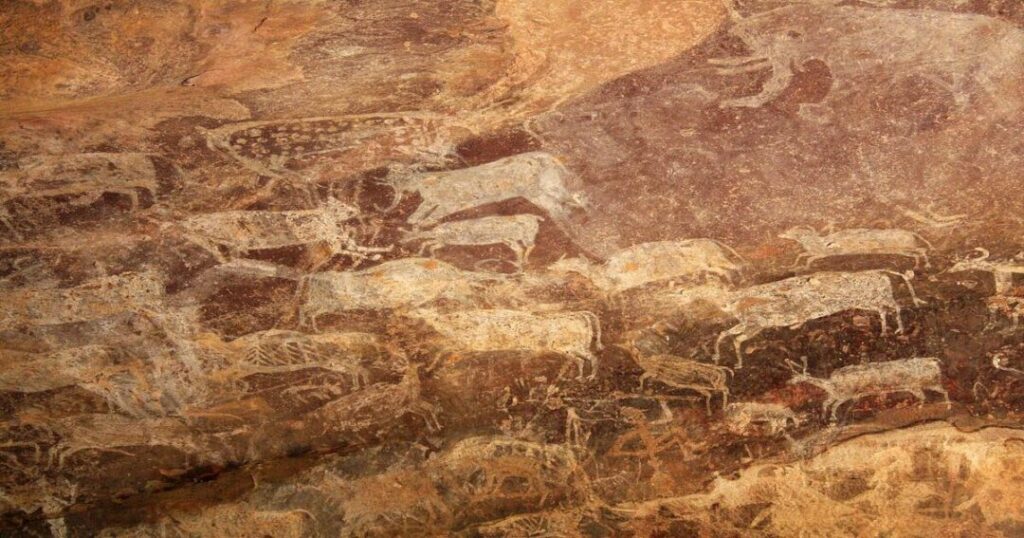
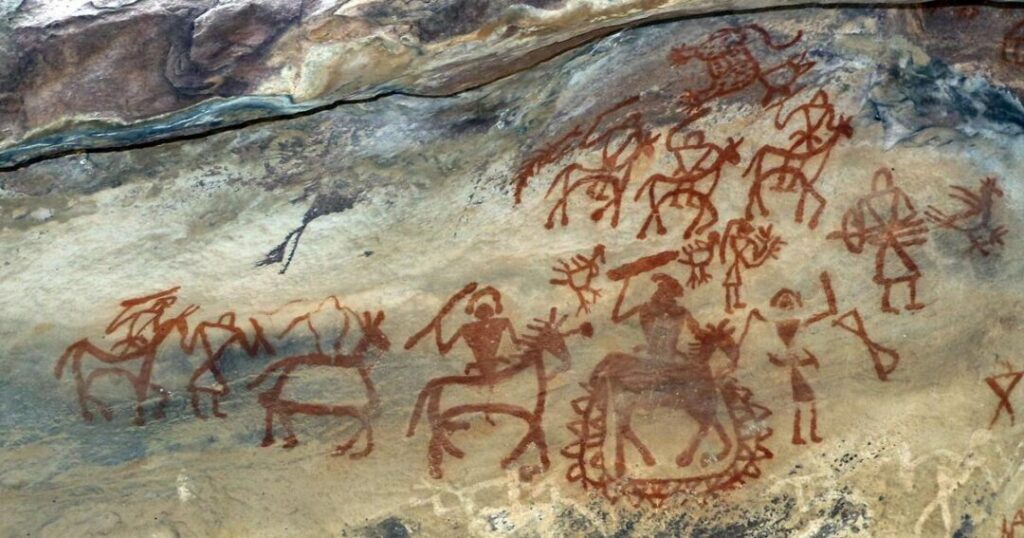
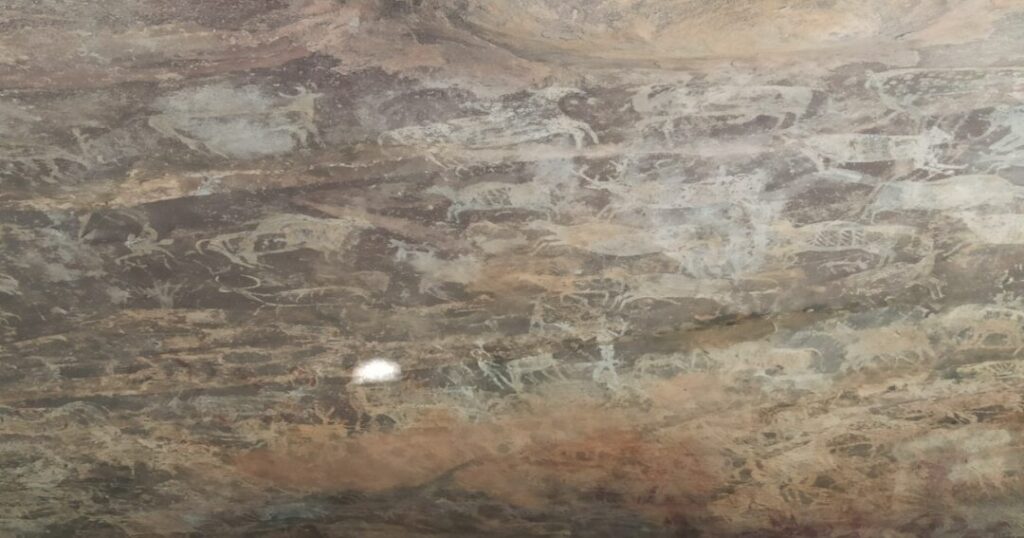
The Bhimbetka cave paintings are the main reason travelers and researchers visit. Artists worked on the walls and ceilings of the shelters, recording the world around them.
Common Themes in Bhimbetka Painting
- Animals: Bison, deer, elephants, tigers, boars, rhinoceroses, leopards, and crocodiles
- Hunting scenes: Groups of hunters with bows, spears, and sticks chasing animals
- Daily life: Gathering food, child-rearing, communal meals, and honey collection
- Dance and ritual: Figures dancing in circles, musicians, and ceremonial processions
- Warfare: Armed riders on horses and elephants in later periods
- Symbols and masks: Abstract designs and figures that may reflect religious or magical beliefs
Colors and Techniques
The Bhimbetka painting tradition mainly used mineral pigments. Red and white were most common, produced from hematite (red ochre) and lime or chalk, while green and yellow appear in some shelters. Artists mixed pigments with natural binders such as animal fat or plant gum and applied them with fingers or brushes made from plant fibers. The sheltered position of the paintings protected them from rain and sunlight, which is why so many survive today.
Bhimbetka Rock Shelters: The Evolution of Prehistoric Art Through Time
The prehistoric rock paintings of Bhimbetka are often grouped into broad periods based on style, subject matter, and superimposition (newer paintings layered over older ones).
- Upper Paleolithic: Large, linear figures of bison, tigers, and rhinoceroses, painted mostly in green and dark red.
- Mesolithic: The largest group of paintings. Smaller figures, lively hunting and dance scenes, and detailed group activities.
- Chalcolithic: Pictures that show contact between hunter-gatherers and early farming communities, including exchange of goods.
- Early Historic: Figures in red, white, and yellow, along with religious symbols, decorative patterns, and some early inscriptions.
- Medieval: Simpler, geometric, and schematic figures, often in a deteriorated state.
Scholars continue to debate exact dates, and estimates vary depending on the method and the shelter studied. Many of the older paintings are generally placed in the tens of thousands of years range, while the rich Mesolithic art is considered the heart of the collection.
Also Read: More Than Just Tigers: Places to Visit in Madhya Pradesh
7 Must-See Bhimbetka Rock Shelters and Sites
Not every shelter is open to visitors, but the ASI has developed a marked trail that covers the most significant ones. Here are the highlights:
- Auditorium Cave: The largest shelter, with a huge rock formation at its entrance. Researchers have documented ancient cupules (small circular hollows) here, among the oldest known rock markings in the world.
- Zoo Rock: A shelter filled with paintings of elephants, sambar, bison, deer, and other animals.
- Boar Rock: Known for a painting of a large boar, along with other animals and a hunting scene.
- King’s Rock (Raja Ka Chatri): A shelter with elaborate paintings that has a regal name and striking composition.
- Bison Rock (Gaur Rock): Features a bison charging at a group of hunters, one of the most famous images at Bhimbetka.
- Painted Rock Shelters (Group Trail): A cluster of shelters featuring dancing figures, riders, musical instruments, and hunting parties.
- Rock of the Cheetah and Related Shelters: Shelters with striking animal motifs that show the stylistic variety of the site.
Why Bhimbetka Rock Shelters Matter: Historical and Cultural Significance
The Bhimbetka rock shelters matter for several reasons:
- Continuous human record: The site shows habitation across a vast span of prehistory.
- Window into early thinking: The paintings reveal how early people hunted, celebrated, worshipped, and understood nature.
- Archaeological value: Stone tools and excavated layers help scholars trace technological change.
- Cultural heritage: The site is a source of pride, a living link to India’s earliest artists.
- Global recognition: UNESCO status has increased protection, research, and tourism.
How to Reach Bhimbetka Rock Shelters
- By air: The nearest airport is Raja Bhoj Airport in Bhopal, roughly 45 to 50 km away. Taxis and cabs are available.
- By train: Bhopal Junction is the main railhead. Obaidullaganj is a closer station on the Bhopal-Itarsi route.
- By road: Bhimbetka lies on the Bhopal-Hoshangabad route (NH 46). Drive or hire a cab from Bhopal; the journey takes around one hour.
Also Read: Places to Visit in Bhopal: Top Attractions in the City of Lakes
Bhimbetka Rock Shelters: Best Time to Visit and Essential Travel Tips
The best time to visit Bhimbetka is between October and March, when the weather is pleasant and the forest trails are comfortable to walk. Summers can be hot, and the monsoon (July to September) makes the area green but the paths slippery.
Practical Tips for Visitors
- Wear comfortable walking shoes, as the trail involves uneven rocky ground.
- Carry water, sunscreen, a hat, and light snacks.
- Start early in the morning for cooler weather and better light for photography.
- Hire an authorized ASI guide to understand the paintings and their context.
- Do not touch, scratch, or chalk the paintings. Flash photography may be restricted, so follow site rules.
- Check current timings and ticket prices on the official ASI or Madhya Pradesh Tourism website before you go.
- Combine the visit with nearby attractions such as Bhojpur Temple, Sanchi Stupa, and Bhopal City.
Conclusion: Experience the Magic of Bhimbetka Rock Shelters
The Bhimbetka rock shelters are more than an archaeological site. They are a gallery of human imagination, where hunters, dancers, and animals still move across stone walls after thousands of years. Whether you love history, art, photography, or nature, a visit to Bhimbetka offers a rare chance to connect with the earliest chapters of Indian civilization.
Plan your trip between October and March, respect the heritage, and let the ancient painters of Bhimbetka tell their story.
FAQs About Bhimbetka Rock Shelters
2. Where is Bhimbetka located?
Bhimbetka is located in the Raisen district of Madhya Pradesh, about 45 km south-east of Bhopal, in the foothills of the Vindhya range.
3. How old are the Bhimbetka cave paintings?
The paintings span many periods. The earliest are generally attributed to the Upper Palaeolithic era, while most visible paintings belong to the Mesolithic period and later. Exact dating remains a subject of ongoing research.
4. How many caves are there at Bhimbetka?
There are more than 750 rock shelters at the site, of which around 400 contain paintings. Only a selection is open to the public.
5. Who discovered the Bhimbetka caves?
Archaeologist Dr. V. S. Wakankar discovered the site in 1957 and began its systematic study.
Why is it called Bhimbetka?
The name is believed to derive from Bhimbaithka, meaning "Bhima's sitting place," linking the site to the Pandava prince Bhima from the Mahabharata.
7. What colours were used in Bhimbetka painting?
The artists mostly used red and white, made from hematite and lime or chalk. Green and yellow also appear in some paintings. The pigments were mixed with natural binders.