
1,558 Total Views
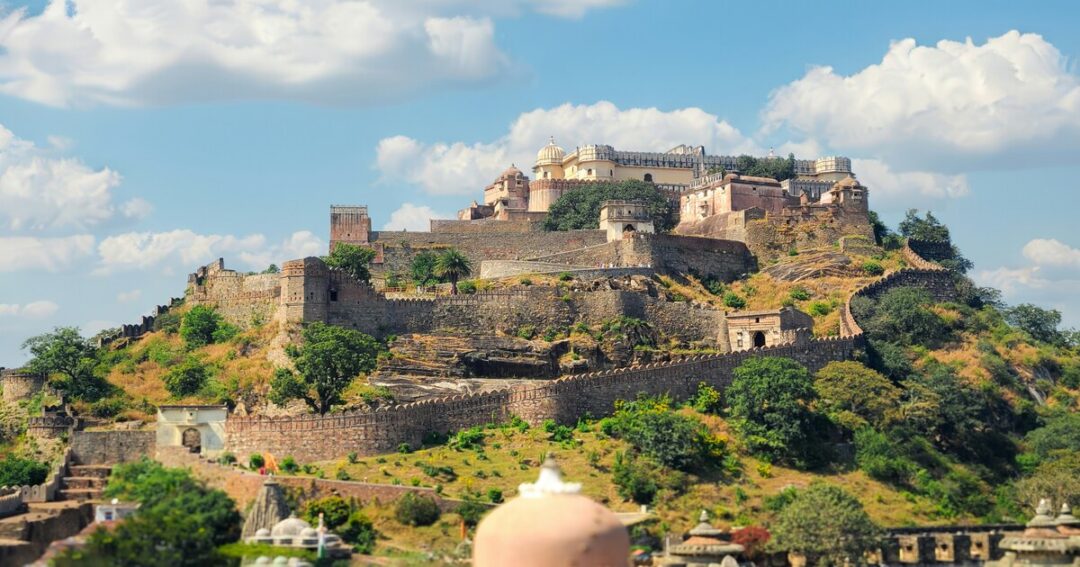
The Buddhist circuit in India links the places where the four defining events of the Buddha’s life happened — birth, enlightenment, first sermon, and death — along with the university and mountain retreats where his teachings were studied and expanded for centuries afterward. Most of these sites sit within a few hundred kilometers of each other across Bihar and Uttar Pradesh, close enough that pilgrims and history travelers alike can realistically string together a single well-planned trip, whether by road, rail, or a dedicated pilgrim train built specifically for the route.
Best Buddhist Circuit in India Sites to Visit
These four sites form the backbone of any serious circuit itinerary, and most tour operators build their entire route around them.
Bodh Gaya: Where the Buddha Attained Enlightenment
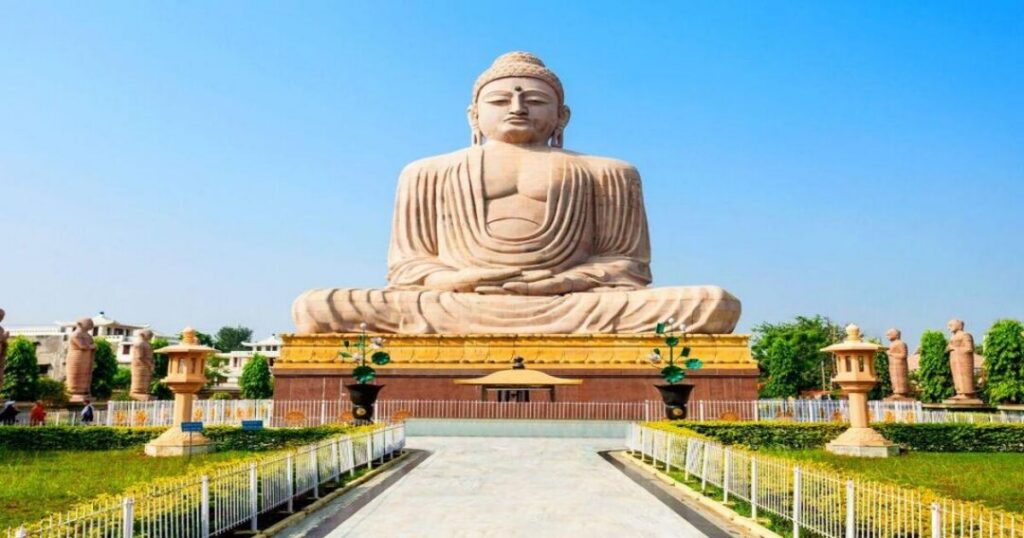
[STAT: the Mahabodhi Temple at Bodh Gaya dates to the 5th or 6th century CE, stands 55 meters tall, and is among the earliest brick Buddhist temples still standing in India; UNESCO inscribed the Mahabodhi Temple Complex as a World Heritage Site in 2002—UNESCO]
- The temple complex centers on a descendant of the original Bodhi Tree, under which Siddhartha Gautama is said to have attained enlightenment, alongside six other sacred spots within the grounds.
- Gaya International Airport is the closest airport, about 17 km away, with Gaya Junction railway station roughly 13-15 km out; Patna’s airport is a further option at around 135 km.
Sarnath: Site of the Buddha’s First Sermon
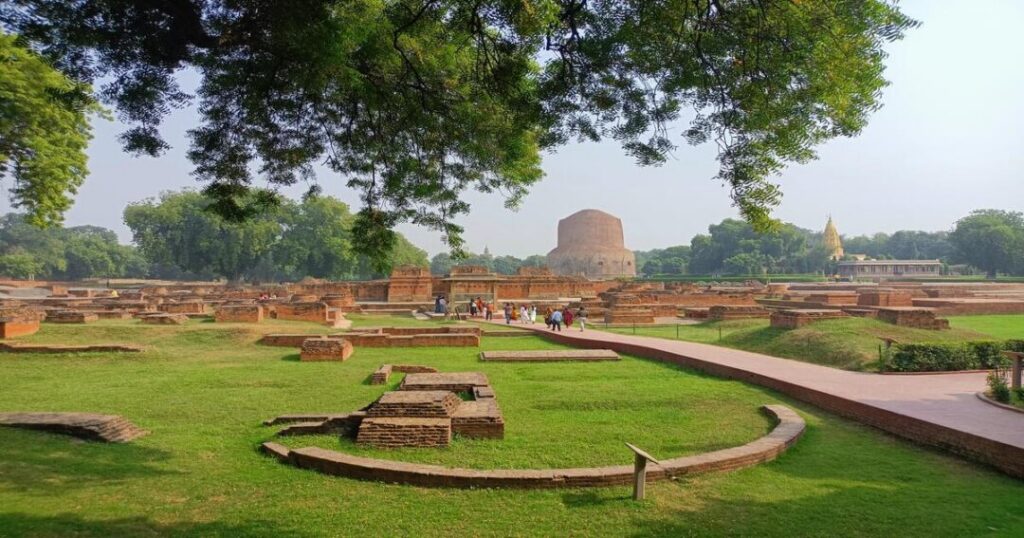
[STAT: Emperor Ashoka commissioned the Dhamek Stupa at Sarnath in 249 BCE, later reconstructed around 500 CE; the stupa stands 43.6 meters tall with a 28-meter diameter and marks the spot where the Buddha delivered his first sermon, the Dharma Chakra Pravartana, to five disciples after attaining enlightenment at Bodh Gaya—Cultural India]
- Sarnath sits about 10 km from Varanasi, making it an easy half-day add-on for anyone already visiting the city, and Bodh Gaya to Sarnath by road runs roughly 250 km.
Also Read: Things to Do in Varanasi: The Complete Guide to Kashi, Banaras & the Eternal City
Kushinagar: Where the Buddha Attained Parinirvana
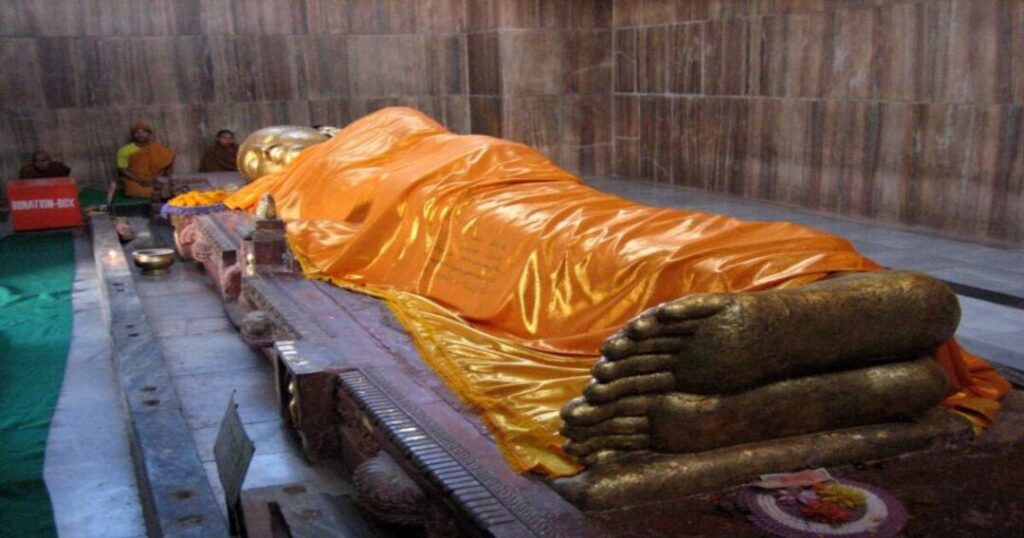
[STAT: the reclining Buddha statue inside Kushinagar’s Parinirvana Temple measures 6.1 meters long and dates to the Gupta Empire period (320-647 CE); it was found shattered during an 1877 excavation and fully restored by the Archaeological Survey of India, while the present temple structure was built by the Indian government in 1956 to mark the 2,500th anniversary of the Buddha’s death, traditionally dated to 487 BCE—Wikipedia]
- Kushinagar does technically have its own international airport, inaugurated in October 2021, but it has run only a handful of flights since opening due to limited instrument-landing infrastructure—Gorakhpur, about 47-54 km away, remains the far more reliable air and rail gateway for now.
Nalanda: The World’s Oldest Residential University
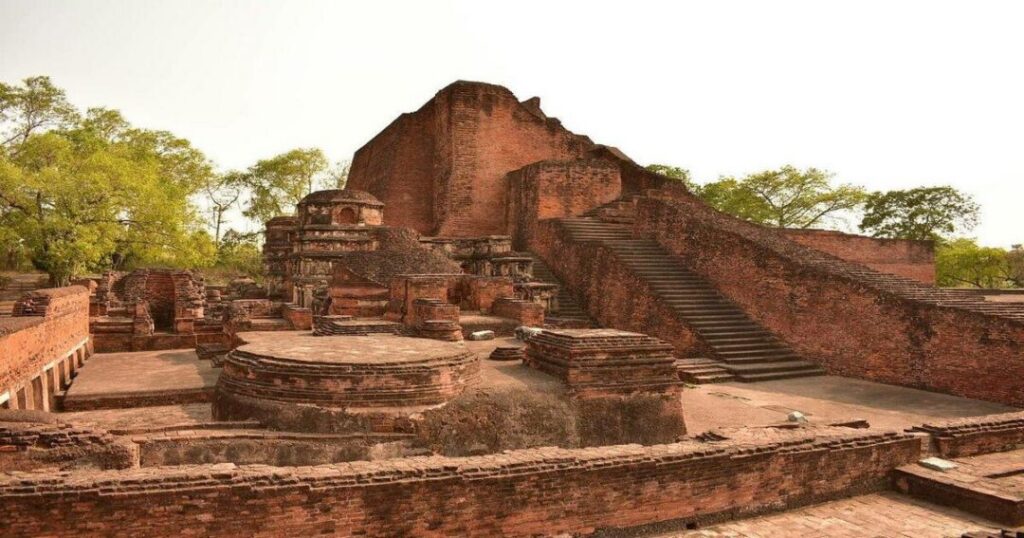
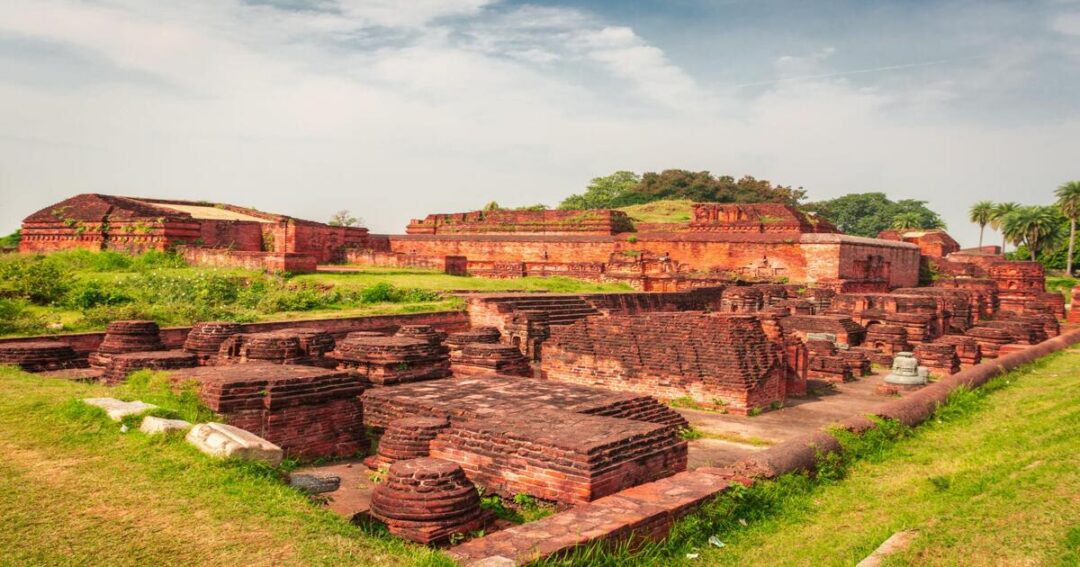
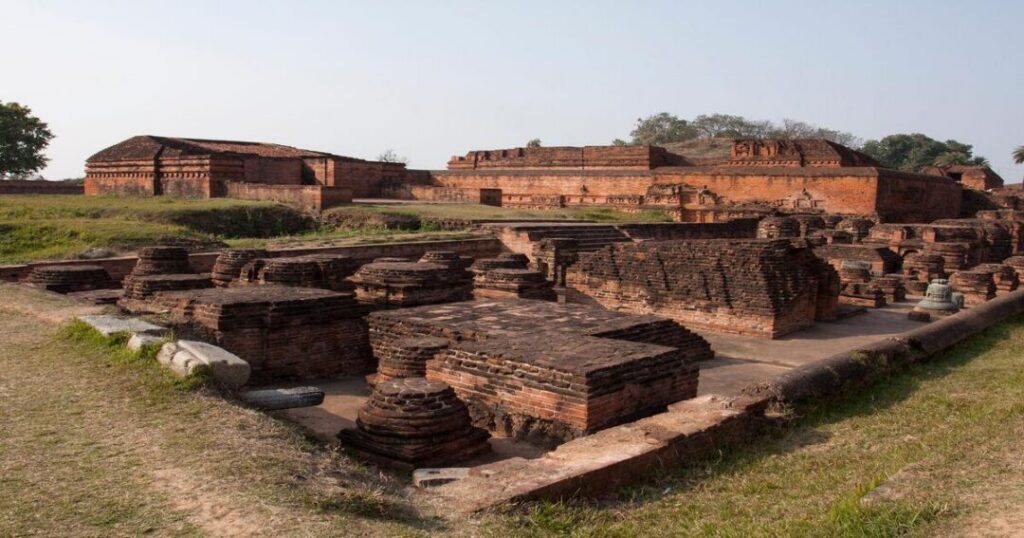
[STAT: Nalanda Mahavihara was founded around 427 CE by Emperor Kumaragupta I; at its peak in the 7th century, the Chinese scholar Xuanzang recorded roughly 1,510 teachers and described support for around 10,000 student monks before the site was sacked and burned around 1200 CE by Muhammad Bakhtiyar Khalji—UNESCO inscribed the ruins as a World Heritage Site in 2016—Wikipedia]
- Nalanda sits close enough to Rajgir to combine both into a single day, and both are roughly 90-95 km from Patna by road.
The Buddhist Circuit of India: Lesser-Known but Essential Stops
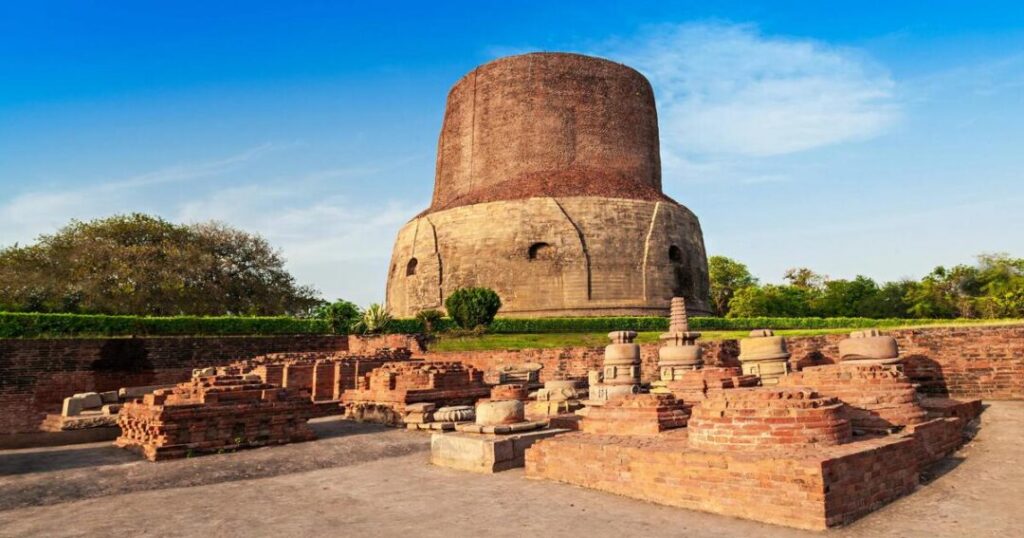
Beyond the four headline sites, a proper Buddhist circuit of India itinerary usually works in at least a couple of these quieter but historically significant stops.
- Vulture’s Peak (Gridhakuta), Rajgir: [STAT: this hilltop, said to resemble a sitting vulture with folded wings, was the Buddha’s favorite retreat in Rajgir and the traditional setting for major Mahayana teachings, including the Heart Sutra and Lotus Sutra—Wikipedia]
- Jetavana Monastery, Sravasti: [STAT: the wealthy merchant Anathapindika purchased this land from Prince Jeta and gifted it to the Buddha, who spent 25 monsoon retreats here—more than at any other single site—delivering many discourses for the first time; it was the second vihara ever donated to him, after Venuvana in Rajgir—Trawell]
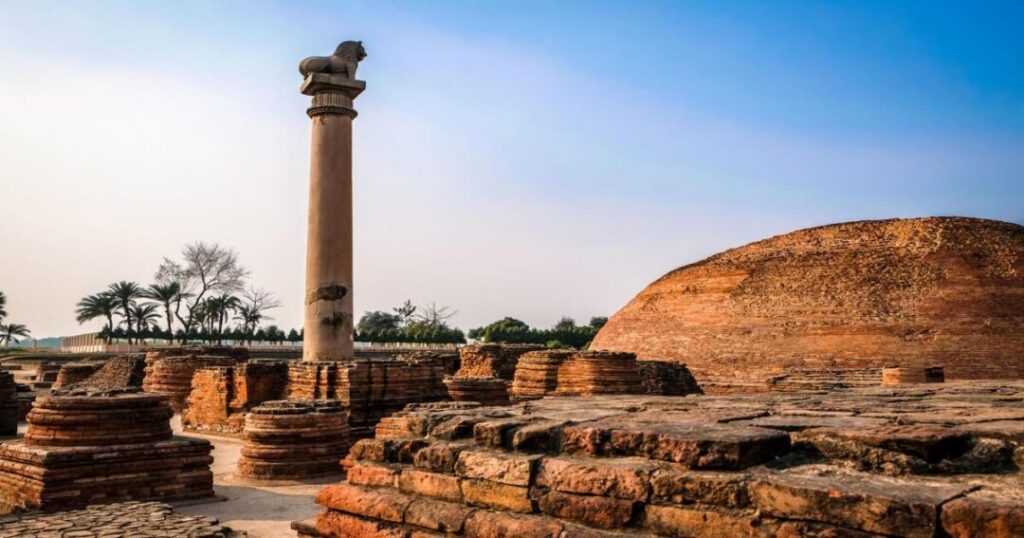
- Ashoka Pillar, Vaishali: [STAT: this 18.3-meter single-piece red sandstone pillar, topped with a lion capital, was erected by Emperor Ashoka to commemorate the Buddha’s last sermon, delivered at Vaishali roughly 65 km northwest of Patna—Bihar Tourism]
Buddhist Circuit in India: Sarnath, Kushinagar & Sravasti
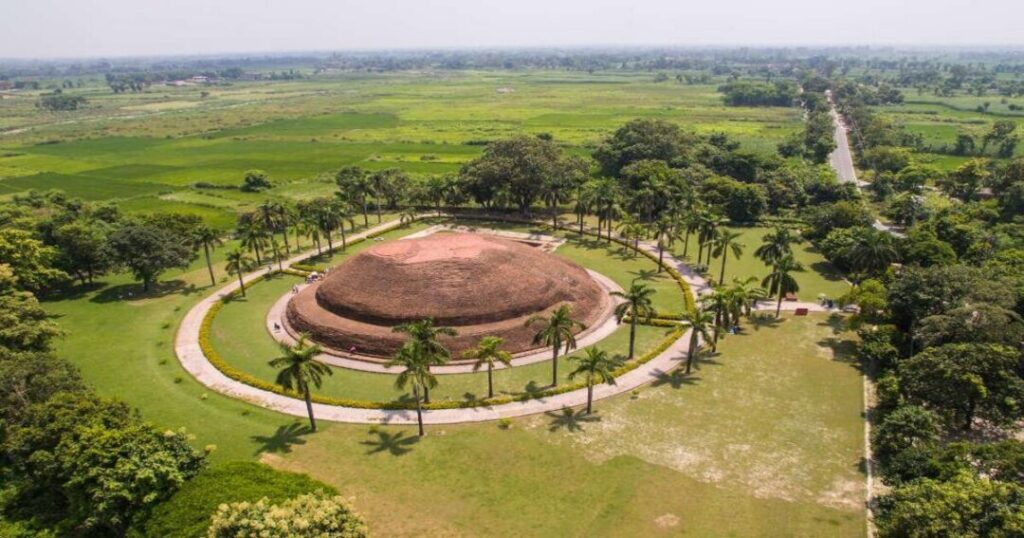
Three of the circuit’s most important sites—Sarnath, Kushinagar, and Sravasti—sit inside a single state, which makes a focused Buddha circuit in Uttar Pradesh a realistic standalone trip even without crossing into Bihar. Varanasi works well as the base for this leg, since Sarnath is barely 10 km away, while Kushinagar (via Gorakhpur) and Sravasti (about 175 km from Lucknow, closer via Balrampur) round out a loop that can be driven in four to five days without excessive backtracking. Grouping the trip this way also avoids the longer Bihar-to-UP transfers that eat up time on a full pan-circuit itinerary.
Buddhist Circuit in India: How to Plan Your Trip
A realistic Buddhist circuit itinerary in India for first-time travellers typically runs 7-9 days and follows a loop rather than a straight line, since Bodh Gaya, Rajgir, and Nalanda cluster in Bihar, while Sarnath, Kushinagar, and Sravasti cluster in Uttar Pradesh.
- Days 1-3: Fly into Gaya or Patna, cover Bodh Gaya, then Rajgir and Nalanda as a single-day trip from Rajgir or Bodh Gaya.
- Day 4 (optional): Vaishali as a day trip from Patna if time allows, before heading north toward Uttar Pradesh.
- Days 5-6: Travel to Varanasi and cover Sarnath, using the city as a base for rest and onward connections.
- Days 7-9: Continue to Kushinagar via Gorakhpur, and add Sravasti if the itinerary allows an extra loop through Balrampur before returning to Lucknow or Delhi for departure.
Also Read: Religious Places in India: The Complete Guide to India’s Most Sacred Sites
Buddhist Circuit in India: The Mahaparinirvan Express
[STAT: the Mahaparinirvan Express, launched by IRCTC in 2007, is a dedicated Buddhist train in India running a 7-night, 8-day loop that begins and ends in Delhi, covering Gaya, Bodh Gaya, Nalanda, Rajgir, Varanasi, Sarnath, Lumbini (Nepal), Kushinagar, Gorakhpur, Sravasti, and Agra—Indian Luxury Trains]
- The train offers First AC, AC 2-Tier, and AC 3-Tier classes, onboard dining from a dedicated kitchen car, hot-water showers, CCTV security, a small library, and English- and Hindi-speaking tour escorts.
- It’s built specifically to solve the logistics problem this circuit otherwise presents—instead of arranging transfers between six or seven separate towns, the entire loop, sightseeing included, is handled as one continuous journey.
Conclusion: Buddhist Circuit in India
From a 6.1-meter reclining Buddha rebuilt from fragments to a university that once supported 10,000 student monks and a train purpose-built to link it all together, the Buddhist circuit in India is as much a logistics puzzle as a pilgrimage—one that rewards travelers willing to plan the loop properly rather than trying to see everything in a single rushed pass. Whether you follow the full route across Bihar and Uttar Pradesh or focus on one state at a time, these sites hold up as some of the most historically dense ground anywhere in India.
Ready to plan your pilgrimage route? Download the Explurger app and start building your Buddhist circuit itinerary today.
FAQs About Buddhist Circuits in India
2. What does the Buddhist circuit of India actually cover geographically?
The Buddhist circuit of India covers sites mostly across Bihar (Bodh Gaya, Rajgir, Nalanda, Vaishali) and Uttar Pradesh (Sarnath, Kushinagar, Sravasti), with Lumbini just across the border in Nepal. Most itineraries treat it as a loop rather than a straight route, since the Bihar and UP clusters sit a few hundred kilometres apart.
3. What is included in a Buddha circuit in Uttar Pradesh?
A Buddha circuit in Uttar Pradesh typically covers Sarnath (near Varanasi), Kushinagar (via Gorakhpur), and Sravasti (via Balrampur or Lucknow), which together can be covered in four to five days as a standalone trip without needing to cross into Bihar.
4. What is a good Buddhist circuit itinerary in India for first-timers?
A workable Buddhist circuit itinerary in India for first-timers runs 7-9 days: 2-3 days covering Bodh Gaya, Rajgir, and Nalanda in Bihar, an optional day trip to Vaishali, then travel to Varanasi for Sarnath, and finally on to Kushinagar (and Sravasti, if time allows) in Uttar Pradesh before returning to Delhi or Lucknow.
5. Is there a dedicated Buddhist train in India?
Yes — the Mahaparinirvan Express, operated by IRCTC since 2007, is a dedicated Buddhist train in India that runs a 7-night, 8-day loop from Delhi covering Gaya, Bodh Gaya, Nalanda, Rajgir, Varanasi, Sarnath, Lumbini, Kushinagar, and Sravasti, with onboard accommodation, meals, and guided sightseeing included.
6. Can I fly directly into Kushinagar?
Technically yes — Kushinagar International Airport was inaugurated in October 2021 — but it has operated only a handful of flights since then due to limited all-weather landing infrastructure. Gorakhpur, about 47-54 km away, remains the more dependable airport and rail gateway for reaching Kushinagar in practice.