
1,037 Total Views
India is one of the most religiously diverse countries on earth—the birthplace of four world religions (Hinduism, Buddhism, Jainism, and Sikhism), the home of one of the world’s largest Muslim populations, and the site of some of the oldest continuously practiced religious traditions in human history. The religious places in India reflect this extraordinary diversity: from the ancient ghats of Varanasi, where Hindus have cremated their dead for millennia, to the Golden Temple in Amritsar, where over 100,000 people eat free meals daily regardless of faith, to the Mahabodhi Temple in Bodh Gaya, where Prince Siddhartha became the Buddha under a specific tree whose descendants still grow in the same spot.
This guide covers the most sacred places in India across all faiths—what makes each significant, who comes and why, and what a visitor should know. Whether you are a pilgrim, a spiritual seeker, or simply someone who wants to understand the living religious culture of the world’s most religiously complex country, these are the best religious places to visit in India.
Top 10 Religious Places in India in 2026
1. Varanasi (Kashi) — The Spiritual Capital of India
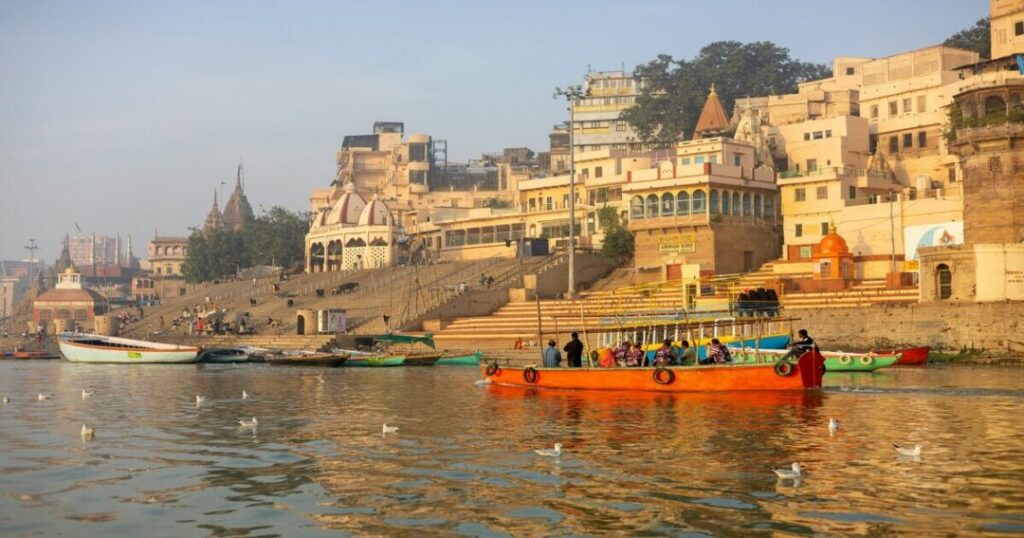
Faith: Hindu | Location: Uttar Pradesh, on the banks of the Ganges
Varanasi — also known as Kashi and Benares — is the most important holy place in India for Hindus and one of the oldest continuously inhabited cities in the world. Associated with Lord Shiva (who is said to reside here as its patron deity), the city’s significance rests on the belief that dying in Varanasi brings moksha—liberation from the cycle of rebirth. This belief has drawn pilgrims for at least 3,000 years.
The sacred geography of Varanasi is its ghats—approximately 84 ghats lining the western bank of the Ganges, each with its own ritual function. The most significant:
- Dashashwamedh Ghat: The primary ghat for the evening Ganga Aarti—a fire worship ceremony performed by priests simultaneously at multiple stations, with fire, flowers, conch shells, and prayer in a choreography that draws thousands of spectators every evening
- Manikarnika Ghat: The primary cremation ghat, where bodies have been cremated continuously for centuries—the fire here is said to have never gone out
The Kashi Vishwanath Temple — one of the twelve Jyotirlinga shrines of Lord Shiva and one of the most significant temples in Hinduism — is in the heart of the old city. The new Kashi Vishwanath Corridor has transformed the temple’s approach while preserving its sanctity.
- Best time: October to March; Mahashivratri (February/March) for the most intense Shiva celebrations
- Also visit Sarnath (10 km from Varanasi)—where the Buddha gave his first sermon
2. Tirupati — The World’s Most Visited Religious Site
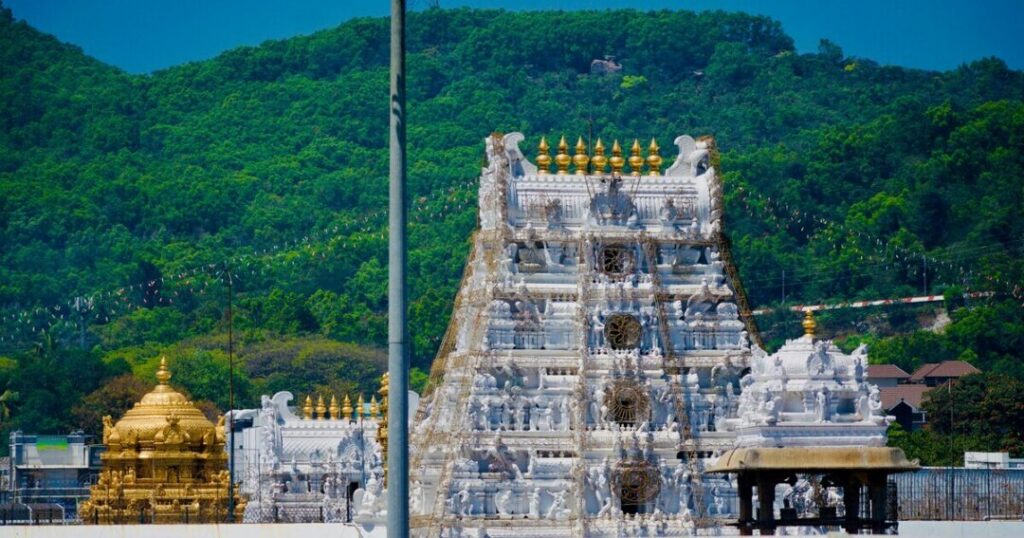
Faith: Hindu | Location: Andhra Pradesh
The Tirumala Venkateswara Temple in Tirupati—dedicated to Lord Venkateswara (Balaji), a form of Lord Vishnu—receives between 30 and 40 million visitors annually, making it the most visited religious site in the world, surpassing the Vatican and Mecca in annual footfall. The temple sits atop the Tirumala hills at approximately 853 meters in the Seshachalam hill range in Andhra Pradesh and is considered one of the wealthiest religious institutions on earth.
The defining ritual for pilgrims is the tonsure—the offering of one’s hair to Lord Venkateswara in fulfillment of a vow. Thousands of pilgrims shave their heads daily at the temple’s dedicated tonsure facilities; the donated hair is auctioned to raise funds for the temple’s charitable works. The temple is one of the four Char Dham pilgrimage sites of South India (the Divya Deshams circuit) and is the most significant of all 108 Divya Desam Vishnu temples.
- Best time: Year-round; the Brahmotsavam festival (September/October) is the grandest annual celebration
- Practical note: Queues can be 24–48 hours long during peak periods; advance darshan booking via the Tirumala Tirupati Devasthanams (TTD) website is strongly recommended
Explore More: Top 10 Haunted Places in India: Famous Ghost Places You Can Visit
3. Golden Temple (Harmandir Sahib) — Sikhism’s Most Sacred Site
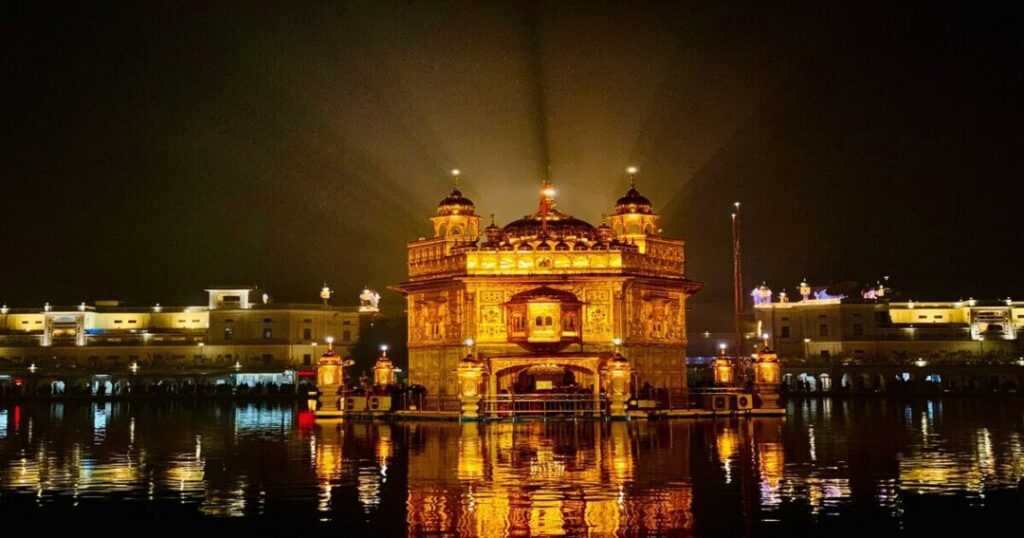
Faith: Sikh | Location: Amritsar, Punjab
The Harmandir Sahib — universally known as the Golden Temple — is the holiest religious site in India for the Sikh faith and one of the most visited spiritual destinations in the world. The temple complex sits in the center of the Amrit Sarovar (Pool of Nectar)—a sacred water tank whose construction was begun by Guru Ram Das (the 4th Sikh Guru) and whose shores are circumambulated by devotees. The upper floors of the temple were covered in gold leaf by Maharaja Ranjit Singh in 1830—using approximately 162 kg of gold. A major renovation between 1995 and 1999 added a further ~500 kg of gold, bringing the total to approximately 750 kg across the temple complex.
Four doors on four sides—one facing each cardinal direction—symbolize the Sikh principle of openness to all peoples and all faiths. More than 100,000 people visit the Golden Temple daily; on major festivals (Gurpurab celebrations and Baisakhi), this number rises to several hundred thousand. The Langar—the free community kitchen—serves between 50,000 and 100,000 free meals every day without exception to people of every religion, caste, and background. The Langar at the Golden Temple is the world’s largest free kitchen.
- Best time: Year-round; Baisakhi (April 14) and Guru Nanak Jayanti (October/November) are the most significant festival dates
- Dress code: Head covering required; shoes removed before entry; tobacco and alcohol not permitted in the complex
4. Bodh Gaya — Where the Buddha Attained Enlightenment
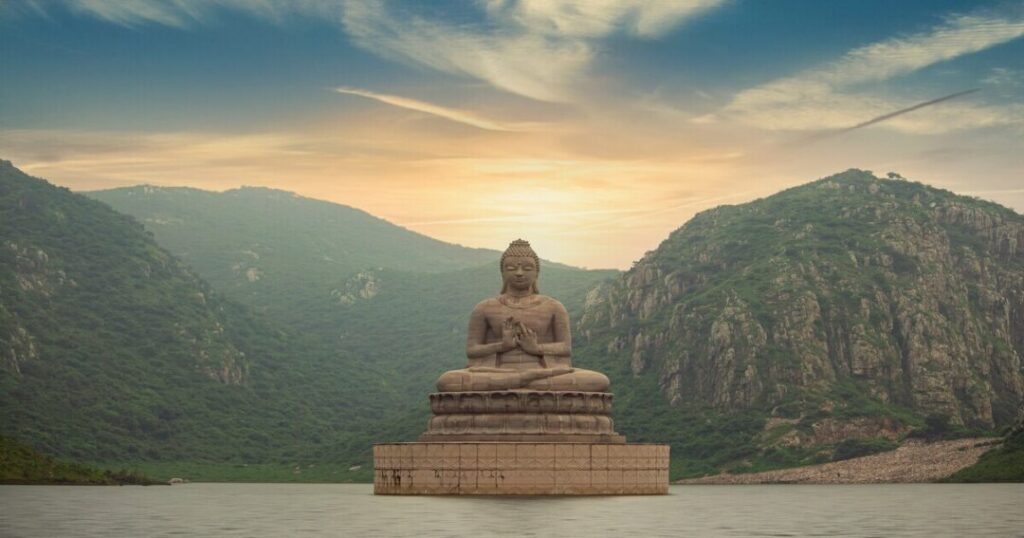
Faith: Buddhist | Location: Bihar
Bodh Gaya is the most sacred of all Buddhist pilgrimage places in India — the site where Prince Siddhartha Gautama attained enlightenment under the Bodhi tree and became the Buddha approximately 2,500 years ago. The Mahabodhi Temple—a UNESCO World Heritage Site (inscribed 2002)—marks the exact spot of the enlightenment. The temple’s towering spire rises 55 meters above the site of the Bodhi tree; the Bodhi tree currently growing at the site is considered a direct descendant of the original tree under which the Buddha meditated.
Bodh Gaya draws Buddhist pilgrims from every Buddhist country in the world: from Thailand, Myanmar, Japan, Tibet, Sri Lanka, Vietnam, and Korea. The surrounding area has monasteries representing each major Buddhist tradition—Tibetan, Zen, Theravada, and Mahayana—creating a concentration of Buddhist practice that is unmatched anywhere outside India. The site is equally significant to students of philosophy and history—the Buddha’s enlightenment at this spot is the founding event of one of the world’s great wisdom traditions.
- Best time: October to March; Buddha Purnima (April/May—the full moon of Vaishakha) is the most significant festival, drawing the largest gatherings
5. Ajmer Sharif Dargah — The Most Visited Islamic Shrine in India
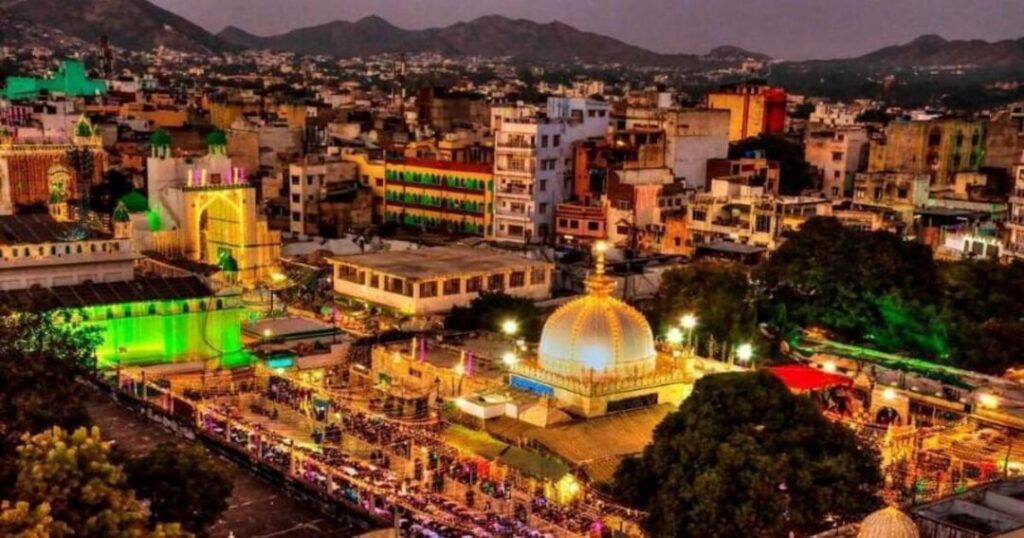
Faith: Islam (Sufi) | Location: Ajmer, Rajasthan
The Ajmer Sharif Dargah — the shrine of Sufi saint Khwaja Moinuddin Chishti (c. 1141–1236 CE), who brought the Chishti order of Sufism to India — is the most important Islamic devotional place in India and one of the most significant Sufi shrines in the world. Khwaja Moinuddin Chishti arrived in Ajmer in 1192 CE and spent the rest of his life here; his message of universal love, service to the poor, and harmony across religious boundaries made the Chishti order one of the most influential spiritual traditions in South Asian history.
The dargah draws approximately 125,000 visitors daily — Muslims, Hindus, Sikhs, and Christians among them — making it one of the most religiously inclusive sacred places in India. The tradition of qawwali music (devotional Sufi music) at the dargah is one of the finest musical experiences in India; the qawwals who perform at the shrine at dawn and evening are among the finest practitioners of this tradition in the subcontinent.
Emperor Akbar reportedly walked from Agra to Ajmer barefoot as a pilgrimage to the dargah after the birth of his son, Prince Salim. The specific cultural position of the Ajmer Dargah — simultaneously a Muslim shrine and a pan-religious pilgrimage destination — is one of the finest expressions of the Sufi tradition of sulh-e-kul (peace with all).
- Best time: The Urs festival (the saint’s death anniversary, observed in the Islamic calendar month of Raja b) is the grandest occasion; year-round otherwise
6. Amritsar & Wagah — Punjab’s Spiritual and National Heart
Faith: Sikh (and national) | Location: Punjab
Beyond the Golden Temple, Amritsar is the sacred city of Sikhism, containing the Akal Takht (the highest seat of Sikh temporal authority, established by Guru Hargobind in 1606) adjacent to the Golden Temple complex. The Jallianwala Bagh — the site of the 1919 massacre of peaceful protesters by British colonial forces — is within walking distance of the Golden Temple, giving Amritsar a dual quality as both sacred and historically tragic ground.
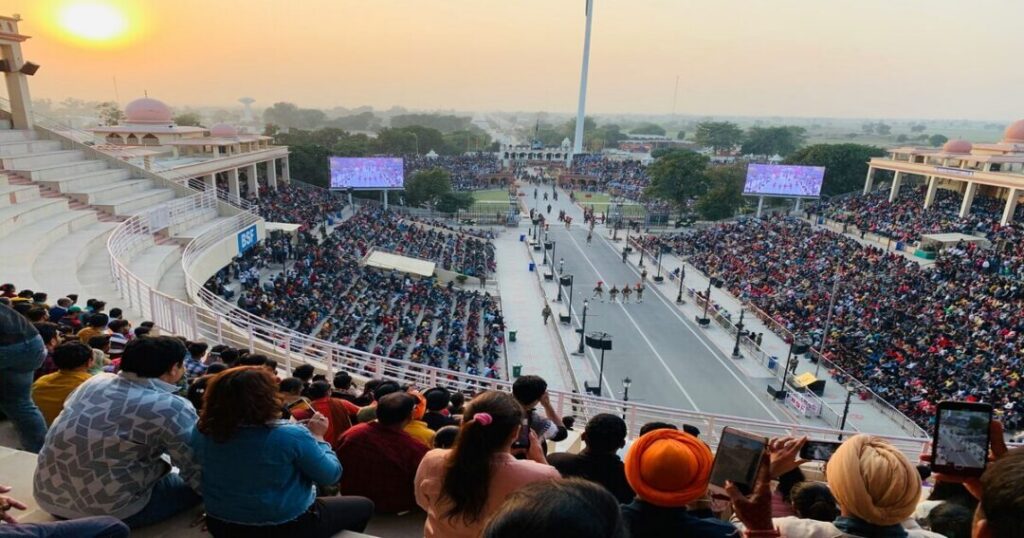
The Wagah Border Ceremony — the daily flag-lowering ceremony at the India-Pakistan border — has become a ritual of national identity that draws thousands daily and carries its own quasi-spiritual weight in Indian popular culture.
Explore More: 10 Stunning Sunrise Places in India: From Tourist Favorites to Hidden Gems
7. Puri — The Char Dham by the Sea
Faith: Hindu (Vaishnavism) | Location: Odisha, on the Bay of Bengal coast
Puri is one of the four Char Dham pilgrimage sites—the quartet of sacred cities (with Badrinath, Dwarka, and Rameswaram) that together form Hinduism’s most significant pilgrimage circuit. The Jagannath Temple — dedicated to Lord Jagannath (a form of Lord Vishnu) — is the defining site of Puri and one of the most important Vaishnavite temples in India.
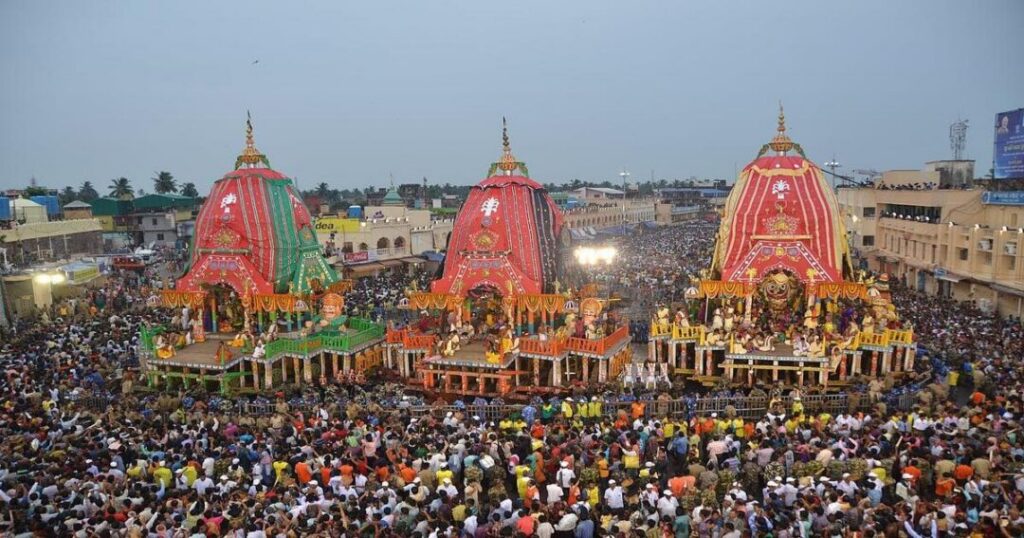
The Rath Yatra (chariot festival) — held annually in June or July, when the three deities (Jagannath, Balabhadra, and Subhadra) are placed on enormous wooden chariots and pulled by devotees through the streets of Puri — is one of the largest religious gatherings in the world, drawing millions of participants. The English word “juggernaut” derives from Jagannath—a reference to the enormous chariot and the irresistible force of the procession.
- Best time: Rath Yatra season (June/July) for the festival; October to March for comfortable visiting
8. Basilica of Bom Jesus — Christianity’s Most Sacred Site in India
Faith: Catholic Christian | Location: Old Goa, Goa
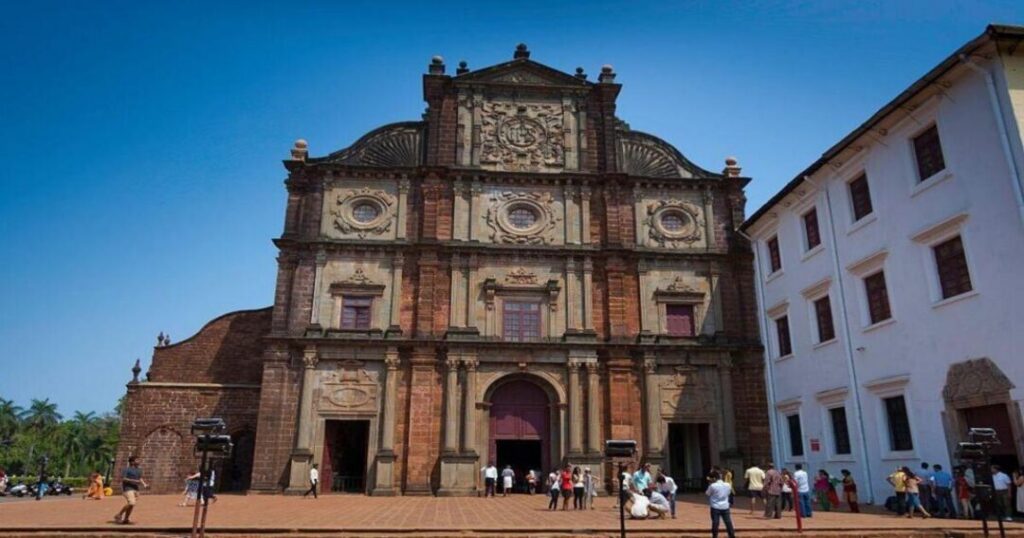
The Basilica of Bom Jesus in Old Goa — a UNESCO World Heritage Site — is the most significant Christian religious destination in India and one of the finest examples of baroque architecture in Asia. The basilica contains the mortal remains of St. Francis Xavier — the Spanish Jesuit missionary who brought Christianity to large parts of Asia and who is the co-patron of Goa — in a silver casket in the Chapel of the Blessed Sacrament. Francis Xavier died in 1552 off the coast of China; his body was brought to Goa in 1554 and has remained here since.
The Exposition of the Relics—when the body of St. Francis Xavier is displayed to the public—occurs approximately every ten years and draws millions of pilgrims. The church was built in 1605 and is considered one of the finest Baroque churches in India.
- Best time: Feast of St. Francis Xavier (December 3)—the most significant annual festival; December is also Goa’s finest travel season
9. Ranakpur Jain Temple — Jainism’s Most Beautiful Pilgrimage Site
Faith: Jain | Location: Rajasthan, near Udaipur
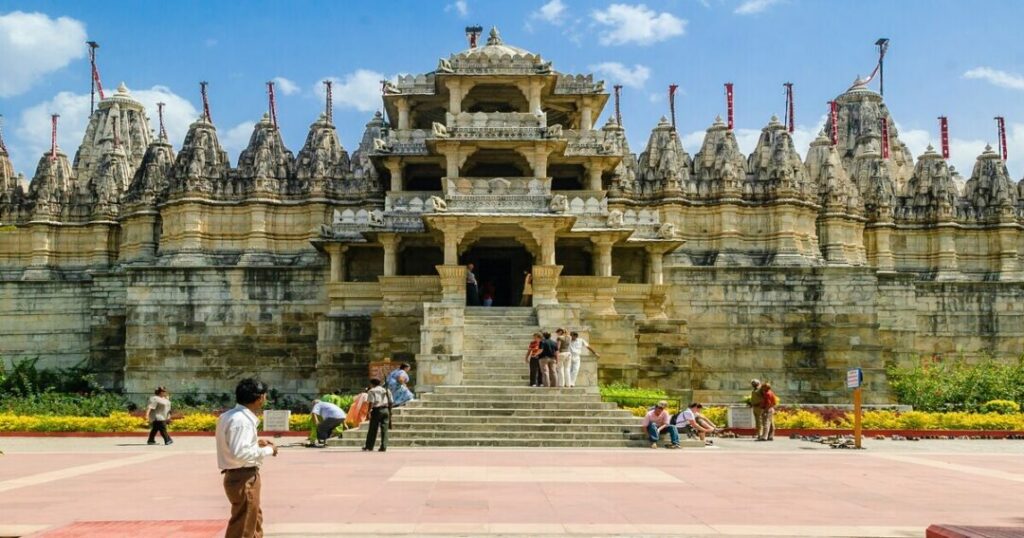
The Ranakpur Jain Temple—officially the Chaumukha Mandir (Four-Faced Temple) dedicated to Adinatha, the first Tirthankara—is the most architecturally extraordinary Jain temple in India. Built in the 15th century, the temple complex has 1,444 intricately carved marble pillars, no two of which are identical. The pale marble carving — depicting celestial beings, floral patterns, and mythological narratives — achieves a density and refinement that is unmatched in any other tradition of Indian temple architecture.
Palitana in Gujarat — the hill temple complex with over 900 Jain temples rising on Shatrunjaya Hill — is the most significant Jain pilgrimage site in terms of religious importance (Shatrunjaya is one of the five sacred mountains of Jainism), while Ranakpur is the finest in terms of architectural experience. Both deserve visits.
- Best time: October to March; avoid summer for the Ranakpur temple visit (marble surface gets extremely hot)
10. Sarnath — Where the Buddha’s Teaching Began
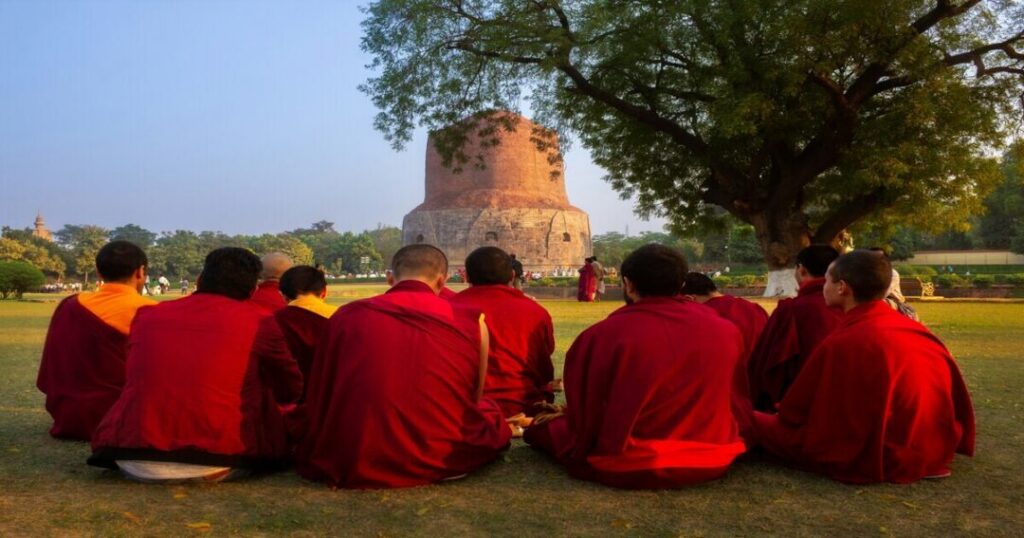
Faith: Buddhist | Location: 10 km from Varanasi, Uttar Pradesh
Sarnath—10 km from Varanasi—is the site where the Buddha delivered his first sermon (Dhammacakkappavattana Sutta—”Setting the Wheel of Dhamma in Motion”) after attaining enlightenment at Bodh Gaya, preaching to five disciples in the Deer Park. This first teaching, which laid out the Four Noble Truths and the Eightfold Path, is the founding event of the Buddhist Sangha (community).
The Dhamek Stupa—a massive cylindrical stupa built on the site of the first sermon, rising 43.6 meters—and the Ashoka Pillar (originally topped with the Lion Capital, now housed in the Sarnath Museum and reproduced as the national emblem of India) make Sarnath one of the most historically significant sites in Asia. The Sarnath Museum’s Lion Capital — four lions back to back, representing the Buddha’s first sermon spreading in all directions — is the image reproduced on every Indian banknote and official document.
- Best time: October to March; easily combined with a Varanasi visit as a half-day trip
Explore More: 5 Off-Beat Places in India You Should Add to Your Bucket List!
Religious Places in India — By Faith Quick Reference
| Faith | Top Sites |
| Hindu | Varanasi, Tirupati, Puri, Haridwar, Rishikesh, Mathura-Vrindavan, Dwarka, Rameswaram, Amarnath, Kedarnath, Badrinath, Shirdi |
| Sikh | Golden Temple (Amritsar), Anandpur Sahib, Patna Sahib, Hemkund Sahib, Nanded |
| Buddhist | Bodh Gaya, Sarnath, Kushinagar, Nalanda, Sanchi, Leh-Ladakh monasteries |
| Jain | Ranakpur, Palitana, Dilwara Temples (Mount Abu), Shravanabelagola |
| Muslim | Ajmer Sharif, Nizamuddin Dargah (Delhi), Dargah of Salim Chishti (Fatehpur Sikri), Haji Ali Dargah (Mumbai), Jama Masjid (Delhi) |
| Christian | Basilica of Bom Jesus (Goa), Velankanni Basilica (Tamil Nadu), St. Thomas Mount (Chennai), Cathedral of St. Philomena (Mysuru) |
Practical Guide — Visiting India’s Religious Sites
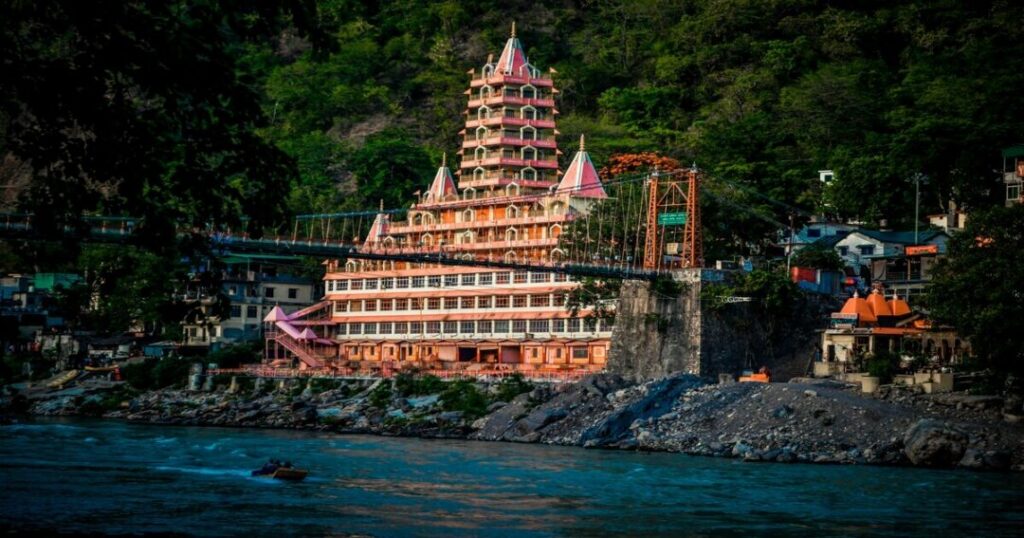
The dress code universally applies: Shoulders and knees covered at all Hindu temples, Sikh Gurudwaras, mosques, and most churches; head covering required at Gurudwaras; shoes removed at all Hindu temples and Gurudwaras
Photography restrictions: Many temples do not permit photography inside the sanctum; always check before raising a camera
Non-Hindu entry restrictions: Several Hindu temples do not permit non-Hindu entry—including Puri’s Jagannath Temple and several Vaishnavite temples in South India; research before visiting
Religious calendar: Most sites have their finest atmosphere during specific festival periods—planning around Diwali, Holi, Navratri, Eid, Gurpurab, Christmas, or Buddha Purnima significantly enhances the experience
Final Thoughts on Religious Places in India
Religious places in India are not merely sites of faith—they are living archives of one of the most complex spiritual histories in the world. Varanasi has been receiving pilgrims longer than Rome has been a city. The Mahabodhi Temple marks the spot where one of humanity’s greatest teachers found his truth. The Golden Temple feeds 50,000–100,000 people every day for free, asking nothing in return. Together, these religious places in India carry genuine spiritual, historical, and cultural significance—for pilgrims, students of religion, and travelers who want to understand what makes India truly unique.
Quick guide to the best religious places to visit in India:
- Varanasi — Hindu; Ganga Aarti; Kashi Vishwanath Jyotirlinga; oldest continuously inhabited city
- Tirupati — Hindu; world’s most visited religious site; 30–40 million annually
- Golden Temple, Amritsar — Sikh; 100,000 daily; world’s largest free kitchen
- Bodh Gaya — Buddhist; UNESCO Mahabodhi Temple; site of Buddha’s enlightenment
- Ajmer Sharif — Muslim/Sufi; Khwaja Moinuddin Chishti; 125,000 daily; all faiths
- Puri — Hindu; Char Dham; Jagannath Temple; Rath Yatra
- Basilica of Bom Jesus, Goa — Christian; UNESCO; relics of St. Francis Xavier
- Ranakpur — Jain; 1,444 marble pillars; 15th century; finest Jain architecture
- Sarnath — Buddhist; site of first sermon; Dhamek Stupa; Ashoka Lion Capital
- Haridwar & Rishikesh — Hindu; Ganga entry; Kumbh Mela; Yoga capital
Download the Explurger app to discover what pilgrims and spiritual travelers recommend for India’s sacred sites, find the best darshan timings and festival dates, and log every ghat, temple, gurudwara, and Sufi dargah on your Indian spiritual journey.
India’s temples are already lit. The Ganga Aarti is already beginning. The langar has already been served. India’s sacred world is always already open.
FAQs About Religious Places in India
2. What are the best spiritual places in India?
The best spiritual places in India by experience type: For Hindu pilgrimage circuits—the Char Dham (Badrinath, Kedarnath, Gangotri, and Yamunotri) in the Himalayas; for immersive city-scale spiritual experience—Varanasi (Ganga Aarti, ghats, and Kashi Vishwanath); for Sikh devotion and community—the Golden Temple, Amritsar; for Buddhist contemplation—Bodh Gaya and Sarnath; for Sufi music and interfaith sacred experience—Ajmer Sharif Dargah; for Jain architecture and philosophy—Ranakpur and Palitana; for Christian pilgrimage—the Basilica of Bom Jesus, Goa, and Velankanni, Tamil Nadu.
3. Which is India's most visited religious site?
The most visited religious site in India — and in the world — is the Tirumala Venkateswara Temple in Tirupati, Andhra Pradesh, which receives between 30 and 40 million visitors annually. The second most visited is the Golden Temple (Harmandir Sahib) in Amritsar, with over 100,000 visitors daily (approximately 36 million annually). The Ajmer Sharif Dargah receives approximately 125,000 visitors daily, making it the most visited Muslim devotional place in India
4. Is Bodh Gaya important for non-Buddhists?
Bodh Gaya is significant for anyone interested in world history, philosophy, or spiritual traditions. The Mahabodhi Temple (a UNESCO World Heritage Site, inscribed 2002) marks the site where one of history's most consequential spiritual events occurred—Prince Siddhartha's attainment of enlightenment approximately 2,500 years ago. The site is open to all visitors regardless of faith. The atmosphere—created by meditating monks from every Buddhist tradition in the world, the ancient Bodhi tree descendants, and the extraordinary temple architecture—makes Bodh Gaya one of the most profound of all sacred places in India for travelers of any background.
6. What should I wear when visiting religious places in India?
t is recommended to wear modest clothing that covers your shoulders and knees. Many places of worship also require visitors to remove their shoes, and some may ask women and men to cover their heads.
6. Which religious place in India serves free meals to visitors?
The Golden Temple in Amritsar is renowned for its langar, a community kitchen that serves free meals to tens of thousands of people every day, regardless of religion, caste, or background.