
1,492 Total Views
Most trips to Bhutan get planned around trekking routes or dzong visits, and the festival calendar becomes an afterthought, if it’s considered at all.
That’s a missed opportunity, because the festivals in Bhutan are often the single best reason to pick one travel date over another. Masked dances, an entire festival built around rhododendrons, and a cluster of celebrations every October can turn a good trip into a genuinely memorable one. Add the dates that fit your calendar to your Explurger Bucket List as you go, so you don’t lose track while you’re comparing options.
Festivals in Bhutan You Can’t Miss: Understanding the Tshechu
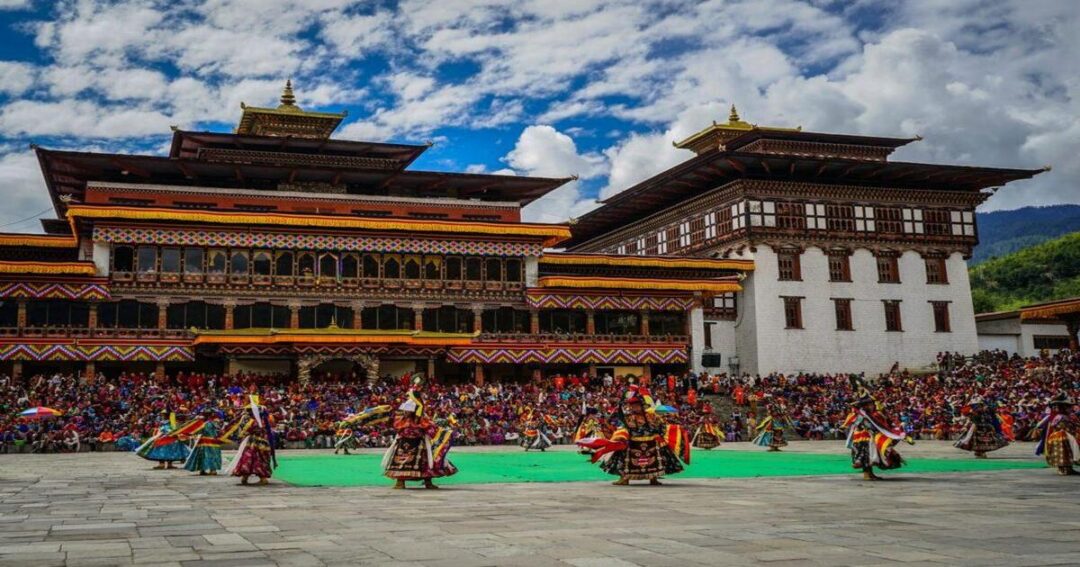
The Bhutan tshechu is the backbone of the country’s festival calendar, and understanding it makes every other festival easier to place in context.
- What it is: A tshechu is held on the tenth day of a month in the Tibetan lunar calendar, marking the birthday of Guru Rinpoche, the saint credited with bringing Buddhism to Bhutan in the 8th century.
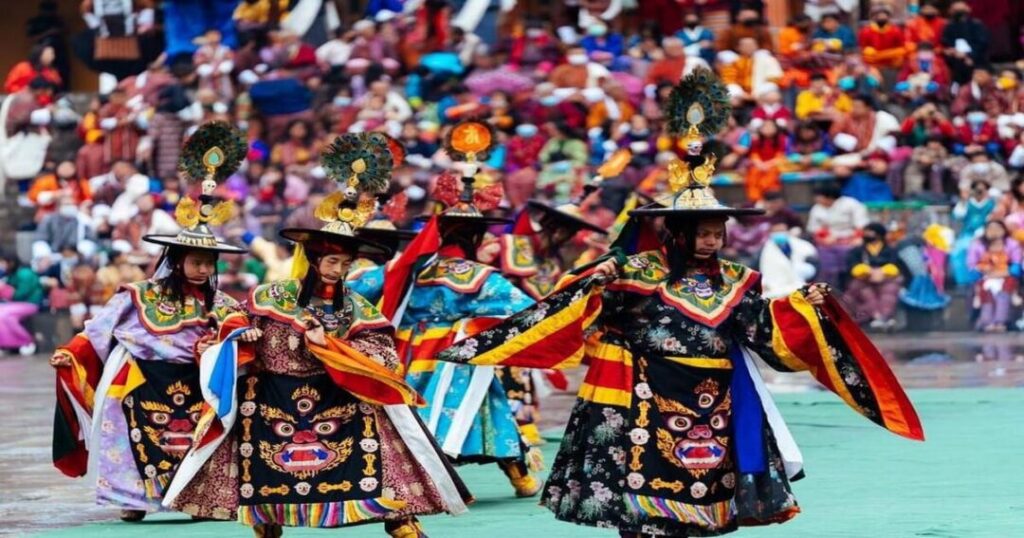
- What happens: Celebrations run up to four days and center on stylized masked dances performed by monks and lay dancers, depicting eight manifestations of Guru Rinpoche.
- Where it happens: Every district holds its own tshechu, usually in the courtyard of the local dzong (fortress-monastery), which means the dates and atmosphere vary widely by region.
Also Read: Things to Do in Bhutan: 20 Best Bhutan Tourist Attractions & Sightseeing Places
Bhutan Festival in October: The Country’s Busiest Celebration Month
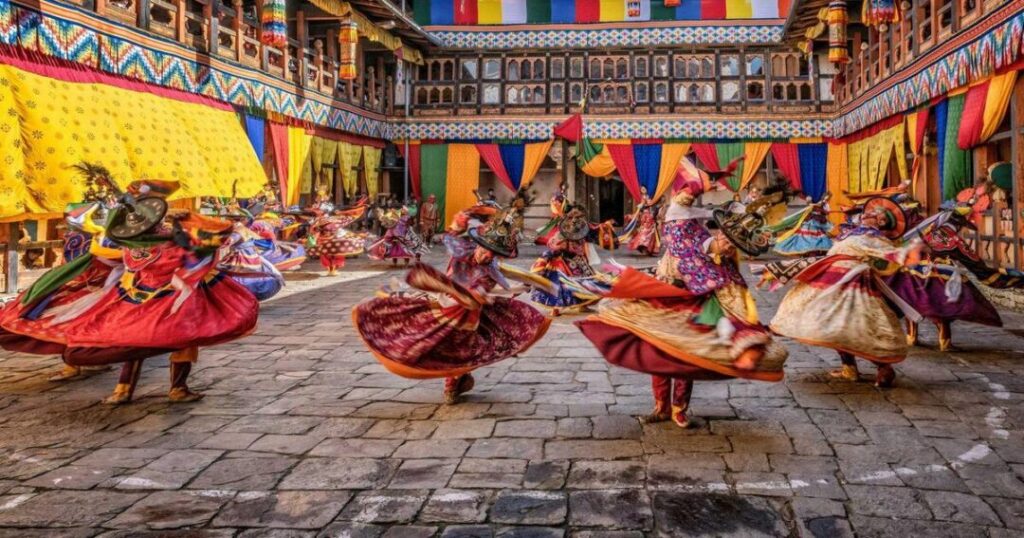
If you’re choosing one month to build a trip around, a Bhutan festival in October is hard to beat.
- Jakar Tshechu — Held October 18–21, 2026, in the Bumthang valley, considered one of the more culturally rich regional tshechus.
- Chhukha Tshechu — Running October 19–21, 2026, in southwestern Bhutan.
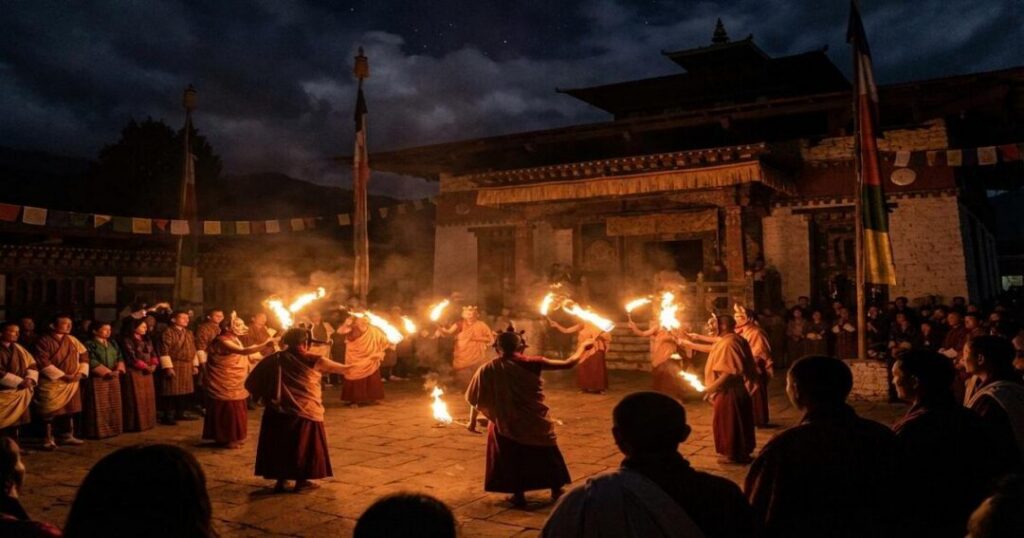
- Jambay Lhakhang Drup — One of the most distinctive festivals on the calendar, running October 26–29, 2026, known for its fire ritual and naked dance performed after midnight.
October also lines up with Bhutan’s most comfortable weather, which is part of why it’s considered the single best month for international visitors overall.
Bhutan Flower Festival: The Rhododendron Bloom at Lampelri
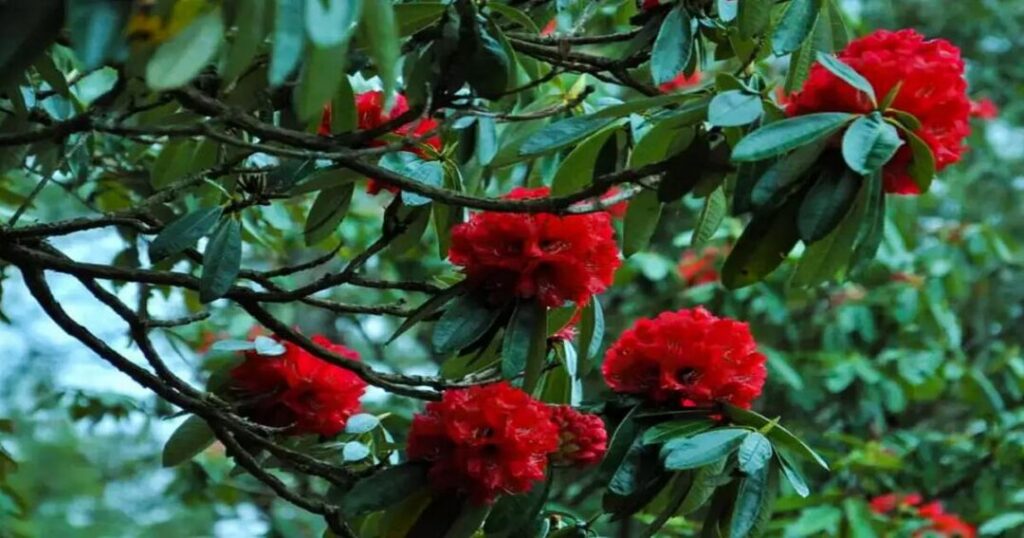
The Bhutan flower festival, officially the Rhododendron Festival, is one of the few celebrations here that isn’t religious in nature.
- When: Held annually in spring, with the 2026 edition running April 13–14.
- Where: The Royal Botanical Park at Lampelri, in Punakha district, roughly a two-hour drive from Thimphu.
- What to expect: Bhutan is home to 46 species of rhododendron, the country’s national flower, and the festival wraps the blooming season into a broader celebration with music, food stalls, and cultural performances.
Traveller’s Experience
[QUOTE: “We timed our trip for the Rhododendron Festival almost by accident and it turned out to be the quietest, most beautiful day of the whole trip.” — suggested source: travel blogger or Bhutan tour review]
Also Read: Bhutanese Food: The Complete Guide to Authentic Bhutan Cuisine, Dishes & Traditions
Paro, Punakha & Thimphu Tshechu: Bhutan’s Biggest Festival Circuit
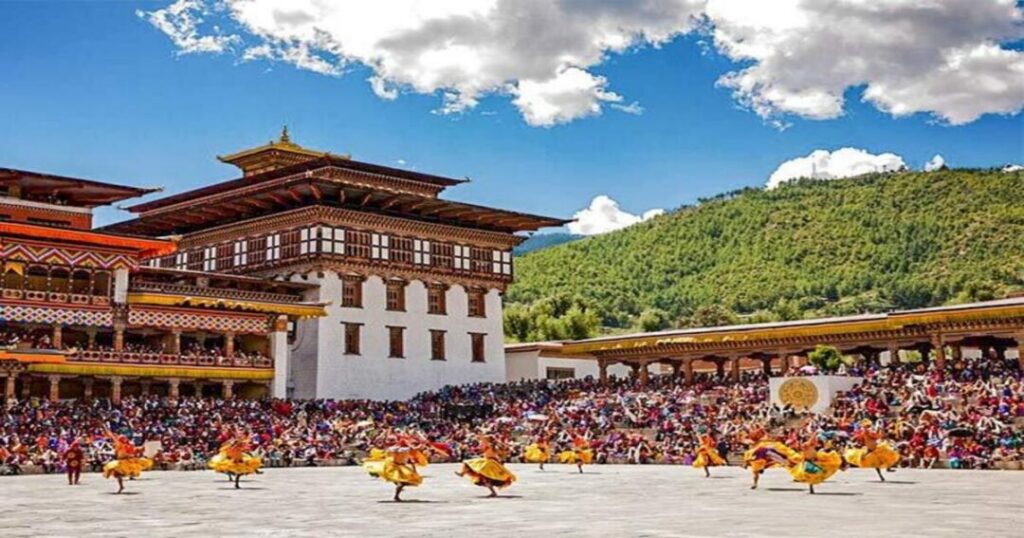
These three tshechus anchor most Bhutan festival tour itineraries, and each has a distinct character.
- Punakha Tshechu — Scheduled February 18–22, 2026, notable for the Punakha Drubchen re-enactment that precedes it, staging a 17th-century battle scene.
- Paro Tshechu — Running March 30–April 3, 2026, held in the courtyard of Paro Dzong and famous for the pre-dawn unveiling of a giant thangka (religious scroll painting) on the final day.
- Thimphu Tshechu — Set for September 27–29, 2026, at Tashichho Dzong in the capital, and one of the largest and most accessible tshechus for first-time visitors.
Not sure which tshechu fits your travel window best? Ask NIVU AI in the Explurger app to match your available dates against Bhutan’s festival calendar and suggest the celebration that lines up with your interests.
Planning a Bhutan Festival Tour: What to Know Before You Book?
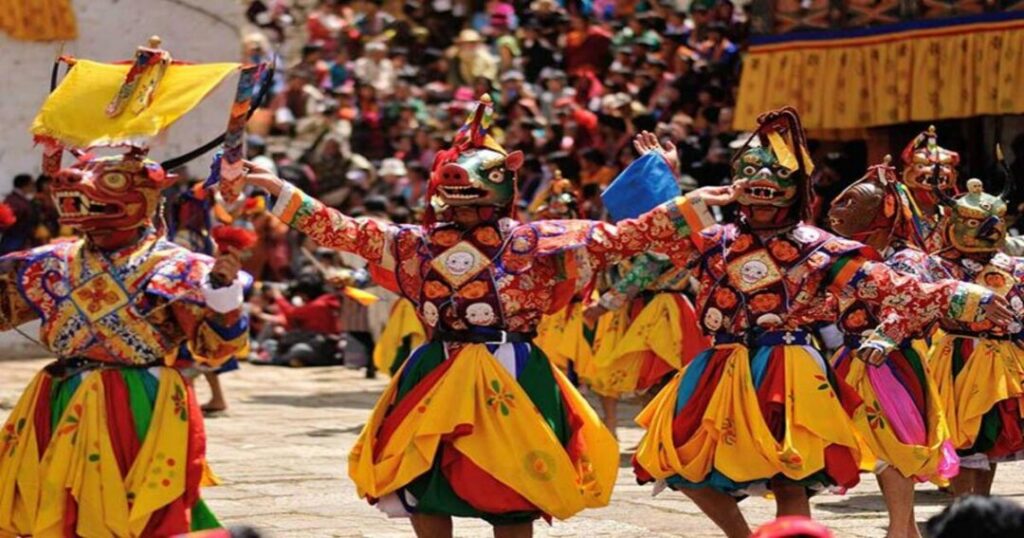
Bhutan isn’t a destination you can plan entirely on your own, and that shapes how a Bhutan festival tour actually gets booked.
- Licensed operator required: All visas and Sustainable Development Fee (SDF) payments run through a Tourism Council of Bhutan-licensed operator; there’s no way to self-arrange entry as an independent traveler.
- Visa: A one-off USD 40 fee, approved in about 5–7 working days as a clearance letter, with the physical stamp added on arrival at Paro.
- Sustainable Development Fee: USD 100 per person, per night (confirmed at that rate through August 2027), with children under 6 exempt and ages 6–11 charged half.
- Book early for festival dates: Hotels and guides near major tshechu venues fill up fast, especially around Paro and Thimphu.
Also Read: 10 Most Famous Temples in Bhutan | Travel Guide 2026
What is the Best Time to Visit for Bhutan Festivals?
- Spring (Mar–May): Paro Tshechu and the Rhododendron Festival, with clear skies and mild temperatures.
- Autumn (Sep–Nov): Thimphu Tshechu plus the October cluster of Jakar, Chhukha, and Jambay Lhakhang Drup — widely considered the best overall season to visit.
- Winter (Dec–Feb): Quieter and colder, but includes Punakha Tshechu in February for travelers who don’t mind the chill.
How to Reach Bhutan?
- By Air: Paro International Airport (PBH) is Bhutan’s only international airport, roughly 50 km from the capital, Thimphu.
- Entry requirements: A pre-approved visa and SDF payment, arranged through your licensed tour operator before you fly.
- Getting around: All ground transport, from Paro to festival venues in Thimphu, Punakha, or Bumthang, is typically arranged as part of your tour package.
Also Read: Discover the Unmissable Tourist Places in Bhutan
Conclusion About Festivals in Bhutan
Whichever month you choose, the festivals in Bhutan offer a way into the country’s culture that sightseeing alone doesn’t fully capture, from centuries-old masked dances to a single weekend built entirely around rhododendrons. Add your shortlist to your Bucket List, let NIVU AI help line up the right dates, and your Automatic Travelogue will keep every tshechu you attend mapped alongside the rest of your travels.
Ready to explore? Download the Explurger app and start your journey today.
Pick one tshechu to anchor your trip, then work with your tour operator to build the rest of your Bhutan itinerary around it.
FAQs About Festivals in Bhutan
2. When is the best Bhutan festival in October?
October brings three major celebrations: Jakar Tshechu (October 18–21), Chhukha Tshechu (October 19–21), and Jambay Lhakhang Drup (October 26–29), all in 2026. October is widely considered Bhutan's best overall month, combining clear weather with this dense festival cluster.
3. What is the Bhutan flower festival?
The Bhutan flower festival is officially the Rhododendron Festival, held each spring at the Royal Botanical Park in Lampelri, Punakha district. It celebrates Bhutan's 46 rhododendron species with music, food, and cultural performances alongside the blooms.
4. Can I book a Bhutan festival tour independently?
No. All Bhutan visas and Sustainable Development Fee payments must go through a Tourism Council of Bhutan-licensed operator, so festival tours are always arranged rather than self-planned. This also means transport, permits, and festival-day logistics are typically handled for you as part of the package.
5. How much does it cost to visit Bhutan for a festival?
Beyond your flights and tour package cost, expect a one-off USD 40 visa fee and a Sustainable Development Fee of USD 100 per person per night, with reduced or waived rates for children under 12. These fees fund environmental and cultural preservation projects across the country.
6. Which is bigger, Paro Tshechu or Thimphu Tshechu?
Thimphu Tshechu is generally considered one of the largest and most accessible tshechus, held in the capital at Tashichho Dzong. Paro Tshechu is smaller but distinctive for its pre-dawn unveiling of a giant thangka on the final day of the festival.