
1,722 Total Views
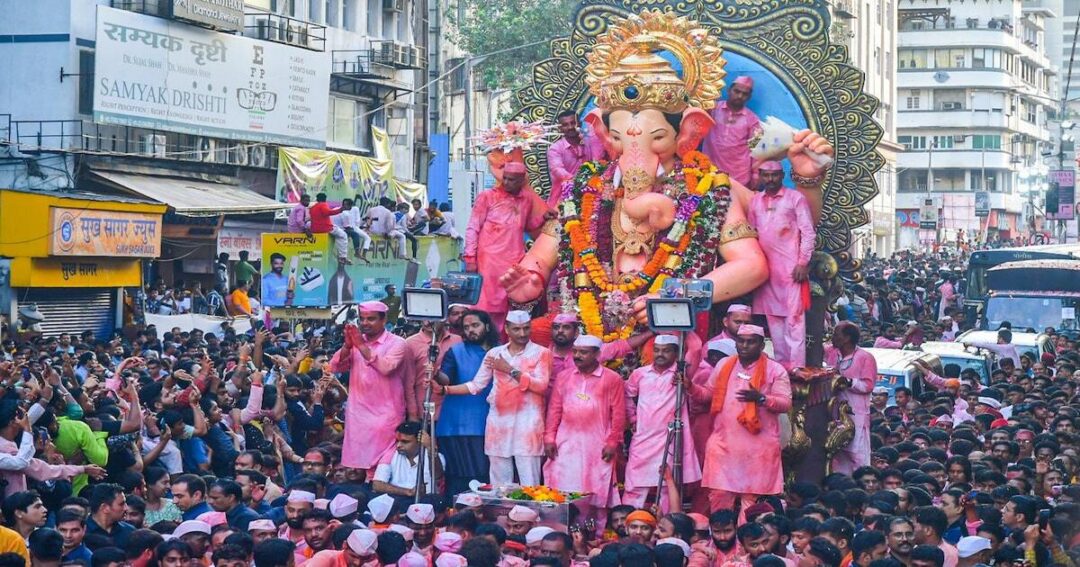
The Ganpati festival in Mumbai turns the entire city into one continuous procession for ten days every year, as lakhs of clay idols move from home altars and neighbourhood pandals toward the Arabian Sea. What began as a scattered set of private household rituals became, in 1893, a deliberately public spectacle — and more than a century later, Mumbai’s version of Ganeshotsav is still the loudest, largest, and most closely watched celebration of Ganesh Chaturthi anywhere in India.
Best Ganpati Festival in Mumbai Pandals to Visit
Mumbai’s pandals range from modest neighbourhood setups to installations insured for hundreds of crores of rupees. These four are the ones every visitor to the city during Ganeshotsav ends up hearing about first.
Lalbaugcha Raja: Mumbai’s Most-Queued-For Ganpati
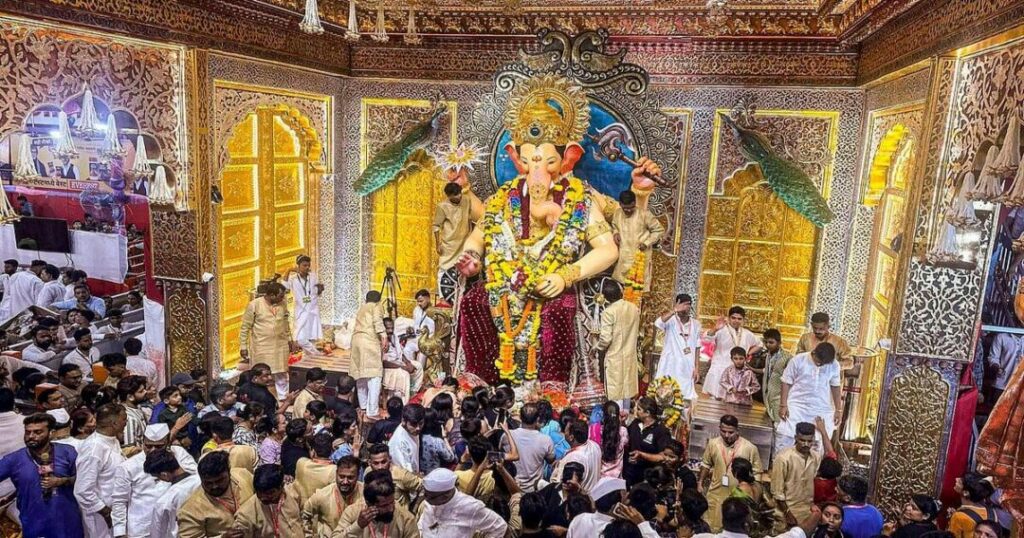
[STAT: Lalbaugcha Raja was established in 1934 by the fishermen and vendor community of Lalbaug after they were granted land to build the local market, at a time when the area’s cotton mills had collapsed economically — the community turned to Ganesha, “the god of new beginnings,” for their first Sarvajanik Ganesh Mandal — Zee Zest]
- Known as the Navasacha Ganpati, or wish-fulfilling Ganesha, the idol has drawn crowds willing to stand in queues stretching several kilometres and lasting over 48 hours for a few seconds of darshan.
- The idol stands 20 feet tall and is dressed in a more human form than the traditional pot-bellied depiction, a nod to the original 1934 idol’s fisherman attire — one of the more recognisable examples of a Ganpati Lalbaug crowds travel across the city to see.
GSB Seva Mandal, Matunga: Mumbai’s Richest Ganpati
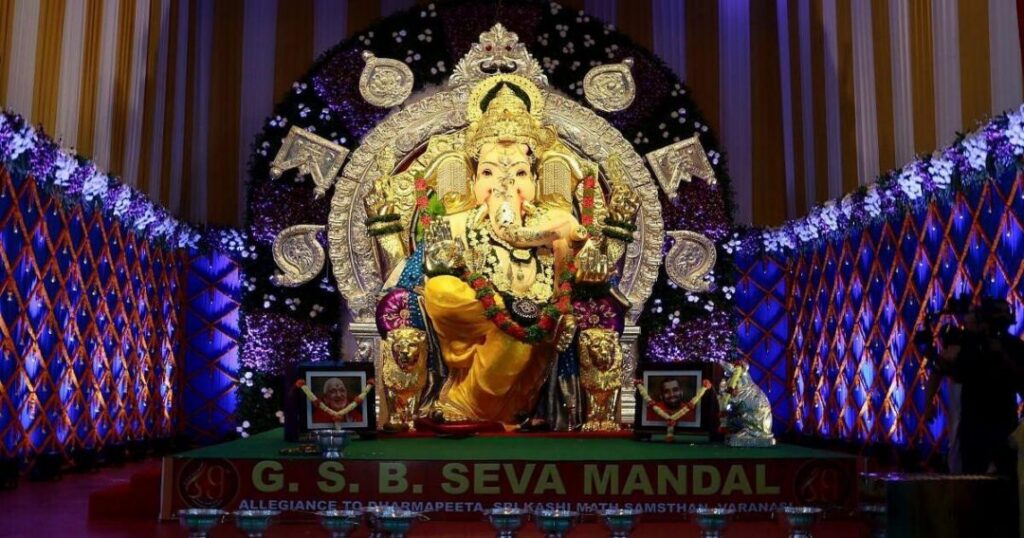
[STAT: GSB Seva Mandal’s 2026 Ganeshotsav idol at King’s Circle, Matunga East, carries over 66 kg of gold and 335 kg of silver, backed by a Rs 703.27 crore insurance cover — up from 69 kg gold, 336 kg silver, and Rs 474.46 crore in insurance the previous year — Free Press Journal]
- The mandal was founded on Vijayadashami in 1951, with its Ganeshotsav celebrations beginning in 1955, making 2026 its 72nd anniversary of the festival.
- The celebration reportedly serves prasad to over 40,000 devotees daily and more than 2 lakh across the five-day event, alongside more than a lakh individual poojas and sevas — making the GSB Ganpati Matunga one of the most logistically massive Ganeshotsav operations in the city.
Andhericha Raja: The Suburbs’ Answer to Lalbaug
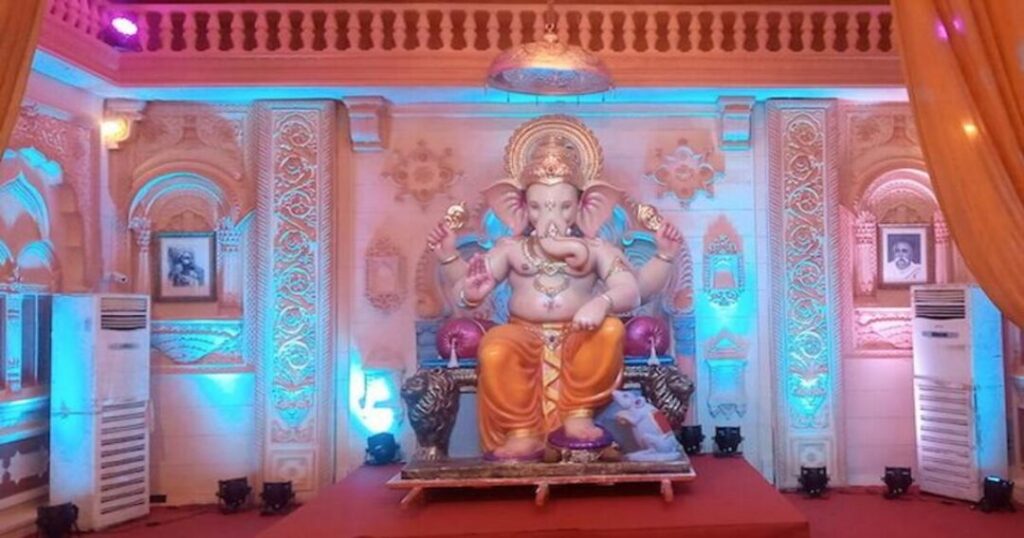
Andhericha Raja, based in Andheri West, has grown into one of the suburbs’ most-visited pandals, drawing crowds that rival South and Central Mumbai’s older, more historic celebrations. Its rise reflects how the festival has spread well beyond its original mill-town and old-city strongholds into every part of greater Mumbai.
Siddhivinayak Temple: A Permanent Shrine That Peaks During Ganeshotsav
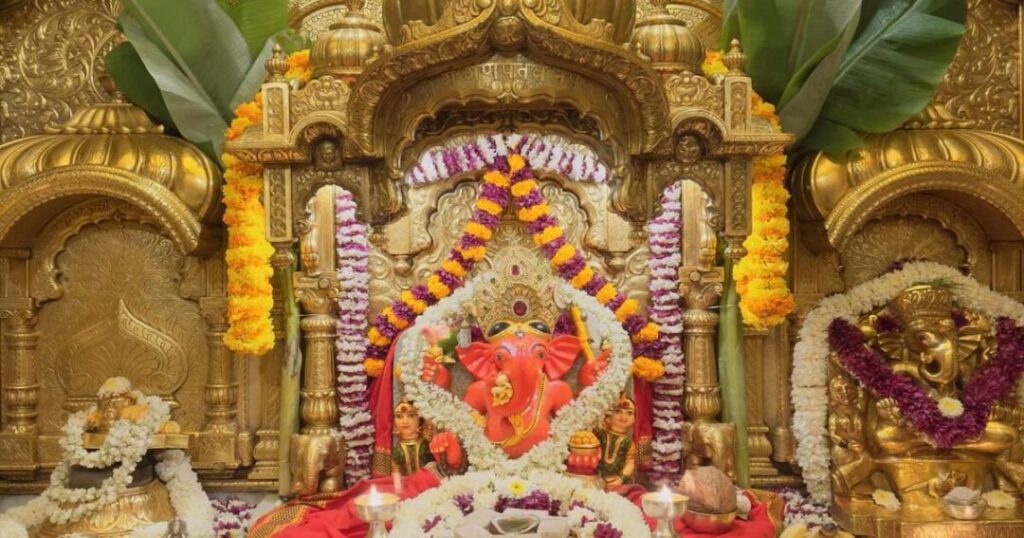
[STAT: Siddhivinayak Temple in Prabhadevi was completed on 19 November 1801 by Laxman Vithu and Deubai Patil, and today is the wealthiest temple trust in Mumbai, receiving between roughly Rs 10 crore and Rs 15 crore annually; its inner sanctum roof is gold-plated, and its wooden sanctum doors are carved with the Ashtavinayaka, the eight manifestations of Ganesha across Maharashtra — Wikipedia]
- Unlike the seasonal pandals, Siddhivinayak is a year-round temple, but its crowds swell dramatically through Ganeshotsav as devotees combine a pandal-hopping route with a stop at this permanent shrine.
Other Famous Ganpati in Mumbai Worth a Darshan
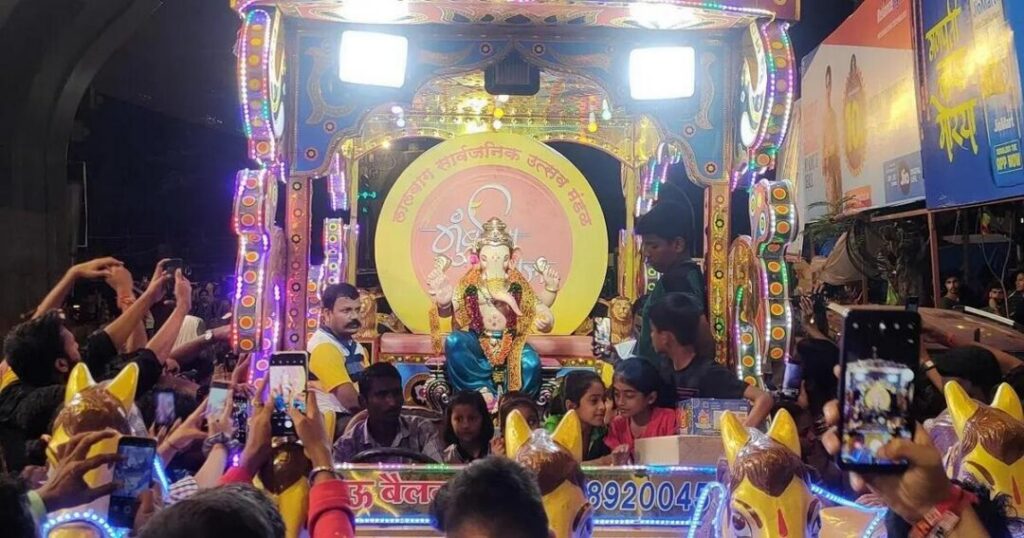
Beyond the four above, several other names come up whenever locals list the famous Ganpati in Mumbai worth visiting during the ten days. Khetwadicha Ganraj in Girgaon and Chinchpoklicha Chintamani in Parel-Chinchpokli are both long-running Sarvajanik mandals with their own loyal followings, while Girgaoncha Raja has kept up a clay-idol tradition stretching back roughly 98 years, standing somewhat apart from the plaster-of-Paris idols that dominate elsewhere in the city.
History of the Ganpati Festival in Mumbai
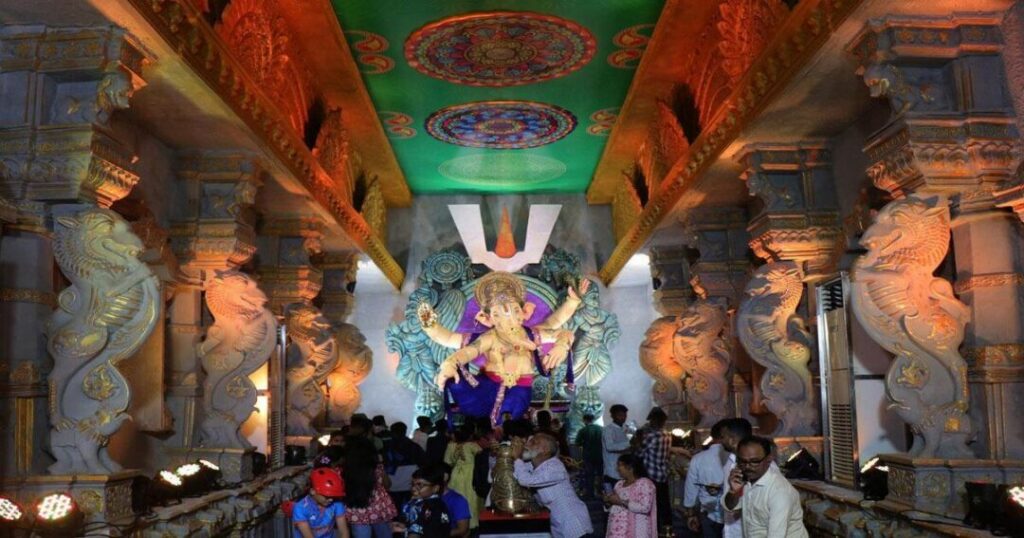
[STAT: Bal Gangadhar Tilak organised the first large-scale public Ganesh festival in 1893, following Hindu-Muslim riots that year; according to biographer Vaibhav Purandare, the initial purpose was “to consolidate Hindus and bring about a Hindu assertion,” though the celebrations later grew into a vehicle for asserting Indian identity against British colonial rule — ThePrint]
- What was then Bombay saw the festival expand rapidly across caste and class lines — Brahmins, Marathas, Vanis, and Kolis all began participating in the public celebrations, worrying British administrators as the scale grew.
- Tilak also pushed for Muslim participation in the public Ganpati celebrations, seeing the festival as a tool for building broader unity rather than a narrowly sectarian event — a piece of Bombay Ganpati history that’s often left out of shorter retellings.
- Ganeshotsav has since been recognised as Maharashtra’s state festival, cementing what started as one community’s local celebration into the state’s largest annual public event.
Also Read: Street Food in Mumbai: 17 Dishes, Iconic Spots & the Stories Behind Them
How Long Does the Ganpati Festival Last? Duration and Visarjan Days
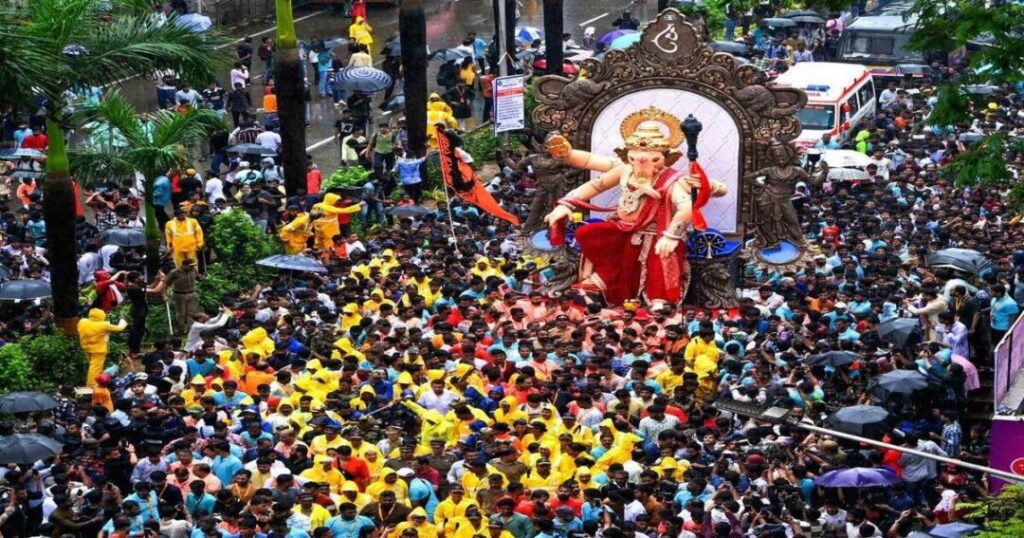
Every Ganpati idol Mumbai households and pandals bring home is immersed on one of several traditional days, not a single fixed date. Common options include the 1.5-day (Dedh) immersion, the 3rd day, the 5th day, the 7th day, and finally Anant Chaturdashi, which closes the full ten-day cycle for pandals like Lalbaugcha Raja and GSB Seva Mandal. In 2026, Ganesh Chaturthi begins on 14 September, with the major immersion days falling on 15, 16, 18, and 20 September, and Anant Chaturdashi — the grand finale for the biggest public pandals — falling on 25 September.
- The final procession converges on immersion points across the city, with Girgaon Chowpatty among the most crowded stretches of coastline as thousands of idols enter the Arabian Sea over a single long night and following day.
- Pandals following the shorter 1.5, 5, or 7-day cycles are just as traditional as the ten-day ones — the choice largely comes down to individual household or mandal custom rather than any single “correct” duration.
Also Read: Hidden Weekend Getaways from Mumbai for Explorers Who Hate the Obvious
The Shift Toward Eco-Friendly Ganpati in Mumbai
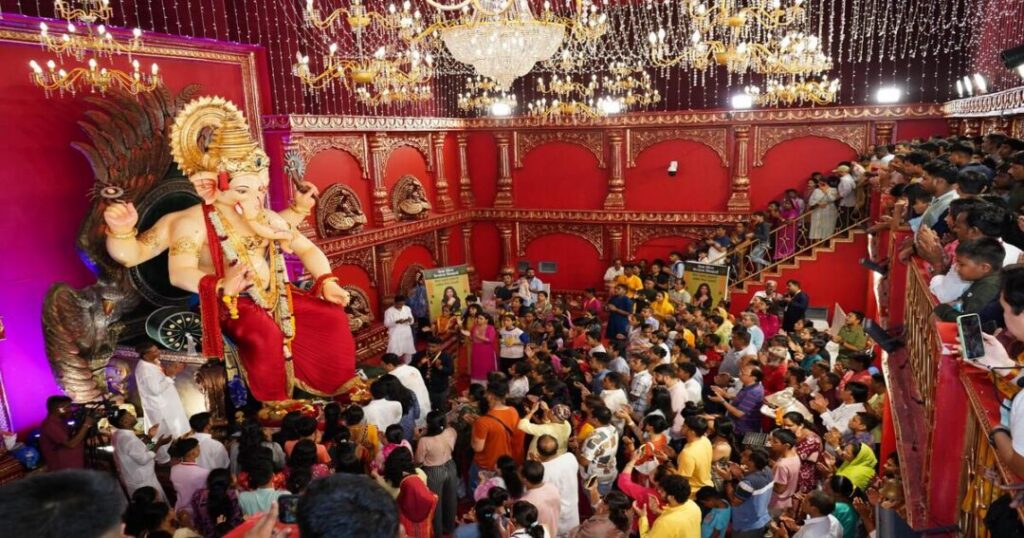
Plaster-of-Paris idols dissolve slowly and release gypsum and toxic paints into Mumbai’s coastal waters, and pressure to move away from them has built for years even though a full ban has repeatedly stalled. Some of the city’s oldest mandals have stuck with natural materials regardless — Girgaoncha Raja’s clay idol tradition, running for close to a century, predates the current environmental debate entirely. Maharashtra’s pollution control authorities have also clarified that smaller eco-friendly idols can be immersed directly in natural water bodies, while larger or POP idols are increasingly directed toward designated artificial immersion tanks set up by the civic body each year.
Also Read: Places to Go in Mumbai: A Local’s Guide to the City Beyond the Tourist Trail
Conclusion: Ganpati Festival in Mumbai
From a 20-foot Navasacha Ganpati in Lalbaug to a 703-crore-insured idol in Matunga, and from a 130-year-old political origin story to an ongoing debate over clay versus plaster, the Ganpati festival in Mumbai is really several overlapping festivals happening at once — devotional, civic, and increasingly environmental. Whichever pandal you queue up at, the ten days between Chaturthi and Anant Chaturdashi remain the single best window for understanding how deeply this festival is woven into the city’s identity.
Planning a Ganeshotsav trip to Mumbai? Download the Explurger app and map your pandal-hopping route today.
FAQs About Ganpati Festival in Mumbai
2. Which is the most famous Ganpati in Mumbai?
Lalbaugcha Raja is widely considered the most famous Ganpati in Mumbai, known as the Navasacha Ganpati or wish-fulfilling Ganesha, drawing queues that have historically stretched several kilometres and lasted over 48 hours. GSB Seva Mandal in Matunga is a close second in prominence, largely due to its idol's gold, silver, and multi-crore insurance cover.
3. Why is GSB Ganpati Matunga insured for so much money?
The GSB Ganpati Matunga idol is adorned with more than 66 kg of gold and 335 kg of silver contributed by devotees over decades, which pushed its 2026 insurance cover to Rs 703.27 crore. The mandal, founded in 1951 with Ganeshotsav celebrations starting in 1955, has built this reputation gradually rather than all at once.
4. How long does Ganeshotsav last in Mumbai?
Ganeshotsav can last anywhere from 1.5 days to 10 or 11 days, depending on household or mandal tradition, with 1.5-day (Dedh), 3rd-day, 5th-day, 7th-day, and Anant Chaturdashi immersions all considered equally traditional. Major public pandals like Lalbaugcha Raja typically follow the full ten-day cycle ending on Anant Chaturdashi.
5. Who started the public Ganpati festival in Mumbai?
Bal Gangadhar Tilak organised the first large-scale public Ganesh festival in 1893 in what was then Bombay, following Hindu-Muslim riots that year. What began, according to biographer Vaibhav Purandare, as an effort to consolidate Hindu community identity later grew into a broader civic movement, with Tilak also encouraging Muslim participation in the public celebrations.
6. Are Ganpati idols in Mumbai eco-friendly?
Not universally — plaster-of-Paris idols remain common and release gypsum and toxic paint into coastal waters, despite repeated attempts at a full ban. Some mandals, such as Girgaoncha Raja with its nearly 98-year-old clay idol tradition, have used natural materials for generations, and pollution control authorities now permit smaller eco-friendly idols to be immersed directly in natural water bodies.