
951 Total Views
Mumbai doesn’t do food quietly. The city feeds itself on pavements, on railway station platforms, at beach promenades at sunset, and outside mill gates that have been closed for decades—the food stalls that served those workers are still there. If you want to understand Mumbai, eat on the street. The problem is knowing where to start. Most lists give you the same five names with no context. This guide to street food in Mumbai is organized by dish type—the classics with their origins, the beach food circuit, the sweets, and the hidden category most visitors skip—with enough detail to actually plan around it.
Street Food in Mumbai — The Classics That Define the City
These are the dishes Mumbaikars grew up with. Each has a specific origin, a political history, and strong opinions about who makes it best.
1. Vada Pav 🌿
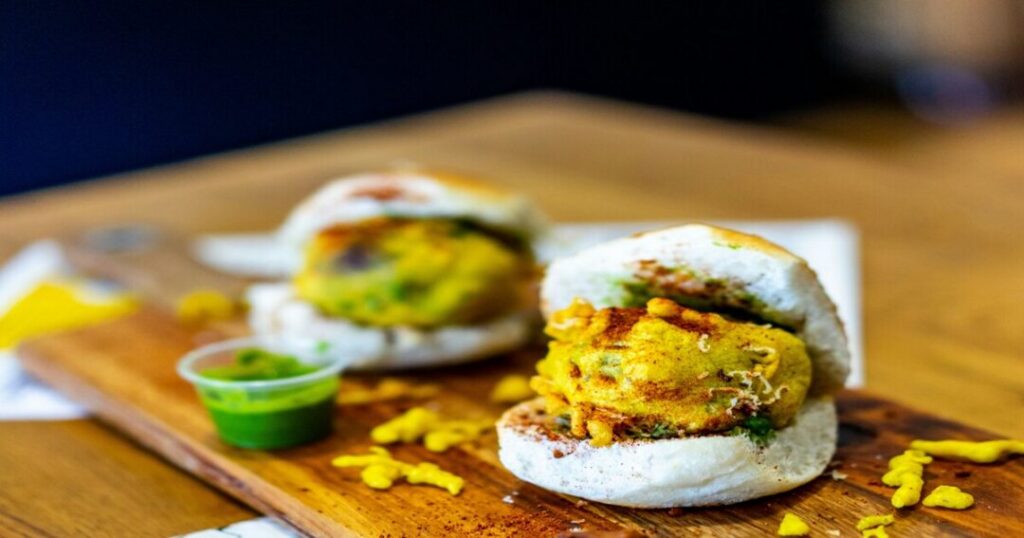
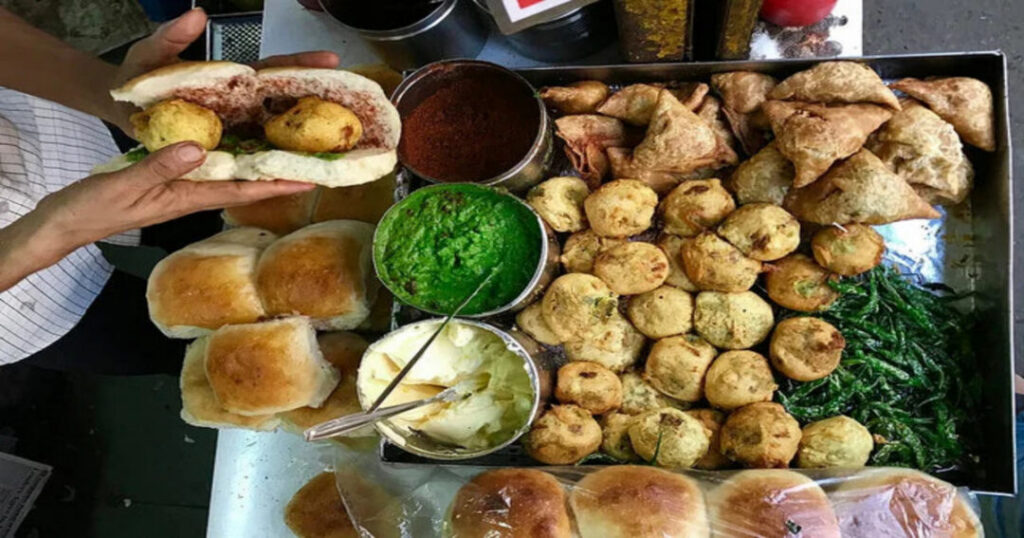
Vada pav is Mumbai’s defining street food—a deep-fried spiced potato dumpling (batata vada) placed inside a soft bread bun (pav) and served with a dry garlic-coconut chutney, sometimes a green chutney, and a fried green chili. The pav itself comes from the Portuguese word “pão” (bread), which entered Mumbai’s food vocabulary during colonial contact.
The dish is credited to Ashok Vaidya, who is widely believed to have started the first vada pav stall outside Dadar railway station in 1966. The snack was designed as a quick, affordable meal for the textile mill workers of central Mumbai’s Girangaon area—filling, cheap, and easy to eat standing on a crowded local train. Wikipedia notes there are now over 20,000 vada pav stalls in Mumbai. Shiv Sena’s association with the dish—encouraging Marathi entrepreneurs to set up stalls in the 1960s and 70s—added a political layer that makes vada pav as much a cultural symbol as a food item.
- What makes it: The dry lasun-khobara (garlic-coconut) chutney pressed into the pav before the vada goes in
- Vegetarian: Yes
- Best eaten: At a platform stall, standing up, with chai
Also read: Places to Go in Mumbai: A Local’s Guide to the City Beyond the Tourist Trail
2. Mumbai Pav Bhaji 🌿
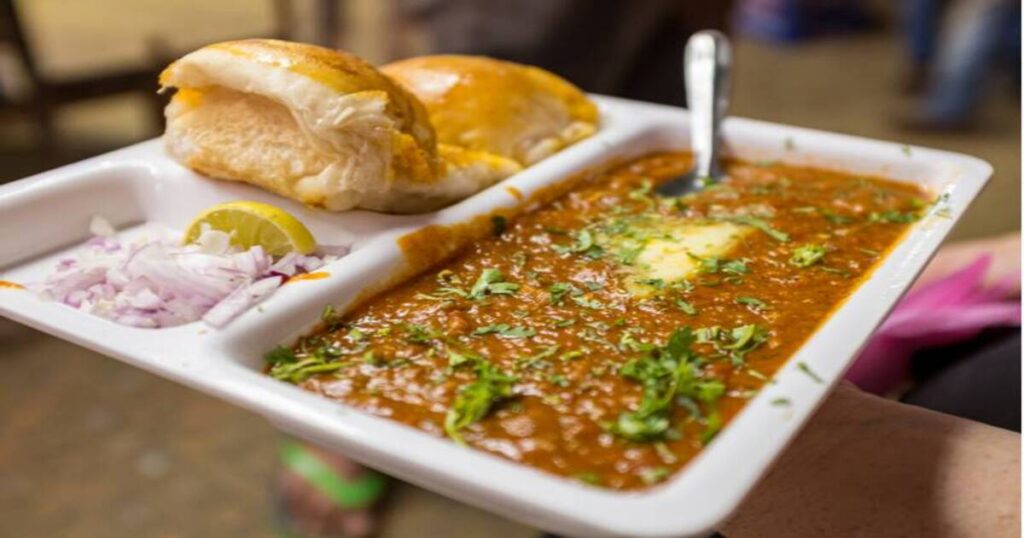
Mumbai pav bhaji is a thick, spiced vegetable curry—bhaji—cooked on a large iron tawa with generous amounts of butter, served with two or three soft pav buns that are toasted on the same tawa. The bhaji base is mashed potato, tomato, peas, capsicum, and onion, cooked with a specific pav bhaji masala blend. It is topped with raw chopped onion, a slice of lime, and a visible square of butter that melts into the bhaji as it’s served.
The dish originated as a fast lunchtime meal for textile mill workers in Mumbai in the mid-19th century, according to Wikipedia—street vendors combined leftover vegetables with spices and served the result with pav. The most famous name associated with the dish’s popularization is Sardar Ahmed, who ran a fruit stall outside a mill gate in the 1960s before developing his pav bhaji recipe and opening Sardar Refreshments in Tardeo in 1966. The restaurant is still operational and remains one of the most referenced pav bhaji destinations in the city.
- Sardar Pav Bhaji in Mumbai: Sardar Refreshments, Tardeo — widely considered the benchmark
- Other acclaimed spots: Cannon Pav Bhaji near CST
- Vegetarian: Yes
- Variations: Cheese pav bhaji, Jain pav bhaji (no onion/garlic/potato — raw banana used instead), khada bhaji (vegetables not fully mashed)
Mumbai Vada Pav vs. Bombay Vada Pav—What’s the Difference?
Nothing, technically—Bombay vada pav and Mumbai vada pav are the same dish. “Bombay” is the city’s pre-1995 name, still in common use for food references. The distinction that actually matters: neighborhood to neighborhood, the chutney composition and the heat level of the vada masala vary noticeably. The Dadar version is often considered the reference point.
Street Food in Mumbai: The Best Chaat Circuit
Mumbai’s chaat scene is its own universe—distinct from Delhi chaat in ingredients, texture ratios, and the prominence of Gujarati and Maharashtrian flavor profiles.
3. Bhel Puri
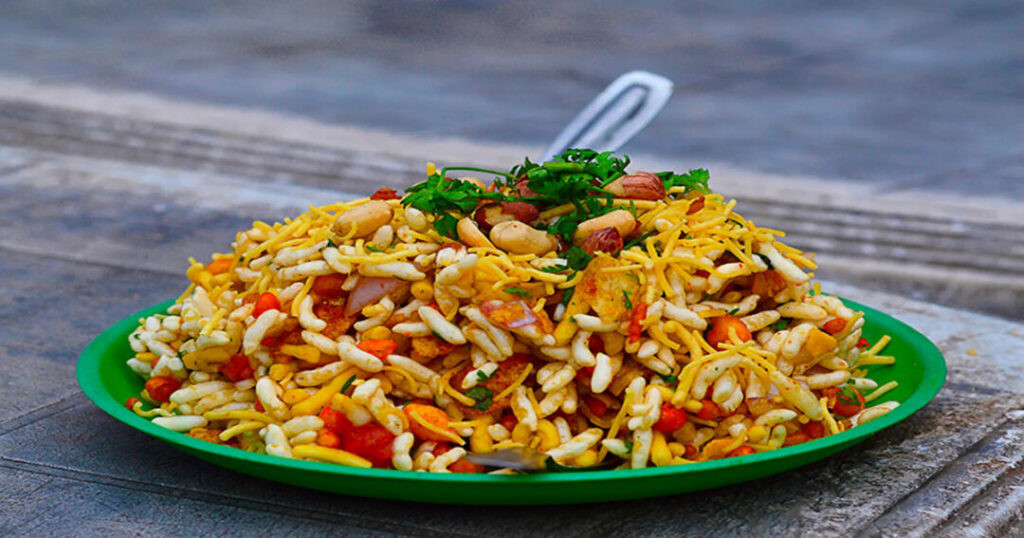
Bhel puri is Mumbai’s most democratic street food—a mixture of puffed rice (murmura), crispy papri, sev (thin fried chickpea noodles), boiled potato, chopped onion, tomato, raw mango (seasonal), tamarind chutney, and green chutney, tossed together at the moment of serving. The origin is disputed: Wikipedia notes a restaurant called Vithal near the old Victoria Terminus (now Chhatrapati Shivaji Maharaj Terminus), established in 1875, claims to have invented it, though this is considered apocryphal by some food historians. The most broadly accepted view is that it evolved from Gujarati farsan traditions combined with North Indian chaat influences, gaining its modern form through the city’s beach stalls in the 1960s and 70s.
Two essential styles:
- Geela bhel (wet): Chutneys mixed through; eat immediately
- Sukha bhel (dry): No liquid chutney; roasted peanuts, masala chana, sev — the version sold in paper packets across the city
- Vegetarian: Yes
- Best locations: Chowpatty Beach, Juhu Beach, Elco in Bandra
4. Sev Puri and Dahi Puri 🌿
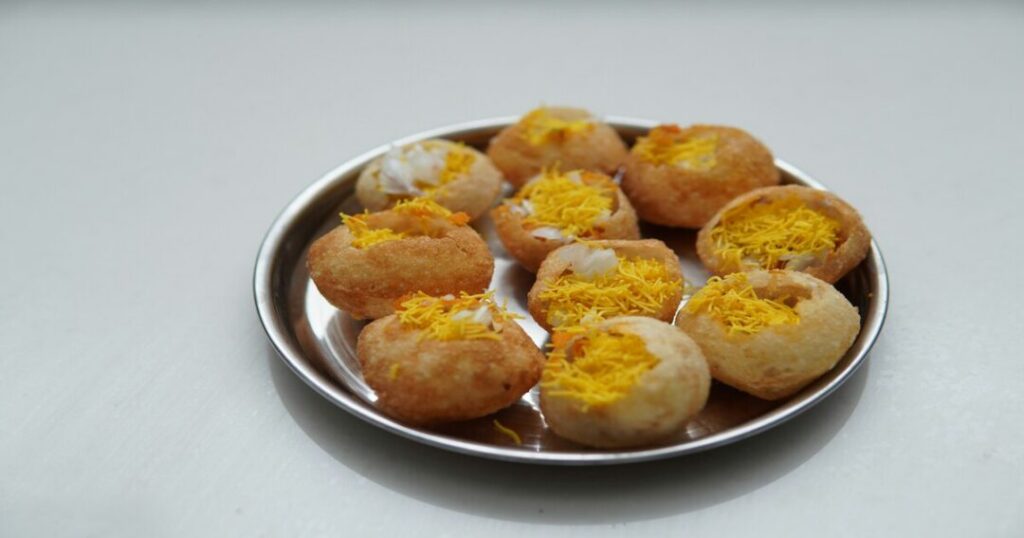
Sev puri is a flat papri topped with boiled potato, onion, tomato, both chutneys, and a heavy blanket of sev—eaten in one bite. Dahi puri is the same base inside a hollow puri shell, with the addition of sweetened yogurt (dahi). Both are chaat staples at every Mumbai street stall and fast-casual chaat restaurant. The contrast of textures—crisp, soft, crunchy, and creamy—within a single bite is what makes these specifically Mumbai chaat rather than a general category.
- Vegetarian: Yes
- Rule: Eat sev puri immediately; it goes soggy within minutes
Also read: Hidden Weekend Getaways from Mumbai for Explorers Who Hate the Obvious
5. Pani Puri (Mumbai Style) 🌿
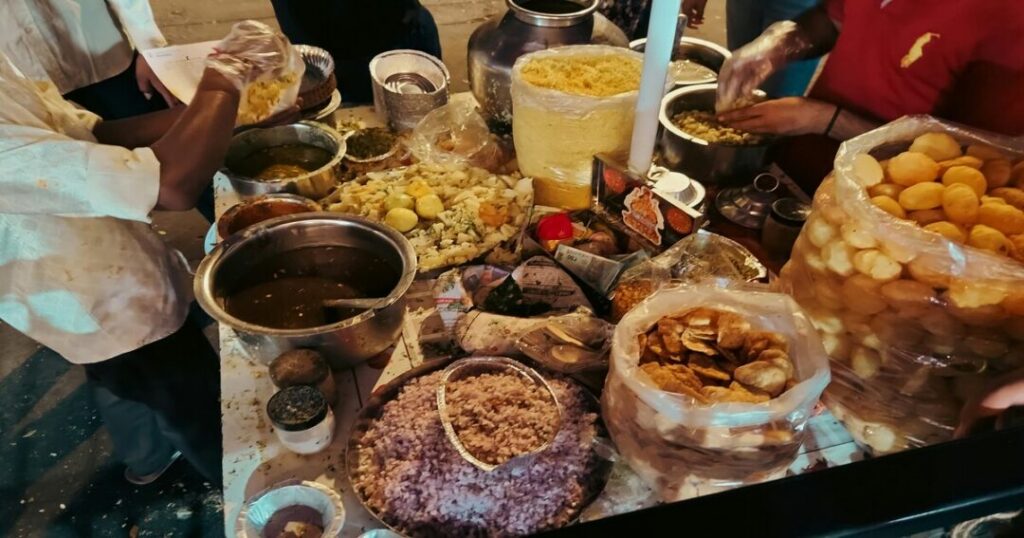
Mumbai’s pani puri uses a thinner, crispier shell than the Kolkata phuchka, and the pani (spiced water) is typically a sharp, mint-heavy preparation with a sweet-sour tamarind note. The filling is mashed potato with black salt, chaat masala, and sometimes sprouted moong. The spice level is considerably more restrained than the Bengali version. Each puri is filled, dunked in the pani, and handed to you one at a time for immediate consumption.
- Vegetarian: Yes
- Debate: Mumbai pani puri vs Kolkata phuchka is one of Indian food culture’s most heated ongoing arguments
Good Street Food in Mumbai — Sandwiches, Rolls & Toasted Staples
6. Bombay Sandwich 🌿
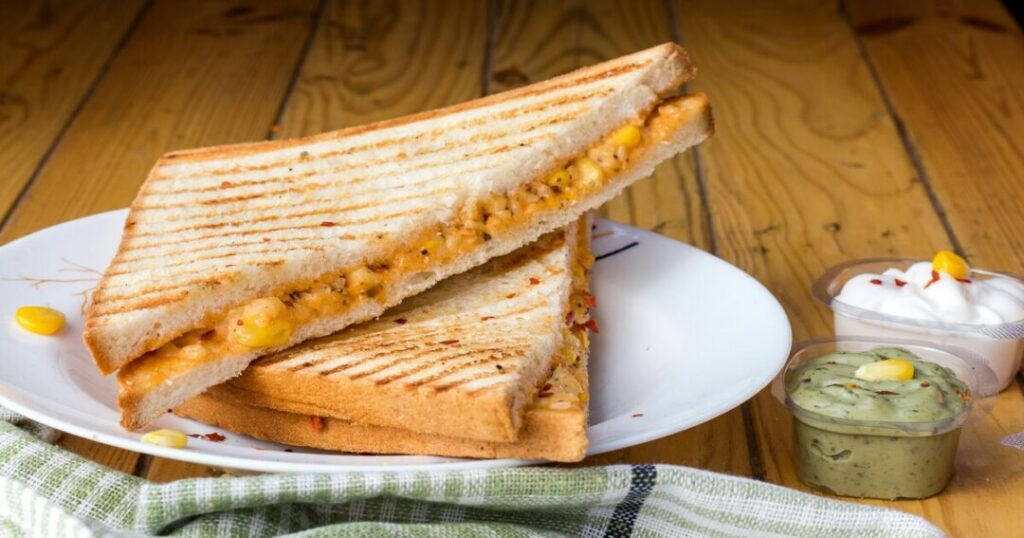
The Bombay sandwich is a pressed, grilled, or toasted sandwich made on white bread with a specific combination of boiled potato slices, cucumber, tomato, beetroot, green chutney (mint-coriander), and butter—sometimes with cheese. The grilling is done on a sandwich press that leaves crosshatch marks. What distinguishes it from every other sandwich is the green chutney and the beetroot: both are non-negotiable in the traditional version. It’s sold at every railway station sandwich counter and street stall across the city at prices that have barely moved relative to inflation.
- Vegetarian: Yes
- Best versions: Near railway stations—CST, Churchgate, Dadar—where the turnover keeps the ingredients fresh
7. Kheema Pav
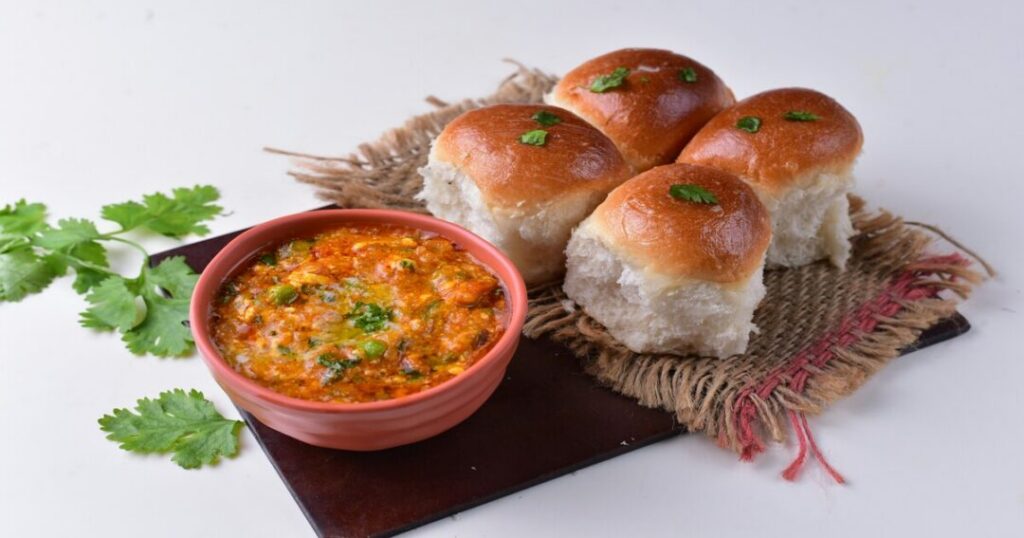
A Parsi and Muslim Mumbai institution: minced meat (traditionally mutton) cooked with onions, tomatoes, ginger, garlic, and a distinct spice blend—not a curry, but a dry-ish mince—served with buttered pav. Found at Irani cafés across the city, particularly in South Mumbai, and at Muslim dhabas near Mohammed Ali Road. One of the few non-vegetarian items that defines Mumbai street food as clearly as the vegetarian ones.
- Non-vegetarian
- Best area: Mohammed Ali Road, Bohri Mohalla, Irani cafés in Colaba and Fort
8. Misal Pav
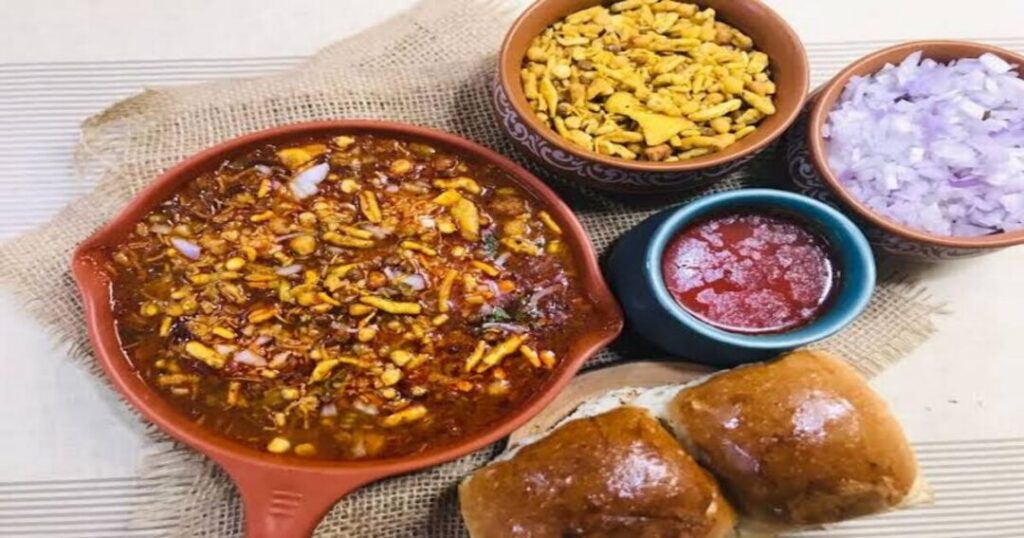
Misal pav is a bowl of sprouted moth beans (matki) cooked in a spiced, slightly oily tarri (gravy), topped with farsan (crispy Maharashtrian snack mix), raw onion, lime, and coriander—served with pav. It’s a complete meal masquerading as a street snack. Pune and Kolhapur have their own ferocious misal traditions; the Mumbai version tends to be slightly less incendiary than the Kolhapur style.
- Vegetarian: Yes
- Best neighborhoods: Dadar and Girgaon have the highest concentration of serious misal spots
Mumbai Street Food — The Beach and Evening Circuit
9. Bhutta (Roasted Corn) 🌿
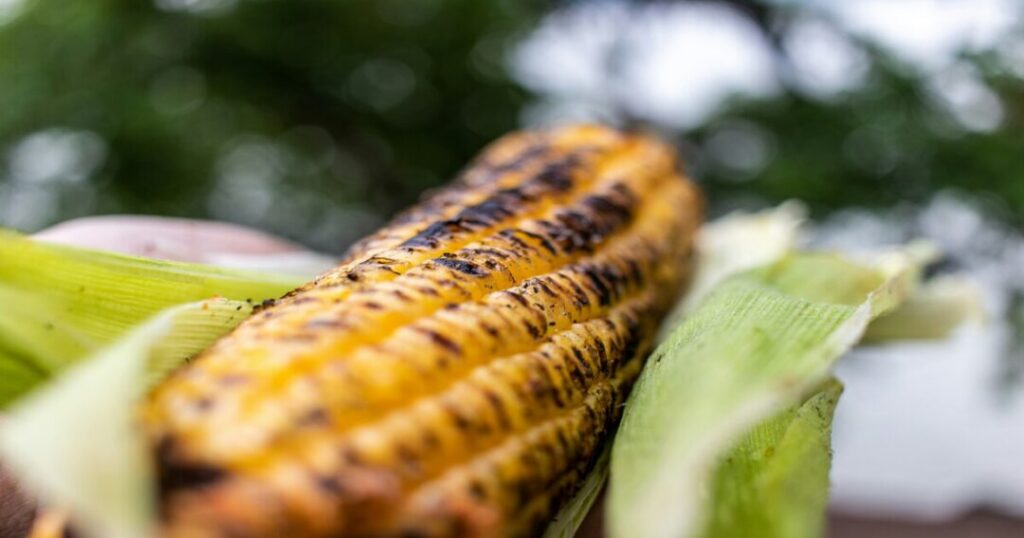
Bhutta is a whole corn cob roasted on live coals, then rubbed with a mixture of lime, salt, red chili powder, and butter. It is the defining smell of Mumbai’s beach promenades—Juhu, Chowpatty, Versova, and Madh Island. Best in monsoon when the corn is at its sweetest and the sea wind makes standing at a coal fire entirely reasonable.
- Vegetarian: Yes
- Best season: Monsoon (June–September)
Also read: 2026 BUCKET LIST MUST HAVES: TOP PLACES TO VISIT IN MUMBAI
10. Dabeli 🌿
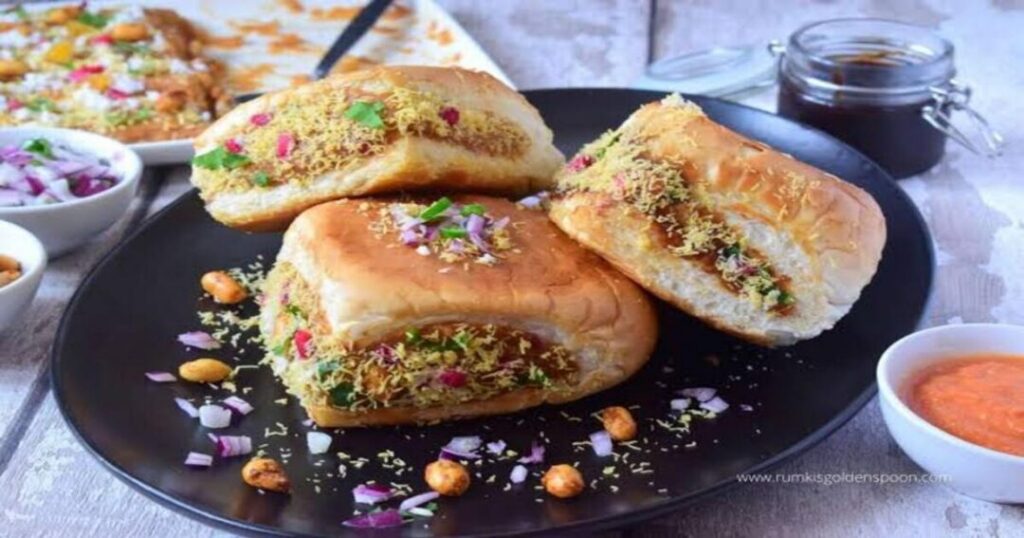
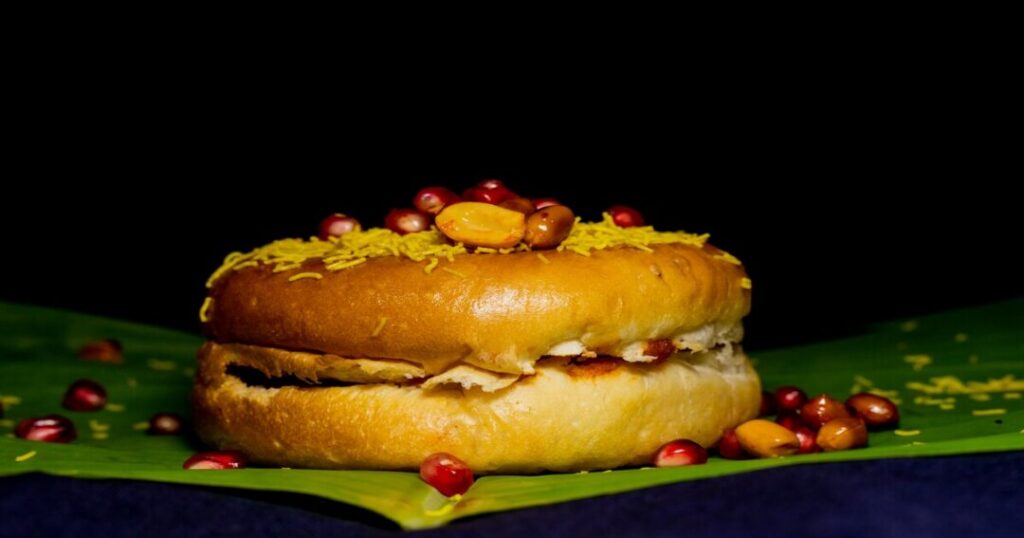
Dabeli (meaning “pressed” in Gujarati) is a spiced mashed potato mixture—made with a specific dabeli masala, tamarind chutney, pomegranate seeds, and roasted peanuts—pressed into a pav and grilled. Originally from Kutch in Gujarat, it migrated to Mumbai with the Gujarati community and is now a staple of the city’s chaat and street stall circuit. The combination of sweet, spicy, and crunchy within a single bun is distinctive—unlike vada pav, it leans sweet.
- Vegetarian: Yes
- Originated: Kutch, Gujarat—popularized in Mumbai
11. Mumbai Frankie
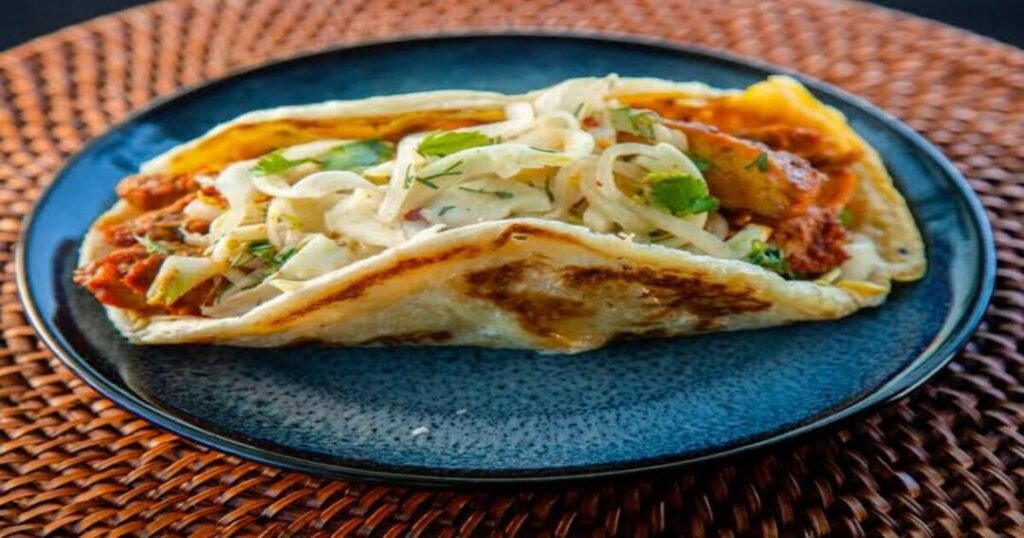
The Mumbai Frankie (also called a Kathi roll locally, though it predates the Kolkata Kathi roll naming convention) is a thin paratha or maida roti wrapped around a filling of egg, paneer, or chicken, with onions, chili sauce, and chutney. It is one of the city’s main late-night street foods, available until well past midnight outside colleges, near nightlife areas, and at railway stations.
- Vegetarian options: Paneer, egg, aloo
- Non-vegetarian options: Chicken, mutton
Bombay Street Food — Sweets, Drinks & the Irani Café Culture
12. Irani Chai and Bun Maska
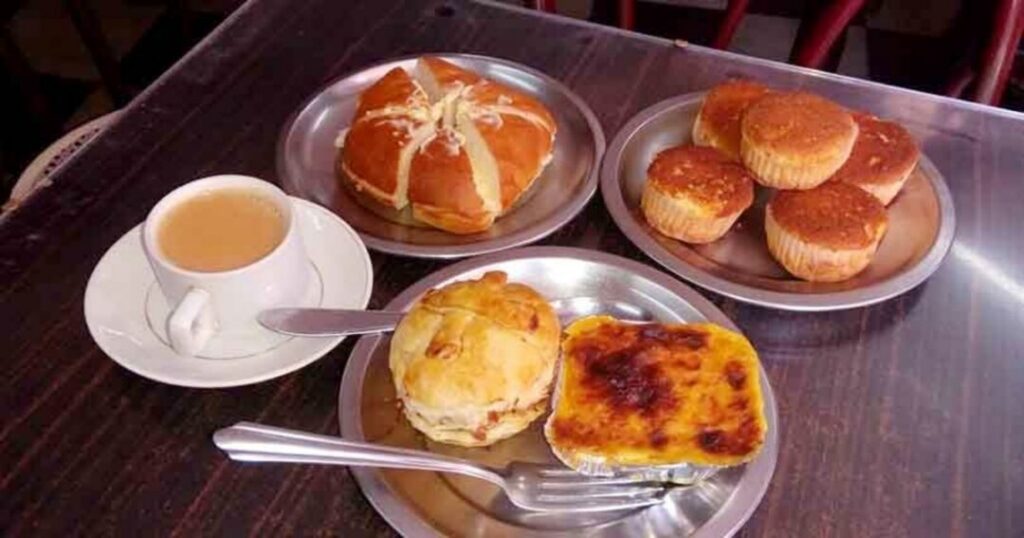
The Irani café is a Mumbai institution—established largely by Zoroastrian immigrants from Iran in the late 19th and early 20th centuries. The experience: strong, slightly milky, slightly sweet tea (Iranian chai) served in a glass with bun maska—a soft, slightly sweet white bread bun split and spread with generous salted butter (maska). The furniture is old. The ceiling fans are slow. The marble tables are chipped. This is not a defect; it is the point.
A shrinking number of Iranian cafés survive in South Mumbai—Britannia & Co. in Ballard Estate, Kyani & Co. in Marine Lines, and Café Military near CST. Each one is a working museum of a specific Mumbai that is disappearing.
- Vegetarian: Yes
- Order: Irani chai + bun maska. Add an omelette if it’s before noon.
13. Falooda 🌿

Falooda is a cold dessert drink: rose syrup, chilled milk, basil seeds (sabja), thin vermicelli noodles (falooda sev), and a scoop of ice cream are served in a tall glass. It is a Mumbai summer ritual, available at Muslim sweet shops across Mohammed Ali Road, at Badshah near Crawford Market (one of the city’s oldest and most referenced falooda counters), and at Irani establishments citywide.
- Vegetarian: Yes
- Best season: March–June (peak summer)
- Key stop: Badshah near Crawford Market
14. Kulfi Falooda 🌿
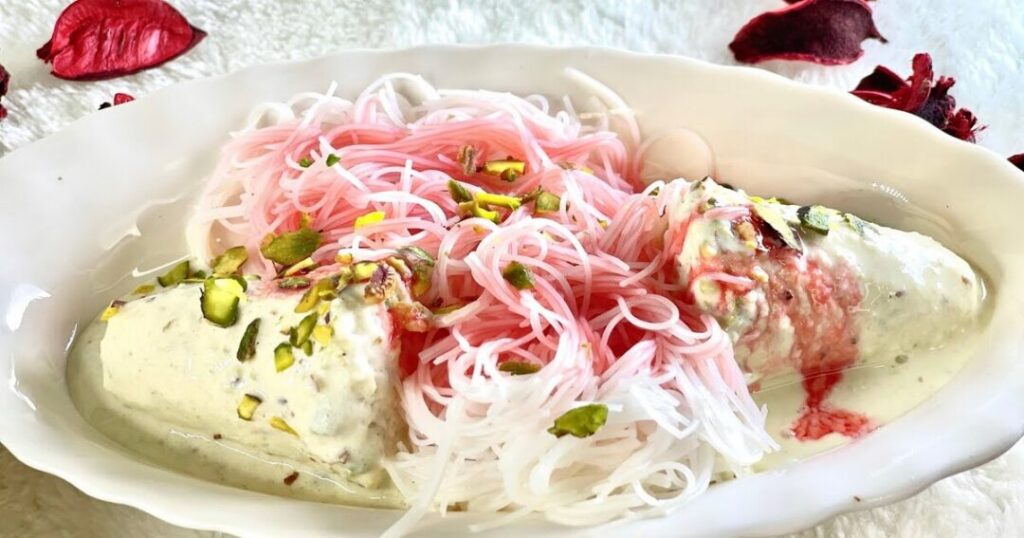
A variation on the above is malai kulfi (dense, slow-frozen Indian ice cream made with reduced milk) served on a stick or sliced on top of the falooda base. The kulfi melts slowly into the falooda as you eat, creating a progressively richer dessert. Mohammed Ali Road during Ramzan has the highest concentration of kulfi falooda vendors in the city, with the evening market running until late into the night.
- Vegetarian: Yes
Offbeat Good Street Food in Mumbai Most Visitors Skip
15. Thalipeeth 🌿
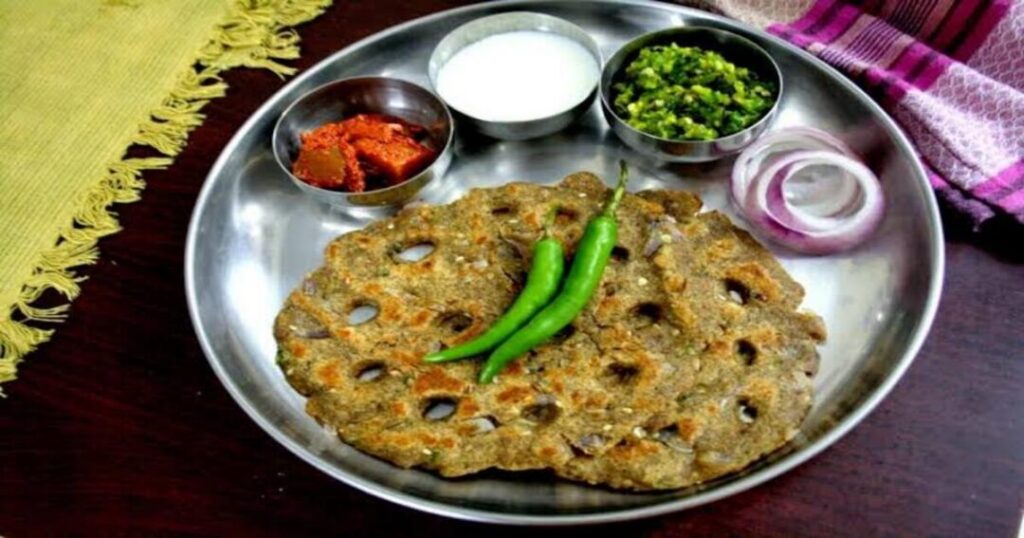
Thalipeeth is a Maharashtrian flatbread made from a multi-grain flour blend (bhajani) including roasted rice, lentils, jowar, and spices; cooked on a tawa with generous oil; and served with white butter (loni) and dry coconut chutney. It is one of the most nutritionally substantive items in Mumbai’s street food canon and one of the least known outside Maharashtrian households and specific Dadar/Girgaon stalls.
- Vegetarian: Yes
- Best area: Dadar, Girgaon, Shivaji Park neighbourhood
16. Anda Bhurji Pav
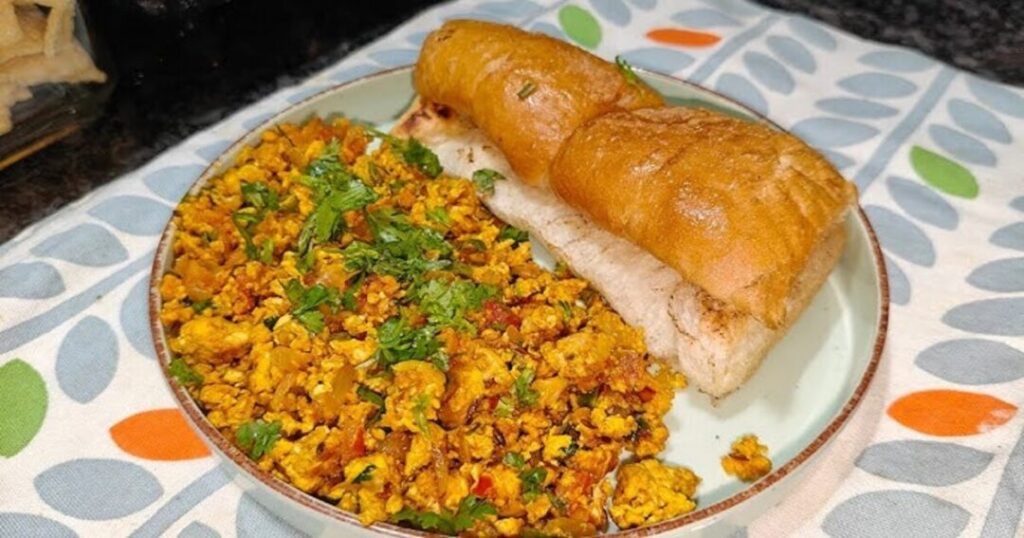
Anda bhurji is Mumbai’s version of scrambled eggs—cooked on a flat tawa with onions, tomatoes, green chilies, and a heavy hand of masala and served with pav. It is the city’s primary late-night food, available from roadside tawa stalls across every neighborhood from around 10 PM until 2 or 3 AM. The version near VT (CST) and Mahim is reliably excellent.
- Non-vegetarian (egg)
- Best time: Late night, 10 PM onwards
Also read: Street Food in Ahmedabad: The Ultimate Guide to the City’s Most Iconic Bites
17. Sabudana Vada (at Upavas Stalls) 🌿
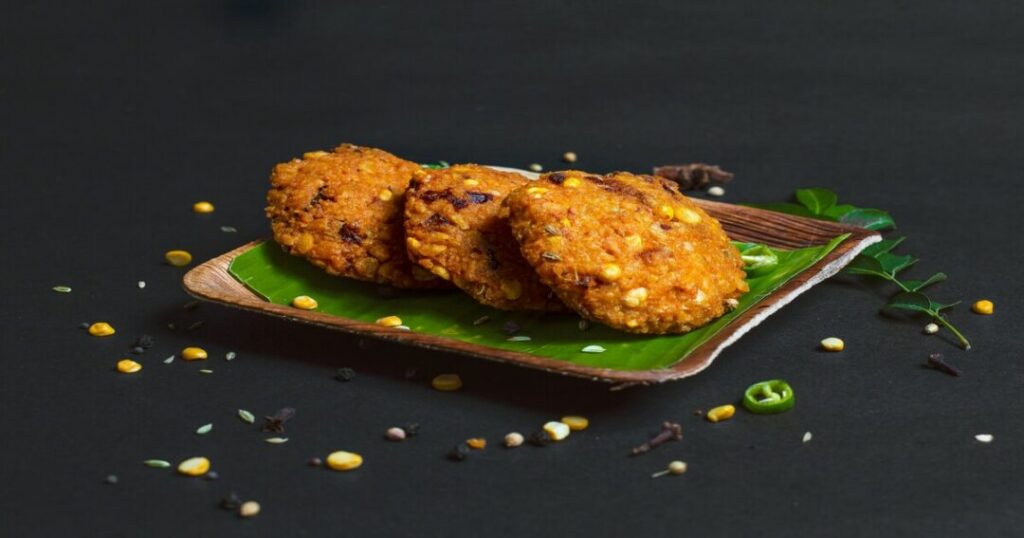
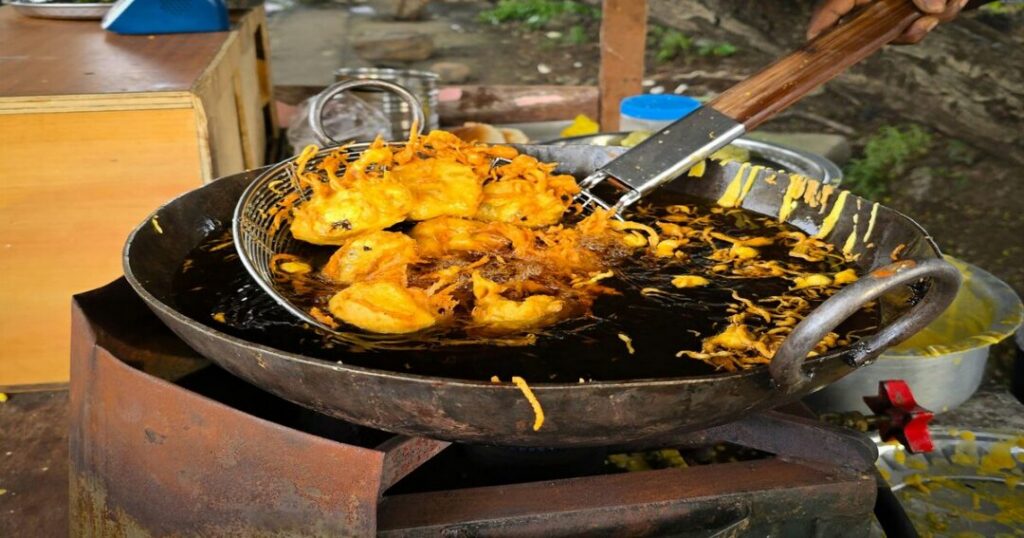
During fasting periods—Navratri, Ekadashi, and Mahashivratri—Mumbai’s street food circuit briefly shifts to sabudana (tapioca pearl) preparations. Sabudana vada is a crispy-outside, soft-inside patty of soaked tapioca pearls, mashed potato, peanuts, and cumin, deep-fried and served with a peanut-coconut chutney. Available year-round at specific Maharashtrian snack shops, but ubiquitous during fasting season.
- Vegetarian: Yes (suitable for most Hindu fasting observances)
Conclusion About Street Food in Mumbai
Street food in Mumbai is the city’s most honest document—it records who came here, what they ate, what they could afford, and how a snack became a political symbol. Vada pav arrived in 1966 with the textile mills. Pav bhaji fed mill workers on short lunch breaks. Bhel puri evolved from Gujarati farsan on beach promenades. Irani chai is what’s left of a Zoroastrian immigrant culture that shaped South Mumbai’s café life for a century. None of this is incidental context—it’s the reason the food tastes the way it does.
Download the Explurger Travel App to log every stall and dish you eat through in Mumbai, discover what other food travelers are finding across the city, and build a street food trail that actually covers the neighbourhoods.
Eat at the platform stall, not the airport replica. The city’s best food costs under a hundred rupees and takes thirty seconds to hand you.
FAQs About Street Food in Mumbai
2. Where is the best place to eat pav bhaji in Mumbai?
Sardar Pav Bhaji in Mumbai (Sardar Refreshments, Tardeo) is the most consistently referenced benchmark—the establishment dates to 1966 and is associated with Sardar Ahmed, who is credited by many sources with popularizing the modern pav bhaji format. Cannon Pav Bhaji near CST is another long-running reference point. Both are vegetarian and serve until late evening.
3. What is Bombay vada pav?
Bombay vada pav is the same as Mumbai vada pav—a deep-fried spiced potato dumpling (batata vada) placed inside a soft bread bun (pav), served with a dry garlic-coconut chutney and a fried green chili. "Bombay" is the city's pre-1995 name and is still commonly used in food contexts. The dish originated around 1966, credited to Ashok Vaidya, a stall owner outside the Dadar railway station.
4. Is most street food in Mumbai vegetarian?
A significant proportion are vegetarian—vada pav, pav bhaji, all chaat (bhel puri, sev puri, pani puri, and dahi puri), dabeli, bhutta, falooda, Bombay sandwich, and misal pav are all vegetarian. Non-vegetarian staples include kheema pav, anda bhurji pav (egg), and chicken frankie. Mumbai's street food is one of the most vegetarian-friendly in any major Indian city.
5. What is Sardar pav bhaji in Mumbai?
"Sardar Pav Bhaji" refers to the pav bhaji served at Sardar Refreshments, a restaurant in Tardeo, South Mumbai. Founded in 1966 by Sardar Ahmed, it is widely credited as one of the earliest dedicated pav bhaji establishments in the city. The bhaji is cooked fresh, served with generous amounts of Amul butter, and accompanied by soft, butter-toasted pav. It remains one of the most visited street food destinations in the city for both locals and travelers.
6. What is the best time to eat street food in Mumbai?
The city's street food circuit runs across the full day but has clear peaks. Morning: thalipeeth, misal pav, and Irani chai with bun maska (Irani cafés open from 7 to 8 AM). Evening 5–8 PM: bhel puri and chaat at beach promenades, vada pav at railway stations, and pav bhaji. Late night 10 PM–2 AM: Anda bhurji pav, Frankie, and kheema pav near Mohammed Ali Road. During Ramzan (dates vary annually), Mohammed Ali Road's night market runs until very late and is the most concentrated street food experience in the city.