
1,227 Total Views
India’s best tea destinations span a genuinely wide range — from misty Himalayan slopes where a colonial-era planter first tried growing Chinese tea seeds in 1841, to a Kerala hill station where century-old estate bungalows still function as working plantation homes. This guide covers five regions worth building a trip around, the stays that actually put you inside the tea gardens rather than just looking at them, and — because it matters — a straight account of the industry’s harder history alongside the scenic one.
Darjeeling: The Queen of Hills’ Tea Gardens
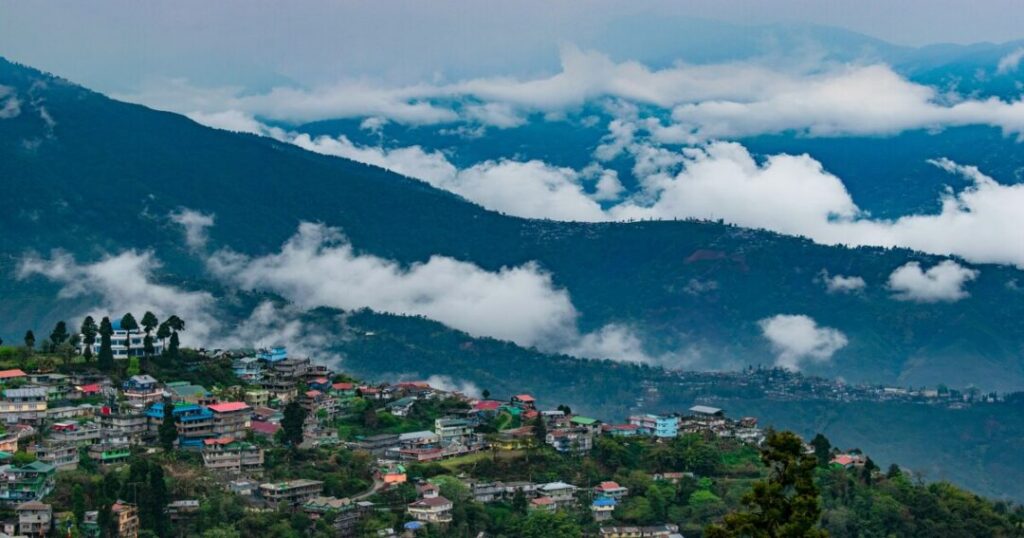
No Darjeeling tea garden tour conversation is complete without the region’s origin story: Dr. Archibald Campbell, Darjeeling’s colonial-era superintendent, sowed the first Chinese Camellia sinensis seeds in his Beechwood garden in 1841, and by 1852 the Tukvar, Steinthal, and Aloobari gardens were producing commercially. Today, Darjeeling tea is grown across roughly 87 gardens spanning the region’s seven valleys, and it holds a genuinely significant distinction: it was the first Indian product to receive GI (Geographical Indication) status, in 2004, and the first Indian commodity to receive EU Protected Geographical Indication status, in 2011.
Here’s the part worth knowing before you buy a single box labeled “Darjeeling” anywhere in the world: actual annual production sits at roughly 8-9 million kg, while historical estimates of “Darjeeling tea” sold globally have run well above 40 million kg — meaning a large share of what’s marketed under the name is blended or entirely substituted with tea from elsewhere. [STAT: Darjeeling’s actual annual tea production is roughly 8-9 million kg, while global sales of tea marketed as “Darjeeling” have historically exceeded 40 million kg.] It’s a genuinely interesting reason to buy directly from an estate or a GI-certified retailer if authenticity matters to you, rather than assuming a supermarket label tells the whole story.
For an actual stay, Glenburn Tea Estate (founded 1859) overlooks the Kanchenjunga range from its Burra and Water Lily bungalows, with tea tours, hiking, and fishing built into the experience. Makaibari Tea Estate, also founded in 1859 and home to what’s often cited as the world’s oldest tea factory, takes the more grounded route — homestays within the estate run around ₹1,500 a night including meals, and it’s built its reputation specifically around organic, community-focused farming rather than luxury.
Munnar: Kerala’s High-Range Tea Country
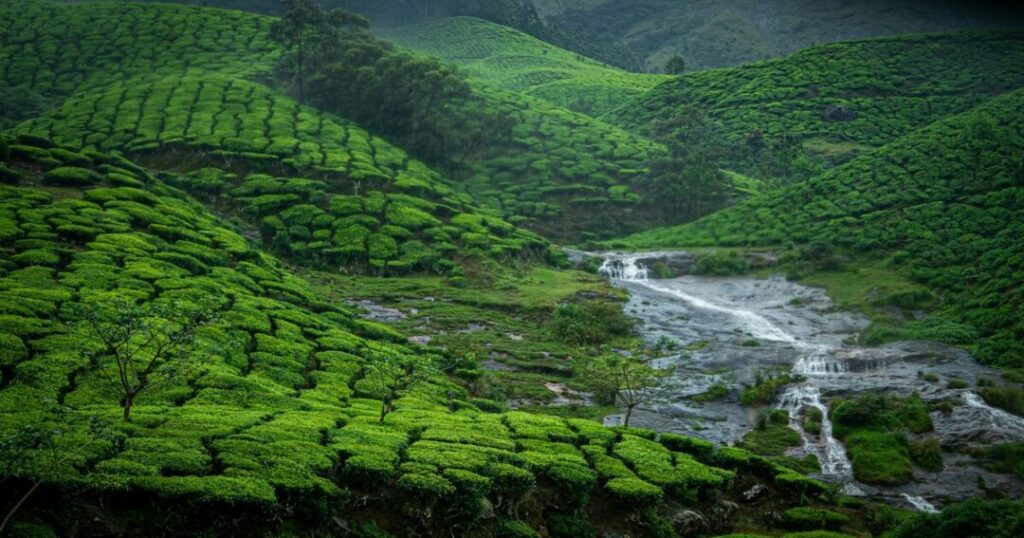
A Munnar tea plantation tour tells a different regional story entirely — British planters established the first estates here in 1878, and the Kannan Devan Hills Production Company, formed in 1897, kicked off large-scale cultivation across what’s now one of South India’s defining tea landscapes. The Kannan Devan Hills Plantation (KDHP) Tea Museum, opened by Tata Tea in 2005 at the Nullatanni Estate just five minutes from Munnar town, walks visitors through the region’s history with genuinely old artifacts — a tea roller from 1905, a Pelton wheel from the 1920s — alongside a tasting session and a briefing on tea processing.
What sets Munnar apart for an actual stay is that several of its heritage bungalows are still KDHP-owned working estate properties rather than converted hotels: Nettigudi Bungalow, built in 1927 for estate planters, Kadalaar Bungalow (1929), and Arivikad Tea Bungalow (1917) all put guests directly inside functioning tea estates, often with guided walks through the plantation itself as part of the stay.
Also Read: Why Monsoon in Darjeeling is the Perfect Escape: Travel Guide for 2026
Assam: The World’s Tea Capital, and Its Harder Story
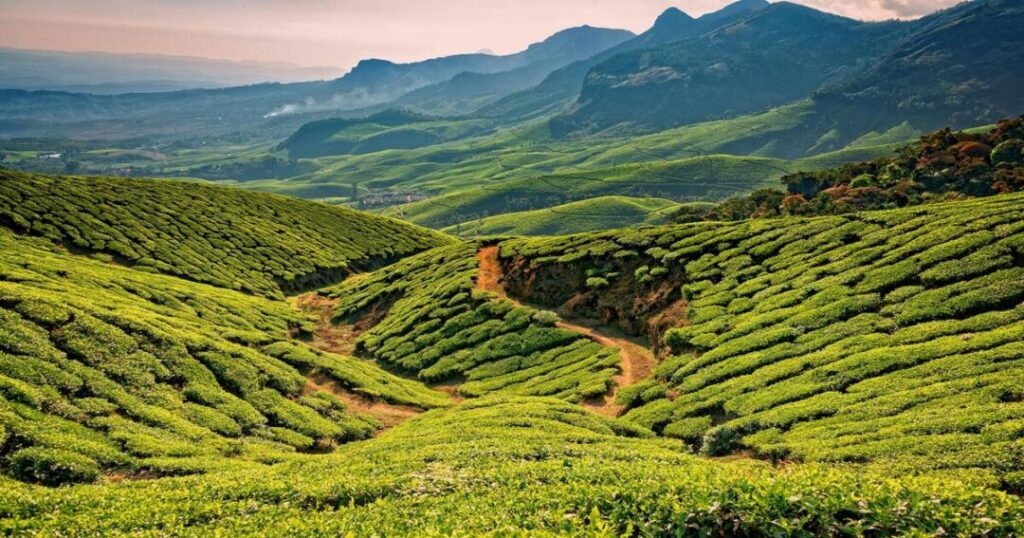
Assam anchors any serious Assam tea garden tourism itinerary simply on scale — Jorhat is widely called the “Tea Capital of the World,” and Dibrugarh alone is home to roughly 177 tea gardens. This is the source of the strong, malty Assam tea found in breakfast blends worldwide, and the gardens themselves, with their colonial-era bungalows and vast green expanses, are genuinely striking to visit.
It’s worth telling the fuller story here rather than just the scenic one. Assam’s tea industry was built on an indentured labor system that transported over three million contract workers into the region between 1860 and independence, many of them Adivasi families displaced from central India by the Permanent Settlement of 1793 and left with few other options. [STAT: More than three million indentured workers were transported into Assam’s tea gardens between 1860 and Indian independence.] Historical accounts describe harsh conditions, low wages, and high mortality tied to poor housing, overcrowding, and inadequate medical care — a system explicitly built around extracting labor at minimal cost.
That history isn’t fully resolved. A 2024 CAG report found that Assam tea garden workers’ wages remain meagre and that welfare scheme implementation has been poor, and in May 2025, Assam’s government announced a wage increase for state-run tea garden workers from ₹220 to ₹250 a day, alongside a one-time payment — an increase labor activists have said still falls short of workers’ long-standing demands. It’s a genuine tension worth sitting with as a visitor: the same gardens producing the tea in your cup remain the site of an ongoing wage and working-conditions debate, even as India exported 254 million kg of tea in 2024 and earned thousands of crores from tea exports. None of this is a reason to skip Assam — but it’s a fuller picture than the postcard version most tea tourism content offers.
Also Read: Tourist Places in Darjeeling: 12 Scenic Spots That Will Take Your Breath Away
Sikkim’s Temi Tea Estate: India’s Only 100% Organic Tea Garden
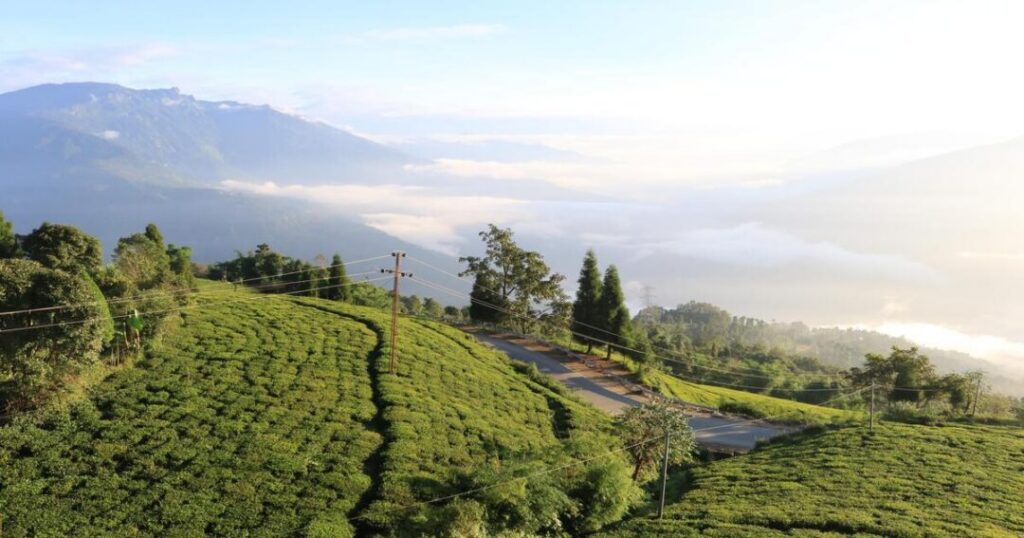
Temi Tea Estate holds a distinction none of the other stops on this list can claim: it’s Sikkim’s only tea garden, established in 1969 under the Chogyal of Sikkim specifically as a social welfare initiative to employ Tibetan refugees and local villagers. Spanning roughly 440 acres, Temi achieved full organic certification in 2008, years ahead of Sikkim’s landmark 2016 declaration as India’s first fully organic state — meaning Temi was proving the model before the rest of the state formally committed to it. Guided tours here walk visitors through the full plucking-to-tasting process, and the estate’s tourism model leans heavily on homestays and community-run experiences rather than large resort-style stays, which keeps a visit here feeling genuinely local.
Kangra Valley: The Himalayan Tea Region Most Travelers Miss
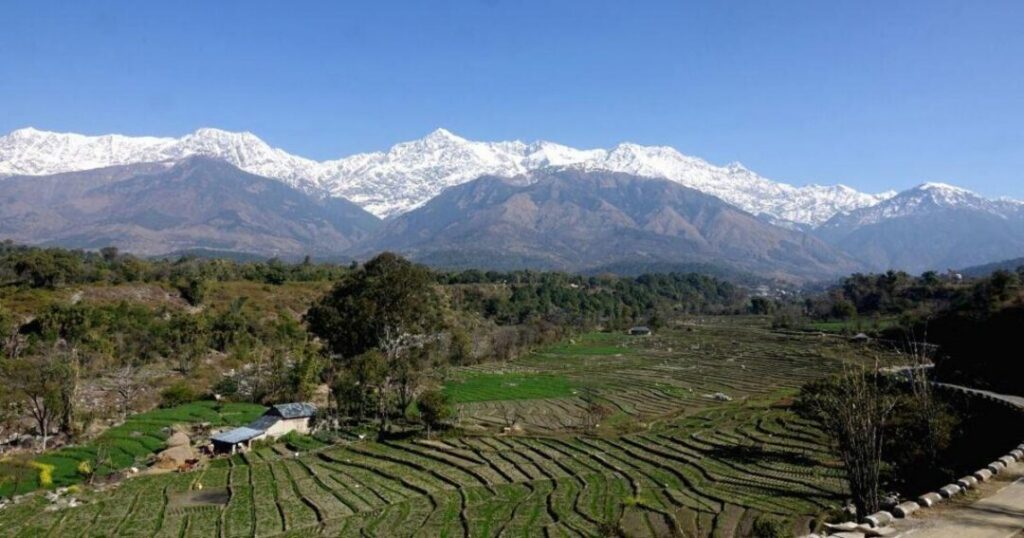
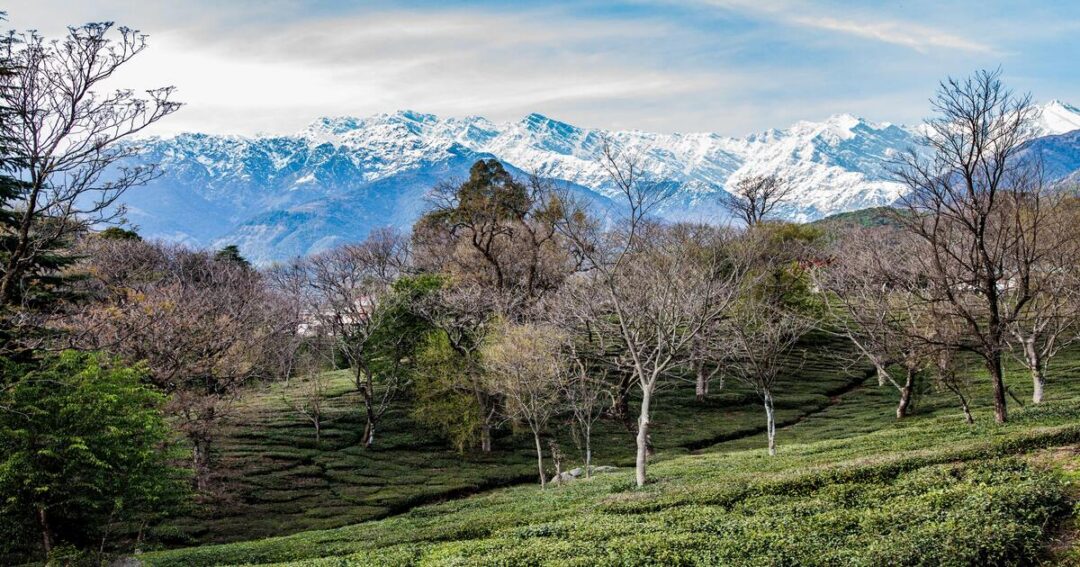
Himachal Pradesh’s Kangra Valley is the region most tea tourism in India conversations skip entirely, which is a real gap given its history. Dr. Jameson established the first profitable plantation here in 1849, and Kangra tea went on to win gold and silver medals in London and Amsterdam in the late 1800s before a devastating 1905 earthquake set the industry back significantly. It’s since recovered, helped by a dedicated tea research center in Palampur and cooperative processing factories built between 1964 and 1983.
What makes Kangra tea distinct is its terrain: grown between 2,000 and 5,000 feet in the shadow of the Dhauladhar range, shielded from the harshest monsoon rains, the tea plants grow slower and develop a milder, fuller-bodied flavor than Darjeeling’s — different enough that the EU has granted Kangra tea its own Protected Geographical Indication status. Tea tourism here is still a newer, smaller-scale draw than Darjeeling or Munnar, with a handful of estates and factories now opening up to visitors as growers diversify into specialty tea and direct retail.
Also Read: Darjeeling Food: The Complete Guide to Famous Dishes, Momos & Street Food
Tea Estate Stays in India: What to Actually Book
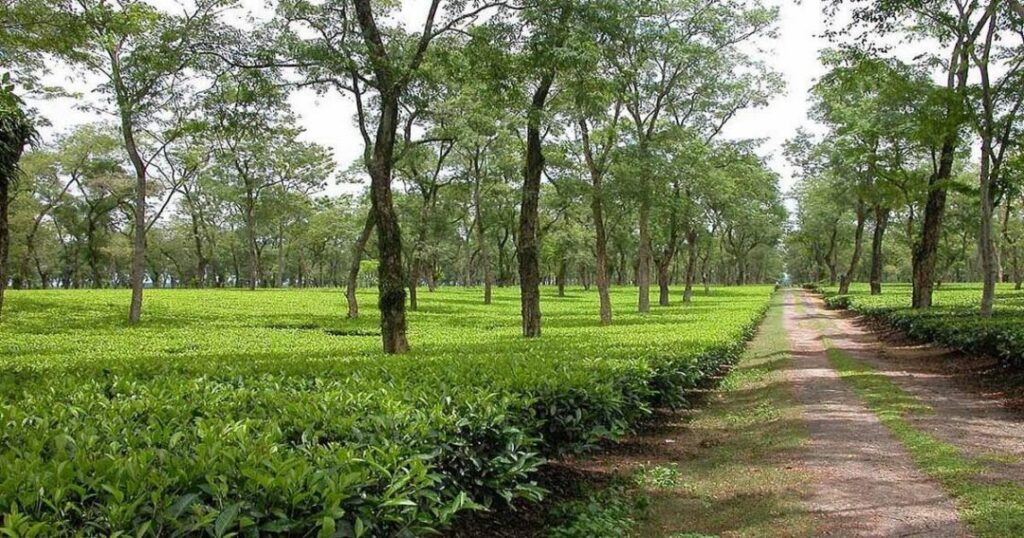
If a tea garden homestay in India is the actual goal rather than just a scenic drive-through, here’s how the options stack up by budget and experience. Makaibari’s estate homestays in Darjeeling (around ₹1,500/night with meals) are the most accessible entry point into a working organic garden. Munnar’s KDHP heritage bungalows — Nettigudi, Kadalaar, Arivikad — put you inside genuinely century-old planter residences still tied to an active estate, generally at a higher price point than a standard hotel given their scale and exclusivity. Temi’s homestays in Sikkim lean community-run and lower-key, better suited to travelers who want a quieter, more local stay than a heritage-property experience. Darjeeling’s Glenburn sits at the luxury end of the spectrum if budget isn’t the constraint. Across all of these, the common thread worth knowing: staying inside an actual estate, rather than a hotel with tea-garden views, is what turns the trip from sightseeing into something closer to understanding how the tea in your cup actually gets made.
Conclusion About India’s best tea destinations
India’s best tea destinations reward travelers willing to look past the postcard version — Darjeeling’s misty slopes carry a real authenticity problem worth knowing about, and Assam’s vast gardens sit on a labor history that isn’t fully settled even today. Save the estates and stays that fit your route to your Explurger Bucket List, and let your Automatic Travelogue keep every tea-country trip mapped as you go. Let Explurger help you plan a tea trail across India that goes beyond the scenery.
FAQs About India’s Best Tea Destinations
2. Is most "Darjeeling tea" sold globally actually real?
Not entirely. Darjeeling's actual annual production is roughly 8-9 million kg, while global sales of tea marketed as "Darjeeling" have historically exceeded 40 million kg, meaning much of what's sold under the name is blended with or substituted by tea from other regions.
3. Can you stay at a working tea estate in India?
Yes. Makaibari and Glenburn in Darjeeling, and Nettigudi, Kadalaar, and Arivikad bungalows in Munnar (all KDHP-owned century-old planter residences), offer genuine working-estate stays rather than hotels with tea-garden views.
4. What is unique about Sikkim's Temi Tea Estate?
It's Sikkim's only tea garden, established in 1969 as a social welfare initiative, and it achieved full organic certification in 2008 — years ahead of Sikkim's 2016 declaration as India's first fully organic state.
5. What are the working conditions like on Assam's tea gardens today?
A 2024 CAG report found wages remain meagre with poor welfare scheme implementation. A 2025 wage increase (from ₹220 to ₹250/day for state-run garden workers) was announced, though labor activists say it still falls short of long-standing demands.
6. How is Kangra tea different from Darjeeling tea?
Kangra tea, grown in Himachal Pradesh's Dhauladhar foothills, is milder and fuller-bodied than Darjeeling tea, a result of its distinct altitude, soil, and monsoon-sheltered terrain. It holds its own EU Protected Geographical Indication status.