
1,443 Total Views
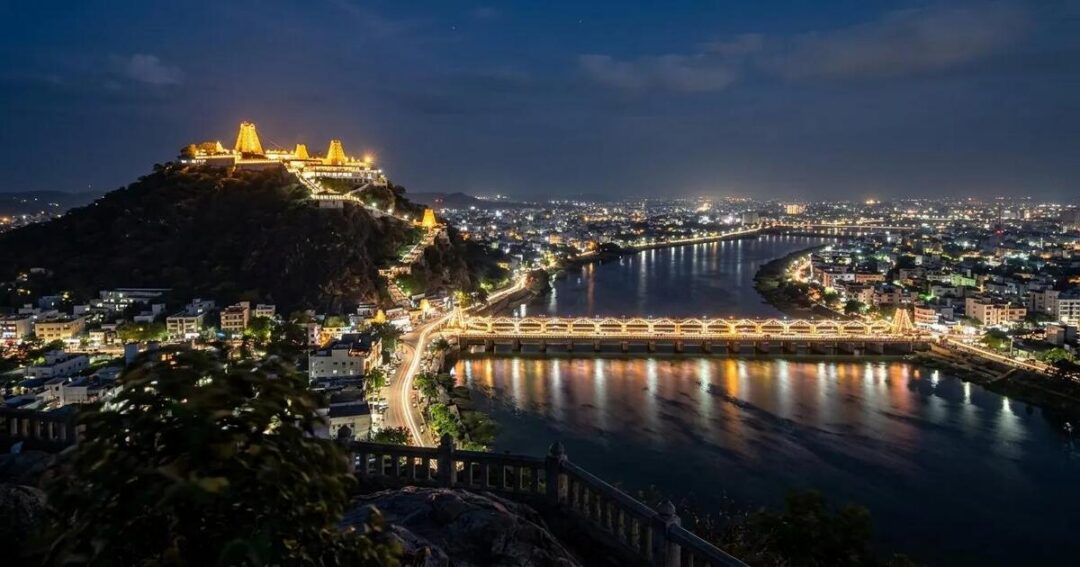
The Kanaka Durga Temple, perched on Indrakeeladri Hill above the Krishna River, is the kind of site where legend and documented history run on separate but parallel tracks — one telling of a demon-slaying goddess and a sage who became a mountain, the other made of dated inscriptions and dynasty-by-dynasty renovations. Both are worth knowing, and they don’t always agree on the details.
Kanaka Durga Temple: History, Significance & Timings
Where the Legend Begins: Indrakila and the Demon Mahishasura
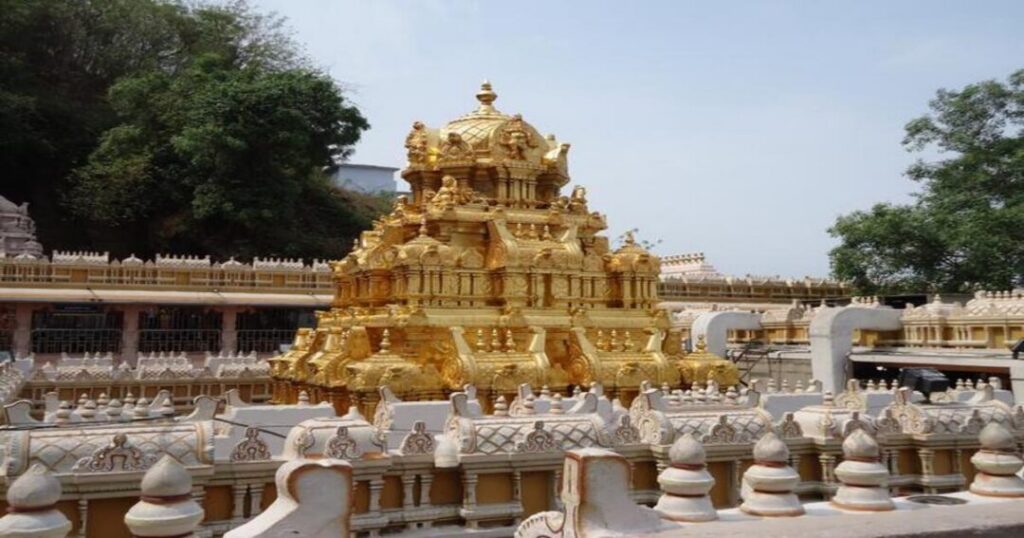
The temple’s founding story is inseparable from the hill it sits on. According to tradition, the sage Indrakila performed severe penance seeking the goddess’s protection against the demons troubling the region, and when Durga appeared, he asked her to make his own body her permanent seat. She agreed, transforming into the hill now called Indrakeeladri – Indrakila’s hill – before going on to slay the demon king Mahishasura and free the region from his tyranny. That victory is where the city’s name is said to originate: Vijayawada, roughly “the place of victory”, commemorating Durga’s triumph. A second, overlapping legend credits the name to Arjuna, who is said to have performed penance on the same hill to obtain the Pashupatastra from Shiva — after receiving it, Shiva reportedly addressed him as “Vijaya,” a title that fed into the same etymology from a different mythological direction. A third local tradition explains the older name Bezawada differently: the river goddess Krishnaveni is said to have asked Arjuna to cut a passage (bejjam) through the hills so she could reach the sea, giving rise to Bejjamwada before it shortened to Bezawada.
What the Inscriptions Actually Say?
Set the legends aside for a moment, because the temple also has something rarer for a South Indian shrine of this antiquity: a dated, physical inscription. A Telugu inscription from 1229 CE, found in Veligandla village in what is now Prakasam district, records a donation made to “the God Bejawada Malleswaradeva at Indrakiladri, known as Dakshina Varanasi”, made by two individuals for the merit of their chief, Siddaraju, alias Trilochana Pallava, a Telugu Pallava king. [STAT: A Telugu inscription dated 1229 CE explicitly names the temple deity “Bejawada Malleswaradeva at Indrakiladri”, making it one of the earliest firmly dated written records of the site.] That inscription matters more than it might first appear – it confirms the temple, under a version of its current name, was an established and endowed religious site by the 13th century, independent of any legend or oral tradition. It also refers to the site as “Dakshina Varanasi” — the Varanasi of the South — a title suggesting the temple already carried significant regional stature by that point.
Also read: Andhra Pradesh Temple List: Top 10 Famous Temples Beyond Tirupati
Adi Shankaracharya and the Sri Chakra
Temple tradition holds that Adi Shankaracharya visited the site, installed a Sri Chakra here, introduced Vedic ritual worship in place of animal sacrifice, and formally established the goddess’s worship along Smarta lines. It’s a widely repeated part of the temple’s identity, and it fits a broader pattern across Shakti temples in India where Shankaracharya is credited with reforming worship practices. Worth noting for context: Adi Shankaracharya’s own dates are themselves a subject of ongoing scholarly debate, with traditional accounts placing him anywhere from the 6th to the 8th century CE — so while the Sri Chakra story is a deeply embedded part of the temple’s tradition, it belongs more to that tradition than to a precisely documented historical event.
Dynasty by Dynasty: Chalukyas to Vijayanagara
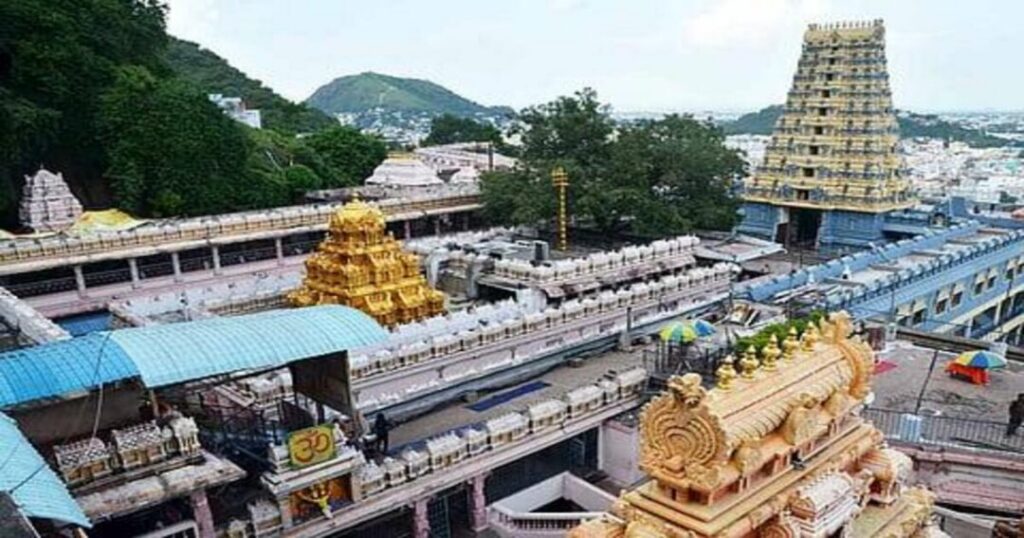
The clearer, better-corroborated construction history starts with the Western Chalukyas. King Thribhuvana Malla is credited with significant temple development in the 10th century CE, and the structure most visitors see today is largely attributed to Chalukya king Pashupati Mahadev Varma in the 12th century, who is said to have built the temple’s present form along with the adjoining Shiva, Durga Malleswara, and Kartikeya shrines. Centuries later, in the 14th and 15th centuries, Vijayanagara-era rulers refurbished and further developed the temple complex – part of a broader Vijayanagara pattern of patronising and expanding older Andhra shrines. Between the Chalukya construction and the Vijayanagara renovations, the temple’s documented architectural history spans roughly 500 years of continuous royal patronage, which is a more grounded claim than the temple’s precise founding date, which — like several swayambhu (self-manifested) deities — isn’t recorded at all.
Also read: Lepakshi Temple: The Complete Guide to Andhra Pradesh’s Iconic Heritage Site
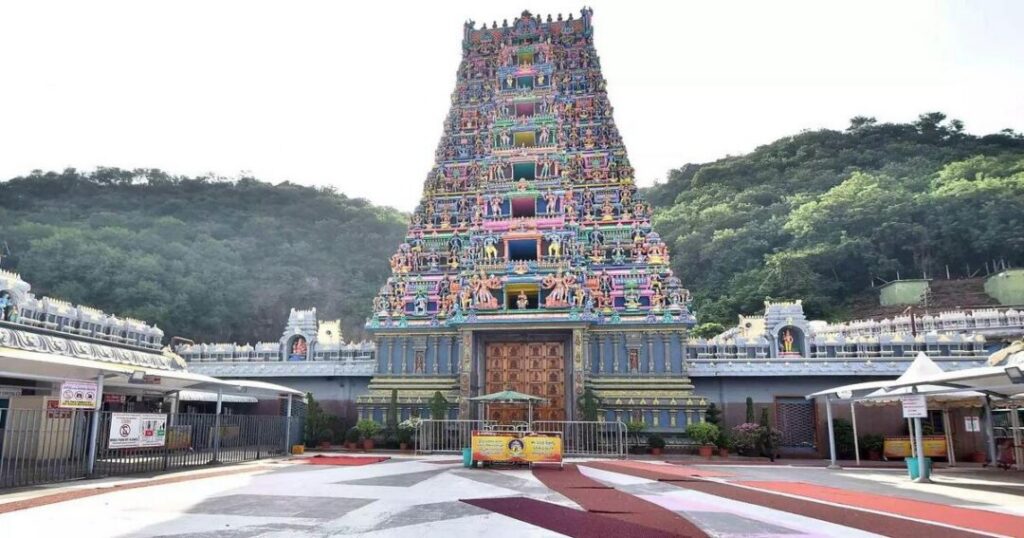
One detail that sets Indrakeeladri apart from most Shiva-Shakti temple pairings in India: Durga sits to the right of her consort Malleswara Swamy (Shiva) rather than to the left, which is the more conventional placement for a goddess relative to Shiva in most other temples. Temple tradition reads this literally, as a statement that Shakti holds the more dominant position on this particular hill. The complex also houses Nataraja; Kartikeya with his consorts Valli and Devasena; and Hanuman as the temple’s kshetrapalaka, or guardian deity — a fuller pantheon than the main Durga shrine alone might suggest from the outside.
Dasara and the Boat Festival on the Krishna
The temple’s largest annual event is Dasara (Navaratri), when ten distinct forms of the goddess — including Bala Tripurasundari, Annapurna, Saraswati, Mahalakshmi, and Mahishasura Mardini herself — are worshipped across the ten days of the festival. The most visually distinctive moment comes on Vijaya Dasami, when the goddess’s processional idol is carried onto a swan-shaped boat for the Teppotsavam, a boat festival on the Krishna River that draws large crowds to the ghats. A separate, smaller festival — Sakambhari, held over three days in the Ashadha month — sees the goddess take the form of Sakambhari or Banashankari Amma, with prayers offered specifically for agricultural abundance, a much older agrarian layer to the temple’s ritual calendar that gets far less attention than Dasara.
Also read: Places to visit in Andhra Pradesh: The Ultimate 2026 Guide to India’s Best-Kept Secret
A Modern Addition: The Suprabhata Seva
Not everything about the temple’s ritual life is ancient. The Suprabhata Seva — the pre-dawn ritual that formally “wakes” the goddess each day around 3 AM — was only introduced in 2018, a reminder that even a temple with a documented history stretching back roughly 800 years continues adding to its ritual practice within living memory, rather than existing as a fixed relic of an unchanging past.
Conclusion: Kanaka Durga Temple
Between a demon-slaying legend, a dated 13th-century inscription, and five centuries of dynastic patronage, the Kanaka Durga Temple carries a history that’s richer – and more carefully documented in places – than most quick temple guides let on. Save it to your Explurger bucket list, and let your automatic travelogue track the visit once you’ve made the climb up Indrakeeladri. Let the Explurger Travel App help you plan a Vijayawada trip built around this history.
FAQs About Kanaka Durga Temple
2. Why is the temple called Kanaka Durga Temple?
The goddess Kanaka Durga is worshipped here as a swayambhu (self-manifested) deity on Indrakeeladri Hill, named after the sage Indrakila, who asked her to make his form her permanent abode.
3. How did Vijayawada get its name?
Most commonly linked to Durga's victory (vijaya) over the demon Mahishasura at this site; a second tradition ties it to Arjuna receiving the title "Vijaya" from Shiva after penance on the same hill.
4. Did Adi Shankaracharya really visit this temple?
Temple tradition holds that he installed the Sri Chakra here and introduced Vedic worship practices, though this rests on tradition rather than precisely dated historical records — Shankaracharya's own dates are themselves debated among scholars.
5. What is the oldest evidence of the temple's existence?
A Telugu inscription dated 1229 CE, found in Prakasam district, which names the deity "Bejawada Malleswaradeva at Indrakiladri" and records a donation to the temple.
6. Why does Durga sit to the right of Shiva at this temple?
It's an unusual arrangement compared to most Shiva-Shakti temples, where the goddess typically sits to the left – interpreted at Indrakeeladri as a statement of Shakti's dominant position on the hill.
7. What is the Teppotsavam?
The boat festival is held on Vijaya Dasami, when the goddess's processional idol is carried on a swan-shaped boat along the Krishna River as part of the Dasara celebrations.