
942 Total Views
Most Indian regional cuisines have a PR problem. Either they’re overshadowed by louder culinary traditions—the Punjabi tandoor, the Mughal biryani—or they’re reduced to a single dish that tourists order and move on from.
Odia food has largely escaped this oversimplification. Not because it lacks depth—it is one of the most historically layered culinary traditions on the subcontinent—but because it has rarely been exported, explained, or celebrated beyond Odisha’s borders. The result: one of India’s great food cultures remains almost entirely unknown outside it.
This guide is a corrective. Odisha food is the product of a civilization that built the Konark Sun Temple, produced the Panchasakha saint-poets, and maintains the world’s largest functioning sacred kitchen. The food reflects all of this—in its restraint, its seasonal intelligence, and its understanding of fermentation, balance, and the idea that what you eat is inseparable from how you live.
The Philosophy Behind Odia Food
The single most important thing to understand about authentic Odia food is that it developed in direct relationship with Vaishnavism—the devotional tradition centered on Lord Jagannath in Puri.
The Panchasakha saints—Balaram Das, Jagannath Das, Achyutananda Das, Ananta Das, and Jasobanta Das—were five 15th–16th-century poet-philosophers who shaped spiritual and social life in Odisha during the Bhakti movement. They promoted an egalitarian Vaishnavism that rejected caste hierarchy in devotion. Their influence on Odia food culture was direct: food shared in devotion, food as offering, and food as the great equalizer—caste, wealth, and status dissolved at the plate—became embedded in Odia social life.
The result is a cuisine that is predominantly sattvic (avoiding onion, garlic, and overly stimulating ingredients in its ritual form), built on rice, lentils, seasonal vegetables, and fermentation—and deeply suspicious of ostentation. The most significant Odia dishes are not elaborate. They are considerate, patient, and deeply contextual.
The five-spice blend pancha phutana—mustard, cumin, fenugreek, aniseed (saunf), and kalonji (onion seeds)—is the flavor signature of Odia cooking: the temper that opens almost every dish, fried briefly in mustard oil until the seeds pop and the oil carries their combined fragrance.
Also read: Tourist Places In Odisha: Temples, Beaches, Wildlife, And Hidden Gems
Odisha Food—Dish by Dish
1. Pakhala—The Dish That Opens Everything
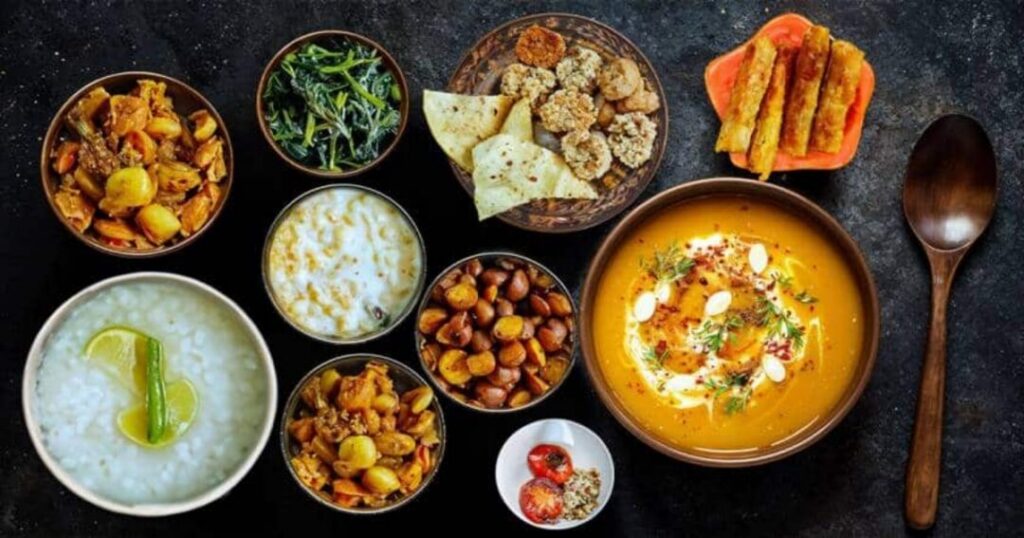
If there is one dish that defines Odia food culturally, philosophically, and emotionally, it is Pakhala. Not because it is complex—it is the opposite—but because of what its simplicity contains.
Pakhala is cooked rice soaked in water and left to ferment overnight. The fermented water — torani — is tangy, probiotic, and cooling. It is eaten at room temperature or chilled, with a handful of accompaniments: fried fish (machha bhaja), mashed potato (aloo bharta), dried lentil dumplings (badi chura), or raw onion and green chilli. The dish costs almost nothing. It takes almost no skill to prepare. It is the food of farmers, labourers, and fishing communities who needed something cooling and restorative in Odisha’s fierce summer heat.
References to Pakhala appear in Odia texts from between 1520 and 1530 CE, including in the poet Arjuna Das’s work Kalpalata — making it documentably over 500 years old in literary record. It is part of the daily offerings at the Jagannath Temple, where six varieties of Pakhala are prepared for the deities each day: Chipuda, Madhura, Subaasita, Dahi, Mitha, and Tabha Pakhala.
In 2011, Odia food enthusiasts initiated Pakhala Dibasa—Pakhala Day—observed every year on 20 March. It began as a grassroots social media movement and has grown into a globally recognized cultural moment, with Odia diaspora communities celebrating by cooking and sharing Pakhala worldwide. In 2025, chef Abinas Nayak presented over 190 varieties of Pakhala at a single Bhubaneswar event.
Where to eat: Any Odia home in summer. In Puri, Pakhala appears in the temple offering. Bhubaneswar’s local restaurants serve it during the summer months.
2. Dalma—The Everyday Sacred
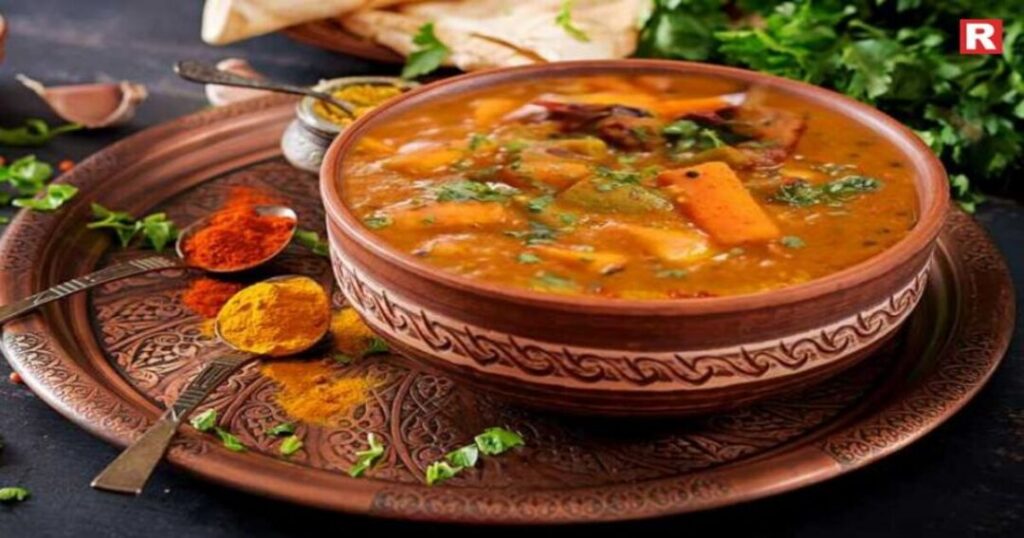
Dalma is the dish that holds the center of the Odia meal. Split yellow lentils (arhar dal) cooked with raw banana, raw papaya, yam, pumpkin, and seasonal vegetables—the exact combination shifting with what the season offers—are tempered with pancha phutana, dried red chilies, and a generous pour of ghee to finish.
Dalma is part of the Mahaprasad—the sacred food offering at the Jagannath Temple in Puri. The temple kitchen (Ananda Bazaar) spans approximately 44,000 square feet, employs approximately 600 cooks working daily, uses no written recipes, and cooks exclusively over wood-fired earthen stoves using water from nine sacred wells. It is prepared without onion, garlic, potato, or tomato—following the sattvic code. The Mahaprasad, after deity service is complete, is available for purchase at Ananda Bazaar—open to all, regardless of caste.
Where to eat: Any household in Odisha. The Mahaprasad at Puri’s Ananda Bazaar carries 600 years of unbroken ritual cooking.
3. Machha Besara—Odia Fish, Cooked the Odia Way
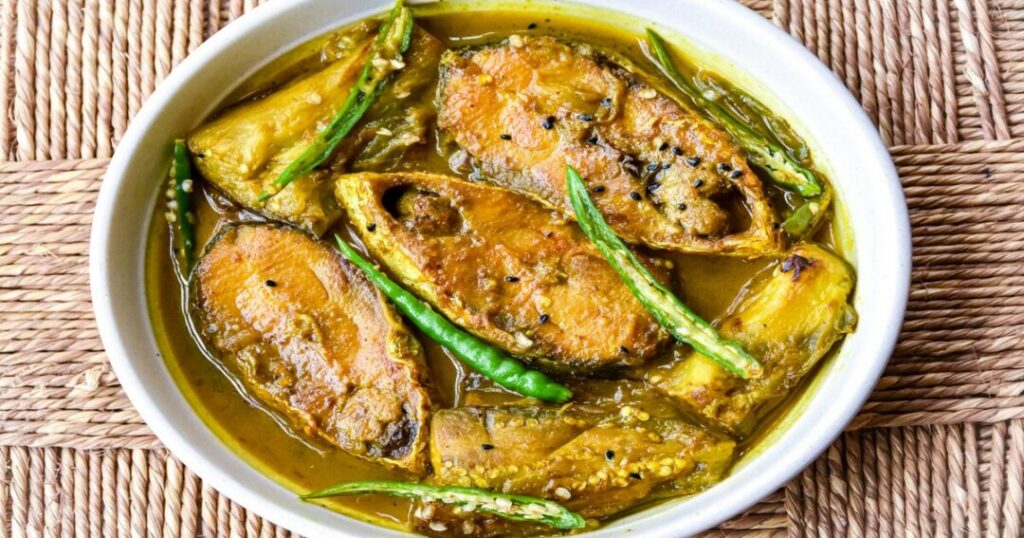
Odisha has approximately 574.71 km of coastline—revised upward from the older 476 km figure in 2025 by the Union Ministry of Home Affairs—and a river system that cuts through one of the most biodiverse deltas in South Asia. Fish is not a luxury here — it is the everyday protein of coastal communities, and the Odia approach to cooking it is among the most distinctive in Indian cuisine.
Machha Besara is the definitive Odia fish preparation: fish cooked in a mustard paste (besara)—raw mustard seeds ground with dried red chili, cumin, and turmeric into a thick paste—tempered in mustard oil. The result is sharp, pungent, and deeply savory. The distinction from neighboring Bengali fish traditions is clear: Bengali fish preparations tend toward sweetness and delicacy; Odia fish cooking leans sharp and austere, anchored in mustard and heat.
Where to eat: Puri’s local dhabas. Fresh-catch restaurants along the Puri beachfront.
4. Santula—The Art of the Vegetable
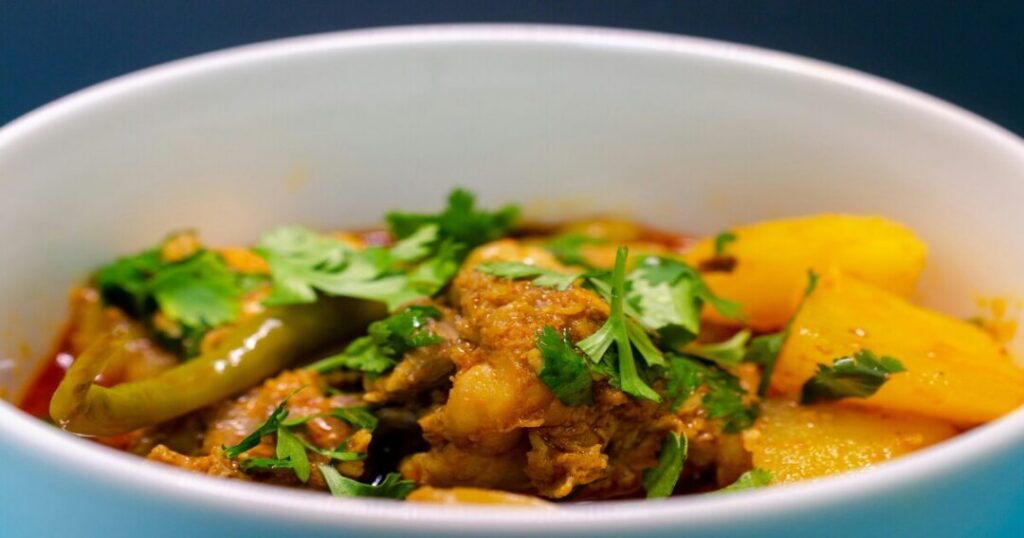
Santula is the most quietly accomplished dish in the Odia kitchen—seasonal vegetables steamed or lightly cooked in minimal water, finished with a simple temper of pancha phutana in mustard oil. No cream. No heavy spice. No attempt to make the vegetables into something other than themselves.
The principle of Santula—”santa” means peace or equilibrium in Odia—is to let each vegetable’s natural flavor remain legible. It embodies the Odia spiritual concept of balance, not transformation. This is odisha cuisine at its most considered.
5. Khechudi—Rice and Lentils as Sacred Geometry
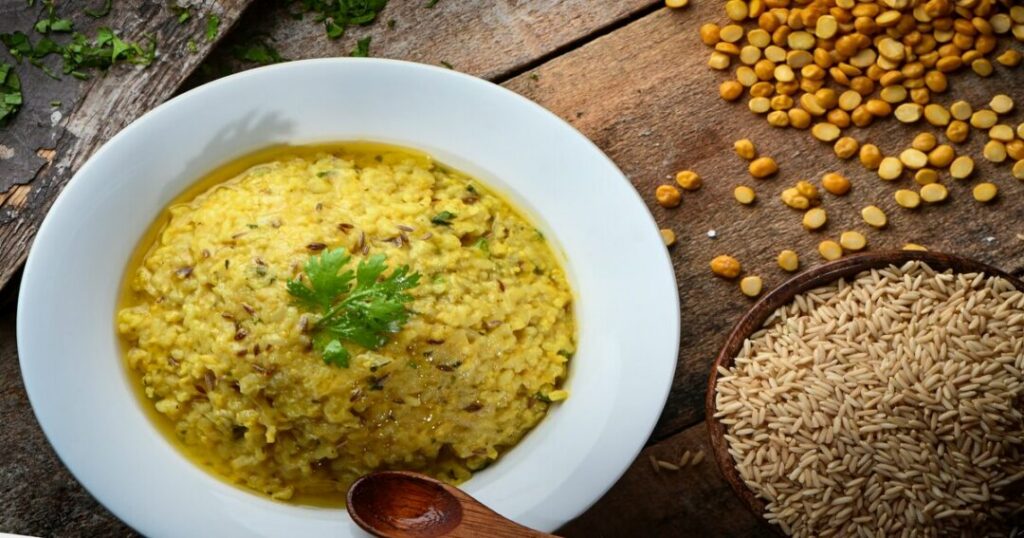
Khechudi (Odia khichdi) is part of the temple offering—made with broken rice, split moong or arhar dal, and ghee, and cooked until the rice and lentils lose individual identity in a soft, warm mass. The temple version—Thali Khichdi—is served at Jagannath’s Ananda Bazaar as one of the 56 ritual offerings (Chhappan Bhog). The home version is the food of illness, recovery, and monsoon evenings.
6. Chhena Poda—India’s Original Cheesecake (GI Tag Pending)
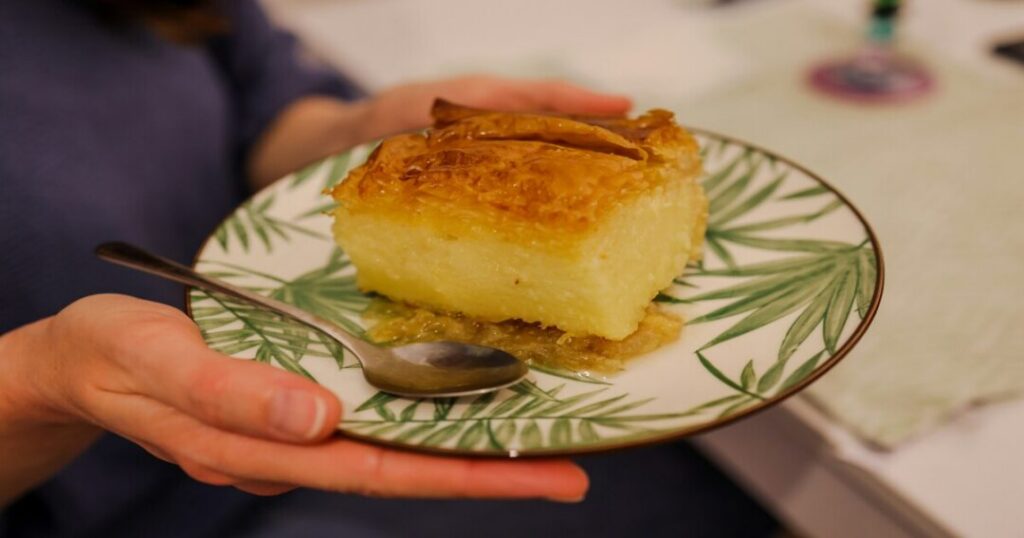
Chhena Poda — literally “burnt cheese” in Odia — is Odisha’s most celebrated sweet and, in effect, India’s original cheesecake.
The origin: In 1947, in the town of Daspalla, Nayagarh district, sweet maker Sudarshan Sahu (or his father Bidyadhar Sahu — the attribution is debated within the family) left fresh chhena, sugar, semolina, cardamom, and cashews in a wood-fired oven (chulha) overnight. By morning it had caramelised into a firm, golden-brown cake with a smoky, charred exterior and a soft, spongy interior.
The GI tag application for Chhena Poda has been filed and is being processed—it will officially link the sweet to the Nayagarh district. This places it alongside Odisha’s GI-recognized Odisha Rasagola (GI received in July 2019) and Sambalpuri Bandha Saree.
Where to eat: Nayagarh district. Sweet shops across Bhubaneswar, Puri, and Cuttack.
7. Odisha Rasagola and the GI Dispute
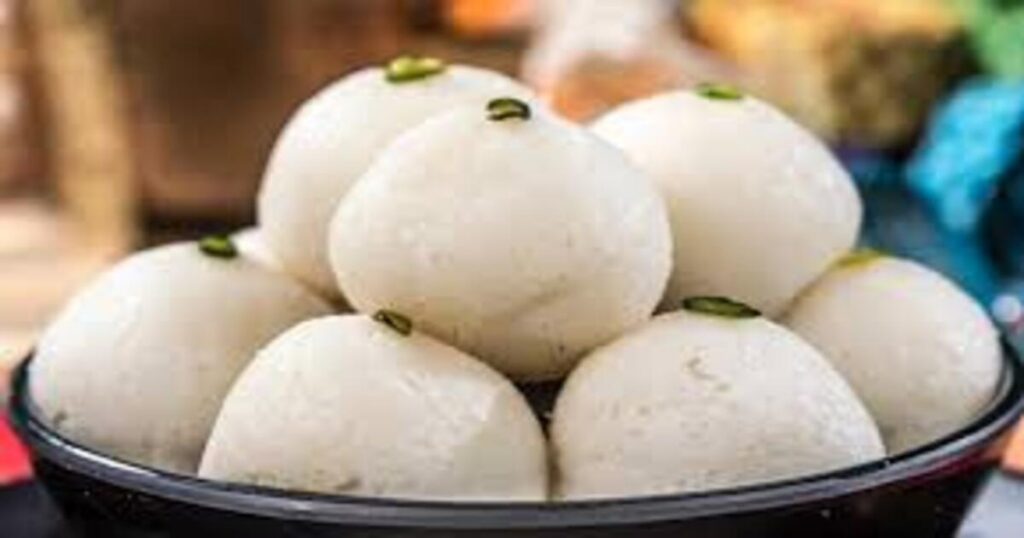
The Rasagola is India’s most contested sweet. Both Odisha and West Bengal have received separate GI tags for their distinct versions.
Odisha’s claim centers on the Niladri Bijaya ritual at the Jagannath Temple—where Lord Jagannath offers rasagola (called khira mohana in its temple form) to appease Goddess Lakshmi after returning from Rath Yatra, a tradition cited as evidence of 12th–13th-century Odia origin.
Bengal’s claim: Nobin Chandra Das standardized and commercialized the modern spongy chhena-in-syrup rasogolla in Kolkata in 1868.
Resolution: West Bengal received a GI tag for Banglar Rasogolla (2017); Odisha received GI for Odisha Rasagola (July 2019). The two are genuinely different—Odisha’s Pahala Rasagola has a reddish-caramel tinge from longer cooking, is less spongy, and is softer in texture.
Where to eat: Pahala village, on the Bhubaneswar–Cuttack Highway (NH-16), approximately 10–15 km from Bhubaneswar—roadside stalls run by sweet-making families who have operated here for generations.
8. Khaja—The Sweet of Puri (GI-Tagged)
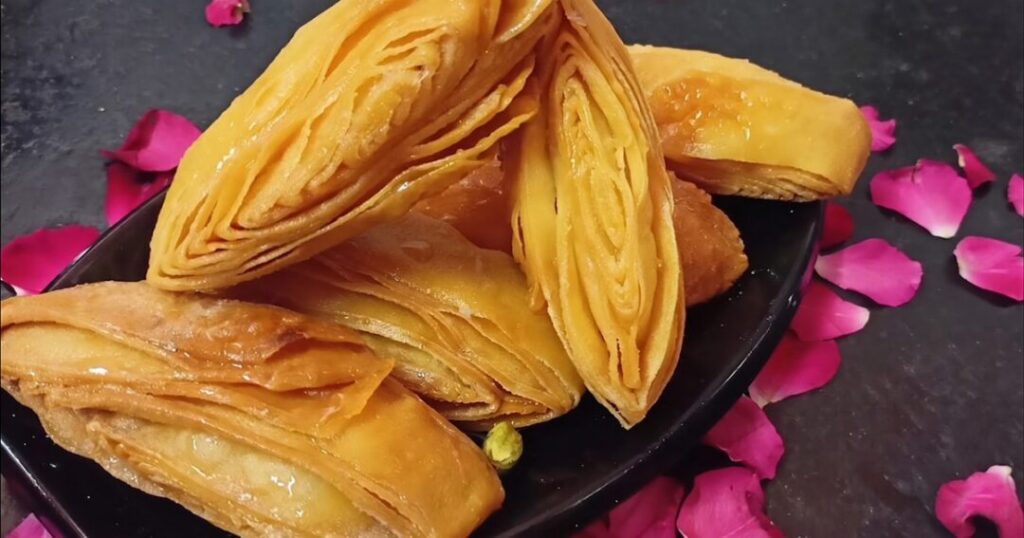
Khaja is Puri’s most famous sweet: layers of flour and sugar deep-fried until golden and crisp, with a honeycomb interior. It is one of the 56 ritual offerings made to Lord Jagannath, holds a GI tag, and has been made in the sweet shops of Puri’s Grand Road near the Jagannath Temple for centuries.
Where to eat: Puri’s Grand Road, the old sweet-making establishments near the temple.
Also read: Diamond Triangle Of Odisha: Exploring The Ancient Buddhist Heritage Circuit
Regional Variation in Odia Food
Puri and the Coast—Temple Food, Seafood, Simplicity

Puri’s food culture is inseparable from the Jagannath Temple. The sattvic Mahaprasad tradition shapes what the city eats—simple, vegetable-forward, lentil-anchored, without onion or garlic in the ritual context. Outside the temple, the coastal diet is fish-heavy: machha besara, chingudi jhola (prawn in light tomato-mustard broth), and fresh coconut throughout.
Cuttack — Street Food Capital of Odisha
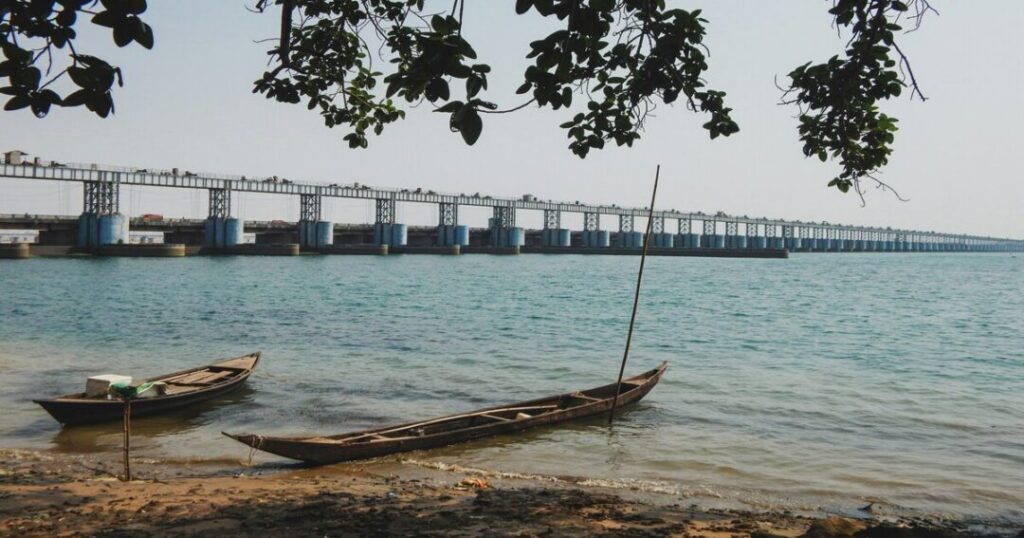
Cuttack, Odisha’s former capital, is the “Orissa Food City” of Odisha that nobody outside the state talks about. Its street food culture is among the most distinctive in eastern India—and the best expression of Odisha cuisine at its most urban and alive.
Dahi Bara Aloo Dum—deep-fried lentil dumplings soaked in spiced curd, served with fiery potato curry on disposable sal leaf plates—is the city’s signature street dish. Ghuguni (dried yellow peas in spiced broth) and bara ghuguni (the vada-pea combination) anchor the evening food lanes.
Sambalpur and Western Odisha — Tribal Cuisine and Forest Ingredients
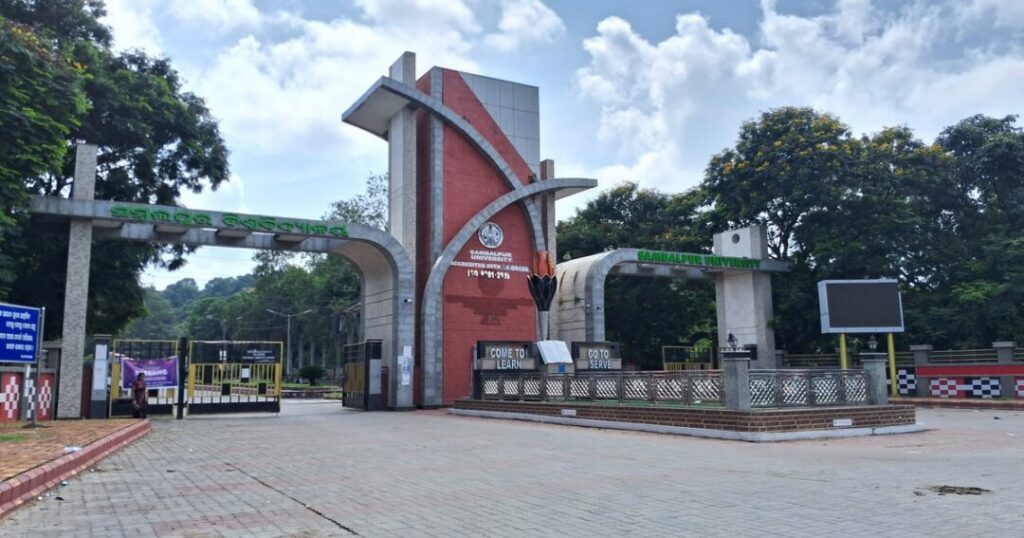
Western Odisha draws from the forest: bamboo shoots, dried mangoes (ambula), raw jackfruit, wild mushrooms (rugda), dried fish, and the mahua flower. Pej—thin broken-rice porridge, the tribal equivalent of Pakhala—is a subsistence staple. Rugda (wild mushrooms gathered after the first monsoon rains) are considered a delicacy, cooked with minimal spice. Ambula appears in curries as a souring agent. This is Odia food at its most ancient—shaped by forest ecology, not temple ritual.
Mahaprasad — A Brief Note on the Sacred Kitchen
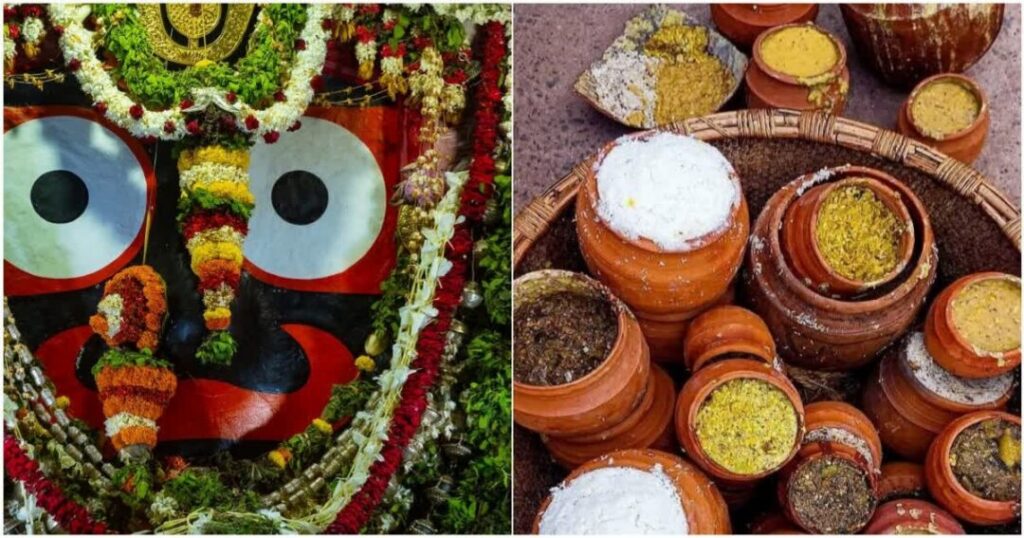
The Jagannath Temple’s Ananda Bazaar—the sacred kitchen—is the most extraordinary food institution in India. Spanning approximately 44,000 square feet, it operates every day of the year, cooking 56 varieties of offerings (Chhappan Bhog) for the deities across six service times. No written recipes are used. Approximately 600 cooks (Suara and Mahasuar caste men) cook using wood-fired earthen stoves and water from nine designated wells. The Mahaprasad is then sold at Ananda Bazaar—available to all, regardless of caste—after the deity service is complete.
Also read: Street Food In Surat: A Flavourful Guide To The City’s Best Local Eats
Final Thoughts: Why Odisha Food Deserves the Attention It Has Never Got
Odisha food doesn’t announce itself. It doesn’t have the global marketing of Punjabi food, the restaurant diaspora of South Indian cuisine, or the film-and-TV visibility of Bengali food. What it has is five hundred years of literary documentation, the world’s most extraordinary sacred kitchen, a fermented rice dish with its own annual international celebration, and a culinary map that runs from temple kitchen to forest floor.
The food of a civilization that built Konark, produced the Panchasakha saints, and maintained an unbroken sacred kitchen for six centuries deserves better than anonymity.
Key takeaways:
- Pakhala—500-year literary record, daily temple offering, World Pakhala Day on 20 March
- Dalma—lentil-vegetable preparation at the heart of Odia cooking, part of the Mahaprasad
- Mahaprasad, Puri—44,000 sq ft sacred kitchen, 56 offerings, 600 cooks, no written recipes
- Chhena Poda—India’s original cheesecake, accidentally created 1947, Nayagarh, GI tag pending
- Pahala Rasagola—GI-tagged (July 2019), distinct from Bengal’s version, caramel-tinged, on the Bhubaneswar–Cuttack Highway
- Khaja — Puri’s GI-tagged layered fried sweet, one of 56 daily temple offerings
- Cuttack street food—Dahi Bara Aloo Dum, ghuguni, sal-leaf plate culture
- Sambalpur/western Odisha—forest ingredients, tribal cuisine, rugda mushrooms, ambula
Discover Odisha’s food traditions; log every thali and every temple town meal on the Explurger app—Odia food rewards the curious and the patient.
Also read: TOP FOOD DESTINATIONS IN INDIA: THE UNDERRATED EDITION
FAQs About Odisha Food
2. What is authentic Odia food like — what defines it?
Authentic Odia food is defined by three principles: rice at the centre (Odisha is one of India's major rice-producing states), fermentation as both practical and spiritual technique (Pakhala being the prime example), and restraint in spicing. The Vaishnavite sattvic tradition — avoiding onion, garlic in ritual contexts — runs through coastal and temple-town food. The five-spice temper pancha phutana (mustard, cumin, fenugreek, aniseed, kalonji) is the flavour signature. The cuisine is built for depth, season, and meaning — not for spectacle.
3. What are the famous sweets of Odisha?
The most significant sweets of odisha include: Chhena Poda (burnt cheese cake, Nayagarh, 1947, GI tag pending); Pahala Rasagola (GI-tagged July 2019, caramel-tinged, softer than Bengal's version, available on the Bhubaneswar–Cuttack Highway at Pahala village); Khaja (Puri, GI-tagged, layered fried sweet, one of the 56 Jagannath Temple offerings); and Rasabali (flattened chhena patties soaked in sweetened reduced milk, associated with the Baladev Jew Temple in Kendrapara).
4. What is Pakhala and why is it culturally significant?
Pakhala is fermented rice — cooked rice soaked in water overnight, producing tangy, cooling torani. One of the oldest documented dishes in Odisha, referenced in texts from 1520–30 CE, and part of the daily ritual offering at the Jagannath Temple (six varieties prepared for the deities daily). Pakhala Dibasa (World Pakhala Day) is celebrated every year on 20 March. It represents the Odia food philosophy at its most essential: simple, probiotic, restorative, democratic, and connected to land, season, and devotion.
5. What is the food of Orissa like in different regions?
The food of orissa varies significantly by region. Coastal Odisha (Puri, Bhubaneswar) is shaped by the sattvic Jagannath Temple tradition — vegetable-forward, rice-centred, fish-heavy outside the temple. Cuttack has the most vibrant street food culture: Dahi Bara Aloo Dum, ghuguni, and sal-leaf plate culture. Western Odisha (Sambalpur, tribal areas) has a forest-ingredient cuisine: bamboo shoots, wild mushrooms (rugda), dried mango (ambula), and mahua — shaped by ecology rather than temple ritual. These three traditions are so distinct they feel like separate cuisines.
6. What is Mahaprasad and where can it be eaten?
Mahaprasad is the sacred food offering at the Jagannath Temple in Puri — 56 varieties of vegetarian dishes (Chhappan Bhog) prepared daily in the world's largest functioning sacred kitchen (approximately 44,000 sq ft, ~600 cooks, no written recipes, wood-fired earthen stoves). After the deity service is complete, Mahaprasad is available at Ananda Bazaar — open to all regardless of caste. It includes Dalma, Khaja, Khechudi, Pakhala, and Rasabali.