
1,276 Total Views
The oldest temples in India span roughly a thousand years of construction, several architectural revolutions, and — for at least two entries on this list — a level of destruction and rebuilding that means the “ancient” temple you’re picturing today is a lot newer than the site it stands on. This list sorts through the dating claims, flags the ones worth taking with a grain of salt, and orders everything roughly by when it was actually built rather than by legend alone.
The Oldest Temple in India List: How This Ranking Works?
Building an oldest temple in India list honestly means separating two different questions that most guides blur together: how old is the site or worship tradition, versus how old is the physical structure standing there today. Several of India’s most famous “ancient” temples — Kashi Vishwanath and Somnath among them — sit on genuinely ancient sites but have been rebuilt so many times that their current buildings are centuries newer than the religious tradition they house. This list is ordered by best-estimated construction date of the surviving structure, and calls out explicitly wherever that structure is newer than the site’s reputation suggests.
1. Aihole’s Lad Khan and Durga Temples, Karnataka
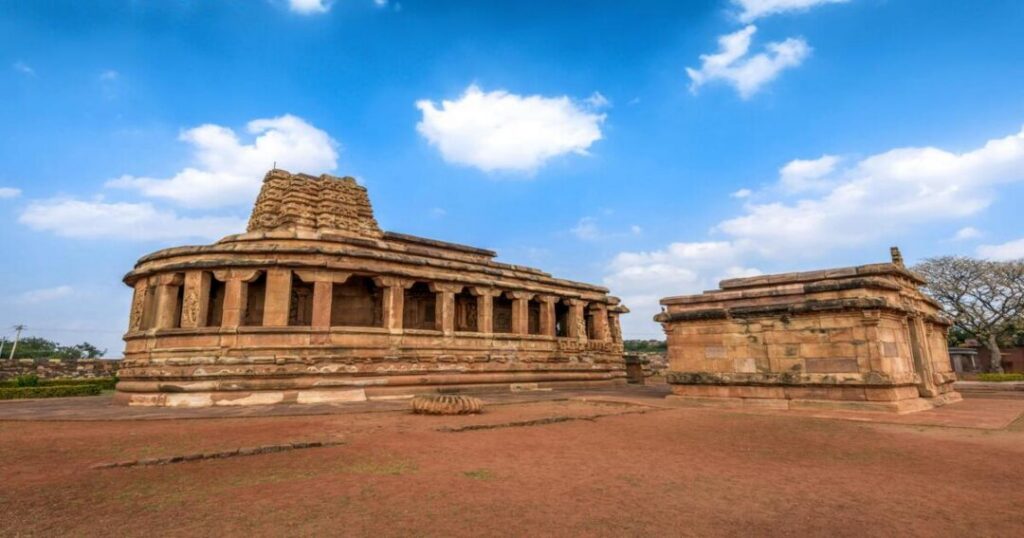
Aihole, a village in Karnataka that functioned as an architectural testing ground for the early Chalukya dynasty, holds two of the strongest claims to being the most ancient temple in India still standing in anything like its original form. The Lad Khan Temple, built around 450 CE, is considered the oldest surviving stone-built temple in Aihole — a squat, flat-roofed structure with massive pillars that clearly imitates timber construction techniques translated into stone. [STAT: The Lad Khan Temple at Aihole, built around 450 CE, is widely cited as one of the earliest surviving stone temples in India.] The nearby Durga Temple, built somewhat later on a semicircular platform modeled on Buddhist chaitya halls, represents the same architectural experimentation a step further along. Together, they make Aihole a strong answer to anyone searching for the oldest temple in South India.
Also Read: Places to Visit in Karnataka: 20 Best Karnataka Tourist Spots for Every Kind of Traveller
2. Bhitargaon Temple, Kanpur (Uttar Pradesh)
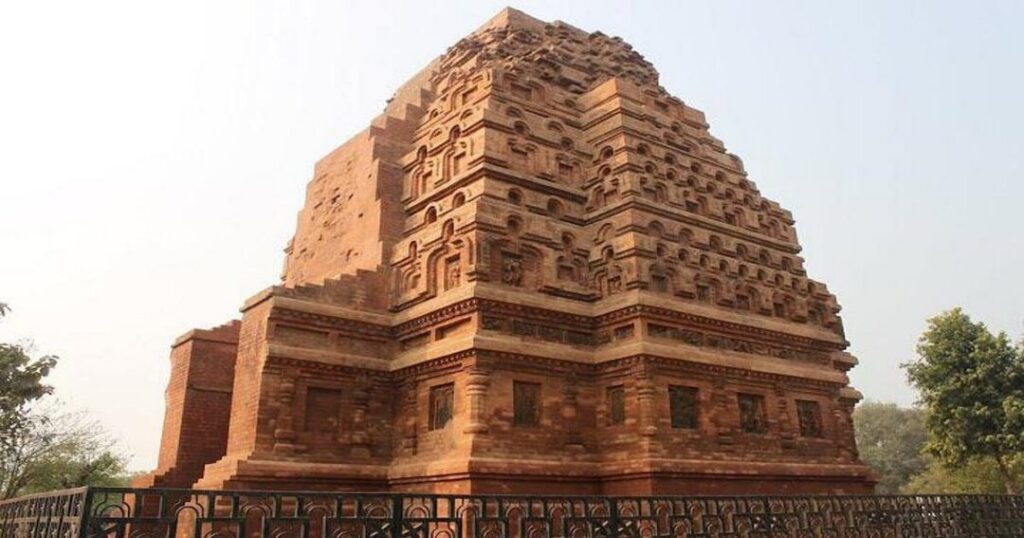
Bhitargaon, near Kanpur, holds a more specific but very well-documented title: it’s the oldest Hindu temple in India built primarily of brick, and the oldest surviving brick temple with a full shikhara (spire) still standing. Built in the late 5th century CE under the Gupta Empire, it marks the point where Indian temple builders shifted from wood and perishable materials to brick as a primary construction material. [STAT: The Bhitargaon Temple, dated to the late 5th century CE, is considered the largest surviving Gupta-era brick temple in India.] Its terracotta relief panels depicting Shiva, Parvati, Ganesha, and Vishnu are some of the earliest surviving examples of narrative temple sculpture in North India.
3. Sanchi Temple 17 (Madhya Pradesh)
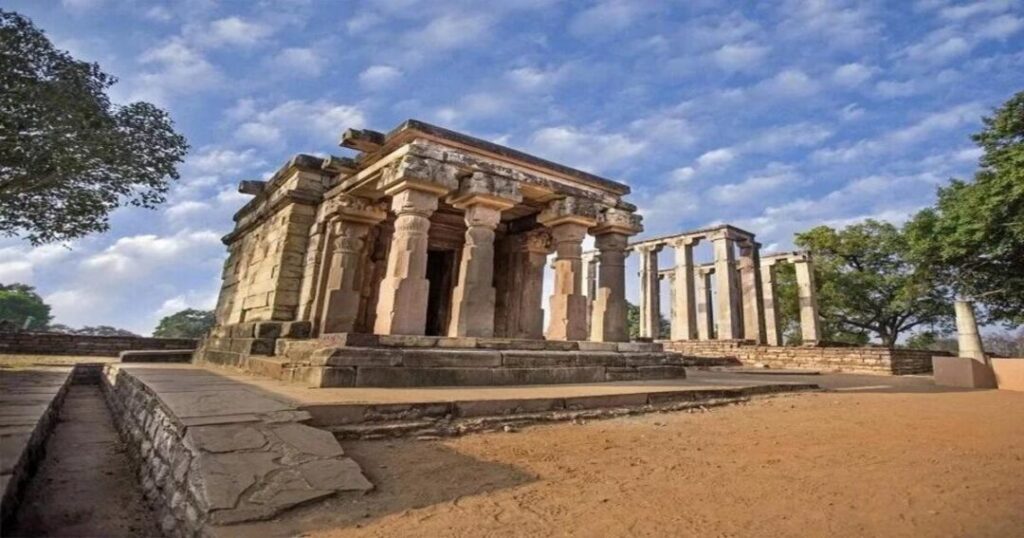
Sanchi is better known for its Buddhist stupas, but Temple 17 on the same site is one of the earliest surviving free-standing Hindu stone temples in India — a small, flat-roofed shrine dated to the 5th century CE, built during the same Gupta period that produced Bhitargaon and Deogarh. Its size is unremarkable, but its architectural role is significant: it’s often cited by historians as an early template for the sanctum-and-porch layout that later temple architecture across India would build on at a much larger scale.
4. Dashavatara Temple, Deogarh (Uttar Pradesh)
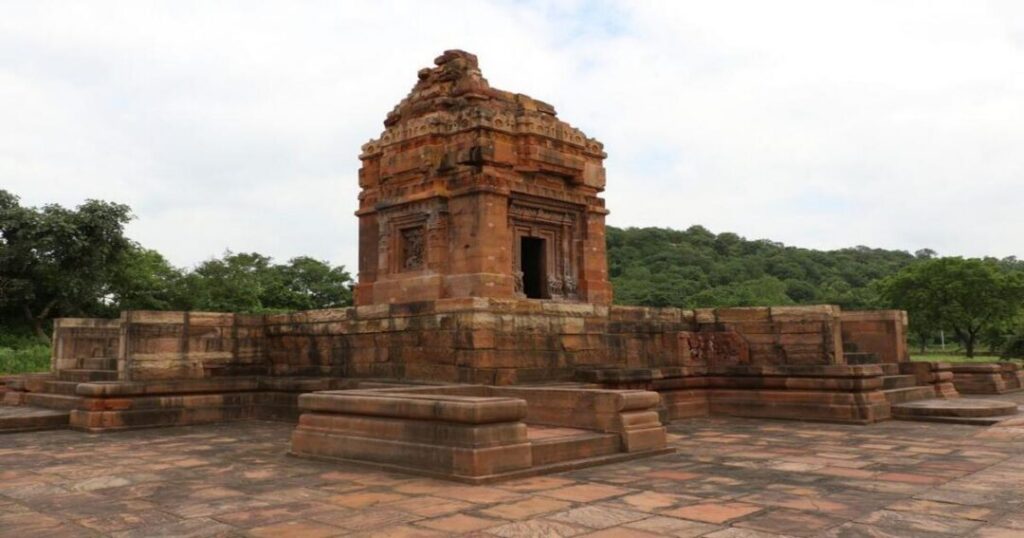
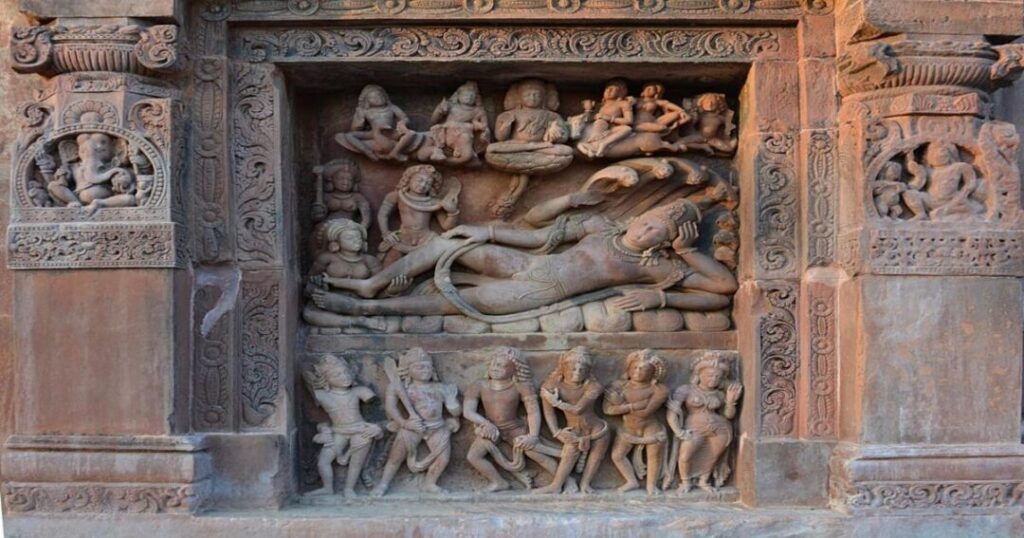
Deogarh’s Dashavatara Temple, built around 500-525 CE, is frequently cited as the most oldest temple in India dedicated primarily to Vishnu, and one of the earliest examples of the Panchayatana style — a main shrine surrounded by four smaller subsidiary shrines at the corners. Its carved panels depicting Vishnu’s ten avatars are considered some of the finest surviving Gupta-era relief sculpture, and the temple’s design influenced Vishnu temple architecture across North India for centuries afterward.
5. Mundeshwari Devi Temple, Bihar
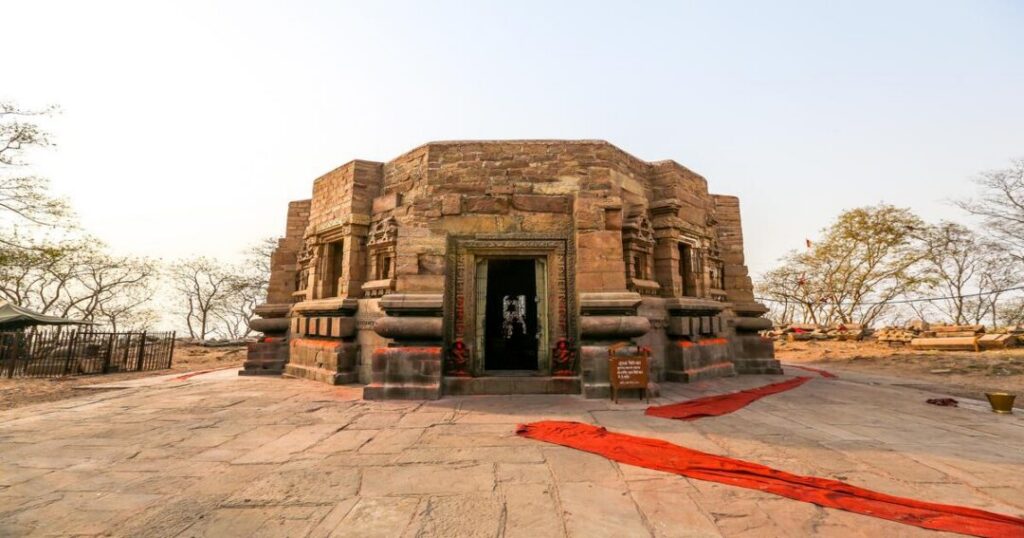
Mundeshwari Devi Temple in Bihar is widely marketed — including by the Archaeological Survey of India — as the “world’s oldest living temple,” based on an inscription dated to 108 CE. That claim deserves a caveat: independent scholarly analysis of the inscription’s writing style (palaeography) points to a significantly later date, most likely the 6th-7th century CE, which would still make it genuinely old but roughly 500 years younger than the popular claim suggests. [STAT: While the ASI dates Mundeshwari Devi Temple’s key inscription to 108 CE, palaeographic analysis by independent scholars suggests a date closer to 570-590 CE.] Either dating puts it among India’s older continuously-worshipped temples — the disagreement is about exactly how old, not whether it’s ancient.
Also Read: Top 10 Things to Do in Bhubaneswar: Temples, Caves & Day Trips
6. Vaikom Mahadeva Temple, Kerala
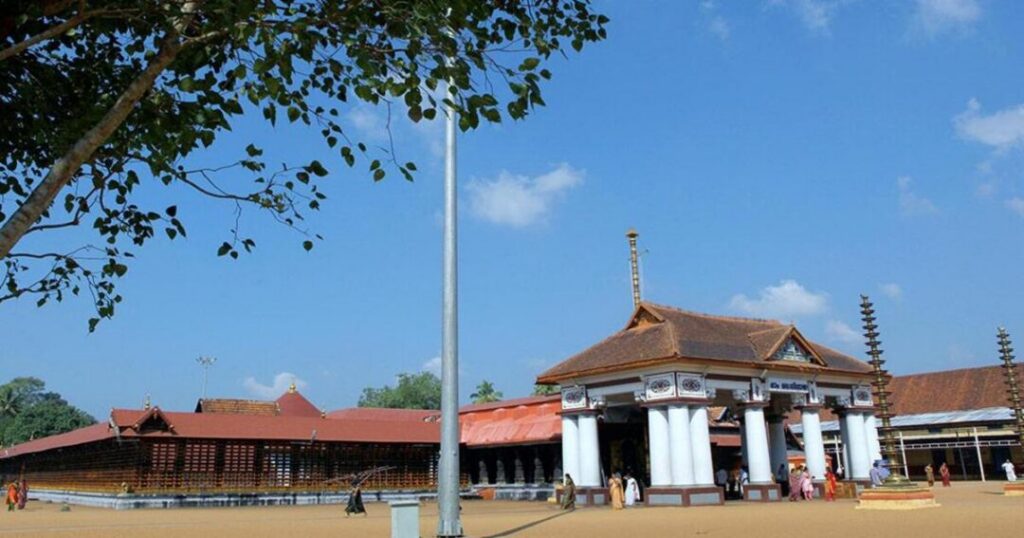
Vaikom Mahadeva Temple, near Kumarakom, is generally considered the oldest temple in Kerala and one of the region’s most revered Shiva shrines. Legend attributes its founding to the sage Parashurama, Kerala’s mythological creator, and the lingam here is traditionally believed to date to the Treta Yuga — a claim rooted in religious tradition rather than archaeology. Setting the legend aside, historical evidence points to the temple’s existence from at least the 8th century CE, with worship continuing unbroken since. It’s often called the “Kasi of the South,” a nod to its standing as Kerala’s answer to Varanasi.
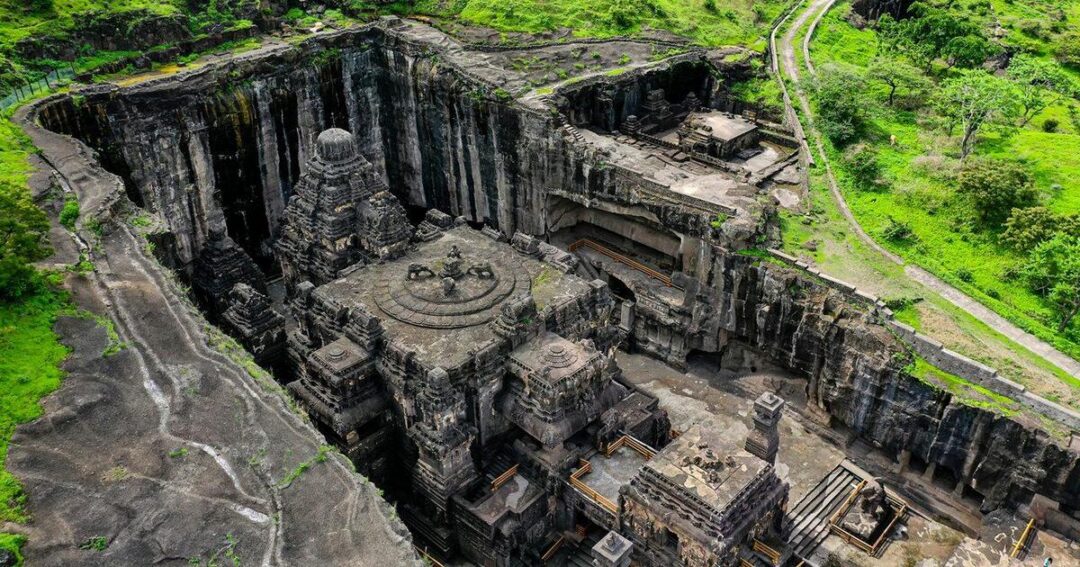
7. Kailasa Temple, Ellora (Maharashtra)
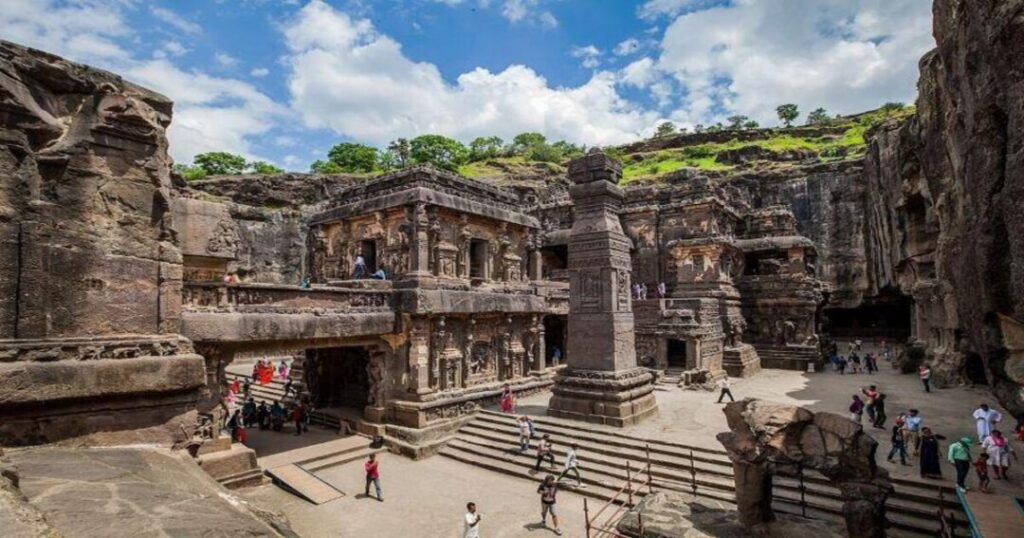
Unlike most entries on this list, the Kailasa Temple at Ellora comes with an unusually solid date: it was commissioned by the Rashtrakuta king Krishna I and built between roughly 756 and 773 CE. What makes it remarkable isn’t just its age but its construction method — it’s carved entirely from a single rock face downward, making it one of the largest monolithic structures in the world rather than a temple built up from the ground. Its precise dating offers a useful contrast to several other entries on this list, where the actual construction date is a matter of ongoing scholarly debate.
Also Read: Alang Madan Kulang Trek: The Complete Guide to Maharashtra’s Toughest Fort Trek
8. Brihadeeswarar Temple, Thanjavur (Tamil Nadu)
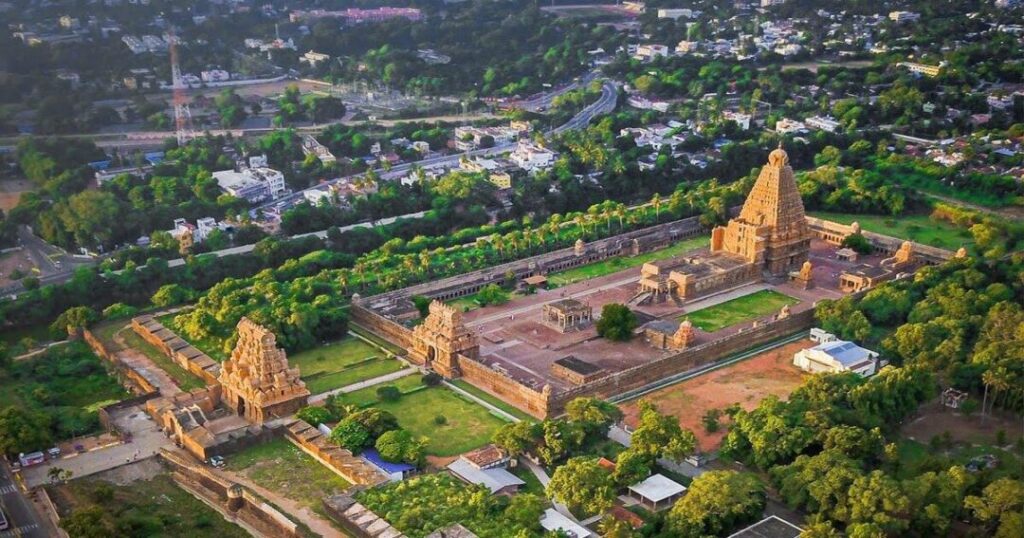
Built by the Chola king Rajaraja I and completed around 1010 CE, the Brihadeeswarar Temple in Thanjavur is younger than most other entries here, but it earns its place through the strength and clarity of its documentation. Its 66-metre vimana (tower) remains one of the tallest temple towers in India, built entirely from granite despite the nearest granite quarry being tens of kilometres away — a logistical feat historians still study today. It’s a UNESCO World Heritage Site and among the least disputed dates on this entire list.
Also Read: Top 5 Places To Visit in Tamil Nadu
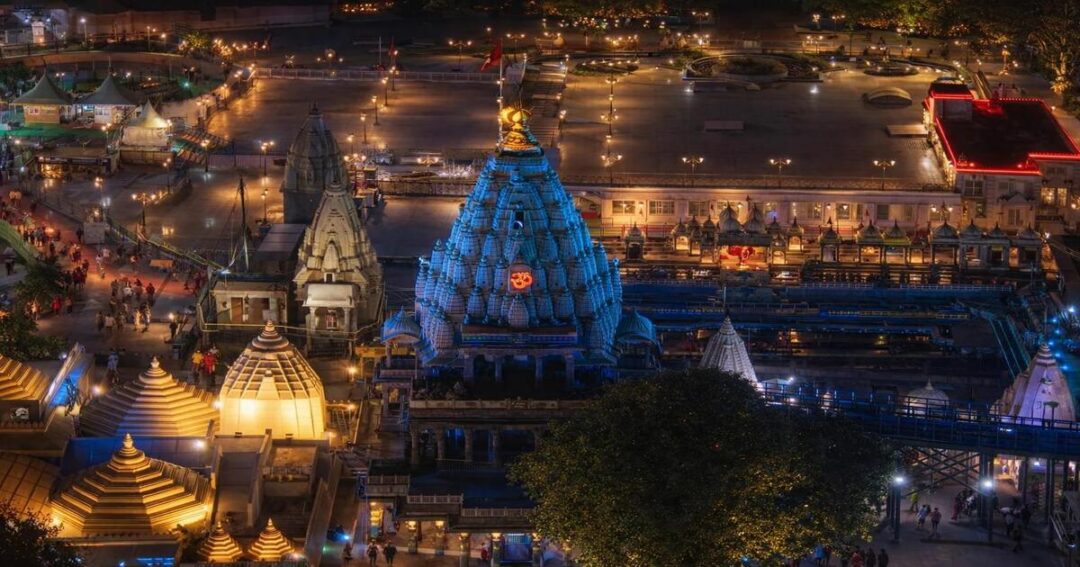
9. Kashi Vishwanath Temple, Varanasi
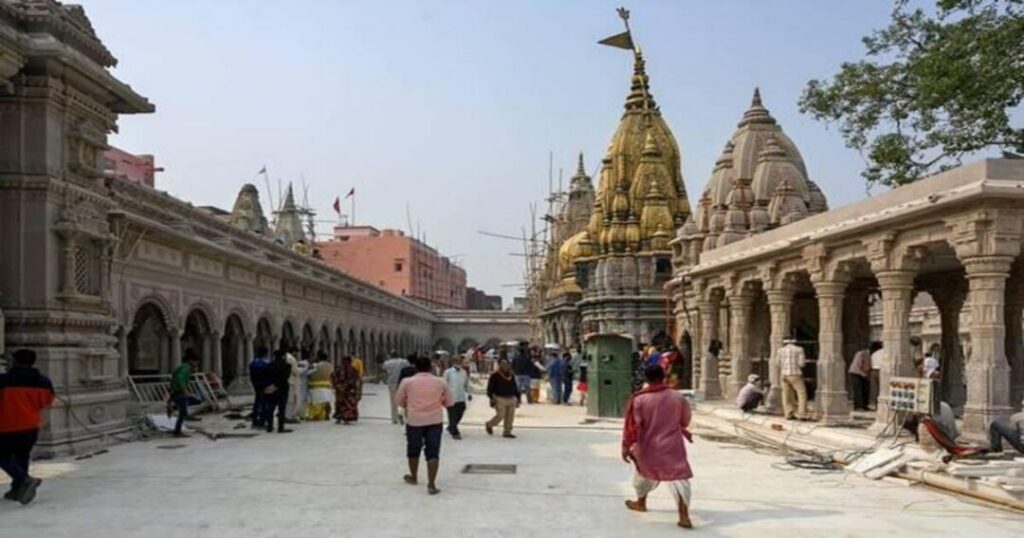
Kashi Vishwanath is the temple most people mean when they search for the oldest temple in Varanasi, and the worship tradition at this site genuinely is ancient — Varanasi’s association with Shiva goes back millennia in religious literature. But the physical structure standing today is not: the temple was destroyed multiple times by various rulers, most notably by Aurangzeb in the 17th century, and the current building was constructed in 1780 by Maharani Ahilyabai Holkar of Indore, with its gold-plated spire added later by Maharaja Ranjit Singh in 1835. It belongs on this list for the antiquity of the site and tradition — not because the building itself is old.
Also Read: Top 10 Holy Places in India Beyond Varanasi: Temple Towns Worth the Journey
10. Somnath Temple, Gujarat
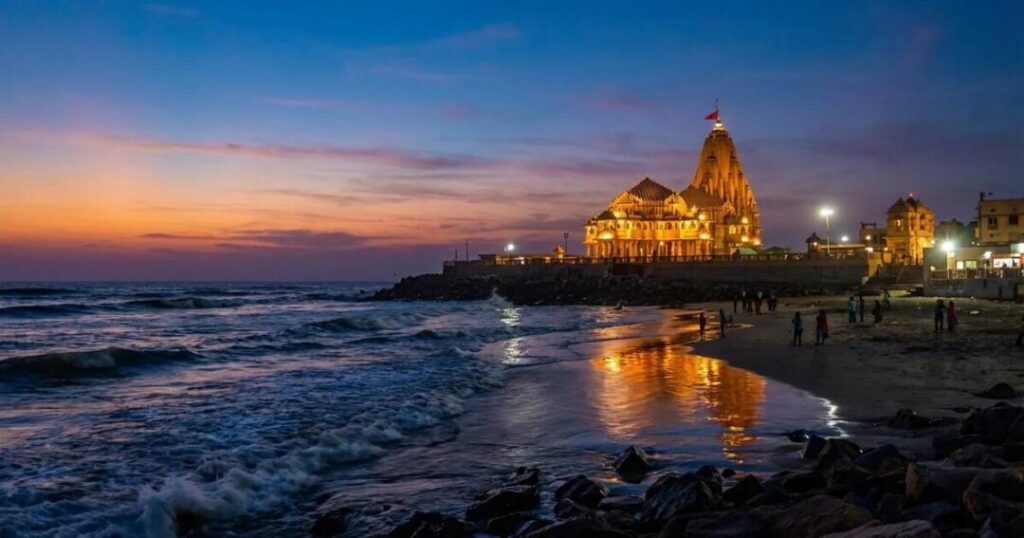
Somnath, one of the twelve Jyotirlingas and frequently cited as one of the oldest Shiva temples in India, tells a similar story to Kashi Vishwanath, just more extreme. Historical and legendary accounts describe the temple being destroyed and rebuilt multiple times over roughly a thousand years, most famously by Mahmud of Ghazni in 1024. The structure visitors see today was completed in 1951, making it — like Kashi Vishwanath — an ancient site with a genuinely modern building. Its inclusion here reflects its historical and religious weight, not the age of its current stonework.
Also Read: Places to Visit in Gujarat: From Ancient Cities to Salt Deserts
Is There a World’s Oldest Temple in India?
No — and this is worth stating plainly, since it’s a claim that circulates a lot. The title of world’s oldest temple in India doesn’t actually exist, because the world’s oldest known temple isn’t in India at all: Göbekli Tepe in Turkey, dated to roughly 9500 BCE, predates every temple on this list by thousands of years and is recognized by archaeologists as the oldest known human-built religious structure anywhere. India’s oldest surviving temples, several of which appear above, date to the first millennium CE at the earliest — genuinely ancient by most standards, just not in the same category as Göbekli Tepe.
Conclusion About the Oldest Temples in India
From Aihole’s 5th-century stone experiments to Somnath’s 1951 rebuild, the oldest temples in India tell as much about destruction and renewal as they do about age. Save the ones on your list to your Explurger Bucket List, and let your Automatic Travelogue track the trip once you start visiting them. Let Explurger help you plan a temple trail that gets the history right.
FAQs About the Oldest Temples in India
2. What is the most oldest temple in India for Vishnu?
The Dashavatara Temple at Deogarh, built around 500-525 CE, is generally considered the oldest major Vishnu temple still standing.
3. Which is the oldest Hindu temple in India built from brick?
Bhitargaon Temple near Kanpur, dated to the late 5th century CE, is the oldest surviving brick temple in India.
4. What is the oldest temple in Kerala?
Vaikom Mahadeva Temple, with historical evidence pointing to at least the 8th century CE and a legendary Parashurama-era origin.
5. Is Kashi Vishwanath the oldest temple in Varanasi?
The worship site is ancient, but the current structure dates only to 1780, after the original was destroyed by Aurangzeb in the 17th century.
6. What is the oldest Shiva temple in India?
There's no single settled answer — Vaikom Mahadeva Temple and Somnath are both commonly cited, though Somnath's current building dates only to 1951.