
566 Total Views
Most guides to places to visit in Aurangabad hand you a checklist: Ajanta, Ellora, a tomb, a fort, done in two days. What they skip is that these sites, laid end to end, form something closer to a two-thousand-year timeline of the Deccan carved directly into rock and marble.
This guide follows that timeline instead of a map. You’ll move from Buddhist monks chiselling prayer halls out of a horseshoe-shaped cliff in the 2nd century BCE, through a Rashtrakuta king who ordered an entire temple carved downward from the top of a mountain, to a Mughal prince building his mother a smaller, sadder echo of the Taj Mahal. Same region, six very different centuries of ambition.
Places to Visit in Aurangabad: Where the Story Begins at Ajanta Caves
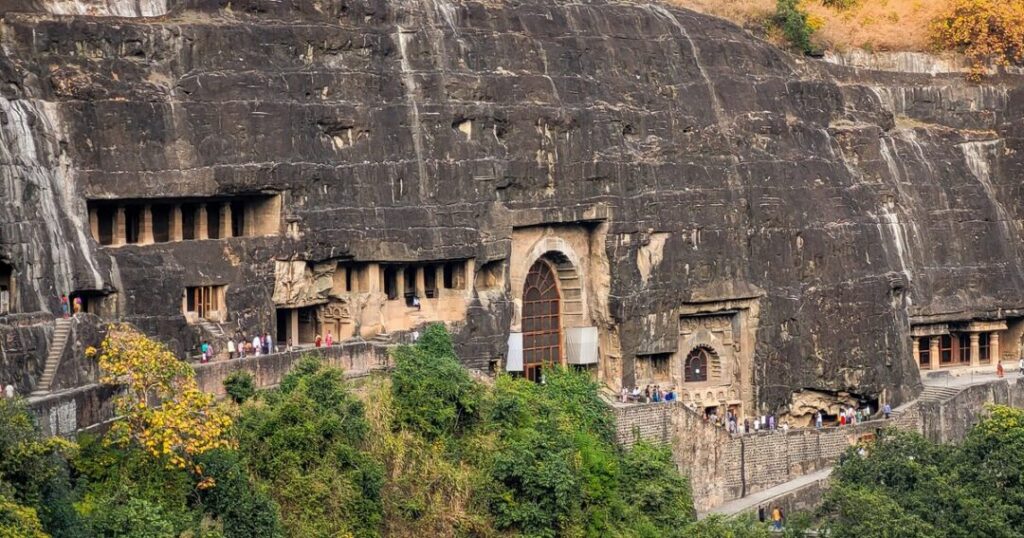
The oldest of the places to visit in Aurangabad starts with a horseshoe-shaped gorge above the Waghur River, where Buddhist monks began cutting monasteries into basalt sometime in the 2nd century BCE, under the patronage of the Satavahana dynasty.
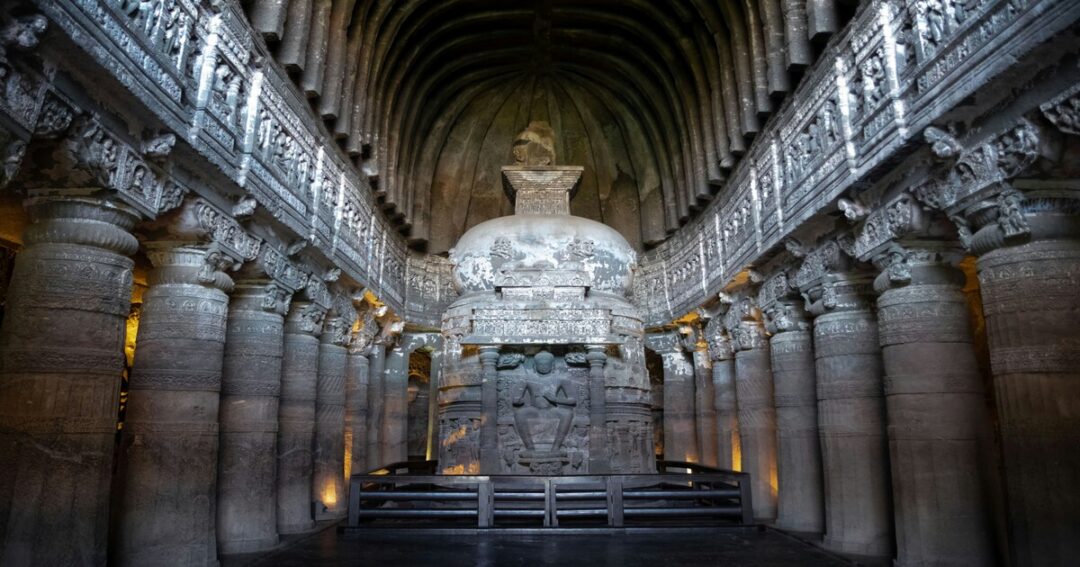
That first wave is known as the Hinayana phase, and it’s conspicuously restrained: the Buddha appears only as a symbol, never as a figure, represented instead through stupas, footprints, and empty thrones. Then the site went quiet for roughly five centuries.
- Work resumed around 400 CE under the Vakataka emperor Harishena, in what’s called the Mahayana phase.
- This later phase is where Ajanta becomes unforgettable: the Buddha now appears in human form, and the walls fill with Jataka tales rendered in a style with more natural fluidity and depth than almost anything else surviving from ancient India.
- Cave 16, sponsored by Harishena’s minister Varahadeva, turned out to be the single most useful clue historians had for dating the entire complex.
- The murals themselves are tempera on lime plaster, not fresco, painted onto a dry surface rather than wet, which is part of why so much of the color has survived at all.
Places to Visit in Aurangabad: The Historic Aurangabad Caves
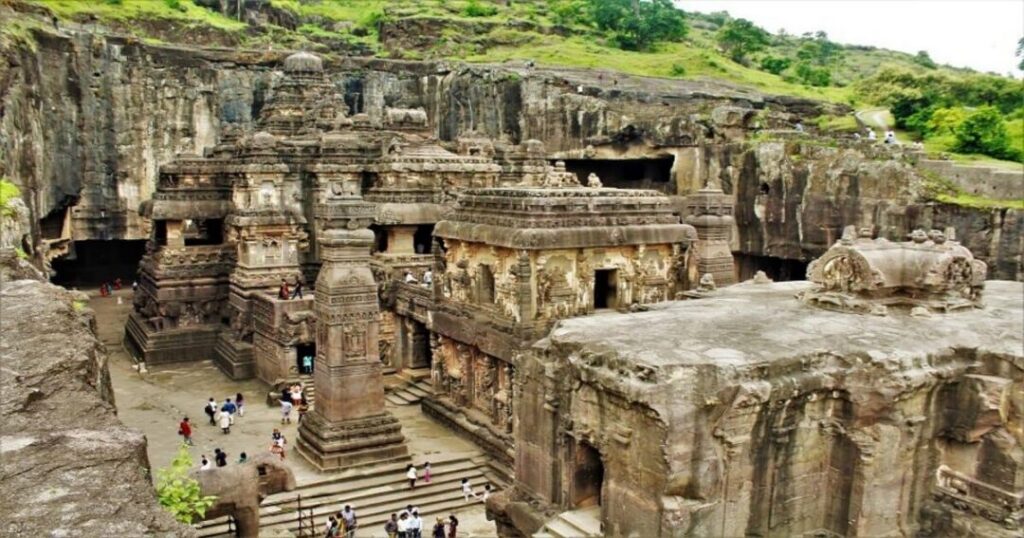
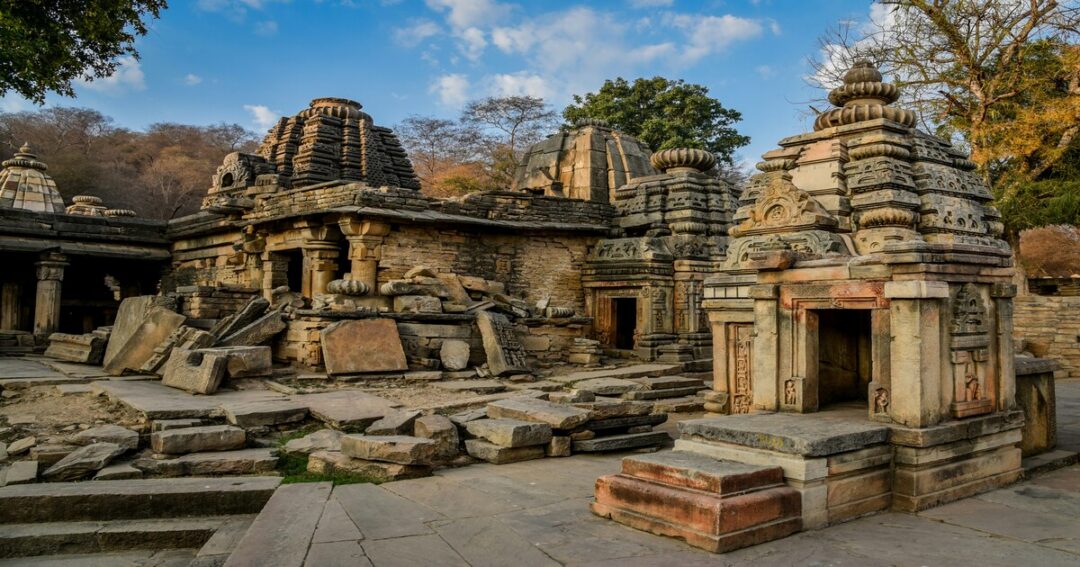
Roughly 8 km northwest of the city itself sit twelve caves that rarely make anyone’s shortlist, but they’re arguably the most interesting of the Aurangabad tourist places if you care about how styles evolve.
Carved mainly through the 6th and 7th centuries CE, these caves sit chronologically and stylistically between Ajanta’s narrative intimacy and Ellora’s coming monumentalism. Patronage had shifted too: where Ajanta relied on emperors and their ministers, the Aurangabad Caves reflect a move toward regional, lay sponsorship, alongside the first stirrings of esoteric, tantric elements entering Buddhist sculpture in the Deccan. It’s the region’s hinge point, quite literally caught between two eras.
Also read: Places to Visit in Shirdi: 10 Best Attractions In and Around the Temple Town
Why Ellora’s Kailasa Temple Tops the List of Places to Visit in Aurangabad?
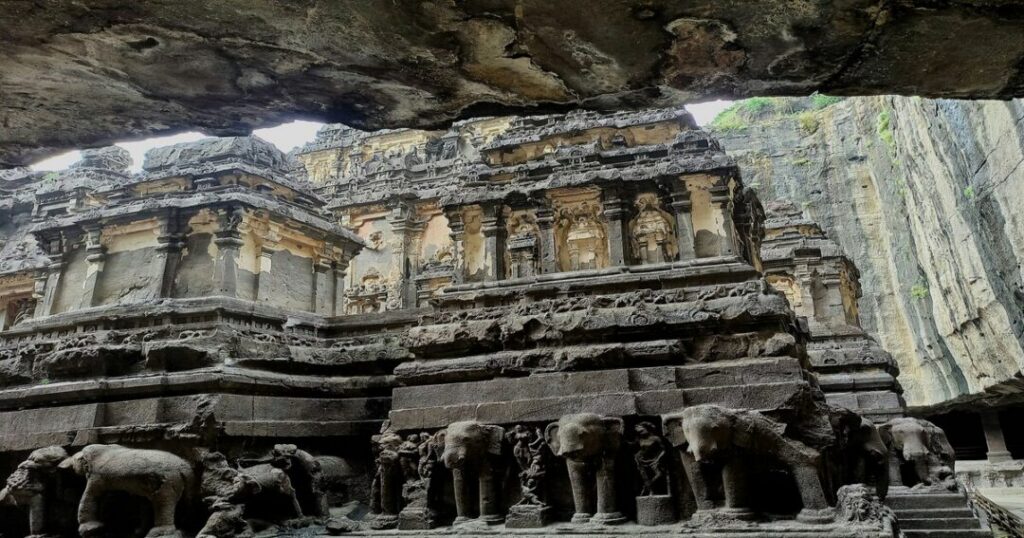
If Ajanta is about patience, Ellora’s Kailasa Temple is about audacity, and it’s the centerpiece of every list of Aurangabad sightseeing places for good reason.
Commissioned under Rashtrakuta king Krishna I around 756–773 CE (building on work possibly begun under his predecessor Dantidurga), Kailasa is not built at all. It’s carved, top-down, out of a single basalt rock face roughly 164 feet deep, 109 feet wide, and 98 feet high.
- Engineers removed an estimated 400,000 tonnes of rock, working downward from the cliff top rather than building upward, which meant the entire design had to be finalized before a single chisel strike, since top-down carving allows zero structural corrections once begun.
- One calculation suggests 250 laborers could have finished the project in about five and a half years, working at a rate of roughly 4 cubic feet of rock removed per person per day, though the full effort likely spanned longer.
- Ellora as a whole isn’t one monument but 34 caves spanning the 6th to 13th centuries CE, split across Buddhist, Hindu, and Jain traditions, unlike Ajanta’s exclusively Buddhist program.
Daulatabad Fort: One of the Most Fascinating Places to Visit in Aurangabad
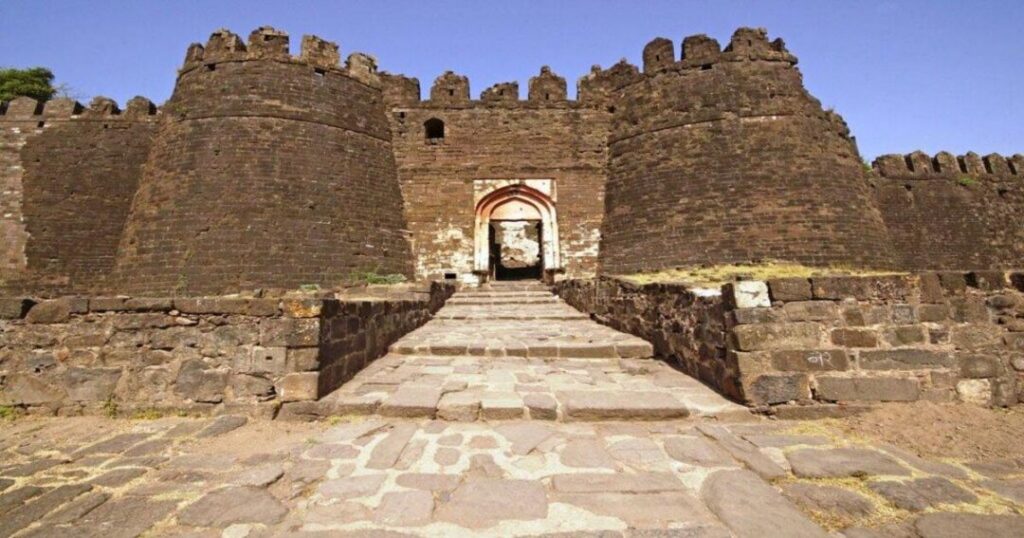
Not every one of the region’s Aurangabad tourist attractions is about religion. Daulatabad Fort is about ambition, hubris, and one of history’s more spectacular urban planning failures.
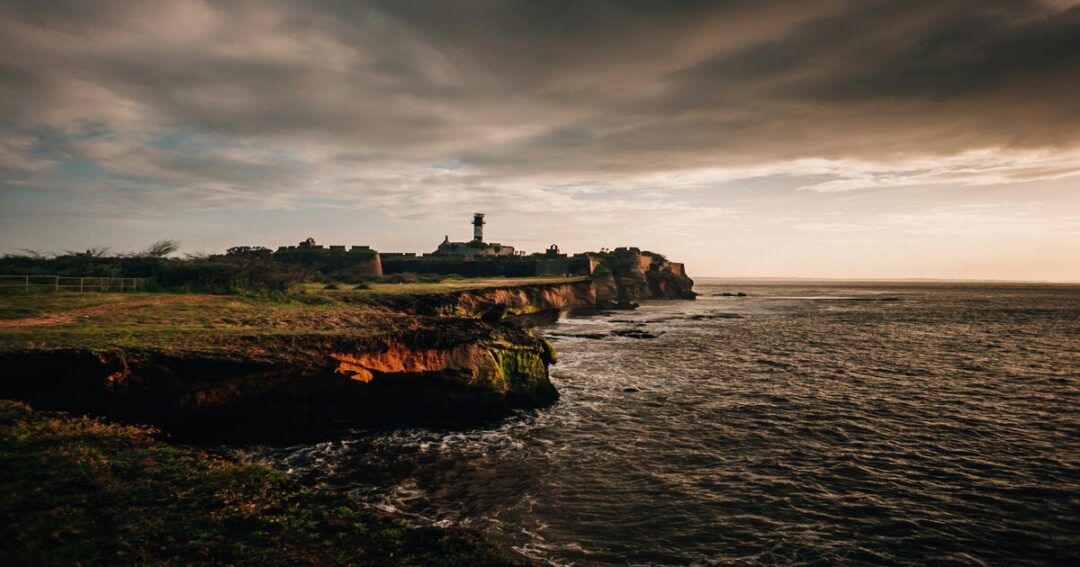
The hill fort began as Devagiri, founded around 1187 by the Yadava king Bhillama V, with the fort itself built up under Singhana II in the early 13th century. Devagiri stood as the Yadava capital for over a century until Alauddin Khilji, Sultan of Delhi, brought it under Delhi’s control.
- In 1327, Muhammad bin Tughlaq decided Devagiri, renamed Daulatabad, would replace Delhi as his empire’s capital and ordered the city’s entire population relocated roughly 1,100 km south.
- The plan collapsed. Historical accounts describe enormous suffering along the route, and within roughly 17 years, Tughlaq abandoned Daulatabad and marched everyone back to Delhi.
- The fort’s Chand Minar, a victory tower built in 1433, still stands as the second-tallest tower in India after Delhi’s Qutb Minar.
- Ownership kept changing hands after that: the Bahmanis held it until 1526, followed by the Mughals, Marathas, and Peshwas, before the Nizams of Hyderabad took final control in 1724, holding it until independence.
Also read: Places to Visit in Mahabaleshwar: Explore Maharashtra’s Scenic Mountain Retreat
Grishneshwar Jyotirlinga Among Places to Visit in Aurangabad
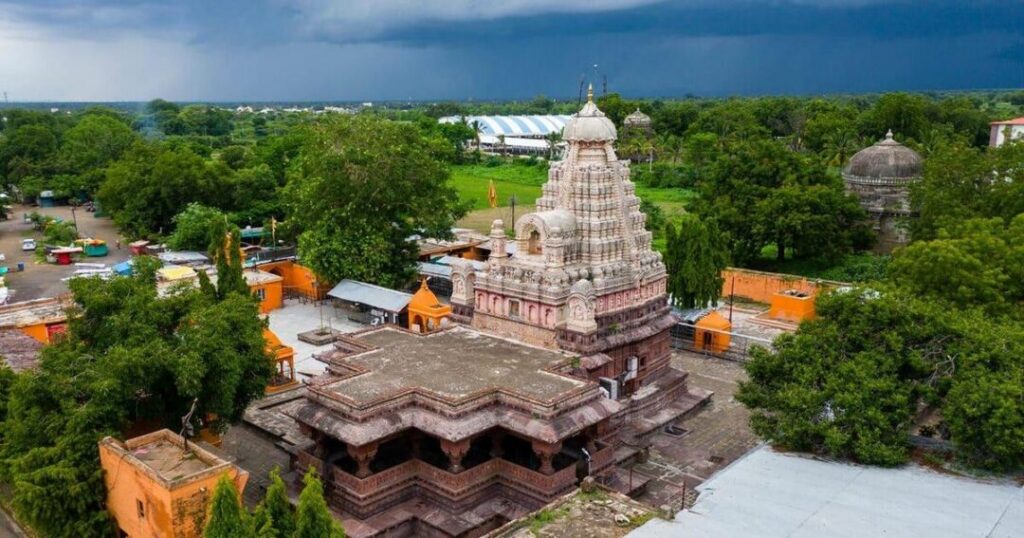
Among the region’s places of interest in Aurangabad, Grishneshwar is the one that keeps getting destroyed and rebuilt, which is its own kind of history lesson.
As one of Shiva’s twelve Jyotirlingas, the temple predates the 13th century in some form but was destroyed during Alauddin Khilji’s Deccan campaigns. It was rebuilt in the 16th century by Maloji Bhosale, grandfather of Chhatrapati Shivaji, only to be demolished again in the 17th century, this time by Aurangzeb himself. The structure standing today was commissioned in the 18th century by Rani Ahilyabai Holkar of Indore, whose temple-rebuilding campaigns across India (Kashi Vishwanath and Somnath among them) make her one of the more underrated patrons in Indian architectural history. The temple’s five-tiered shikhara follows a South Indian architectural style, an unusual choice this far north in the Deccan, and it sits close enough to Ellora to combine both visits in a single outing.
Bibi Ka Maqbara Among Places to Visit in Aurangabad
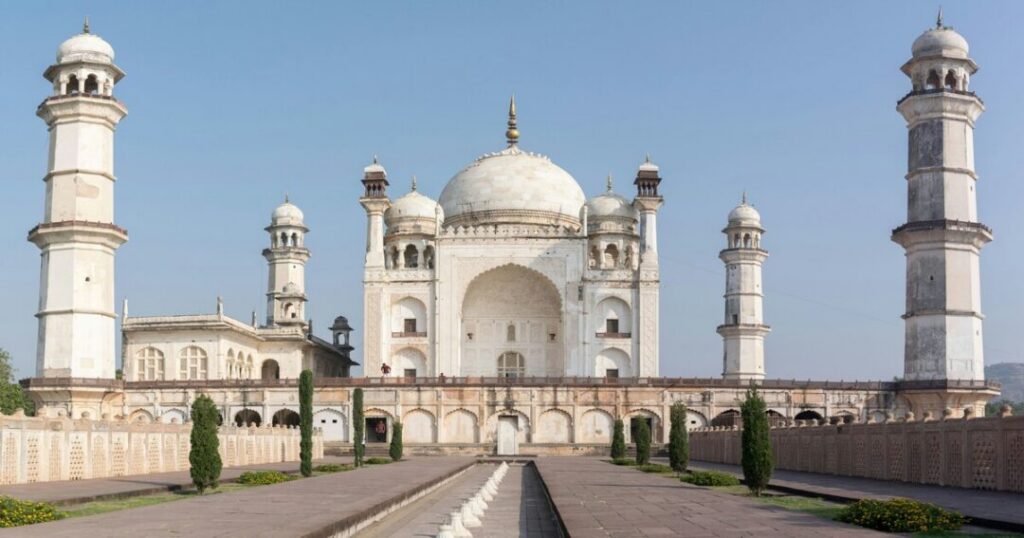
The most photographed Aurangabad tourist spot after the caves is also the region’s most direct dialogue with the Taj Mahal, intentionally so.
Emperor Aurangzeb commissioned the tomb in 1660 for his wife, Dilras Banu Begum, who had died in 1657 following childbirth complications. Construction, completed by their son Azam Shah between 1668 and 1669, was overseen by architect Ata-ullah, son of Ustad Ahmad Lahauri, the very architect who built the Taj Mahal for Dilras’s mother-in-law, Empress Mumtaz Mahal. The family resemblance in the architecture is deliberate, but the resources weren’t equal. Bibi Ka Maqbara was the largest structure Aurangzeb built in his lifetime, yet it’s noticeably smaller and less lavishly finished than the Taj, a fact often read as reflecting Aurangzeb’s more austere priorities compared to his father Shah Jahan’s.
Panchakki Among Places to Visit in Aurangabad
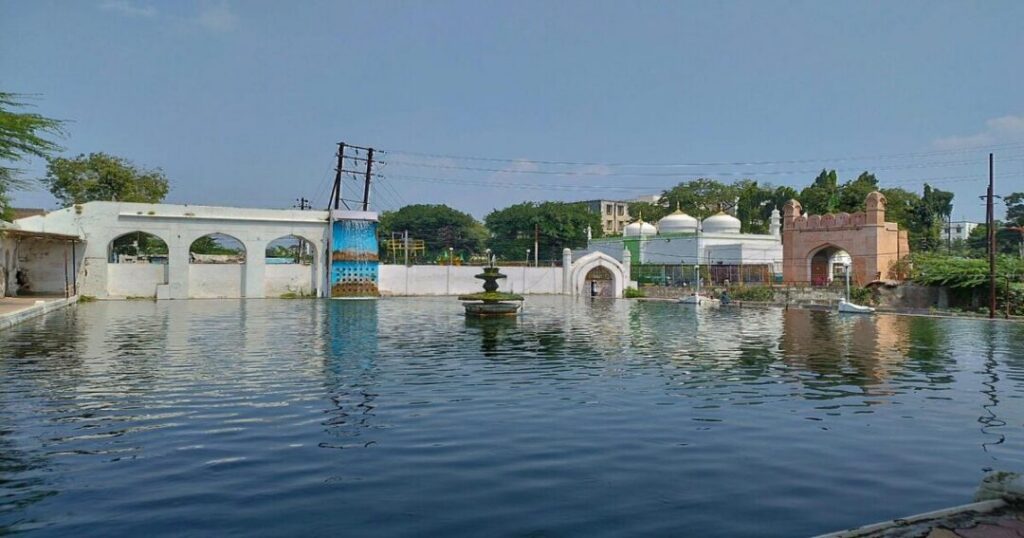
Not every one of the places to see at Aurangabad is a monument to an emperor. Panchakki, literally “watermill,” is a monument to plumbing and arguably deserves more attention than it gets.
The dargah complex housing it, built for the Sufi saint Baba Shah Musafir (a spiritual advisor to Aurangzeb), was largely constructed around 1695 by the noble Turktaz Khan under Nizam-ul-Mulk Asaf Jah, with an ornamental reservoir added around 1715 by another courtier, Jamil Beg Khan. The mill itself came later, built in 1744 to grind grain for the local population and Aurangzeb’s soldiers.
- Water was drawn from a spring in the Jatwada Hills, channeled through the Harsul River, and lifted using a siphon system into an earthen pipe.
- That pipe carried water roughly 6 km downhill to the mill, entirely through gravity and pressure, centuries before modern plumbing existed in the region.
- It’s a quieter kind of engineering flex than Kailasa, but no less deliberate.
Also read: Spice Trail Through Maharashtra That Every Food Lover Must Experience
More Places to Visit in Aurangabad Beyond the Big Six
If you have an extra afternoon, a handful of smaller Aurangabad places to see round out the trip without requiring a full detour.
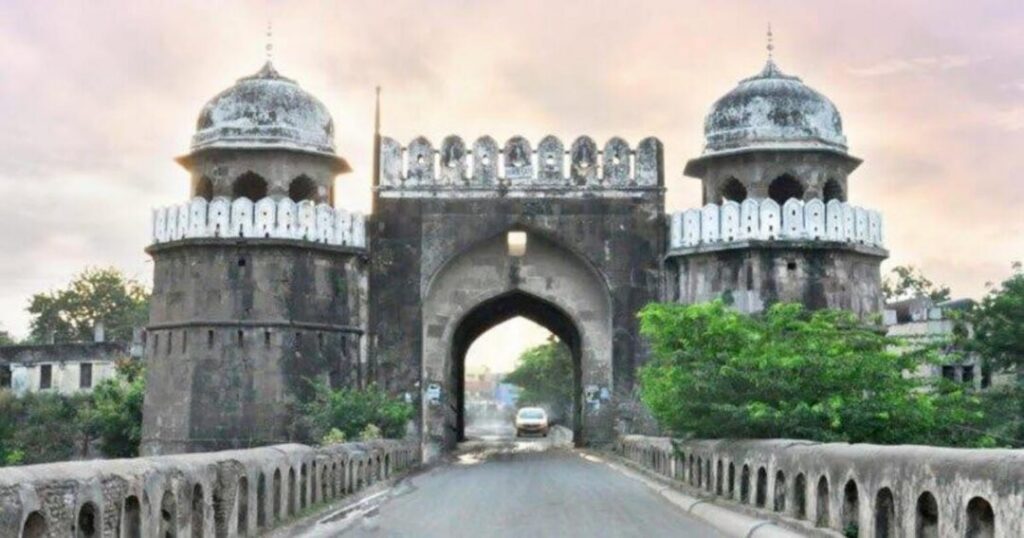
- The historic Darwazas (gates)—Remnants of Aurangabad’s old walled city, scattered through the modern urban grid.
- Siddharth Garden & Zoo— A low-key break between heavier historical sites, easy with kids in tow.
- Salim Ali Lake—A quiet birdwatching spot named for the ornithologist, a good option for an unhurried morning.
Best Time to Visit Aurangabad
- November to February: The most comfortable window, cool and dry, ideal for a full-day walk in Ellora’s caves or Daulatabad’s ramparts.
- June to September (monsoon): Humid, but the surrounding hills turn green, and the seasonal waterfall near Ajanta’s gorge starts flowing, a genuinely different way to see the site.
- March to May: Hot, and best avoided for anything involving long stretches outdoors between caves.
How to Reach Aurangabad?
- By Air: Aurangabad Airport (IXU) is the nearest, roughly 30 km (about 45 minutes) from Ellora and around 100 km (2.5–3 hours) from Ajanta.
- By Rail: Aurangabad railway station is the main railhead, connected to Mumbai and Pune, sitting about 30 km from Ellora and 96 km from Ajanta; Jalgaon station is a closer alternative specifically for Ajanta.
- Getting between sites: Ajanta and Ellora sit roughly 100 km apart from each other, so most itineraries split them across two separate days rather than trying to combine both in one.
Conclusion: Places to Visit in Aurangabad
Walk this region in the order it was built rather than the order it appears on a map, and Aurangabad stops being a checklist and starts reading like a timeline: Buddhist monks in the 2nd century BCE, a Rashtrakuta king erasing the line between architecture and sculpture, a failed medieval capital, a temple destroyed and rebuilt three times over, and a grieving Mughal prince trying to recreate his father’s masterpiece on a smaller budget. That’s what makes the places to visit in Aurangabad worth the extra day most itineraries don’t budget for.
Plan your perfect trip with Explurger— download the app now.
Start with Ajanta, end with Bibi Ka Maqbara, and let the two thousand years in between fill in everything on your itinerary.
FAQs About Places to Visit in Aurangabad
2. How many days do you need to see Ajanta and Ellora?
Most itineraries allocate two separate days, since the two cave complexes sit about 100 km apart and each deserves several unhurried hours. A third day is worth adding if you want to include Daulatabad Fort, Bibi Ka Maqbara, and Panchakki without rushing.
3. Why is Ellora's Kailasa Temple considered an engineering marvel?
Kailasa was carved top-down out of a single basalt rock face, removing an estimated 400,000 tonnes of stone with no possibility of structural correction once the excavation began. That meant the entire three-story temple design had to be fully planned in advance, a level of pre-modern engineering precision that still surprises architects today.
4. What is the difference between Ajanta and Ellora?
Ajanta is exclusively Buddhist and is famous primarily for its painted murals depicting Jataka tales, spanning roughly the 2nd century BCE to the 6th century CE. Ellora, by contrast, spans the 6th to 13th centuries CE and brings together Buddhist, Hindu, and Jain caves in a single complex, with sculpture rather than painting as its main form of expression.
5. What are some places to go in Aurangabad besides the caves?
Beyond Ajanta and Ellora, Daulatabad Fort, Bibi Ka Maqbara, Grishneshwar Jyotirlinga Temple, and Panchakki are the other major places to go in Aurangabad. Each covers a different slice of the region's history, from 13th-century fort politics to 17th-century Mughal engineering.
6. Is Bibi Ka Maqbara really similar to the Taj Mahal?
Yes, the resemblance is intentional. It was built by Aurangzeb's son using an architect who was the son of the Taj Mahal's own chief architect, though on a noticeably smaller scale and budget, which is why it's often nicknamed the "Mini Taj."
7. What is the significance of Daulatabad Fort's failed capital experiment?
In 1327, Muhammad bin Tughlaq attempted to move Delhi's entire population roughly 1,100 km to Daulatabad to make it his new capital, a plan that caused significant hardship and collapsed within about 17 years. It remains one of medieval India's most cited examples of an ambitious relocation plan gone wrong.