
816 Total Views
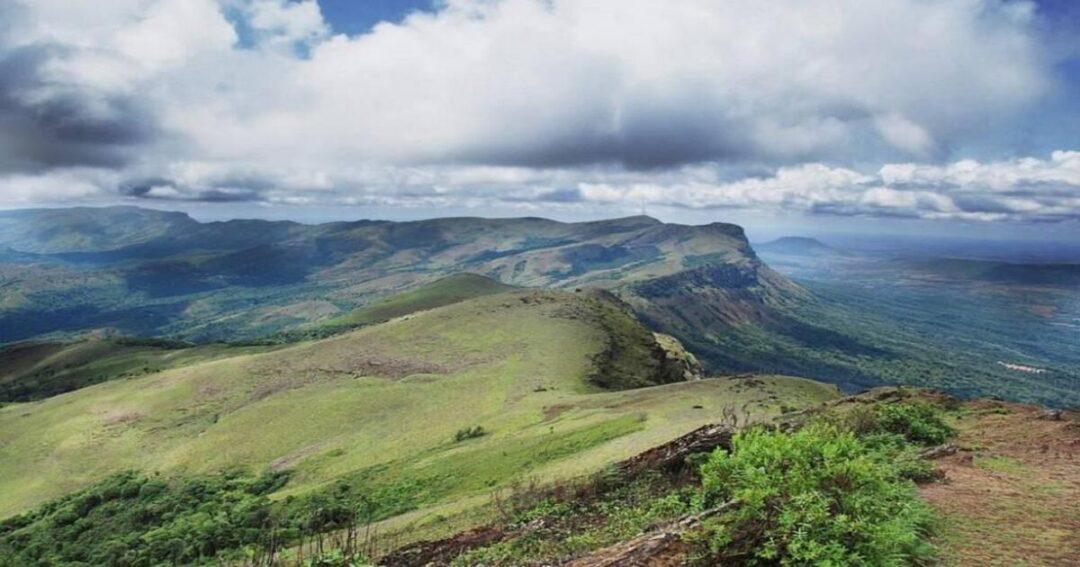
Rajasthan is a desert state — camel safaris, sand dunes, forts baking under a relentless sun. And then there’s Mount Abu, sitting on a plateau in the Aravalli Range at over 1,200 meters, cool enough for woolens in winter and green enough to look like it wandered in from somewhere else entirely. The places to visit in Mount Abu work precisely because of that contrast: marble temples, a lake with a mythological origin story, and a wildlife sanctuary in a state better known for camels than leopards. Here’s what’s actually worth your time.
Tourist Places to Visit in Mount Abu in 2026
1. Nakki Lake: The Lake the Gods Carved With Their Nails
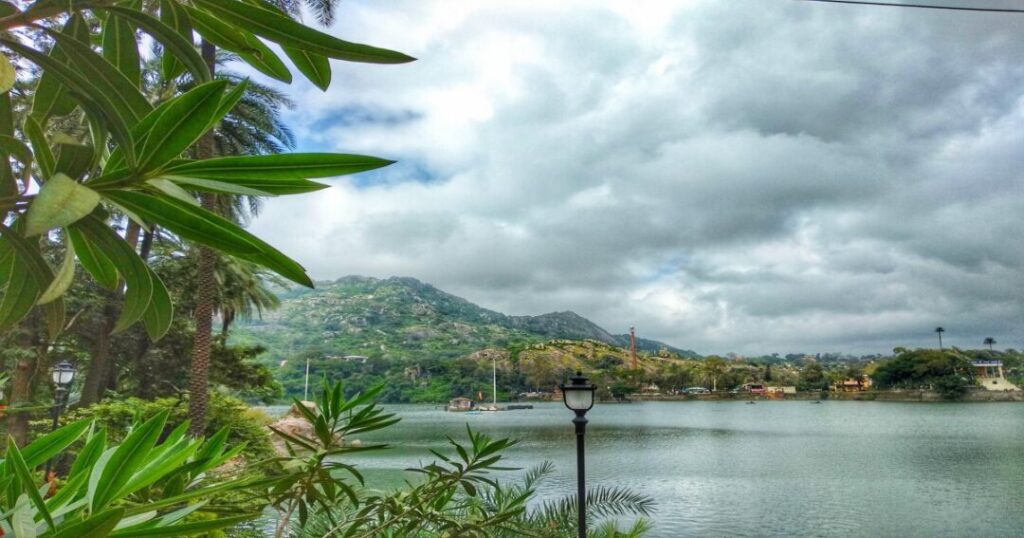
Start with the legend, because it’s the reason the lake has the name it does. Nakki — from nakh, meaning nail — comes from the story that Hindu gods dug the lake out with their own fingernails to give sages a place to rest, safe from a demon named Bashkali. [STAT: The name “Nakki Lake” derives from the Sanskrit/Hindi word “nakh,” meaning nail, referencing the legend of its divine origin.] There’s a second, gentler version of the story too: a suitor named Rasiya Balam supposedly won a princess’s hand by digging the entire lake basin overnight using only his nails, only to have the king’s wife renege on the promise — with local tradition holding that the two lovers were incarnations of Shiva and Parvati, playing out an unresolved love story on a geological scale.
Setting the myth aside, Nakki is Rajasthan’s only natural lake, and it’s the town’s social center — paddle boats and shikaras in the morning and evening, a small toy train ride along the bank for kids, and food stalls that fill up as the sun starts to drop. It gets busy, especially on weekends, but that’s part of the atmosphere rather than something to avoid.
Also Read: Places to See in Rajasthan Beyond Jaipur, Jodhpur, Udaipur & Jaisalmer
2. Dilwara Jain Temples: Marble Carved Without Modern Tools
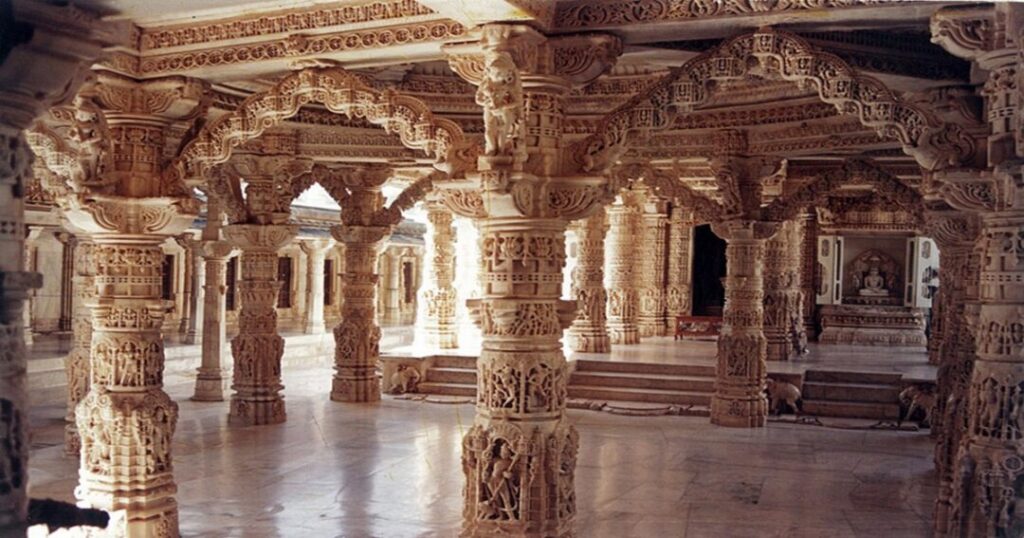
A short distance from the lake, the Dilwara Jain Temples are a cluster of five white marble temples built between the 11th and 13th centuries. The most celebrated, Vimal Vasahi, was completed around 1031 AD under the Solanki-era minister Vimal Shah and took 14 years to build. [STAT: The Vimal Vasahi temple at Dilwara took roughly 14 years to complete after construction began around 1031 AD.] The marble itself was hauled up from the Arasuri Hills near Ambaji, and what makes the temples genuinely remarkable is the ceiling and pillar work — lotus medallions, filigree so fine it looks more like lacework than stone, carved entirely without power tools. Photography isn’t allowed inside, which is worth knowing before you go rather than after you’ve packed a camera bag for nothing. It’s a worthwhile stop even on a tight itinerary, though you don’t need to budget half a day for it — an hour or so is enough to take in the main halls.
3. Guru Shikhar: Rajasthan’s Highest Point
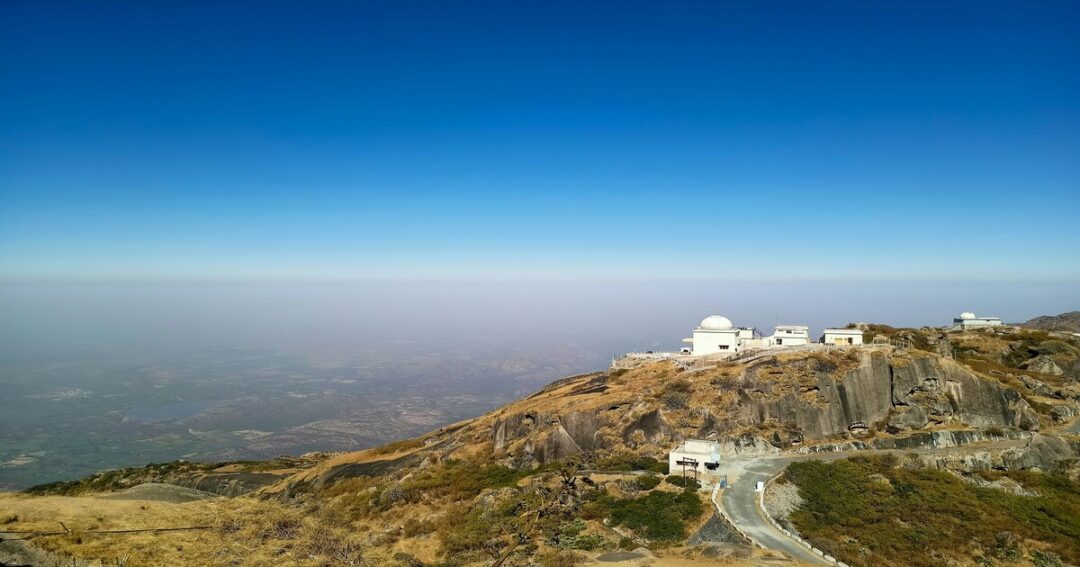
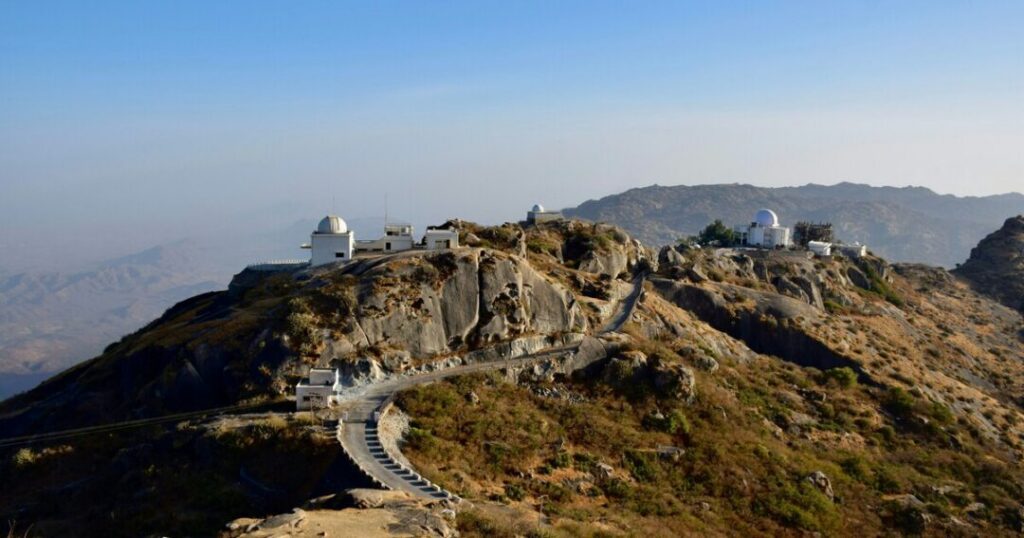
About 15km from the town center, Guru Shikhar is the highest peak in the entire Aravalli Range at 1,722 meters, and by extension the highest point in Rajasthan. [STAT: Guru Shikhar, at 1,722m, is the highest peak of the Aravalli Range and the highest point in Rajasthan.] The name means “peak of the guru,” honoring Guru Dattatreya — in Hindu tradition, an incarnation of the Brahma-Vishnu-Shiva trinity — and a small temple to him sits at the summit with a white dome and a red flag that’s visible from some distance below. The peak also hosts the Mount Abu Infrared Observatory, run by Physical Research Laboratory, which takes advantage of the elevation and relatively clear air for astronomical observation — not open to casual visitors, but a nice bit of context for why the site was chosen. The climb to the temple itself is short and manageable, a few hundred steps rather than a real trek.
Also Read: Places to Visit in Jaisalmer: Discover the Golden City of Rajasthan
4. Mount Abu Wildlife Sanctuary: Rajasthan’s Only Leopard Habitat, Honestly
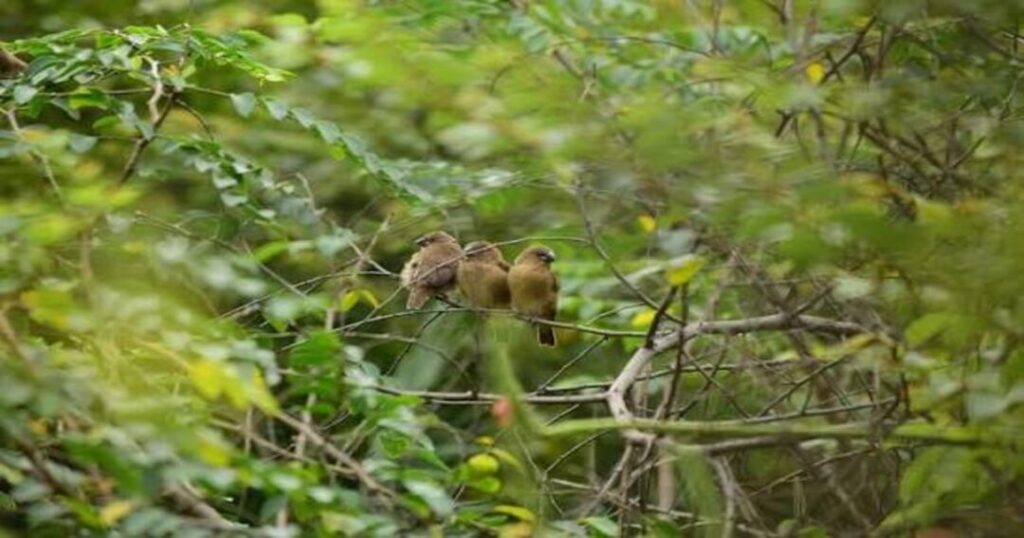
The sanctuary wraps around most of the plateau and is worth visiting for what it protects rather than any guarantee of what you’ll see. Established in 1980, it holds close to 820 recorded plant species and over 250 bird species, and it’s the only place in Rajasthan where wild orchids grow. [STAT: Mount Abu Wildlife Sanctuary has around 820 recorded floral species and is the only location in Rajasthan where wild orchids are found.] It’s also home to leopards, sloth bears, sambar deer, wild boar, and chinkara — but leopard sightings are genuinely rare and, when they do happen, typically from a safe distance near a waterhole rather than up close. Go for the walking trails, the birdlife, and the general sense of being somewhere greener than the rest of the state, not with the expectation of ticking a leopard off a list. The Arna Trail is the one most commonly recommended if wildlife spotting is your priority, though patience matters more than the trail choice.
5. Toad Rock, Sunset Point, and Achalgarh Fort: The Rest of the Circuit
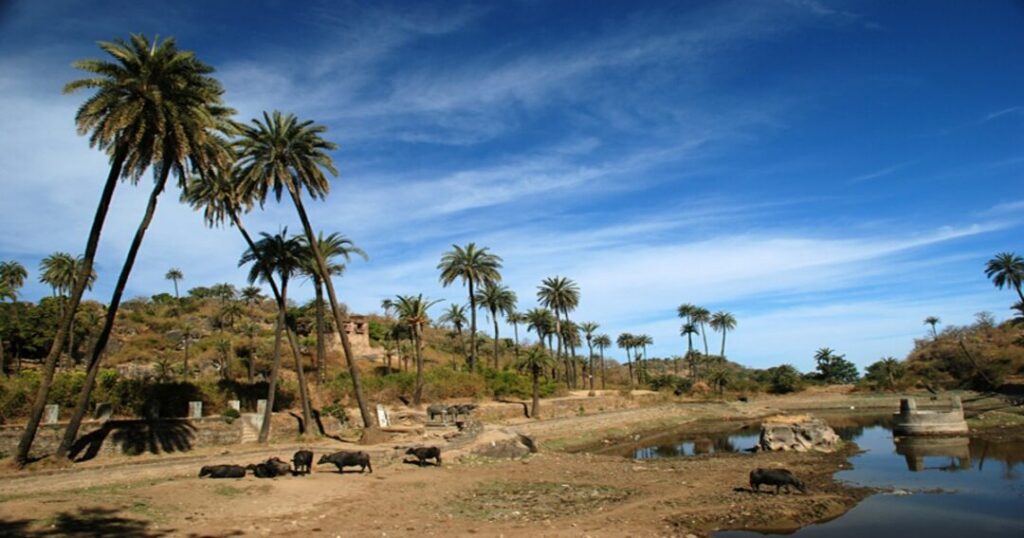
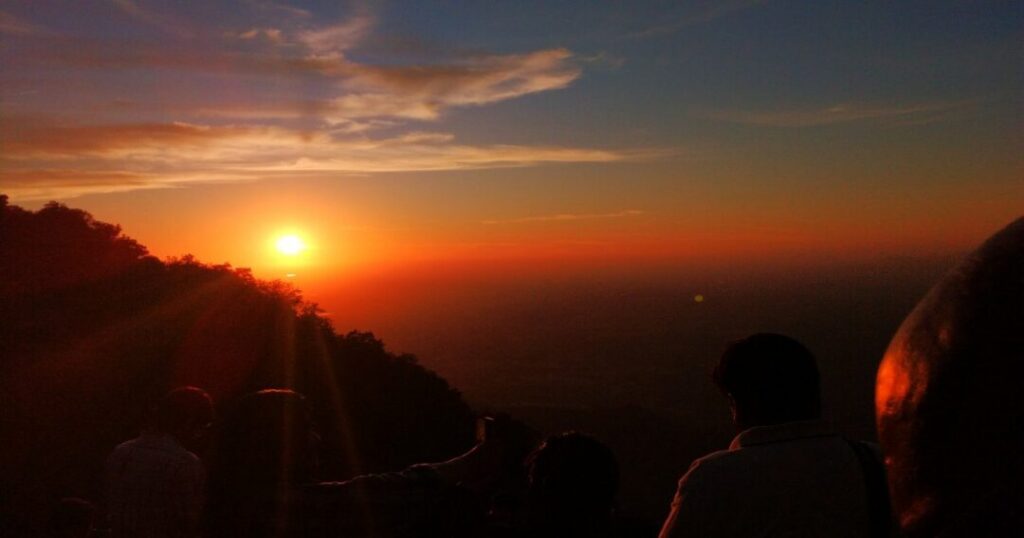
A few more stops round out a typical Mount Abu day. Toad Rock, shaped roughly like its name suggests, is a short and easy uphill walk from Nakki Lake and has become something of an unofficial mascot for the town — the climb is safe enough for families, and the payoff is a clean view back over the lake. Sunset Point lives up to its name with a wide, uninterrupted view over the Aravallis and is one of the more popular spots in town for an evening visit, so arrive early if you want a good spot along the rail. Achalgarh Fort, near Sunset Point, has a longer history than either — originally built by the Paramara dynasty and later rebuilt and renamed by Maharana Kumbha in 1452 CE, with the Achaleshwar Mahadev temple and Mandakini Lake inside its walls. It sees a fraction of the footfall the other spots get, which makes it a good choice if you want a quieter, more historical stop on the same day.
Also Read: Things to Do in Chittorgarh: The Complete Guide to Rajasthan’s Fort of Sacrifice
What is the Best Time to Visit and How to Reach Mount Abu?
Winter, from November to February, is Mount Abu’s clear peak season — daytime temperatures sit around 12-25°C, evenings get genuinely cold, and it’s the best window for sightseeing without either heat or rain to work around. Summer, mid-March through mid-June, runs warmer at 20-33°C but is still far more comfortable than the rest of Rajasthan at the same time of year, which is exactly why it doubles as a peak season here too — many travelers come specifically to escape the plains’ heat. Monsoon, July through September, turns the plateau lush and misty and temperatures stay mild, but boating on Nakki Lake and some outdoor activities shut down, so it’s a better fit if you’re chasing atmosphere over a full checklist of activities.
There’s no airport or railway station in Mount Abu itself. The nearest railway station is Abu Road, about 28km away and a major junction on the Western Railway line with direct connections to Delhi, Mumbai, Ahmedabad, Jaipur, and Bengaluru. From Abu Road, shared jeeps (roughly ₹100-300 per person) and RSRTC buses make the winding climb up to town in 45 minutes to an hour. [STAT: Abu Road, the nearest railway station to Mount Abu, is approximately 28km away with a 45-minute to one-hour road journey up to the town.
Also Read: Things to Do in Alwar: 15 Must-Visit Attractions in Rajasthan’s Heritage City
Conclusion About Places to Visit in Mount Abu
Between marble temples that took over a decade to carve, a lake with two competing origin myths, and a wildlife sanctuary tucked improbably into a desert state, the places to visit in Mount Abu add up to something genuinely different from the rest of Rajasthan’s circuit. Map out your Mount Abu stops on your Explurger Bucket List, and let your Automatic Travelogue keep the whole trip — temples, lake, sanctuary trails — recorded without the extra effort. Plan your Rajasthan hill-station escape with Explurger.
FAQs About Places to Visit in Mount Abu
2. Is photography allowed inside the Dilwara Jain Temples?
No. Photography is prohibited inside the temple halls to protect the marble carvings and preserve the sanctity of the site — plan to leave cameras and phones put away once inside.
3. Can you see leopards at Mount Abu Wildlife Sanctuary?
It's possible but rare. The sanctuary is home to leopards, but sightings typically happen from a distance near waterholes and shouldn't be treated as a guarantee — the birdlife and orchid population are a more reliable draw.
4. What is the best time to visit Mount Abu?
November to February is the clearest peak season for sightseeing, though summer (mid-March to mid-June) is also popular since it's markedly cooler than the rest of Rajasthan at that time.
5. How do you reach Mount Abu?
The nearest railway station is Abu Road, about 28km away, connected to Delhi, Mumbai, Ahmedabad, Jaipur, and Bengaluru. From there, shared jeeps or RSRTC buses cover the 45-minute to one-hour climb into town.
6. Why is Mount Abu called Rajasthan's only hill station?
It's the sole hill station in the state, sitting on an Aravalli plateau above 1,200 meters — a genuine climate outlier in a state otherwise defined by desert heat.