
730 Total Views
Every Rajasthan itinerary defaults to the same four names, and it’s easy to see why: Jaipur’s palaces, Jodhpur’s blue lanes, Udaipur’s lakes, and Jaisalmer’s dunes. But spend all your time there and you miss a queen who allegedly chose fire over surrender, a merchant who built a temple after a vision, and a prince who founded a kingdom out of spite.
These places to see in Rajasthan sit just outside the well-worn circuit, each carrying a specific era and a specific story, not just another fort silhouette for the feed. Save the ones that pull you in to your Explurger bucket list as you plan.
Places to See in Rajasthan Beyond the Big Four: Bundi’s Painted Palace
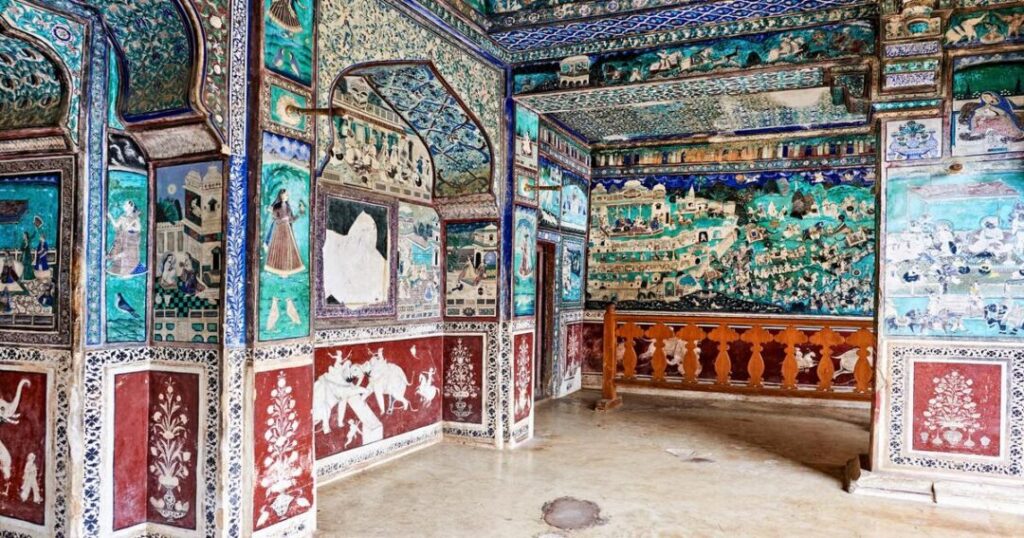
Bundi doesn’t get the crowds of the big four, which is exactly why its murals have survived as well as they have.
Founded in the 12th century as the capital of the Hadoti kingdom under the Hada Chauhans, Bundi’s fortunes shifted in 1624 when Kota broke away as its own independent state, quietly demoting Bundi from capital to something smaller. What it kept, though, was Taragarh Fort, built in 1354 and once described by Rudyard Kipling as “the work of goblins rather than of men”. Kipling wasn’t just passing through for the view: he stayed at Bundi’s Sukh Mahal while writing parts of Kim, and the forested hills around town are often cited as inspiration for The Jungle Book’s setting.
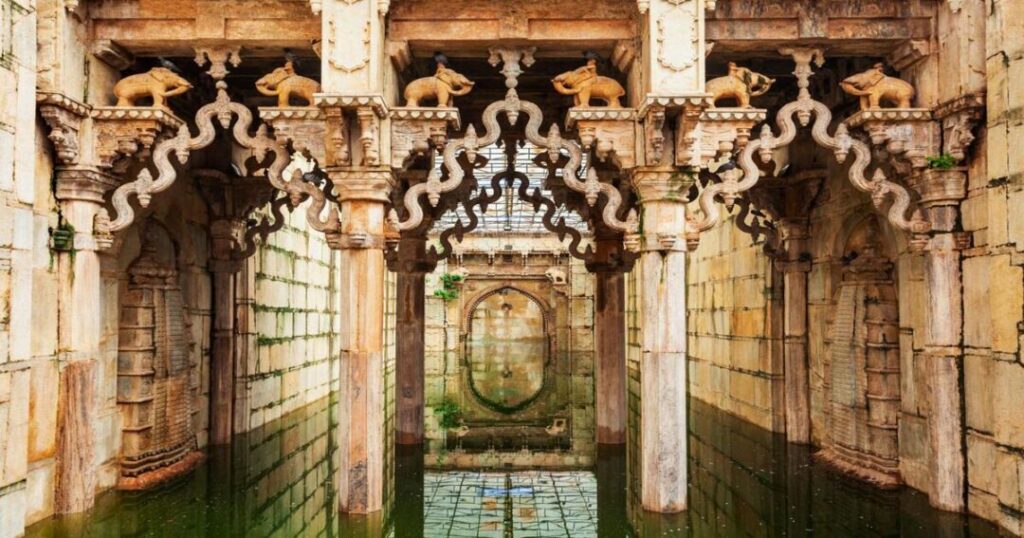
Inside Bundi Palace, the real draw is the Chitrashala, along with murals in the Chhatra Mahal, Phool Mahal, and Badal Mahal, representing the Bundi school of painting that flourished from the 17th century through the late 1800s. The town also holds roughly 50 stepwells, most now in ruins, though Raniji ki Baori, built in 1699 by Rani Nathavati Ji, still descends about 46 meters with deity carvings on every level.
- Location: Southeast Rajasthan, roughly 210 km from Jaipur
- Best paired with: A stop en route between Jaipur and Udaipur
- The detail most visitors miss: The murals inside Bundi Palace are original, not restorations, which is rare for painted interiors of this age left exposed to the elements.
Also Read: Places to Visit in Jaisalmer: Discover the Golden City of Rajasthan
Rajasthan Places to See for Real Rajput History: Chittorgarh Fort
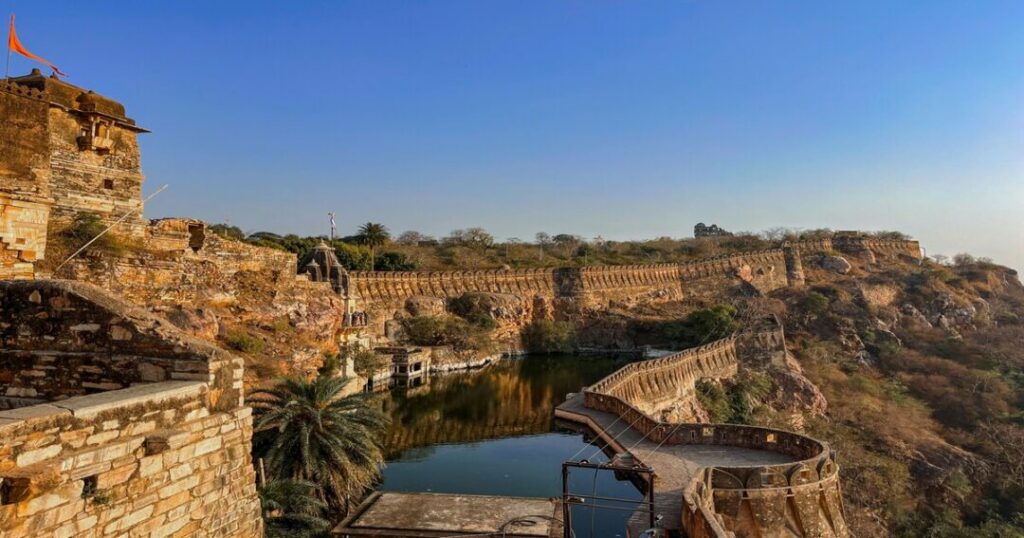
If you want one of the Rajasthan places to see that carries the region’s most-told and most-disputed legend, Chittorgarh is it.
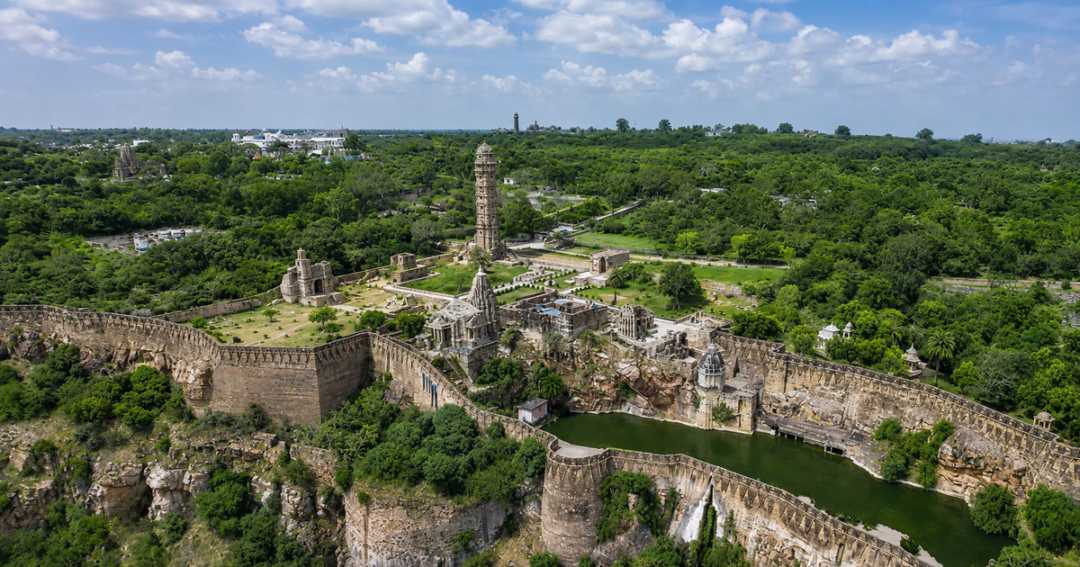
The fort itself is not in question: a UNESCO World Heritage Site crowning a seven-mile-long hill across 700 acres, it endured an eight-month siege by Alauddin Khilji, Sultan of Delhi, that ended in the fort’s capture on August 26, 1303. What happened next is where history and legend blur. The most famous version holds that Khilji besieged Chittor after hearing of the extraordinary beauty of Rani Padmini, queen of Rana Rattan Singh, and that after a tense standoff (including a supposed agreement to let the sultan view only her reflection in a mirrored pool) the siege ended with the women of the fort performing jauhar, mass self-immolation, rather than face capture.
Historians are divided on how much of this actually happened as told; the Padmini story as most people know it traces heavily to a 1540 Sufi poem, written over two centuries after the siege, rather than to contemporary court records. What’s verifiable is the fort’s later chapter under Rana Kumbha, who built the 37-meter Vijay Stambh in 1448 to commemorate his own victory over Mahmud Khilji of Malwa, alongside the older Kirti Stambh, a 12th-century Jain tower predating Kumbha’s reign by centuries.
- Location: Southern Rajasthan, about 115 km from Udaipur
- Best paired with: A half-day add-on to an Udaipur itinerary
- The detail most visitors miss: Rana Kumbha, whose victory tower dominates Chittorgarh, is the same king who later commissioned the Jain temple at Ranakpur, further down this list.
Traveller’s Experience
[QUOTE: “Guides at Chittorgarh will tell you the Padmini story as fact and then, if you ask, admit historians argue about it — both versions are worth hearing.” — suggested source: heritage travel writer]
Also Read: TOP 10 OFFBEAT PLACES TO VISIT IN RAJASTHAN
Important Places to Visit in Rajasthan for Desert History: Bikaner
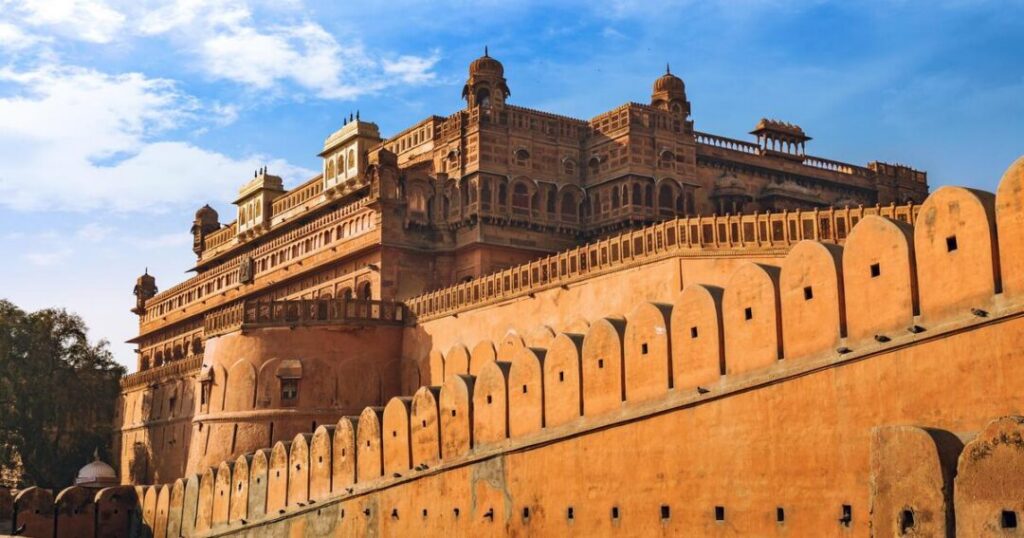
Among the important places to visit in Rajasthan, Bikaner is the one founded almost entirely out of a family argument.
In 1488, Rao Bika, one of five sons of Rao Jodha (the same Rao Jodha who founded Jodhpur), left his father’s court after an insensitive remark and rode out into the wilderness known as Jangladesh determined to build something of his own. Along the way he stopped at Deshnoke to consult the mystic Karni Mata, who blessed his venture and predicted his success. Karni Mata went on to become the kuladevi (family deity) of the Bikaner Rathores, and later helped broker a marriage alliance between Rao Bika and the daughter of Rao Shekha, a powerful Bhati chief, cementing Bika’s hold on the region he’d carve into a kingdom.
The city’s centerpiece today, Junagarh Fort, came later: built between 1589 and 1594 by Raja Rai Singh under the name Chintamani, it holds a distinction few Rajasthani forts can claim, it was never successfully captured. About 30 km outside the city, the temple Karni Mata inspired still stands at Deshnoke, better known today as the Rat Temple for the thousands of rats considered sacred and protected within its halls.
- Location: Northern Rajasthan, in the Thar Desert, about 330 km from Jaipur
- Best paired with: A dedicated day or two rather than a rushed stop, given the distance from other stops on this list
- The detail most visitors miss: Junagarh’s “never captured” record makes it one of the few major Rajasthani forts you can genuinely call undefeated rather than merely restored.
Also Read: Things to Do in Alwar: 15 Must-Visit Attractions in Rajasthan’s Heritage City
Places to Visit in Rajasthan for Architecture Alone: Ranakpur’s 1,444 Pillars
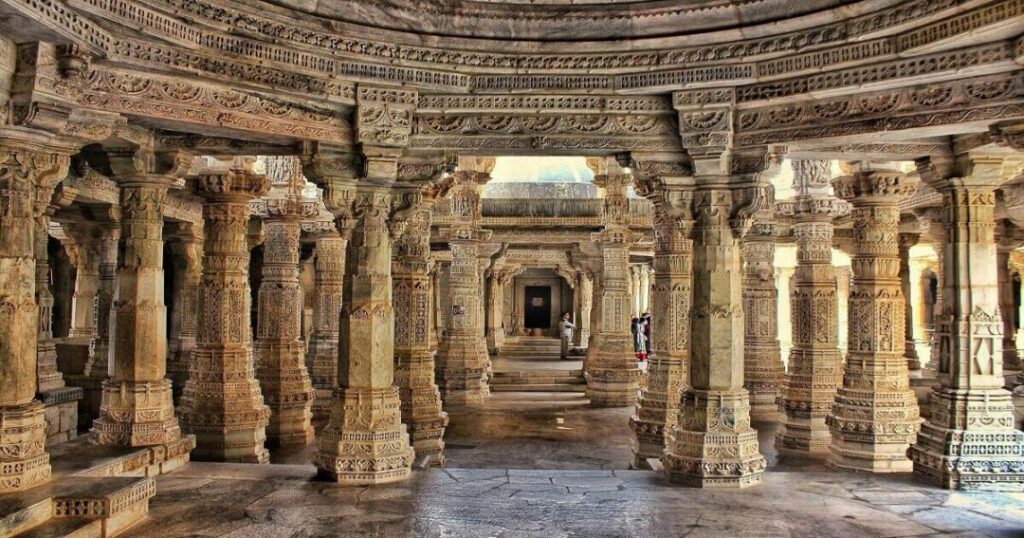
Some places to visit in Rajasthan justify the trip on architecture alone, and Ranakpur’s Jain temple is the clearest example on this list.
According to local legend, a wealthy Jain merchant named Dharna Shah received a celestial vision that left him determined to build a temple honoring Adinatha, the first Jain Tirthankara. He took the plan to Rana Kumbha, the same Mewar king behind Chittorgarh’s Vijay Stambh, who not only granted land but suggested a township be built around it, a town that took his own name: Ranakpur. Construction is said to have begun around 1437 and taken roughly 50 years to complete, at a cost historically estimated near 10 million rupees.
What resulted is a temple covering nearly 48,000 square feet, with 29 halls, 80 domes, and 1,444 intricately carved marble pillars, no two of them alike, arranged so precisely that no pillar blocks a devotee’s view of the central deity from any angle in the temple. One enduring legend claims a single pillar is fated to remain forever unfinished: each time craftsmen have tried to complete it, it’s said to have broken the following day again.
- Location: Pali district, roughly 90 km from Udaipur, on the way to Jodhpur
- Best paired with: A stop between Udaipur and Jodhpur, since it sits almost directly on that route
- The detail most visitors miss: The pillar count and construction cost are frequently repeated as fact, but both come from local tradition rather than independently verified historical records.
Also Read: Things to Do in Ajmer: The Complete Guide to Rajasthan’s City of Faith
Good Places to Visit in Rajasthan Most Tourists Skip: Mandawa’s Painted Havelis
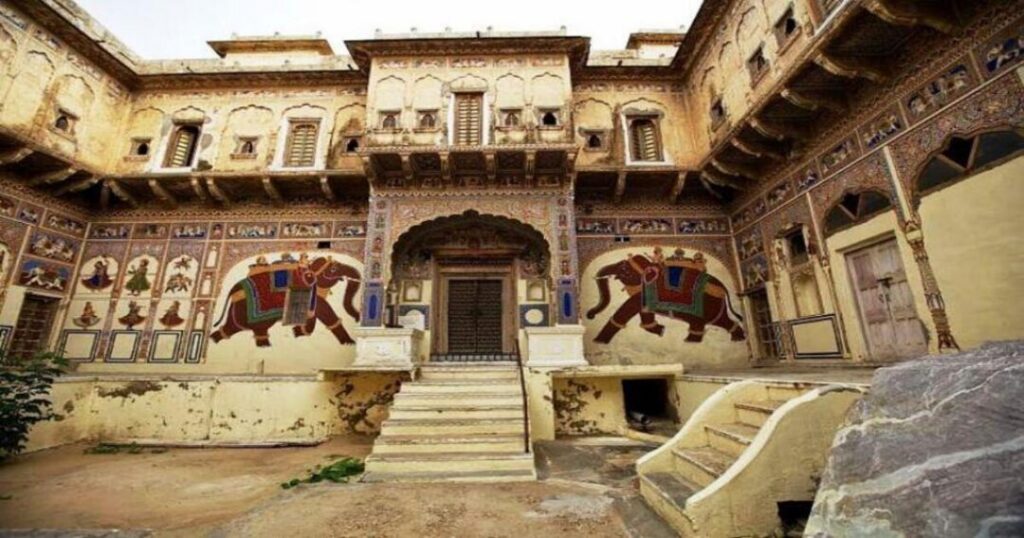
Of the good places to visit in Rajasthan that rarely make a first-timer’s list, Mandawa is the strongest case for slowing down and looking at walls rather than forts.
Mandawa sits in the Shekhawati region, where the story isn’t royal at all; it’s mercantile. Beginning around 1830, Marwari merchant families who’d grown wealthy trading across Central Asia, and later in cities like Calcutta, began funneling money back into their hometowns, commissioning grand havelis covered floor to ceiling in fresco paintings. These weren’t just decorative flourishes: the frescoes depicted religious stories and royal processions alongside scenes of daily life, and, tellingly, the new inventions these merchants encountered on their travels- steam trains, bicycles, even early telephones- were painted onto walls by craftsmen who mixed their own mineral and organic pigments on site.
As trade routes shifted decisively toward Calcutta and Mumbai in the 20th century, Shekhawati’s commercial importance faded, and many of these havelis were left standing but unoccupied, earning the region its nickname as an open-air art gallery, one that’s slowly crumbling in places.
Not sure how to fit Bundi, Chittorgarh, Bikaner, Ranakpur, and Mandawa into a realistic route? Ask NIVU AI in the Explurger app to map these five against your existing Jaipur-Jodhpur-Udaipur-Jaisalmer itinerary and suggest where each fits best.
- Location: Shekhawati region, roughly 260 km from Jaipur
- Best paired with: Other Shekhawati towns like Nawalgarh and Fatehpur, since haveli-hopping works best across several towns rather than one
- The detail most visitors miss: Many of these havelis are privately owned and only partially open, so a local guide often makes the difference between seeing a locked courtyard and an actual fresco hall.
Also Read: Things to Do in Chittorgarh: The Complete Guide to Rajasthan’s Fort of Sacrifice
Rajasthan Tour Places to Visit First: How to String These Five Together
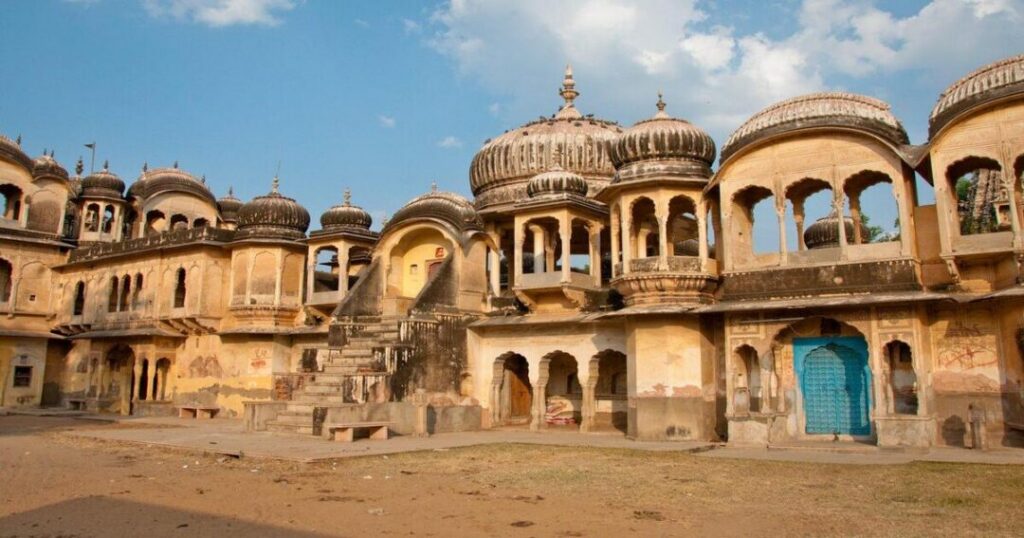
If you’re building these into an existing trip, the order among these Rajasthan tour places to visit matters more than you’d think.
- Coming from Jaipur or Udaipur? Bundi and Chittorgarh both sit on natural routes between the two, making them easy add-ons rather than detours.
- Heading toward Jodhpur? Ranakpur sits almost directly on the Udaipur-to-Jodhpur road, arguably the easiest “extra” stop on this entire list.
- Have a dedicated desert leg? Bikaner is far enough from the others that it deserves its own day or two, ideally paired with Jaisalmer given their shared Thar Desert setting.
- Want a slower, walking-focused day? Mandawa and the wider Shekhawati region reward unhurried exploration on foot far more than a rushed single stop.
Things to Do in Rajasthan Beyond Sightseeing: Food, Craft & Local Experiences
A few things to do in Rajasthan beyond photographing forts add real texture to a trip through these five towns.
- In Bikaner, try the region’s famous bhujia (a spiced gram-flour snack) and rasgulla variations, both closely associated with the city.
- In Bundi, seek out contemporary artists still working in the Bundi school painting tradition, a craft that nearly disappeared after the 1800s.
- In Mandawa and the Shekhawati towns, a guided haveli walk with a local historian reveals fresco details, especially the era’s fascination with new technology, that are easy to miss on your own.
Also Read: Food of Rajasthan: The Complete Guide to Rajasthani Cuisine, Dishes & Sweets
Conclusion About places to see in Rajasthan
The big four will always anchor a first Rajasthan trip, but the places to see in Rajasthan covered here hold their own once you know what’s actually behind them: a fort Kipling called goblin-work, a siege still argued over more than 700 years later, a prince who built a kingdom out of spite, and a temple whose pillar count nobody can fully verify. Save the ones that fit your route to your Bucket List, and your Automatic Travelogue will have every stop mapped by the time you’re back.
Ready to explore? Download the Explurger app and start your journey today.
Pick one of these five to slot into your next Rajasthan trip, and let its story earn the detour.
FAQs About Places to see in Rajasthan
2. Is the Rani Padmini story at Chittorgarh historically accurate?
It's disputed. The most widely told version traces largely to a Sufi poem written more than two centuries after the 1303 siege, and many historians treat it as partly or wholly legendary rather than verified historical fact. The siege itself and its outcome are well documented; the specific Padmini narrative is the contested part.
3. How many pillars does the Ranakpur Jain temple actually have?
Local tradition puts the number at 1,444 marble pillars, each carved differently, though this figure comes from local record-keeping rather than an independently verified modern count. The temple's design ensures none of them block a devotee's view of the central shrine from any angle.
4. Why was Bikaner founded separately from Jodhpur?
Rao Bika, a son of Jodhpur's founder Rao Jodha, left his father's court after a personal dispute and founded his own kingdom in 1488 in the Thar Desert region known as Jangladesh. The mystic Karni Mata reportedly blessed his venture early on, and she later became the Bikaner Rathores' family deity.
5. What is the Bundi school of painting?
It's a Rajasthani mural and miniature painting tradition that developed in Bundi starting in the 17th century, visible today in the Chitrashala and other halls of Bundi Palace. The tradition continued into the late 1800s before declining, though some contemporary artists still work in the style.
6. Can Ranakpur be visited as a day trip from Udaipur or Jodhpur?
Yes, Ranakpur sits roughly 90 km from Udaipur and is positioned almost directly on the road toward Jodhpur, making it one of the easiest single-day additions to an existing itinerary. Most visitors combine it with a stop at Kumbhalgarh Fort, which sits along a similar route.