
922 Total Views
There are forts in India that are impressive. And then there is Chittorgarh Fort, which is something else entirely. It is not primarily a monument to military power, though its scale makes that argument easily enough. It is a monument to a specific, terrible, recurring choice: to die rather than surrender. Three times in its history — in 1303, 1535, and 1568 — the women of the Mewar kingdom performed jauhar, a mass act of self-immolation, while the men rode out to certain death in saka (a last battle with no expectation of survival). The fort remembers all three of these moments. You cannot walk through it without feeling the weight of what happened here.
At approximately 700 acres — one of the largest forts in India — Chittorgarh Fort is a UNESCO World Heritage Site (inscribed in 2013 as part of the “Hill Forts of Rajasthan”) that contains 65 historic structures, nearly 20 large temples, half a dozen palaces, two extraordinary towers, sacred reservoirs, and the palace of Rani Padmini, whose beauty is said to have triggered the first siege. Things to do in Chittorgarh are concentrated almost entirely within the fort complex, but what the fort contains is enough for a full day and more.
The Three Jauhars — The History You Need to Know First
Before the monuments, the history. Chittorgarh was the capital of the Mewar kingdom — the heartland of the Sisodia Rajput clan — from approximately the 7th century CE. The fort’s history is shaped by three catastrophic sieges:
First Jauhar — 1303: Alauddin Khilji, Sultan of Delhi, besieged Chittorgarh for approximately eight months. The siege is connected to the legend of Rani Padmini — the queen of King Ratnasimha — whose legendary beauty Khilji was said to have glimpsed in a mirror. When defeat was inevitable, the Rajput women performed jauhar, and the men rode out in saka. Khilji took the fort and reportedly ordered the massacre of tens of thousands of the fort’s inhabitants. Note: The Rani Padmini legend is a later tradition — the earliest source is the 16th-century poem Padmavat by Malik Muhammad Jayasi — and historians debate the degree to which it is historical versus legendary.
Second Jauhar — 1535: Bahadur Shah, Sultan of Gujarat, besieged and took the fort. Rani Karnavati — widow of Rana Sanga — led the second jauhar. According to some accounts she sent her famous rakhi (protection thread) to the Mughal Emperor Humayun seeking aid; he was too distant to arrive in time. The numbers recorded — 13,000 women and 3,200 warriors — are extraordinary and form part of the fort’s darkest chapter.
Third Jauhar — 1568: Mughal Emperor Akbar besieged the fort. Maharana Udai Singh II (who would later found Udaipur) was evacuated to safety before the siege, carrying the Mewar lineage forward. The third jauhar took place as Akbar’s forces broke through. Akbar reportedly entered the fort and was so struck by the courage of the defenders that he ordered the construction of a memorial. The fort was eventually returned to the Rajputs in 1616 under Jahangir.
Also Read: Food of Rajasthan: The Complete Guide to Rajasthani Cuisine, Dishes & Sweets
Chittorgarh Fort — The UNESCO Complex
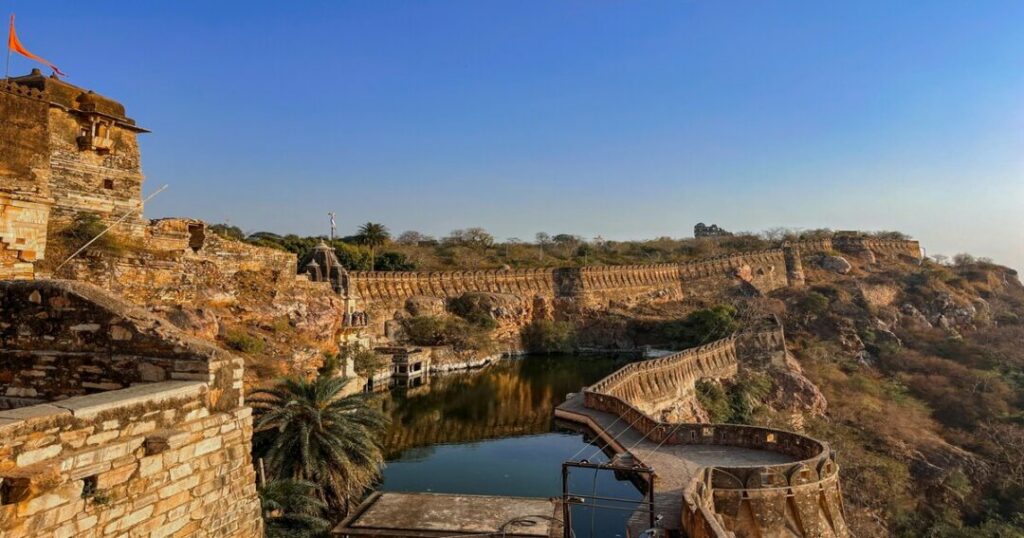
The fort sits on a 180-metre-high hill above the Berach River, rising dramatically from the plains. Entry is through seven sequential gates (pols) — Padan Pol, Bhairon Pol, Hanuman Pol, Jorla Pol, Ganesh Pol, Laxman Pol, and the main Ram Pol (named after Lord Rama). The sequential gate system was a military defence design — attackers who breached one gate would face another immediately.
Vijay Stambh — The Tower of Victory
The Vijay Stambh (Tower of Victory) is the defining monument of Chittorgarh — a 37-metre-high (approximately 120 feet) tower built by Rana Kumbha in the 1440s to commemorate his victory over Mahmud Khilji of Malwa. Rising nine storeys and covered on every external surface with carved figures from Hindu mythology — deities, warriors, celestial musicians, and narrative scenes from the Mahabharata and Ramayana — it is one of the most impressive examples of medieval Rajput stone carving anywhere in India.
Visitors can climb the dark, narrow internal staircase to the top for panoramic views across the fort complex and the surrounding plains. The tower is the symbol of Chittorgarh and appears on the insignia of the Rajasthan Police.
- Open for climbing; nominal entry fee; the narrow staircase requires care
- The exterior carving program is best examined at dawn and dusk when the low-angle light reveals the relief depth
- The tower is illuminated at night — visible from the town below
Also Read: Things to Do in Ajmer: The Complete Guide to Rajasthan’s City of Faith
Kirti Stambh — The Jain Tower of Fame
The Kirti Stambh (Tower of Fame) predates the Vijay Stambh — an approximately 22-metre-high Jain tower dedicated to Adinath (the first Tirthankara of Jainism), built by a wealthy Jain merchant in approximately the 12th century CE. The tower’s seven storeys are covered in carvings of Jain Tirthankaras in various postures — a visual compendium of Jain iconography. It is smaller than the Vijay Stambh but in some ways more intricately detailed.
- One of the finest examples of Jain sculptural architecture in Rajasthan
- Less crowded than the Vijay Stambh at any time of day
- Located in the lower section of the fort complex near the Fateh Prakash Palace
Rana Kumbha Palace — The Fort’s Oldest Surviving Structure
Rana Kumbha Palace is the oldest surviving palace structure within the fort — a partially ruined but still atmospheric complex that served as the primary royal residence of the Mewar kings. Multiple legends converge here: it is traditionally identified as the site of the first jauhar in 1303, as the place where Meera Bai spent her time in devotional practice, and as the birthplace of Maharana Udai Singh II, founder of Udaipur.
The palace’s ground floor includes a series of chambers, courtyards, and an underground cellar — the thalghara — where the first jauhar is said to have taken place. Walking through the partially collapsed rooms, the layers of history are literally visible in the stonework.
- Arrive early when the light enters the eastern chambers and the shadows are long
- The underground section requires a flashlight or phone torch
- The architecture shows clear Rajput and early Mughal transitional influences
Padmini Palace — The Mirror Pavilion
Rani Padmini’s Palace (Padmini Mahal) is a three-storey structure surrounded by a small reflecting pool — and it is in this pool’s water that the famous story of Alauddin Khilji glimpsing Padmini’s reflection is set. According to the legend (as recorded in the Padmavat of Malik Muhammad Jayasi, composed in 1540), Khilji was permitted to see only the queen’s reflection in the pool — not her face directly.
The palace itself is in a partially deteriorated state but the setting — the water surrounding the structure, the pavilion visible across the pool — is atmospheric and genuinely evocative.
- The approach to the palace is along a causeway across the water — the reflection of the structure in still conditions is one of Chittorgarh’s finest photographs
- The site has no reconstruction and retains a raw, unrestored quality that the restored sites of Rajasthan often lack
- Combine with the Gaumukh Reservoir (below) for the southern fort circuit
Gaumukh Reservoir — The Fort’s Water Source
Gaumukh Kund (Cow-Mouth Reservoir) is a sacred water tank within the fort, fed by a natural spring that flows through a carved cow’s mouth (gaumukh) in the rock face. This reservoir provided fresh water to the fort’s inhabitants during sieges — and the fact that it was fed by a natural spring rather than rain collection made it strategically crucial. The water from the spring is considered sacred; the kund is associated with the sage Valmiki.
- The spring is still active — fresh water flows year-round
- One of the most peaceful spots in the fort, particularly in early morning
- The carved cow’s mouth is an extraordinary example of Rajput architectural detail in a functional structure
Religious Sites Within the Fort
Meera Temple — The Devotee’s Shrine
The Meera Temple is dedicated to Meera Bai — the 16th-century Rajput princess who became one of the most celebrated poet-saints in the bhakti tradition. Meera Bai was born into the Merta branch of the Rathore clan and married into the Mewar royal family. After her husband’s death, she devoted herself entirely to Lord Krishna — composing thousands of devotional poems (bhajans) that are still sung across North India and that articulate a complete abandonment to divine love.
According to tradition, Meera Bai’s in-laws tried multiple times to kill her (by sending her a poisoned cup and a basket of snakes among other methods); she survived each attempt and attributed her survival to Krishna’s protection. She eventually left the palace and spent the rest of her life among Krishna devotees in Vrindavan and Dwarka. The small temple dedicated to her within the fort complex marks the space where she performed her devotions.
- The temple is active — priests conduct daily rituals
- The Rajput architecture of the temple is in good condition with carved pillars and a distinctive shikhara (tower)
- The Meera Bai bhajans are played at many temple fairs across Rajasthan; the temple has a particularly intense atmosphere during Krishna Janmashtami celebrations
Kumbha Shyam Temple (Varahamitha Temple)
The Kumbha Shyam Temple (also called the Varahamitha Temple) is one of the oldest temples within the fort — built during the reign of Rana Kumbha in the 15th century in the nagara architectural style with a heavily carved exterior. Dedicated to Lord Vishnu, the temple’s notable feature is its connection to Meera Bai — she is traditionally associated with worship here as well as at the Meera Temple proper.
Kalika Mata Temple — The Ancient Devi Shrine
The Kalika Mata Temple stands on the site of an ancient 8th-century Sun Temple (Surya Mandir) — the original solar iconography is still visible in the carved panels around the base of the current structure. The temple was later converted to worship of Kali (Kalika Mata) and continues as an active Devi shrine. The architectural transition between the original Sun Temple and the later Shakti conversion is visible in the mixed iconography on the walls — Sun God panels alongside Kali imagery.
- One of the most historically layered structures on the fort
- The 8th-century carved panels at the base are some of the finest pre-Rajput stonework in the complex
- Active religious site — head covering required
Fateh Prakash Palace Museum
The Fateh Prakash Palace, a 19th-century palace within the fort, houses a small but well-curated museum with Mewar-period sculptures, weapons, coins, and artefacts. The palace was built by Maharana Fateh Singh and sits near the Vijay Stambh. The museum is usually empty of tourists even when the fort is crowded — worth 45 minutes for anyone interested in Mewar history beyond the legendary.
Jauhar Kund — The Site of the First Jauhar
The Jauhar Kund — the site identified with the first jauhar of 1303 — is a sunken area adjacent to the Rana Kumbha Palace. A stepped platform descends to the area where the mass self-immolation is said to have taken place. It is stark, unadorned, and extraordinary quiet — one of the most affecting places in the entire fort complex and consistently overlooked by visitors who concentrate on the towers and palaces.
Fort Circuit by Vehicle
The Chittorgarh Fort complex is enormous — approximately 700 acres spread across the hilltop plateau. Walking the entire circuit takes a full day and covers considerable distance in the Rajasthan heat. Most visitors hire an auto-rickshaw or a small vehicle inside the fort for the circuit — this is the most practical way to cover the main Chittorgarh sightseeing places without exhaustion.
Best Time to Visit Chittorgarh
October to March is the finest window — temperatures between 10°C and 30°C, clear skies, and the fort at its most walkable. November and December are particularly good — the post-monsoon landscape is still slightly green, the light is clear, and the crowds are manageable. Avoid April to June — temperatures can reach 42°C and the exposed fort plateau amplifies the heat. The Jauhar Mela — an annual fair held at Chittorgarh in February/March commemorating the jauhars — is one of the most extraordinary and emotionally powerful events in Rajasthan’s festival calendar.
How to Reach Chittorgarh
- From Udaipur (~175 km | 2.5–3 hours): By road via NH76 — the most common approach; by train (Chittorgarh is on the main rail line connecting Udaipur to Jaipur and Delhi)
- From Jaipur (~340 km | 5–6 hours): By road; by train
- From Delhi (~650 km | 10–11 hours): Overnight train to Chittorgarh directly; several trains connect Delhi to Chittorgarh via Kota
- Chittorgarh Junction is the main railway station — approximately 5 km from the fort base; autos and taxis available
- Within Chittorgarh: The fort is 5 km from the town; hire an auto for the ascent and a vehicle within the fort for the circuit
Day Trips — Places to Go from Chittorgarh
Udaipur (~115 km | 2 hours)
The Lake City — Udaipur — was founded by Maharana Udai Singh II after he escaped the fall of Chittorgarh in 1568. The city is in a direct historical continuation of Chittorgarh: Udai Singh carried the Mewar lineage westward and established his new capital on the banks of Lake Pichola. Visiting both in sequence creates the most complete understanding of Mewar’s story — the fort that was lost and the city that was built from its ashes.
Kumbhalgarh (~185 km | 3 hours)
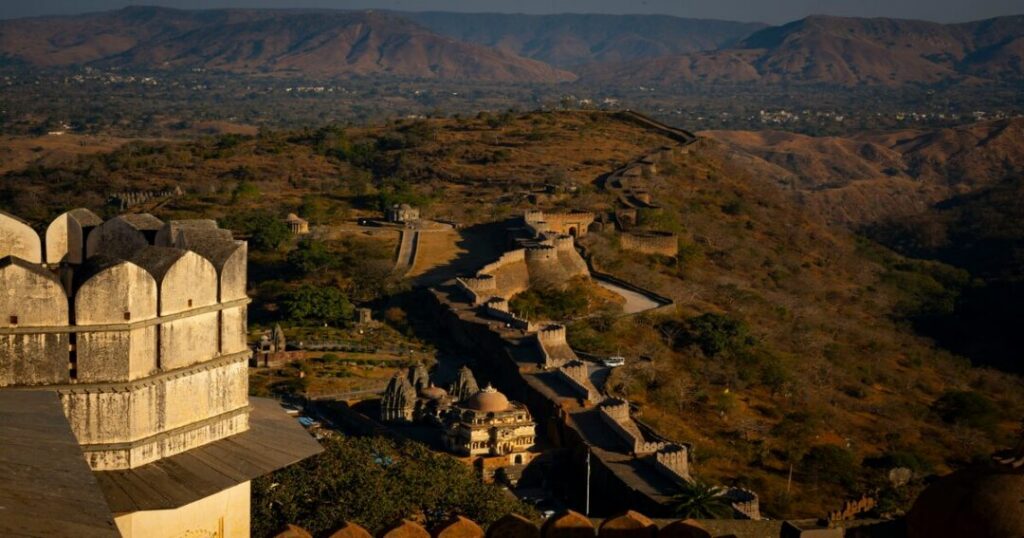
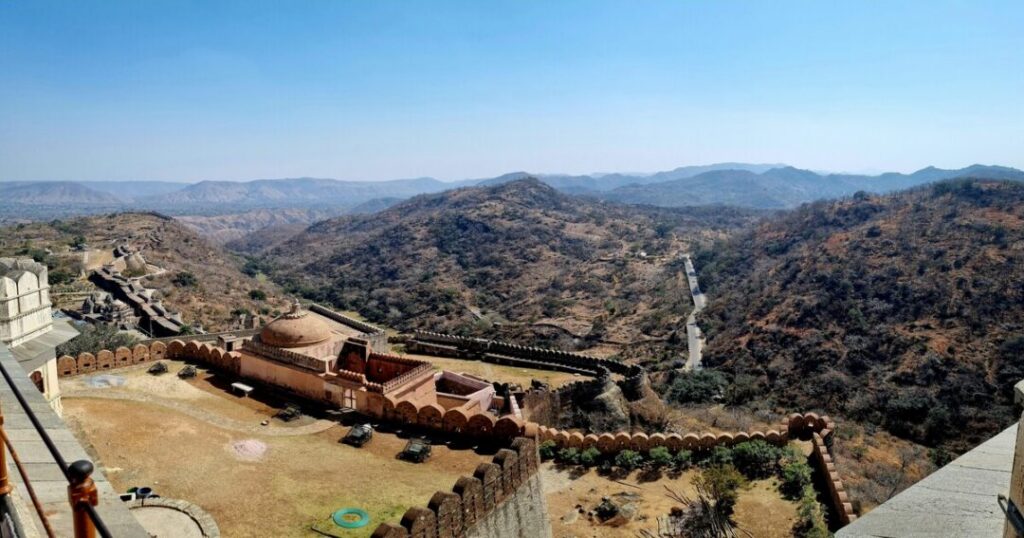
Kumbhalgarh Fort — also a UNESCO World Heritage Site (Hill Forts of Rajasthan, 2013) — was built by Rana Kumbha (the same ruler who built Vijay Stambh) in the 15th century. It is famous for having the second-longest wall in the world after the Great Wall of China — the fort wall stretches approximately 36 km. It was also the birthplace of Maharana Pratap — the greatest of the Mewar warrior kings — making it an essential stop on the Mewar heritage circuit.
Also Read: Banswara Tourist Places: A Complete Travel Guide to Rajasthan’s Hidden Gem
Conclusion About Things to Do in Chittorgarh
Chittorgarh is not a comfortable history. It is history that asks something of you — to stand in the Jauhar Kund and understand what happened there, to climb the Vijay Stambh and read the carved walls as a record of a culture that built beauty and tragedy in equal measure, to walk through the mirror pavilion of Rani Padmini’s Palace and feel the weight of a story that has been carried for seven centuries.
Quick guide to Chittorgarh: best places to visit:
- The towers: Vijay Stambh (37 m, 1440s, climb for panoramic views), Kirti Stambh (22 m, 12th-century Jain)
- The palaces: Rana Kumbha Palace (oldest, 1303 jauhar site), Rani Padmini’s Palace (mirror pool, legend of Khilji)
- The religious sites: Meera Temple (Meera Bai’s devotional space), Kalika Mata (8th-century Sun Temple foundation), Kumbha Shyam Temple
- Hidden: Jauhar Kund (site of 1303 jauhar), Fateh Prakash Museum, Gaumukh Reservoir
- Practicalities: UNESCO World Heritage Site (2013); 65 structures in ~700 acres; hire a vehicle inside the fort; best October to March
- Day trips: Udaipur (115 km — the city Udai Singh built after Chittor fell), Kumbhalgarh (185 km — 36 km wall, birthplace of Maharana Pratap)
Download the Explurger app to discover what heritage travellers recommend in Chittorgarh, find the best routes through the fort, and log every tower, temple, and moment of quiet at the Jauhar Kund.
The gates are open. The towers are still standing. Chittorgarh has been waiting seven centuries for you to come and understand it.
FAQs About Things to Do in Chittorgarh
2. What are the main Chittorgarh tourist attractions?
The main Chittorgarh tourist attractions in the fort: Vijay Stambh (Tower of Victory, 37 m, Rana Kumbha, 1440s), Kirti Stambh (Tower of Fame, 22 m, 12th-century Jain), Rana Kumbha Palace (oldest structure, site of 1303 jauhar), Rani Padmini's Palace (mirror pool, Alauddin Khilji legend), Meera Temple (Meera Bai's devotional site), Kalika Mata Temple (8th-century Sun Temple foundation), Gaumukh Reservoir (sacred spring-fed tank), Fateh Prakash Palace Museum (Mewar artefacts). The fort is a UNESCO World Heritage Site (Hill Forts of Rajasthan, 2013) containing 65 historic structures.
3. What is the history of the three jauhars at Chittorgarh?
Chittorgarh witnessed three major jauhars: First in 1303 when Alauddin Khilji besieged the fort — Rani Padmini led the jauhar (the story of Khilji seeing her reflection in a mirror first appears in the 16th-century poem Padmavat by Malik Muhammad Jayasi). Second in 1535 when Bahadur Shah of Gujarat besieged the fort — Rani Karnavati led the second jauhar; 13,000 women and 3,200 warriors died. Third in 1568 when Mughal Emperor Akbar took the fort — Maharana Udai Singh II escaped to later found Udaipur; the third jauhar took place as the fort fell. The fort was returned to the Rajputs in 1616 under Jahangir.
4. Is the Chittorgarh Fort a UNESCO World Heritage Site?
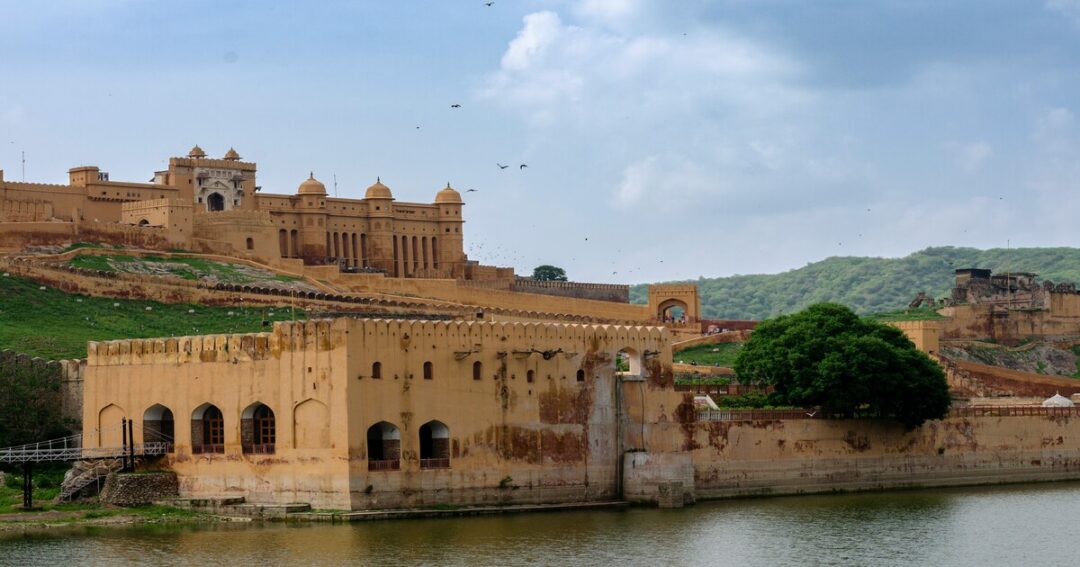
Yes — Chittorgarh Fort was inscribed as a UNESCO World Heritage Site in 2013 as part of the "Hill Forts of Rajasthan" serial nomination, which also includes Amber Fort (Jaipur), Jaisalmer Fort, Kumbhalgarh Fort, Gagron Fort, and Ranthambore Fort. The serial nomination recognised the collective significance of these six forts as representing the zenith of Rajput military architecture. Chittorgarh Fort — at approximately 700 acres — is the largest of the six.
5. What is the best time to visit Chittorgarh?
October to March is the best window for Chittorgarh sightseeing — comfortable temperatures (10–30°C), clear skies, and manageable crowds. The Jauhar Mela in February/March — an annual commemoration of the three jauhars — is one of Rajasthan's most extraordinary and emotionally powerful events. Avoid April to June when temperatures can reach 42°C and the exposed fort plateau amplifies the heat significantly.