
2,027 Total Views
Most Sahyadri forts give you a fort. Ratangad gives you a needle threaded through solid rock, two ladders bolted into a cliff face, and— for about six weeks a year—hillsides carpeted in wildflowers that most trekkers never plan around. The ratangad trek starts in the quiet village of Ratanwadi near Bhandardara and climbs through forest and open ridge to one of the most distinctive fort summits in Maharashtra, known locally as the “Jewel of the Sahyadris.” This guide covers the actual route, difficulty, cost, and the flower season worth timing your trip around.
Ratangad Trek History: Inside the Jewel of the Sahyadris
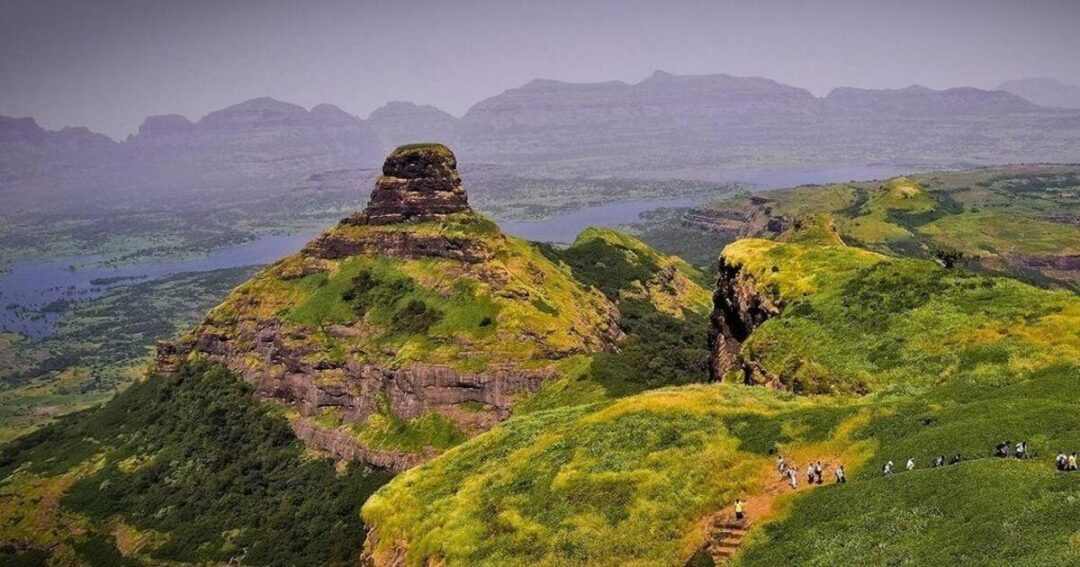
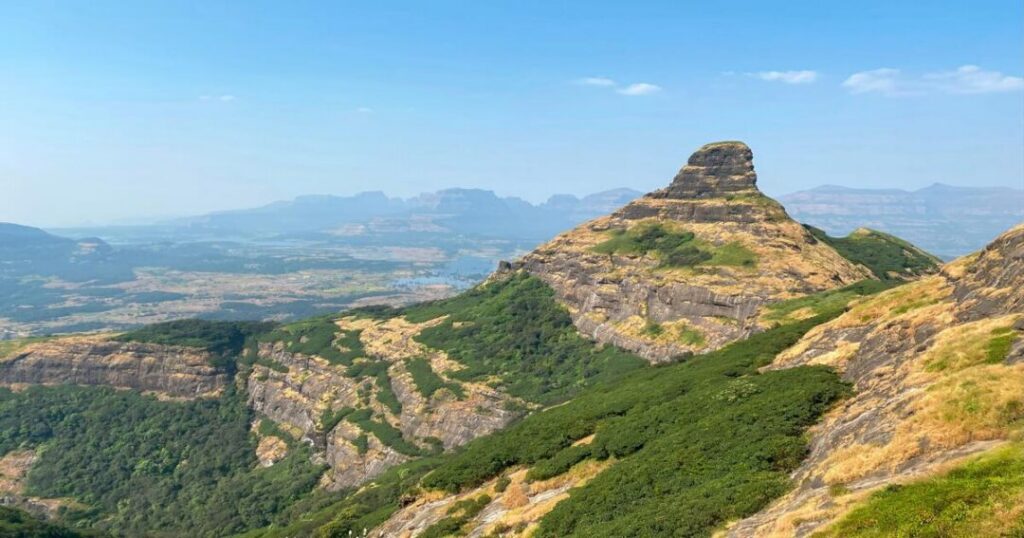
Ratangad is roughly 400 years old and sits above Bhandardara in Ahmednagar district, right on the border with Thane. Historians place it among the older Sahyadri hill forts that changed hands repeatedly between local chieftains and the Maratha kingdom before settling into disuse once its military value faded. What makes it stand apart from nearby forts like Harishchandragad isn’t political history so much as geology—a natural rock summit pierced clean through by a hole locals call the Nedhe, visible from villages kilometers away. The fort also holds the Amruteshwar-adjacent shrine complex and traces of a thieves’ entrance, the Chor Darwaza, still visible along the ridge.
Ratanwadi to Summit: Ratangad Trek Route
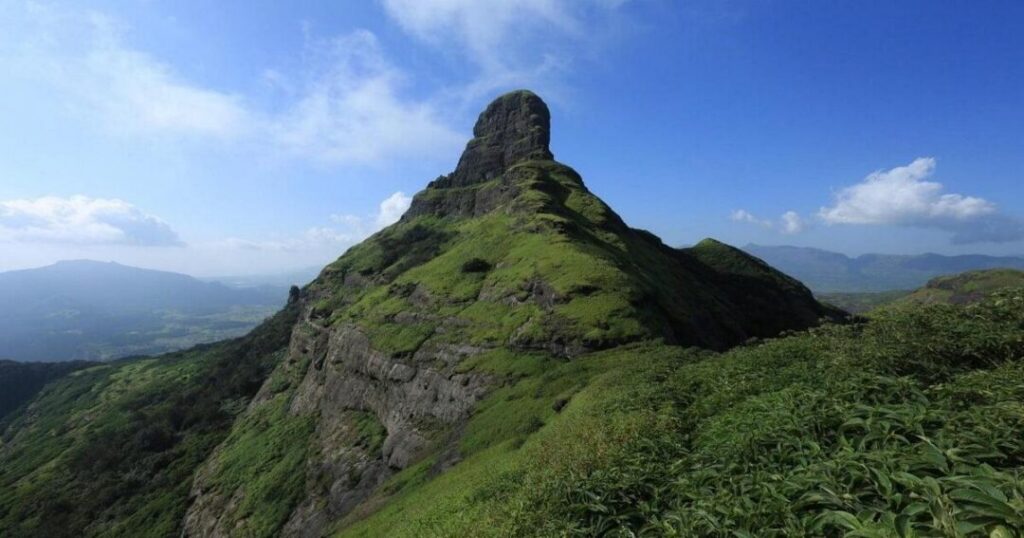
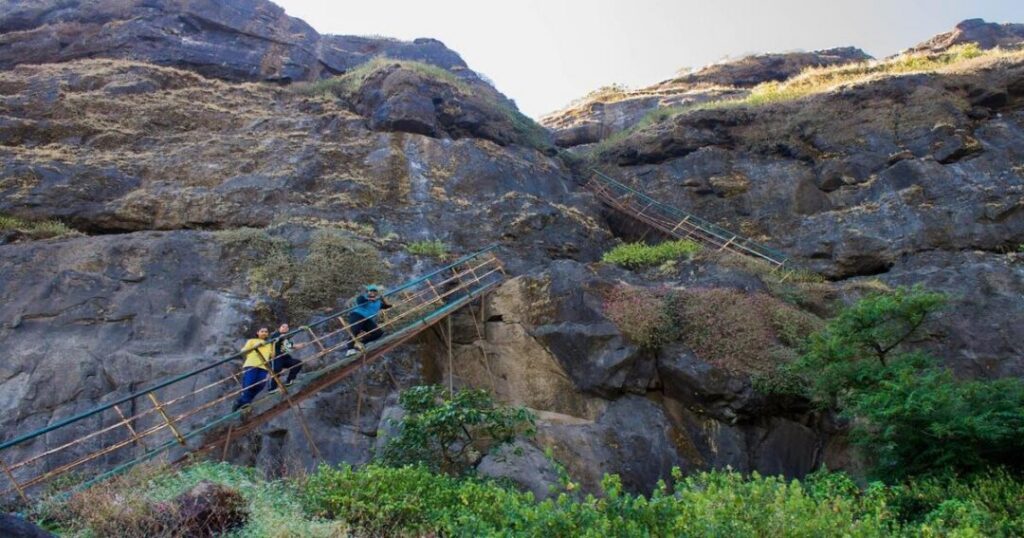
The standard Ratangad Fort trek route begins at Ratanwadi and climbs roughly 4–5 km one way, gaining height through open fields, forest patches, and a crossing of the Pravara River before the final rocky ascent. Most trekkers cover this in 3–4 hours going up, a little faster coming down. The last stretch to the fort plateau involves two iron ladders bolted onto the rock face—not technical climbing, but enough exposure that trekkers uneasy with heights should go slow and use the safety chains where provided. Once past the ladders, the trail opens onto the plateau near Ganesh Darwaja, the main gate, marking the start of the fort proper. This section is the part of the Ratangad trek most first-timers ask about in advance, and it’s genuinely the only technical stretch on an otherwise straightforward climb.
Ratangad Trek Difficulty and Fitness Level
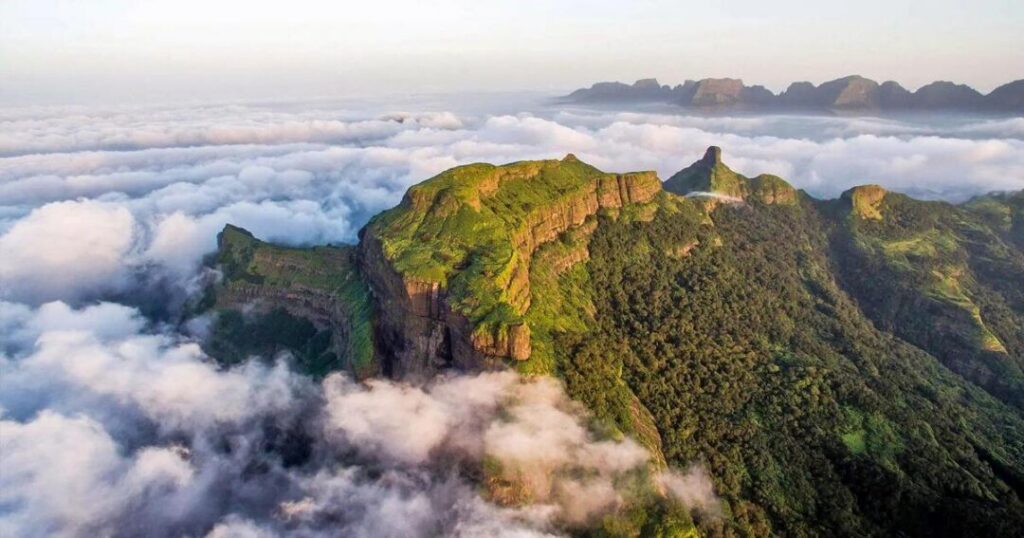
Most trek listings grade the Ratangad trek as easy to medium, and that’s a fair description for a first-timer with reasonable fitness—the trail itself is a manageable, undulating climb rather than a technical one. That said, “easy to medium” undersells the two ladder sections and the endurance needed for a 4–5 km uphill stretch in humid conditions, so ankle-supported trekking shoes and a reasonable base fitness level matter more than the grading suggests. Anyone attempting it during or right after heavy rain should budget extra time for the river crossing and expect the rock near the ladders to be slick.
Also read: Kalavantin Durg Trek: The Complete Guide to Maharashtra’s Most Thrilling Pinnacle
Top Things to See on the Ratangad Trek
The Nedhe—Ratangad’s Famous Needle Hole
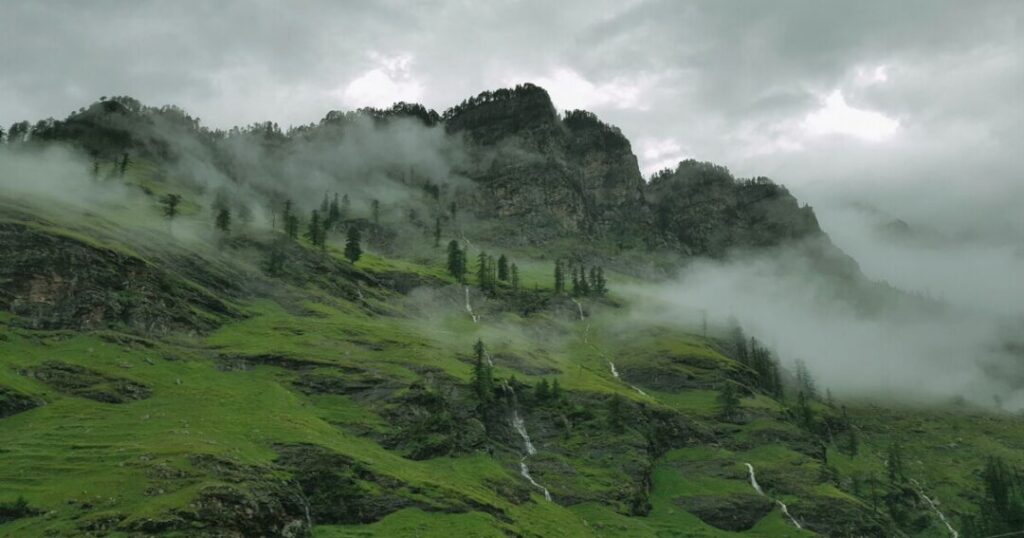
The single most photographed feature of any Ratangad trek is the Nedhe, a natural circular opening piercing straight through the summit rock—sometimes called the “Eye of the Needle.” It’s visible from the plains below on a clear day and is the fort’s defining landmark, distinguishing its skyline silhouette from every other Sahyadri fort.
Amruteshwar Temple
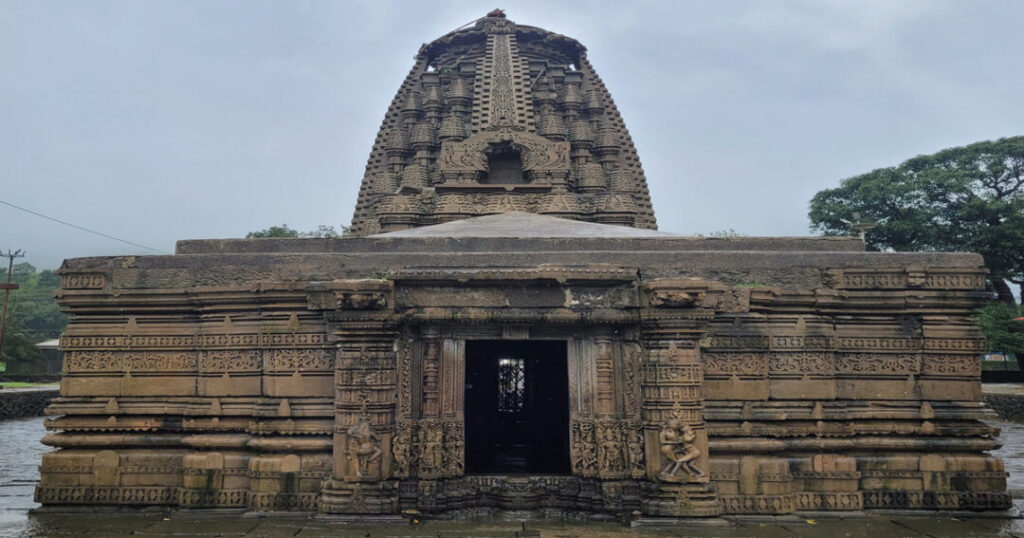
Roughly 6 km from Ratanwadi village, the Amruteshwar Temple is built in the Hemadpanthi architectural style and is known for its detailed stone carvings. Local legend ties the temple to the Pravara River’s origin, connected to a meditation story involving Sage Agastya. Many trekkers visit it either before or after the climb, since it sits right along the approach road.
The Four Gates and the Twin Ladders
Ratangad has four historic gates—Ganesh Darwaja, Hanuman Darwaja, Konkan Darwaja, and Trimbak (Tryambak) Darwaja—along with a concealed Chor Darwaza, or thieves’ entrance, still visible on the ridge. Sculpted figures of Ganesh and Hanuman flank the main entrance. The two ladders near the top remain the most talked-about obstacle on the whole route, short but exposed enough to need full attention.
Ratangad Flowers—The Monsoon Bloom
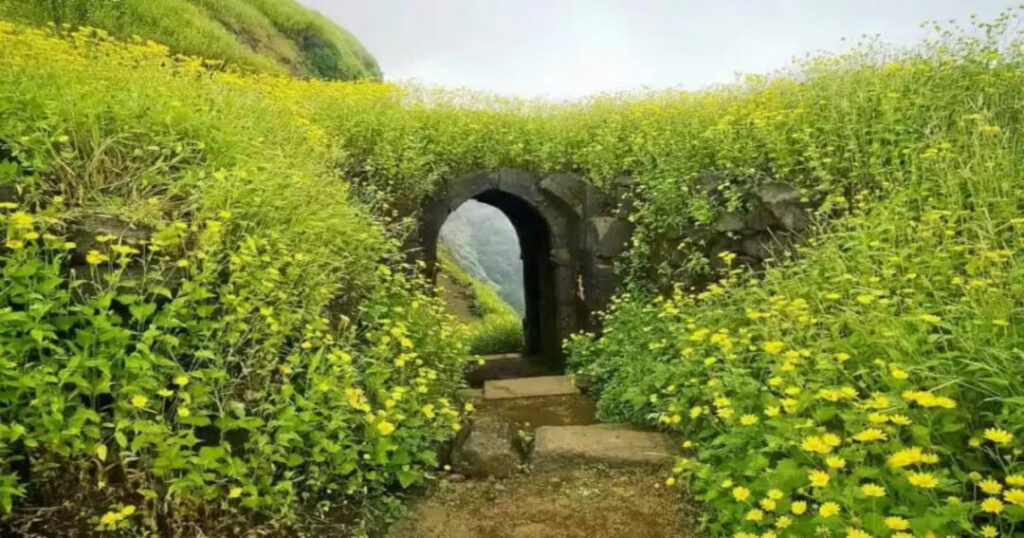
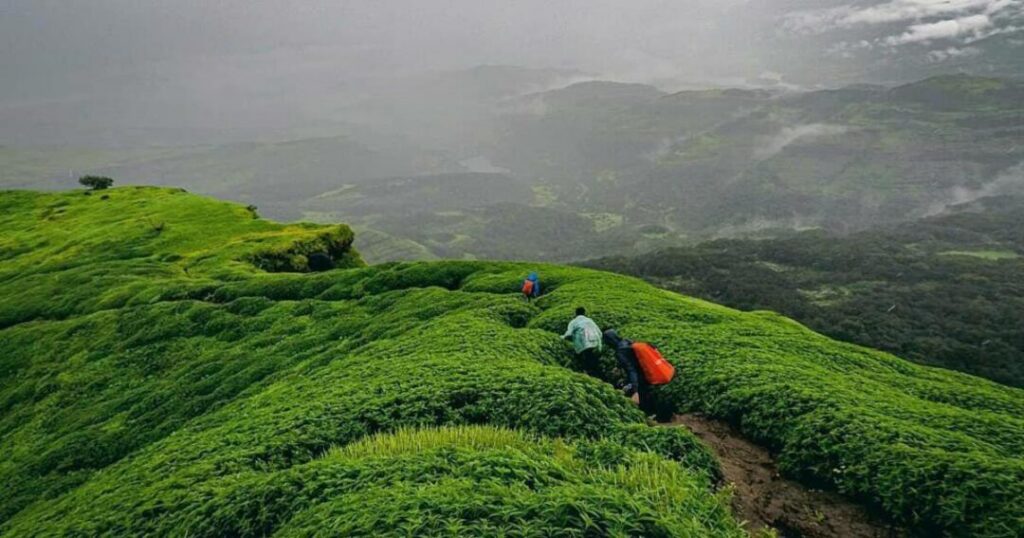
The late monsoon turns the slopes around Ratangad into one of the better Ratangad flower spots in the Sahyadri range, with species like Strobilanthes, Impatiens, and Smithia purpurea covering the trail edges in white, purple, and yellow through August and September. Several trek operators run a dedicated ratangad flower trek specifically timed to this bloom window, usually the last two weeks of August into mid-September, since the flowering season is short and weather-dependent. If flowers are the main reason for your trip, book close to the date rather than months in advance, since bloom timing shifts a little each year with the monsoon. A dedicated ratangad flower trek group also tends to move slower and stop more often for photos than a standard climb, so budget extra time if that’s the plan.
Summit Caves Stay: Camping on the Ratangad Trek
Unlike forts that require carrying tents, a ratangad fort stay usually means the caves near the summit—the largest can comfortably hold 30–40 people, with smaller caves suited to pairs or small groups. It’s a popular option for trekkers doing a sunrise summit or combining the climb with a night under the stars, and it means the fort effectively doubles as free, sheltered accommodation once you’ve made the climb. Carry your own sleeping mat, warm layer, and headlamp—the caves are shelter, not a campsite with facilities.
Also read: Harishchandragad Trek: The Complete Guide to Maharashtra’s Most Dramatic Fort Trek
Ratangad Trek Cost and Why a Local Guide Matters?
The Ratangad trek cost varies quite a bit depending on what’s included. Budget-conscious trekkers arranging their own transport can expect to pay somewhere around ₹800–900 for a basic guided day trek, while packages that include transport from Mumbai or Pune, breakfast, and lunch typically run ₹1,400–1,700. These figures shift by operator and season, so treat them as a rough range rather than a fixed number—Explurger isn’t the trek operator here, so always confirm current pricing and inclusions directly before booking.
A local ratangad trek guide is worth the cost even on the “easy to medium” grading, mainly for river-crossing conditions after rain, help at the ladder sections, and knowing exactly when the flower bloom has started that season—information that changes year to year and isn’t something a map alone will tell you. Most operators build a ratangad trek guide into the package price rather than charging separately, so check what’s included before assuming you’ll need to arrange one yourself.
What is the Best Time to Visit in Ratangad Trek?
For most trekkers, the best time to visit the Ratangad trek is October to December, right after the monsoon, when the trails have dried out, visibility is at its best, and the Pravara river crossing near the base is manageable rather than swollen. Winter (December–February) adds cold mornings but clear summit views. Monsoon (June–September) is a different trip entirely—the slopes turn green and the wildflowers bloom, but the path gets slippery near the ladders and river crossings can run high, so it’s better suited to trekkers going specifically for the flower season with a guide who knows the current conditions. Summer (March–May) is best skipped; the climb is exposed, and the heat makes the final stretch unpleasant.
Also read: Alang Madan Kulang Trek: The Complete Guide to Maharashtra’s Toughest Fort Trek
How to Reach the Fort: Ratangiri Trek Guide?
Ratanwadi, the base village, is about 150 km from Mumbai and roughly 220 km from Pune by road, both manageable as a long day trip or an overnight one. Trekkers without their own vehicle usually take a train to Kasara or Igatpuri, then a local bus or shared jeep to Shendi, about 20 km short of Ratanwadi, followed by a short private vehicle transfer for the final stretch. Most trek operators running a scheduled Ratangad trek arrange this last leg as part of their package, which is one less thing to plan if you’re going with a group. Solo trekkers should factor the Shendi-to-Ratanwadi transfer into their Ratangad trek timeline, since public transport options thin out later in the day.
Conclusion About Ratangad Trek
Ratangad packs an unusual amount into one climb—a genuine geological landmark in the Nedhe, a temple worth the detour, cave accommodation at the summit, and a flower season most Sahyadri forts simply don’t have. Whether you’re doing the standard day climb, timing it for the monsoon bloom, or extending into the range trek to Harishchandragad, this Ratangad trek rewards a bit of planning around the season.
Let Explurger App help you time your Ratangad trip around the flowers, the ladders, and everything in between.
FAQs About the Ratangad Trek
2. What is the best time to visit Ratangad for the flowers?
Late August into mid-September is generally the window for the Ratangad flowers, though exact bloom timing shifts slightly each year depending on the monsoon.
3. How much does the Ratangad trek cost?
A basic self-transport guided trek runs roughly ₹800–900, while packages including transport and meals from Mumbai or Pune are usually ₹1,400–1,700. Prices vary by operator and season.
4. Can I stay overnight on Ratangad fort?
Yes — the summit caves offer a genuine ratangad fort stay, with the largest cave holding 30–40 people. Carry your own sleeping mat and warm layer, since the caves are shelter only.
5. How long is the Ratangad to Harishchandragad trek?
It's typically done as a 2-day, 1-night range trek, with an overnight halt at Kumshet village between the Katrabai pass crossing and the final push to Harishchandragad.
6. Do I need a guide for the Ratangad trek?
It's not mandatory but strongly recommended, especially for river-crossing conditions after rain, the ladder sections, and knowing the current flowering status if you're going for the Ratangad flowers.