
1,806 Total Views
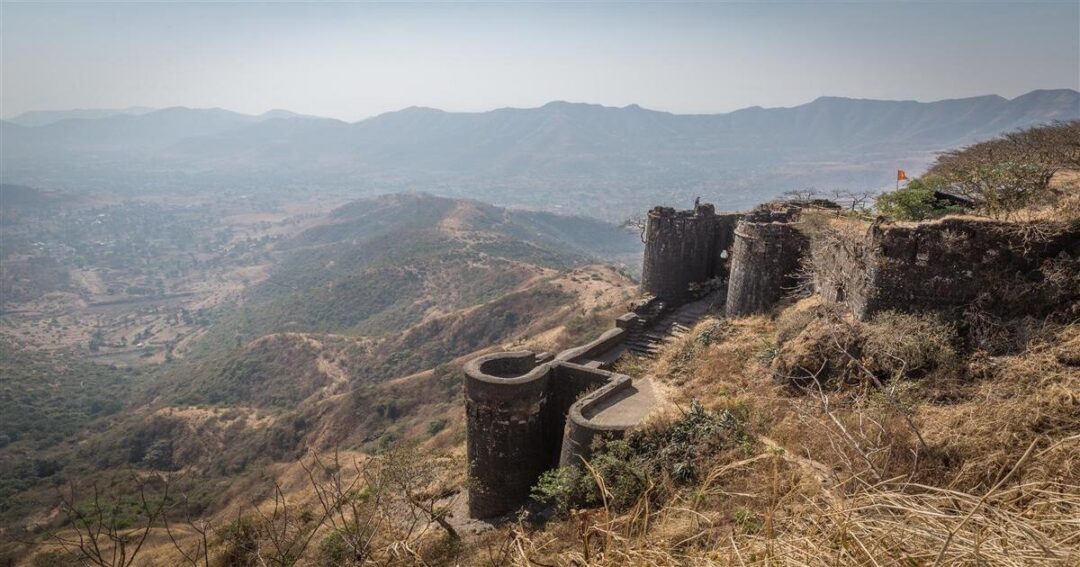
Sinhagad Trek is the hike most people in Pune do before they’ve done any other hike at all — a roughly 1,317-metre fort perched above the Sahyadri foothills, close enough for a Sunday morning and steep enough to actually feel like a climb. What makes it more than just a fitness outing is the history sitting at the top: this is the fort where a Maratha commander named Tanaji Malusare died taking back the walls in a single night in 1670, an event still commemorated in the fort’s very name. Add in kanda bhaji stalls at the summit and a couple of route options depending on how much of a workout you want, and it’s easy to see why this stays Pune’s most repeated weekend trek.
Top Sinhagad Trek Highlights You Shouldn’t Miss
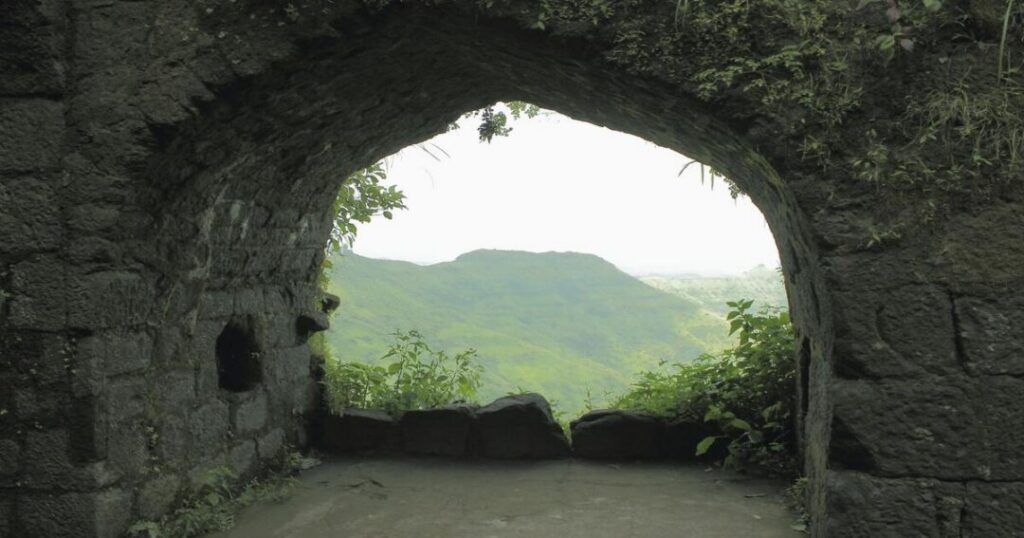
Here’s what actually makes up a Sinhagad trek, from the story behind the fort’s name to the food stalls waiting at the summit.
The Legend of Tanaji Malusare and the Battle of Sinhagad
The fort wasn’t always called Sinhagad. [STAT: it was originally known as Kondhana, named after the sage Kaundinya, before being renamed following the events of 4 February 1670 — Wikipedia] On that night, the Maratha commander Tanaji Malusare led a raid up the fort’s cliffs using rope ladders to recapture it from Mughal forces, and was killed in the fighting that followed.
[STAT: on hearing of the victory and Tanaji’s death, Chhatrapati Shivaji is recorded as saying “Gad ala, pan Sinha gela” — “The fort is conquered, but the lion is lost” — which is why the fort was renamed Sinhagad, the “Lion’s Fort” — Wikipedia] A memorial stone to Tanaji, unearthed in 2019 and believed to be roughly 350 years old, still stands near the site along with a cenotaph for Rajaram I, Shivaji’s younger son.
- The story is one of the more widely taught chapters of Maratha history in Maharashtra, and most local guides will retell it as you climb.
[QUOTE: “Gad ala, pan Sinha gela” — attributed to Chhatrapati Shivaji Maharaj on learning of Tanaji Malusare’s death]
Choosing Your Sinhagad Trek Route
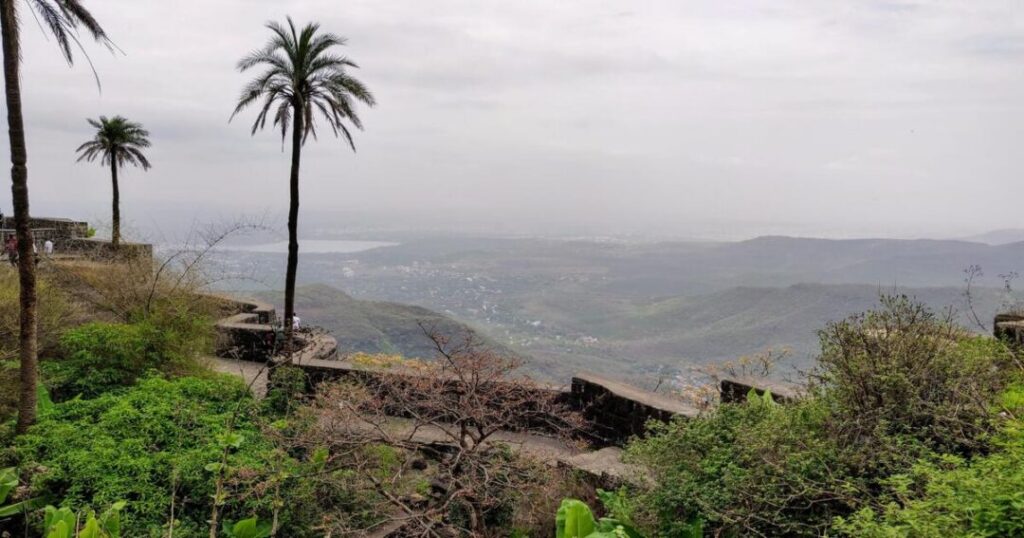
There are two realistic ways to do the Sinhagad trek, depending on how much climbing you actually want.
- Sinhagad Pethe (Atkarwadi) route — the shorter, far more popular option: a direct climb of about an hour each way for a reasonably fit trekker, ending right at the fort’s main entrance. Most day-trippers and families use this route.
- Donje Village route — a longer, quieter approach starting from the Donje Gaon Phata bus stop, roughly 11 km round trip with about 2,100 feet of elevation gain, rated easy-to-moderate. This is the pick for trekkers who want the walk itself, not just the summit.
- Both routes are doable without technical gear, but carry water, good grip shoes, and a torch if you’re timing it for sunrise or a night trek.
Also Read: Rajgad Fort Trek: The Complete Guide to Shivaji’s Mountain Capital
What to See Atop Sinhagad Fort?
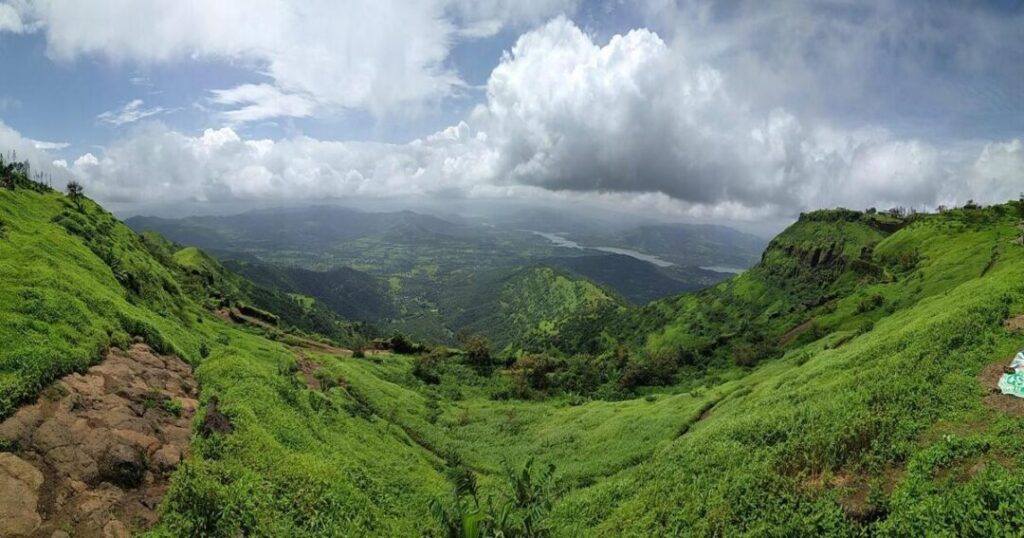
- Pune Darwaza and Kalyan Darwaza — the fort’s two main entry gates, facing northeast and southeast respectively.
- Tanaji Malusare’s memorial and the Rajaram I cenotaph — the fort’s most visited historical markers.
- Kondhaneshwar Temple and a small Kali temple with a Hanuman statue, both remnants of the fort’s older religious life.
- Wide-open viewpoints over the Sahyadri range and, on a clear day, the city of Pune itself — the main reason most people make the climb at all.
Food at the Top: Kanda Bhaji, Pithla Bhakri and More
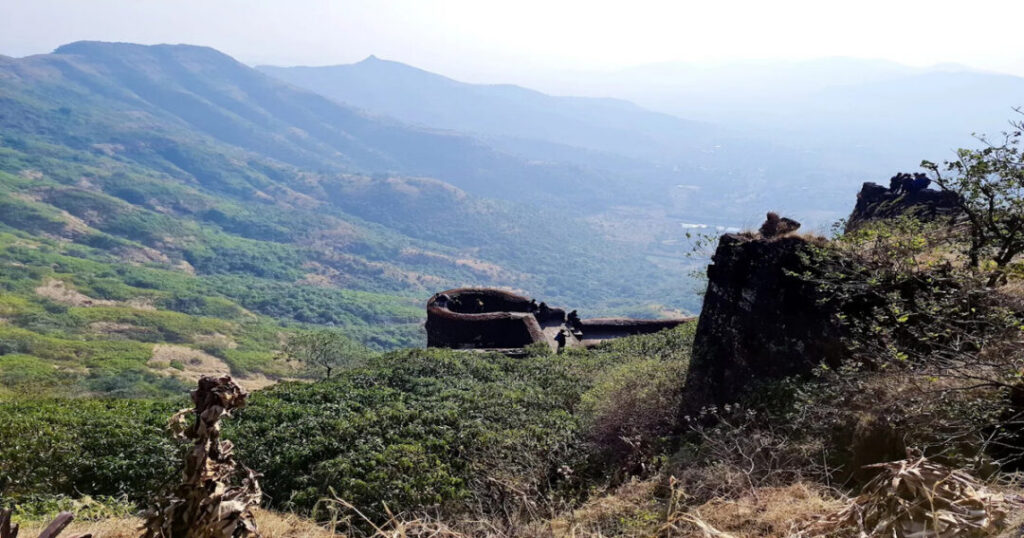
Sinhagad’s summit stalls are as much a reason to do this trek as the fort itself. [STAT: stalls at the top commonly serve crispy kanda bhaji (onion fritters), pithla-bhakri, thecha, vangyache bharit (roasted eggplant), roasted corn, and raw mango in season, with kulfi vendors nearby for dessert — Thrillophilia]
- Kanda bhaji and hot pithla-bhakri, best eaten with a glass of buttermilk, are the two dishes almost every trekker orders.
- Stalls tend to be busiest on weekend mornings and during the monsoon, when the whole plateau turns green.
Traveller’s Experience: Planning a Sinhagad Weekend
Most Pune residents treat Sinhagad as an early-morning trek: start climbing by 6 or 7 AM, reach the top before the heat sets in, eat at the stalls, and be back down by early afternoon. The fort gets genuinely crowded on monsoon weekends, when the surrounding hills turn a deep green and the temperature at altitude drops noticeably below the city — carrying a light rain jacket is worth it even on a clear-looking morning.
Also Read: Things to Do in Pune: 20 Best Experiences for Every Kind of Traveller
What is the Best Time to Visit Sinhagad Trek?
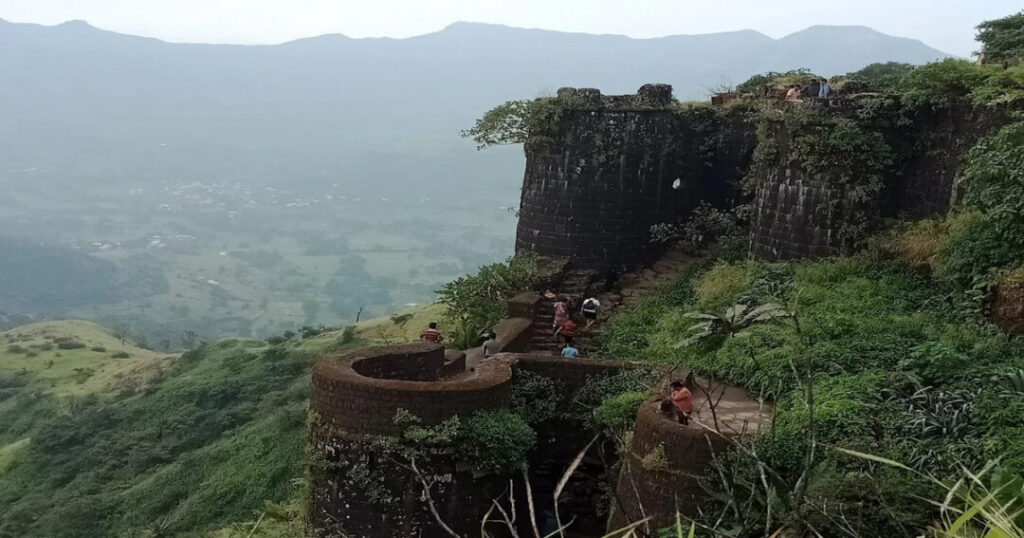
Monsoon (June to September) and winter (October to February) are the two best windows for the Sinhagad trek. Monsoon brings cool temperatures, mist and green hillsides but slippery rock sections, while winter offers the clearest visibility and the most comfortable climbing conditions. Summer (March to May) gets hot enough that most trekkers avoid the exposed sections of the climb in the middle of the day.
How to Reach Sinhagad?
- By Air: Pune International Airport is the nearest airport, with the fort’s base village roughly 35-40 km away by road [STAT: exact airport-to-base-village distance — verify before publishing].
- By Rail: Pune Railway Station is the nearest major station, also around 30-35 km from the base village, well connected to Mumbai, Delhi, and other major cities.
- By Road: Sinhagad sits about 28 km southwest of Pune as the crow flies (roughly 35-40 km by road, close to an hour to 90 minutes’ drive); shared autos and taxis run from Swargate and Katraj to the base village of Sinhagad Pethe.
Conclusion: Sinhagad Trek
Between a night raid that gave the fort its name, two route options depending on how much of a workout you want, and kanda bhaji waiting at the top, Sinhagad trek earns its reputation as Pune’s default weekend climb. It’s short enough to do in half a day, historic enough to be worth the read-up beforehand, and easy enough to bring first-time trekkers along.
Plan your Pune weekend and book your stay with the Explurger app — download it before you go.
FAQs About Sinhagad Trek
2. How far is Sinhagad from Pune?
Sinhagad Fort sits about 28 km southwest of Pune as the crow flies, which works out to roughly 35-40 km by road and close to an hour to 90 minutes' drive depending on traffic. Shared autos and taxis run regularly from Swargate and Katraj to Sinhagad Pethe, the village at the base of the trek.
3. What is the history behind the name Sinhagad?
Sinhagad was originally called Kondhana, named after the sage Kaundinya, before being renamed after the Battle of Sinhagad on 4 February 1670. Maratha commander Tanaji Malusare led a night raid to recapture the fort and was killed in the fighting; on hearing the news, Chhatrapati Shivaji reportedly said 'Gad ala, pan Sinha gela' — 'the fort is conquered, but the lion is lost' — which gave the fort its present name, meaning Lion's Fort.
4. What is the best time to do the Sinhagad trek?
Monsoon (June to September) and winter (October to February) are the best times for the Sinhagad trek. Monsoon brings cool, misty, green conditions but slippery rock in places, while winter offers the clearest views and most comfortable climbing weather. Summer months from March to May get hot enough that most trekkers prefer to avoid the exposed midday sections of the climb
5. What food is available at Sinhagad Fort?
Sinhagad's summit stalls are known for crispy kanda bhaji (onion fritters), pithla-bhakri, thecha, roasted corn, vangyache bharit, and raw mango in season, with kulfi vendors nearby for dessert. Kanda bhaji and hot pithla-bhakri with a glass of buttermilk are the most commonly ordered combination among trekkers reaching the top.
6. Which route should I take for the Sinhagad trek?
Most day-trippers take the Sinhagad Pethe (Atkarwadi) route, a direct climb of about an hour each way that ends right at the fort's main entrance. Trekkers who want a longer walk usually choose the Donje Village route instead, which starts from the Donje Gaon Phata bus stop and covers about 11 km round trip with a steadier elevation gain.