
1,243 Total Views
Most cities in Rajasthan are defined by their forts. Ajmer is defined by a tomb. The Dargah Sharif — the shrine of the 13th-century Sufi saint Khwaja Moinuddin Chishti — draws more visitors annually than almost any other religious site in India, receiving millions of pilgrims of every faith who come to pray, to seek, and to experience the particular atmosphere of a place that has been continuously venerated for nearly 800 years. But Ajmer is not only its dargah. It has a Mughal fort that launched one of history’s most consequential diplomatic missions. It has a hilltop citadel that was never successfully stormed. It has one of Rajasthan’s finest artificial lakes. And it has a street food culture built on the specific Rajasthani Muslim cooking tradition that makes its kebabs, kormas, and sweet preparations entirely distinct from what you will eat elsewhere in the state.
This guide covers all of it — the spiritual anchor, the Mughal heritage, the medieval fortifications, the natural beauty, the food, and the 11-kilometre day trip to Pushkar that every Ajmer visitor should make.
Best Things to Do in Ajmer in 2026
Ajmer, nestled in the heart of Rajasthan, is a city where spirituality, history, and culture converge most remarkably. From the sacred Dargah Sharif to the shimmering Ana Sagar Lake, every corner of this ancient city has a story to tell. Whether you are a pilgrim seeking divine blessings, a history enthusiast tracing Mughal and Rajput heritage, or a traveler in search of vibrant bazaars and local flavours — Ajmer promises an experience that stays with you long after you leave. Here is your complete guide to the best things to do in Ajmer and the most iconic places that make this city truly unforgettable.
Dargah Sharif — The Heart of Ajmer
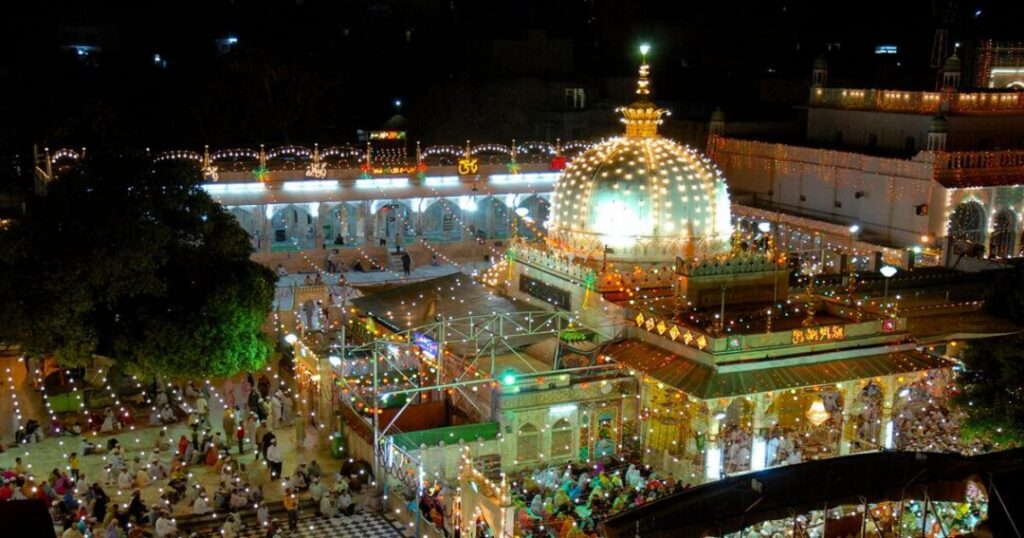
Khwaja Moinuddin Chishti (also written Muin al-Din Chishti) was a 13th-century Sufi saint born in Persia — in Sanjar in modern-day Iran — who arrived in India during the reign of Prithviraj Chauhan and settled in Ajmer in 1192 CE. He dedicated his life to preaching love, compassion, and tolerance, earning the title Gharib Nawaz (Benefactor of the Poor) for his generosity toward the poor and marginalised. He died in Ajmer in 1236 CE and was buried here.
The shrine around his tomb was constructed by Mughal Emperor Humayun and subsequently expanded and enriched by later Mughal rulers — Akbar visited Ajmer on foot as a pilgrimage on multiple occasions and is credited with adding significant structures to the complex; Shah Jahan built the white marble mosque (Akbari Masjid) within the dargah premises. The white marble dome over the main tomb was completed in 1532 CE.
The Chishti order of Sufism — which Moinuddin Chishti founded and propagated in South Asia — became the most widely followed Sufi tradition in the Indian subcontinent, emphasising service, music (qawwali), and the direct experience of the divine over formal religious learning. The Urs (death anniversary) is celebrated on the 6th and 7th day of Rajab — one of the largest gatherings at any religious site in India.
The Dargah Complex
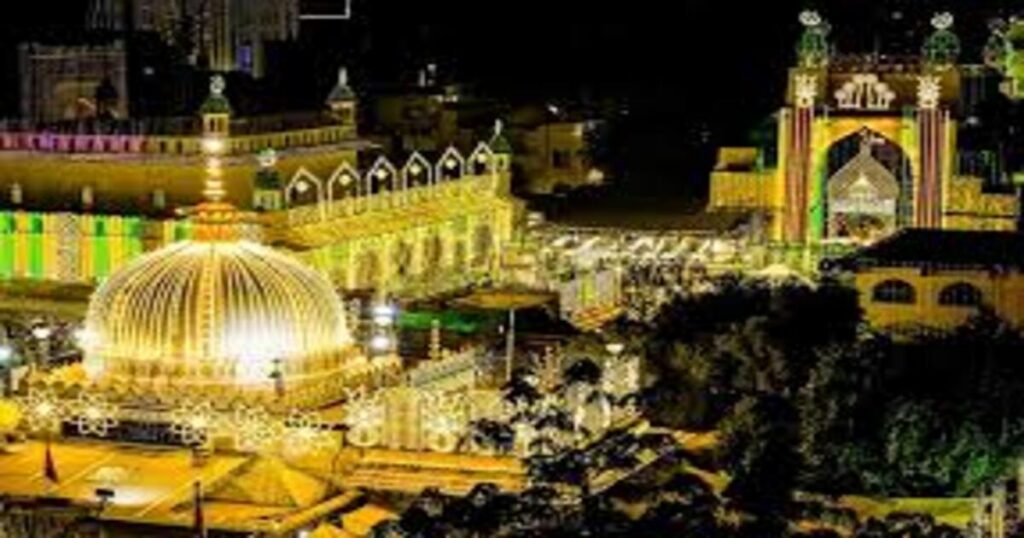
The Ajmer Dargah Sharif is a large complex of white marble buildings arranged around two main courtyards. Key elements:
- Nizam Gate — the main entrance gate, donated by the Nizam of Hyderabad
- Shahjahani Gate — the inner gate, built by Shah Jahan
- Buland Darwaza — the High Gate, from which the Urs flag is hoisted to mark the beginning of the death anniversary ceremonies
- The main tomb — a marble structure with a gold-plated dome, surrounded by silver railings; the innermost sanctum where pilgrims offer chadar (ceremonial cloth), flowers, and prayers
- Akbari Mosque — built within the complex by Shah Jahan
- Two large cauldrons (degs) — enormous iron cauldrons in which food (langar) is cooked and distributed to pilgrims; the larger one was donated by Akbar, the smaller by Jahangir
Practical notes:
- Entry is free; the complex is open to all faiths at all hours
- Head coverings are required; cloth is available at the entrance for a nominal amount
- Photography of the inner sanctum is generally not permitted; photography in the outer courtyard is acceptable with respect
- The lanes leading to the Dargah from the main road are filled with stalls selling flowers, chadar, incense, and Rajasthani crafts
Also Read: Banswara Tourist Places: A Complete Travel Guide to Rajasthan’s Hidden Gem
Ajmer’s Mughal Heritage
Akbar’s Fort — officially the Daulat Khana — was built by Emperor Akbar in 1570 CE as his administrative headquarters for the Rajputana campaigns. It is historically significant as the site where, in 1616 CE, the British East India Company’s representative Sir Thomas Roe presented his credentials to Emperor Jahangir — the first formal diplomatic meeting between England and the Mughal Empire, which ultimately led to the establishment of British trading rights in India.
The fort now houses the Government Museum, which contains a remarkable collection of Mughal armour, artworks, and artefacts, including a collection of stone sculptures and inscriptions. The museum also displays the Akbari Daulat Khana — the emperor’s treasury buildings — and a set of cannons from the Mughal and later periods.
- Entry: nominal fee; closed on Fridays and national holidays
- The museum collection is one of the most significant Mughal-era collections in Rajasthan outside of Jaipur
- Located near the Dargah in the old city area; easily combined with the same morning visit
Adhai Din Ka Jhonpra — The Mosque Built in Two and a Half Days
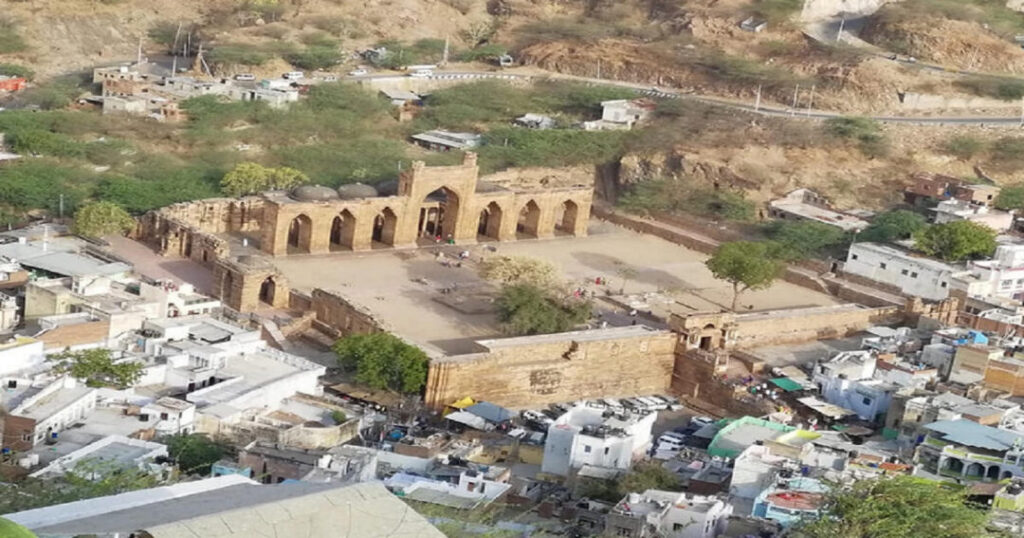
The Adhai Din Ka Jhonpra (literally “hut of two and a half days”) is one of the oldest mosques in India — built in 1192 CE by Qutb ud-Din Aibak on the orders of Muhammad of Ghor, supposedly in just two and a half days (though this is likely legendary; more probable interpretations suggest it was completed in two and a half months, or that the name refers to a two-and-a-half-day fair that was previously held at the site). The mosque was built on the foundations of a Sanskrit college and Hindu-Jain temples — some of the original columns from these structures were incorporated into the mosque’s construction, creating a unique hybrid of pre-Islamic and Islamic architecture.
- One of the most architecturally significant Ajmer tourist attractions and one of the most overlooked
- The elaborate calligraphic screen across the front of the mosque is among the finest examples of early Indo-Islamic architecture in India
- Located approximately 500 metres north of the Dargah Sharif; accessible on foot from the dargah complex
Taragarh Fort — The Citadel Above the City
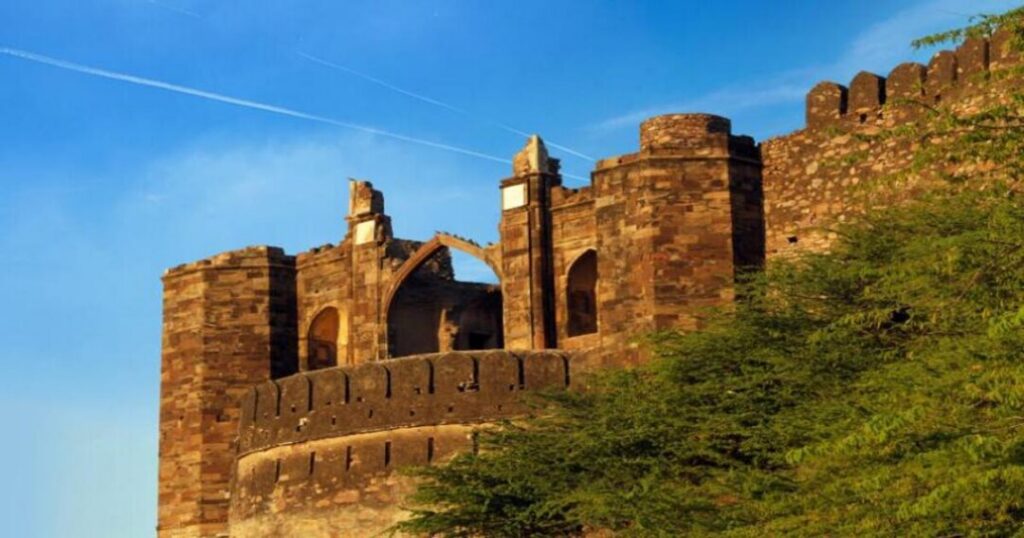
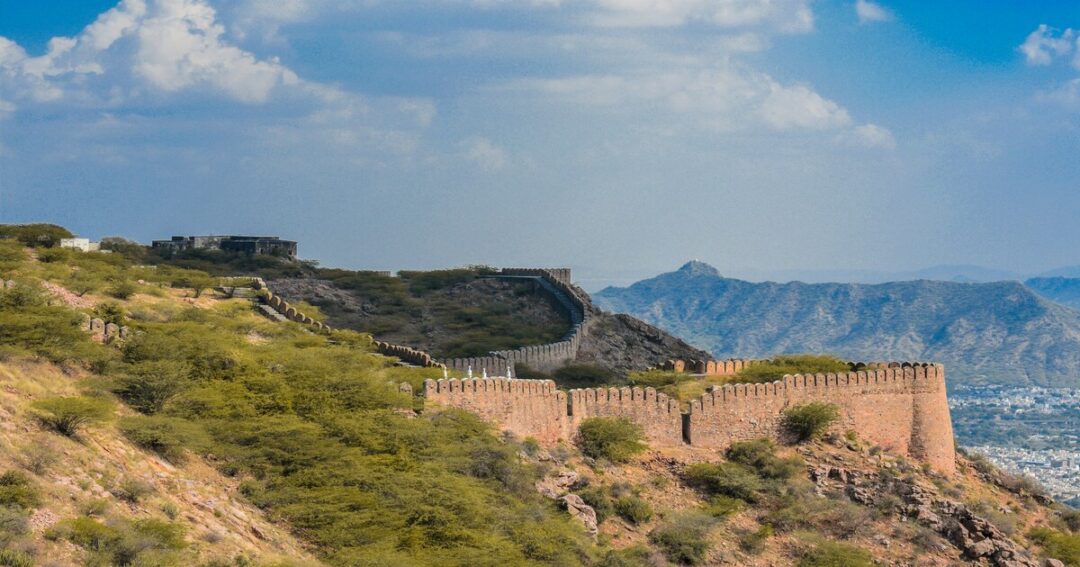
Taragarh Fort (Star Fort) crowns the Aravalli hills directly above Ajmer at approximately 1,300 feet (396 metres) above the city — a commanding position that made it one of the most strategically significant hilltop fortifications in medieval Rajputana. Built in approximately 1354 CE by King Ajaypal Chauhan (though some sources place its origins earlier), it is one of the oldest hill forts in India.
The fort was historically significant as a military stronghold controlling the pass between the Rajputana and the Deccan — it was besieged multiple times and changed hands between Rajput rulers, the Delhi Sultanate, and the Mughals but was never successfully stormed by direct assault. Its name — Taragarh, or Star Fort — comes from its star-shaped plan when viewed from above.
- The fort is accessible by road part of the way and then on foot; the climb takes approximately 30–45 minutes from the end of the motorable road
- The views from the ramparts — across Ajmer city, Ana Sagar Lake, and the surrounding Aravalli hills — are among the finest in Rajasthan
- Within the fort precincts is the Dargah of Miran Saheb — the tomb of the governor of the fort under Moinuddin Chishti, making it a spiritual site connected to the broader Chishti tradition
Ana Sagar Lake — Ajmer’s Natural Centre
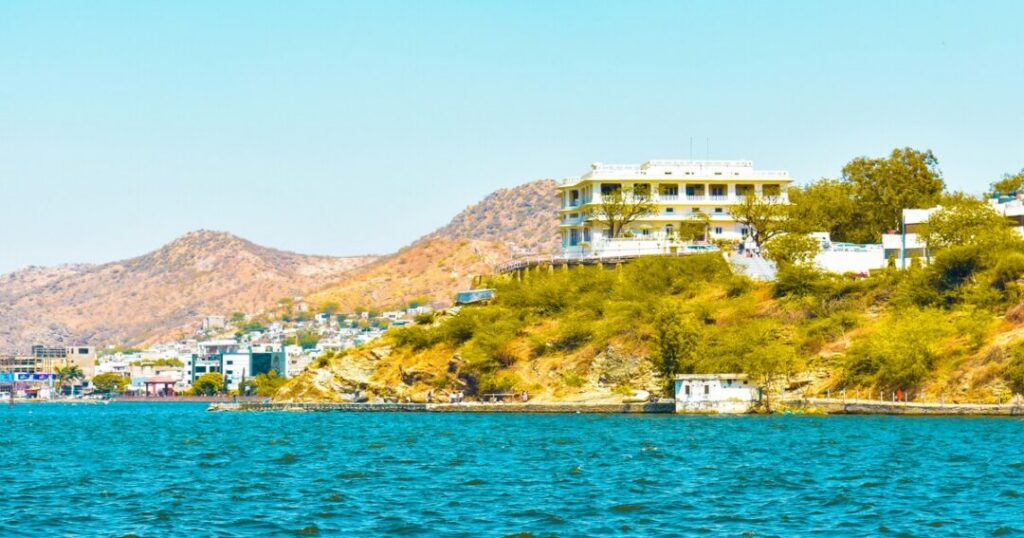
Ana Sagar Lake is a large artificial lake in the centre of Ajmer, built by Anaji (grandfather of Prithviraj Chauhan) between 1135 and 1150 CE by damming the Luni River. It is one of the oldest manmade lakes in Rajasthan. The lake’s eastern bank is lined by the Daulat Bagh — a series of marble pavilions (baradaris) built by Shah Jahan on the lake’s embankment, originally serving as the emperor’s pleasure garden.
The lake is at its best in the monsoon and post-monsoon months (September–November) when it is full and the surrounding hills are green. In summer, the water level can drop significantly.
- The marble pavilions of Daulat Bagh on the lake’s edge are among the most elegant Mughal garden structures in Rajasthan — largely unvisited by tourists who focus entirely on the Dargah
- The lakeside promenade is the city’s primary evening walking area; the sunset view across the water toward the Aravalli hills is one of Ajmer’s finest visual experiences
- Boat rides on the lake are available; the lake is best appreciated from the pavilions in the early morning or at dusk
Nasiyan Jain Temple (The Red Temple)
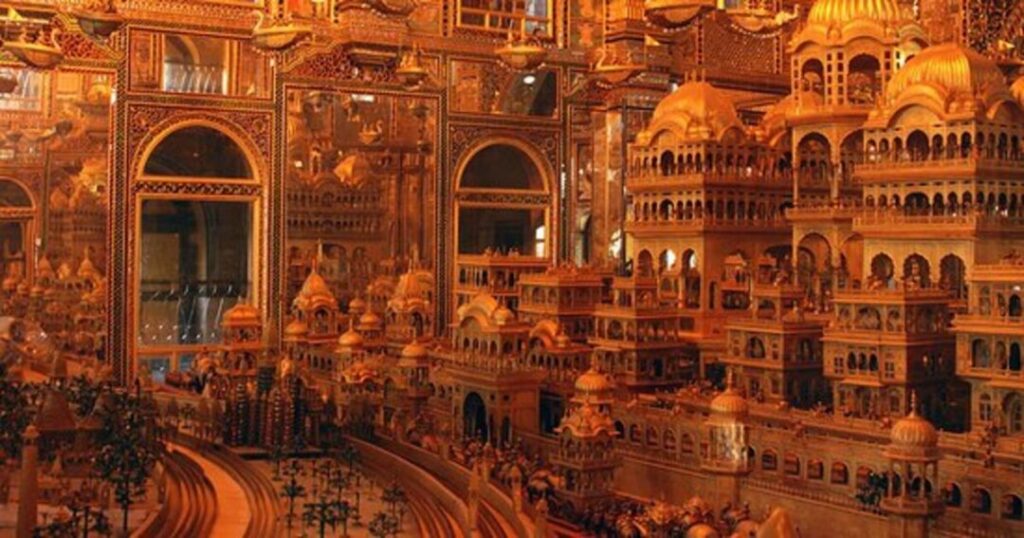
The Nasiyan Jain Temple, built in 1865, is one of the most extraordinary architectural spectacles in Rajasthan — and one of the most undervisited. The temple’s main attraction is its double-storey golden samavasarana (assembly hall), containing a vast diorama of the Jain cosmological universe — gilded wooden figures, miniature mountains, celestial vehicles, and pavilions arranged in an elaborate three-dimensional representation of Jain mythology. The craftsmanship is extraordinary; the effect is overwhelming.
- Entry: nominal fee; photography permitted in the outer sections
- Located near Prithviraj Smarak in central Ajmer
- One of the most genuinely surprising Ajmer sightseeing places, particularly for visitors who don’t know it exists
Soniji Ki Nasiyan — The Golden Jain Museum
The same temple complex contains the Soniji Ki Nasiyan museum — a more intimate collection of Jain religious artefacts, manuscripts, and objects that reveals the depth of Jain heritage in this predominantly Muslim-heritage city.
Food in Ajmer — The Street Food Culture
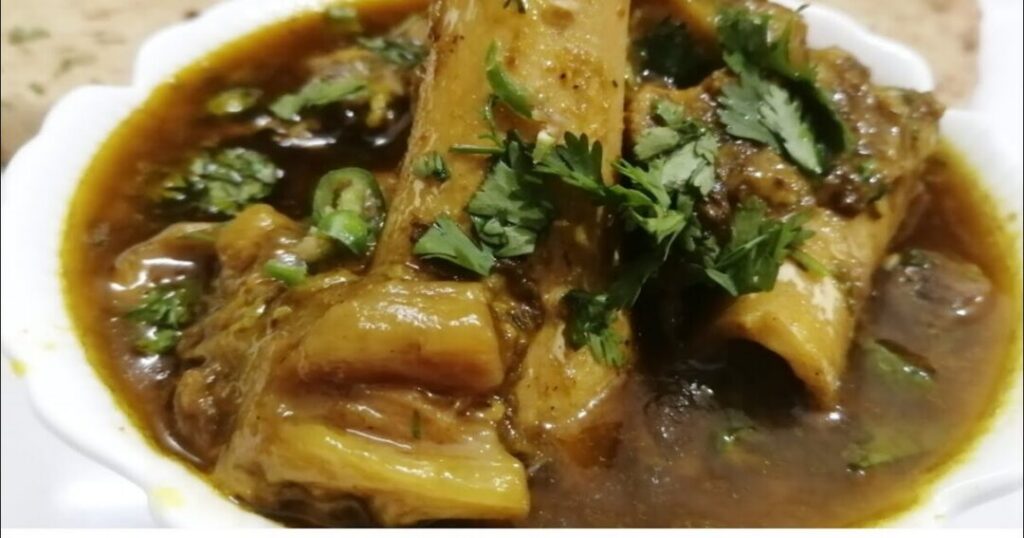
Ajmer’s food culture reflects its position as a Muslim-majority pilgrimage city in a Hindu-majority state — the result is one of the richest concentrations of Mughlai-influenced Rajasthani street food in the region.
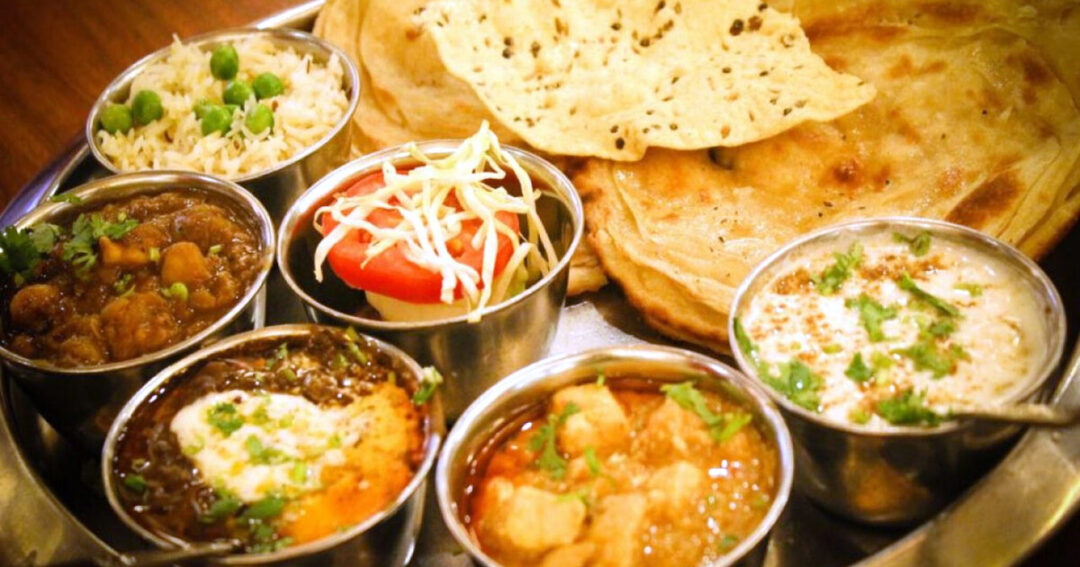
Nihari and paya — slow-cooked mutton shanks or trotters cooked overnight in a rich spiced broth; the classic Muslim breakfast food and Ajmer’s most distinctive non-vegetarian speciality. Available from early morning at dhabas in the old city around the Dargah.
Sheermal — a saffron-flavoured leavened flatbread baked in a tandoor; a Mughal-era preparation brought to Ajmer by the same culinary traditions that shaped Lucknow and Delhi’s food culture. Sweet, soft, and fragrant.
Malpua — a sweet, deep-fried pancake soaked in sugar syrup, typically served with rabri (thickened sweetened milk). The Ajmer version is particularly rich and is a fixture of the city’s sweet shops, particularly during Eid and festival seasons.
Kalakand — a milk-based sweet of particular quality in Ajmer, made from reduced full-fat milk and sugar, set into a soft, grainy fudge. The Rajasthani version is firmer and less sweet than the Agra variety.
The food lanes near the Dargah — the narrow lanes leading to the shrine are lined with vendors selling tabarruk (blessed food) as well as regular street food: kebabs, biryani, bread, and sweets. The concentration of food culture here is itself one of the most distinctive things to do in Ajmer for food lovers.
Also Read: TOP 10 OFFBEAT PLACES TO VISIT IN RAJASTHAN
What is the Best Time to Visit Ajmer?
October to March is the most comfortable window — temperatures between 8°C and 28°C, clear skies, and the city’s festival calendar at its most active. The Urs of Khwaja Moinuddin Chishti — the annual death anniversary celebration at the Dargah Sharif — is the most significant event in Ajmer’s calendar, falling on the 6th and 7th day of the Islamic month of Rajab. It draws millions of pilgrims from across India and beyond and is the most extraordinary time to experience the Dargah’s atmosphere — though accommodation is extremely limited and must be booked months in advance. April to June is hot (up to 42°C) but less crowded. Monsoon (July–September) fills Ana Sagar Lake and the surrounding landscape turns green.
How to Reach Ajmer?
- From Jaipur (~135 km | 2–2.5 hours): Frequent train services; road via NH58; the most common approach from the Rajasthan circuit
- From Delhi (~400 km | 6–7 hours): Direct trains (Ajmer Shatabdi, multiple express services) from Delhi; road via NH48
- From Jodhpur (~200 km | 3.5 hours): By road via NH62; train connections available
- By air: No commercial airport in Ajmer; nearest is Jaipur International Airport (~135 km, ~2 hours). Kishangarh Airport (near Ajmer) has limited connectivity — verify current routes before planning
- Within Ajmer: The Dargah Sharif is approximately 2 km from Ajmer Junction railway station; accessible by auto-rickshaw, cycle rickshaw, or on foot through the old city lanes
Day Trip: Pushkar (~11 km | 20–30 minutes)
Pushkar — just 11 km from Ajmer over the Nag Pahar (Snake Mountain) range — is one of India’s holiest Hindu pilgrimage sites and home to the only Brahma Temple in India (the four-headed creator god is rarely worshipped independently; Pushkar’s temple is the exception). The town sits on the edge of the sacred Pushkar Lake, surrounded by 52 ghats where pilgrims take holy dips.
Pushkar and Ajmer represent one of India’s most striking religious juxtapositions — two cities 11 km apart, one the most important Sufi Muslim pilgrimage site in India, the other one of Hinduism’s most sacred lakes, both operating simultaneously and largely harmoniously.
What to do in Pushkar:
- Walk the ghats at dawn — the lake at sunrise, with the surrounding hills and temples reflecting in the water, is one of Rajasthan’s finest morning experiences
- Visit the Brahma Temple — the only Brahma temple in India of this significance; built in the 14th century, rebuilt and extended over the centuries
- The Pushkar Bazaar — the main market street, lined with stalls selling Rajasthani textiles, silver jewellery, and handicrafts
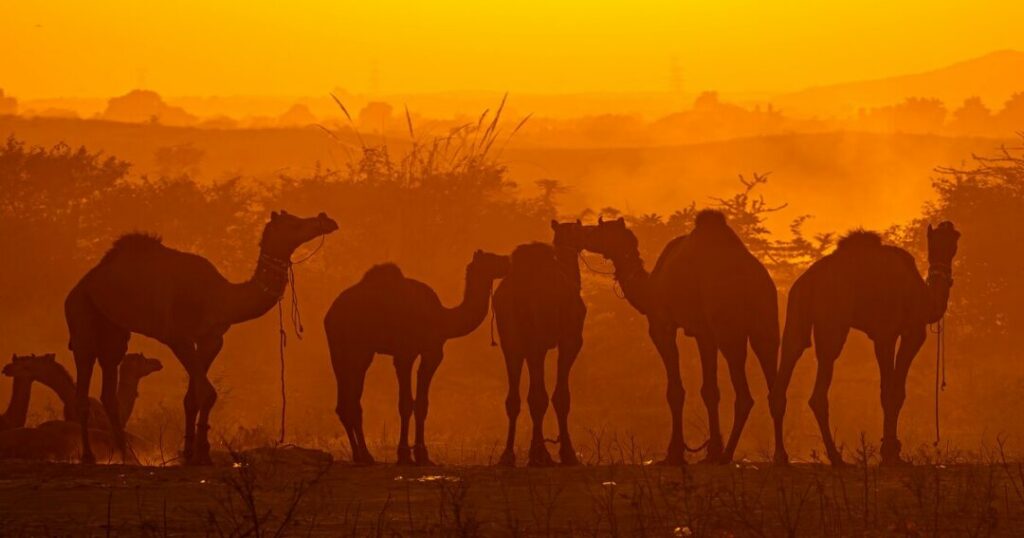
- The Pushkar Camel Fair — held annually in October/November during the Kartik Purnima full moon — is one of India’s most extraordinary events; book accommodation months in advance if visiting then
- Accessible from Ajmer by road over the Nag Pahar pass (~20–30 minutes by auto or cab)
Most visitors visit Pushkar as a half-day from Ajmer; staying overnight is equally valid and recommended during the Camel Fair
Conclusion about Things to Do in Ajmer
Ajmer is a city that rewards visitors who look past the obvious — and the obvious (the Dargah Sharif) is itself extraordinary enough that many visitors never look further. But the mosque built in 1192 CE, the fort that launched the British empire’s relationship with India, the golden Jain cosmological diorama that nobody knows about, the Ana Sagar pavilions of Shah Jahan, and the hilltop citadel that was never stormed — all of these are within an hour’s walk or auto ride of each other.
Quick guide to Ajmer sightseeing places:
- The anchor: Dargah Sharif (Moinuddin Chishti, 1192–1236 CE, Humayun’s shrine)
- Mughal heritage: Akbar’s Fort/Daulat Khana (1570 CE), Adhai Din Ka Jhonpra (1192 CE), Ana Sagar marble pavilions (Shah Jahan)
- Medieval fortifications: Taragarh Fort (~1354 CE, 1,300 ft/396 m above the city, never stormed)
- Hidden gem: Nasiyan Jain Temple (1865, golden Jain diorama — extraordinary and empty)
- Nature: Ana Sagar Lake (1135–1150 CE, lakeside promenade, sunset views)
- Food: Nihari, sheermal, malpua, kalakand — in the lanes near the Dargah
- Day trip: Pushkar (11 km — Brahma Temple, sacred lake, Camel Fair in October/November)
Download the Explurger app to discover what travellers actually recommend in Ajmer, find authentic street food spots near the Dargah, and log every shrine, fort, and bowl of nihari on your trip.
The Dargah is already lit with lamps. The qawwali is already beginning. Ajmer has been receiving visitors for 800 years and is ready for one more.
FAQs about Things to Do in Ajmer
2. What is the Dargah Sharif in Ajmer?
The Dargah Sharif in Ajmer is the shrine of Sufi saint Khwaja Moinuddin Chishti — who settled in Ajmer in 1192 CE and died there in 1236 CE. The shrine was built by Mughal Emperor Humayun and expanded by Akbar and Shah Jahan over successive reigns. The white marble dome over the main tomb was completed in 1532 CE. The dargah receives millions of visitors annually from all faiths; the Urs (death anniversary) celebration falls on the 6th and 7th day of Rajab in the Islamic calendar and is one of India's largest religious gatherings. Entry is free; head coverings required.
3. What are the famous things in Ajmer?
The most famous things in Ajmer are: the Dargah Sharif (India's most visited Sufi shrine), the Adhai Din Ka Jhonpra (one of India's oldest mosques, 1192 CE), Akbar's Fort/Daulat Khana (Mughal administrative centre, site of first England-Mughal diplomatic meeting 1616), Taragarh Fort (approximately 1,300 ft/396 m above the city, oldest hill fort in Rajasthan, built ~1354 CE), Ana Sagar Lake (built 1135–1150 CE, Shah Jahan's marble pavilions), and Nasiyan Jain Temple (1865, extraordinary golden Jain cosmological diorama). The day trip to Pushkar (11 km) is how most visitors extend their Ajmer sightseeing.
4. How far is Pushkar from Ajmer?
Pushkar is approximately 11 km from Ajmer — a 20–30 minute drive over the Nag Pahar (Snake Mountain) range that separates the two towns. Despite being so close, the two cities have completely different characters: Ajmer is predominantly Muslim in heritage and centred on the Sufi dargah; Pushkar is one of Hinduism's most sacred pilgrimage sites with a sacred lake and India's only major Brahma Temple. Most visitors combine both in a single day or a 2-day Ajmer-Pushkar circuit.
5. What is the best time to visit Ajmer?
October to March is the best window — comfortable temperatures (8–28°C), clear skies, and the city's festival calendar at its most active. The Urs of Khwaja Moinuddin Chishti (6th–7th Rajab in the Islamic calendar) is the most extraordinary time to experience the Dargah — but accommodation is extremely limited and must be booked months in advance. The Pushkar Camel Fair (October/November, Kartik Purnima) is the best time to combine an Ajmer visit with Pushkar.