
2,083 Total Views
China’s relationship with its festivals is unlike that of almost any other civilisation on earth. These are not events that were invented and then became traditions. They grew out of the land — from the rhythms of the agricultural calendar, the movements of the moon and sun, the stories that communities told themselves about how the world works and what the dead require of the living. The Chinese festivals that fill the lunar calendar today are the same ones that rice farmers observed two thousand years ago, that poets wrote about during the Tang Dynasty, that silk weavers marked in their mountain villages. They have been carried across oceans by the Chinese diaspora and celebrated in cities on every continent. And they remain — in Beijing hutongs, in Malaysian Chinatowns, in San Francisco’s streets — unmistakably themselves.
This guide covers the eight essential Chinese traditional festivals, their mythology and cultural roots, their food, their rituals, and their 2026 dates.
Spring Festival — The Most Important Chinese Festival in 2026
Spring Festival (Chūnjié, 春节) — Chinese New Year — is the most significant event in the Chinese calendar, and one of the largest annual human migrations on earth: the Chunyun period (春运), when hundreds of millions of Chinese people travel home for family reunion. It falls on the first day of the first month of the Chinese lunisolar calendar — in 2026, on February 17 — and the celebrations extend for 15 days, ending with the Lantern Festival.
The mythology of Spring Festival is anchored in the legend of Nian (年) — a fearsome creature that emerged each year to devour crops, livestock, and people. Villagers discovered that Nian was afraid of the colour red, loud noises, and fire — and the traditions of Spring Festival flow directly from this discovery: red decorations, red envelopes (hóngbāo), firecrackers, and the lion and dragon dances that drive out evil and welcome good fortune.
The essential Spring Festival traditions:
- Red envelopes (hóngbāo) — gifts of money in red paper, given by elders to children and by employers to staff; the colour carries the luck
- New Year’s Eve reunion dinner — the most important meal of the year; families travel any distance to be together at the table
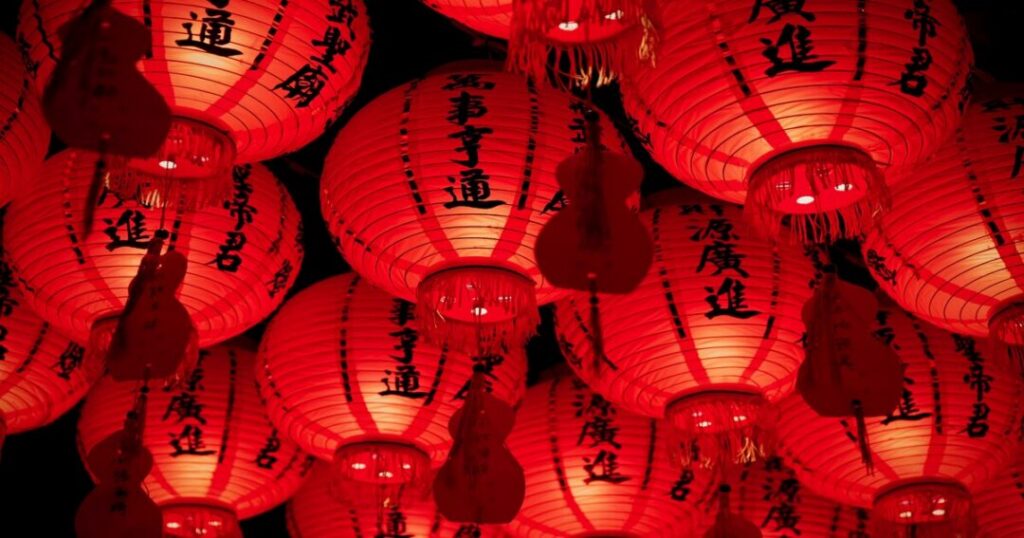
- Spring Festival couplets (chūnlián) — red paper with golden calligraphy, pasted on doorframes with auspicious phrases welcoming the new year
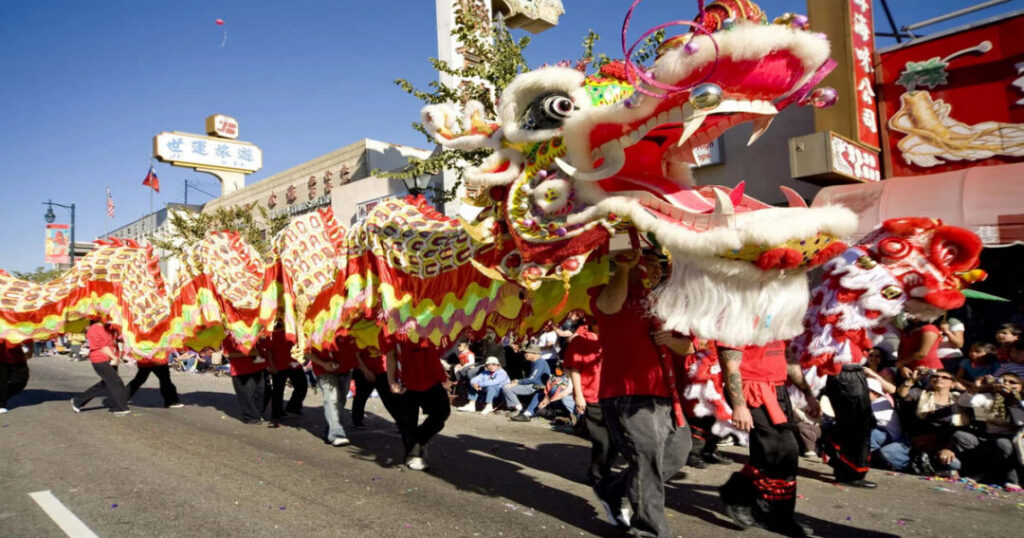
- Dragon and lion dances — processions through streets and markets, the noise and movement driving away bad luck and inviting prosperity
- Lanterns, fireworks, and the colour red — everywhere, in every form
Spring Festival food: Each dish carries symbolic meaning. Fish (yú, 鱼) sounds like “surplus” — served whole, head and tail intact. Dumplings (jiǎozi) shaped like ancient gold ingots. Glutinous rice cake (nián gāo) — nián means both “year” and “sticky,” and the cake represents rising higher each year.
2026: Year of the Horse. February 17 — the first day of the Spring Festival.
Chinese Festivals List — The Complete Calendar
Before the deep dives, here is your complete Chinese festivals list for 2026:
| Festival | Chinese Name | 2026 Date |
| Spring Festival (Chinese New Year) | 春节 Chūnjié | February 17, 2026 |
| Lantern Festival | 元宵节 Yuánxiāo Jié | March 3, 2026 |
| Qingming Festival | 清明节 Qīngmíng Jié | April 4, 2026 |
| Dragon Boat Festival | 端午节 Duānwǔ Jié | June 19, 2026 |
| Qixi Festival | 七夕节 Qīxī Jié | August 13, 2026 |
| Mid-Autumn Festival | 中秋节 Zhōngqiū Jié | September 25, 2026 |
| Double Ninth Festival | 重阳节 Chóngyáng Jié | October 17, 2026 |
| Winter Solstice (Dongzhi) | 冬至 Dōngzhì | December 22, 2026 |
Also Read: Festivals in Mauritius: The Complete Guide to Cavadee, Divali, Chinese New Year & More
Chinese Lantern Festival — The Grand Finale of the New Year
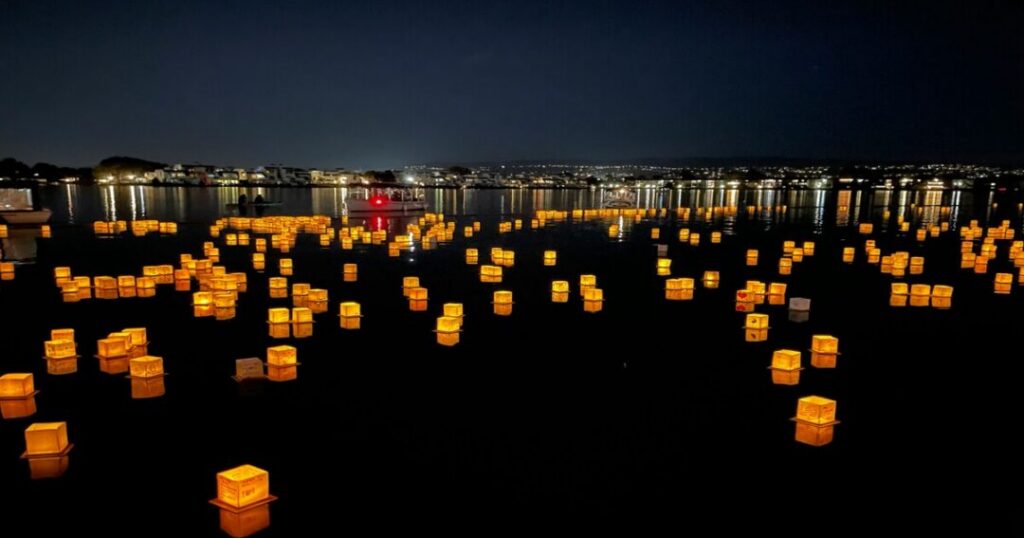
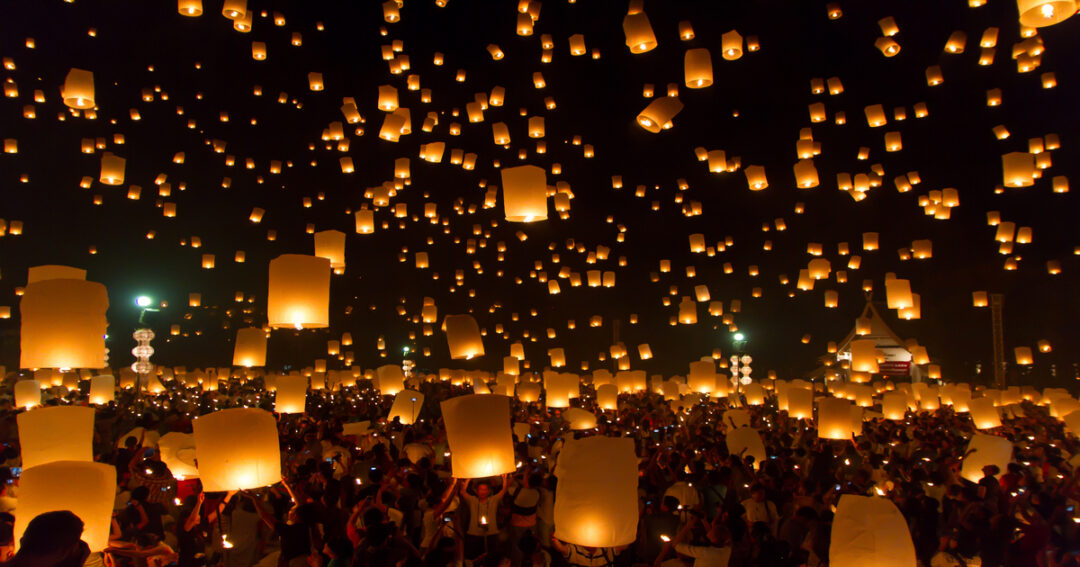
The Chinese lantern festival (Yuánxiāo Jié, 元宵节) falls on the 15th and final day of the Spring Festival period — the first full moon of the new lunar year. In 2026 it falls on March 3. It marks the formal end of the New Year celebrations and the return to ordinary life — but it does so with extraordinary spectacle: the lighting of thousands of lanterns that float into the night sky or hang in coloured constellations along river banks and temple walls.
The lantern tradition has its roots in Han Dynasty religious practice — lighting lanterns to honour the Jade Emperor (Yù Huáng Dàdì) — but has absorbed Daoist, Buddhist, and folk elements over two millennia into a celebration that is simultaneously spiritual and purely joyful. The Chinese light festival that modern visitors experience — sky lanterns released over rivers, elaborate themed lantern parks, lantern riddle games — represents this accumulated layering.
Yuanxiao — sweet glutinous rice balls filled with sesame paste, red bean, peanut butter, or other sweet fillings — are the festival’s defining food; the round shape symbolises family unity and wholeness.
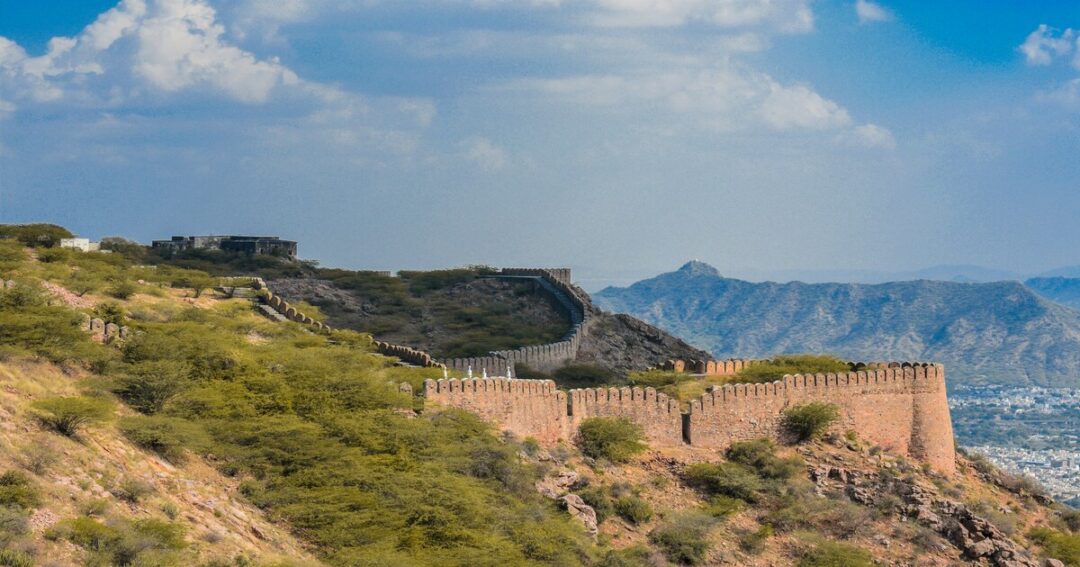
The most celebrated locations for the Chinese lantern festival include Pingxi (Taiwan) for sky lantern releases, Nanjing’s elaborate lantern fairs, and Xi’an’s City Wall displays — where the ancient fortifications are illuminated in colours that the Tang Dynasty poets who wrote about these celebrations would not entirely recognise but would certainly understand.
Qingming Festival — Honouring the Ancestors
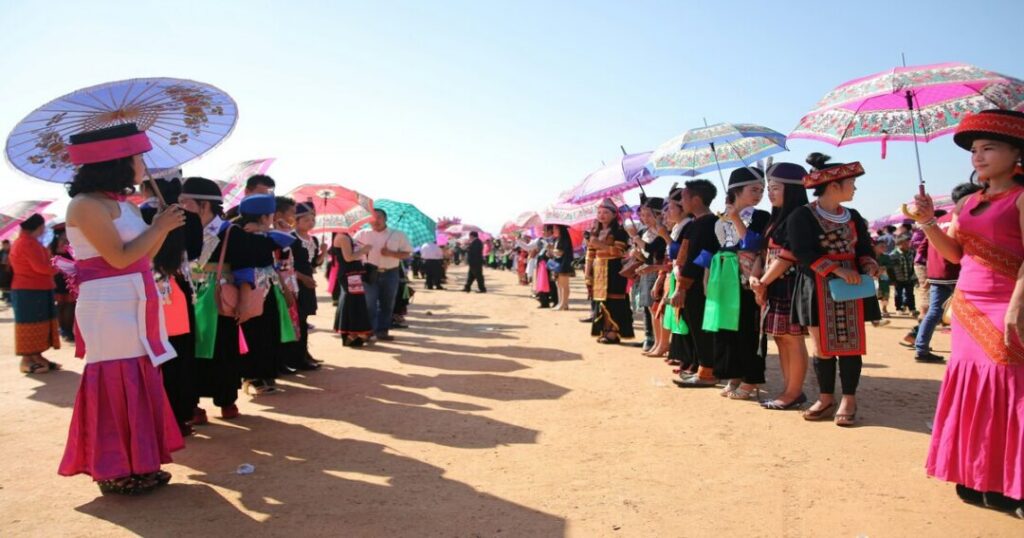
Qingming (清明节, Tomb-Sweeping Day) is the most solemn of the Chinese traditional festivals — a day when families visit the graves of their ancestors to clean the tomb, burn paper offerings, and make food offerings. It falls approximately 15 days after the Spring Equinox — in 2026 on April 4 — when the weather is clear and mild, perfect for the outdoor pilgrimages the festival requires.
The word Qingming means “clear and bright” — referring to the weather and the season, but also to a clarity of memory and devotion. The tradition is approximately 2,500 years old, traced to the Zhou Dynasty practice of ancestral veneration that lies at the heart of Confucian ethics. The living owe the dead honour and remembrance; Qingming is the annual expression of that debt.
Beyond tomb sweeping, Qingming has a gentler face: it is also the season of spring outings (tà qīng, literally “treading on green”) — walking in the fresh spring landscape, flying kites (especially in the evenings, when lit kites cut the sky), and eating qīngtuán — emerald-green glutinous rice balls made with mugwort or barley grass that taste of spring itself.
2026 date: April 4 (note: sources vary slightly between April 4 and 5 depending on the year; April 4 is confirmed for 2026).
Dragon Boat Festival — Racing for Qu Yuan
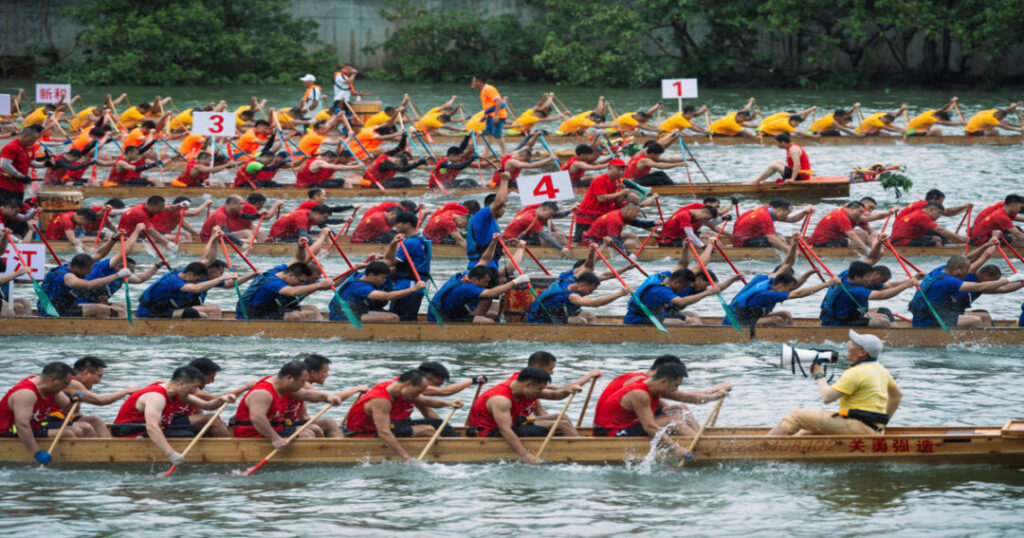
The Dragon Boat Festival (Duānwǔ Jié, 端午节) — celebrated on the fifth day of the fifth lunar month — is one of the most energetically physical of all Chinese festivals: dragon boat racing, the beating of drums, the ancient ritual protection foods, and the memory of a poet’s sacrifice. In 2026 it falls on June 19.
The festival’s origin myth centres on Qu Yuan (340–278 BCE) — a loyal minister and celebrated poet of the Chu state during the Warring States period who, when his king was captured by Qin and the state fell, drowned himself in the Miluo River rather than live under foreign domination. The local people, distraught at losing him, rowed their boats frantically to recover his body, beating drums to frighten away the fish, and threw rice wrapped in bamboo leaves into the water to feed the fish so they would not consume him. The dragon boat races and zòngzi (sticky rice dumplings wrapped in bamboo or reed leaves) are the living memory of this act of collective grief.
Zòngzi — the festival’s defining food — comes in an extraordinary variety across China’s regions: sweet with red bean and jujube in the north; savoury with pork belly, egg yolk, and mushroom in the south. The regional divide in zòngzi preference is one of China’s most passionate and unresolvable food arguments.
The Dragon Boat Festival was inscribed on the UNESCO Representative List of the Intangible Cultural Heritage of Humanity in 2009.
Qixi Festival — The Chinese Valentine’s Day
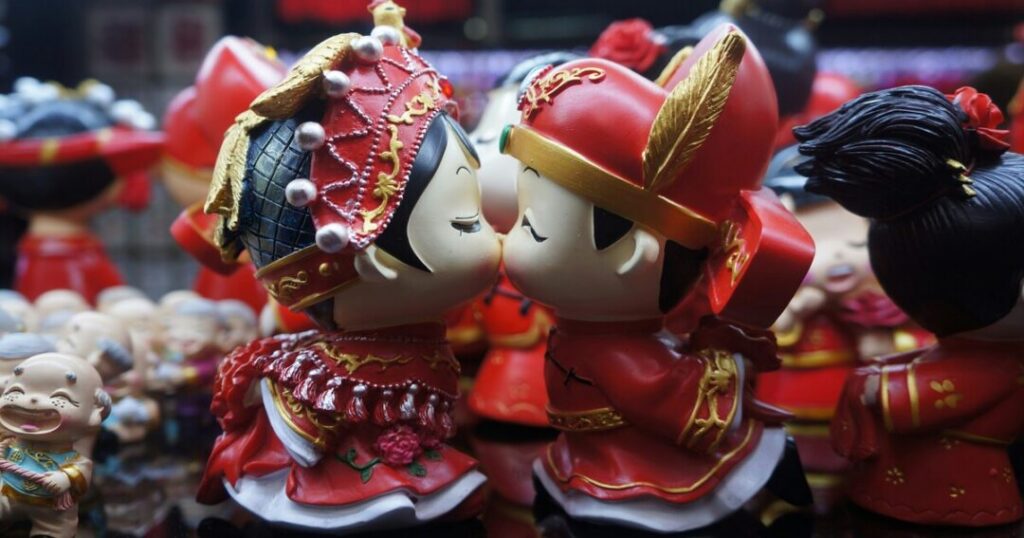
The Qixi Festival (Qīxī Jié, 七夕节) — also called the Double Seventh Festival — falls on the seventh day of the seventh lunar month. In 2026 it falls on August 13. It is built around one of China’s most beloved folk stories: the Cowherd and the Weaver Girl (Niú Láng Zhī Nǚ).
The Weaver Girl (Zhī Nǚ) is the seventh daughter of the Goddess of Heaven — a celestial weaver of clouds and rainbows. She falls in love with a mortal cowherd (Niú Láng) and they marry, living happily on earth. The Goddess of Heaven, furious at the match, creates the Silver River (the Milky Way) to separate them — they can only meet once a year when a bridge of magpies forms across the sky on the seventh night of the seventh month.
The Chinese Qixi festival is observed by couples with romantic dinners, lantern releases, and gifts; by young women who traditionally prayed to the Weaver Girl for skill and a good husband; and by stargazers who look for the stars Vega (the Weaver Girl) and Altair (the Cowherd) either side of the Milky Way. In modern China, the Qixi Festival has increasingly taken on the commercial character of Valentine’s Day in the West — flowers, chocolate, jewellery, and romantic dinners — while the older tradition of sitting under the night sky and listening for the magpies persists in quieter forms.
Mid-Autumn Festival — The Moon Festival
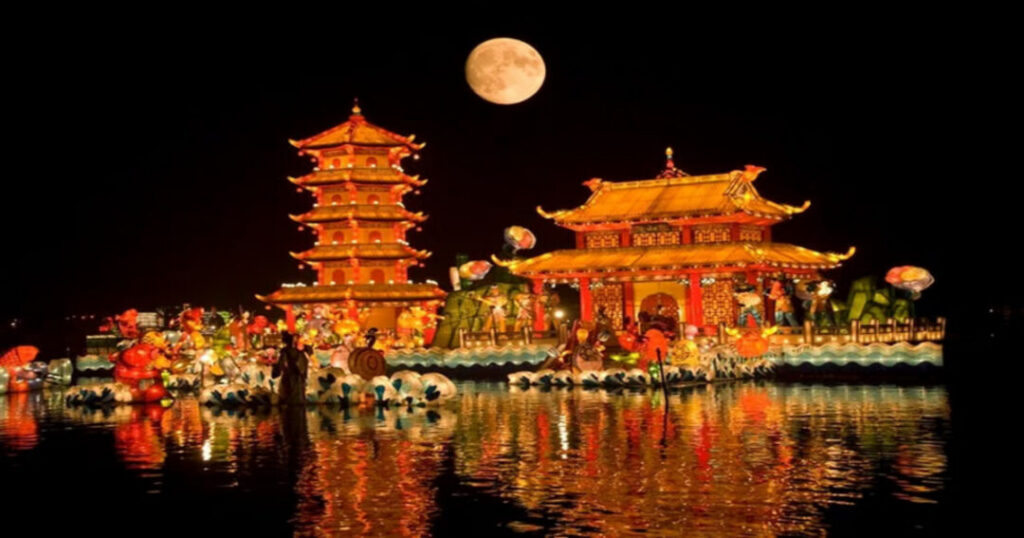
The Mid-Autumn Festival (Zhōngqiū Jié, 中秋节) — also called the Moon Festival or Mooncake Festival — is the second most important festival in the Chinese calendar after Spring Festival, and perhaps the most visually romantic. It falls on the 15th day of the eighth lunar month — the night of the year’s brightest full moon — in 2026 on September 25. It is a festival of reunion: the full moon is the symbol of wholeness and family, and the Mid-Autumn table is the year’s second most important family gathering after New Year’s Eve.
The mythology is layered. The most beloved story involves Chang’e (嫦娥) — the Moon Goddess — who drank an elixir of immortality and floated to the moon, where she lives with the Jade Rabbit (Yù Tù) who compounds medicines. The moon on Mid-Autumn night is where Chang’e lives, and looking at it is looking toward someone who is separated from you.
Mooncakes (yuèbǐng) — round pastries filled with lotus seed paste, red bean, salted egg yolk, or dozens of regional variations — are the festival’s defining food and the primary gift exchanged between families and friends. The round shape mirrors the full moon; the giving of mooncakes is the giving of reunion.
The mid moon festival is celebrated with lantern displays, family gatherings, and the ancient practice of moon gazing — which Chinese poets have been doing continuously since at least the Tang Dynasty. The poet Su Shi’s Shui Diao Ge Tou (水调歌头), written in 1076 CE while separated from his brother, remains the most quoted poem about Mid-Autumn: “We wish each other a long life to share the beauty of this graceful moonlight, even though miles apart.”
Also Read: UNESCO’s Newest Geoparks: Remarkable New Sites Added to the Global Network
Double Ninth Festival — Climbing Higher
The Double Ninth Festival (Chóngyáng Jié, 重阳节) falls on the ninth day of the ninth lunar month — in 2026 on October 17. In Chinese numerology, nine is the highest single digit and is associated with Yang (positive energy); two nines together double the Yang force. The festival is associated with the elderly — it was officially designated China’s Senior Citizens’ Day in 1989 — and the traditions of mountain climbing, chrysanthemum appreciation, and chrysanthemum wine drinking are acts of wishing health, longevity, and high aspiration.
The practice of climbing high ground (dēng gāo, 登高) on this day has its roots in a legend from the Eastern Han Dynasty about a man who was warned by a fortune teller to take his family to high ground on the ninth day of the ninth month to avoid disaster — carrying dogwood (zhūyú) and drinking chrysanthemum wine as protection. The family returned to find their livestock dead; the high ground had saved them. The chrysanthemum’s golden colour and late-autumn blooming made it the festival’s symbol — defiance of the cold, beauty in decline.
Winter Solstice — Dongzhi
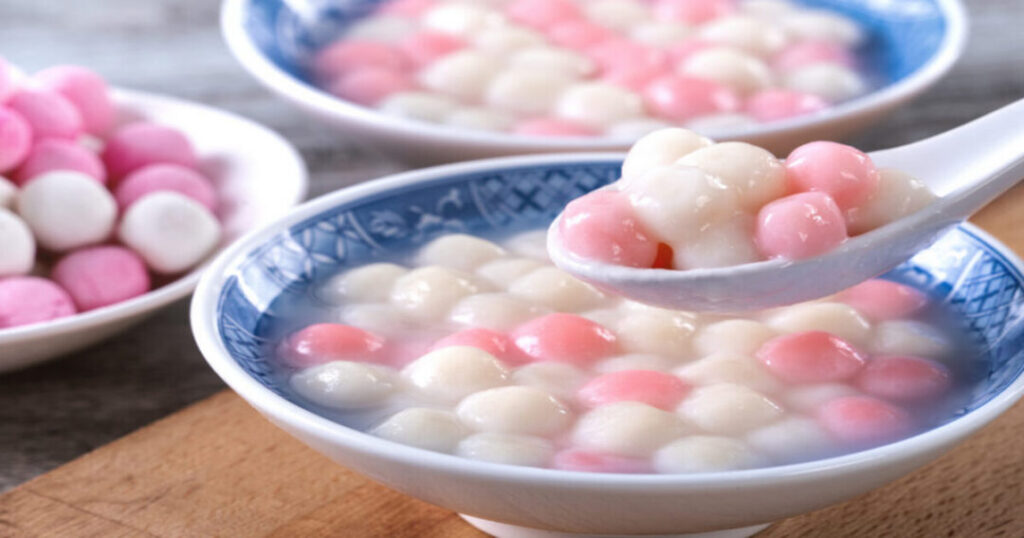
Dongzhi (冬至, Winter Solstice) is one of the oldest of the Chinese traditional festivals — predating the Spring Festival in its origins — and one of the quietest. It falls on the winter solstice (approximately December 21–23 in the Gregorian calendar), in 2026 on December 22. It is primarily a family meal: the longest night of the year is met with warmth, food, and the knowledge that from here the days will lengthen.
In northern China, the Dongzhi tradition centres on dumplings (jiǎozi) — whose shape is said to resemble ears, recalling the legend of Zhang Zhongjing, a Han Dynasty physician who prescribed dumpling soup to his cold-suffering patients. In southern China, particularly in Guangdong, the tradition is tāngyuán — glutinous rice balls in sweet soup. The family gathering of Dongzhi is considered almost as important as New Year’s Eve in many regions.
Chinese Lantern Festival and Chinese Light Festival — The Visual Traditions
The Chinese lantern festival and Chinese light festival are terms that overlap in Western usage but refer to distinct traditions:
Yuan Xiao (Lantern Festival) — the 15th day of the first lunar month — is the official conclusion of Spring Festival and the oldest lantern-lighting tradition in the calendar. Paper lanterns, sky lanterns, riddle games, and yuanxiao food define this specific event.
Lantern festivals throughout the year — many Chinese festivals involve lanterns: the Mid-Autumn Festival has its own lantern traditions (children carry rabbit lanterns, streets are hung with coloured lanterns for moon viewing), the Ghost Festival (Hungry Ghost Festival, 中元节, 15th day of the seventh lunar month) involves floating lotus lanterns on water to guide the spirits of the dead.
Contemporary Chinese light festivals — large-scale illumination events at parks, temples, and heritage sites — have grown enormously in recent decades, drawing on the lantern tradition while adding modern lighting technology. Xi’an’s City Wall, Zigong’s (Sichuan) international lantern festival, and countless temple fairs create the Chinese light festival experience that international visitors photograph and share.
Also Read: Chiang Mai Flower Festival 2026: The Complete Guide to Thailand’s Most Beautiful Celebration
Chinese Food Festival Culture
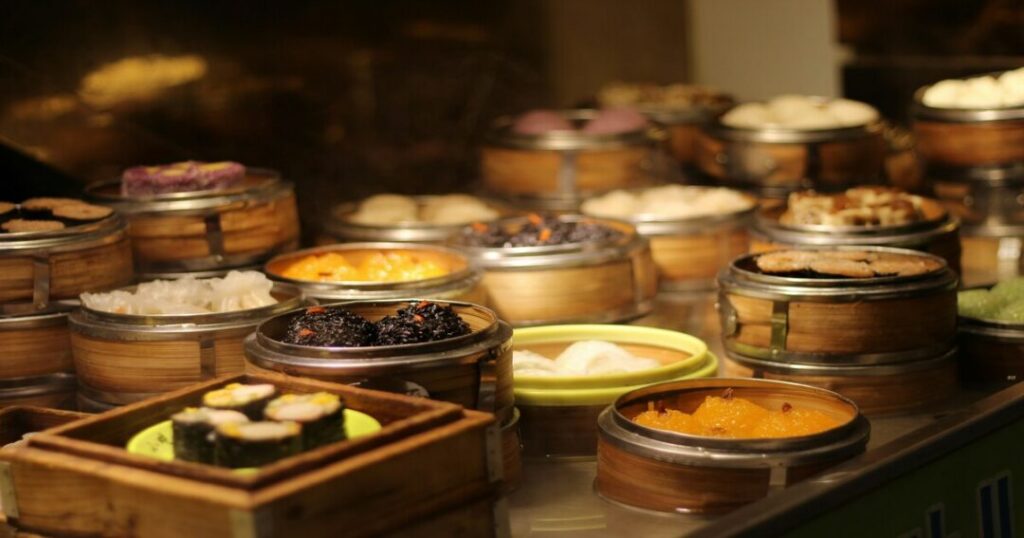
Chinese food festivals are woven through every traditional celebration rather than existing as standalone events — but several food-centred gatherings have become significant:
Temple fairs (miào huì) — the most authentic Chinese food festival experience; held around temples during the Spring Festival period and other holidays, they combine street food, traditional crafts, performance, and carnival atmosphere. Beijing’s Ditan Temple Fair and Shanghai’s Yu Garden bazaar are the most famous.
Regional food festivals — Chengdu’s International Food and Tourism Festival (celebrating Sichuan cuisine), Shunde’s food culture events (home of Cantonese cuisine’s most complex tradition), and countless city-level celebrations of local culinary heritage.
The festival food calendar:
- Spring Festival → dumplings, fish, niangao, glutinous rice cakes
- Lantern Festival → yuanxiao (sweet glutinous rice balls)
- Qingming → qingtuan (green rice balls with mugwort)
- Dragon Boat → zongzi (sticky rice dumplings in bamboo leaves)
- Mid-Autumn → mooncakes, pomelo, taro, cassia wine
- Dongzhi → dumplings (north) or tangyuan (south)
Conclusion about Chinese Festivals
Chinese festivals are not separate from Chinese life — they are its punctuation. They mark the turning of seasons, the obligations of memory, the celebration of love, the gathering of families separated by the vast distances of the country and its diaspora. The complete Chinese festivals list — Spring Festival, Lantern Festival, Qingming, Dragon Boat, Qixi, Mid-Autumn, Double Ninth, Dongzhi — is a map of everything the Chinese cultural tradition holds most important: ancestors, reunion, the moon, the harvest, love, longevity, and the knowledge that the year will turn again.
2026 Chinese traditional festivals at a glance:
- Spring Festival: February 17 — Year of the Horse, reunion dinner, red envelopes
- Lantern Festival: March 3 — sky lanterns, yuanxiao, riddles
- Qingming: April 4 — tomb sweeping, spring outings, qingtuan
- Dragon Boat Festival: June 19 — racing, zongzi, Qu Yuan’s memory
- Qixi: August 13 — Cowherd and Weaver Girl, stars, romance
- Mid-Autumn / Moon Festival: September 25 — mooncakes, Chang’e, family reunion
- Double Ninth: October 17 — mountain climbing, chrysanthemums, elders
- Dongzhi: December 22 — winter solstice, dumplings, family warmth
Download the Explurger app to discover Chinese festival events near you, find communities celebrating these traditions worldwide, and log every lantern, mooncake, and dragon boat race on your cultural journey.
The lunar calendar is already turning. The red envelopes are already being filled. The lanterns are already being made.
FAQs about Chinese Festivals
2. What is the Chinese lantern festival?
The Chinese lantern festival (Yuánxiāo Jié, 元宵节) falls on the 15th day of the first lunar month — March 3, 2026 — and marks the final day of the Spring Festival period. It is celebrated with thousands of lit lanterns, sky lantern releases, lantern riddle games, and the eating of yuanxiao (sweet glutinous rice balls). The most spectacular celebrations are at Xi'an's City Wall, Nanjing's lantern fairs, and Pingxi in Taiwan where sky lanterns are released en masse over the mountains.
3. What is the Qixi Festival?
The Chinese Qixi festival (七夕节, Qīxī Jié) is celebrated on the seventh day of the seventh lunar month — August 13, 2026 — and is based on the legend of the Cowherd and the Weaver Girl, two stars (Altair and Vega) separated by the Milky Way who meet once a year on this night when magpies form a bridge across the sky. It is China's most romantic festival — sometimes called the Chinese Valentine's Day — observed with romantic dinners, lantern releases, and stargazing.
4. What is the Mid-Autumn Festival (Moon Festival)?
The mid moon festival — properly the Mid-Autumn Festival (Zhōngqiū Jié) — falls on the 15th day of the eighth lunar month, September 25, 2026. It is China's second most important festival, celebrated with mooncakes (round pastries filled with lotus paste or egg yolk), family reunions, lantern displays, and moon gazing. The mythology centres on Chang'e, the Moon Goddess who lives on the moon with the Jade Rabbit. The poet Su Shi's 11th-century poem about separation and the moon remains the most quoted text associated with this festival.
5. What is the Dragon Boat Festival?
The Dragon Boat Festival (Duānwǔ Jié, 端午节) falls on June 19, 2026. It commemorates the poet-statesman Qu Yuan (340–278 BCE) who drowned himself in the Miluo River when his state fell to Qin. The festival traditions — dragon boat racing, eating zòngzi (sticky rice dumplings in bamboo leaves), and wearing protective herbs — all trace back to the community's attempt to recover his body and protect it. It was inscribed on the UNESCO Representative List of Intangible Cultural Heritage in 2009.
6. What food is eaten at Chinese festivals?
Chinese food festival traditions link specific foods to each celebration: Spring Festival → fish (surplus), dumplings (gold ingots), niangao (rising higher); Lantern Festival → yuanxiao/tangyuan (sweet glutinous rice balls — family wholeness); Qingming → qingtuan (green mugwort rice balls); Dragon Boat Festival → zòngzi (sticky rice in bamboo leaves — savoury in the south, sweet in the north); Mid-Autumn Festival → mooncakes (round like the moon), pomelo, cassia wine; Dongzhi → dumplings (north) or tangyuan (south). Every major Chinese traditional festival has its own defining food.