
11,144 Total Views
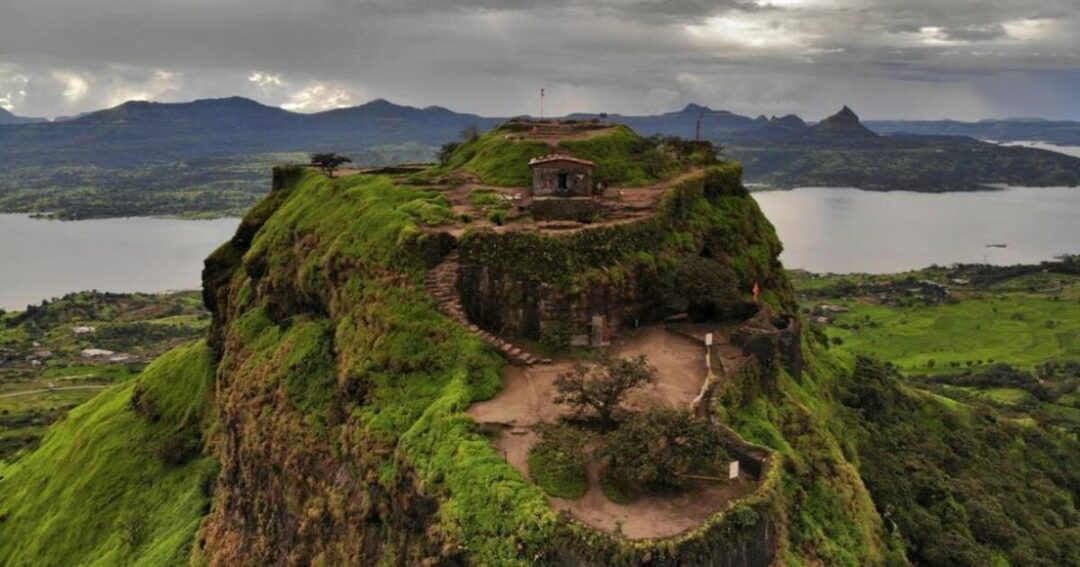
Named for its distinctive triangular silhouette, Tikona Fort is one of the most approachable hill forts near Pune — a half-day trip that pairs a genuinely easy climb with a 17th-century Maratha stronghold and, on a clear day, a full view of Pawna Lake curling around its base. This guide covers the fort’s history, the exact trek route from Tikona Peth village to the summit, how long it actually takes, how difficult it is, and when to go.
Best Tikona Fort Trek Guide
Here’s what makes Tikona worth the climb — its history, what’s still standing at the top, and what to expect on the way up.
History of Tikona Fort (Vitandgad)
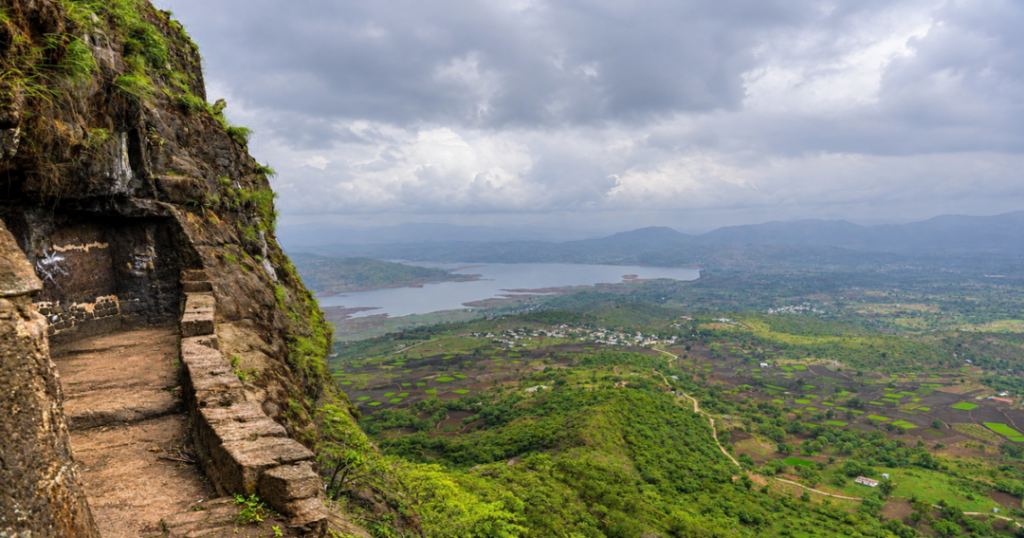
Tikona is also known historically as Vitandgad, and its earliest confirmed trace is a Buddhist vihara on the hill dated to roughly the seventh or eighth century AD, long before it became a fortress. Malik Ahmad Nizam Shah I captured the hill for the Nizam Shahi dynasty in 1585, and in 1657 Chhatrapati Shivaji Maharaj took Tikona along with a cluster of neighboring forts, bringing the region under Maratha control and making Tikona the administrative centre for the entire Pawna Maval region. In 1660, the Dhamale Deshmukh family was given charge of the fort’s security. After the 1665 Treaty of Purandar briefly handed it to the Mughals, the Marathas recaptured it, and it finally fell to the British in 1818 after a short engagement.
What to See Inside Tikona Fort?
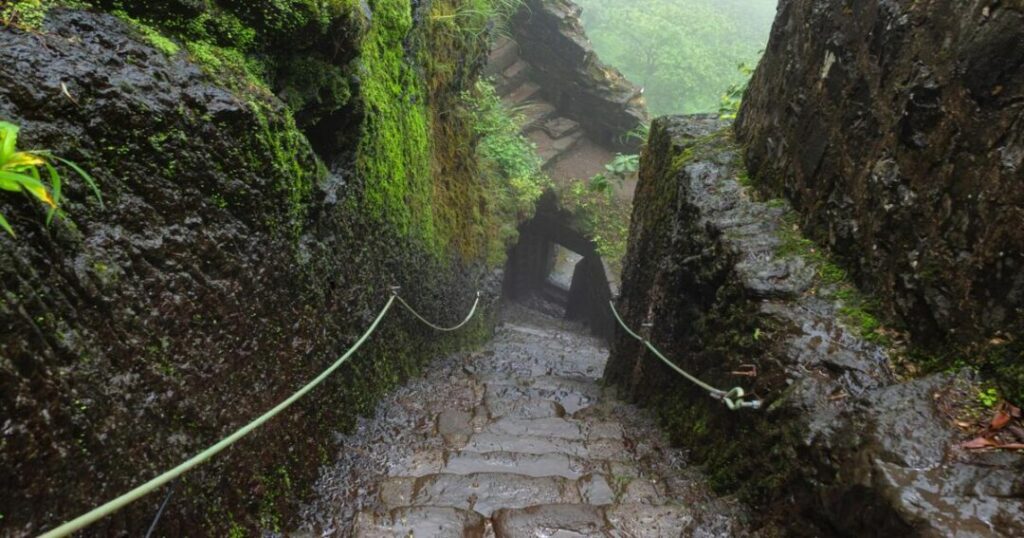
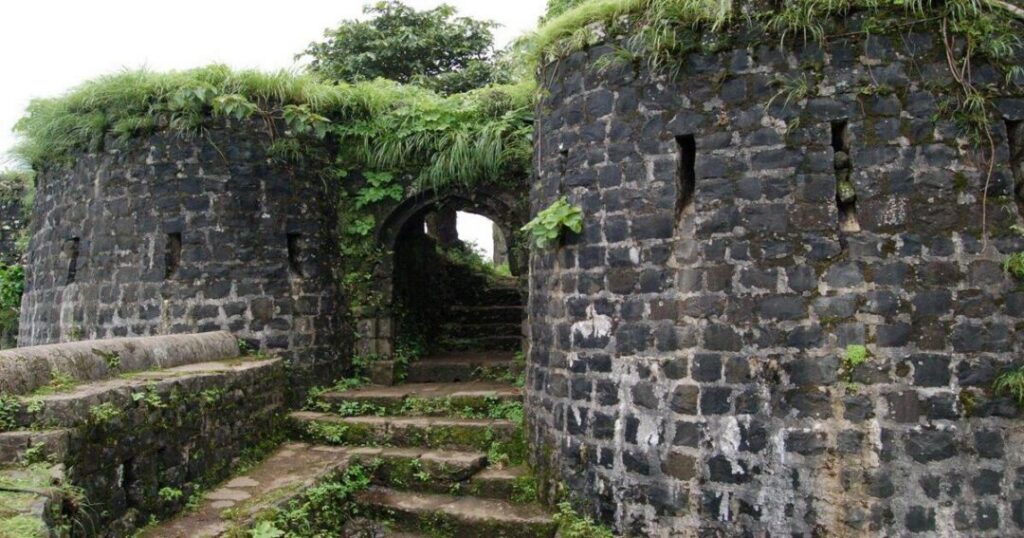
The fort is in ruins today but still has enough standing to make the climb worthwhile: a temple dedicated to Trimbakeshwar Mahadev near the top, seven water tanks and rock-cut cisterns carved directly into the hillside, the remains of large ceremonial entrance gates, and a set of caves from the Satavahana era large enough to shelter in overnight. A stretch of narrow stone steps, wide enough for only one person at a time, leads through the final approach — a reminder that the fort’s layout was built for defense first, not convenience.
Tikona Fort Trek Route: Step by Step
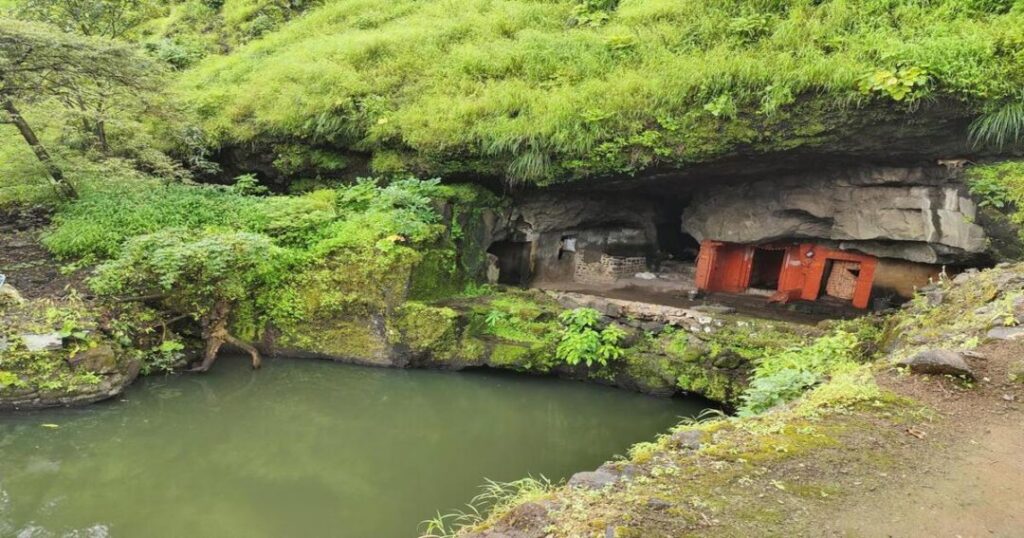
Walking the tikona fort trek route is straightforward enough that it works as a first trek for beginners, but it still has a real climb in it. From Tikona Peth village, a motorable dirt road covers the first stretch to where the actual trail begins; from there, the path climbs gradually through forest cover before turning rockier, passing a cave and a Hanuman statue partway up. The final push to the fort gate involves a set of roughly 100 steep stone steps, and a fixed rope with bolts is installed along the steepest section to help with grip, especially useful when the rock is wet. Past the entrance, a short walk leads to the temple, the cisterns, and the summit itself.
Tikona Fort Trek Distance, Time, and Difficulty at a Glance
For anyone comparing the numbers before deciding whether to go, here’s the quick reference:
- Tikona fort trek distance: about 1.5 to 2 kilometres of walking trail, starting from where the motorable road ends just outside Tikona Peth village and finishing at the fort’s entrance gate.
- Tikona fort trek km (round trip): roughly 3 to 4 kilometres of walking once you count both the ascent and the way back down.
- Tikona fort trek time: typically 1 to 1.5 hours climbing up and about 45 minutes to an hour coming back down, so budget roughly 2 to 3 hours for the trek itself, or around half a day once travel to and from Pune or Mumbai is included.
- Tikona fort trek difficulty level: rated easy, one of the more beginner-friendly forts in the Sahyadri range, though the last stretch of stone steps is steep enough to deserve proper trekking shoes and a bit of caution, especially in the rain.
Tikona Fort Height and Location
Tikona Fort sits at an elevation of about 3,580 feet (roughly 1,090 metres) above sea level, in the Maval region of Pune district near the town of Kamshet, just west of Pawna Lake — a figure that’s worth knowing if you’re specifically researching tikona fort trek height before planning the climb. Its name, meaning “triangular,” comes directly from the hill’s pyramid-like shape, which is visible from a considerable distance across the lake and is part of what makes it such a recognizable landmark on the Pune-Mumbai trekking circuit. Nearby Tung Fort, often trekked as a companion peak on the same trip, sits just across the water and shares a similar profile, and the two are sometimes called the twin forts of the Pawna Maval region.
Also Read: Rajgad Fort Trek: The Complete Guide to Shivaji’s Mountain Capital
Best Photo Spots on the Tikona Fort Trek
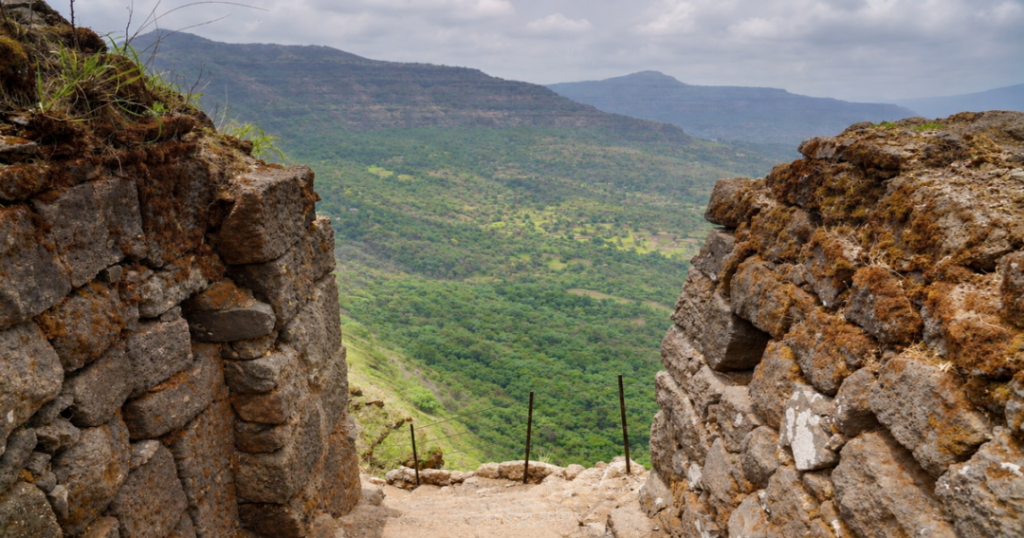
This is a written guide rather than a photo gallery, so if you’ve searched tikona fort trek photos hoping to see the view before you go, here’s a description instead of an image: the summit looks straight down over Pawna Lake, with the water curling around the base of the hill and the Sahyadri range stacked up in the background — most trekkers consider it the single best reason to make the climb. The triangular shape of the fort itself is best photographed from the Pawna Lake shoreline or from a boat on the lake, where the hill’s distinctive silhouette shows up clearly against the sky, especially early morning or just before sunset. On the fort itself, the old cisterns, the Trimbakeshwar Mahadev temple, and the narrow stepped entrance are the most photographed structures, and the cave near the Hanuman statue partway up the trail is a popular rest-and-photo stop for anyone climbing in a group.
Also Read: Places to Visit in Kumbhalgarh: Fort, Temples & Wildlife
What is the Best Time to Visit Tikona Fort?
The monsoon months, June through September, are when Tikona is at its most photogenic — the hills turn fully green, Pawna Lake fills up, and small waterfalls appear along the trail — but the same rain makes the rocky steps near the top genuinely slippery, so it’s worth having proper grip and taking the fixed-rope section slowly. Winter, from October through February, trades that lush green for clear skies and easy visibility, though it can get cold and windy right at the summit, so a light jacket is worth carrying even though the climb itself will keep you warm. Summer, March through May, is the least recommended window — the region gets hot and the hillside turns dry and brown, without either the greenery of monsoon or the clear air of winter working in its favor.
How to Reach Tikona Fort?
Tikona Fort is most easily reached by road. From Pune, it’s roughly 50 to 60 kilometres via the Pirangut-Paud route or through Kamshet off the Mumbai-Pune corridor, about 1.5 to 2 hours by car or bike. From Mumbai, it’s a longer haul at around 120 to 135 kilometres, roughly 3 hours via the Mumbai-Pune Expressway, exiting toward Kamshet or Lonavala. There’s no direct public bus to the base village, so most travelers either drive themselves or take a train to Kamshet or Lonavala railway station and then arrange a shared rickshaw or hired jeep for the final stretch to Tikona Peth village, where the trek itself begins. Entry to the fort is free, and it’s generally accessible from around 9 AM to 5 PM.
Also Read: Lohagad Trek: The Complete Guide to Routes, Difficulty & Night Trekking
Conclusion: Is Tikona Fort Worth the Climb?
Between a Maratha-era hilltop, a genuinely easy climb, and one of the best lake views in the Pawna Maval region, Tikona Fort earns its reputation as one of the most rewarding half-day trips out of Pune — pack proper shoes, check the season against what you want to see, and you’ll be back down in time for a late lunch by the lake.
Planning a Sahyadri fort trek from Pune or Mumbai? Let the Explurger app help you map the route and time your trip.
FAQs About Tikona Fort
2. How long does the Tikona Fort trek take?
The climb itself takes about 1 to 1.5 hours up and 45 minutes to an hour back down, so 2 to 3 hours total, or roughly half a day once travel from Pune or Mumbai is included.
3. What is the height of Tikona Fort?
Tikona Fort sits at about 3,580 feet, roughly 1,090 metres, above sea level.
4. What is the best time to visit Tikona Fort?
Monsoon (June to September) gives the greenest views and a full Pawna Lake but slippery steps, while winter (October to February) offers clearer skies and easier footing at the cost of some of the greenery.
5. Is there an entry fee for Tikona Fort?
No, Tikona Fort is free to visit, and it's generally accessible from around 9 AM to 5 PM.
6. How do I reach Tikona Fort from Pune?
It's about 50 to 60 kilometres from Pune via Pirangut-Paud or through Kamshet, roughly 1.5 to 2 hours by road; there's no direct public bus, so a private vehicle or a train to Kamshet followed by a shared rickshaw is the usual route.