
1,217 Total Views
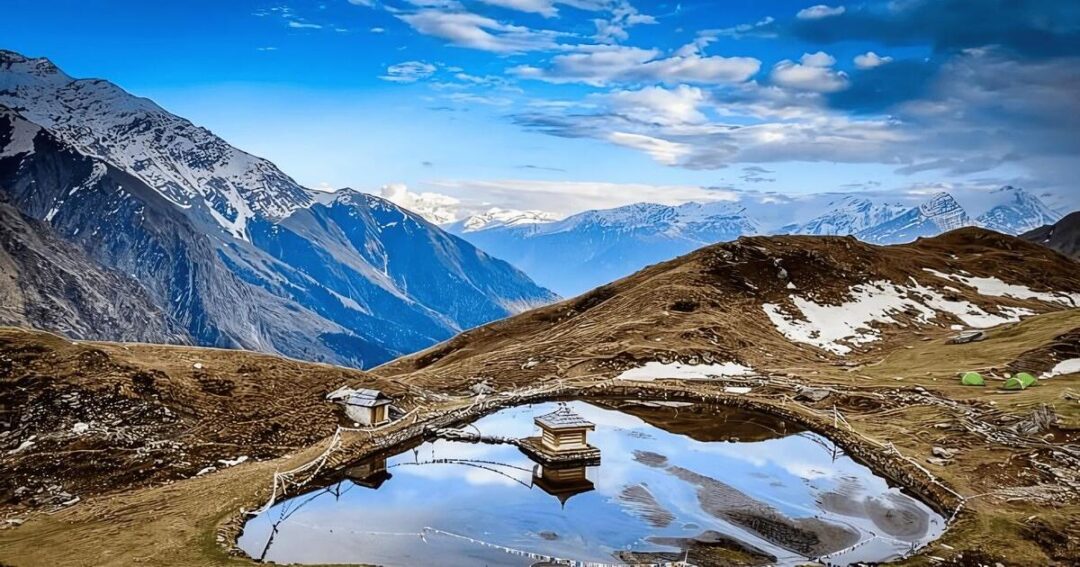
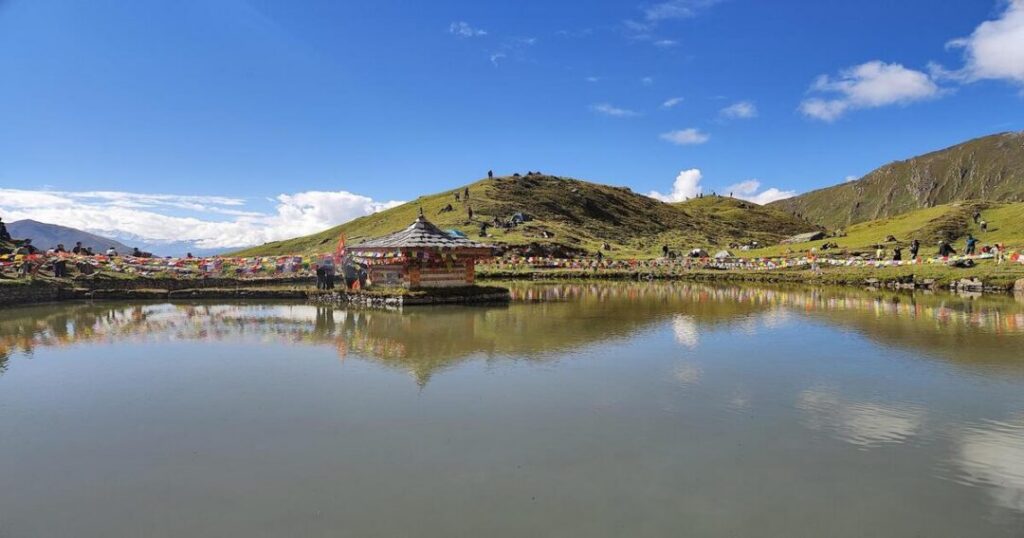
Yulla Kanda doesn’t show up on most Himachal itineraries, and that’s largely the point of going. Tucked into Kinnaur’s Rora Valley, this glacial lake holds a small, ancient temple standing right in its center — widely described by trek operators and Indian travel outlets as the world’s highest Krishna temple. Unlike the Shiva-centered high-altitude shrines that dominate most Himalayan pilgrimage treks, this one belongs to Krishna, and getting there still requires a genuine trek through forest, stream crossings, and alpine meadow rather than a paved road.
This guide covers the real distance, difficulty, permit situation, and cost of getting here — from both Delhi and Manali — so you can plan around what this trek actually demands rather than the shorthand version.
Yulla Kanda: Where the World’s Highest Krishna Temple Sits
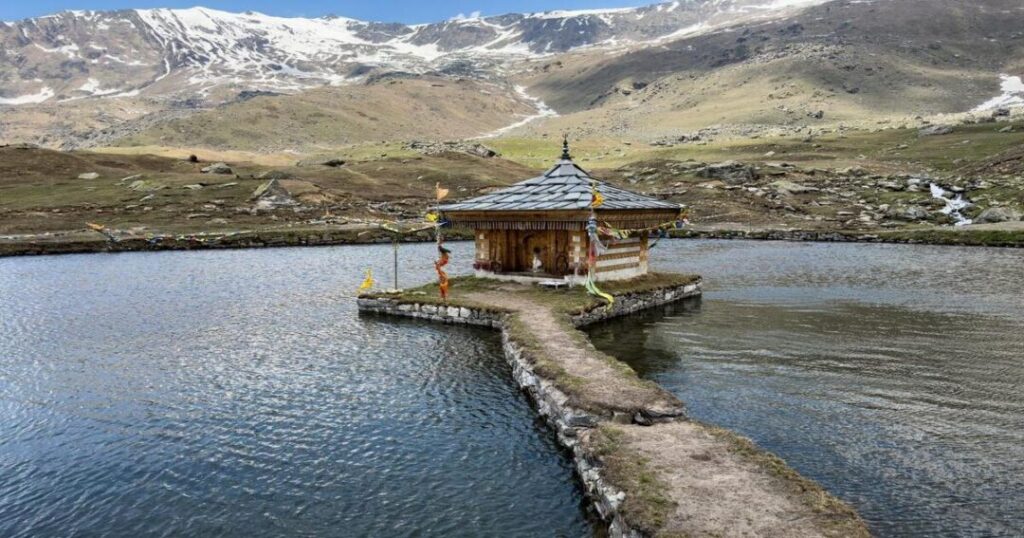
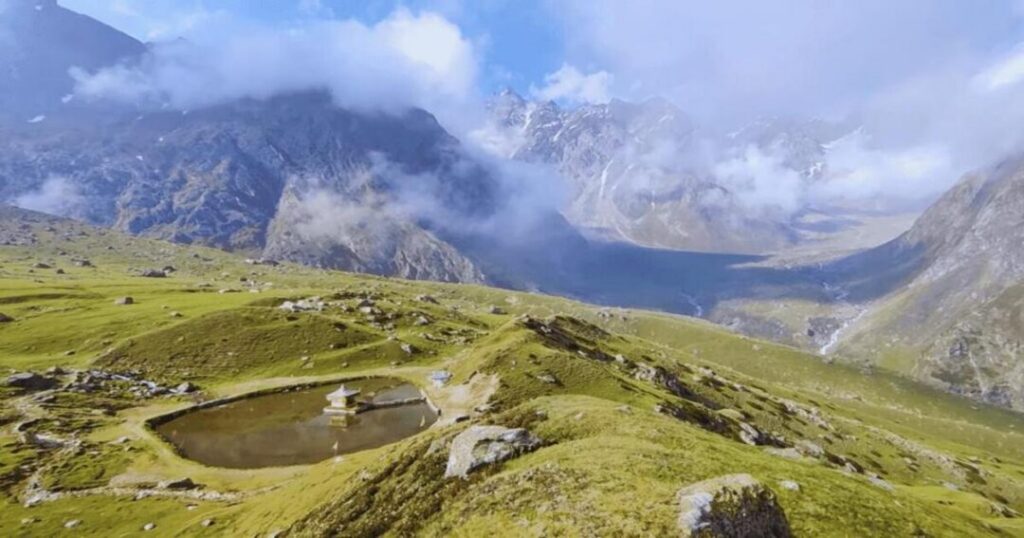
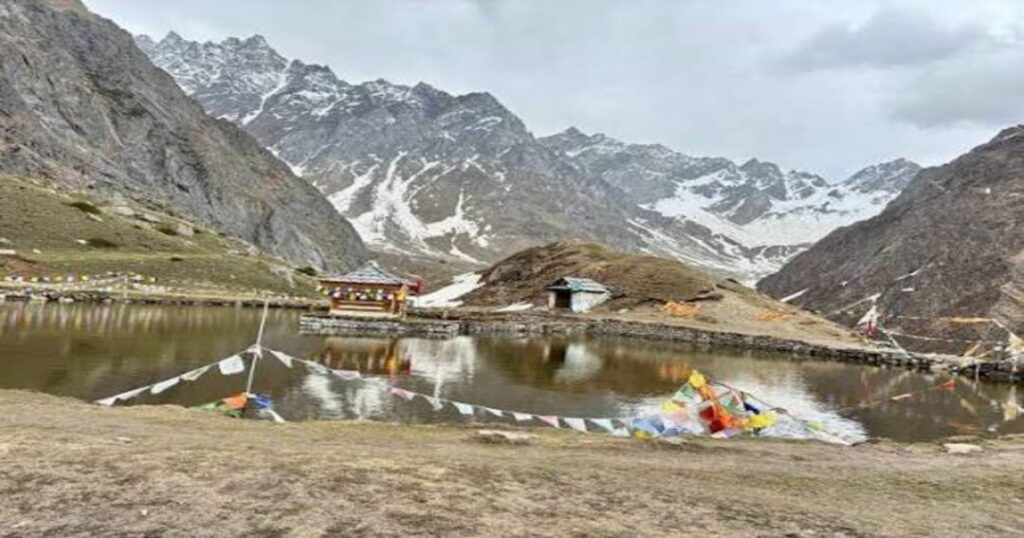
Yulla Kanda sits at approximately 3,895 metres (12,778 feet) in the Rora Valley of Kinnaur district, Himachal Pradesh, with a small temple positioned directly in the middle of the lake itself. It’s consistently described across trek-operator sites and outlets like Outlook Traveller and Zee News as the world’s highest Krishna temple — worth noting this is the claim as widely repeated in Indian travel media rather than a title verified by any independent record-keeping body. Still, at nearly 3,900 metres, it’s genuinely one of the highest-altitude Krishna shrines documented anywhere, whether or not a formal record exists to confirm the superlative. [STAT: Yulla Kanda sits at approximately 3,895 metres (12,778 feet), a figure consistently cited across multiple independent trek-operator sources.]
The Legend Behind Yulla Kanda’s Krishna Temple
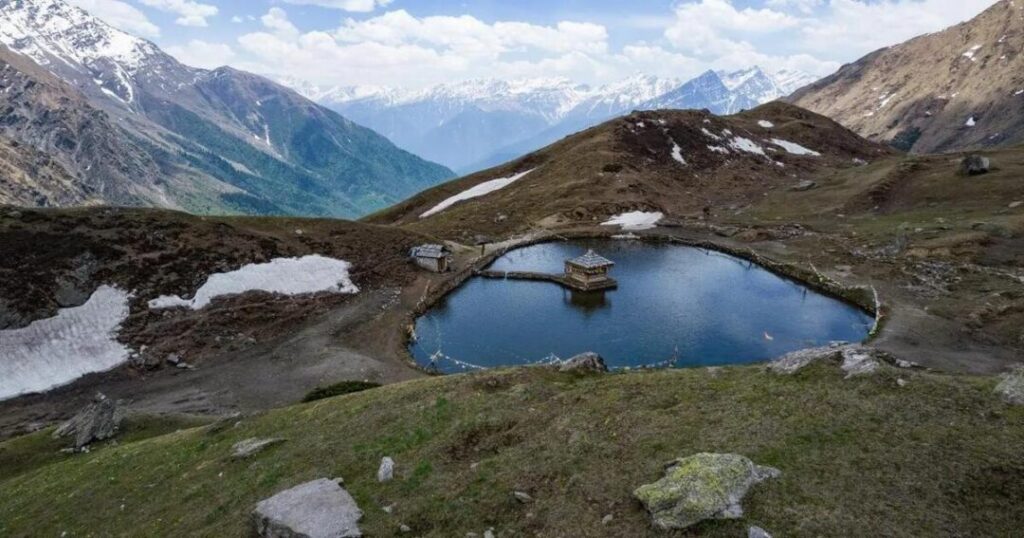
Local tradition holds that the temple’s deity is Swayambhu — self-manifested rather than installed — and that the site was visited by the Pandavas during their period of exile, a legend that recurs across several remote Himachal shrines. During Janmashtami, Krishna’s birth celebration, hundreds of devotees reportedly make the trek up to celebrate at this extraordinary altitude, turning what’s normally a quiet, little-visited lake into a genuine gathering point once a year.
Also Read: Top 10 Holy Places in India Beyond Varanasi: Temple Towns Worth the Journey
Yulla Kanda Trek Distance and Route
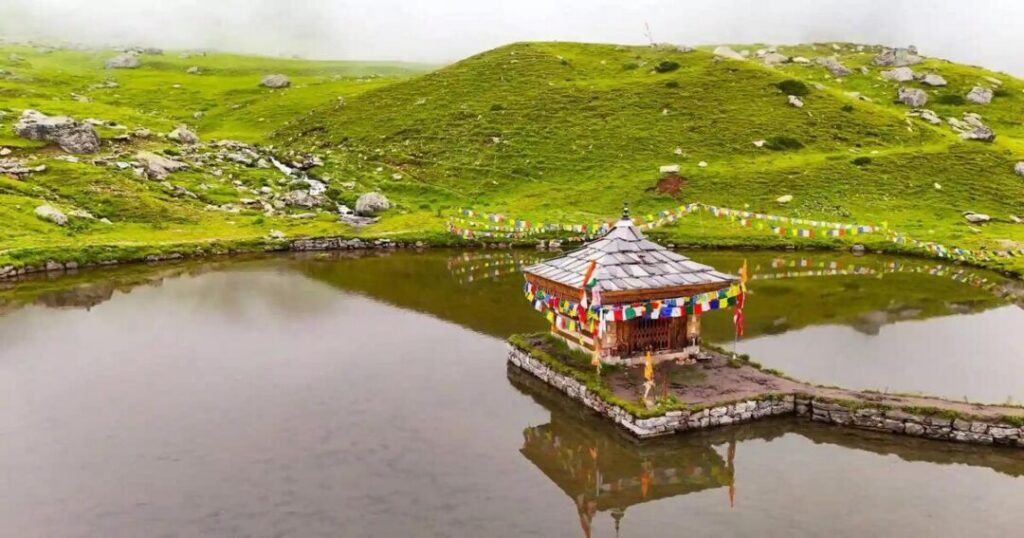
Here’s where it’s worth being upfront about conflicting information: most trek-operator sources put the Yulla Kanda trek distance at roughly 11–12 km one way from Yulla Khas village, making the full round trip approximately 22–24 km, with an elevation gain of around 500–600 metres along the way. A smaller number of sources cite a longer 18 km one-way figure instead, though it’s not always clear whether that reflects a different starting point or route variation. Given how lightly documented this trek still is, treat the 11–12 km figure as the more reliable planning number, but don’t be surprised if a specific operator quotes something longer.
The route itself runs from Yulla Khas village through dense forest, crossing clear mountain streams, before opening into alpine meadows on the approach to the lake and temple. If you’re looking for a Yulla Kanda trek map before you go, most local operators provide a basic route sketch rather than a detailed topographic map, so booking with a guide familiar with the trail is genuinely useful here, not just a nice-to-have.
Yulla Kanda Trek Difficulty Level
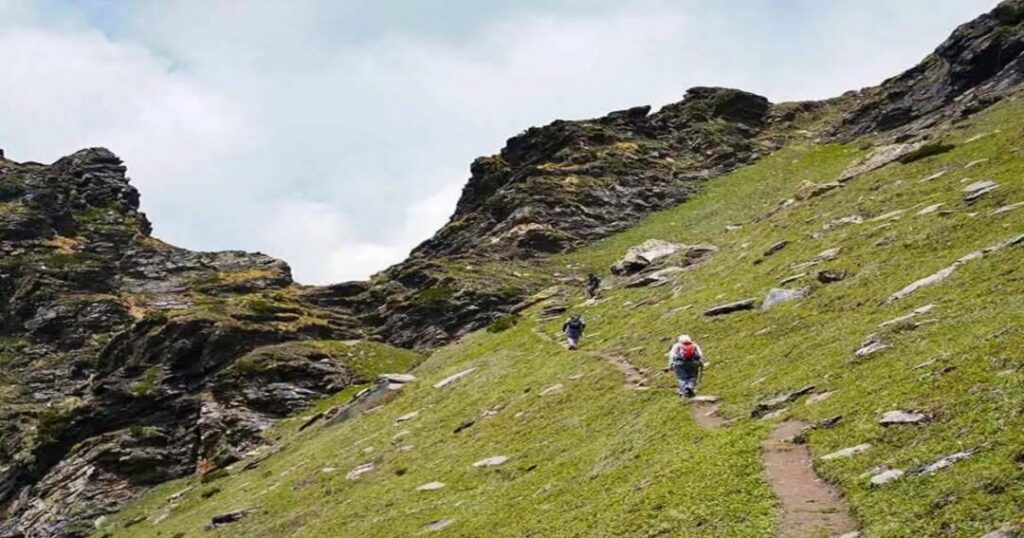
The Yulla Kanda trek difficulty level is generally rated moderate, though a few sources soften that to easy-moderate. In practice, expect steep ascents and rocky terrain through the forested stretches, with most fit trekkers completing the day-trek version in roughly 6–8 hours including time at the temple and rest stops. This isn’t a trek to underestimate simply because it’s less famous than Kedarnath or Hampta Pass — the altitude alone (nearly 3,900 metres) means acclimatization and a realistic pace matter just as much here as on better-known routes.
Also Read: Lepakshi Temple: The Complete Guide to Andhra Pradesh’s Iconic Heritage Site
Yulla Kanda Trek Package Options and Cost
Yulla Kanda trek packages vary widely in price depending on inclusions, ranging from around ₹4,500 for a bare-bones guided day trek up to roughly ₹30,000 for a more comprehensive multi-day package including transport, meals, and accommodation from Delhi. Mid-range options in the ₹7,500–9,500 bracket are common for Delhi-to-Delhi packages that bundle transport with the trek itself.
If you’d rather go independent, budget roughly ₹800–1,200 per night for a local homestay or guesthouse (often including meals), ₹400–600 per day for simple food if arranged separately, and ₹1,200–1,500 per day if you hire a local guide — which, given the limited trail marking, is genuinely worth the cost here.
Permits: Do You Need One for Yulla Kanda?
Here’s a genuinely useful clarification most generic Kinnaur travel content misses: Yulla Khas village sits in lower Kinnaur, well before Jangi, the point roughly 35 km from Reckong Peo where the district’s Protected Area Permit (commonly called an Inner Line Permit, though that’s not the technically correct term) becomes mandatory for foreign nationals heading toward Spiti. Since Yulla Kanda’s trailhead doesn’t require crossing that line, foreign travelers do not need this permit specifically for this trek. [STAT: Kinnaur’s Protected Area Permit becomes mandatory for foreign nationals only beyond Jangi, roughly 35 km from Reckong Peo — a threshold Yulla Khas village, the Yulla Kanda trailhead, sits well short of.] Indian citizens don’t need any special permit for this route at all. That said, if you’re combining this trek with onward travel deeper into Kinnaur or toward Spiti, you’ll need to sort the permit separately at that point, through DM offices in Shimla, Reckong Peo, Kullu, or Keylong.
Also Read: Top 10 Places to Visit in Kathmandu: Temples, Stupas & Valley Day Trips
Delhi to Yulla Kanda Distance and How to Reach?
Delhi to Yulla Kanda distance works out to roughly 600 km, translating to a 12–14 hour drive if done in one stretch — most travelers break this into two days instead. A practical budget route: take an HRTC bus from Delhi to Reckong Peo (around ₹1,000), then a local bus (under ₹100) or shared cab (₹400–600) onward to Yulla Khas village. Alternatively, HRTC buses run from Shimla’s ISBT or Rivoli Bus Stand to Tapri, from where private taxis and shared cabs continue on to Yulla Khas. Coming specifically from Shimla, expect the full journey to Yulla village to take roughly 7–9 hours by road before the trek itself even begins.
Manali to Yulla Kanda Distance
If you’re coming from Manali rather than Delhi or Shimla, the Manali to Yulla Kanda distance is approximately 300 km, but don’t assume that shorter distance means a quicker trip — this route often takes over 10 hours by road, since it isn’t a particularly direct or well-serviced connection compared to the Shimla–Reckong Peo corridor. Unless you’re already routing through Kinnaur from the Manali side for other reasons, approaching via Shimla and Reckong Peo is generally the more straightforward option.
Also Read: Places to Visit in Manali: 15 Must-See Spots for Every Traveller
What is the Best Time to Visit Yulla Kanda?
The trek is realistically doable from mid-May through mid-October, when trails are clear and weather conditions are safest. Monsoon months, particularly July and August, make the trail genuinely slippery and are worth avoiding if possible. The temple and route close entirely from November through April due to heavy snowfall, so this isn’t a trek you can attempt outside its narrow six-month window.
Trying to work out whether this fits into a wider Kinnaur or Himachal itinerary? NIVU AI inside the Explurger app can help weigh Yulla Kanda’s remoteness and travel time against the rest of your trip, rather than you guessing at how much of your schedule to set aside for it.
Also Read: Top 10 Things to Do in Bhubaneswar: Temples, Caves & Day Trips
Conclusion About Yulla Kanda
Yulla Kanda rewards exactly the kind of traveler willing to double-check a distance figure and book a local guide rather than assume a well-marked trail — the payoff is a genuinely uncrowded high-altitude shrine that most Himachal itineraries skip entirely. Save it to your Explurger Bucket List while you sort the logistics, and once you’ve made the trek, log it as an Explurge-in — your Automatic Travelogue will keep it mapped alongside every other Himalayan trek you’ve completed. Plan the trek smarter with Explurger.
FAQs About Yulla Kanda
2. What is the Yulla Kanda trek distance?
Most sources cite roughly 11-12 km one way from Yulla Khas village, making the round trip approximately 22-24 km with an elevation gain of around 500-600 metres. A smaller number of sources cite a longer 18km figure, so treat the 11-12km range as the more reliable planning number and confirm specifics with your chosen operator.
3. How difficult is the Yulla Kanda trek?
It's generally rated moderate, with steep ascents and rocky terrain through forested sections, though a few sources describe it as easy-moderate. Most fit trekkers complete the day-trek version in 6-8 hours including temple time and rest stops. The nearly 3,900-metre altitude means acclimatization matters here just as much as on more famous high-altitude treks.
4. Do foreigners need a permit to trek to Yulla Kanda?
No, not specifically for this trek. Yulla Khas village, the trailhead, sits in lower Kinnaur well before Jangi, the point roughly 35km from Reckong Peo where a Protected Area Permit becomes mandatory for foreign nationals heading toward Spiti. Since this trek doesn't cross that threshold, no special permit is required, though onward travel deeper into Kinnaur or toward Spiti would need one arranged separately.
5. What is the Delhi to Yulla Kanda distance?
Roughly 600 km, translating to a 12-14 hour drive, typically broken into two days. A budget route involves an HRTC bus from Delhi to Reckong Peo (around ₹1,000), followed by a local bus or shared cab to Yulla Khas village.
6. How much does a Yulla Kanda trek package cost?
Packages range widely, from around ₹4,500 for a basic guided day trek to roughly ₹30,000 for comprehensive multi-day packages including transport and accommodation from Delhi. Mid-range Delhi-to-Delhi packages commonly fall between ₹7,500 and ₹9,500. Independent travelers can budget ₹800-1,200 per night for homestays and ₹1,200-1,500 per day for a local guide.