
450 Total Views
Some places you see in photographs and think, That cannot be real. Then you go, and you stand in front of it, and you think: the photograph didn’t tell the truth either—but in the opposite direction. The real thing is stranger and more extraordinary than any camera can communicate. The most beautiful places in the world have this quality: they exceed expectations not because they are bigger than you thought, but because they are more alive, more textured, and more complex in their light and their silence than any image can capture.
This guide covers the top 10 most beautiful places on earth—one landscape for each major region of the world—with what makes each extraordinary, when to go, and why they belong on every serious bucket list. All are pure nature. All earn the description. Add each one to your Explurger bucket list as you read—the app lets you save, track, and share every destination you’re working toward.
Top 10 Most Beautiful Places in the World in 2026
1. Patagonia (Chile & Argentina) — South America
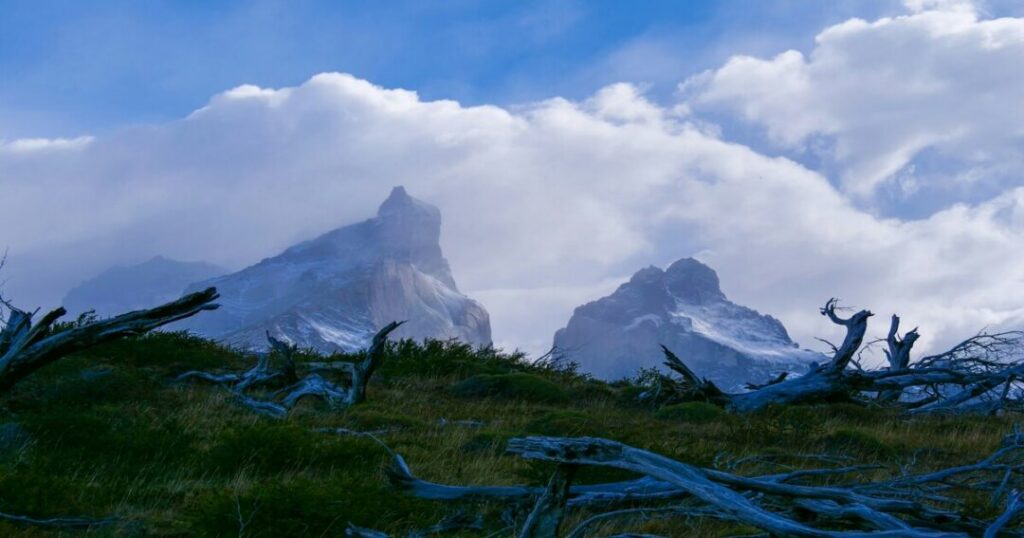
What it is: The southern tip of South America—a region shared between Chile and Argentina covering glaciers, granite peaks, turquoise lakes, and some of the most dramatic wilderness on earth
At the very bottom of the world, where the Andes run out of land and the ocean begins, Patagonia does something to most visitors that they struggle to describe afterwards: it makes them feel simultaneously very small and very alive. The centerpiece is Torres del Paine National Park on the Chilean side—a UNESCO Biosphere Reserve where three granite towers (torres) rise from the steppe like the remnants of an ancient civilization, surrounded by glaciers from the Southern Patagonia Ice Field, bright turquoise lakes colored by glacial sediment, and wildlife that has never learned to fear humans. Guanacos wander the plains. Andean condors circle the thermals above the peaks.
On the Argentine side, Los Glaciares National Park contains the Perito Moreno Glacier—one of the few advancing glaciers in the world, stretching over 250 square kilometers and standing 74 meters above the surface of Lago Argentino. The glacier periodically dams a channel of the lake, builds pressure, then ruptures in a collapse of ice and water that can last for hours. People come from across the world to watch it.
- Best time: November to February (Chilean/Argentine summer); long daylight hours; the sun sets after 10 PM in Torres del Paine
- Continent: South America
2. Ha Long Bay — Vietnam, Asia
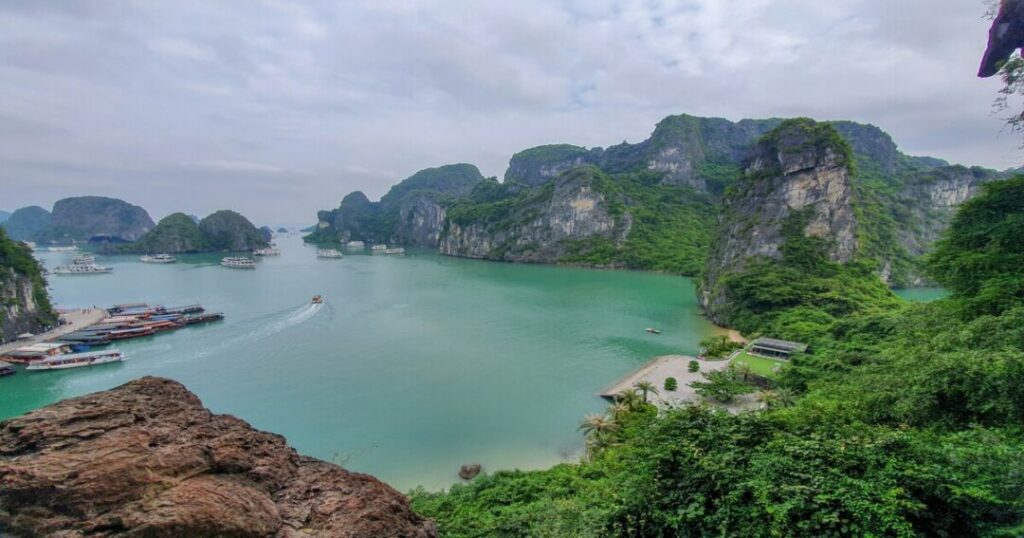
What it is: A UNESCO World Heritage Site in northeastern Vietnam with approximately 1,600–2,000 limestone karst islands rising from emerald-green water
Ha Long Bay was inscribed as a UNESCO World Heritage Site in 1994—and the reason is immediately visible: nearly 2,000 limestone karst formations rising vertically from the Gulf of Tonkin, most of them uninhabited, covered in dense jungle to their very edges, and surrounded by water of an extraordinarily clear green-blue. The name means “descending dragon” in Vietnamese—local legend holds that a family of dragons descended here and spat jade and jewels that became the islands protecting the coast.
The experience of Ha Long Bay at sunrise — when the mist sits between the karsts and the fishing boats are already moving through the channels, and the light changes from grey to gold across a thousand islands — is one of the most painterly natural views on earth. Travelers kayak through caves, swim in hidden lagoons, and spend nights on traditional junk boats anchored in coves with no other human presence visible.
- Best time: October to April — clearer skies, lower humidity
- Continent: Asia
Also read: Remote Escapes Around the World Worth Exploring: Journeys to the Edge of the Earth
3. Fiordland — New Zealand, Oceania
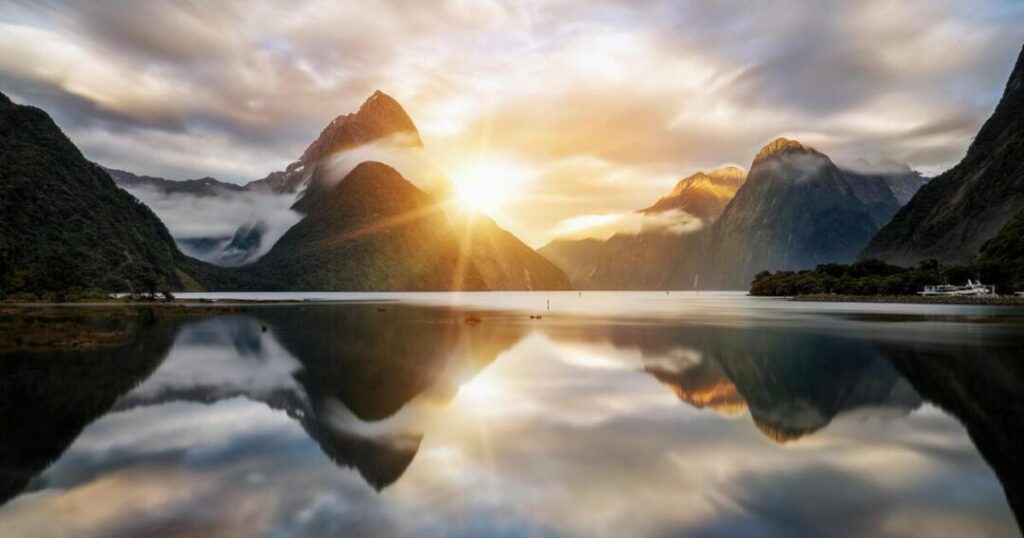
What it is: The southwestern corner of New Zealand’s South Island — a UNESCO World Heritage Site of fjords, glacial valleys, rainforest, and waterfalls
Fiordland, part of the UNESCO Te Wāhipounamu World Heritage Site, contains Milford Sound and Doubtful Sound: two fjords of such vertical, dramatic beauty that Rudyard Kipling described Milford Sound as “the eighth wonder of the world.” The fjords were carved by glaciers; the waterfalls that cascade from the cliff faces above the water are permanent features of the landscape, fed by rainfall that averages over 6 meters per year. When it rains heavily — which it does, often — the number of temporary waterfalls multiplies by dozens, and the valley becomes something beyond description.
Fiordland is also home to wildlife found nowhere else on earth—the kea (the world’s only alpine parrot), the takahe (one of the rarest birds alive), and the famous kiwi among them. The Milford Track — one of the finest multi-day walks in the world, covering 53.5 km through glacial valleys, alpine meadows, and rainforest — is the finest way to experience Fiordland’s full character.
- Best time: November to April (New Zealand summer); December to February for the most reliable weather
- Continent: Oceania
4. Salar de Uyuni — Bolivia, South America
What it is: The world’s largest salt flat—a 10,582 sq km expanse of salt crust on the Bolivian altiplano at 3,656 metres above sea level
Salar de Uyuni is the world’s largest salt flat—and during the rainy season (November to April), when a thin layer of water covers the surface, it becomes the world’s largest natural mirror. The sky reflects perfectly in the water below, the horizon disappears, and the distinction between earth and sky ceases to exist. Photographs from Uyuni during the wet season look like they have been produced by digital manipulation — they have not.
The salt crust that covers the flat was formed by the evaporation of prehistoric lakes that once covered the altiplano. Beneath the crust lies one of the world’s largest lithium reserves. At its edges, unique islands of ancient cactus emerge from the white surface—the most famous, Isla Incahuasi, is covered in centuries-old cacti, some reaching 10 meters in height. The combination of extreme altitude, extreme flatness, extreme whiteness, and the specific silence of a place with no features to break the wind makes Salar de Uyuni one of the most disorienting and most extraordinarily beautiful places in the world.
- Best time: November to April for the mirror effect; May to October for drier conditions and clearer stargazing
- Continent: South America (second entry — the Americas earn it)
Also read: Remote Villages in India: A Guide for Hidden Adventures and Offbeat Tourism
5. The Faroe Islands — North Atlantic, Europe
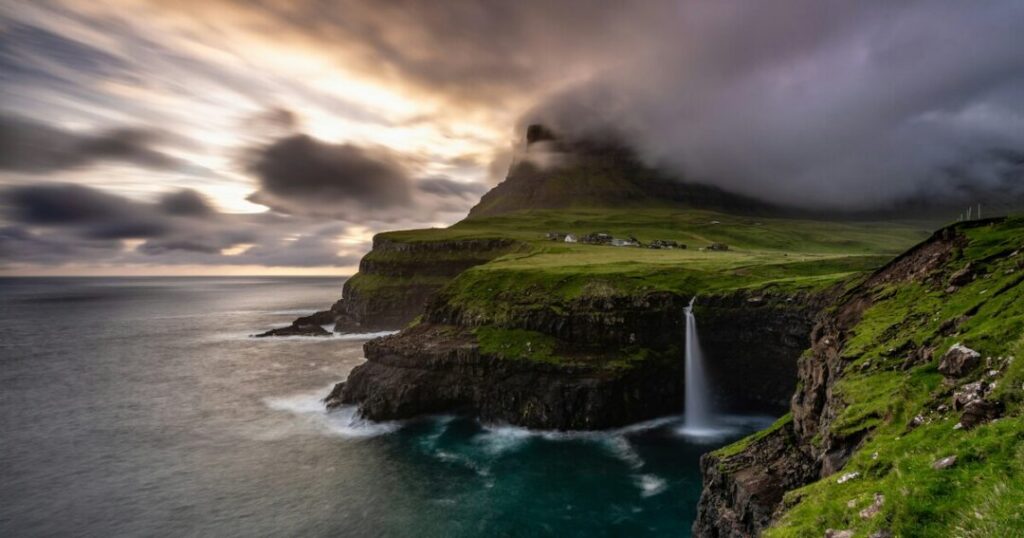
What it is: An archipelago of 18 volcanic islands between Iceland and Norway—dramatic cliffs, green meadows, waterfalls falling directly into the sea
The Faroe Islands are one of those places that most people have not yet been to but that most people, once they see a photograph, immediately add to their list. Eighteen volcanic islands, each with steep cliffs plunging into the North Atlantic; grass that is improbably green year-round (the Gulf Stream keeps temperatures mild), and waterfalls—most famously at Trælanípa and Gásadalur—that spill directly into the ocean hundreds of meters below. The islands have more sheep than people. The villages look as if someone designed them as a fairy tale: colored houses with grass roofs, fishing boats in tiny harbors, and paths that climb through clouds.
The weather changes entirely without warning—four seasons in a single morning is a local description that is not hyperbole. This unpredictability is part of the landscape’s character: the light that breaks through after rain, the mist that rolls across the clifftops and makes the view disappear and reappear, the sheer wildness of a place where nature is still clearly in charge.
- Best time: May to August for long daylight hours; September for fewer crowds and dramatic weather
- Continent: Europe
6. Zhangjiajie National Forest Park — China, Asia
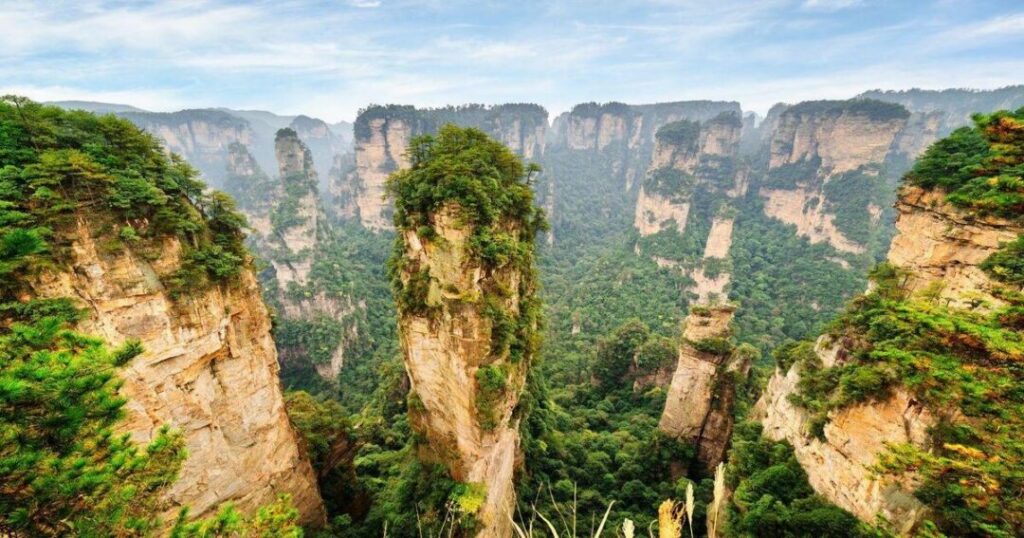
What it is: A UNESCO World Heritage Site in Hunan Province featuring thousands of quartzite sandstone pillars rising from dense forest—the direct inspiration for Avatar’s Pandora floating mountains
Zhangjiajie, specifically the Wulingyuan Scenic Area that contains it, is the landscape that director James Cameron borrowed for the floating mountains of Avatar. The more than 3,000 quartzite sandstone pillars, some rising over 200 meters, are wrapped in vegetation to their very tops, shrouded in cloud, and visible from walking trails that wind along ridge tops between them. When the cloud is heavy, the pillars appear to float above it—Cameron’s borrowing was faithful.
The park contains other extraordinary features: the Bailong Elevator—a 330-meter glass elevator built into the cliff face that is the world’s tallest outdoor elevator—and the Zhangjiajie Grand Canyon Glass Bridge, one of the longest glass-bottomed bridges in the world, stretching between two cliff faces above a canyon. The park’s depth — multiple canyons, streams, and forest layers — means that return visitors consistently find new sections they had not explored.
- Best time: April to June; September to November — the most dramatic cloud conditions are in the transition seasons
- Continent: Asia
7. Iguazu Falls — Argentina/Brazil, South America
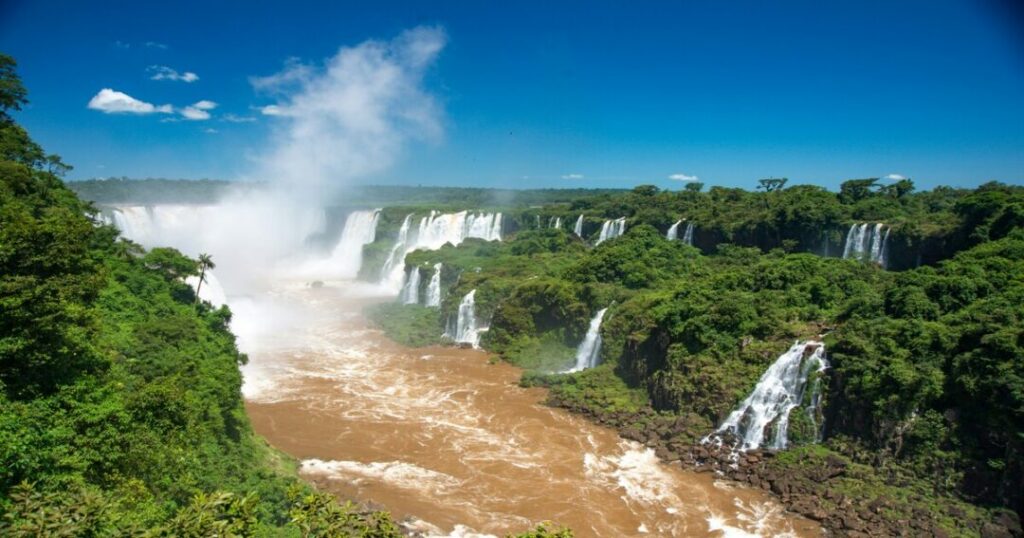
What it is: The world’s largest waterfall system—275 individual waterfalls spread across the Iguazu River on the Argentina-Brazil border
Iguazu Falls, whose name means “big water” in Guaraní, the language of the Indigenous people who lived in the region long before European arrival, is the largest waterfall system on earth. The 275 individual waterfalls that make up Iguazu are spread across a 2.7 km crescent of the Iguazu River on the border between Argentina and Brazil, and at peak flow, they collectively move over 12,000 cubic meters of water per second. The most dramatic of the individual falls is the Devil’s Throat (Garganta del Diablo)—a U-shaped chasm 82 meters high, 150 meters wide, and 700 meters long into which approximately half the river’s total flow plunges simultaneously, creating a permanent cloud of mist and thunder that is audible from kilometers away.
Both sides of the border offer extraordinary vantage points: the Argentine side takes you into the falls on walkways at water level, and the Brazilian side gives you the panoramic view of the entire system. Both are UNESCO World Heritage Sites — separately listed on their respective national territories.
- Best time: March to May (after wet season) for maximum flow; August to November for lower water and more accessible paths
- Continent: South America
Also read: 10 Highest Ropeways Across the World — From Glaciers to Himalayan Peaks
8. The Amazon Rainforest — South America
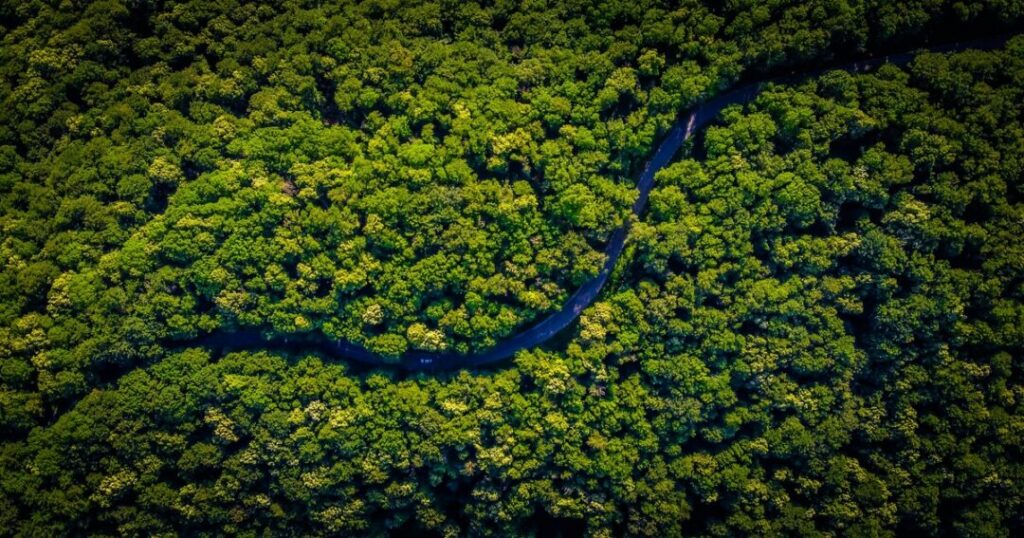
What it is: The world’s largest tropical rainforest — 5.5 million sq km across nine countries; produces approximately 20% of the world’s oxygen
The Amazon is not a beautiful place in the way that Salar de Uyuni or Milford Sound is beautiful. Its beauty is not immediately accessible from a viewpoint or a photograph. It is a beauty of scale—of a forest so vast that it creates its own weather, generates its own rainfall, and supports more species of plants and animals than have been discovered and catalogued by science. The Amazon has been called “the lungs of the earth” because the forest cycle—trees absorbing carbon dioxide and releasing oxygen—produces approximately 20 percent of the world’s oxygen supply.
What a visitor finds in the Amazon: a river so wide that you cannot see the other bank; water the color of dark tea; the sound of a forest that never falls silent; the extraordinary improbability of a canopy 40 meters above your head that contains more life per square meter than any other habitat on earth. Brazil and Peru offer the most accessible entry points, with jungle lodges ranging from basic to luxury providing the base for wildlife viewing, canopy walks, and river expeditions.
- Best time: June to September (dry season)—lower water levels reveal beaches; wildlife more concentrated around water sources
- Continent: South America
9. The Norwegian Fjords — Norway, Europe
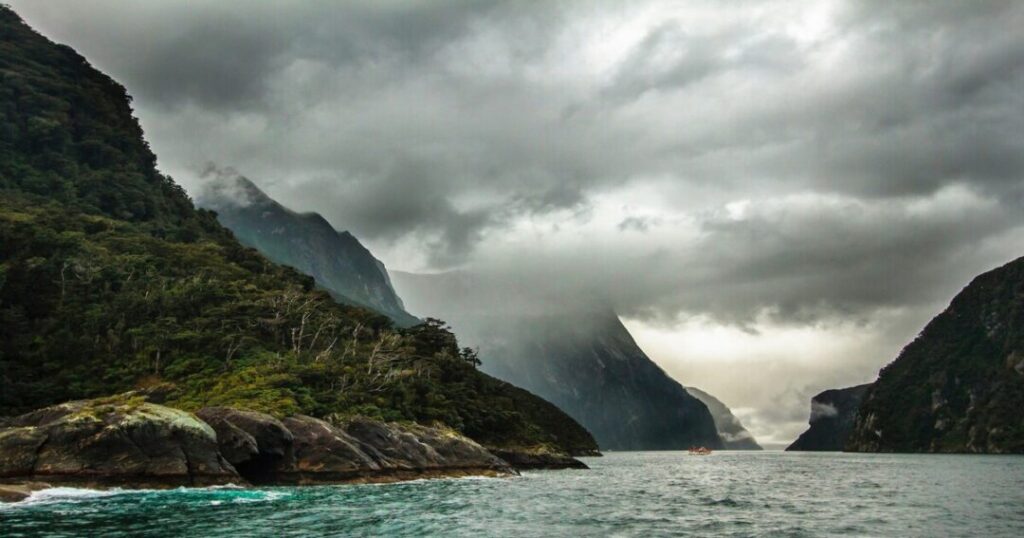
What it is: A 1,600 km coastline of glacially carved fjords—Geirangerfjord and Nærøyfjord both UNESCO World Heritage Sites
The Norwegian fjords are Europe’s most dramatic coastline—glacially carved valleys filled with seawater, their walls rising, in some cases, over a kilometer from the water’s surface. Geirangerfjord and Nærøyfjord are the two UNESCO World Heritage designated fjords, inscribed in 2005 for their exceptional natural beauty. Nærøyfjord, at its narrowest, is only 250 meters wide with walls that rise nearly 1,700 meters on either side—making it one of the narrowest fjords in the world and one of the most geometrically extraordinary natural spaces accessible by boat.
The village of Flåm at the end of the Aurlandsfjord is the starting point of the Flåm Railway—a 20 km descent of 866 meters through mountain tunnels and past waterfalls, considered one of the most scenic railway journeys in the world. In summer, cruise ships navigate the fjords; in winter, the fjords are quieter and occasionally snow-covered, with the northern lights visible above the cliff walls.
- Best time: May to September for full daylight and accessibility; December to February for northern lights and snow
- Continent: Europe
10. The Maldives — Indian Ocean
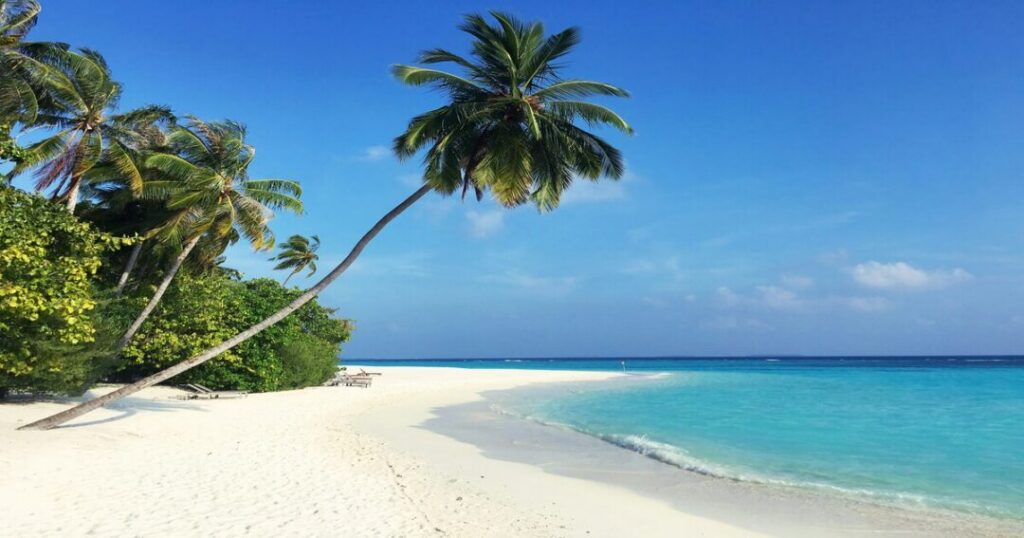
What it is: 26 coral atolls comprising approximately 1,200 islands in the Indian Ocean—the world’s lowest-lying country; most biodiverse coral reef system in the Indian Ocean
The Maldives—26 atolls and approximately 1,200 islands scattered across the central Indian Ocean—contains the most biologically rich coral reef system in the Indian Ocean. The islands sit barely above sea level: the country’s highest natural point is approximately 2.4 meters, making the Maldives the world’s lowest-lying country. The same vulnerability that gives the Maldives its specific urgency—the knowledge that rising sea levels are an existential threat—also gives it its beauty: the absolute flatness of the islands in relation to the ocean, the clarity of the water that reveals the reef 10 meters below your feet, and the specific quality of light on an atoll that has no shadows.
The water is home to 187 species of hard coral, whale sharks (the world’s largest fish), manta rays, and a diversity of reef life that marine biologists consider among the finest diving in the world. The question of whether to go before it is gone is not hypothetical—it is becoming, for many travelers, the actual decision.
- Best time: November to April (dry season) — clearest visibility, calmest seas
- Continent: Asia (Indian Ocean)
Also read: Underground Rivers Around the World You Can Actually Visit
Most Beautiful Places in the World: Cities You Must Visit
For travelers seeking beautiful urban landscapes rather than pure nature, these are the most beautiful cities in the world by consistent global ranking:
1. Kyoto, Japan: The preserved temple and garden culture of Japan’s ancient capital — 17 UNESCO World Heritage Sites in a single city; the specific beauty of the Arashiyama bamboo grove, Fushimi Inari shrine, and Gion geisha district
2. Prague, Czech Republic: Central Europe’s most architecturally intact medieval city — Gothic, Baroque, and Art Nouveau in a single skyline above the Vltava River
3. Dubrovnik, Croatia: The walled medieval city on the Adriatic coast is a UNESCO World Heritage site with terracotta rooftops above the bluest sea in Europe
4. Cape Town, South Africa: The combination of Table Mountain, the Cape Peninsula, and the specific urban design of one of Africa’s finest cities—one of the world’s most photogenic city-and-landscape combinations
5. Istanbul, Turkey: The only city that spans two continents—the specific beauty of the Bosphorus, the Hagia Sophia, and the Blue Mosque in the golden light of late afternoon
Conclusion About Most Beautiful Places in the World
The most beautiful places in the world are not competing with each other — they are each doing something entirely different. Patagonia’s beauty is the beauty of the elemental: wind, granite, ice, and space. Ha Long Bay’s beauty is the beauty of the mythological: a landscape that looks designed by a story rather than geology. Salar de Uyuni’s beauty is the beauty of the disorienting: a place that removes the horizon and makes you question what is real.
Quick guide to the top 10 beautiful places in the world—add them all to your Explurger Bucket List:
- Patagonia—South America; granite towers, glaciers, condors; Torres del Paine UNESCO Biosphere Reserve 🗺️ Add to Bucket List
- Ha Long Bay—Vietnam; ~2,000 karst islands; UNESCO 1994; sunrise between the pillars 🗺️ Add to Bucket List
- Fiordland—New Zealand; Milford Sound; UNESCO Te Wāhipounamu; kea, takahe, kiwi 🗺️ Add to Bucket List
- Salar de Uyuni—Bolivia; world’s largest salt flat; wet season mirror effect 🗺️ Add to Bucket List
- Faroe Islands — North Atlantic; 18 volcanic islands; cliffs, waterfalls, grass roofs 🗺️ Add to Bucket List
- Zhangjiajie — China; 3,000+ sandstone pillars; UNESCO; Avatar’s Pandora 🗺️ Add to Bucket List
- Iguazu Falls — Argentina/Brazil; 275 waterfalls; world’s largest system; Devil’s Throat 🗺️ Add to Bucket List
- Amazon Rainforest—South America; 5.5 million sq km; 20% of world’s oxygen 🗺️ Add to Bucket List
- Norwegian Fjords — Norway; UNESCO Geirangerfjord & Nærøyfjord; Flåm Railway 🗺️ Add to Bucket List
- Maldives — Indian Ocean; 26 coral atolls; world’s lowest country; 187 coral species 🗺️ Add to Bucket List
Add these to your Explurger Bucket List—Explurger’s in-app Bucket List feature lets you save every destination on this list, track which ones you’ve visited, and share your bucket list with fellow travelers. Add Patagonia, Ha Long Bay, Salar de Uyuni, the Faroe Islands, and every other destination on this list to your Explurger bucket list today—and start planning the trips that make it worth having a list in the first place.
Download the Nivu AI-powered Explurger travel app to add today’s bucket-list destinations, discover what real travelers recommend for every location, and log every unforgettable experience—from salt flat reflections and karst sunrises to misty fjords and iconic landmarks.
The condors are already circling above Torres del Paine. The mist is already rising between Ha Long Bay’s karsts. Your Explurger bucket list is waiting to be filled.
FAQs About The Most Beautiful Places in the World
2. What is the prettiest place in the world?
The prettiest places in the world depend on what kind of beauty you are seeking. For dramatic mountain landscapes: Patagonia (Chile/Argentina) and the Norwegian Fjords. For water and island beauty: Ha Long Bay (Vietnam), the Maldives, and Palawan (Philippines). For surreal otherworldly landscapes: Salar de Uyuni (Bolivia) and Zhangjiajie (China). For wild, wind-swept Atlantic beauty: the Faroe Islands. For sheer natural power: Iguazu Falls (Argentina/Brazil). For ecological complexity and scale: the Amazon Rainforest. For cities: Kyoto, Prague, and Dubrovnik consistently rank as the world's most beautiful cities.
3. What are the most beautiful natural places in the world?
The most beautiful places on earth by natural category: Greatest waterfall system — Iguazu Falls (275 waterfalls; UNESCO on both Argentina and Brazil sides); largest salt flat — Salar de Uyuni, Bolivia (10,582 sq km; wet season mirror effect); finest fjords — Fiordland, New Zealand, and Norwegian Fjords (both UNESCO); most extraordinary rock formations — Zhangjiajie, China (3,000+ sandstone pillars; UNESCO); most biodiverse reef — Maldives (187 species of hard coral); largest rainforest — Amazon (5.5 million sq km across 9 countries; produces ~20% of world's oxygen); most dramatic island landscape — Ha Long Bay, Vietnam (UNESCO 1994; ~2,000 limestone karst formations).
4. Which country has the most beautiful places in the world?
Countries such as New Zealand, Switzerland, Italy, Norway, Canada, Iceland, and Japan are widely regarded for having some of the most beautiful places in the world, thanks to their diverse landscapes, historic cities, and iconic attractions.
5. Are the most beautiful places in the world suitable for budget travelers?
Yes. Many of the most beautiful places in the world can be explored on a budget by traveling during the shoulder season, using public transportation, staying in hostels or guesthouses, and booking flights in advance.
6. How can I plan a trip to the most beautiful places in the world?
Start by choosing destinations based on your interests, travel season, and budget. Create an itinerary, apply for visas if required, book accommodation early, and research local transportation to make the most of your visit to the most beautiful places in the world.