
2,226 Total Views
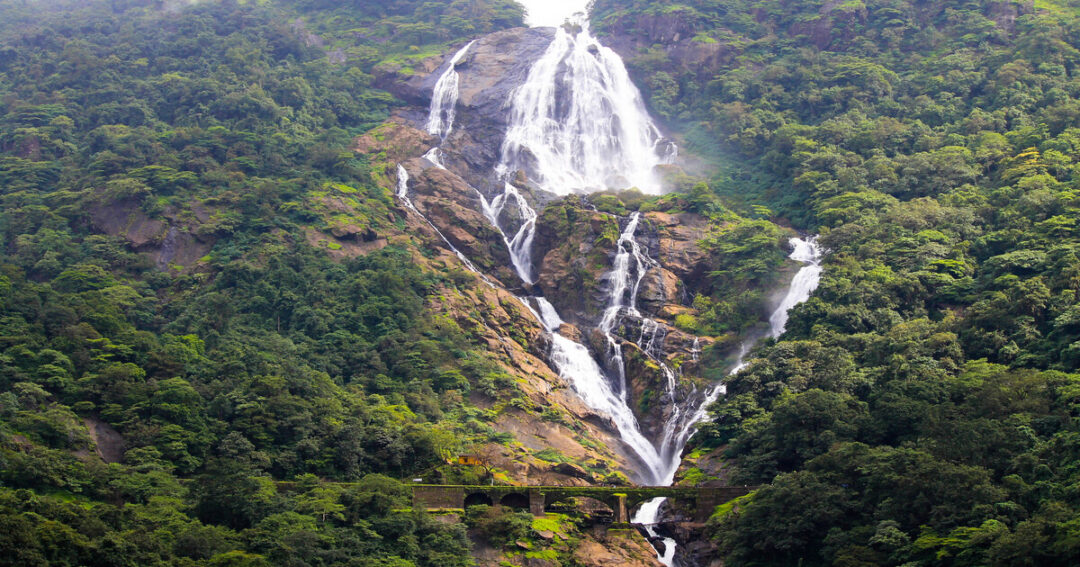
There is a moment — it happens when you emerge from the forest trail or round a bend on the jeep track — when Dudhsagar appears without warning. A wall of white water descending four tiers from 310 metres above, churning into a pool at the base, the roar building long before the fall itself comes into view. And directly across it, impossibly, a railway viaduct carrying trains through the Western Ghats — with the waterfall thundering on both sides of the bridge. It is one of the most dramatic natural sights in India.
Dudhsagar — Dudh (milk) + Sagar (sea) — is named for its milky white appearance when the water is at full flow during and after the monsoon. At 310 metres (1,017 feet) high and 30 metres (100 feet) wide, it is among India’s tallest waterfalls and one of its most iconic. Located on the Mahadayi River (also known as the Mandovi River) on the Goa-Karnataka border within the Bhagwan Mahaveer Sanctuary and Mollem National Park, Dudhsagar is equally accessible as a jeep safari day trip from Goa and as a multi-day trek from Castle Rock in Karnataka — and the two experiences are entirely different.
Dudhsagar Waterfalls — Key Facts
| Detail | Info |
| Height | 310 m (1,017 ft) |
| Width | 30 m (100 ft) |
| Type | Four-tiered waterfall |
| River | Mahadayi River — also known as the Mandovi River (same river, two names) |
| Location | Bhagwan Mahaveer Sanctuary & Mollem National Park, Goa |
| Border | Goa-Karnataka border; falls partly in each state |
| Railway | Belagavi–Vasco Da Gama rail route passes directly across the falls |
| Distance from Panaji | ~60 km by road |
| Distance from Madgaon (Margao) | ~46 km east |
| Nearest railway station (jeep route) | Kulem (Collem) station |
| Nearest railway station (trek route) | Castle Rock station (Karnataka) |
| Best time | September to December (post-monsoon) |
| Entry | Forest department permits required; obtained at checkpost |
What Makes Dudhsagar Special?
Three things make Dudhsagar waterfalls genuinely extraordinary rather than merely impressive:
The railway viaduct: A working railway line — the Belagavi–Vasco Da Gama route — crosses directly across the face of the waterfall on a stone arch viaduct. Trains pass through with the waterfall pouring on both sides of the bridge. Watching (or photographing) a train crossing the viaduct with Dudhsagar thundering around it is one of the finest juxtapositions of engineering and nature anywhere in India.
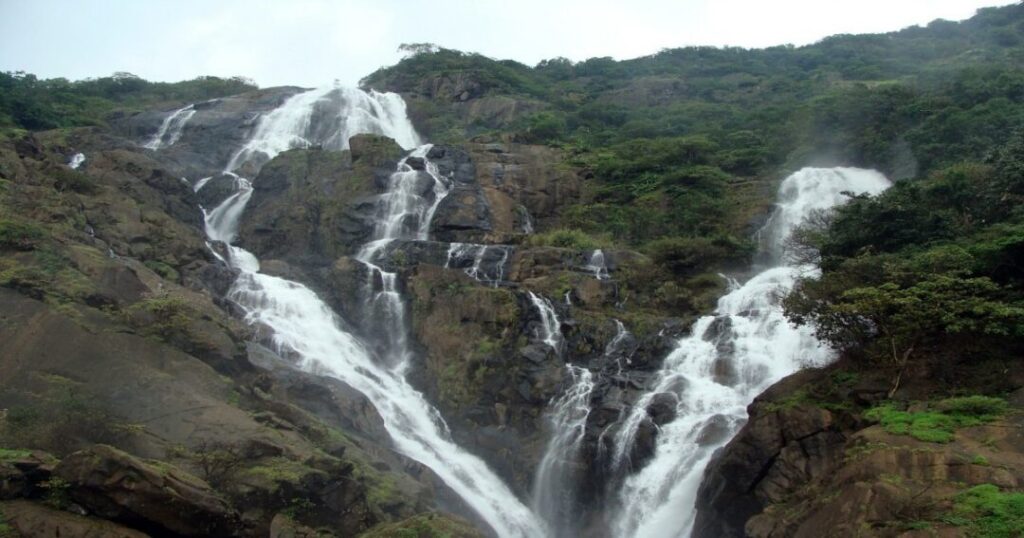
The four-tiered fall: Unlike a single-drop waterfall, Dudhsagar descends in four distinct tiers — the water tumbling from ledge to ledge, each section a different width and volume, the whole cascade visible from the base as a continuous white wall from cliff top to pool.
The forest setting: The waterfall is surrounded by the dense, largely undisturbed forests of the Mollem National Park and Bhagwan Mahaveer Sanctuary — one of the most biodiverse protected areas in Goa. The approach through this forest (whether by jeep or on foot) is as much a part of the experience as the falls themselves.
The legend: A princess bathing in the lake above the falls used to drink sweetened milk from a golden jug. One day, noticing a prince watching her, she poured the milk into the water to create a white curtain hiding her from view. The milk, flowing endlessly, became Dudhsagar.
Also Read: Things to Do in Goa: 20 Best Experiences for Every Kind of Traveller
Route 1: Jeep Safari from Kulem — The Day Trip
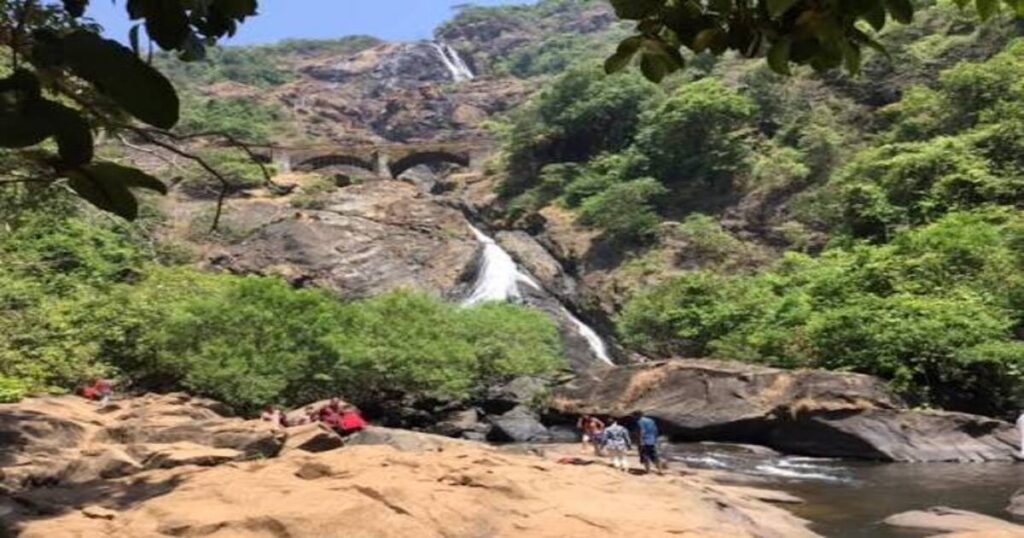
Best for: Tourists visiting Goa on a limited time budget; families; those who want to see the falls without a multi-day commitment
The most popular way to visit Dudhsagar waterfalls is the organised jeep safari from Kulem (Collem) village — a 4WD jeep ride through the forest, crossing the Mahadayi River multiple times, to the base of the falls. This is a day trip from Goa and requires no trekking preparation.
How It Works
Starting point: Kulem (Collem) village — approximately 60 km from Panaji, 46 km from Madgaon (Margao)
From Panaji/North Goa (~60 km | ~1.5 hours by road):
- Road via NH748 toward Mollem; turn into Kulem village
- Most visitors book through operators in Panaji, Panjim, or their hotel — the operator handles permits, jeep booking, and guide
From Madgaon/South Goa (~46 km | ~1 hour):
- Most direct approach from the south; the NH748 highway toward Mollem
By train to Kulem: The Kulem railway station is on the Vasco Da Gama line; trains from Margao (Madgaon) to Kulem take approximately 45 minutes
The Jeep Safari Route
- From Kulem, 4WD jeeps (typically carrying 6–8 passengers) drive approximately 9–10 km through the forest reserve to the base of the falls
- The route involves crossing the Mahadayi River several times — during post-monsoon months the stream crossings are knee-deep and genuinely fun; in peak dry season they reduce to shallow fords
- The jeep drops you at a point approximately 15–20 minutes’ walk from the base of the falls; the final approach is on foot through the forest
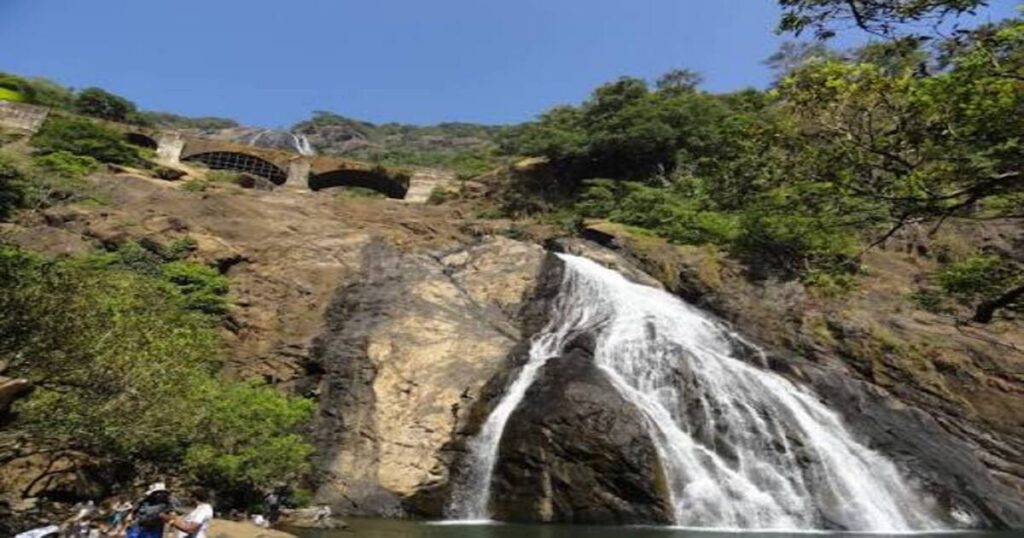
- At the base: The plunge pool at the base of Dudhsagar is the destination — visitors wade into the pool (when conditions are safe; depth and current vary by season), photograph the railway viaduct from below, and spend time in the mist-spray from the fall
Jeep Safari Practical Details
- Permit: Forest department entry permit required — purchased at the checkpost; most organised tours include this
- Jeep fees: Check current rates with operators — a per-person fee covers the jeep and entry; rates vary by season and group size
- Duration: The full jeep safari day trip (including travel from Goa, jeep ride, time at the falls, and return) takes approximately 6–8 hours
- Swimming: Permitted at the base pool outside monsoon season; check current conditions with the forest department before visiting — the pool can be dangerous at high water
- Closed during monsoon: The jeep safari route is typically closed during June–September when water levels make the river crossings impassable; the forest department announces the reopening date each year, typically in late September or October
Also Read: Best Restaurants in Goa: 12 Must-Visit Eateries for Every Food Lover
Route 2: Dudhsagar Waterfalls Trek — The Full Experience
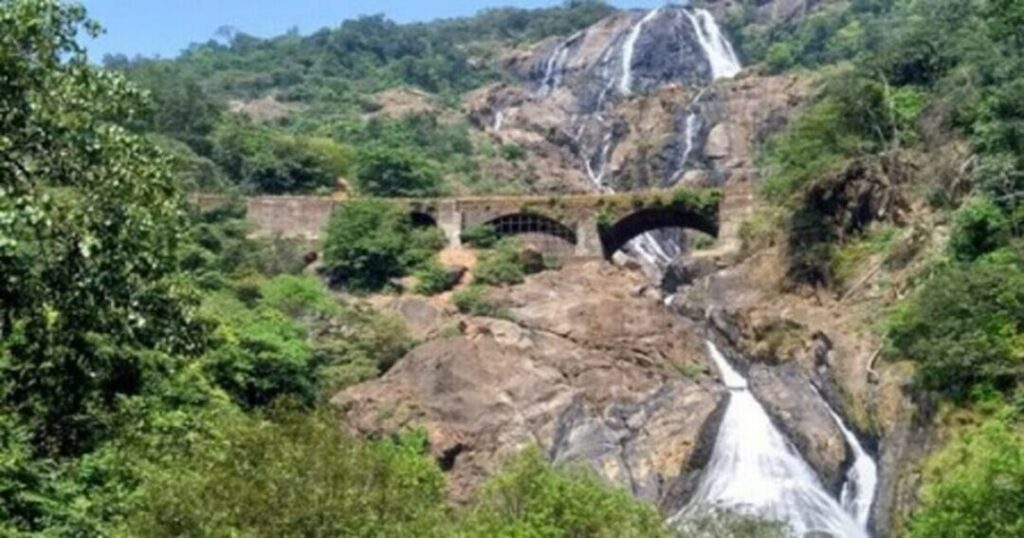
Best for: Trekkers and adventure travellers who want the forest experience and are comfortable with a challenging multi-day trail
The Dudhsagar waterfalls trek from Castle Rock station in Karnataka is a fundamentally different experience from the jeep safari. This approximately 11 km forest trek takes you through some of the finest Western Ghats wilderness in the region, arriving at the falls from above rather than from below.
⚠️ Critical Safety Note — The Railway Track
The railway track trek (following the Belagavi–Vasco Da Gama railway line to the falls) is officially BANNED and ILLEGAL. Wikipedia (Dudhsagar Falls) confirms: “This trek is not allowed by the Government of Goa (Forest Department) as it is very risky being on a railway track with minimum safety. Anyone trekking along the Railway trek can be heavily fined and can even land you in jail.”
The legal Dudhsagar trek route goes through the forest — NOT along the railway track. Multiple operators and online sources still describe the railway track route; do not follow these directions.
Trek Route — Castle Rock to Dudhsagar
Starting point: Castle Rock railway station, Karnataka (~3 km from the Goa border; accessible by train from Hubli or Dharwad in Karnataka)
Trek distance: ~11 km one way — legal forest trail from Castle Rock.
Total round trip: ~22 km
Trek time: 5–7 hours one way at a comfortable pace
Difficulty: Moderate to Challenging — sustained distance through forest terrain; significant stream crossings; no paved path
Full Day-by-Day Itinerary — Dudhsagar Trek
Day 1: Reach Castle Rock / Base Camp
- Travel to Castle Rock station (from Bangalore ~11–12 hours by train via Hubli; from Hubli ~4 hours; from Goa arrive via Kulem and approach from that side for overnight camping near Kulem)
- Register with the forest department — permits are mandatory; obtain the permit for the trek before starting
- Overnight at Castle Rock or a nearby camping spot
- Altitude: Castle Rock ~700 m
Day 2: Castle Rock → Dudhsagar Falls → Return (or camp at Dudhsagar)
Stage 1: Castle Rock to Collem Bridge (~4 km | ~1.5 hours)
- The trail begins at Castle Rock station and descends through dense semi-evergreen forest toward the Mahadayi River
- The Collem Bridge crossing over the river is the first major landmark — a forest bridge above the river, with the forest on both sides
Stage 2: Collem Bridge to Viewpoint (~5 km | ~2 hours)
- After the bridge crossing, the trail continues through the Bhagwan Mahaveer Sanctuary forest
- Multiple stream crossings — depending on season, these range from dry boulder-hops to knee-deep wading
- The forest thickens through this section — semi-evergreen canopy with significant biodiversity; malabar giant squirrel, Kingfisher species, hornbills, and various reptiles
- The roar of Dudhsagar becomes audible before it is visible
Stage 3: Viewpoint to Dudhsagar Base (~5 km | ~2 hours)
- The final approach descends to the base of the falls
- The railway viaduct comes into view from above first — the waterfall visible both above and below the track
- At the base: the plunge pool, the full four-tiered face of the falls visible, the specific sound of water at 310 metres of continuous fall
At the waterfall:
- Swimming permitted outside monsoon season (check forest department conditions)
- Photography — the railway viaduct framing the falls is the classic shot; take it from the base looking up
- Camping at the designated forest department campsite near the base (permit required; must be arranged in advance)
Return journey: Follow the same route back to Castle Rock (another ~11 km, ~4–5 hours on return)
Day 3: Return or Extend
- If camping at Dudhsagar base on Day 2: morning at the falls (best light is early morning), then return trek to Castle Rock
- Alternatively, after returning to Castle Rock, take a train toward Hubli (Karnataka) or back toward Kulem (Goa)
Trek Practical Details
- Guide: Mandatory — forest department requires a registered guide for the Dudhsagar trek; the guide also ensures you take the legal forest trail and not the prohibited railway track route
- Permits: Forest department permit required; obtain from the checkpost or arrange through a registered trekking operator; book in advance for weekends
- Season: September to February (the trail is impassable during monsoon June–August due to flooding); October–November for the finest post-monsoon forest conditions
- Fitness: Comfortable with 10–12 km walking per day with some stream crossings and uneven forest terrain; no technical climbing required
- Gear: Trekking shoes (waterproof recommended); quick-dry clothing; water (minimum 2.5–3 litres per person); snacks; headlamp for early starts; rain gear in October–November
Also Read: The 10 Best Waterfalls in Bali for Nature Explorers (2026 Guide)
What is the Best Time to Visit Dudhsagar Waterfalls?
| Season | Conditions | Recommended? |
| June to September (Monsoon) | Falls at maximum power and visual drama; jeep safari CLOSED; railway trek illegal; forest trails difficult and slippery | ⚠️ Can be viewed from train; not accessible on foot or jeep |
| October to December (Post-Monsoon) | Falls still very full; forest lush and green; jeep safari reopens; best overall conditions | ✅ Best — full flow + accessible |
| January to February | Flow beginning to reduce; accessible; less crowded | ✅ Good — quieter, clearer trails |
| March to May | Flow significantly reduced; falls much less dramatic; summer heat | ⚠️ Accessible but the falls lose their character |
The best single window: October to November — the falls are still at near-monsoon volume, the forest is at its most green and alive, the temperatures are manageable, and both the jeep safari and the trek are fully open.
Practical Tips
Photography:
- The railway viaduct shot — train crossing with Dudhsagar on both sides — requires knowing the train schedule for the Belagavi–Vasco Da Gama line; check the Indian Railways schedule before visiting
- Best light is morning; arrive early to catch the falls before the afternoon crowds
Wildlife in Mollem National Park:
- The forest around Dudhsagar is home to leopards, gaur (Indian bison), malabar giant squirrels, sloth bears, and a remarkable diversity of birdlife including the Malabar pied hornbill, Indian pitta, and several species of kingfisher
- Do not leave the marked trail — the forest is genuinely wild
Closest accommodation:
- Molem/Kulem village: Basic guesthouses and homestays near the jeep safari start point
- Castle Rock: Very limited accommodation; most trekkers stay overnight at a campsite
- Panaji/Madgaon: The main Goa cities for full accommodation options
Also Read: Top Waterfalls in India: 10 Stunning Places You Can’t Miss
Conclusion About Dudhsagar Waterfalls
Dudhsagar waterfalls is one of those places where the journey and the destination are equally good. The jeep safari through the Mahadayi River crossings. The forest trek from Castle Rock through the Bhagwan Mahaveer Sanctuary. The moment the four-tiered white wall appears through the trees. The railway viaduct with the train crossing and the waterfall on every side. Each of these is, individually, a fine reason to make the trip. Together, they make Dudhsagar one of the finest natural experiences in South India.
Quick recap:
- Height: 310 m (1,017 ft) | Width: 30 m | Type: Four-tiered | River: Mahadayi
- Location: Bhagwan Mahaveer Sanctuary & Mollem National Park, Goa-Karnataka border
- Jeep safari: From Kulem village (~60 km from Panaji); ~9–10 km jeep ride; open October to May
- Trek: From Castle Rock, Karnataka; ~11 km one way (legal forest trail); railway track route is banned and illegal (railway track route is banned and illegal)
- Trek difficulty: Moderate to Challenging; guide mandatory; permits required
- Best time: October to December (post-monsoon — full flow + fully accessible)
- Railway: Belagavi–Vasco Da Gama line crosses the falls on a stone viaduct — trains pass through with the waterfall on both sides
Download the Explurger app to discover what Goa travellers and trekkers actually recommend for Dudhsagar, find the best jeep safari operators and trekking guides, and log every river crossing, forest trail, and waterfall view on your Dudhsagar journey.
The Mahadayi is already running full. The four tiers are already white. Dudhsagar is already waiting in the forest.
FAQs About Dudhsagar Waterfalls
2. How to reach Dudhsagar waterfalls?
There are two access routes to Dudhsagar waterfalls: 1. Jeep safari from Kulem (Collem) — the most popular day trip from Goa; a 4WD jeep covers ~9–10 km through the forest reserve to the falls base with multiple river crossings (open approximately October to May; closed during monsoon). 2. Dudhsagar waterfalls trek from Castle Rock — approximately 11 km (legal forest trail) from Castle Rock railway station in Karnataka through the Bhagwan Mahaveer Sanctuary (legal forest trail only; the railway track route is officially banned). Note: The railway track trek is banned and illegal per the Goa Forest Department.
3. What is the Dudhsagar waterfalls trek?
The Dudhsagar waterfalls trek from Castle Rock railway station in Karnataka covers approximately 11 km one way (22 km round trip) on the legal forest trail through the dense semi-evergreen forests of the Bhagwan Mahaveer Sanctuary. The trek takes 5–7 hours one way at a comfortable pace; difficulty is Moderate to Challenging. A registered forest guide and forest department permit are mandatory. The trek follows the legal forest trail — the railway track route is officially prohibited and carries heavy fines. Best season: October to February. The trek is impassable during monsoon (June–September) due to flooding.
4. Can you swim at Dudhsagar waterfalls?
Swimming is permitted at the plunge pool at the Dudhsagar waterfalls base outside the monsoon season — typically October to May when water levels are manageable. During and immediately after monsoon (June–October), the pool is dangerously deep and fast; swimming is not safe or permitted. Always check current conditions with the forest department before swimming — the depth and current at the base pool vary significantly by month and by the rainfall in the weeks prior to your visit.
5. What is the best time to visit Dudhsagar?
The best time to visit Dudhsagar waterfalls is October to December — immediately post-monsoon, when the falls are at near-maximum volume (the most dramatic visual), the forest is green and alive, the jeep safari is open, and temperatures are manageable. January to February is also good but the flow begins reducing. The monsoon months (June–September) are when the falls are most powerful but access by jeep or trek is not possible — though the falls can be viewed from a train on the Belagavi–Vasco Da Gama line. March to May sees significantly reduced flow and the falls lose much of their character.