
590 Total Views
Most people photograph stepwells for the optical illusion, an inverted pyramid of stone steps, and never learn the actual story sitting underneath them: a famine relief project, a queen who chose death over remarriage, a stepwell that sat submerged and forgotten for decades.
Finding India’s best stepwell sites means looking past the Instagram angle. Here are six across Rajasthan, Gujarat, and Delhi, each with a real story attached, some famous, some genuinely easy to walk past without knowing what’s beneath your feet. Save the ones that pull you in to your Explurger Bucket List as you go.
India’s Deepest Stepwell: Chand Baori’s 3,500 Steps
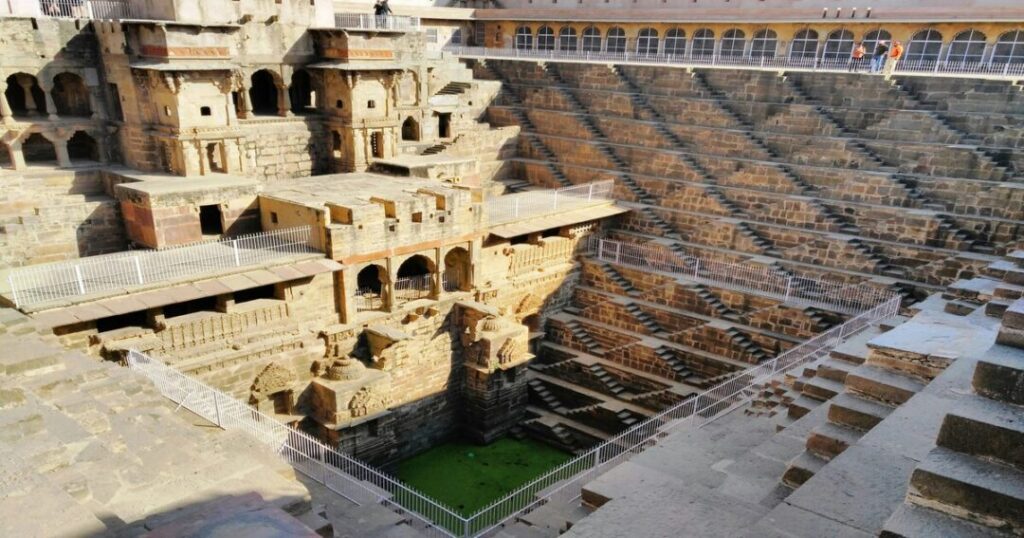
Chand Baori, in the village of Abhaneri, Rajasthan, is usually the first name that comes up when people ask about India’s deepest stepwell, and the numbers back it up.
Built between roughly 800–900 CE by King Chanda of the Nikumbh dynasty, and dedicated to Hashat Mata, the goddess of joy, it descends around 20–30 meters across 13 stories, depending on which measurement point you use. Double flights of stairs, roughly 3,500 of them, run down three sides in a pattern that turns into an optical illusion the moment you look straight down.
- Location: Abhaneri village, about 95 km from Jaipur
- Best paired with: A day trip from Jaipur, often combined with Fatehpur Sikri en route to Agra
- Why it matters beyond the photo: It wasn’t decorative. Villagers descended those 3,500 steps to reach water even when levels dropped low in peak summer.
Also Read: Places to Visit in Jaipur: Popular Places and Hidden Gems
Most Beautiful Stepwell India Has Ever Built: Rani ki Vav
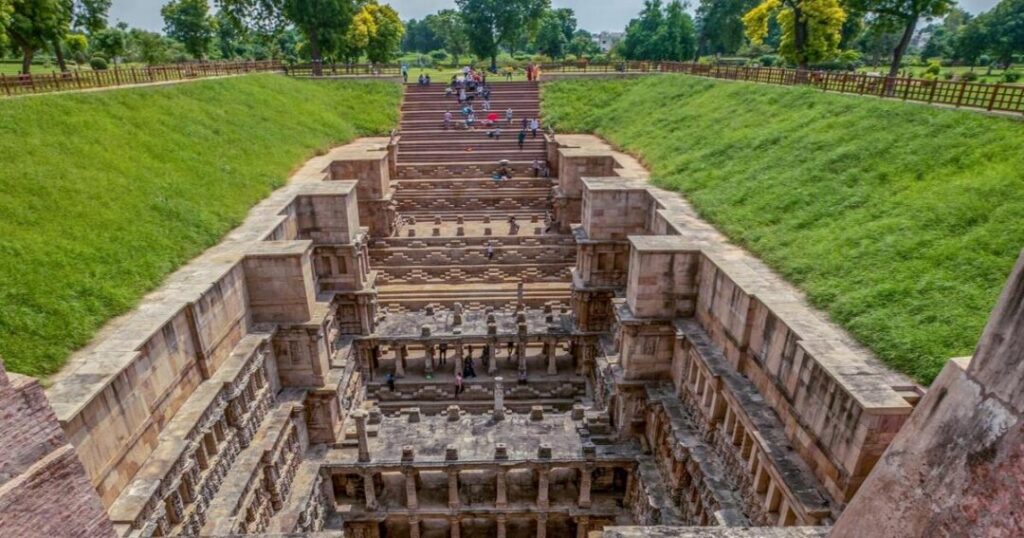
If there’s a consensus pick for the most beautiful stepwell India has produced, it’s Rani ki Vav in Patan, Gujarat, and it’s not a close call once you’ve seen the carvings.
Built in the 11th century by Queen Udayamati in memory of her husband, King Bhima I, it’s carved across seven descending levels with more than 500 major sculptures and over 1,000 minor ones, all in the ornate Maru-Gurjara style. UNESCO inscribed it as a World Heritage Site in 2014, calling it the most developed example of stepwell architecture in India, and since 2019 it’s been quietly present in everyone’s wallet, printed on the back of the 100-rupee note.
- Location: Patan, Gujarat, on the banks of the Saraswati River
- UNESCO status: World Heritage Site since 2014
- Why it matters beyond the photo: It wasn’t just a water source; it was built as an act of memory, a widowed queen’s monument to her husband.
India’s Famous Stepwell with a Tragic Legend: Adalaj
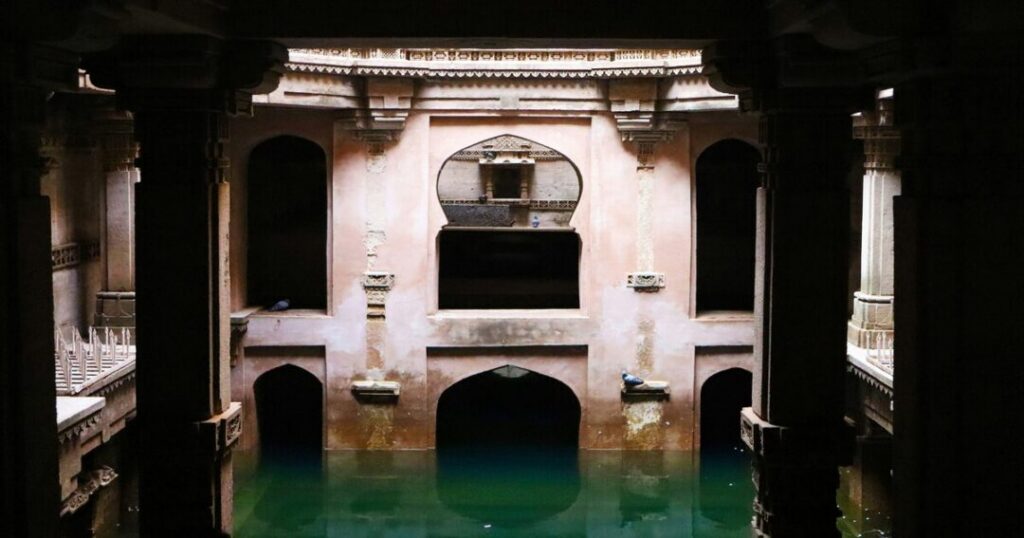
Ask anyone in Gujarat about India’s famous stepwell with a ghost story, and Adalaj comes up fast.
Construction began in 1498 under Rana Veer Singh of the Vaghela dynasty, but he died in battle against Sultan Mahmud Begada before it was finished. Begada wanted to marry the widowed Queen Roopba, and she agreed on one condition: that he complete her late husband’s stepwell first. He did. Once it was finished, she threw herself into the well rather than go through with the marriage, having only wanted to see the project completed. The result is a five-story structure blending Hindu and Islamic architectural styles, octagonal landings unfolding as you descend toward the well.
- Location: Adalaj village, about 18 km from Ahmedabad
- Built: 1498–1499
- Why it matters beyond the photo: The Hindu-Islamic architectural fusion exists specifically because of how the story ended.
[QUOTE: “Every guide at Adalaj tells the Roopba story slightly differently, but they all end the same way — that’s when you know it’s real folklore.” — suggested source: heritage travel writer]
Also Read: Religious Places in India: The Complete Guide to India’s Most Sacred Sites
The Most Beautiful Stepwell Most Visitors Walk Right Past: Agrasen ki Baoli, Delhi
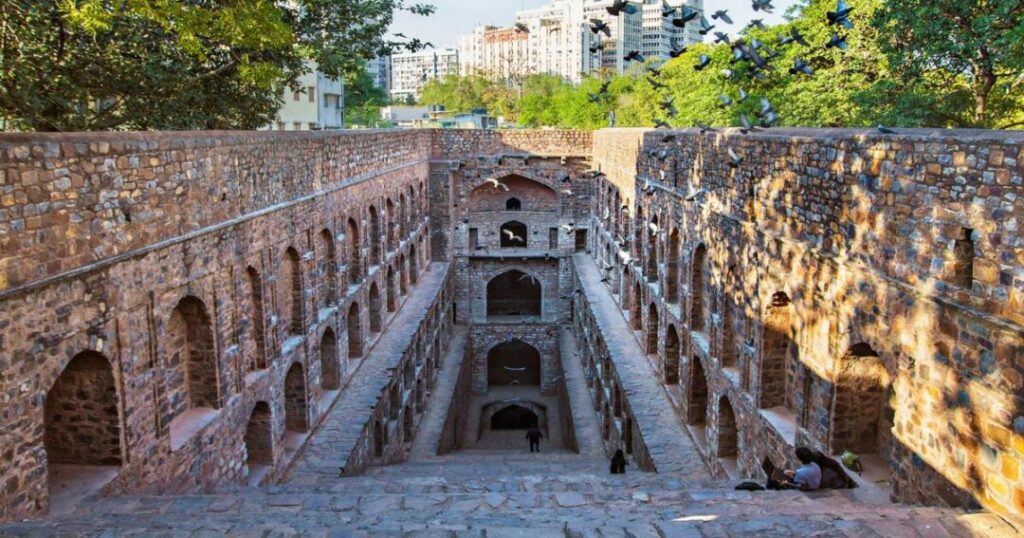
A few blocks from Connaught Place sits arguably the most beautiful stepwell most Delhi visitors have no idea exists, largely because it’s squeezed between office buildings with almost no signage.
Legend attributes the original stepwell to King Agrasen from the Mahabharata era, though no records confirm this, and most historians place the current structure’s construction around the 14th century under the Tughlaq dynasty. It has 108 steps descending into a now-dry, blackened reservoir, a colony of resident bats, and a local reputation for being haunted, complete with stories of the water once turning black overnight.
- Location: Hailey Road, near Connaught Place, New Delhi
- Entry: Free, and open to the public daily
- Why it matters beyond the photo: It’s one of the only stepwells in India you can visit on a lunch break in the middle of a major city.
India’s Best Stepwell Restoration Story: Toorji ka Jhalra, Jodhpur
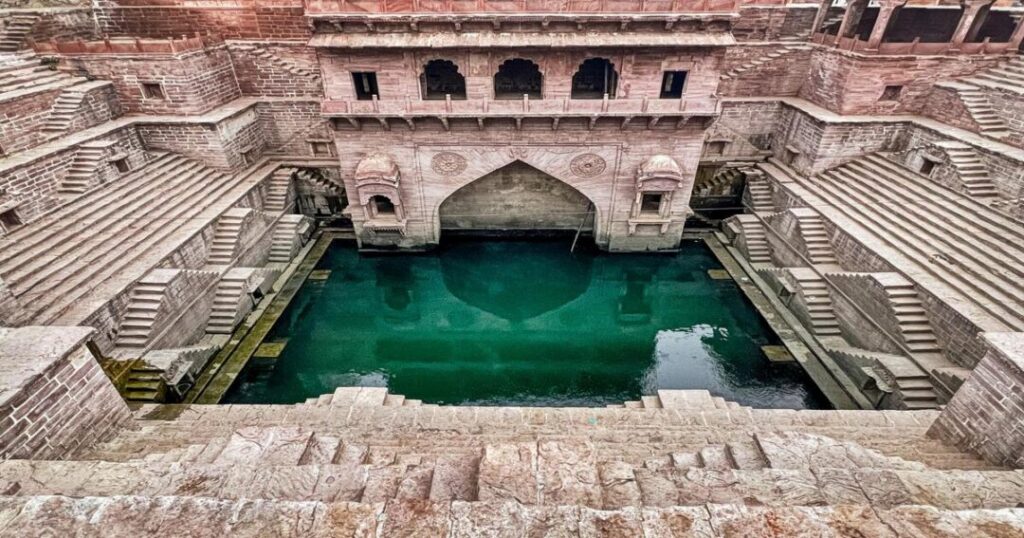
Not every entry on this list has stood untouched for centuries. Toorji ka Jhalra is India’s best stepwell example of a genuine comeback.
Commissioned in the 1740s by Maharani Toorji, wife of Maharaja Abhay Singh, it was modeled on the stepwells of her hometown, Patan, the same city that gave us Rani ki Vav. For decades it sat submerged and forgotten under the Blue City’s streets until a multi-year restoration by RAAS Hotels and the JDH Foundation uncovered carved elephant sculptures and reopened the stepwell as the centerpiece of what’s now called Stepwell Square, a small district of shops and cafes built around it.
Not sure which of these six actually fits your route through Rajasthan and Gujarat? Ask NIVU AI in the Explurger app to map out a stepwell trail based on which cities you’re already planning to visit.
- Location: Old City, Jodhpur, near the clock tower
- Restoration: Multi-year project, completed in recent years
- Why it matters beyond the photo: It’s proof these structures can still be recovered, not just preserved behind a rope line.
One More Most Beautiful Stepwell India Rarely Talks About: Panna Meena ka Kund
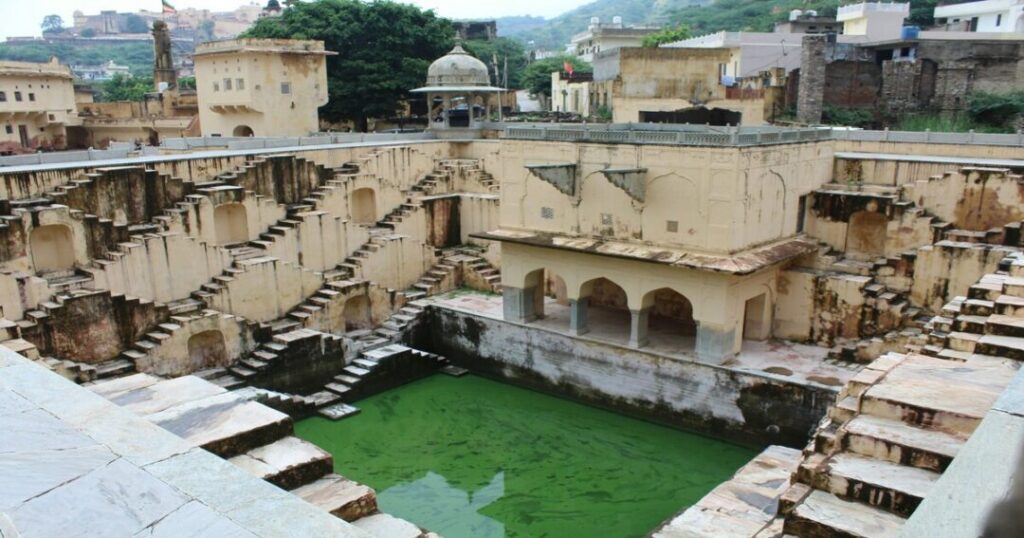
Near Amer Fort, just outside Jaipur, sits a stepwell that rarely makes the highlight reel despite being one of the most beautiful stepwell designs on this entire list.
Believed to date from the 16th century, likely during the reign of Maharaja Jai Singh, Panna Meena ka Kund is an eight-story, roughly 200-foot-deep square stepwell with a genuinely unusual feature: symmetrical, crisscrossing staircases on three sides that never intersect, so no two paths down the well ever actually cross.
- Location: Near Amer Fort, about 11 km from Jaipur
- Best paired with: A same-day visit to Amer Fort, since both sit on the same road
- Why it matters beyond the photo: The crisscross staircase design is rare enough that it’s still cited as a case study in stepwell architecture.
Also Read: Karnala Fort Trek: Distance, Time, Difficulty & Entry Fee Guide
FAQs About India’s Best Stepwell
2. What is the most beautiful stepwell in India? [
Rani ki Vav in Patan, Gujarat, is the most commonly cited answer, thanks to its seven levels of intricate carvings and more than 1,500 combined major and minor sculptures. It was inscribed as a UNESCO World Heritage Site in 2014 and now appears on the reverse of the 100-rupee note.
3. Why is Agrasen ki Baoli considered haunted?
Local legend attributes the haunted reputation to stories of the stepwell's water turning black overnight, along with its resident bat colony and the general mystery around who exactly built it and when. No historical records confirm the King Agrasen legend, adding to the folklore rather than resolving it.
4. What is the legend behind Adalaj stepwell?
Queen Roopba agreed to marry Sultan Mahmud Begada only if he completed her late husband's unfinished stepwell, and once he did, she took her own life rather than remarry. The stepwell's blend of Hindu and Islamic architectural styles is a direct result of this history.
5. Are these stepwells still used for water today?
No, most of these stepwells no longer function as active water sources and are preserved primarily as historical monuments. Some, like Toorji ka Jhalra, went through periods of being dry or submerged before restoration returned them to public visibility.
6. Can I visit multiple stepwells in one trip? Y
Yes, Chand Baori and Panna Meena ka Kund both pair easily with Jaipur-based itineraries, while Rani ki Vav and Adalaj can be combined on a Gujarat heritage route through Patan and Ahmedabad. Agrasen ki Baoli in Delhi and Toorji ka Jhalra in Jodhpur are better treated as standalone stops on their respective city visits.