
70 Total Views
Northeast India rarely tops the average traveller’s list, and that’s exactly why Tripura is worth the detour. Most itineraries stick to Assam and Meghalaya, leaving this small, hilly state overlooked despite palaces, ancient rock art, and wildlife all within easy reach of each other. This guide covers the best places to visit in Tripura, from a 1901 royal palace turned museum to towering 7th-century stone carvings, so you can build a trip that actually fits into a week. Whether you’re chasing history, nature, or something off the usual Northeast India route, here’s where to start.
Explore Agartala’s Royal Heritage at Ujjayanta Palace
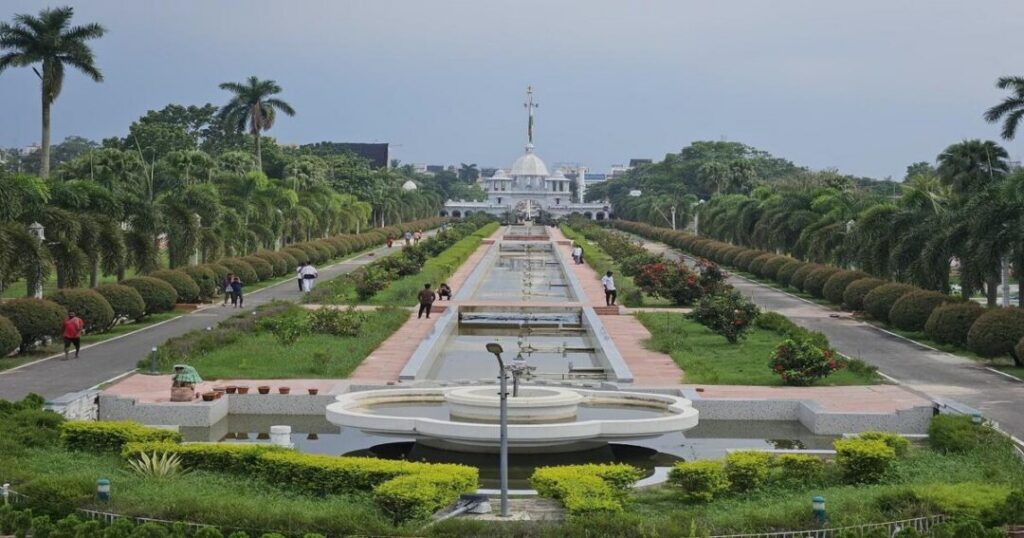
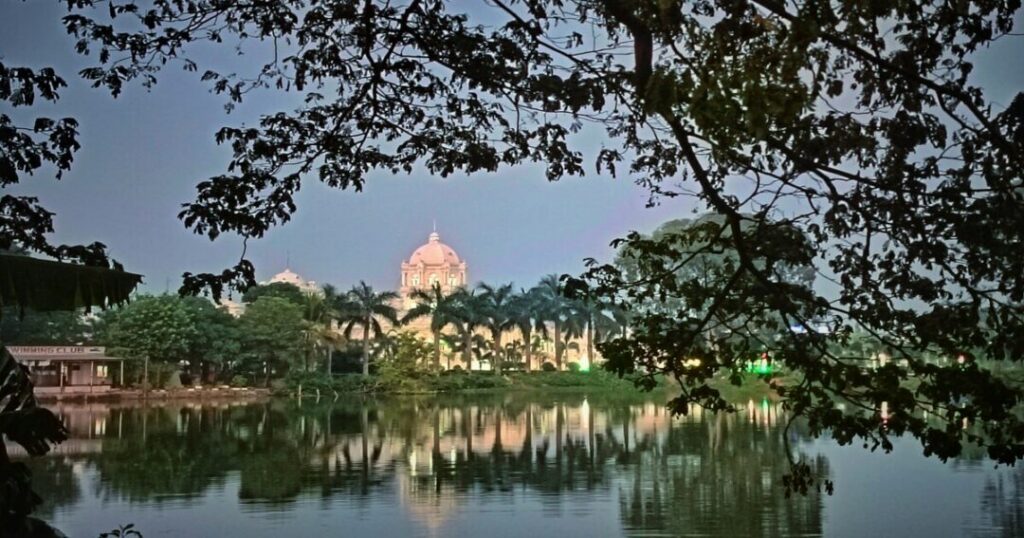
Start in the capital itself. Ujjayanta Palace was built between 1899 and 1901 under Maharaja Radha Kishore Manikya, designed in an Indo-Saracenic style that blends Mughal, Roman, and British influences.
- The two-story palace is topped by three large domes, the tallest rising 26 meters above a four-story central tower.
- Since 2013, it has served as the Tripura State Museum, with 22 galleries covering regional art, tribal culture, and historical artifacts—commonly cited as Northeast India’s largest museum.
- The manicured Mughal-style gardens and reflecting pools make it especially photogenic in the evening light.
Marvel at Neermahal, India’s Largest Water Palace
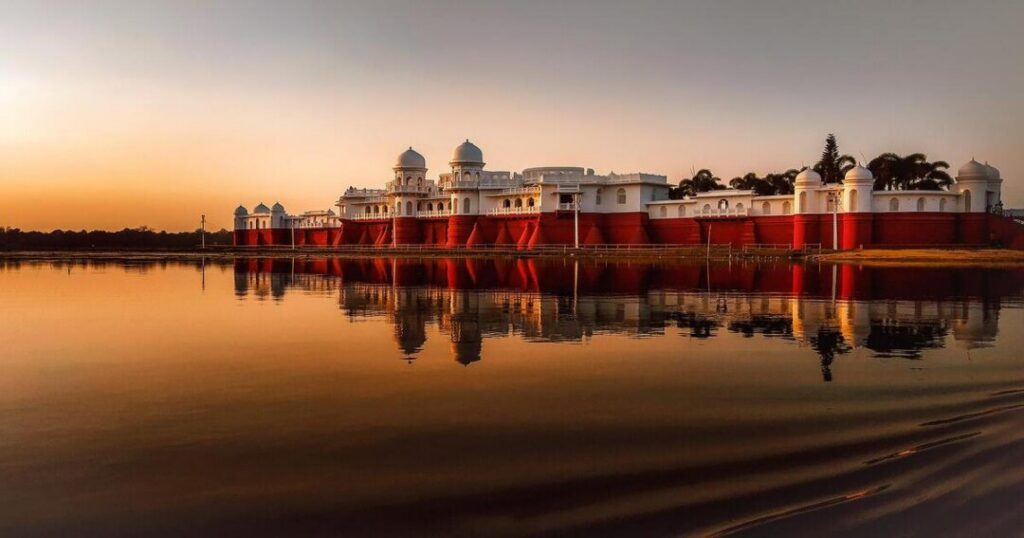
A little over an hour from Agartala sits one of Tripura’s most photographed places to visit: Neermahal.
- Built between 1930 and 1938 by King Bir Bikram Kishore Manikya Bahadur, with the British firm Martin and Burn executing the nine-year construction.
- The palace sits in the middle of Rudrasagar Lake in Melaghar, about 53 km from Agartala, and blends Hindu and Muslim architectural styles as a deliberate symbol of unity.
- Reach it by boat across the lake—the short ride itself is part of the experience, especially near sunset.
Uncover the Ancient Carvings of Unakoti
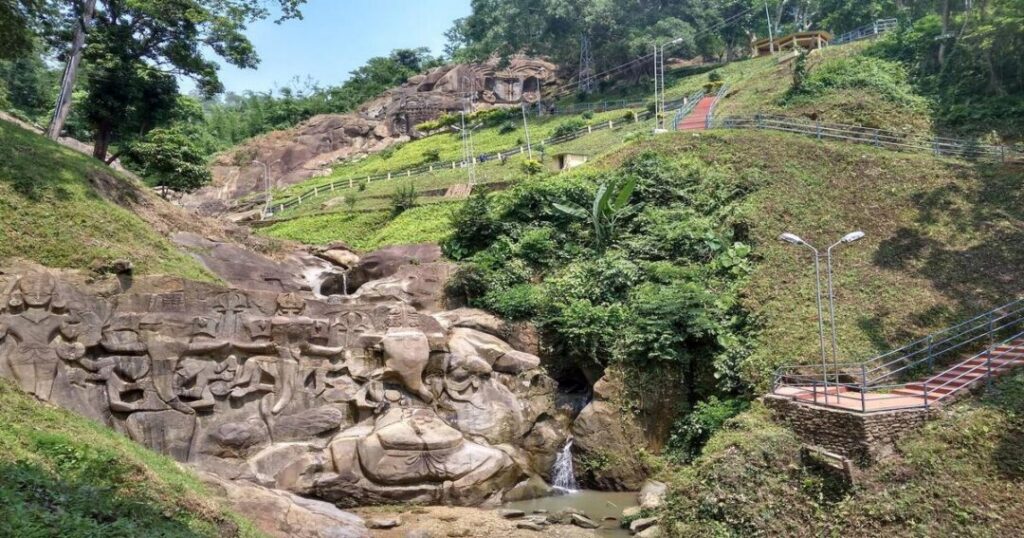
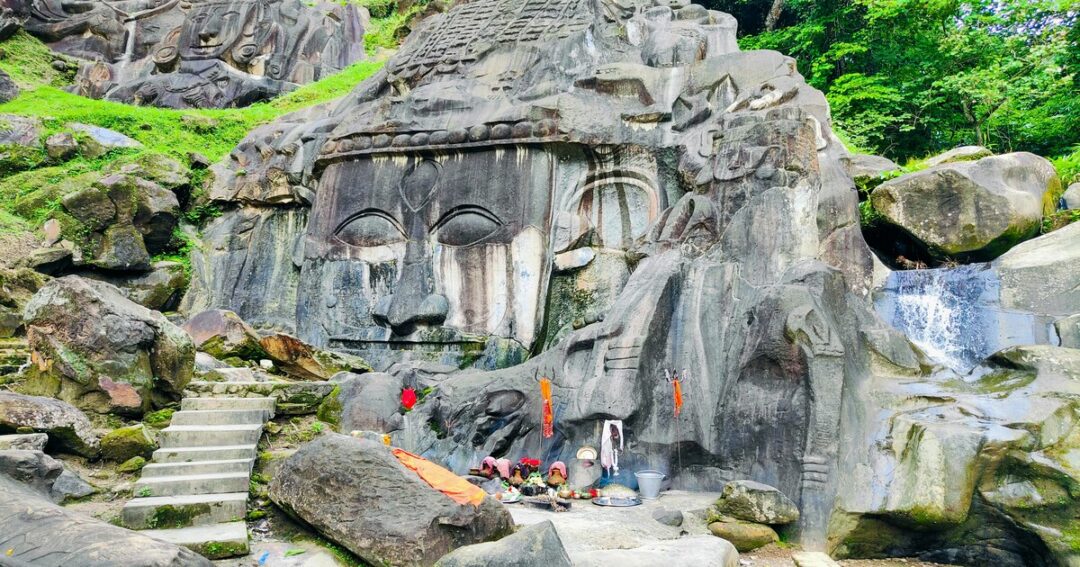
For something older and stranger, head to Unakoti, a hillside gallery of rock-cut sculptures dating to the 7th century or earlier.
- The name means “one less than a crore” (roughly 9.9 million), tied to a legend of Shiva travelling with a crore of deities who were turned to stone after failing to wake before dawn.
- The centrepiece is a 30-foot-high carved head of Shiva, known as Unakotiswara Kal Bhairava, with a 10-foot ornamental headdress, alongside giant Ganesha figures and a Durga astride a lion.
- It’s about 60 km from Agartala’s airport, with Kumarghat as the nearest railway station; the annual Ashokastami Mela draws pilgrims each April.
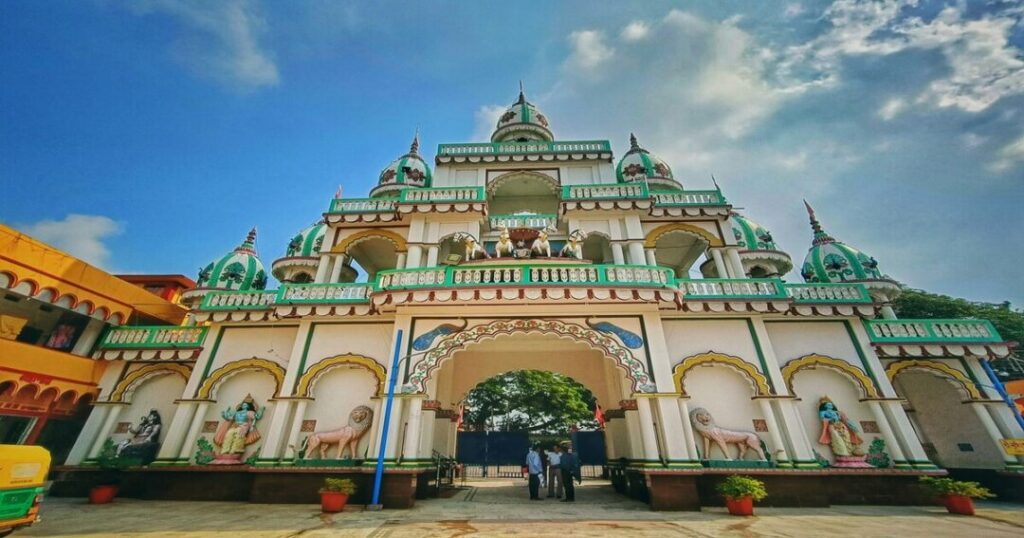
Seek Blessings at Tripura Sundari Temple, Matabari
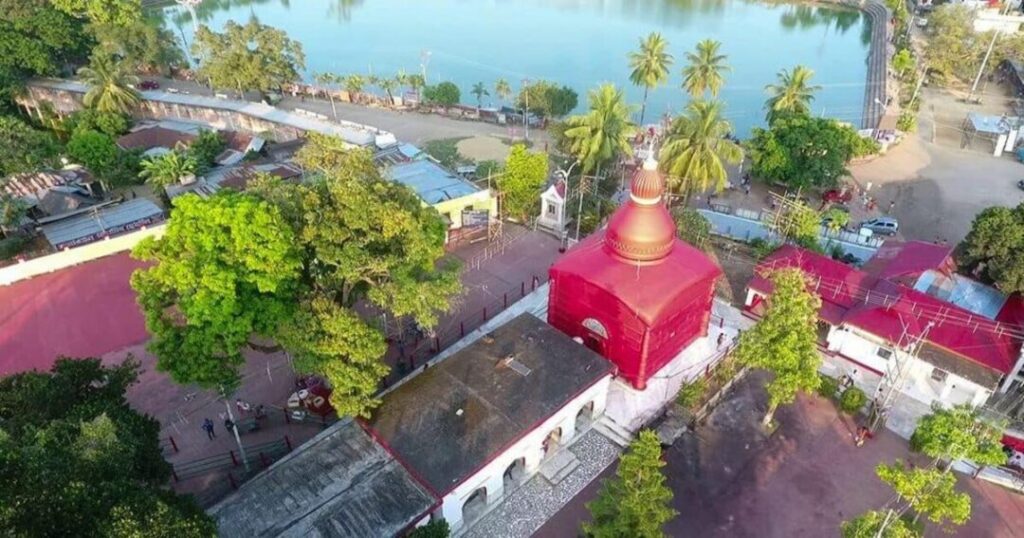
Religious travellers shouldn’t skip Tripura Sundari Temple, locally known as Matabari, in the town of Udaipur, about 55 km from Agartala.
- Built in 1501 CE by Maharaja Dhanya Manikya, it’s one of the 51 Shakti Peethas—sites believed to mark where parts of the goddess Sati fell.
- Its tortoise-shaped hillock design classifies it as a Kurma Pitha, considered one of the holiest forms a Shakti temple can take.
- The temple reportedly draws the second-highest visitor numbers of any temple in Northeast India, after Kamakhya Temple in Assam.
Also read: Places to Visit in Trivandrum: 10 Spots That Mix the Iconic and the Overlooked
Spot Wildlife at Sepahijala and Clouded Leopard National Park
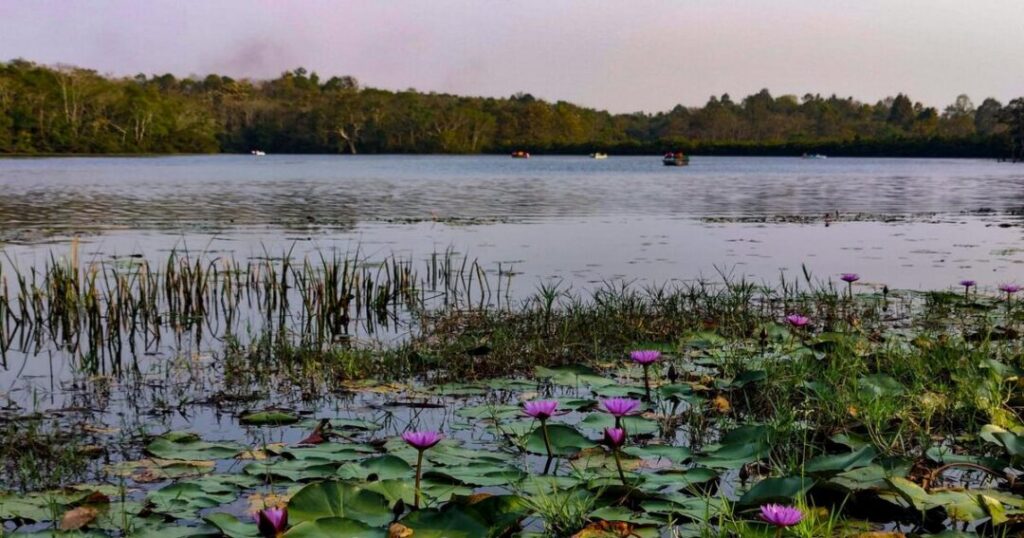
Around 26–28 km from Agartala, Sepahijala Wildlife Sanctuary covers roughly 18.5 sq km and is home to nearly 150 bird species alongside primates like capped langurs, dusky langurs, and rhesus and pig-tailed macaques.
- Inside the sanctuary, the smaller Clouded Leopard National Park (about 5 sq km) is specifically dedicated to protecting the clouded leopard, along with Phayre’s langur and other primate species.
- A lake within the sanctuary offers boating, and the attached botanical garden and zoo make it an easy half-day trip from the capital.
- [STAT: Sepahijala has been a protected sanctuary since 1987, one of the oldest in Tripura.]
Explore Chabimura: Where Ancient Rock Art Meets the Gomati River
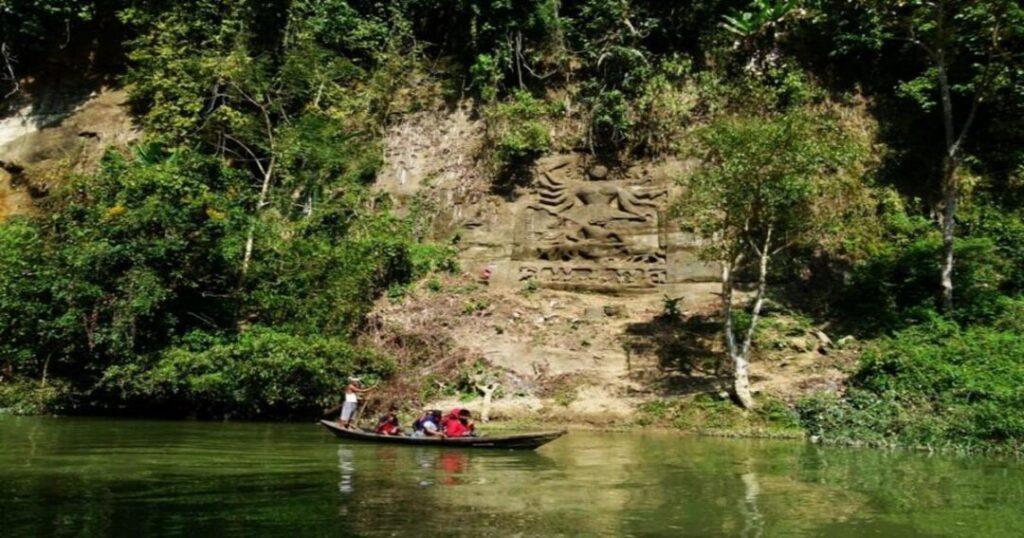
Chabimura is one of Tripura’s most striking offbeat attractions, where enormous rock-cut carvings of Hindu deities are etched into steep cliffs along the Gomati River. The site is best explored by boat, combining ancient art, dense greenery, and dramatic riverside scenery.
- Rock-cut carvings: Chabimura is famous for its enormous carvings of Hindu deities etched into steep rocky cliffs.
- Gomati River: The site stretches along the scenic Gomati River and is best explored by boat.
- Nature & adventure: Dense greenery, dramatic cliffs, and the peaceful river create a memorable offbeat experience.
- Ancient heritage: The carvings offer a fascinating glimpse into Tripura’s rich religious and artistic history.
Escape to the Cool Heights of Jampui Hills
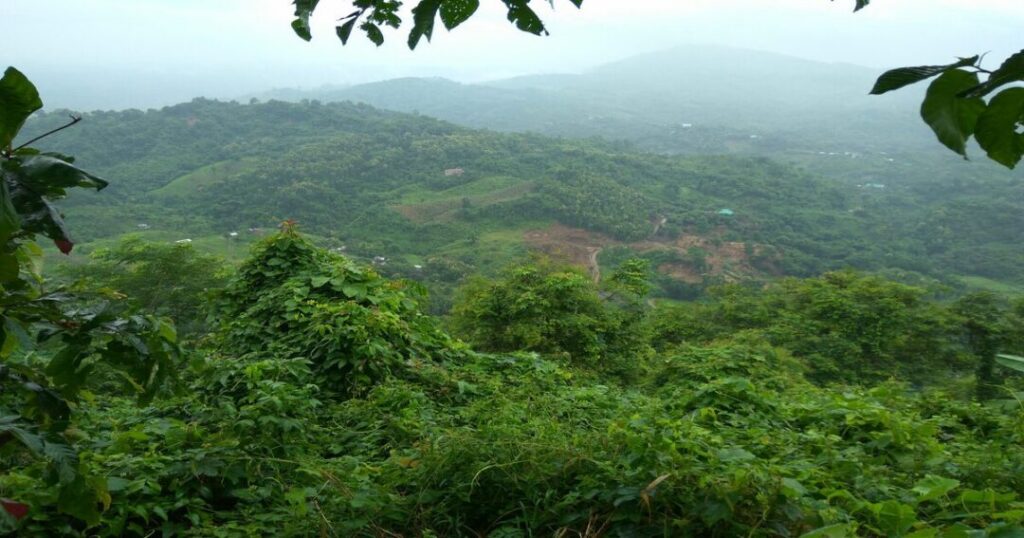
If you have time for one hill escape, make it Jampui Hills, Tripura’s highest hill range at an average elevation of around 1,000 meters.
- The hills are known for orange cultivation—Jampui oranges once won top honors at a Delhi fruit exhibition in the mid-1980s—plus panoramic viewpoints, virgin forests, and flowering orchids.
- The area is home to Mizo communities, and travellers can catch traditional dance performances and local culture alongside the scenery.
- Cooler temperatures year-round make it a natural add-on if the lowland heat gets to be too much.
Also read: Exploring the Hidden Beauty of Tripura with Explurger Creator Connect
Practical Tips for Exploring Places to Visit in Tripura
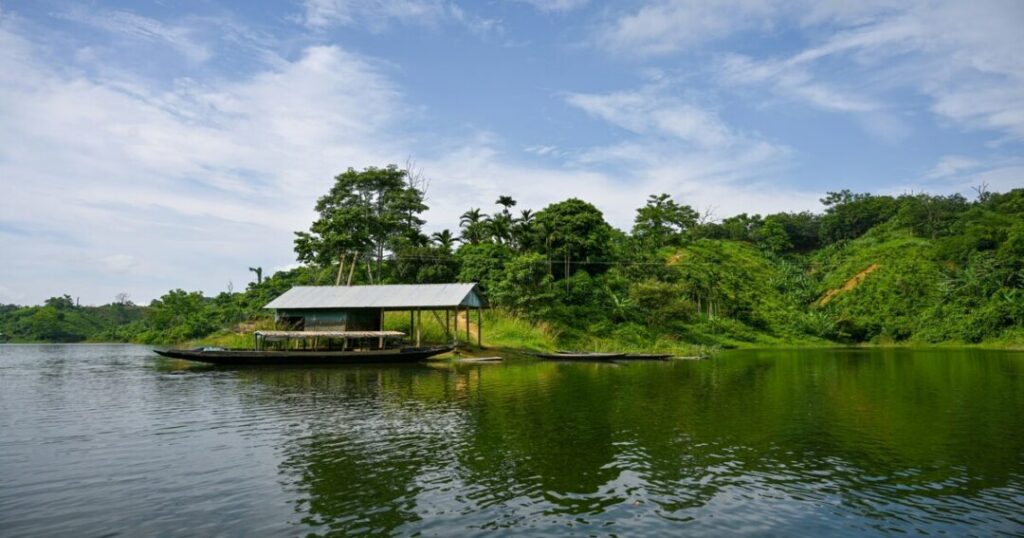
- Base yourself in Agartala and take day or overnight trips outward—Neermahal, Sepahijala, and Udaipur are all manageable as day trips; Unakoti and Jampui Hills are better as overnight stops.
- Bengali and Kokborok are the state’s official languages, but Hindi and English are widely understood in tourist areas and hotels.
- Carry cash for smaller towns and rural attractions, where card acceptance is inconsistent.
- Permits: Indian citizens don’t need special permits for Tripura; foreign nationals should check current Protected Area Permit (PAP) requirements before travelling, as northeast India rules can change.
Best Time for Places to Visit in Tripura
- Winter (November–February) is the best window—temperatures sit between 10 and 30°C, humidity drops, and rainfall is minimal, making it ideal for sightseeing and travel between towns.
- Summer (March–May) turns hot and humid, reaching around 33°C, though hill areas like Jampui Hills stay noticeably cooler.
- Monsoon (June–September) brings heavy rainfall, with humidity around 85% and a real risk of road disruption and flooding—best avoided if your itinerary depends on covering multiple sites.
How to Reach Places to Visit in Tripura?
- By air: Maharaja Bir Bikram (MBB) Airport in Agartala is about 12 km from the city center and is Northeast India’s second-busiest airport, with direct flights from Kolkata, Guwahati, Delhi, Bangalore, Hyderabad, and Imphal—roughly a 50-minute hop from Kolkata or Guwahati.
- By rail: Agartala Railway Station at Badharghat is the state’s main rail junction, connected to Guwahati, New Jalpaiguri, Sealdah, and Delhi’s Anand Vihar via trains including the Tripura Sundari Express and Kanchanjangha Express.
- By road: Agartala is about 587 km from Guwahati via NH44 through Shillong (roughly a 24-hour drive) and around 1,645 km from Kolkata—most travelers combine a flight in with road trips to individual attractions once there.
Also read: Best Places to Visit in Northeast India: The Region’s Most Beautiful Villages
Conclusion: Places to Visit in Tripura
Tripura packs royal history, ancient art, wildlife, and hill views into a state most travelers fly straight past. Between Ujjayanta Palace, Neermahal’s lake setting, and Unakoti’s stone giants, the best places to visit in Tripura cover a lot of ground for such a compact itinerary.
Quick takeaways:
- Visit between November and February for the most comfortable weather and easiest travel.
- Base yourself in Agartala and radiate outward—most major sites are 1–3 hours away.
- Combine heritage (Ujjayanta, Neermahal, Unakoti, Matabari) with nature (Sepahijala, Jampui Hills) for a well-rounded week.
Plan your perfect trip with the Explurger app—download the app now.
Save this guide before you book, and start mapping out a Tripura itinerary that goes well beyond the usual Northeast India circuit.
FAQs About Places to Visit in Tripura
2. How many days are enough for Tripura?
Most travellers can cover Tripura's major highlights in 4–5 days, with Agartala as a base for day trips to Neermahal, Sepahijala, and Udaipur. Adding Unakoti and Jampui Hills as overnight extensions stretches a comfortable trip to around 6–7 days, especially if road travel between the northern and southern parts of the state is involved.
3. What is Tripura famous for?
Tripura is famous for its royal heritage, particularly Ujjayanta Palace and the lake palace of Neermahal, along with the ancient rock-cut sculptures at Unakoti and the Shakti Peetha temple at Matabari. It's also known for its tribal culture, bamboo and cane handicrafts, and hill regions like Jampui Hills that produce some of Northeast India's best oranges.
4. Is Tripura safe for tourists?
Tripura is generally considered safe for domestic and international tourists, with a much calmer security situation than it had decades ago and a steady stream of visitors to its heritage and religious sites. As with any Indian state, standard travel precautions apply — stick to well-travelled routes after dark, keep documents secure, and check current government travel advisories before finalizing your itinerary.
5. When is the best time to visit Tripura?
Winter, from November to February, is the best time to visit Tripura, with temperatures between 10–30°C, low humidity, and minimal rainfall that keeps roads reliable between attractions. Summer gets hot and humid, and the monsoon season from June to September can disrupt road travel, so winter remains the most comfortable and practical choice for most itineraries.
6. How do I reach Tripura from Delhi or Kolkata?
The fastest way to reach Tripura from Delhi or Kolkata is by flying into Maharaja Bir Bikram Airport in Agartala, with direct flights from both cities and a flight time of roughly 50 minutes from Kolkata. Rail travel is also possible via the Tripura Sundari Express and Kanchanjangha Express, which connect Agartala to Kolkata's Sealdah station and Delhi's Anand Vihar terminal, though the journey takes considerably longer than flying.