
63 Total Views
Few Indian regions pack as much festival variety into a calendar year as Jammu and Kashmir—a place where a Hindu pilgrimage to a Himalayan ice cave, a Sikh harvest celebration, and a spring tulip bloom can all draw crowds within a few months of each other. Sorting out the festivals in Jammu and Kashmir worth knowing about means covering both the religious calendar that’s shaped the region for centuries and the newer tourism-driven events built around its landscape. This guide runs through the major festivals, tackles the genuinely debatable question of which one counts as the region’s “main” festival, and gives full details on two of the most-searched events by name: the Tulip Festival and Baisakhi.
Best Festivals in Jammu and Kashmir
These are the festivals that recur every year across the region, spanning religious pilgrimage, community celebration, and tourism-focused events built around Kashmir’s lakes and valleys.
1. Amarnath Yatra
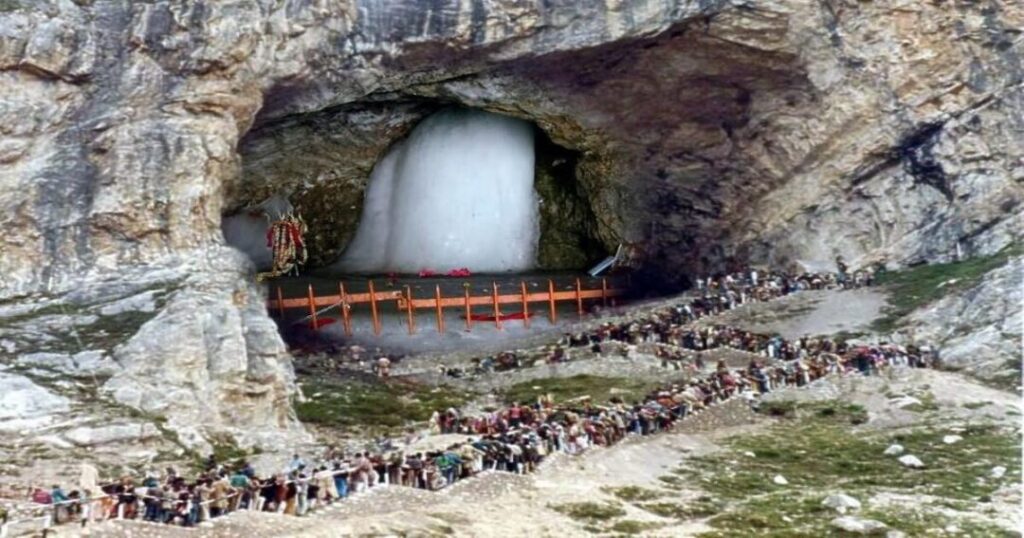
The Amarnath Yatra is the region’s largest annual pilgrimage, an arduous trek through the Himalayas to the Amarnath cave shrine, where a naturally forming ice stalagmite is worshipped as a lingam of Lord Shiva. Undertaken during the Hindu month of Shravan, typically falling between June and August, the pilgrimage draws large numbers of devotees from across India each year via the traditional Pahalgam route or the shorter Baltal route, both requiring registration and a period of high-altitude acclimatization.
Also Read: Amarnath Yatra 2026 Registration Routes Dates Complete Travel Guide
2. Eid ul-Fitr and Eid ul-Azha
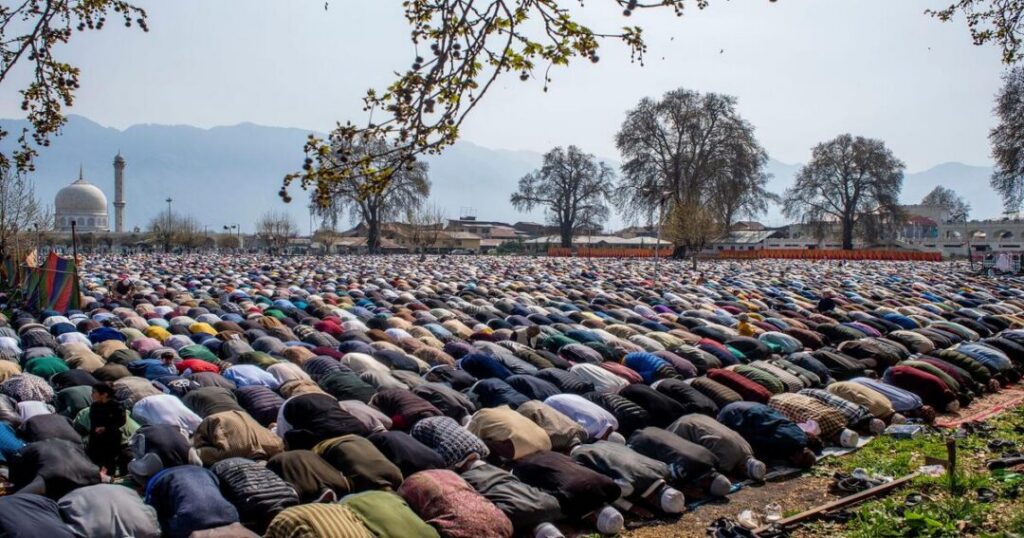
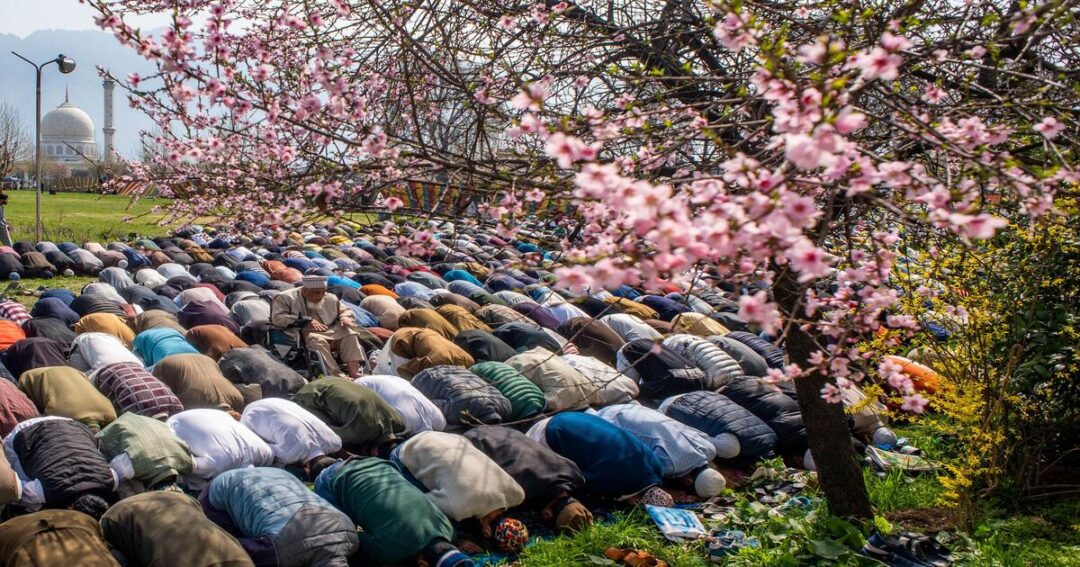
As a Muslim-majority region, Kashmir observes both Eid ul-Fitr, marking the end of Ramadan’s fasting month, and Eid ul-Azha, the festival of sacrifice, with particular intensity. Both are marked by communal prayers at mosques and shrines, new clothes, elaborate feasts, and the exchange of sweets, with Srinagar’s Jama Masjid and Hazratbal Shrine among the most significant gathering points during these observances.
3. Urs Festivals
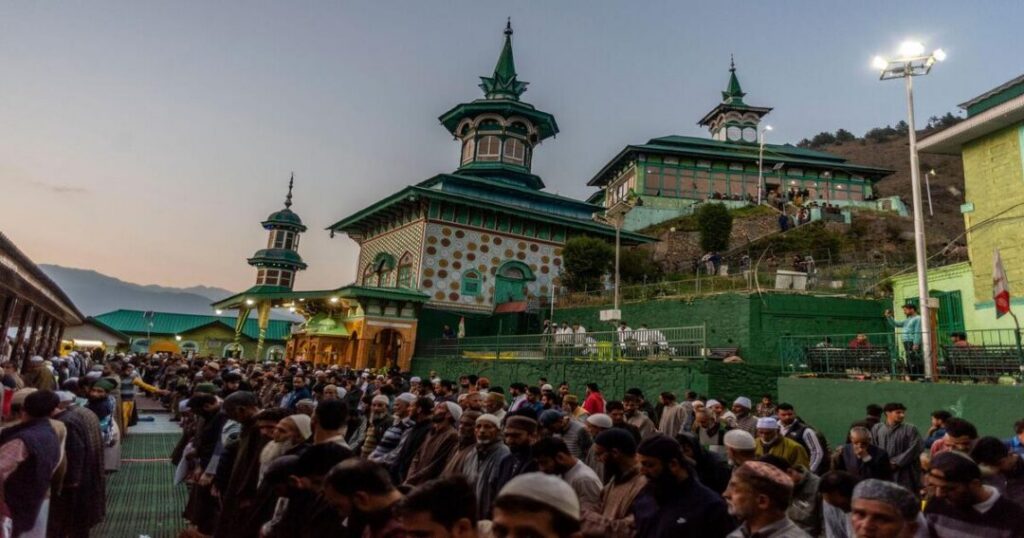
Urs celebrations mark the death anniversaries of revered Muslim saints across the Kashmir Valley—figures such as Meesha Sahib and Bahauddin among them—and are notable as genuinely inter-communal events, drawing Hindus and Sikhs alongside the Muslim majority despite often falling during the depths of Kashmir’s winter. The gatherings typically center on a saint’s shrine, with devotional singing, community meals, and processions running for days at a stretch.
4. Shikara Festival
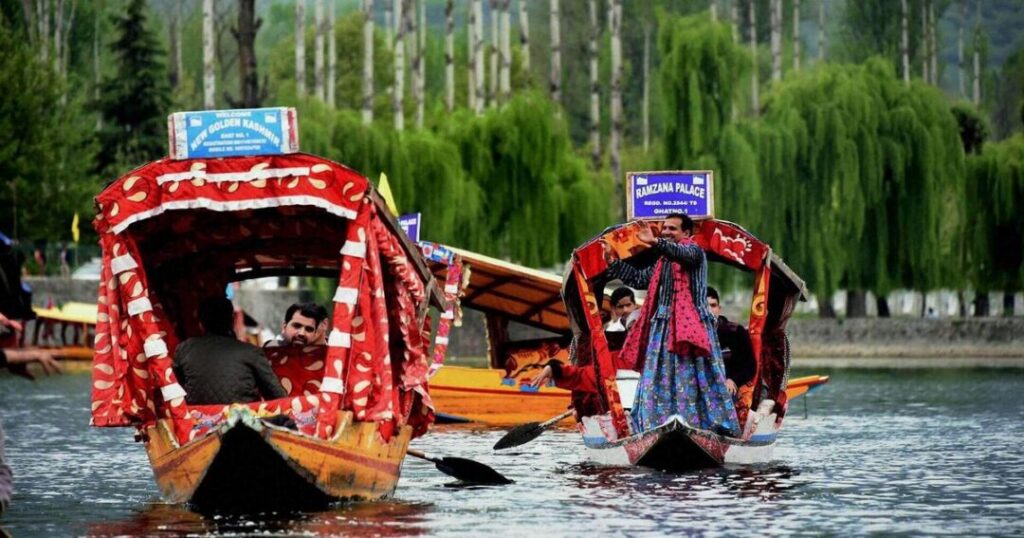
Held on Dal Lake, usually across July and August, the Shikara Festival turns Srinagar’s iconic wooden boats into the centerpiece of an event built specifically to promote Kashmir tourism, with shikara races, dragon boat competitions, and cultural performances staged along the water. It’s one of the more recently established events on this list, designed explicitly to showcase the lake as a living, working part of the city rather than just a scenic backdrop.
Also Read: Places to Visit in Jammu: The Complete Guide to the City of Temples
5. Gurez Festival
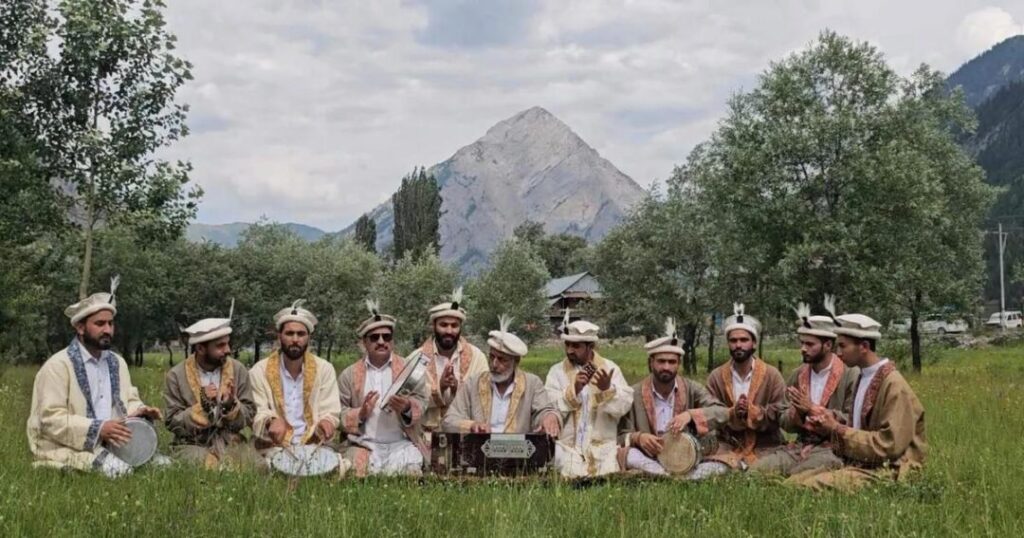
Set in the remote, high-altitude Gurez Valley near the Line of Control, the Gurez Festival is a summer celebration — typically July to August — built around the valley’s Dardic culture and rugged Himalayan setting, combining local handicrafts, music performances, river rafting, and trekking. It’s a much smaller, more regional event than the Shikara or Tulip festivals, but it’s become a growing draw for travelers looking to see a less-visited part of the region.
6. Lohri
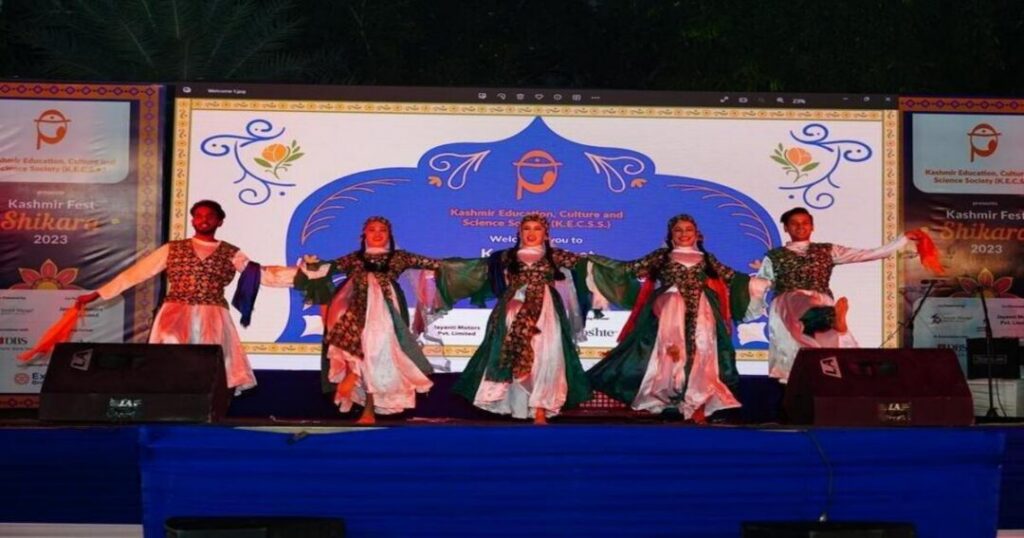
Lohri marks the end of winter and the harvest of sugarcane and other winter crops, and it’s celebrated with particular enthusiasm in Jammu’s Punjabi-influenced communities every January, mirroring celebrations across Punjab. Bonfires are the centerpiece of the evening, with families and neighbors gathering around the flames to sing, exchange sweets like til and gachak, and mark the turn toward spring.
Festivals in Jammu and Kashmir: Main Celebrations
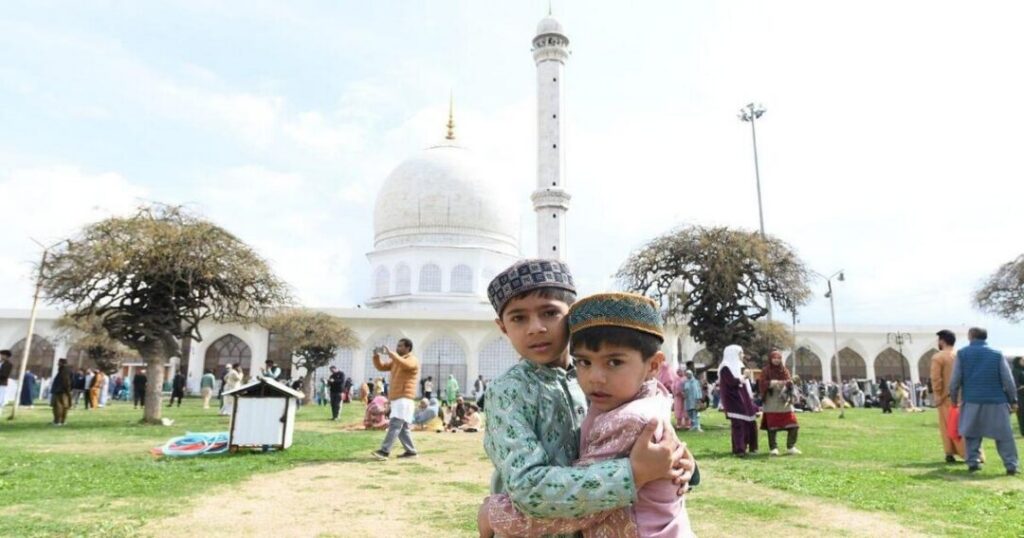
There’s no single, universally agreed answer to what counts as the main festival of Jammu and Kashmir—it genuinely depends on which lens you’re using. By sheer scale and religious significance, the Amarnath Yatra is arguably the region’s biggest annual event, drawing pilgrims from across the country on a pilgrimage that shapes months of local logistics, security planning, and tourism infrastructure every year. By tourism promotion and sheer visibility in travel marketing, the Tulip Festival has effectively become the region’s unofficial flagship event—it’s the one most heavily featured in Jammu and Kashmir’s official tourism campaigns, timed deliberately each spring to draw domestic and international visitors during the shoulder season between winter snow and peak summer crowds. And by sheer breadth of everyday participation across the population, it’s arguably Eid that touches the largest share of residents directly, given Kashmir’s Muslim-majority demographics. In practice, most travel guides that use the phrase “main festival” are really pointing at the Tulip Festival, simply because it’s the event most actively promoted to visitors—which is exactly why it gets its own full section next.
Tulip Festival of Jammu and Kashmir: Everything to Know
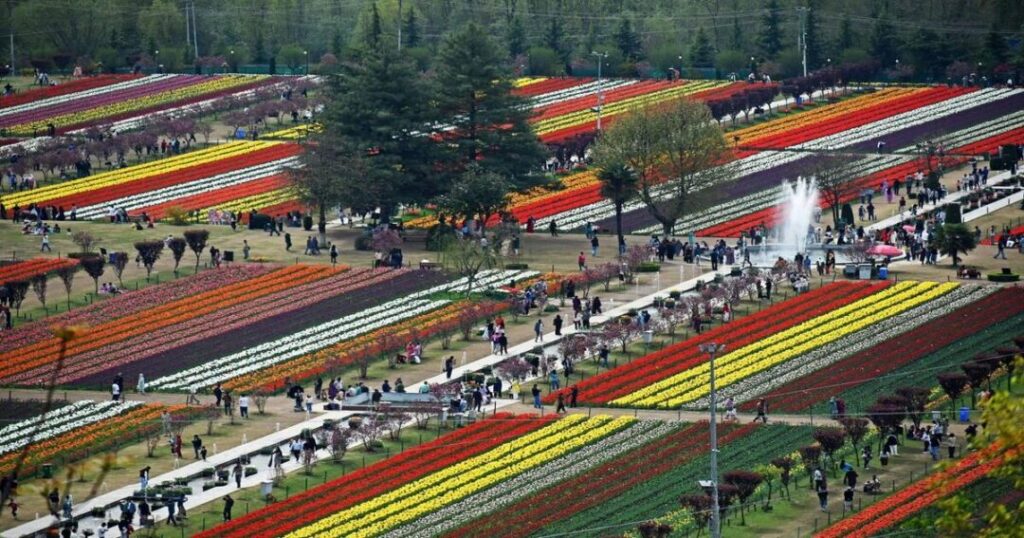
Anyone searching for the Tulip Festival of Jammu and Kashmir or looking for information about the Tulip Festival in Jammu and Kashmir is asking about the event built around the Indira Gandhi Memorial Tulip Garden in Srinagar’s Rainawari area, on Cheshma Shahi Road between the Zabarwan mountain range and the shores of Dal Lake. The garden spans roughly 30 hectares across seven terraces and is widely recognized as Asia’s largest tulip garden, with recent editions displaying around 1.8 million tulip bulbs across more than 70 varieties, many of them originally imported from the Netherlands’ Keukenhof gardens. It was first opened in 2007 specifically to promote floriculture and boost spring tourism in the Kashmir Valley, and it has grown into one of the most photographed events in the region ever since.
The festival typically opens in mid-to-late March and runs through mid-April, with peak bloom generally falling in the first two weeks of April, though the exact opening date shifts a little each year depending on spring weather. The garden runs daily from 9 AM to 7 PM during the festival window, with modest entry fees for domestic and foreign visitors and free entry for young children, and alongside the tulips themselves, the event typically features Kashmiri handicraft stalls, local cuisine, and cultural performances. For photography, weekday mornings tend to be noticeably quieter than weekend afternoons, when the garden draws its biggest crowds.
Also Read: Places to Visit in Srinagar: The Complete Guide Beyond Dal Lake
Baisakhi Festival of Jammu and Kashmir
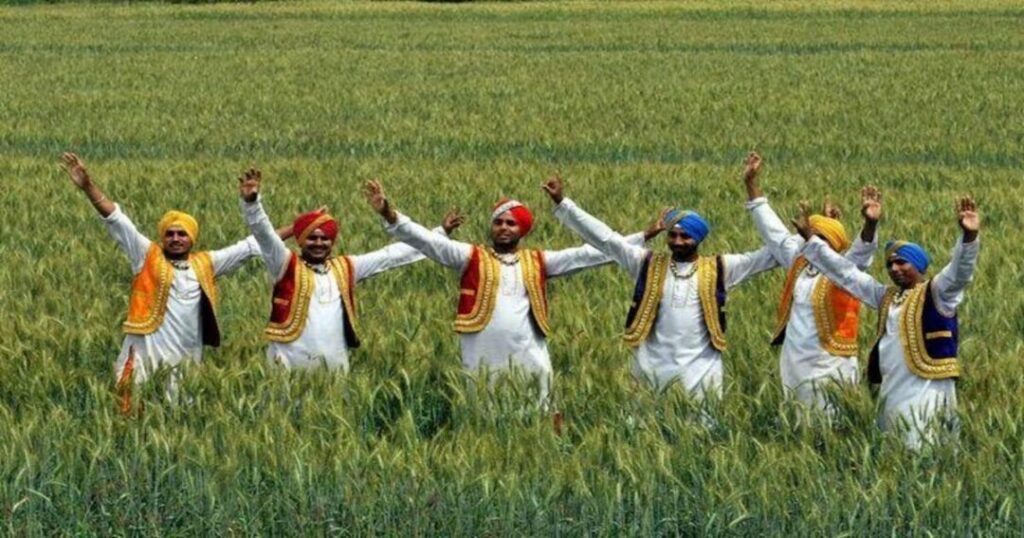
The baisakhi festival of jammu and kashmir falls every year on April 13th or 14th and carries a double significance: it marks the harvest of Rabi crops like wheat and barley, and it commemorates the founding of the Khalsa Panth by Guru Gobind Singh in 1699. In the Kashmir Valley, the festival is celebrated by Sikh communities concentrated in areas including Tral and Mattan in South Kashmir’s Anantnag district and Singapura village in North Kashmir—a community that makes up a small but long-established share of the Valley’s population—while in the Jammu region, celebrations more closely mirror the harvest festivities seen across neighboring Punjab.
Celebrations typically include traditional Punjabi attire, dancing to dhols and nagadas, gurdwaras decorated and filled with devotional singing, and community meals served through the langar tradition, which offers free food to everyone regardless of religion or background. One of the more distinctive features of Baisakhi in Kashmir specifically is its interfaith character—Muslim neighbors often visit Sikh households and gurdwaras to extend greetings on the day, a gesture of goodwill that Sikh families frequently reciprocate during Eid and other Muslim festivals.
Conclusion: Festivals in Jammu and Kashmir
Between an ice-shrine pilgrimage, a Sikh harvest celebration with genuinely interfaith roots, and a tulip garden built to put Kashmir on the spring tourism map, the festivals in Jammu and Kashmir reflect a region shaped by religion, agriculture, and, increasingly, its own scenery. Whichever one draws you in, checking exact dates close to your travel window matters here more than most places, since religious festivals shift with the lunar calendar and the Tulip Festival’s opening depends entirely on how early spring arrives that year.
Planning a trip around a Kashmir festival? Let the Explurger app help you time it against the Tulip Garden’s bloom and everything else on your itinerary.
FAQs About Festivals in Jammu and Kashmir
2. Which is considered the main festival of Jammu and Kashmir?
There's no single agreed answer — the Amarnath Yatra is the biggest by religious scale and pilgrimage numbers, Eid touches the largest share of the population given the region's Muslim majority, and the Tulip Festival is the one most heavily promoted as the region's flagship event in tourism marketing.
3. When is the Tulip Festival held in Jammu and Kashmir?
It typically opens in mid-to-late March and runs through mid-April, with peak bloom generally in the first two weeks of April, though the exact opening date shifts each year depending on how early spring weather arrives.
4. Where is the Tulip Festival held?
At the Indira Gandhi Memorial Tulip Garden in Srinagar's Rainawari area, on Cheshma Shahi Road between the Zabarwan mountain range and Dal Lake — widely recognized as Asia's largest tulip garden.
5. When is Baisakhi celebrated in Jammu and Kashmir?
Every year on April 13th or 14th, marking both the Rabi harvest and the 1699 founding of the Khalsa Panth by Guru Gobind Singh.
6. Is Baisakhi celebrated in Kashmir Valley, not just Jammu?
Yes — Kashmir Valley's Sikh communities, concentrated in areas like Tral, Mattan, and Singapura, celebrate Baisakhi with dhol dancing, decorated gurdwaras, and community langars, alongside more Punjab-style celebrations in the Jammu region.