
87 Total Views
For ten days every autumn, the city of Mysuru turns into something close to a living history lesson — a palace lit with nearly 100,000 bulbs, a goddess’s idol carried through the streets on a 750-kilogram gold howdah, and a torchlight parade that closes out a tradition running back more than four centuries. Mysuru Dasara is Karnataka’s official state festival, and it’s genuinely one of the few festivals in India built around a fixed, bookable event calendar rather than something you simply show up for. This guide covers the festival’s history and headline events, walks through exactly how ticketing works, and closes with the confirmed 2026 dates and how to get to Mysuru in the first place.
Top Mysuru Dasara Events in 2026
These five give the clearest sense of what the festival actually involves, from its royal origins to its two headline processions.
1. A Festival Four Centuries in the Making
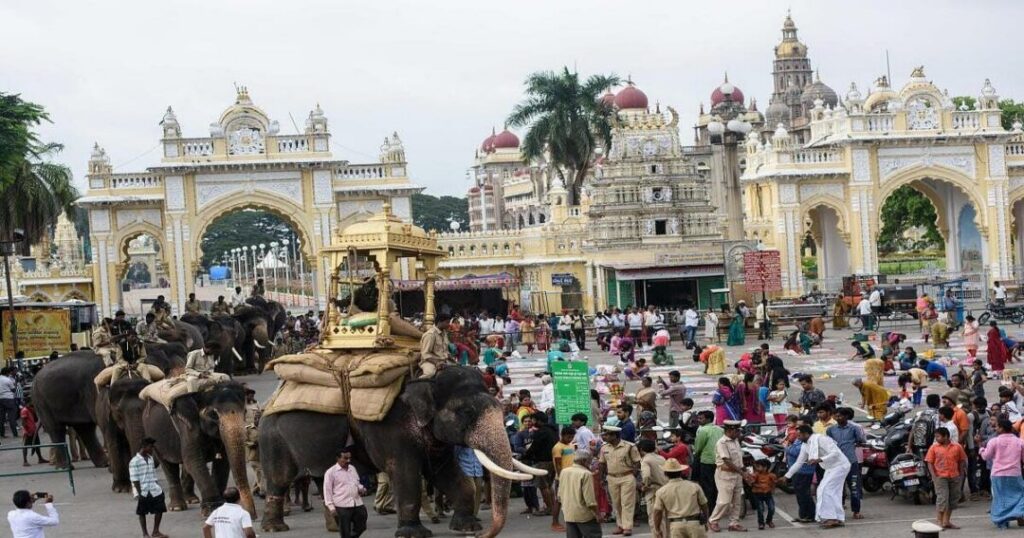
Mysore Dasara traces back to 1610, when Raja Wodeyar I began celebrating it at Srirangapatna, continuing a tradition of Navaratri celebrations that the Vijayanagara Empire had held as Mahanavami — a festival depicted in temple carvings at Hampi dating to the 14th and 15th centuries. After the Vijayanagara Empire fell, the Wodeyars of Mysore kept the tradition alive in their own territory, and it remains Karnataka’s official Nadahabba, or state festival, to this day. At its spiritual core is the legend of the goddess Chamundeshwari defeating the demon Mahishasura — the very story that gave Mysuru its name.
2. Mysore Palace Illumination
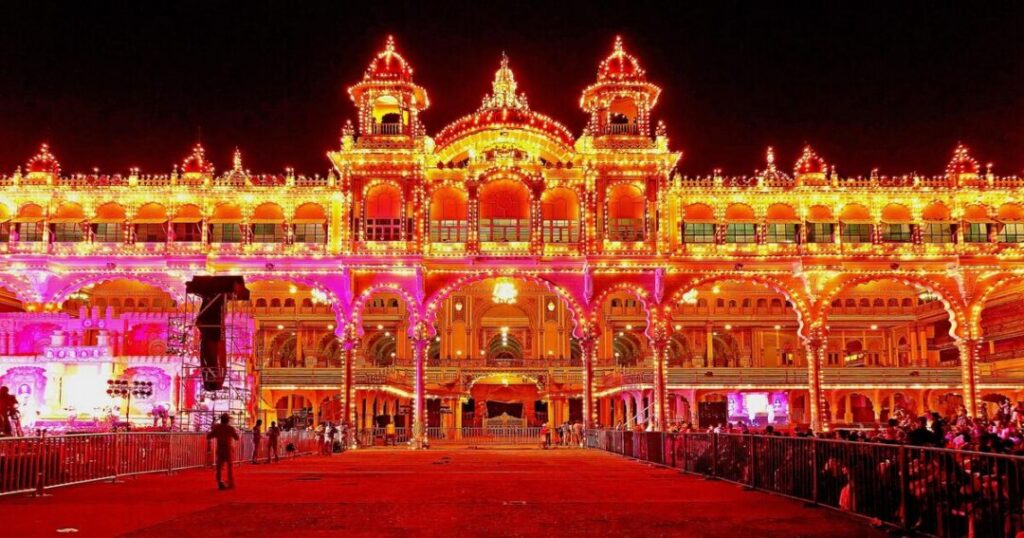
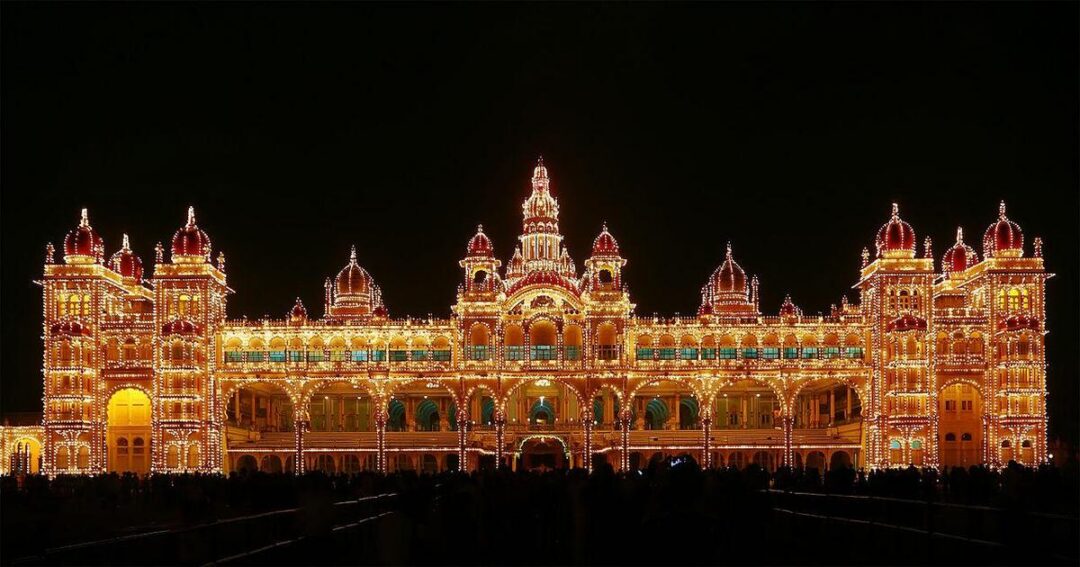
Every evening across the festival’s ten days, Mysore Palace is lit with close to 100,000 light bulbs from 7 to 10pm, turning the already ornate structure into one of the most photographed sights in South India. It’s free to view from the palace grounds and remains one of the festival’s most reliably spectacular, no-ticket-required experiences.
3. The Dasara Exhibition
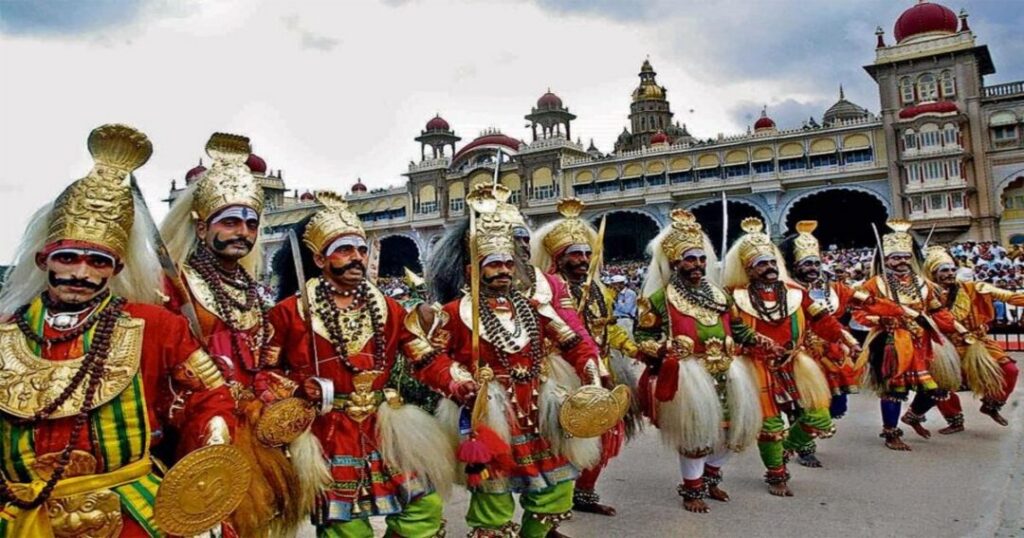
Just across from the palace, the Dasara Exhibition has run since 1880, when Maharaja Chamaraja Wodeyar X established it to showcase contemporary developments to the public. Today’s version runs for around 90 days starting in early October, mixing stalls selling clothes, kitchenware, and food with a Ferris wheel, dozens of children’s amusement rides, and government stalls highlighting public projects — all for an entry fee of around ₹50.
4. Jumbo Savari
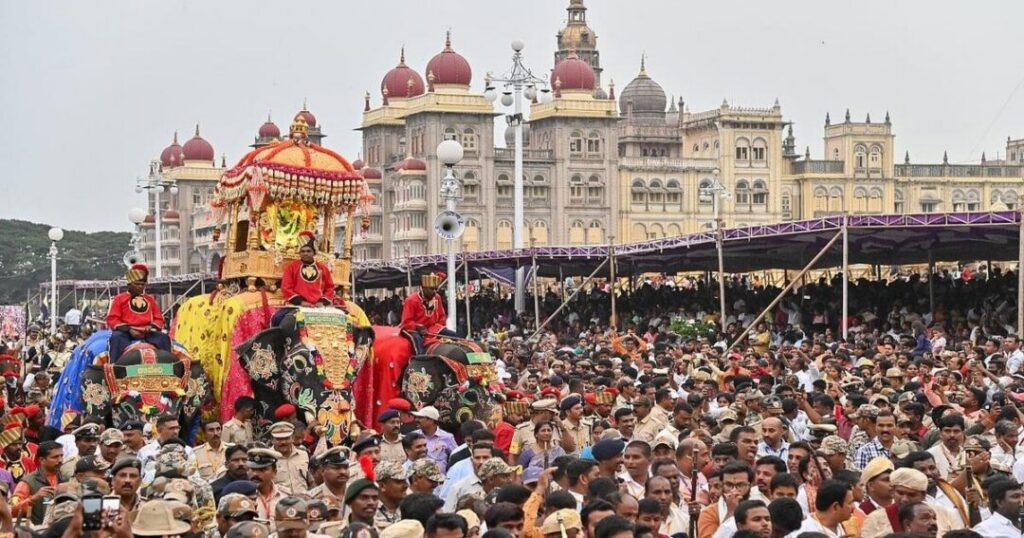
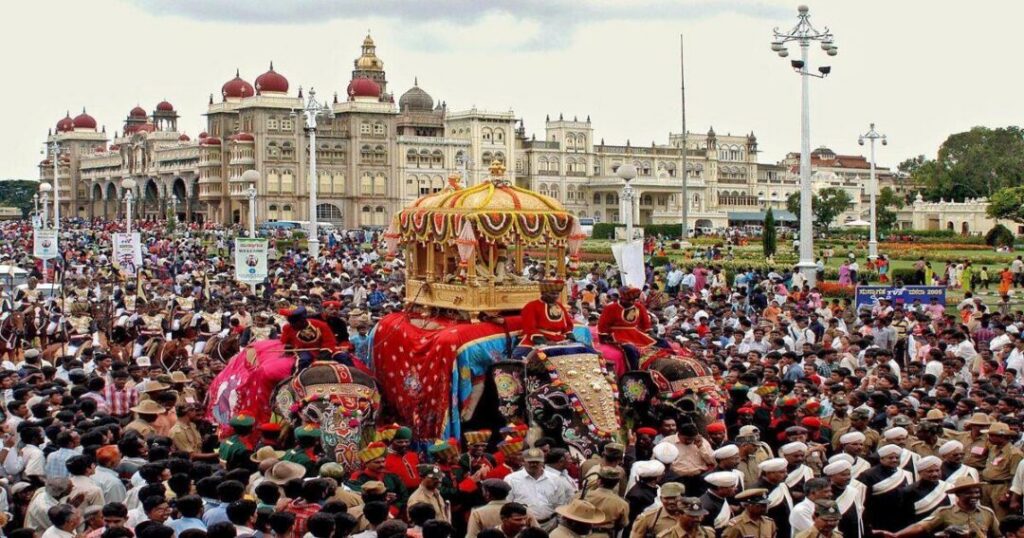
On Vijayadashami, the festival’s final day, an idol of Chamundeshwari is carried through Mysuru’s streets from the palace to Bannimantap atop a lead elephant bearing the Golden Howdah — more on this procession, and how to get tickets to it, below.
5. Panjina Kavayathu Torchlight Parade
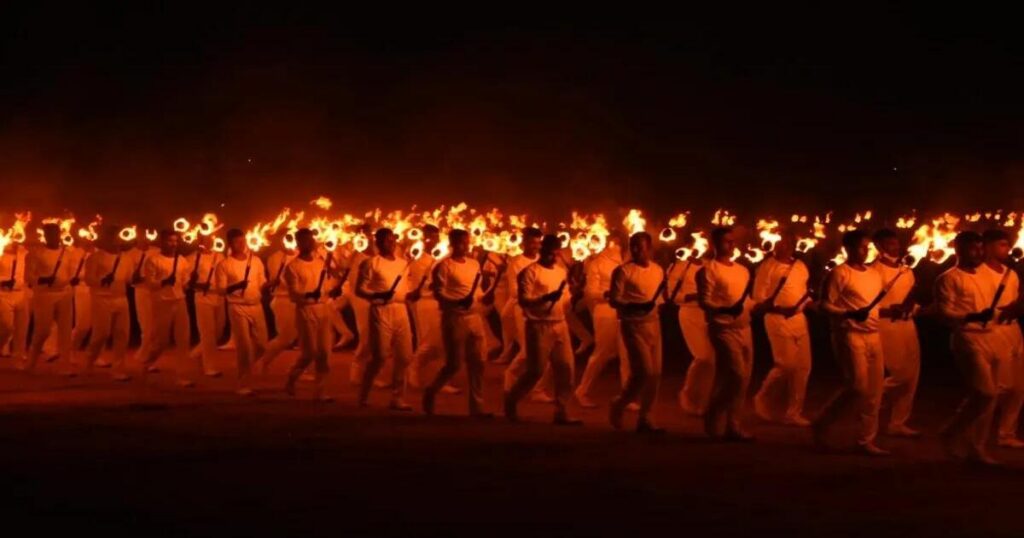
The same evening, once the Jumbo Savari reaches Bannimantap Parade Grounds, a torchlight parade closes out the festival — full details on attending it are also covered below.
Mysore Dasara Ticket: How and Where to Book?
Booking a mysore dasara ticket — or a mysore dussehra ticket, the same thing under Dasara’s other common spelling — comes down to one legitimate channel: the mysore dasara official website at mysoredasara.gov.in, which sells five ticketed items through the TicketGenie platform. There’s the Gold Card (₹6,500 and up), an all-access pass valid October 11-21 covering one-time entry to Mysuru Palace, Chamundi Hill, and the zoo plus a numbered seat for both the Jumboo Savari and Torchlight Parade; standalone Jumboo Savari Procession seating (₹3,500 and up); Torchlight Parade seating (₹1,500 and up), with a separate ticket for the October 20 full-dress rehearsal at the same price; and Drone Show tickets (₹1,000 and up) for October 17 or 18 at Bannimantap.
The official website is explicit that TicketGenie is the only authorised seller — there are no ticket counters and no authorised agents, so anything bought elsewhere is a real risk. Worth remembering too: most of Dasara is free regardless of whether you buy a ticket, including the full procession route, the palace illumination, cultural stages, and general public viewing enclosures — tickets buy a guaranteed seat, not access to the festival itself.
Also Read: 20 Best Places to Visit in Karnataka for Every Traveller
Mysore Dasara Procession Tickets: Inside the Jumbo Savari
For anyone specifically after Mysore Dasara procession tickets, it helps to know what you’re actually watching. The Golden Howdah itself weighs 750 kilograms in total, with 85 kilograms of filigreed gold sheeting applied over a wooden core by the 19th-century goldsmith Singannacharya — its exact date of construction isn’t recorded, but it’s been the ceremonial centrepiece of the procession for generations. The howdah carries Chamundeshwari’s idol on the lead elephant’s back as the procession moves from the palace to Bannimantap on Vijayadashami.
The honour of carrying it has passed between a handful of elephants over the decades: Balarama carried it 13 times between 1999 and 2011, Arjuna took over in 2012, and 60-year-old Abhimanyu carried it for six consecutive years through 2025 before retiring from the role — in 2026 he’s expected to join the procession instead as the nishane, or flag-bearing, elephant, a ceremonial send-off after his final howdah-bearing year. As of this writing, five tuskers — Prashant, Dhananjay, Mahendra, Sugriva, and Ekalavya — are in wooden-ambari training to be considered as his successor, with the final selection still pending. A numbered seat in Enclosure I, facing the route where the howdah leaves the palace, runs ₹3,500 and up, with gates open 10am to 12:30pm on procession day.
Mysore Dasara Torch Light: The Panjina Kavayathu
The Mysore Dasara torch light parade, known locally as Panjina Kavayathu, is the festival’s closing set piece, held at Bannimantap Parade Grounds the same evening the Jumbo Savari arrives. Ticketed seating in a dedicated enclosure runs ₹1,500 and up with gates open 4:30 to 6:30pm, and a full-dress rehearsal the evening before — October 20 in 2026 — is ticketed separately at the same price, a good option for anyone who wants a similar experience with a smaller crowd.
Mysore Palace During Dussehra: Quick Reference
Between the Mysore Palace during Dussehra and the Mysore Palace in Dussehra — two ways of asking the same thing — here’s what’s worth knowing about the palace itself across the festival:
- Illumination: Close to 100,000 bulbs light the palace nightly from 7 to 10pm across all ten festival days, free to view from the grounds.
- Regular entry: The palace remains open for standard daytime sightseeing throughout Dasara alongside the evening illumination, so a single visit can cover both.
- Exhibition proximity: The Dasara Exhibition runs directly across from the palace, making it easy to combine an evening illumination visit with a stop at the exhibition grounds.
- Procession starting point: The palace is also where the Jumbo Savari itself begins on Vijayadashami, so Enclosure I ticket holders are effectively watching the procession leave from right outside it.
Also Read: Places to Visit in Mysore: The Complete Guide to Mysore Karnataka’s Best Experiences
Mysore Dussehra 2026: Key Dates and Tickets
For mysore dussehra 2026 tickets, here’s the confirmed schedule:
- Festival dates: Sunday, October 11 to Wednesday, October 21, 2026 (11 days total).
- Opening ceremony: October 11, atop Chamundi Hill, around 11:50am.
- Drone Show: October 17 or 18 at Bannimantap.
- Torchlight Parade rehearsal: October 20 at Bannimantap Parade Grounds.
- Vijayadashami, Jumbo Savari, and Torchlight Parade: October 21, with the Chief Minister’s floral tribute between 4:10 and 4:35pm.
Worth noting: some national festival calendars list Dussehra on October 20, 2026, while Mysuru’s own celebrations fall on October 21 — Mysuru follows the local Mysuru panchanga, which places Vijayadashami on whichever day the Dashami tithi is running at sunrise, so the two dates genuinely diverge this year. If you’re booking travel around the festival, October 21 is the date that matters for Mysuru itself.
How to Reach Mysuru?
Mysuru has its own small airport at Mandakalli with limited domestic connections, so most visitors fly into Bengaluru’s Kempegowda International Airport instead, about 170 km away and roughly 3-4 hours by road. Mysuru Junction is well connected by rail, with express trains including the Shatabdi and Tippu Express linking it to Bengaluru in about 2.5-3 hours, and the Bengaluru-Mysuru Expressway covers the same route by car in around 3 hours, with KSRTC and private bus operators running frequent services in between.
Also Read: India’s Most Unique Dussehra Festival Celebrations
Conclusion: Book Early, Arrive Even Earlier
Between a 750-kilogram gold howdah, a palace lit with 100,000 bulbs, and a ticketing system that actually works if you use the right website, Mysuru Dasara is that rare Indian festival where a little planning genuinely pays off. Book through the official portal, pick your seat for Vijayadashami, and the rest of the festival is yours to wander into for free.
Planning a Mysuru Dasara trip? Let the Explurger app help you time your visit around the procession, the palace lights, and everything in between.
FAQs About Mysuru Dasara
2. How do I book a Mysore Dasara ticket?
Through the official website at mysoredasara.gov.in, which sells Gold Card, Jumboo Savari, Torchlight Parade, rehearsal, and Drone Show tickets via TicketGenie — the only authorised seller, with no other counters or agents.
3. What is the Golden Howdah?
A 750-kilogram ceremonial seat covered in 85 kilograms of filigreed gold sheeting, carried by the lead elephant in the Jumbo Savari procession and used to transport the idol of the goddess Chamundeshwari.
4. When is Mysore Dasara 2026?
The festival runs October 11-21, 2026, with Vijayadashami, the Jumbo Savari, and the Torchlight Parade all falling on October 21.
5. What is the Mysore Dasara Torchlight Parade?
Known as Panjina Kavayathu, it's the festival's closing procession at Bannimantap Parade Grounds on Vijayadashami evening, with a separate ticketed full-dress rehearsal the night before.
6. Is the Mysore Palace illumination free to see?
Yes — the palace is lit with close to 100,000 bulbs nightly from 7 to 10pm across all ten festival days, and viewing it from the grounds doesn't require a ticket.