
1,080 Total Views
Mysore — officially renamed Mysuru in 2014, though both names remain in common use — is one of India’s most gracious cities. At the southern end of Karnataka, it sits at a comfortable 770 metres above sea level, surrounded by gentle hills, sandalwood forests, and the long shadow of the Wodeyar dynasty that shaped everything about it. Most visitors come for the famous royal palace. But Mysore Karnataka tourist places go far deeper than palaces: a garden designed by the Diwan of Mysore below a great dam, a tiger reserve with one of India’s finest safari corridors, a 13th-century Hoysala temple that UNESCO has recognised as a world heritage site, a silk weaving tradition that has been producing some of India’s finest fabric for over a century, and a day trip circuit that connects three kingdoms’ worth of history in a single road journey.
This guide covers the best places to visit in Mysore beyond the standard palace tour — with a particular focus on nature, crafts, hidden gems, and the excellent day trips that most visitors either rush through or miss entirely.
Nature & Outdoors — Mysore’s Green Spaces and Wildlife
Brindavan Gardens — Terraced Beauty Below the Dam
Brindavan Gardens, approximately 19 km from Mysore city, is one of the finest terraced gardens in India — a 60-acre landscaped complex built below the Krishnaraja Sagar (KRS) Dam on the Kaveri River, in the Mandya district of Karnataka. Construction began in 1927 under the direction of Sir Mirza Ismail, the then Diwan of Mysore, and was completed in 1932. The garden’s design was inspired by the Shalimar Bagh of Kashmir — three terraces descend from the dam wall, each planted with different combinations of flowering trees, topiary, water channels, and fountains.
The garden’s musical fountain — a choreographed display of water synchronised with music, illuminated after dark — is the main evening attraction. The evenings at Brindavan Gardens are particularly special: the fountain runs from approximately 6:30–7:30 PM, the gardens are lit with coloured lights, and the crowds that fill the place on weekends give it an unmistakably festive character.
- Best visited on a weekday evening when the crowds are manageable and the fountain display is at full effect
- The adjacent KRS Dam and its backwaters are worth exploring — boat rides are available on the reservoir
- The garden is split by the Kaveri River; the two halves (north and south) are connected by a bridge and boat service
- Located 19 km from Mysore; accessible by road in approximately 30 minutes
Also Read: Places to Visit in Coorg: The Complete Guide to Kodagu’s Best Experiences
Karanji Lake Nature Park — Mysore’s Urban Birding Destination
Karanji Lake, in the heart of Mysore city near the zoo, is a 55-hectare freshwater lake and nature park that is one of the finest urban birdwatching spots in South India. The lake and its surrounding reed beds support over 170 species of birds — both resident and migratory — including painted storks, purple herons, spot-billed pelicans, cormorants, and a wide variety of waders and waterbirds that arrive between October and March.
The park features a large walk-in aviary, a butterfly park, and a network of trails around the lake edge that provide excellent close-up views of nesting colonies. This is one of the most consistently underrated Mysore city tourist places — most visitors walk past it on the way to the zoo without realising what it contains.
- Best for birdwatching from October to March when migratory species arrive
- The walk-in aviary is the largest of its kind in Karnataka
- Located adjacent to the Mysore Zoo, both can be covered in the same half-day visit
Nagarhole National Park (Rajiv Gandhi National Park) — Tiger Country West of Mysore
Nagarhole National Park — part of the Nilgiri Biosphere Reserve along with Bandipur, Wayanad, and Mudumalai — is approximately 96 km from Mysore and one of the finest wildlife reserves in South India. The park is home to tigers, leopards, elephants, gaur (Indian bison), dholes (wild dogs), sloth bears, and over 270 species of birds. The Kabini reservoir within the park (formed by the Kabini River dam) is famous for the dry season congregation. In April and May, when water sources recede, elephants, deer, and predators gather at the Kabini riverbank in concentrations rarely seen elsewhere.
- Jeep safaris and boat safaris on the Kabini reservoir are both available; the boat safari provides the finest views of the riverbank congregation
- Best season: October to May; the park closes during peak monsoon
- Accommodation at the Kabini area (in various lodges near the reservoir) needs to be booked well in advance for the October–March and April–May peak windows
Art, Silk & Crafts — Mysore’s Living Cultural Industries
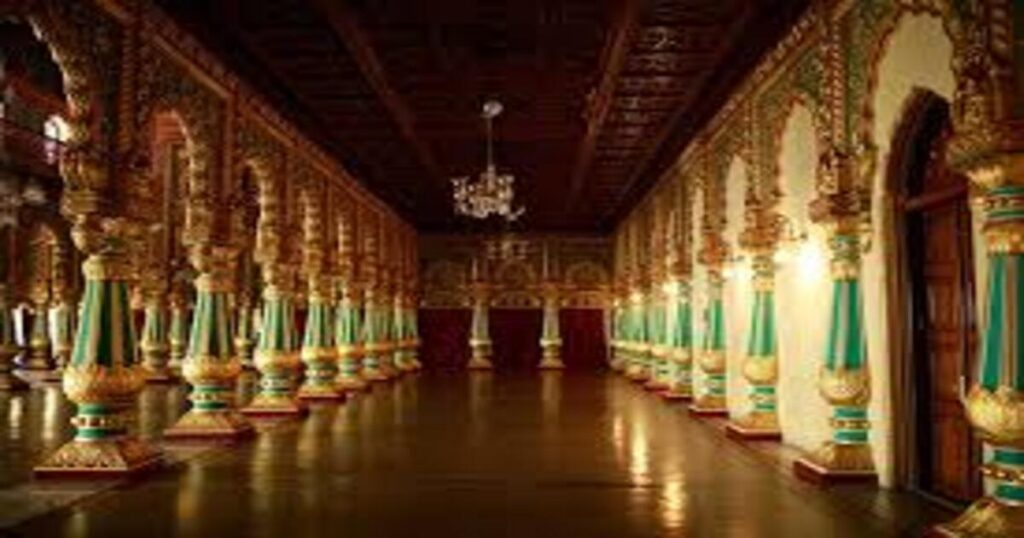
Mysore Silk — The GI-Tagged Fabric
Mysore silk — specifically Mysore Crepe Silk, produced at the Mysore Silk Factory in Manandavadi Road — is one of India’s most celebrated GI-tagged (Geographical Indication) textile traditions. The factory was established in 1912 by the Mysore state government under Krishnaraja Wadiyar IV, making it one of the oldest government-run silk weaving enterprises in India. The silk produced here uses pure mulberry silk thread woven on power looms with real gold and silver zari (brocade) — the defining characteristics of the authentic Mysore silk saree.
What makes Mysore silk distinctive:
- The crepe weave gives it a characteristic soft, slightly crinkled texture unlike the flatter Kanchipuram or Banarasi varieties
- The gold zari in authentic Mysore silk must contain a minimum percentage of real gold — a standard maintained since the factory’s founding
- The saree designs draw from Mysore’s Wodeyar court traditions — peacocks, elephant motifs, and the traditional mysore style border
Visiting the Mysore Silk Factory (also called the KSIC Silk Factory) allows visitors to watch the weaving process on the factory floor — an extraordinary sight of massive Jacquard looms translating punch-card patterns into silk fabric at remarkable speed. The factory showroom sells at fixed prices, which — while not cheap — represent the genuine article.
- The factory is on Manandavadi Road in Mysore; open on weekdays
- Tip: Avoid the shops immediately outside the factory that claim to be “government authorised” — buy only from the official KSIC showroom inside the factory
- The GI tag for Mysore Silk was granted, protecting the tradition from imitation
Sandalwood Carving — Karnataka’s Aromatic Art Tradition
Mysore is the centre of India’s sandalwood carving tradition — Karnataka has historically produced the majority of India’s sandalwood, and the city’s craftspeople have been carving decorative objects from Santalum album (Indian sandalwood) for centuries. Sandalwood elephant figures, jewellery boxes, incense sticks, essential oil, and the distinctive Mysore sandalwood soap (produced by the Karnataka Soaps and Detergents Limited since 1916) are all connected to this tradition.
The Government Sandal Oil Factory in Mysore — one of the oldest of its kind — produces sandalwood oil through steam distillation. The oil from Mysore sandal is among the finest in the world and commands premium prices globally.
- Sandalwood carving workshops are concentrated in the old city area and near the Devaraja Market
- Note: Raw sandalwood trade is heavily regulated in India; buy only certified, legally sourced products from authorised government shops
Also Read: Places to Visit in Karnataka: 20 Best Karnataka Tourist Spots for Every Kind of Traveller
Devaraja Market — The Most Alive Street in Mysore
Devaraja Market (Krishnarajendra Market) on Sayyaji Rao Road is Mysore’s oldest and most atmospheric market — a covered bazaar of over 2,000 shops that has been operating in its current location since the late 19th century. The market’s most famous sections are the flower market (jasmine garlands in quantities that make the air fragrant from 50 metres away), the fruit and vegetable section (Mysore region produces some of Karnataka’s finest mangoes, jackfruit, and sitaphal), and the incense and sandalwood stalls that line the market’s inner lanes.
The flower section is at its most active between 5–8 AM when the fresh stock arrives from surrounding farms and the garland-makers work at extraordinary speed. The whole market should be experienced rather than shopped — the sensory density here is one of the finest in any South Indian city.
- Best time: early morning (5–8 AM) for the flower section; late afternoon for the general market
- The Devaraja Market is a Grade I heritage structure and one of the finest Victorian-era market buildings in Karnataka
- Look for the section selling traditional Mysore incense sticks (agarbatti) — the specific blend of sandalwood, vetiver, and rose used in Mysore-style incense is distinct from any other Indian variety
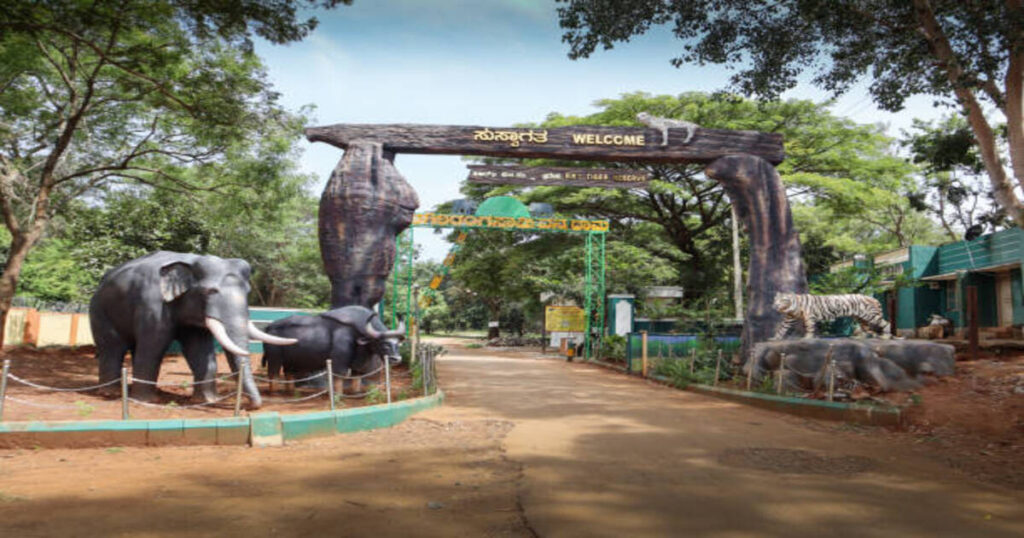
Ranganathittu Bird Sanctuary — Cormorant Island on the Kaveri
Ranganathittu Bird Sanctuary, approximately 16 km from Mysore near Srirangapatna, is the largest bird sanctuary in Karnataka — a cluster of small rocky islands in the Kaveri River that supports breeding colonies of painted storks, open-billed storks, spoonbills, and various herons and egrets. The boat ride through the sanctuary — passing within metres of the nesting islands — is one of the finest wildlife experiences near Mysore.
- The best time is June to November when nesting colonies are at their most active and visible
- The boat ride takes approximately 30–40 minutes and passes all major islands
- Crocodiles bask on the riverbanks alongside the bird colonies — visible from the boats
Talakadu — The Temple Town Under the Sand
Talakadu, approximately 45 km east of Mysore on the Kaveri, is one of Karnataka’s most unusual heritage sites — a town of ancient Shiva temples that are partially buried under shifting sand dunes that have encroached from the riverbank over centuries. The town has over 30 temples, of which several are excavated and in active worship, while others remain buried. The Vaidyeshvara Temple (dating to approximately 1000 CE) and the Kirtinarayana Temple (associated with the Ganga dynasty) are the most significant.
The legend of Talakadu’s burial involves a Mysore queen’s curse (Talakadu maralagali, Malangi maduvagali — “May Talakadu become sand, may Malangi become a whirlpool”) — one of the most dramatic pieces of Mysore royal history.
- Accessible by road from Mysore (approximately 1–1.5 hours); can be combined with Somnathpur on the same day
- The Panchalinga Darshana ritual — when all five Shiva temples of Talakadu are simultaneously opened for worship — happens once every 12 years; the next occurrence should be verified with local sources
Rangayana Theatre — Karnataka’s Living Theatre Tradition
Rangayana in Mysore is one of Karnataka’s most respected theatre institutions — a repertory theatre company that has been producing Kannada-language drama since 1989, with a permanent ensemble of actors, directors, and designers who work year-round. The annual Bahuroopi National Theatre Festival held here (typically in December) brings theatre groups from across India for a week of performances.
For visitors who want to experience contemporary Karnataka cultural life rather than only its heritage, attending a Rangayana performance is one of the most distinctive things to do in Mysore.
Day Trips — Places to Go from Mysore
Srirangapatna (~16 km | 30 minutes)
Srirangapatna (also spelled Seringapatam) is a river island town on the Kaveri — the capital of Tipu Sultan’s Mysore kingdom and the site of the Fourth Anglo-Mysore War (1799), when British forces under Arthur Wellesley (later the Duke of Wellington) stormed the fort and killed Tipu Sultan. The island is compact enough to explore in half a day:
- Tipu Sultan’s Summer Palace (Daria Daulat Bagh) — a teak structure of extraordinary delicacy, now a museum with murals depicting the battles of Seringapatam; built in 1784
- Gumbaz — the mausoleum of Tipu Sultan and his father Hyder Ali, set in a garden with ebony and cypress trees; Tipu’s tiger-striped tomb is here
- Sri Ranganathaswamy Temple — the Vaishnava temple from which Srirangapatna takes its name; one of the most important Vishnu temples in Karnataka
Somnathpur (~35 km | 45 minutes)
The Chennakesava Temple at Somnathpur is a UNESCO World Heritage Site — a 13th-century Hoysala temple of extraordinary sculptural refinement, considered one of the three finest Hoysala temples in Karnataka (alongside Belur and Halebidu). The temple was built in 1268 CE by Somanatha Dandanayaka, a general of the Hoysala king Narasimha III.
The exterior walls are covered in seven horizontal bands of continuous narrative sculpture — elephants, horses, foliage, scenes from the Ramayana and Mahabharata, mythological figures, and the Hoysala star-shaped plan. The level of detail is extraordinary — a single panel might contain hundreds of individual figures, each with distinct facial expressions and gestures.
- Open daily; entry fee applies; approximately 35 km from Mysore
- Combine with Srirangapatna and Ranganathittu Bird Sanctuary for a full day circuit
- The temple is less crowded than Belur and Halebidu, making it easier to appreciate the sculpture at length
Kabini (~85 km | 2 hours)
Kabini — the area around the Kabini reservoir where Nagarhole National Park borders the Kabini River — is one of the finest wildlife destinations in India. The boat safari on the reservoir at dawn, the jeep safaris through the deciduous forest, and the extraordinary dry-season congregation of wildlife at the riverbank make Kabini worth the two-hour drive from Mysore. Best done as an overnight stay rather than a day trip — the morning and evening safari combination is significantly more rewarding than a single visit.
Also Read: Places to Visit in Chikmagalur: 15 Best Experiences for Weekend Trippers from Bengaluru
Best Time to Visit Mysore
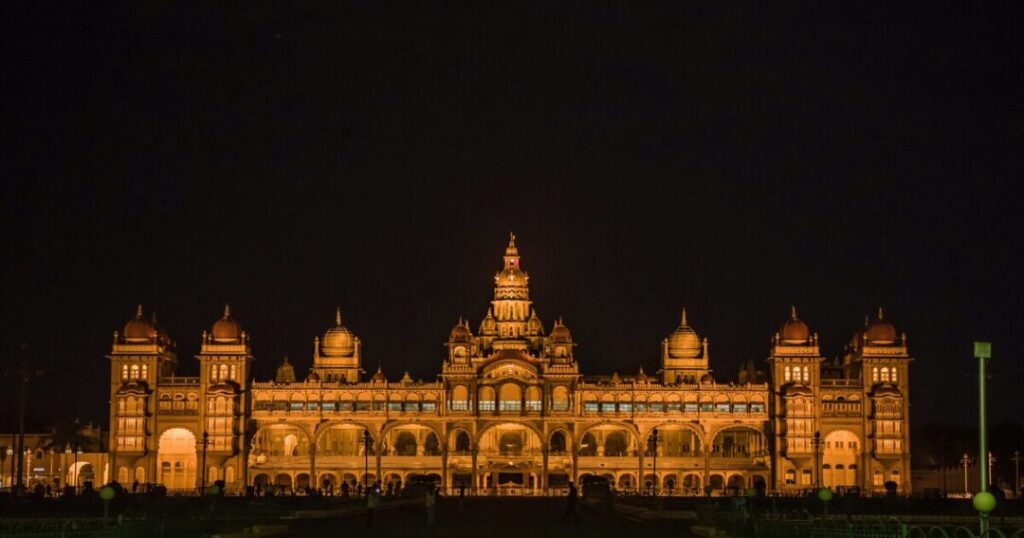
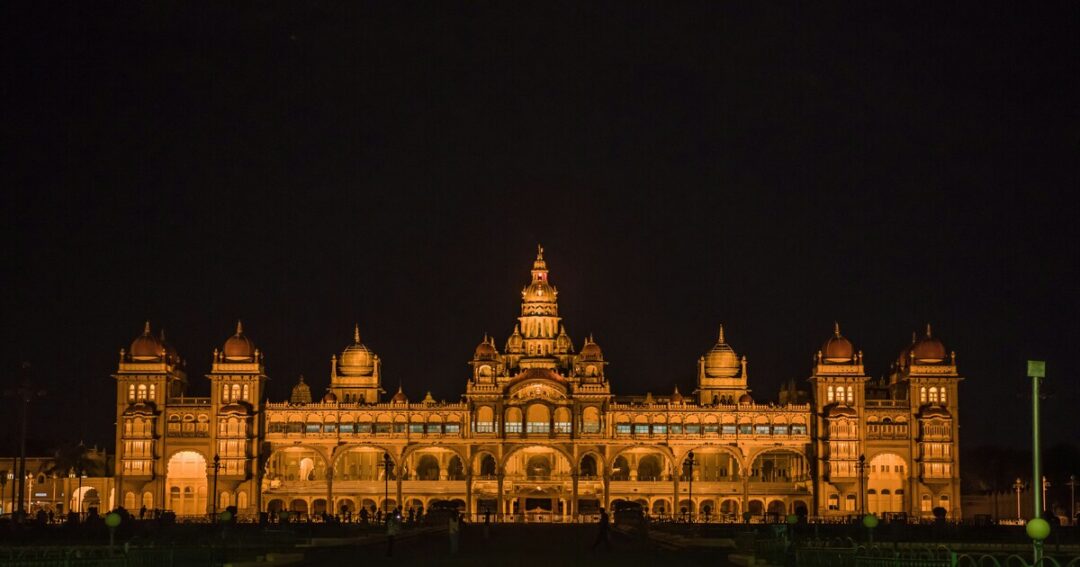
October to March is the finest window — temperatures between 15°C and 30°C, clear skies, and the city at its most active. October/November is when Mysore Dasara (Dussehra) takes place — a 10-day royal festival when the Mysore Palace is illuminated with approximately 100,000 light bulbs and the final day’s procession (the Jamboo Savari elephant procession) is one of the grandest public events in South India. If you can visit during Dasara, prioritise it.
April and May are hot but manageable; the mango season is at its peak, and Devaraja Market’s mango section is extraordinary. Monsoon (June–September) is green, but some roads get difficult; the gardens are at their most vivid.
How to Reach Mysore
- From Bengaluru (~150 km | 3 hours): The most common approach — by road via the Mysore Expressway (one of Karnataka’s finest highways); by train from KSR Bengaluru City or Yeshwanthpur stations (multiple daily services, approximately 2 hours); by KSRTC/private buses from Bengaluru
- From Chennai (~490 km | 8–9 hours): By road via NH48 and the Bengaluru Mysore Expressway; by train via Bengaluru
- By air: Mysore has an airport (Mandakalli Airport, MYQ) with limited connectivity; most visitors fly into Bengaluru’s Kempegowda International Airport and travel by road or rail
Conclusion
Mysore city places to visit reward the traveller who goes beyond the famous palace. The gardens at Brindavan deserve a full evening. The bird sanctuary at Ranganathittu deserves a morning boat ride. The sculpted walls of Somnathpur deserve at least two hours of unhurried attention. The flower market at Devaraja at dawn deserves your 6 AM alarm.
Quick guide to the best Mysore places to see:
- Nature: Brindavan Gardens (19 km, 1932, terraced, musical fountain), Karanji Lake (in-city, 170+ birds), Nagarhole National Park (96 km, tigers & elephants)
- Art & crafts: Mysore Silk Factory (est. 1912, GI-tagged, gold zari), Devaraja Market (heritage Victorian market, dawn flower section), sandalwood carving workshops
- Hidden gems: Talakadu (sand-buried temples, 45 km), Ranganathittu (stork colonies, boat ride, 16 km), Rangayana Theatre
- Day trips: Srirangapatna (16 km, Tipu Sultan’s capital), Somnathpur (35 km, UNESCO Hoysala temple 1268 CE), Kabini (85 km, wildlife)
- Best time: October–March; Dasara in October/November is unmissable
Download the Explurger app to discover what travellers actually recommend in Mysore, find the hidden corners of Devaraja Market and the best birding spots at Karanji, and log every silk saree, temple wall, and safari sunrise on your trip.
The gardens are already lit. The looms are already running. Mysore is ready.
FAQs About Mysore City Places to Visit
2. What are the Mysore Karnataka tourist places most visitors miss?
The most consistently overlooked Mysore Karnataka tourist places: Talakadu (45 km — ancient Shiva temples partially buried under sand dunes, royal curse legend), Ranganathittu Bird Sanctuary (16 km — Karnataka's largest bird sanctuary, boat ride past nesting stork colonies and crocodiles), Karanji Lake Nature Park (within the city — 55 hectares, 170+ bird species, walk-in aviary), and Rangayana Theatre (Karnataka's finest repertory theatre company, since 1989, annual Bahuroopi festival in December).
3. What is Mysore silk?
Mysore silk — specifically Mysore Crepe Silk — is a GI-tagged (Geographical Indication protected) textile produced at the Mysore Silk Factory established in 1912 by the Mysore state government. It uses pure mulberry silk with real gold and silver zari (brocade), woven on Jacquard looms. The crepe weave gives it a characteristic soft texture. Authentic Mysore silk sarees contain a minimum percentage of real gold in the zari — a standard maintained since the factory's founding. The factory on Manandavadi Road is open to visitors; the weaving process can be observed on the factory floor.
4. How far is Somnathpur from Mysore?
Somnathpur is approximately 35 km from Mysore — about 45 minutes by road. The Chennakesava Temple at Somnathpur is a UNESCO World Heritage Site and one of the finest Hoysala temples in Karnataka, built in 1268 CE. It can be combined with Srirangapatna (16 km from Mysore) and Ranganathittu Bird Sanctuary for a full day heritage and nature circuit. Together these three Mysore places to go form one of the most rewarding day trip circuits in Karnataka.
5. What is the best time to visit Mysore?
October to March is the best window for comfortable weather (15–30°C) and the widest range of activities. October/November is particularly special if the dates align with Mysore Dasara — a 10-day royal festival when the palace is illuminated with approximately 100,000 lights and the Jamboo Savari elephant procession takes place on the final day. April–May is hot but excellent for the mango season at Devaraja Market. Monsoon (June–September) makes the gardens and forests most vivid but some roads can be difficult.