
226 Total Views
Uttarakhand holds some of the most varied trekking in India: alpine meadows that flower for a few weeks each monsoon, frozen lakes in January, a 5,900-metre glacier pass, and weekend ridge walks within a few hours of Dehradun. The best treks in Uttarakhand range from two-day beginner outings to nine-day expeditions, and the right pick depends on the month you’re travelling more than on anything else. This guide covers five anchor treks, breaks the rest down by difficulty, goes deep on winter treks and the state’s highest passes, and closes with a quick-reference list of short treks. It also flags two recent changes — a seasonal closure and a court ruling — that affect planning right now.
Best Treks in Uttarakhand
Uttarakhand is where the Himalayas change character with every trail. One trek takes you into flower-filled alpine meadows, another ends at a mysterious glacial lake, while others lead through ancient villages, dense forests and vast mountain grasslands.
For travellers planning their first Himalayan adventure, these five treks offer a strong introduction to the state’s diverse landscapes. From the wildflower valleys of Chamoli to the snow-covered trails around Sankri, each route brings a very different experience.
Roopkund Lake Trek
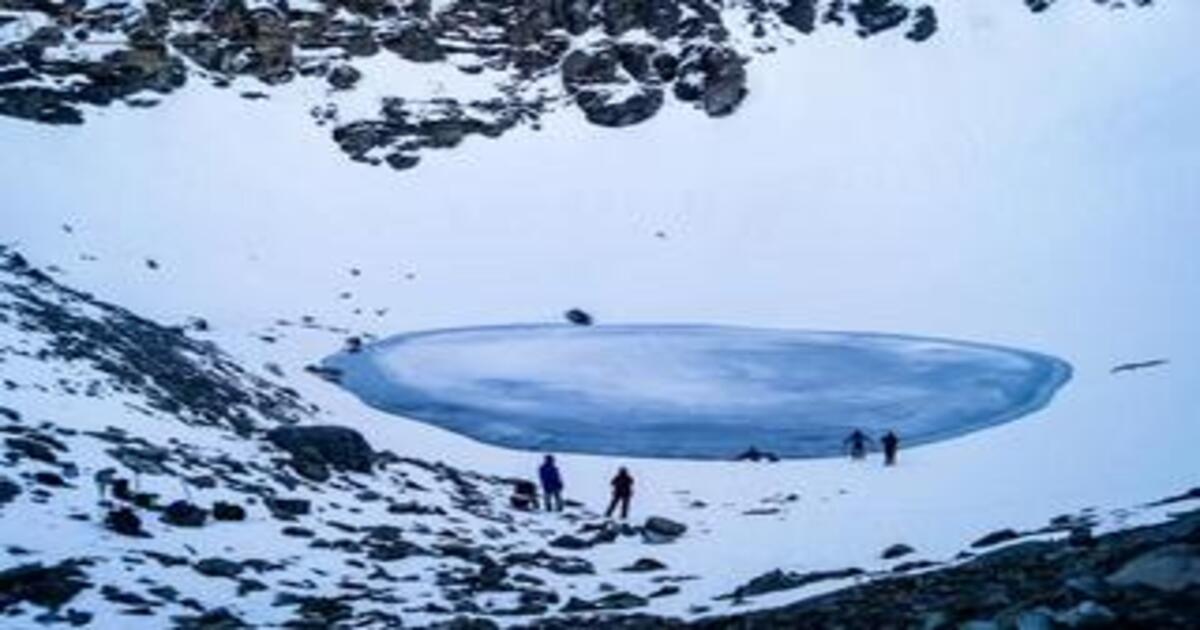
Roopkund is not simply another Himalayan lake. It is the destination at the end of a trail surrounded by one of the Himalayas’ most enduring mysteries.
Known popularly as Skeleton Lake, Roopkund sits at roughly 4,800 metres and became famous for the human remains discovered around its shores. Scientific research has made the story even more intriguing, revealing that the remains represent people from different genetic groups and periods rather than a single mysterious incident.
Yet the mystery is only part of the attraction. The traditional route from Lohajung moves through forests before opening into the spectacular high-altitude meadows of Ali Bugyal and Bedni Bugyal. As the trail climbs higher, the landscape becomes increasingly rugged, with sweeping views of the surrounding Himalayan peaks.
Roopkund is considerably more demanding than Valley of Flowers. High altitude, steep sections, unpredictable weather and long trekking days make preparation and acclimatisation particularly important. Camping regulations in the high-altitude bugyals have also been subject to legal and administrative changes, so current local rules and operator arrangements should be confirmed before planning a trek.
Best for: Experienced beginners, dramatic Himalayan landscapes, high-altitude adventure and travellers fascinated by mountain history.
Valley of Flowers Trek
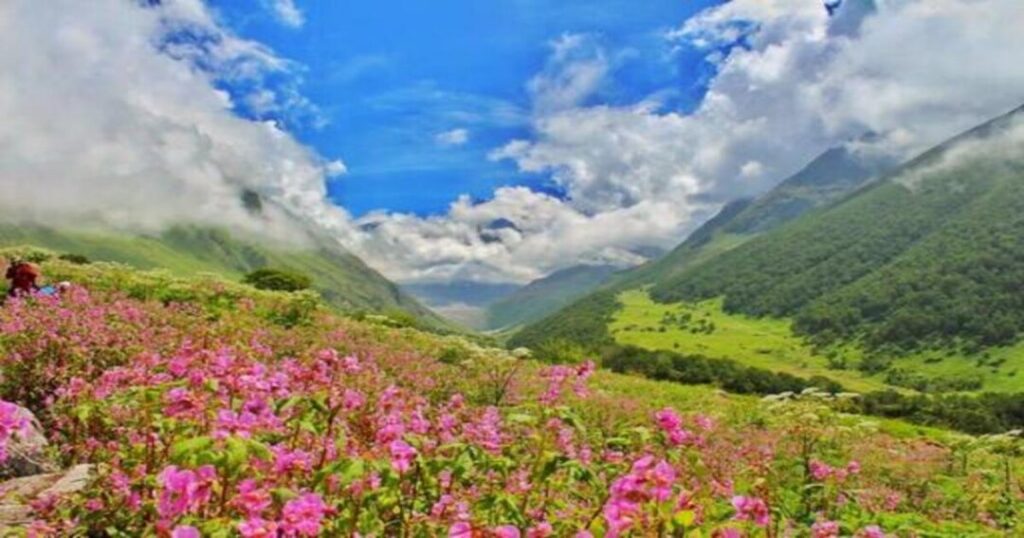
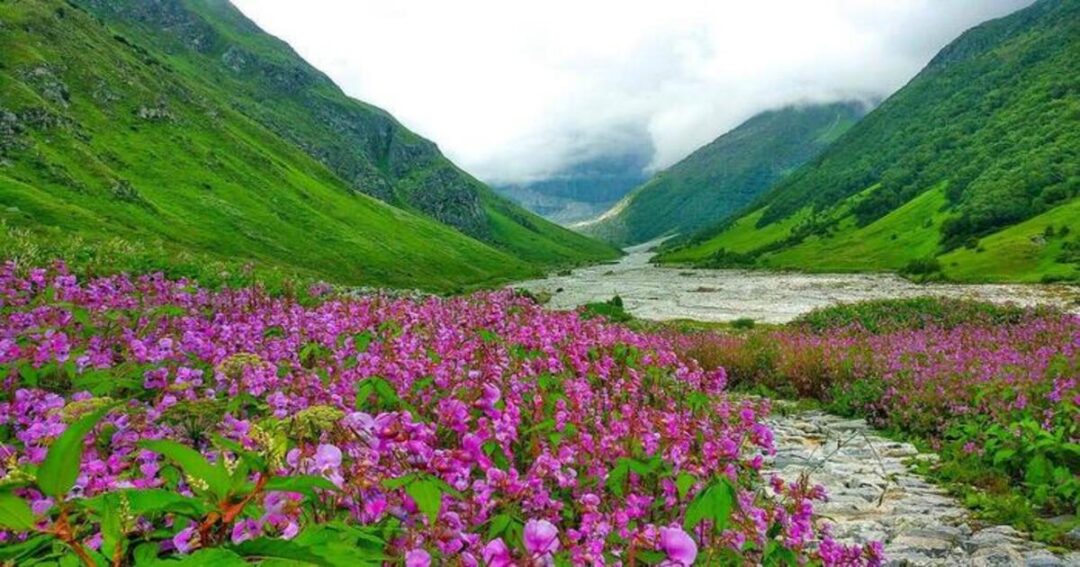
There are Himalayan landscapes that impress you, and then there are landscapes that seem almost unreal. The Valley of Flowers belongs firmly to the second category. As the trail climbs beyond Ghangaria, the scenery gradually opens into a vast alpine meadow surrounded by Himalayan peaks, streams and waterfalls.
Located in Chamoli, the Valley of Flowers National Park is a UNESCO World Heritage Site spread across about 87 sq km. More than 600 species of flowering plants have been recorded here, with the greatest abundance of blooms generally appearing between July and September. The valley sits at around 3,600 metres and is also known for its rich alpine flora and wildlife.
The experience is less about conquering a summit and more about walking through an extraordinary natural landscape. The final trail from Ghangaria to the valley is around 4 km, while reaching Ghangaria itself involves a much longer mountain trek from Govindghat.
There is also an important practical point: overnight stays and camping are not permitted inside the Valley of Flowers, so trekkers must return to Ghangaria after exploring the valley.
Best for: Wildflowers, photography, nature lovers and travellers looking for a scenic introduction to Himalayan trekking.
Also Read: Valley of Flowers Trek: Complete Guide to India’s Most Beautiful Himalayan Trail
Har Ki Dun Trek
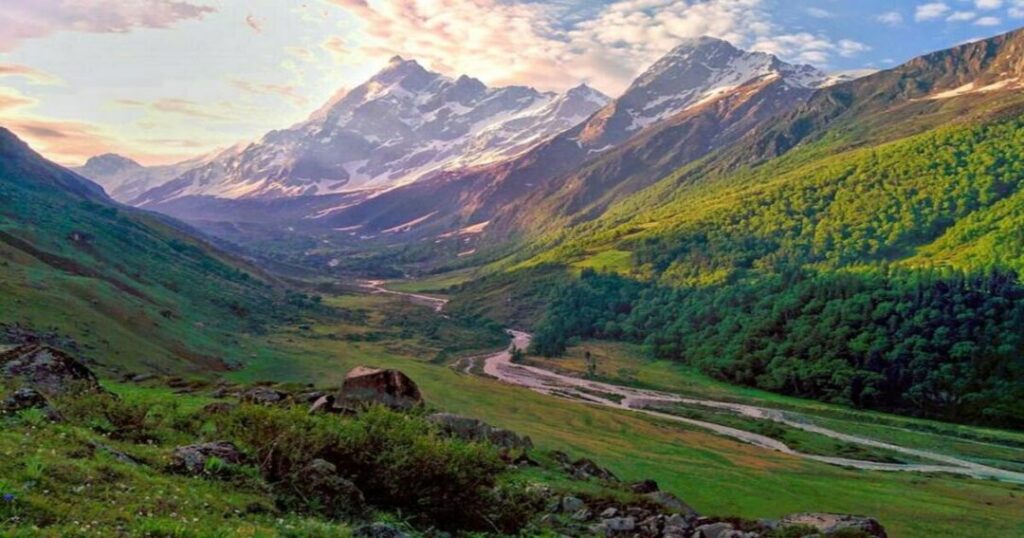
If some Himalayan treks feel like a race towards a summit, Har Ki Dun feels more like a journey into a hidden valley.
The trail begins around Sankri and follows mountain paths, forests and river valleys towards the distinctive cradle-shaped Har Ki Dun valley. Along the way, villages such as Osla and Seema add a cultural dimension to the journey, with traditional wooden houses and old Himalayan lifestyles still visible along the route.
Then the landscape opens up. Green meadows stretch beneath towering peaks, with Swargarohini providing one of the most dramatic backdrops. The surrounding mountains and valleys make the final approach to Har Ki Dun one of the most rewarding sections of the trek.
Unlike a summit-focused expedition, Har Ki Dun is about experiencing the journey itself — walking through forests, crossing streams, passing villages and gradually entering a remote Himalayan valley.
Best for: First-time trekkers, mountain villages, forests, meadows and Himalayan culture.
Also Read: Har Ki Dun Trek: The Complete Independent Trekker’s Guide (2026)
Kedarkantha Trek
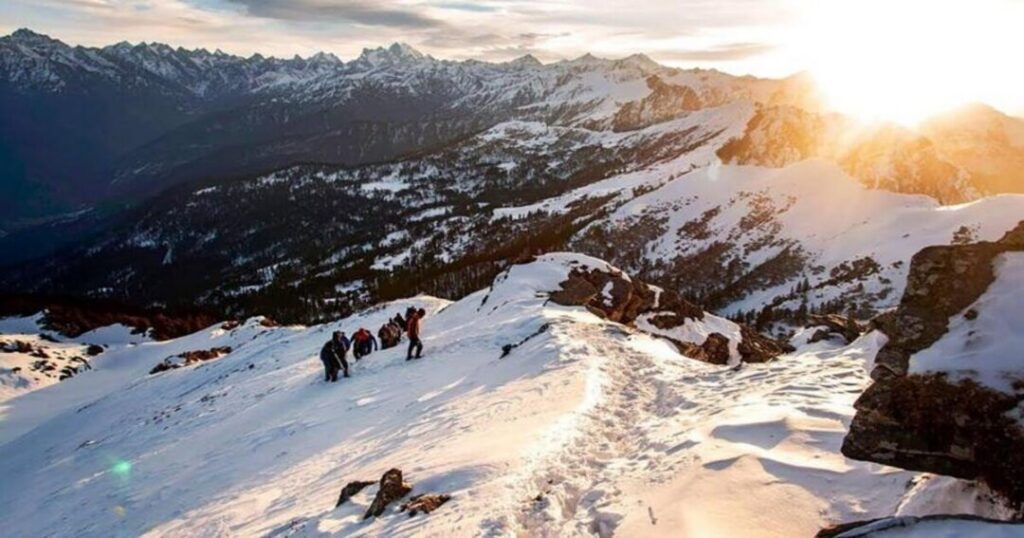
For many first-time trekkers, Kedarkantha is the route that introduces them to the winter Himalayas.
Starting from Sankri, the trail winds through pine and oak forests before reaching open campsites and the picturesque Juda Ka Talab. As the altitude increases, the landscape changes from forest to open mountain slopes, with snow becoming a defining feature during the winter season.
The summit climb is the defining moment. At around 3,800 metres, the top offers broad Himalayan views and a powerful sense of achievement, particularly when the surrounding ridges are covered in snow.
Kedarkantha’s appeal lies in its combination of a manageable Himalayan route and a genuine summit experience. For travellers who want to see the mountains under a blanket of snow without immediately taking on a highly technical expedition, it remains one of the most popular choices.
Best for: Snow, summit views, winter trekking and first-time Himalayan adventurers.
Also Read: Kedarkantha Trek: The Complete Guide to India’s Best Winter Snow Trek
Dayara Bugyal Trek
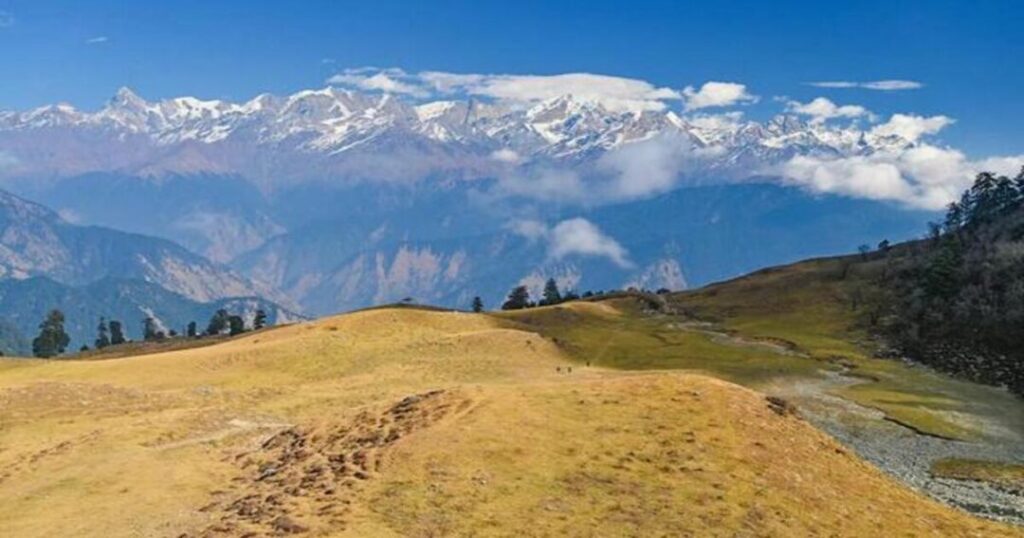
There is something wonderfully uncomplicated about Dayara Bugyal. Instead of chasing a famous lake or a dramatic summit, the trek’s greatest attraction is the landscape itself — enormous open meadows surrounded by Himalayan peaks.
The route takes trekkers through forests before opening onto rolling alpine grasslands. From the higher sections, the views extend towards peaks including Bandarpoonch and Kala Nag, while the broad meadows create a feeling of space that is difficult to find on more enclosed mountain trails.
Dayara Bugyal also changes dramatically with the seasons. During warmer months, the meadows are green and dotted with alpine vegetation, while winter transforms the same landscape into a snow-covered expanse.
With an easy-to-moderate difficulty rating and a total route of around 21 km on the official Raithal itinerary, Dayara Bugyal is particularly appealing to beginners looking for their first taste of alpine trekking.
Best for: Beginners, Himalayan meadows, panoramic mountain views and both summer and winter trekking.
Also Read: Dayara Bugyal Trek: Where the Himalayas Open Into Endless Green Meadows
Best Trekking in Uttarakhand by Difficulty
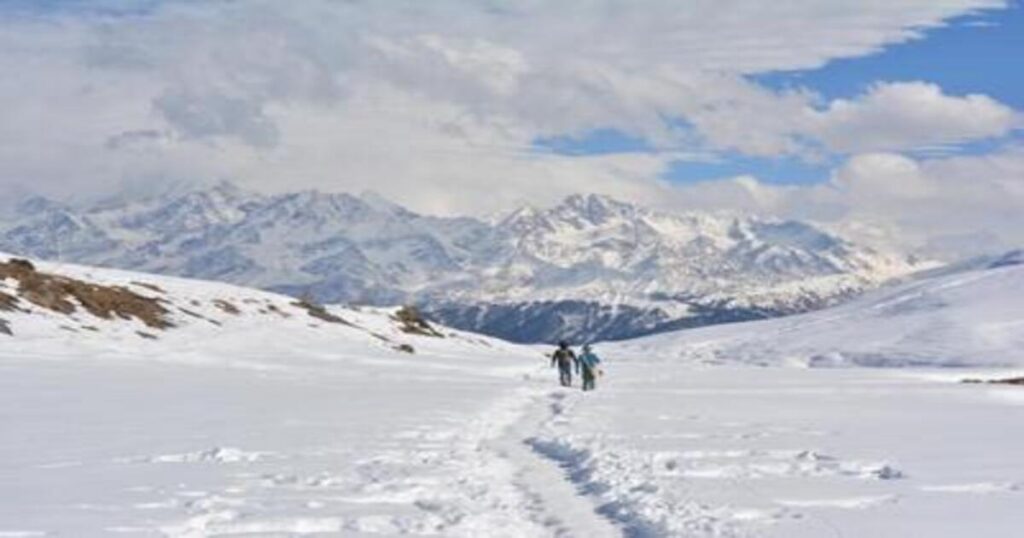
Choosing the best trekking in uttarakhand for your own fitness comes down to altitude gain, trek length, and how much of the route is on snow or glacier. This tiered breakdown sorts the treks in this guide the way most operators grade them.
Easy to Easy-Moderate
Nag Tibba, Dayara Bugyal, Har Ki Dun, and Deoriatal-Chandrashila fall in this group: well-defined trails, modest daily gains, and no technical sections. Valley of Flowers also rates easy to moderate, though the climb to Ghangaria is steadier than the grade suggests. These are the right starting point for anyone who hasn’t trekked above 3,000 metres before.
Moderate to Moderate-Difficult
Kedarkantha is usually rated easy to moderate, with a steep final summit push in snow. Brahmatal is rated moderate, and Roopkund is moderate-to-difficult because of its altitude above 4,500 metres, long days, and exposed final stretch. Prior trekking experience and a proper acclimatization schedule matter more on these.
Advanced and Expedition-Grade
Kalindi Khal and Auden’s Col sit in their own tier: glaciated, crevassed, and above 5,400 metres, they require prior high-altitude experience, technical skills, and permits. They are covered in the highest-trek section below and are not suitable first Himalayan treks.
Best Winter Trek in Uttarakhand
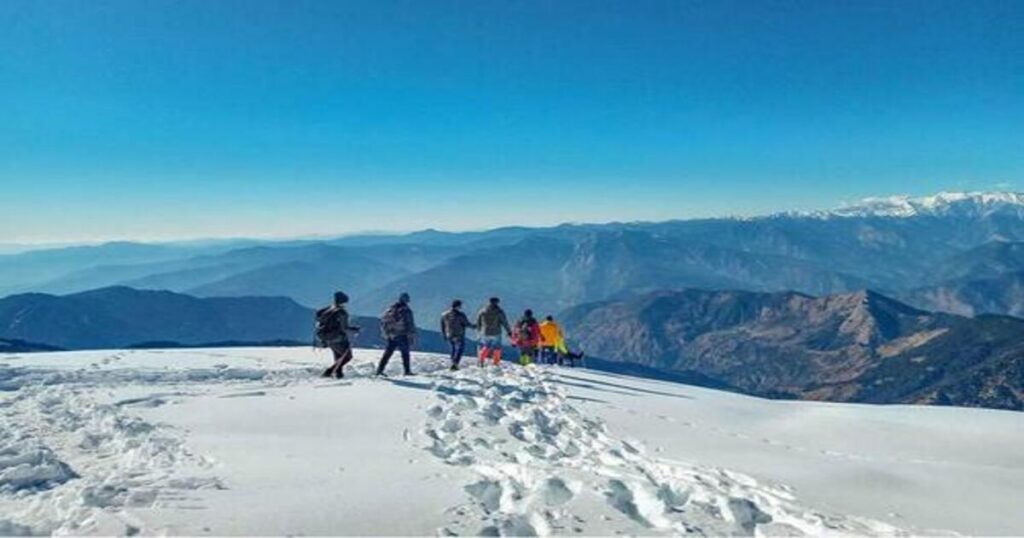
For anyone chasing snow, the best winter trek in uttarakhand depends on how much snow depth and cold you want. The reliable snow window is roughly late November or December through early February, with December usually giving the most active snowfall.
- Kedarkantha (about 3,800 m): Five days, easy to moderate, best for snow from December to March, and known for its sunrise views from the summit. The most popular snow trek in the state, so winter weekends can be crowded.
- Brahmatal (about 3,734 m): A moderate trek built around a frozen lake and snowy meadows, best from December to February; one operator guide lists it at 7-8 days, though itineraries vary by operator.
- Dayara Bugyal (about 3,688 m): Easy and good for families, with snow-covered meadows from December to February; a shorter option for first-timers.
- Deoriatal-Chandrashila (about 3,683 m): An easy-to-moderate trek of roughly 18 km over four to five days, workable in winter and especially popular in spring when the rhododendrons bloom.
Highest Trek in Uttarakhand
The highest trek in uttarakhand depends on whether you count trekking passes or lake and summit destinations, but among established routes, Kalindi Khal is generally the highest and the hardest.
Kalindi Khal (Kalindi Pass)
Kalindi Pass reaches about 5,942 metres (19,495 feet) and links Gangotri in the Bhagirathi Valley to Ghastoli and Badrinath in the Alaknanda Valley, a roughly 86-km crossing through heavily glaciated Garhwal terrain. It’s usually done in around six days by acclimatized trekkers between mid-June and mid-September, needs an inner-line permit, and demands prior high-altitude experience because of its moraine, crevasses, and snowfields.
Auden’s Col
Auden’s Col, at about 5,490 metres (18,010 feet), connects Gangotri to Kedarnath via Mayali Pass. It was discovered in 1935 by geologist John Bicknell Auden and first crossed by him in 1939, and it remains one of the most dangerous passes in Garhwal because the pass and the Khatling Glacier are heavily crevassed. Treat it as an expedition-grade route, not a trek.
Roopkund as the Highest Mainstream Trek
For trekkers who want serious altitude without glacier travel, Roopkund at roughly 4,800 metres is the highest of the popular, non-technical routes in this guide. It is a far more accessible option than the two passes above.
Small Trek in Uttarakhand: Quick Reference
If you only have a weekend, a small trek in Uttarakhand can still deliver real Himalayan views. For anyone comparing uttarakhand trekking places, best trekking places in uttarakhand, famous treks in uttarakhand, or places to trek in uttarakhand more broadly, here are the short options worth knowing:
- Nag Tibba: About 3,022 metres, a two-day weekend trek rated easy to moderate, starting from Pantwari village in Tehri Garhwal, around 104 km and three to four hours from Dehradun. It offers views of Bandarpoonch, Srikanth, and Swargarohini, and works from September to March, with snow in winter. Sources disagree on total distance (roughly 8 to 18 km), likely depending on the route and start point.
- Deoriatal-Chandrashila: Roughly 18 km over four to five days, easy to moderate, with a summit near 3,683 metres and spring rhododendron blooms.
- Dayara Bugyal: Easy, with a short itinerary of three to four days according to some operators, making it one of the shortest meadow treks in the state.
- Valley of Flowers (day section): The 4-km walk from Ghangaria to the valley entrance is short enough to make a single-day visit during the June-to-early-October season, though reaching Ghangaria takes extra days.
Also Read: Top Winter Treks in India–Best Trails From North to South
Conclusion: Pick the Season First
More than distance or fitness, the best treks in Uttarakhand are decided by the calendar: snow treks need December, flower treks need July, and passes need mid-summer. Pick your month first, then match the trek to your experience, and check recent closures and rules before booking.
Planning a Himalayan trek? Let the Explurger app help you match the right Uttarakhand route to your season and experience level.
FAQs About best treks in Uttarakhand
2. Which is the best winter trek in Uttarakhand?
Kedarkantha is the most popular snow trek, best from December to March; Brahmatal and Dayara Bugyal are strong alternatives, with the most reliable snow between roughly December and February.
3. What is the highest trek in Uttarakhand?
Kalindi Khal (Kalindi Pass), at about 5,942 metres, is generally cited as the highest established trekking route, followed by Auden's Col at about 5,490 metres; both are advanced, glaciated routes needing prior high-altitude experience.
4. Is the Valley of Flowers open now?
No — the 2026 season closed on October 4, 2026, and the valley typically reopens around June, with July and August the peak bloom months.
5. Is Roopkund open for trekking?
Operators have reopened Roopkund departures for autumn 2026 after the Supreme Court reportedly set aside the 2018 overnight-camping ban on July 20, 2026; reconfirm current rules with your operator before booking.
6. What is a good short trek in Uttarakhand for beginners?
Nag Tibba, a two-day weekend trek to about 3,022 metres, is the most common beginner pick, with Dayara Bugyal and Deoriatal-Chandrashila as slightly longer easy options.