
118 Total Views
Hue was the capital of Vietnam under the Nguyen dynasty from 1802 until 1945, and it still feels like a city built for an emperor: a walled citadel on the Perfume River, royal tombs set among pines and lakes in the hills to the south, and pagodas along the water. The places to visit in hue fall into two clear groups: the Imperial City and its riverside sights in town, and the tombs of the emperors a short ride out. The Complex of Hue Monuments was inscribed by UNESCO in 1993, and the city has a cuisine with its own specialties, from bun bo Hue noodle soup to banh beo. This guide covers the headline sights, the attractions beyond the walls, what to do and eat, a two-day plan, and the practical details that matter most: when to go and how to get there.
Best Places to Visit in Hue
These five are the sights that define a first visit. Together they cover the citadel, the best-known pagoda and three of the royal tombs.
1. Imperial City (Hue Citadel)
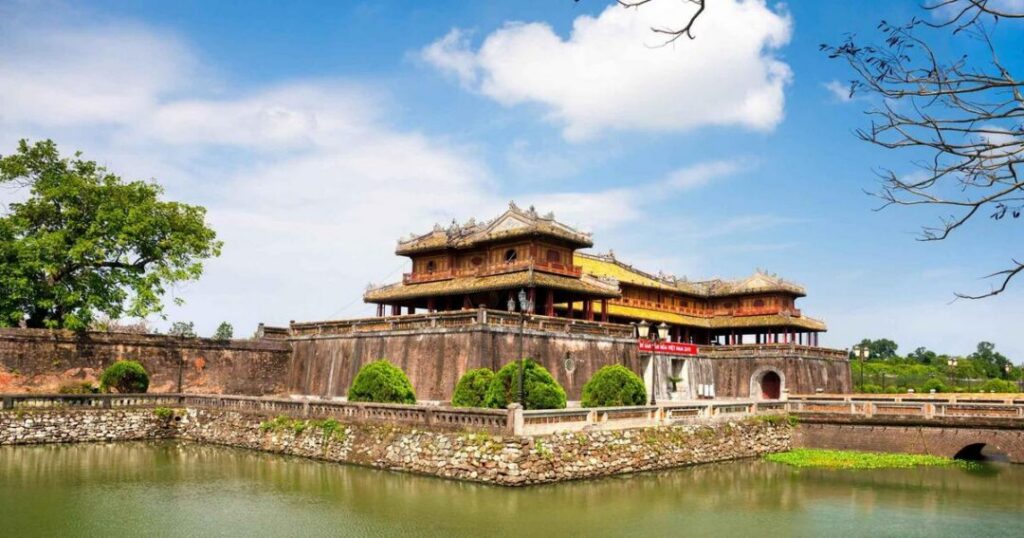
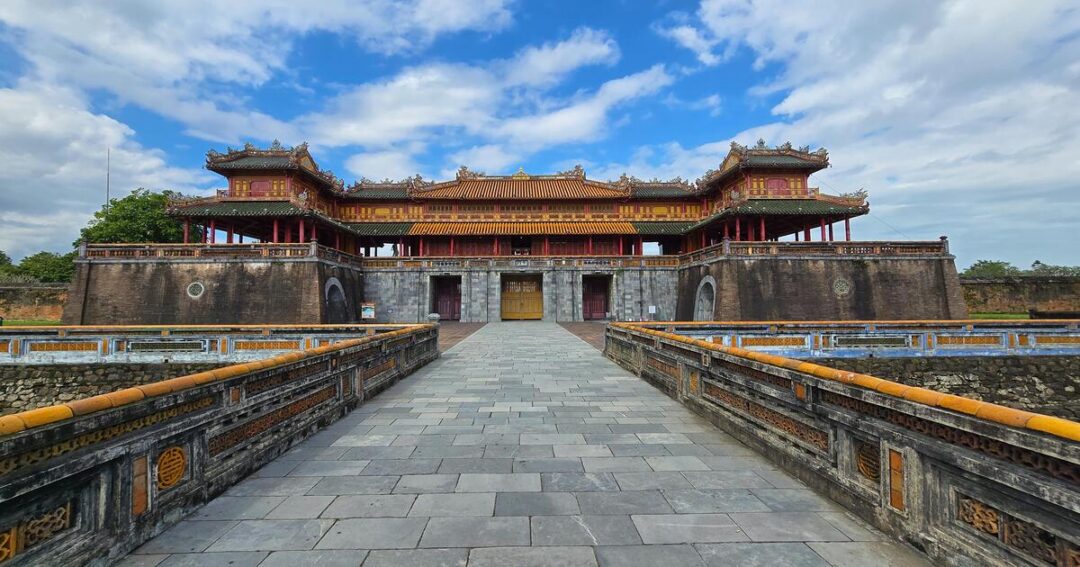
Emperor Gia Long began building the Citadel in 1804, and it was the political and cultural centre of the Nguyen dynasty until the monarchy ended in 1945. The complex follows three concentric rings: an outer wall, the imperial city in the middle and the palace at the centre. Visitors enter through Ngo Mon Gate, the main entrance used for royal processions and state ceremonies. Thai Hoa Palace was the site of coronations and court meetings, while the Forbidden Purple City was once open only to the royal family and senior officials. Much of it was severely damaged in the war and reconstruction is ongoing; Kien Trung Palace, for example, was restored from ruined foundations. Opening hours are given as roughly 7:00 or 8:00 AM to 5:30 PM depending on the source, so plan to arrive early. Dress modestly, especially in the Forbidden Purple City, and consider a guide or map, since there is a lot to cover.
2. Thien Mu Pagoda
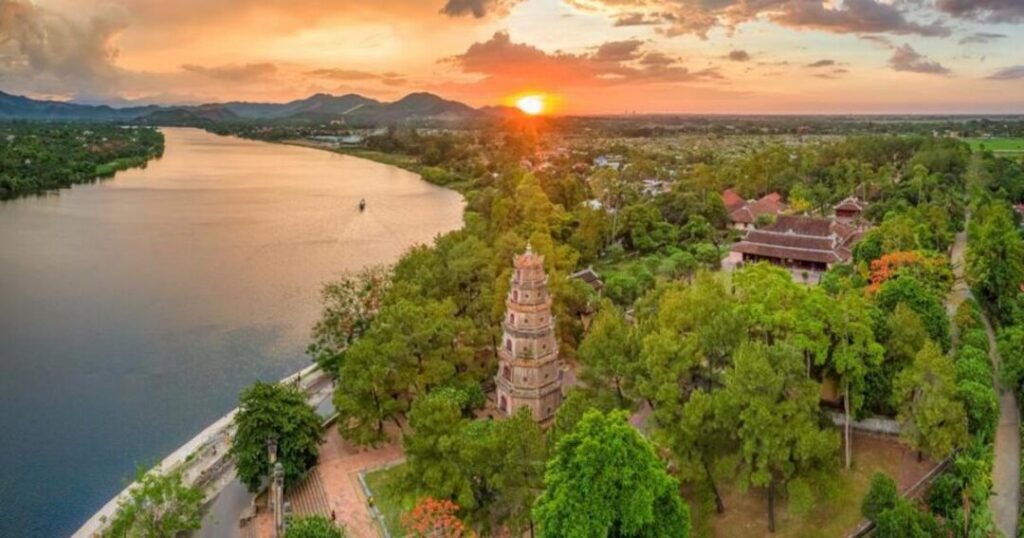
Founded in 1601 by Lord Nguyen Hoang, the first Nguyen ruler of southern Vietnam, after locals told him a legend about a celestial lady who foretold that a great leader would build a temple on the hill, Thien Mu stands on the northern bank of the Perfume River, about 4 to 5 km west of the city centre. Its seven-storey, octagonal Phuoc Duyen Tower, about 21 metres high, was built in 1844 under Emperor Thieu Tri. Near the rear of the grounds, a glass garage displays the blue Austin car that the monk Thich Quang Duc drove to Saigon before his self-immolation in 1963. You can reach it by dragon boat from the Toa Kham boat station near the Imperial City or in about eight minutes by car. Visit before 8:00 AM, when it is calmer, or in late afternoon, and dress modestly.
3. Tomb of Tu Duc
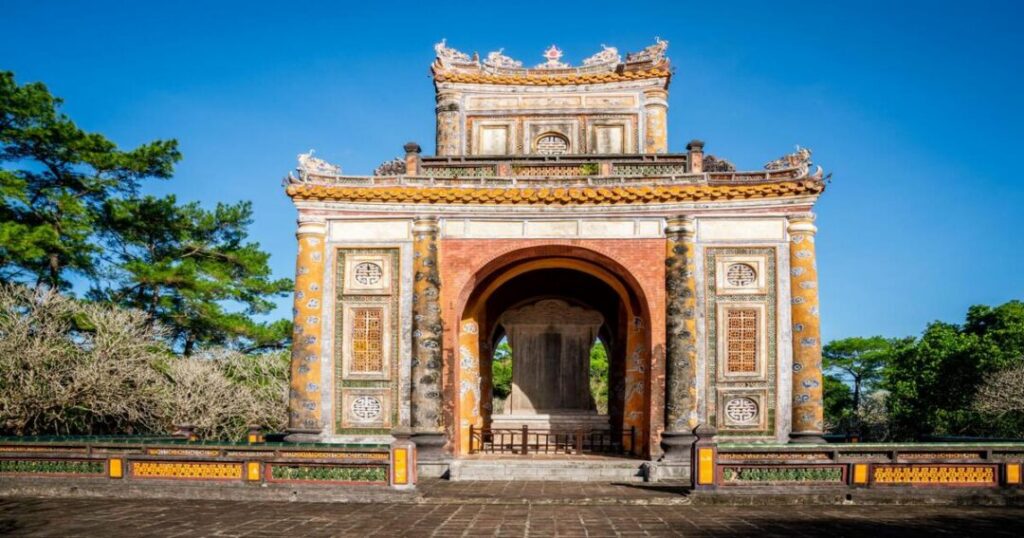
About 6 to 8 km southwest of the centre, the tomb of Emperor Tu Duc was built from 1864 to 1867. Tu Duc reigned from 1848 to 1883, the longest reign of any Nguyen monarch; the grounds include Luu Khiem Lake lined with pines and lotus, the open-sided Xung Khiem Pavilion where he is said to have composed poetry, and the Du Khiem dock where his boat landed. He had 104 wives and concubines but no son, so he wrote his own epitaph, and the stele carrying it is the largest of its type in Vietnam. His actual burial place is unknown. Allow around half a day.
4. Tomb of Minh Mang
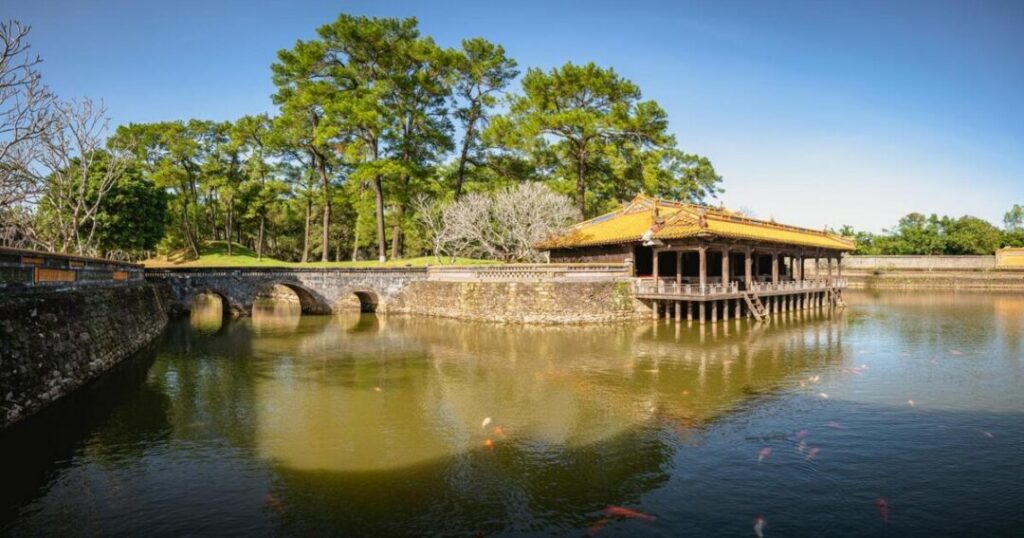
Minh Mang approved the site in 1840 and died in early 1841; his successor Thieu Tri finished the tomb in 1843. It is about 12 km southwest of the city centre, near the Perfume River, and follows a 700-metre central axis designed to resemble a human body at rest, with the burial site as the head, Sung An Palace as the heart and the lakes as the arms. The main entrance, Dai Hong Mon, keeps its central gate closed, so visitors use the side gates. A crescent-shaped lake, Tan Nguyet, is most scenic in early morning or late afternoon. The site is open from about 7:00 AM to 5:00 PM, and a taxi or Grab takes about 20 to 30 minutes.
5. Tomb of Khai Dinh
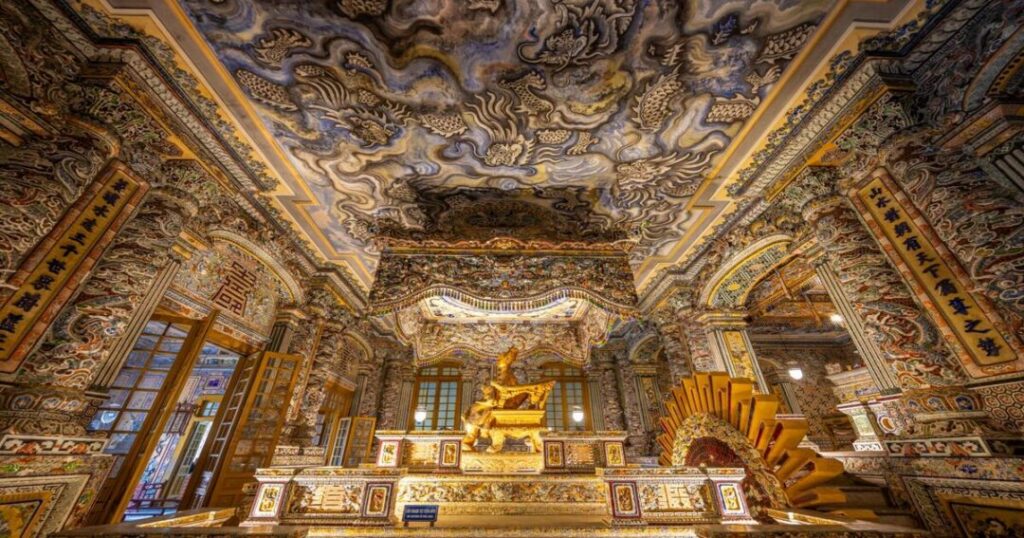
Khai Dinh’s tomb is much smaller than the other Nguyen tombs but more elaborately designed. Construction began on September 4, 1920 and took 11 years, finishing in 1931 under his son Bao Dai, six years after the emperor died in 1925. It blends Vietnamese architecture with Baroque, Gothic and Neoclassical elements, built largely of concrete, steel and iron and decorated with glass and porcelain. You climb 127 steps lined with stone dragon pillars, pass stone mandarins, elephants and horses in the honour courtyard, and reach Thien Dinh Palace, where the ceiling carries nine dragons painted by the royal painter Phan Van Tanh. It sits on Chau Chu mountain about 10 km southwest of the centre. Arrive early or late to avoid midday heat and tour groups.
Hue Vietnam Attractions Beyond the Imperial City
The best Hue Vietnam attractions outside the citadel walls are the river itself and the everyday life along it: the Perfume River, the bridges, the market and a handful of lesser-known historic sites.
Perfume River and Trang Tien Bridge
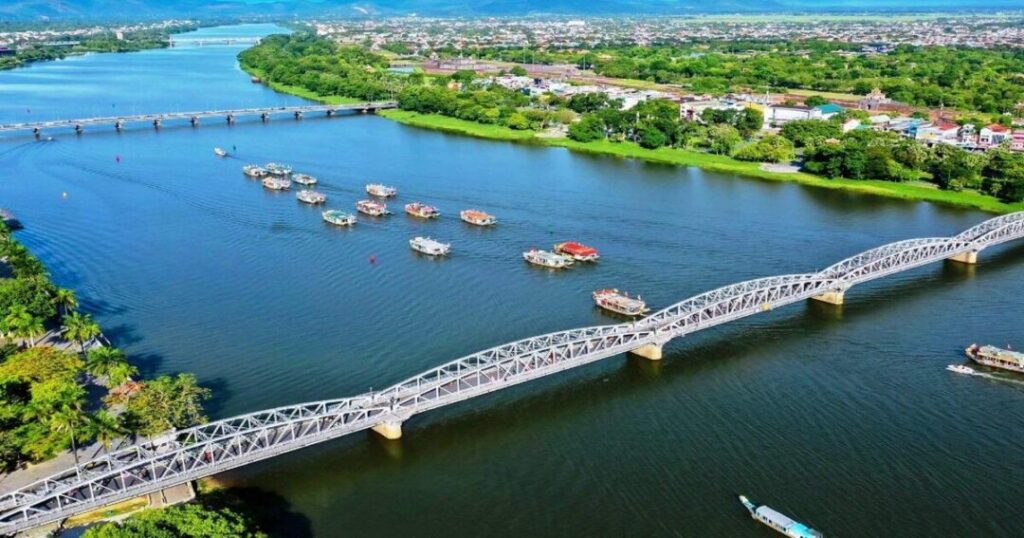
The Perfume River runs through the city centre, and the tombs of Minh Mang, Khai Dinh and Tu Duc and Thien Mu Pagoda all lie along it. Trang Tien Bridge spans the river and offers panoramic views over the water and the city. A boat trip is best in the afternoon for sunset or in the evening, when local musicians and singers perform Hue folk songs on board and dinner can be served.
Dong Ba Market
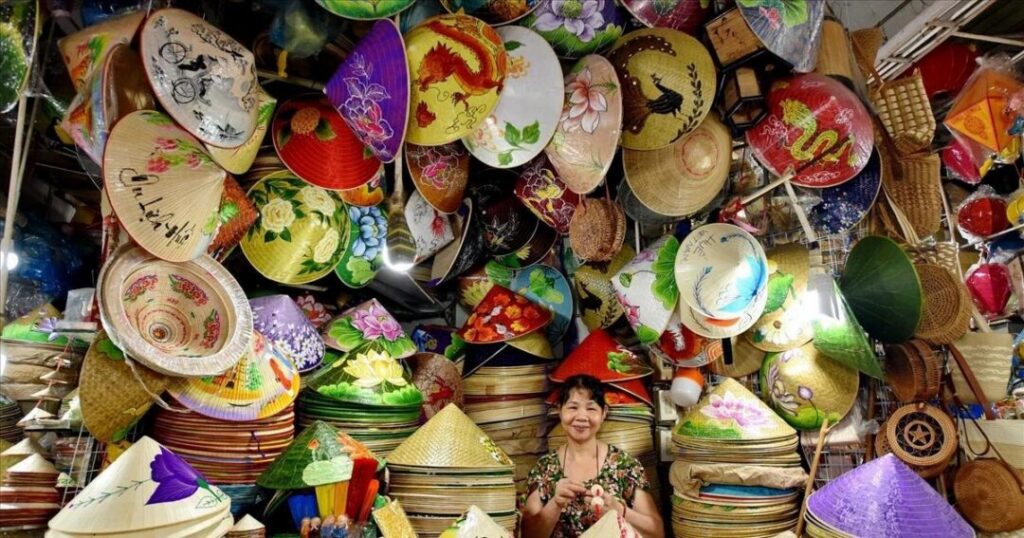
Dong Ba Market sells fresh produce, seafood, meats, spices and traditional handicrafts, and is busy from early morning until late afternoon.
Thanh Toan Tile-Roofed Bridge
About 7 km from the centre, a roughly 15-minute motorbike ride, this covered bridge sits in a village where you can row along canals, cycle country roads and try activities such as making Tet cakes or conical hats. At sunset, vendors set up a night market with street food and local products.
Hue Museum of Royal Antiquities
Housed in the former Long An Palace, the museum holds royal decrees, manuscripts and historical documents from the Nguyen dynasty.
Ho Quyen (Tiger Arena)
Built in 1830 after a tiger broke free and threatened the king during a ceremonial fight, the arena hosted elephant and tiger fights until the last one in 1904. Nearby is the Dien Voi Re temple, where battle elephants were worshipped.
Hue Vietnam Things to Do: Food, River Nights and Day Trips
A list of hue, vietnam things to do should start with the food, because the local cooking is a reason to visit in its own right.
Eat the Local Specialties
Bun bo Hue, the city’s beef noodle soup, is the dish most visitors seek out. Also recommended are nem lui, com hen, banh beo, banh khoai, banh ram it and the sweet dessert che Hue. Hue cuisine is often spicy, and the city has several vegetarian restaurants.
Spend an Evening on the River or in the Walking Streets
Besides a night cruise with folk music, several pedestrian and walking streets in the city centre host cultural events and performances. The Thanh Toan night market at sunset adds street food and local crafts.
Time It With a Festival
Hue is nicknamed the Festival City, and Hue Festival 2026 runs across the whole year, with nearly 80 activities. It was launched on January 1, 2026 at Ngo Mon Square. The programme follows the seasons: royal ritual reenactments in spring, Hue Festival Week from April to June, Mid-Autumn and Lantern Festival celebrations from July to September, and music shows and a New Year countdown in winter. Exact dates for the autumn and winter events were not found, so check the official schedule.
Day Trips: Hai Van Pass, Lang Co and Bach Ma
South of the city, the Hai Van Pass, about 21 km long, is known for its coastal views, especially at sunrise and sunset, and Lang Co is a beach roughly 8 to 10 km long with seafood restaurants. Bach Ma National Park lies about 40 km south of Hue. Da Nang is about 100 km from Hue, so these can be combined with a trip down the coast.
Also Read: 12 Must-See Places to Visit in Vietnam for Every Traveler
Things to See in Hue: A Sample Two-Day Plan
If your list of things to see in hue is long and your time is short, this two-day plan groups the sights by geography. It is our own suggestion, built from the distances above, and is not a published itinerary.
Day 1: The City and the River
Start at the Imperial City when it opens, spending the morning on the gates, palaces and the Forbidden Purple City. After lunch, walk to Dong Ba Market and the Hue Museum of Royal Antiquities, then take a dragon boat upstream to Thien Mu Pagoda in the late afternoon. Finish with a river evening or the walking streets, and a bowl of bun bo Hue.
Day 2: The Royal Tombs
Hire a taxi, scooter or a tour for the tomb circuit and start early. The tombs are 6 to 12 km from the centre: Tu Duc at 6 to 8 km, Khai Dinh at about 10 km and Minh Mang at about 12 km, so a sensible order is Tu Duc, Khai Dinh and then Minh Mang. Taxi rides to Tu Duc and Khai Dinh are reported at 15 to 25 minutes, and it is worth agreeing on a wait for the return, because finding a ride back can be hard. Add Thanh Toan Bridge in the evening for the sunset market.
Also Read: Hanoi Street Food: The Ultimate Guide to Vietnam’s Best Food Tour
Attractions in Hue and Hue Tourist Attractions: Quick Reference

For anyone scanning the attractions in Hue at a glance, this is the short version. The list of Hue tourist attractions below is ordered by distance from the city centre.
- Imperial City: In the city centre, open from about 7:00 or 8:00 AM to 5:30 PM.
- Thien Mu Pagoda: About 4 to 5 km west, by road or dragon boat.
- Thanh Toan Bridge: About 7 km, a quick ride.
- Tomb of Tu Duc: About 6 to 8 km southwest.
- Tomb of Khai Dinh: About 10 km southwest.
- Tomb of Minh Mang: About 12 km southwest.
- Bach Ma National Park: About 40 km south of Hue.
The Complex of Hue Monuments, inscribed by UNESCO in 1993, includes the Imperial City, the citadel, the Forbidden Purple City, and the tombs of the emperors Gia Long, Minh Mang, Thieu Tri, Tu Duc, Duc Duc, Dong Khanh and Khai Dinh, along with temples and pagodas.
Also Read: Places to Visit in Phu Quoc, Vietnam: Top Things to Do, Beaches & Islands
What is the Best Time to Visit Hue?
March and April are the sweet spot: the dry season runs from about March to August, and those two months are moderate enough for the Imperial City, the tombs and the pagodas. May to August is hotter, with highs often above 35°C. The rainy season, from about September to February, brings frequent showers, and rain is heaviest from October to December, when low-lying areas can flood; storms from the South China Sea can hit between September and November and disrupt flights, trains and roads. If you are reading this in October, the city is in one of its wettest months, so check the forecast, allow slack in your plan and pack rain gear. Sources disagree on exactly when the dry season starts.
How to Reach Hue?
Phu Bai International Airport is about 15 km south of the city, and a new terminal opened in 2023. It is served by domestic flights, including routes from Hanoi, Ho Chi Minh City and Da Nang (about 40 minutes). Hue railway station is in the city centre on the North-South railway, and trains from Da Nang take about 2 to 3 hours. By road, Da Nang is about 100 km away, 2 to 2.5 hours by car via the Hai Van Pass and Lang Co; the Hai Van Tunnel also links the two cities. From Hanoi, a flight takes about an hour; trains on the North-South line also stop in Hue, and open-tour buses make a long overnight trip.
Also Read: Things to Do in Ho Chi Minh City: Explore Vietnam’s Vibrant South
Conclusion: Give the Tombs a Full Morning
The best places to visit in Hue reward slow travel: the Imperial City over a morning, Thien Mu from the river, and the tombs on a second day when the light is soft. Go in March or April if you can, bring patience for the rain if you cannot, and finish each day with a bowl of bun bo Hue.
Planning a trip to Hue? Use the Explurger app to map your route and meet fellow travelers heading to the Imperial City and the tombs.
FAQs About places to visit in Hue
2. When is the best time to visit Hue?
March and April, when the weather is dry and moderate. May to August is hot, and the rainy season from September brings heavy rain, floods and typhoon risk, especially from October to December.
3. How many days do you need in Hue?
Two days covers the Imperial City, Thien Mu Pagoda and the three main tombs. Add a day for Thanh Toan Bridge, the museum and day trips to Lang Co and the Hai Van Pass.
4. How far are the royal tombs from Hue city?
The tomb of Tu Duc is about 6 to 8 km southwest of the centre, Khai Dinh about 10 km and Minh Mang about 12 km. Taxis take roughly 15 to 30 minutes.
5. How do I get from Da Nang to Hue?
About 100 km by road, 2 to 2.5 hours by car via the Hai Van Pass, or 2 to 3 hours by train. There are also flights of about 40 minutes to Phu Bai Airport.
6. What food should I try in Hue?
Bun bo Hue beef noodle soup, nem lui, com hen, banh beo, banh khoai, banh ram it and che Hue. The cuisine is often spicy, and vegetarian restaurants are available.