

904 Total Views
Hanoi street food isn’t a side activity you fit around sightseeing — in Hanoi, it basically is the sightseeing. The city’s Old Quarter is a maze of 36 streets, each one historically named for a single trade, and today that same density has turned into one of the most walkable, plastic-stool-and-sidewalk food scenes anywhere in Southeast Asia. Bowls of pho steam next to grills of bun cha, egg coffee gets whisked in doorways, and bia hoi corners fill up with locals the second the sun starts going down.
This guide runs through Hanoi’s essential dishes, the real story behind a few of them, honest advice on the vegetarian side of things, and the practical details – guided tours, timing, and how to get here – you’ll need whether you’re planning a single evening or three days of eating your way through the city. Save the dishes and areas that catch your eye to your Explurger bucket list as you go so you’ve got a running list of what you’ve tried and what’s still left.
Must-Try Hanoi Street Food
Pho: The Original Hanoi Street Food and Its North-South Divide
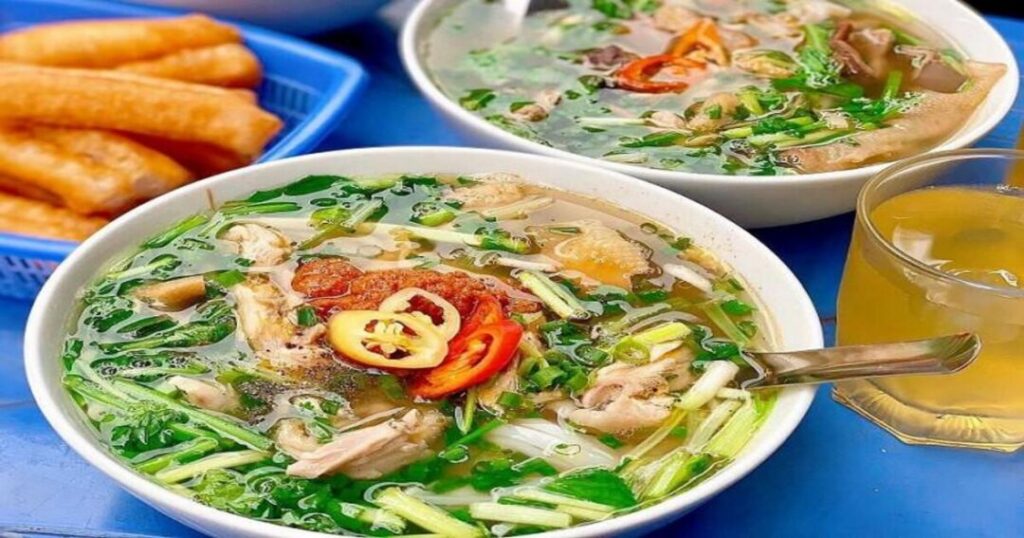
Start with pho, because it’s the dish most people associate with Vietnamese food generally, but its story is specifically Hanoi’s. Pho traces back to the late 19th and early 20th centuries in and around Hanoi and nearby Nam Dinh, emerging during the French colonial period when a new local appetite for beef combined with existing rice-noodle traditions to produce something new entirely. [STAT: Pho is widely traced to Hanoi and the neighboring Nam Dinh province in the late 1800s to early 1900s, during the French colonial period in Vietnam.]
What most visitors don’t realise is that pho split in two after 1954, when the country partitioned and over a million people from the north migrated south, carrying the dish with them. Southern cooks, working with a wider variety of fresh herbs and sugarcane, sweetened and brightened the broth, adding bean sprouts, extra herbs, and hoisin-style sauces. Hanoi never fully forgave the additions. Northern pho — the original — stays deliberately restrained: a clear, simple broth; wider noodles; and a purist’s insistence that the soup doesn’t need dressing up. Order it here and you’re tasting the dish before the split, not after.
Bun Cha: Hanoi’s Signature Dish for Any Street Food Tour
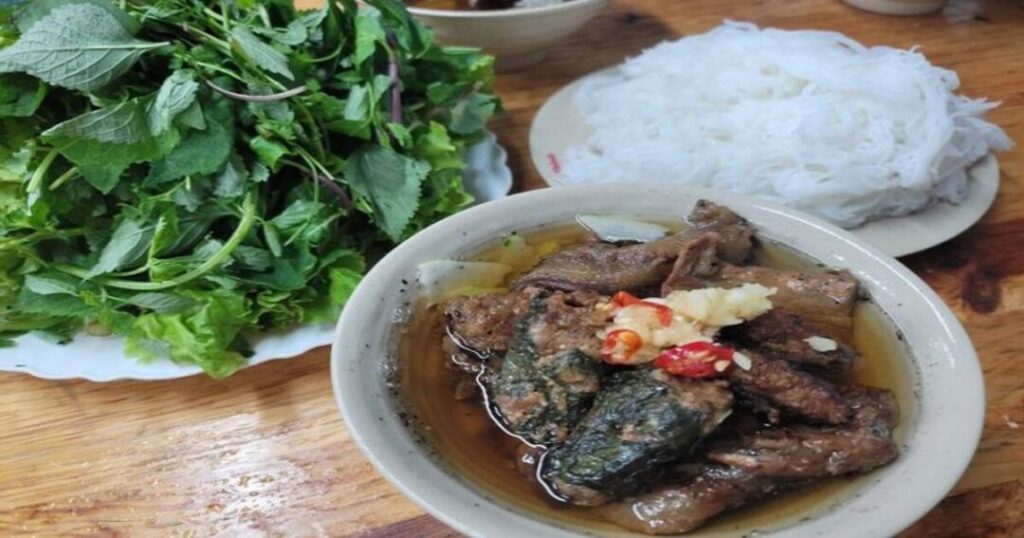
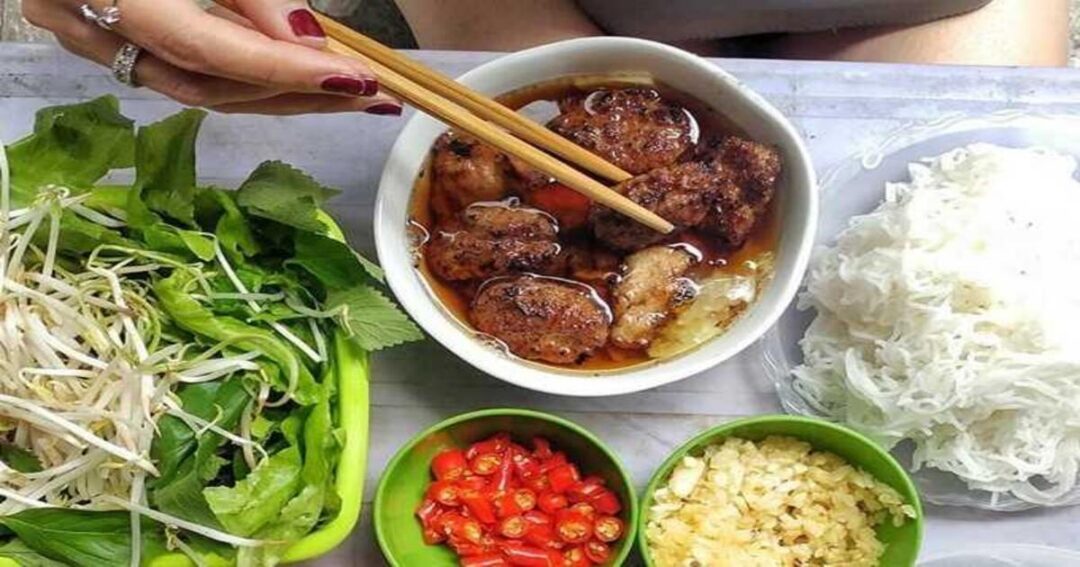
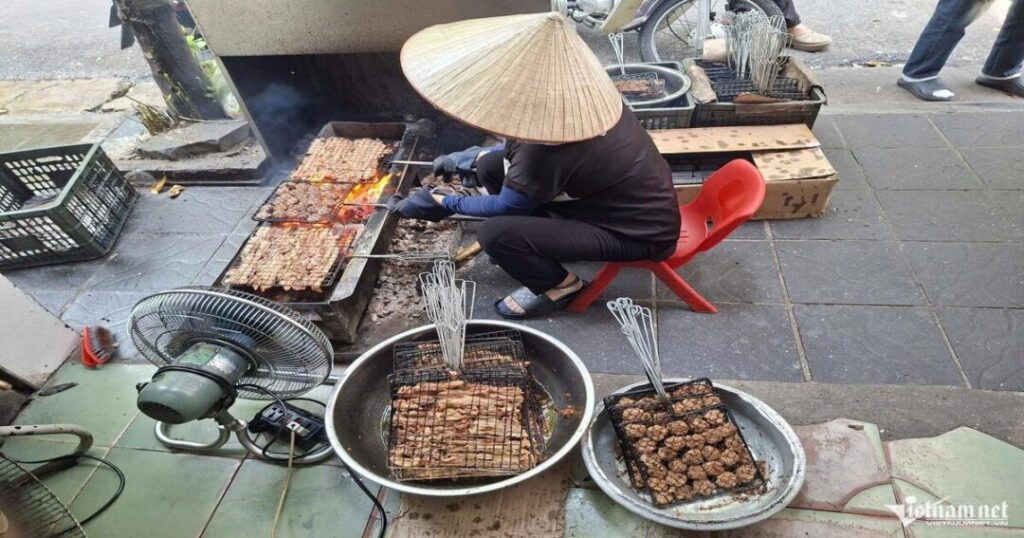
If pho is Hanoi’s most famous export, bun cha is arguably its most local secret — the dish regulars will tell you defines the city’s street food scene more than any other. Grilled, chopped pork patties and pork belly sit over a bowl of cold vermicelli, served alongside a bowl of sweet-sour-savoury dipping fish sauce (nuoc cham) loaded with pickled vegetables. You mix everything together yourself, bite by bite, alternating between the smoky char of the pork and the cool crunch of fresh herbs.
It’s a relatively modern classic by Hanoi standards — most food historians place its rise in popularity firmly in the 20th century — and it remains one of the dishes locals eat almost exclusively at lunchtime, from small charcoal-grill stalls rather than restaurants, which is part of why it’s such a fixture on any real street food tour Hanoi visitors put together.
Also read: Famous Vietnamese Food: The Complete Guide to Top Vietnamese Dishes & Cuisine
Cha Ca La Vong: The Dish That Renamed a Hanoi Street
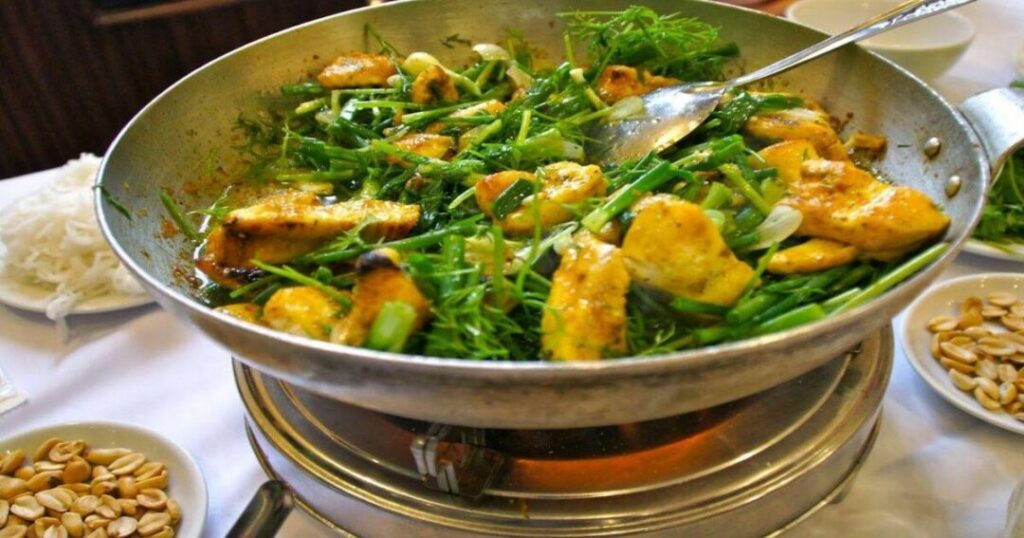
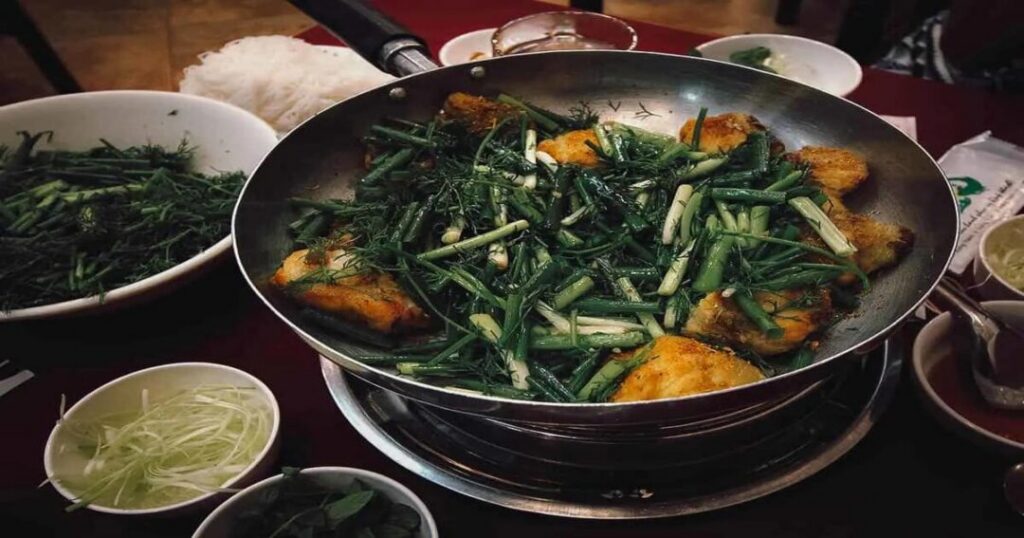
Few dishes anywhere have literally changed a city’s map, but chả cá did exactly that. In the 19th century, the Doan family, living in Hanoi’s Old Quarter, began grilling turmeric-marinated fish for their neighbours on what was then called Hang Son Street. The dish — hemibagrus catfish marinated in turmeric and galangal, grilled tableside over charcoal with dill and scallion, and eaten with vermicelli, peanuts, and pungent shrimp paste — became so identified with the family and the street that locals simply started calling it Cha Ca Street instead, a name the street still carries today. [STAT: Hang Son Street was renamed Cha Ca Street after the Doan family’s turmeric grilled fish dish became inseparable from the location, following the dish’s rise to prominence after 1871.]
Unlike most of the dishes on this list, cha ca la vong isn’t really street-stall food — it’s traditionally served in sit-down restaurants along the street that now bears its name, which makes it a slightly more structured stop than the rest of this guide, but a worthwhile one.
Egg Coffee (Ca Phe Trung): Hanoi’s Answer to a Wartime Milk Shortage

Egg coffee is Hanoi’s most distinctive drink, and the story behind it is a genuinely good one. In 1946, during a fresh milk shortage tied to the First Indochina War, a bartender named Nguyen Van Giang, working at Hanoi’s Metropole Hotel, needed a substitute for the milk that typically topped the era’s coffee drinks. He landed on egg yolk, whisking it with sugar and condensed milk into a thick, airy foam, then pouring strong Vietnamese coffee underneath it. The result — bitter coffee under a rich, custard-like cream — worked well enough that Giang left the hotel that same year to open his own small shop, and cà phê trứng has been a fixture of the city ever since. [STAT: Egg coffee was invented in Hanoi in 1946 by bartender Nguyen Van Giang, in response to a milk shortage during the First Indochina War.]
It’s worth ordering slowly — the “coffee” underneath is almost secondary to the thick, sweet foam sitting on top, and it’s meant to be sipped, not stirred together.
Banh Mi and Nem: Hanoi’s Best Street Food for Eating on the Go
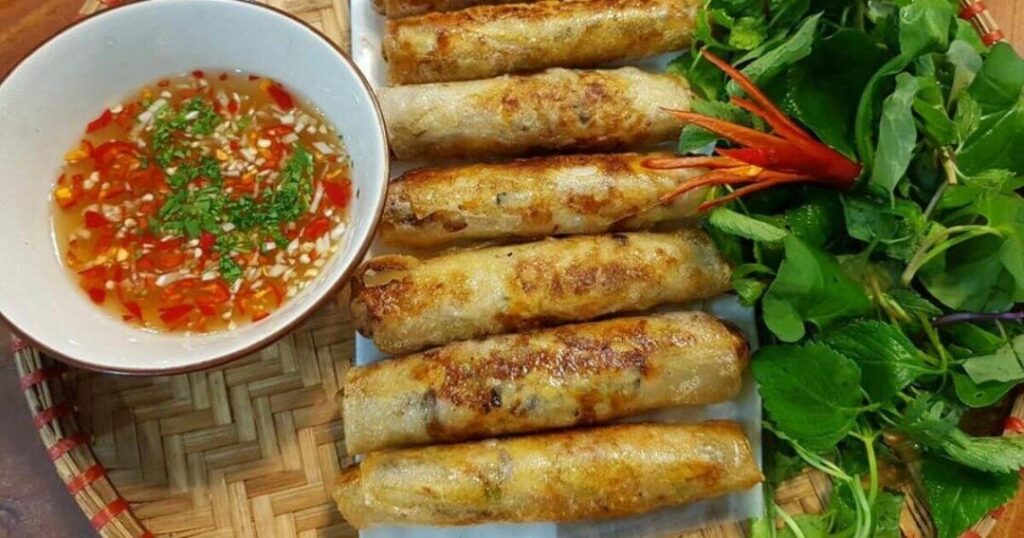
Not every stop needs a sit-down moment. Banh mi – Vietnam’s French-influenced baguette sandwich, filled with a mix of pâté, cold cuts, pickled vegetables, and fresh herbs – is Hanoi’s default grab-and-go breakfast or snack, sold from small carts and stalls throughout the Old Quarter. Nem (fried spring rolls) work the same way: crisp, pork-and-vegetable-filled rolls you can eat standing on a street corner between other stops, often served with the same style of dipping sauce used for bun cha.
Also read: Places to Visit in Vietnam: 12 Must-See Destinations for Every Traveler
Bia Hoi: Hanoi’s Cheap and Fresh Draft Beer Culture
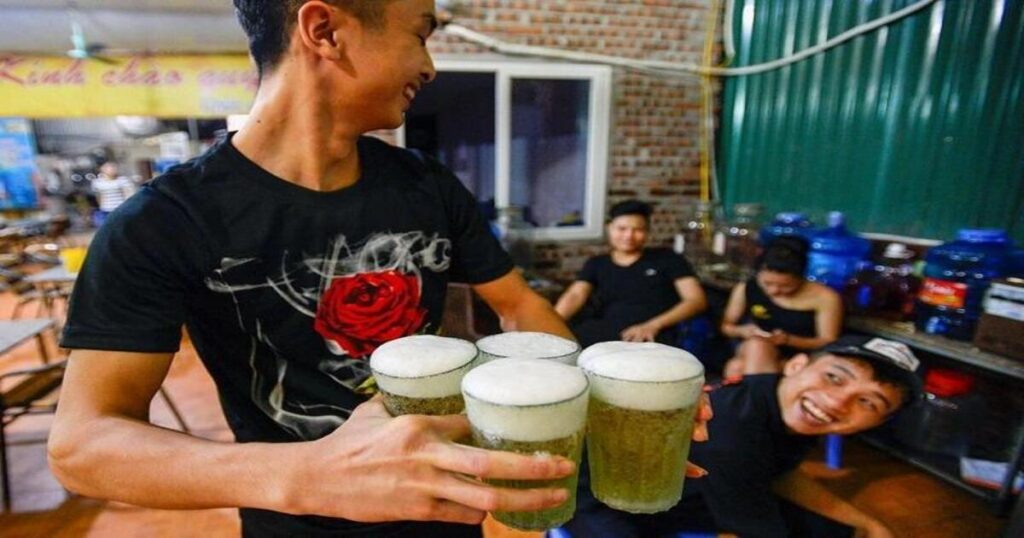
No walk through Hanoi’s food scene is complete without stopping at a bia hoi corner — small, low-stool sidewalk bars serving fresh draught beer brewed daily and consumed almost as quickly as it’s made. It’s intentionally light, cheap, and meant to be drunk fresh rather than aged, and it pairs naturally with light bar snacks like nem chua ran (fried fermented pork) or grilled meats picked up from a nearby stall. Bia hoi corners are as much a social ritual as a drink — locals gather on tiny plastic stools well into the evening, and joining them is one of the more authentic, unscripted parts of any trip through the city.
Vegetarian Food Tour Hanoi: What to Realistically Expect
It’s worth being upfront here: if you’re searching for a vegetarian food tour Hanoi experience built entirely around the city’s most iconic dishes, you’ll run into a real limitation. Pho, bun cha, and cha ca la vong are all meat or broth-based at their core, and adapting them into a “vegetarian version” often means losing what makes them distinctive in the first place.
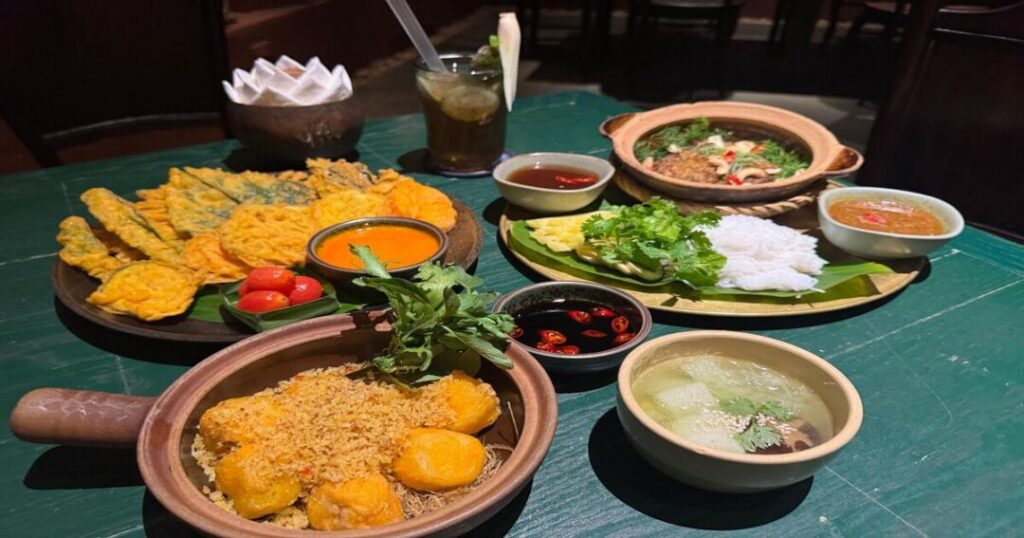
That said, Hanoi does have a genuine vegetarian tradition worth seeking out on its own terms, rooted in Buddhist “chay” cooking — tofu- and mushroom-based dishes, mock-meat preparations, and vegetable-forward meals that exist independently of the meat-based classics rather than as substitutes for them. Vegetarian banh mi and nem chay (vegetarian spring rolls) have also become genuinely easy to find across the Old Quarter as demand has grown. The honest takeaway: come for chay cuisine as its own thing, not as a workaround for the dishes built around pork and fish sauce.
Where to Find the Best Hanoi Street Food
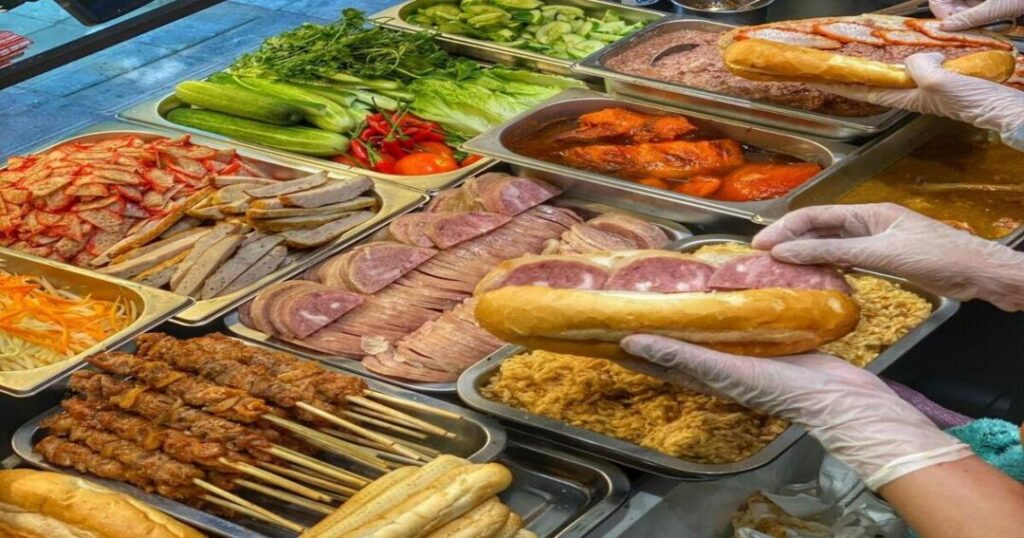
The Old Quarter is, without much competition, where you’ll find the best street food in Hanoi concentrated most densely. Its 36 streets were historically each dedicated to a single trade or craft, and that same tight, walkable layout now works in food-lovers’ favour — pho, banh mi, bun cha, egg coffee, and bia hoi corners all sit within a comfortable walking radius of each other, with fried snacks and late-night stalls filling in the gaps after dark.
If you’re building your own Hanoi walking food tour rather than joining a guided one, the Old Quarter is really the only area worth centring it on — it’s dense enough that you can genuinely graze your way through an afternoon or evening without needing transport between stops.
Hanoi Street Food: Guided Food Tours vs Going Solo
If you’d rather not plan the sequence yourself, joining a guided Hanoi food tour is a genuinely good option here, not just a tourist shortcut. Most guided street food tours run through 6–8 stops with around 10 tastings, often including a drink or two, and pricing typically scales down with group size – solo travellers might pay in the range of $35–40, while larger groups can bring the per-person cost down toward $20. Evening-focused tours often start around 5:30 PM specifically so you can watch vendors prepping dishes from scratch before eating them.
Going solo works just as well if you’d rather set your own pace — the Old Quarter’s density means you’re never more than a few minutes from the next stop, and street vendors don’t require reservations. Whichever route you choose, if you’re trying to figure out how much time to realistically block off for a proper Hanoi street food tour around everything else on your Vietnam itinerary, NIVU AI inside the Explurger app can help you weigh it against your other plans and suggest a pace that actually fits your trip.
Also read: Places to Visit in Vietnam: A Complete Travel Guide for Explorers
Best Time to Enjoy Hanoi Street Food
Hanoi’s most comfortable stretch for wandering between food stalls runs October through April, with October–November and March–early April offering the best combination of mild temperatures and walkable evenings. Avoid June through August if you can — Hanoi turns genuinely brutal during these months, with daily highs often exceeding 32–35°C and humidity that pushes the felt temperature well past 38°C, which makes standing at an open-air pho stall considerably less appealing.
Conclusion: Hanoi Street Food
Whether you follow a guided route or just wander the Old Quarter stall by stall, Hanoi street food rewards curiosity more than planning — the best bowl of pho you’ll have might be at a stall with no sign at all. Save the dishes and streets you want to try to your Explurger Bucket List before you land, and once you’ve eaten your way through them, log each stop as an Explurge-in — your automatic travelogue will keep the whole food trail mapped long after the trip ends. Let Explurger help you plan the eating so all you have to do is show up hungry.
FAQs About Hanoi Street Food
2. Is Hanoi pho different from pho elsewhere in Vietnam?
Yes, genuinely. Pho originated in and around Hanoi in the late 1800s to early 1900s, but after the 1954 partition, migration south led to a sweeter, more heavily garnished southern version with bean sprouts and hoisin-style sauces. Hanoi's northern pho stays deliberately simple — a clear, restrained broth with wider noodles, and locals still tend to view the southern additions as unnecessary.
3. What is a good vegetarian food tour Hanoi option?
Hanoi's iconic dishes – pho, bun cha, and cha ca la vong – are mostly meat- or broth-based, so a fully vegetarian version of the "classic" food tour has real limits. That said, Hanoi has a genuine Buddhist "chay" vegetarian tradition built around tofu, mushrooms, and mock-meat dishes, plus increasingly common vegetarian banh mi and nem chay (vegetable spring rolls). It's better approached as its own distinct food experience rather than a substitute tour of the meat-based classics.
4. What is the story behind Hanoi's egg coffee?
Egg coffee, or ca phe trung, was invented in 1946 by Nguyen Van Giang, a bartender at Hanoi's Metropole Hotel, during a milk shortage caused by the First Indochina War. He whipped egg yolks with sugar and condensed milk into a thick foam and poured it over strong coffee. The drink was popular enough that he left to open his own shop that same year, and it remains one of Hanoi's most distinctive specialities today.
5. How much does a guided street food tour in Hanoi cost?
Pricing typically scales with group size — solo travellers might pay around $35–40, while larger groups can bring per-person costs down toward $20. Most tours cover 6–8 stops and around 10 tastings, often including a drink or two, with some evening tours starting around 5:30 PM to let you watch dishes being prepared before eating them.
6. Where is the best area in Hanoi for street food?
The Old Quarter is the clear answer. Its 36 historically trade-specific streets create a dense, walkable food scene where pho, banh mi, bun cha, egg coffee, and bia hoi corners all sit within easy walking distance of one another, making it easy to graze through an afternoon or evening without needing transport between stops.
7. What is the best time of year for a Hanoi street food tour?
October through April offers the most comfortable weather, with October–November and March–early April as the sweet spot for mild, walkable conditions. June through August brings intense heat and humidity that makes standing at open-air food stalls considerably less enjoyable.
8. How do I get from Hanoi's airport into the Old Quarter?
Noi Bai International Airport is about 27 km from central Hanoi, roughly a 45-minute to one-hour drive depending on traffic. Express Bus 86 offers a fast, affordable option into the city centre, while private transfers and taxis provide convenient door-to-door service for around $17–27.