

114 Total Views
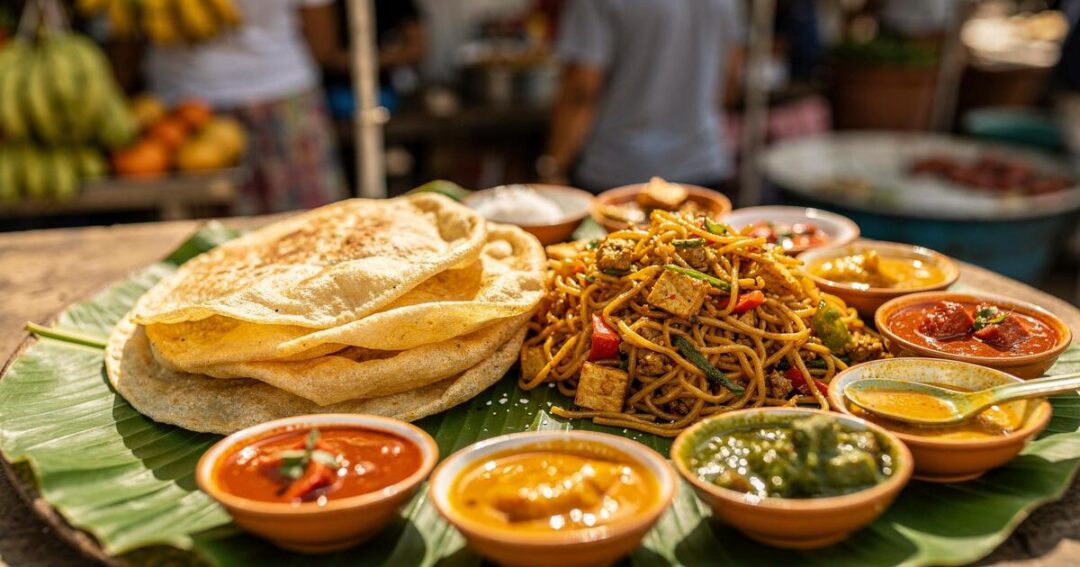
Mauritius is a small island with a big menu. About two-thirds of its 1.2 million people are of Indian descent, around 28 percent are Creole, and smaller Chinese and French communities add their own cooking. The result is that Mauritius food is a blend you will not find anywhere else: flatbreads stuffed with split peas, thyme-scented tomato sauces, fried noodles, and vinegar-and-mustard fish, usually sold for a few rupees by a roadside vendor. This guide covers five dishes to start with, the four traditions behind the cooking, how food ties into daily culture, Indian dishes, street snacks, and what it all costs. A timely warning on cost: food inflation rose to 6.2 percent in September 2026, so treat every price below as a guide, not a quote.
Best Mauritius Food to Try First
These five dishes give the clearest picture of the island’s cooking. Descriptions come from reference and travel sources, and origin stories are often disputed.
1. Dholl Puri
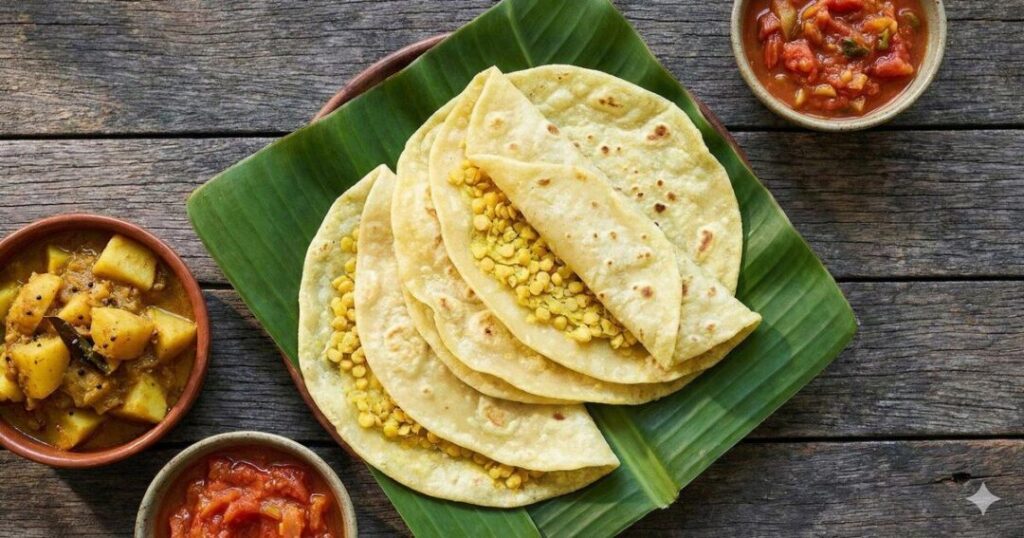
A thin, soft flatbread made from white flour, stuffed with ground yellow split peas and baked on a griddle, dholl puri is the dish most often called Mauritius’s national dish. That is an informal label with no official designation behind it. It has little flavor alone, so it is sold wrapped around a vegetable curry such as a bean curry, a tomato rougaille, chilli paste, or pickles. Indian indentured labourers, many of them Bhojpuri, are credited with creating it, though the origin stories differ: necessity on the voyage, an accidental mix-up, or one man’s adaptation of an older flatbread. The Mauritian version uses white flour and is baked on a griddle.
2. Rougaille
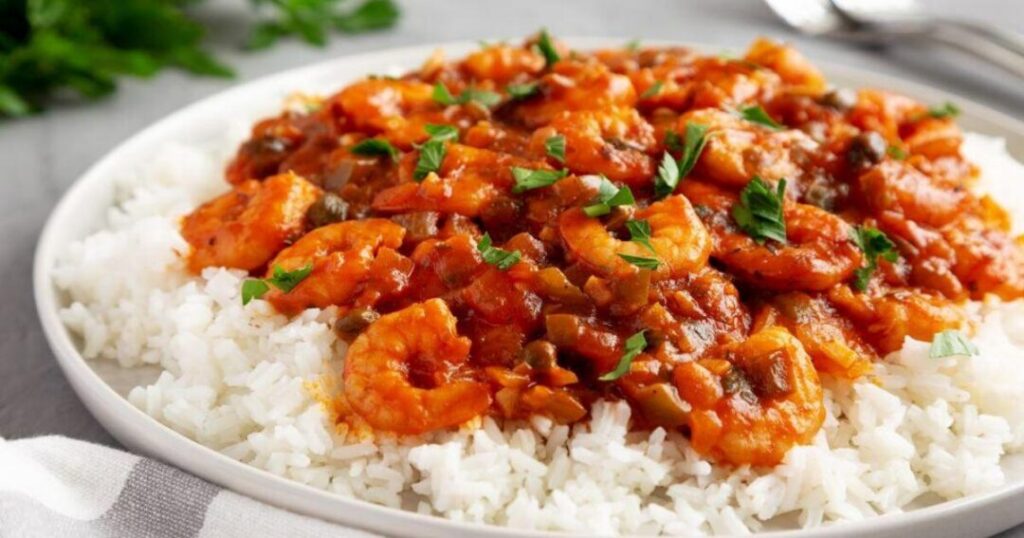
Rougaille is a tomato sauce cooked with onions, garlic, chillies, ginger, and spices, with thyme as a French touch. It is served with fish, meat, sausage, or vegetables, and it also turns up as a sauce on dholl puri. It is a good example of the Creole kitchen at its simplest.
Also Read: Malaysian Street Food: Must-Try Dishes and Where to Find Them
3. Fish Vindaye
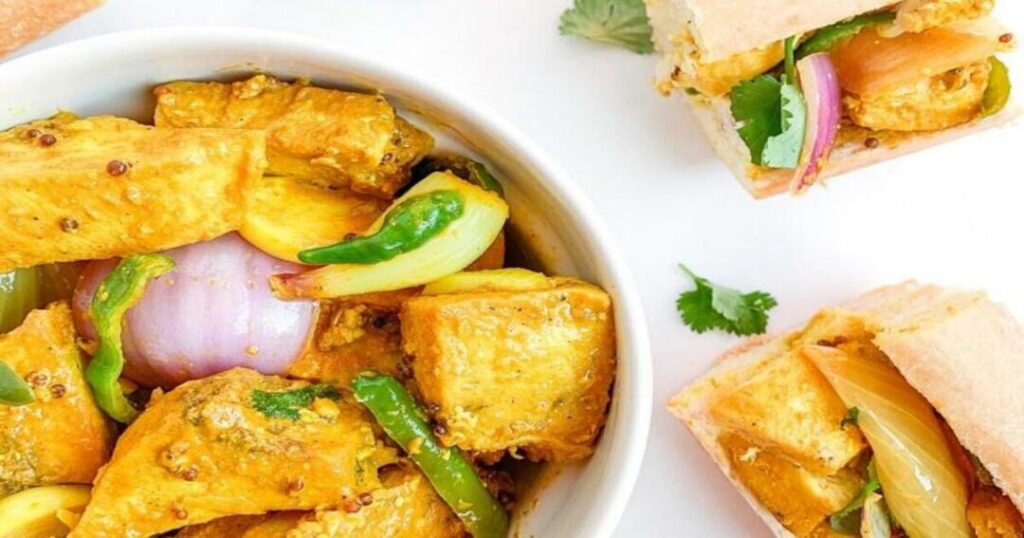
Vindaye is a vinegar-based cousin of vindaloo made with mustard seeds and turmeric. Fish is the usual choice, and recipes vary from kitchen to kitchen.
4. Briani
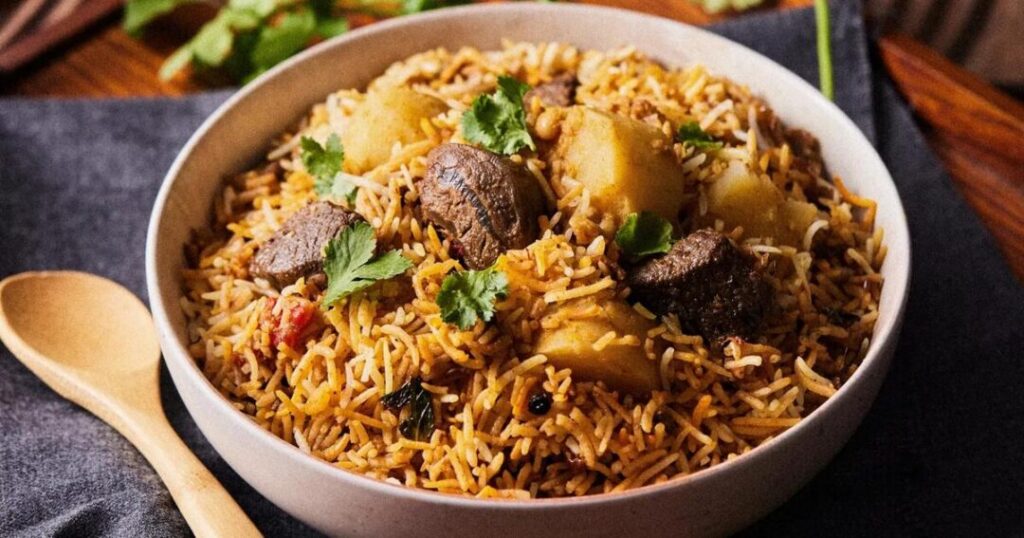
Briani is a spiced rice dish of Indo-Mauritian origin and a regular on local restaurant menus.
5. Mine Frite and Bol Renversé
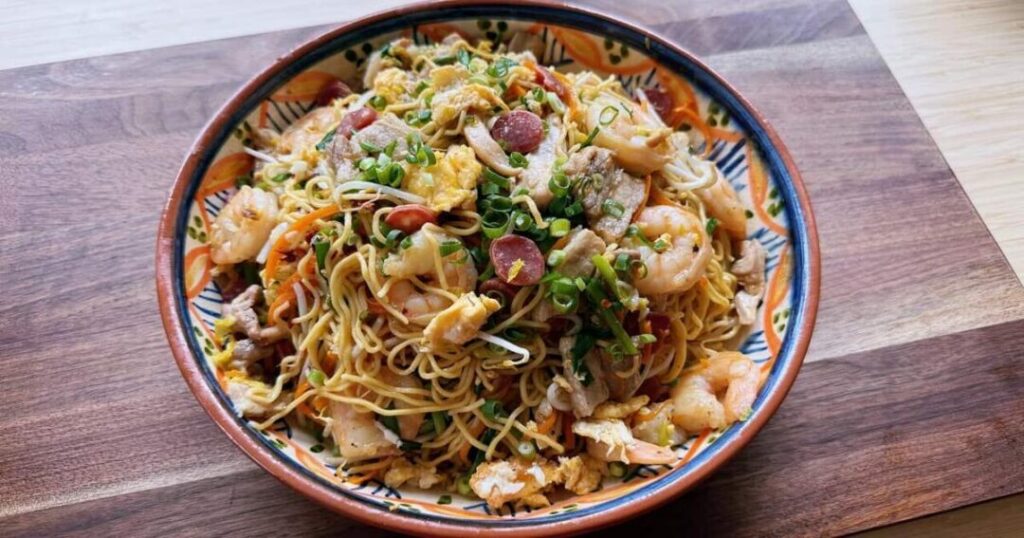
Fried noodles, called mine frite, are credited to Chinese migrants who arrived in the 19th century. A bol renversé is a Sino-Mauritian rice bowl with vegetables, meat, shrimp, or tofu, topped with a fried egg and served inverted. Boiled noodles, or mine bouilli, are the soupy version.
Also Read: Best Roman Food to Try in Rome
Mauritius Food: Four Culinary Traditions on One Plate
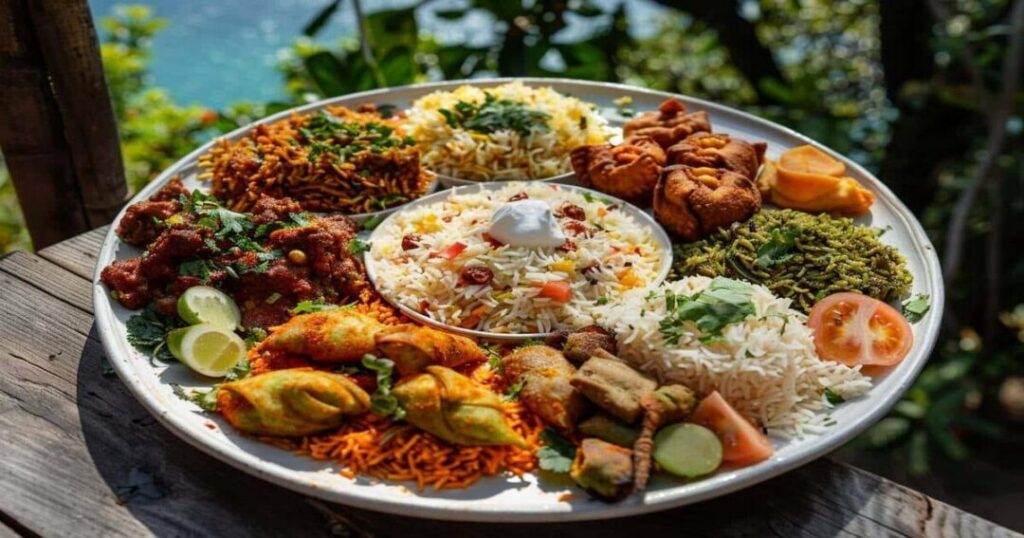
The cuisine in Mauritius has four main roots, and understanding them explains most of the menu.
1. Indian Roots
Indentured laborers from different parts of India brought northern and southern traditions, and Indo-Mauritian cooking draws on Bhojpuri cuisine. Wikipedia credits Indian communities with making flour and rice the island’s staples.
2. Creole Roots
Creole dishes typically feature seafood, pulses, beans, corn, and tapioca, and the tomato-based rougaille belongs here.
3. Chinese Roots
Cantonese, Hakka, and Fujianese migrants arrived in the 19th century and are largely credited with popularizing fried and steamed noodles and fried rice.
4. French and British Touches
French settlers left thyme-scented rougaille, daube, coq au vin, and baguettes, and a tradition of venison and wild boar. British rule from 1810 brought afternoon tea, and the Napolitaine biscuit is said to have originated on the island.
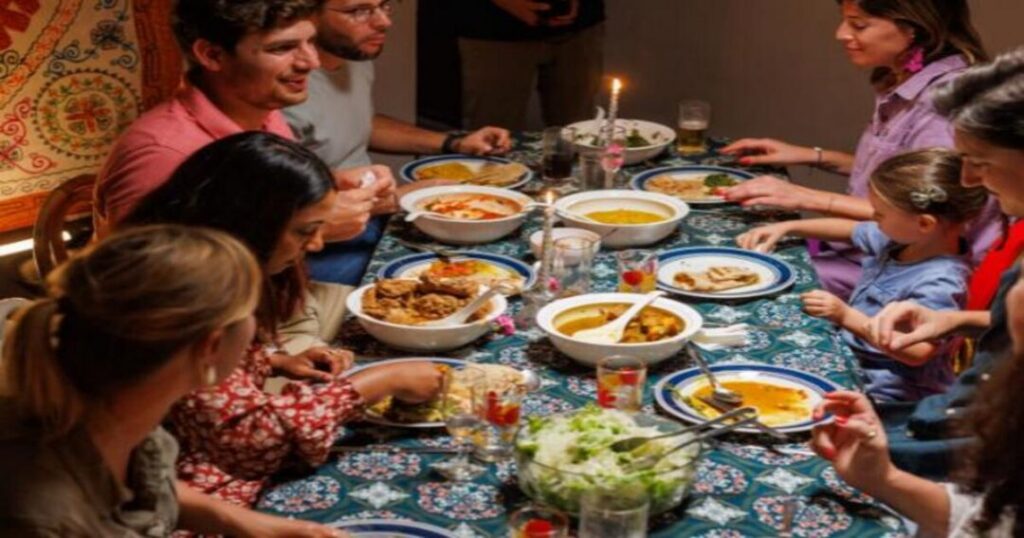
A defining feature of Mauritius culture is that food dishes cross community lines. Many dishes started in one community and are now eaten by all. Sept cari, a multi-dish thali, is served at Indian weddings, and Wikipedia adds that dinner at an Asian restaurant is often considered a treat for Mauritian families. The island’s population is 47.9 percent Hindu, 32.3 percent Christian, and 18.2 percent Muslim in the 2022 census, and about 90 percent speak Mauritian Creole at home, which helps explain why a stall might sell Indian, Creole, and Chinese food side by side.
Mauritius Food: Indian Dishes with Familiar Names and Local Twists
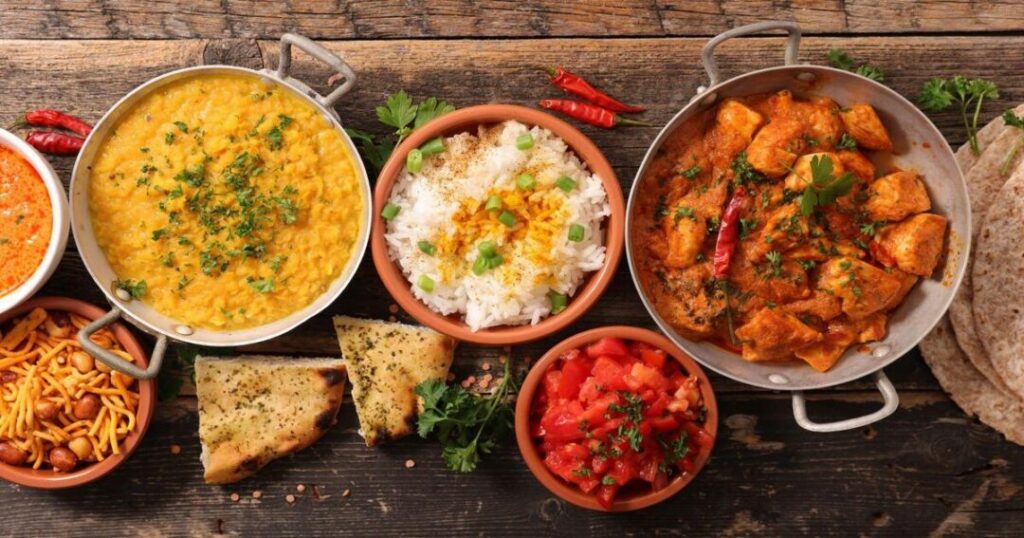
If you are looking for Indian food in Mauritius, expect familiar names with local twists. Dholl puri is not quite Indian puri, farata is a flaky flatbread usually sold in the morning, and samosas, briani, and sept cari are all widely available. Achards, pickled vegetables or fruits such as green mango or eggplant, come with many meals. A May 2026 travel blog names Grand Baie, Port Louis, Quatre Bornes, and Rose Hill as practical areas for vegetarian and Indian food.
Vegetarian travelers should be careful. The same blog says vegetarian food is widely available, but that “pure veg” is not assumed, since fish sauce, chicken stock, a shared griddle, and egg in noodles are common. Pure vegetarian restaurants are less common than in India, and Jain travelers need more planning. Say clearly that you want no meat, fish, or egg. This advice comes from one commercial blog and has internal inconsistencies, so confirm with each restaurant.
Also Read: Food Festivals Around the World: The Complete Guide
Mauritius Food: Famous Street Snacks and Sweets
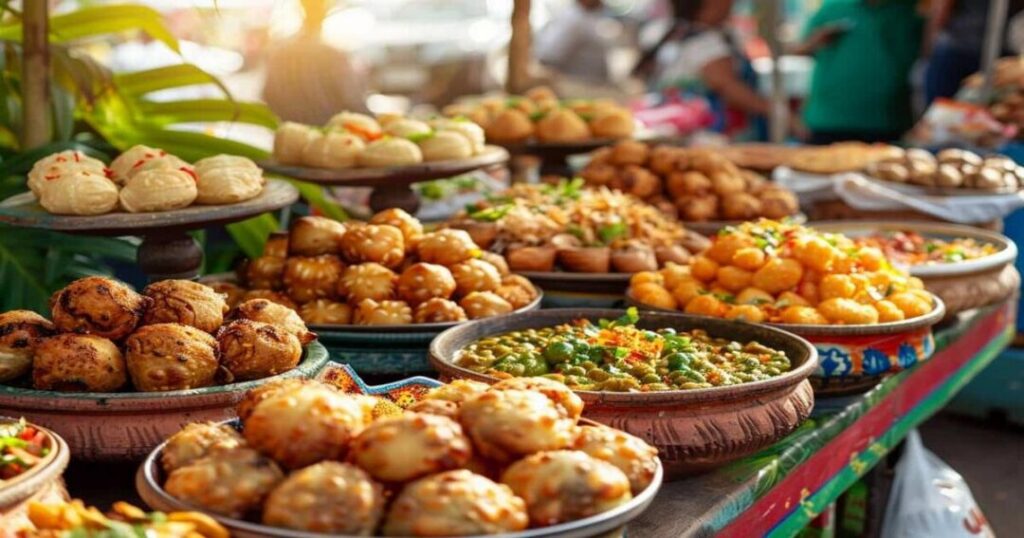
For Mauritius’ famous food that fits in your hand, start with these. Prices are in the next section.
- Gâteaux piments: Split-pea and chilli fritters.
- Samosas and merveilles: Fried snacks; merveilles are served with satini or mazavarou.
- Boulettes: Fish balls or meatballs in broth.
- Gato brinzel and gato patate: Eggplant and sweet potato cakes.
- Alouda: A cold milk drink with basil seeds and jelly.
- Napolitaine: A biscuit said to have originated in Mauritius.
Where to find them: the Central Market in Port Louis has a street-food section, the Caudan Waterfront has food stalls, and markets such as Flacq on Wednesdays, Rose Hill on Thursdays, and Grand Baie on Saturdays are also named. Other drinks include the national beer Phoenix, produced since the 1960s, local rums such as Green Island, and vanilla-flavored teas.
Mauritius Food Prices: Street Eats and Restaurant Meal Costs
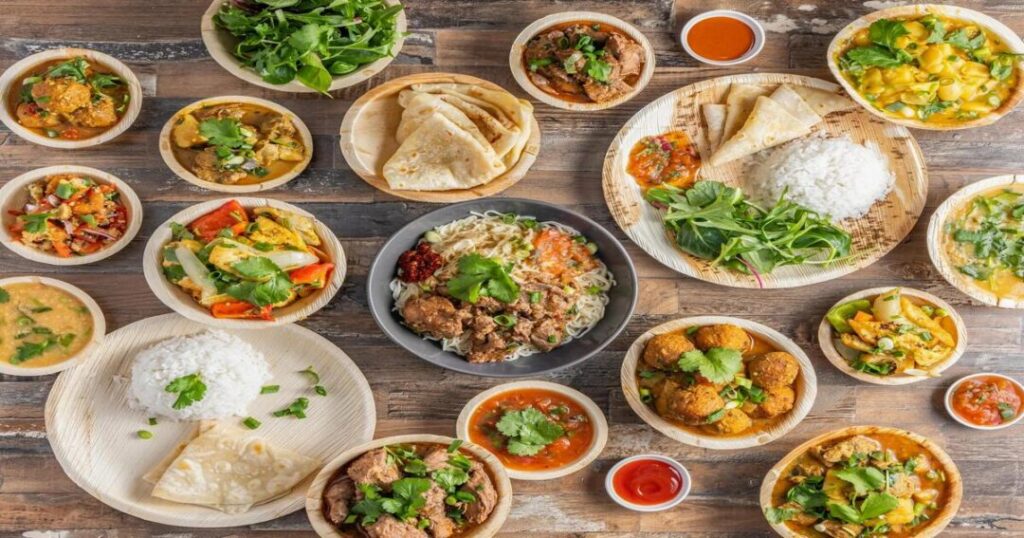
All the numbers on food in Mauritius prices come from travel sites, not an official price list, and they are in Mauritian rupees (Rs). They conflict, so ranges are given.
- Dholl Puri: About Rs 15 to 35 in 2026 sources. One lists Rs 15 to 30 per piece, another Rs 20 to 25 per pair, so check whether you are paying per piece or per pair.
- Farata or roti: About Rs 20 to 50.
- Gâteaux piments: About Rs 5 to 10 each.
- Samosas: About Rs 5 to 15 each.
- Boulettes and mine bouilli: About Rs 50 to 100 a bowl.
- Mine frite: About Rs 75 to 150 at local stalls.
- Alouda: About Rs 25 to 50 a glass.
Sit-down meals cost more. One September 2026 guide gives fast food at about Rs 230 to 450, local takeaways at Rs 200 to 500, casual mains at Rs 350 to 850, beachfront or tourist meals at Rs 500 to 1,200, and luxury resort mains at Rs 1,500 to 2,500 or more. A May 2026 blog gives simple local meals at about Rs 150 to 300 and tourist restaurants at Rs 400 to 800 a person.
Cost of Food in Mauritius: Daily Budgets
The cost of food in Mauritius depends on where you eat. These budgets are per person per day and come from the same travel sources, so they are planning benchmarks and not official averages.
- Budget: About Rs 400 to 700.
- Mixed street food and restaurants: About Rs 700 to 1,500.
- Restaurant-heavy: About Rs 1,500 to 3,000 or more.
- Luxury resort dining: Rs 3,000 or more.
For groceries, the September 2026 guide lists 1.5 liters of local water at Rs 21 to 27, a liter of milk at Rs 65 to 80, six eggs at about Rs 54, and 5 kg of rice at Rs 260 to 450, based on sample online listings. Inflation is the caveat: Trading Economics reports food inflation of 6.2 percent in September 2026, up from 3.9 percent in August, with headline inflation at 5.7 percent, the highest since February 2024. Older figures may therefore be low.
Also Read: Festivals in Mauritius: The Complete Guide to Cavadee, Divali, Chinese New Year & More
Cost of Mauritius Food: Ways to Spend Less
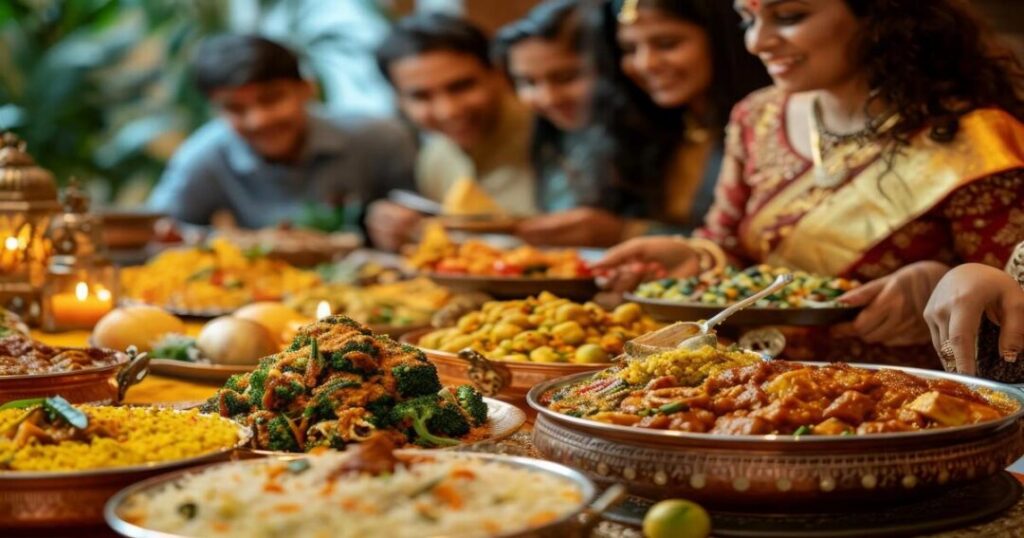
Anyone worried about the cost of food Mauritius visitors face can keep it down with these habits.
- Eat where locals eat: Roadside stalls and market food courts cost far less than beachfront restaurants.
- Treat street food as a meal: Dholl puri, farata, and snacks can cover a meal for very little.
- Buy water in the supermarket: A 1.5-liter bottle is much cheaper than small kiosk bottles. One guide says tap water is not really problematic but suggests bottled water at first, so check a travel-health source.
- Carry small notes: One guide advises carrying cash in small notes for stalls and markets.
- Choose busy stalls: A long queue usually means fresh food and fast turnover.
Tipping of 10 percent is described as usual in hotels and restaurants, but that comes from a page last updated in 2019. Confirm locally.
Conclusion: Mauritius Food
The best Mauritius food is cheap, shared across communities, and easy to find: begin with dholl puri, add rougaille, vindaye, and noodles, and budget for rising prices.
Planning an island trip? Open the Explurger app to meet travelers who want to eat their way across Mauritius.
FAQs About Mauritius Food
2. What is Mauritian food like?
It blends Indian, Creole, Chinese, and French cooking: flatbreads with split peas, tomato-and-thyme rougaille, vinegar-and-mustard fish, fried noodles, and rice dishes. Street food is cheap and widely available.
3. How much does food cost in Mauritius?
Street snacks run roughly Rs 5 to 150, and local meals Rs 150 to 500. Tourist restaurants cost Rs 400 to 1,200, and resorts Rs 1,500 or more. Daily budgets range from about Rs 400 to 700 up to Rs 3,000 or more, and food inflation rose to 6.2 percent in September 2026.
4. Is Mauritian street food safe to eat?
Travel sources advise choosing busy stalls with fast turnover and eating fried snacks while they are fresh. No official safety data was found, so check a travel-health source such as a national travel clinic before you go, especially if you have a sensitive stomach.
5. Is Indian food common in Mauritius?
Yes. About two-thirds of Mauritians are of Indian descent, and Indo-Mauritian dishes such as dholl puri, farata, briani, and sept cari are everywhere. Indian restaurants also operate in Grand Baie, Port Louis, Quatre Bornes, and Rose Hill, according to a May 2026 travel blog.
6. Is Mauritius good for vegetarians?
Vegetarian food is widely available, including dholl puri, gâteaux piments, and sept cari. Fish sauce, chicken stock, and egg in noodles are common, so say clearly that you want no meat, fish, or egg. Jain travelers need extra planning and should call ahead.