
540 Total Views
You’ve been scrolling through dreamy travel photos for weeks. Turquoise lagoons, powder-white sand, endless sunshine. Both Seychelles vs Maldives make it to every “bucket list” article ever written — and for good reason. But here’s the problem: they offer very different experiences, at very different price points, for very different kinds of travellers.
Book the wrong one and you might find yourself craving hiking trails when all you have is a sandbank, or hunting for a budget guesthouse on an island where the cheapest bed costs ₹20,000 a night.
This guide cuts through the confusion. We compare both destinations head-to-head — beaches, experiences, costs, romance, and more — so you can walk away with a clear answer on which one is right for you.
Seychelles vs Maldives — A Quick Overview
Both destinations sit in the Indian Ocean, both are tropical, and both are world-class. But their characters are distinctly different.
| Feature | Seychelles | Maldives |
| Location | East Africa, Indian Ocean | South Asia, Indian Ocean |
| Total Islands | 115 islands | ~1,200 islands (26 atolls) |
| Best Known For | Granite beaches, wildlife, hiking | Overwater bungalows, coral reefs, luxury |
| Ideal For | Adventure + romance | Pure luxury + diving |
| Entry For Indians | Visa on arrival | Visa on arrival |
| Main Airport | Mahé (Seychelles International) | Malé (Velana International) |
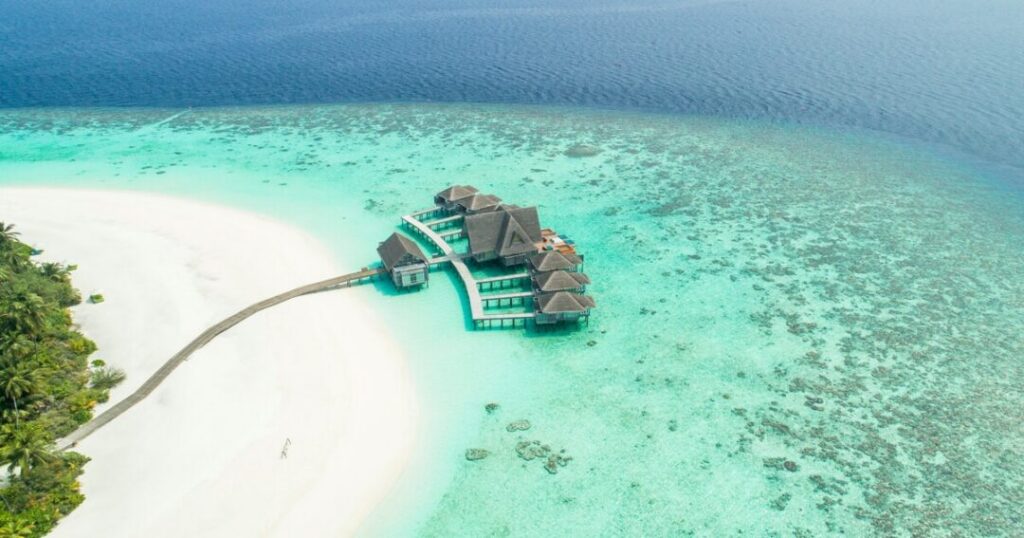
The Maldives is a network of low-lying coral atolls — almost entirely flat, and much of it barely above sea level. Seychelles, by contrast, has dramatic granite mountains, lush rainforests, and varied terrain across its largest islands.
Seychelles vs Maldives Beaches — Which Shores Win?
Both destinations offer some of the finest beaches on Earth. But their beach experiences feel completely different.
Seychelles Beaches
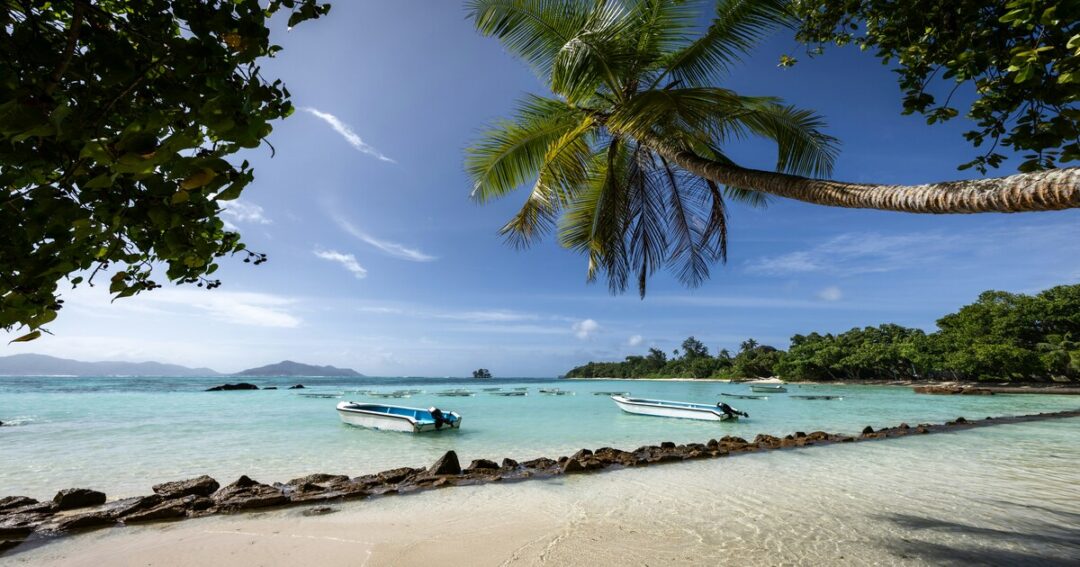
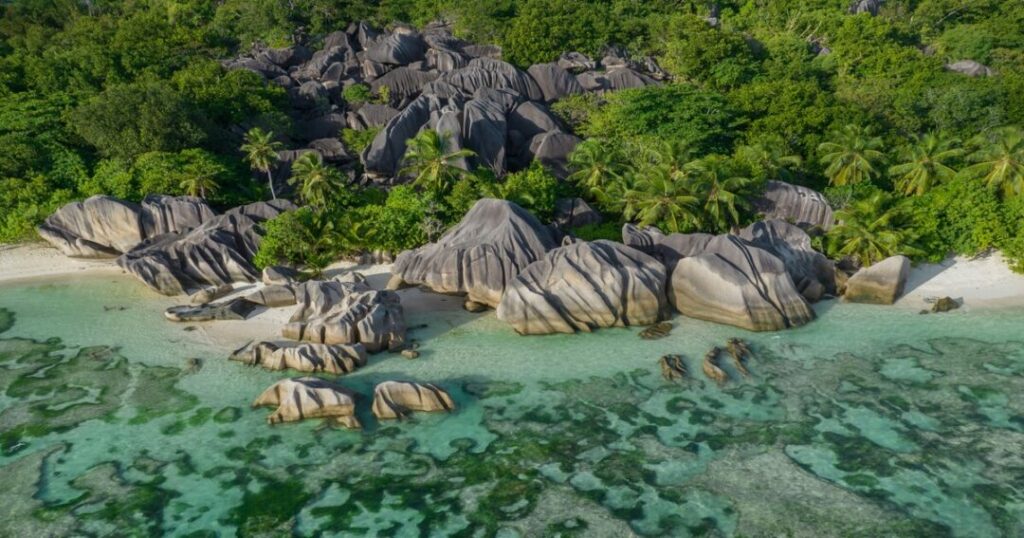
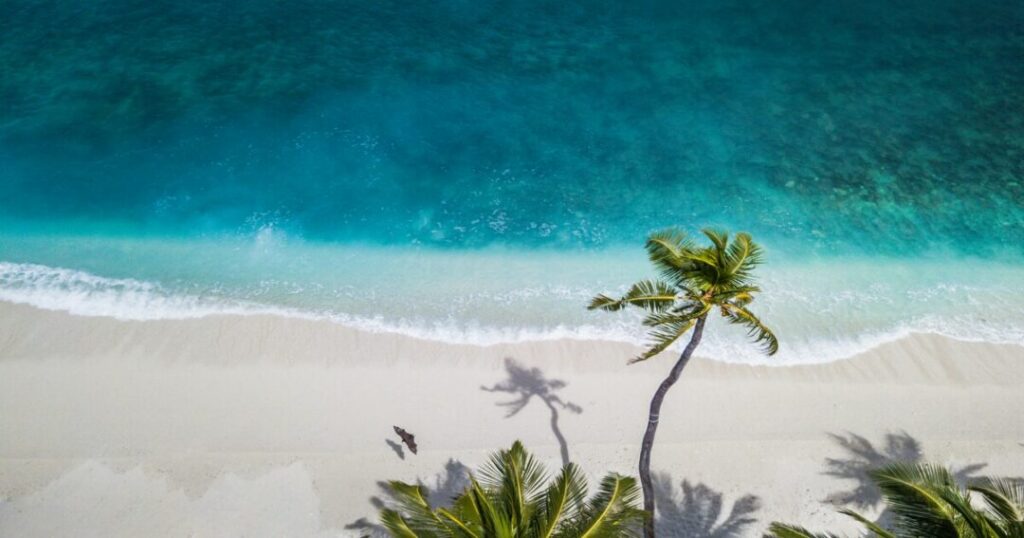
Seychelles is famous for its granite-boulder beaches — a geological rarity found almost nowhere else in the world. The pink-tinged sand, framed by massive ancient boulders and lush palm canopy, creates a landscape that looks almost surreal.
Top beaches to visit:
- Anse Lazio (Praslin) — frequently listed among the world’s best beaches; calm, clear, and sheltered
- Anse Source d’Argent (La Digue) — the most photographed beach in the world, with signature pink granite formations
- Beau Vallon (Mahé) — longest beach on the main island, ideal for watersports and sunset walks
Best time to visit Seychelles: April–May and October–November (shoulder months between trade winds) for the calmest seas and best visibility. December–March brings the northwest monsoon; June–September, the southeast trade winds.
How to reach Seychelles:
- Nearest international airport: Seychelles International Airport, Mahé — flights from Delhi (via Dubai or Nairobi) approx. 9–12 hours total travel time
- Inter-island travel: Domestic flights (15–30 mins) or ferries connect Mahé to Praslin and La Digue
- Road access: Taxis and car rentals available on main islands; La Digue is largely car-free (bicycles are the norm)
Maldives Beaches
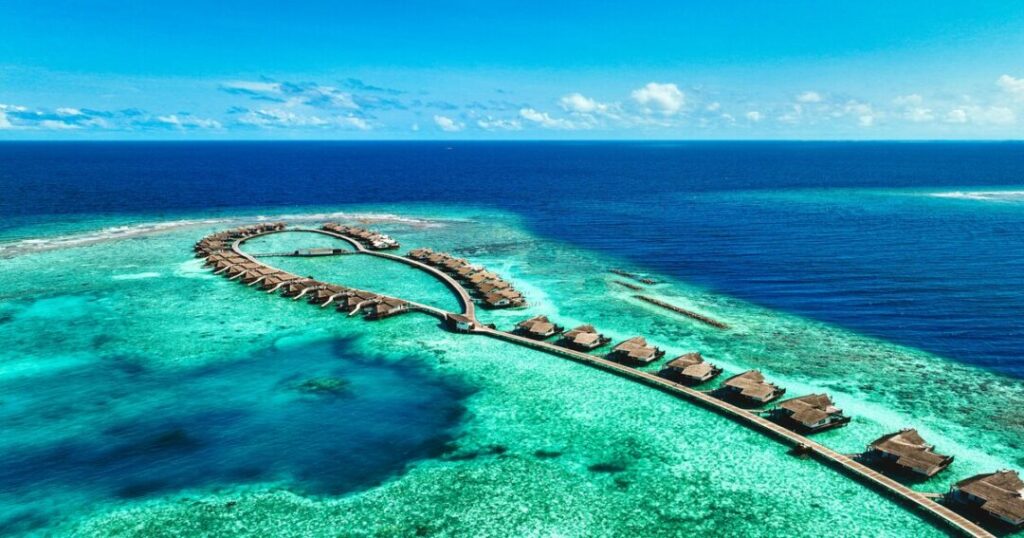
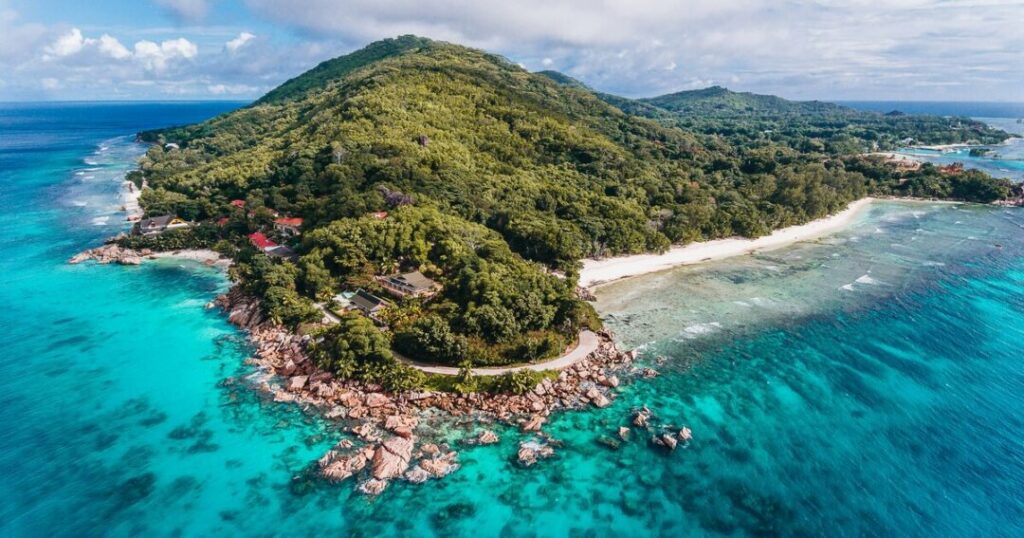
Maldives beaches are defined by their otherworldly stillness. The water is so shallow and clear that you can see the sandy floor 3–4 metres down. The beaches wrap around tiny, flat coral islands — many no larger than a cricket pitch — giving every resort its own private strip of sand.
What makes them special:
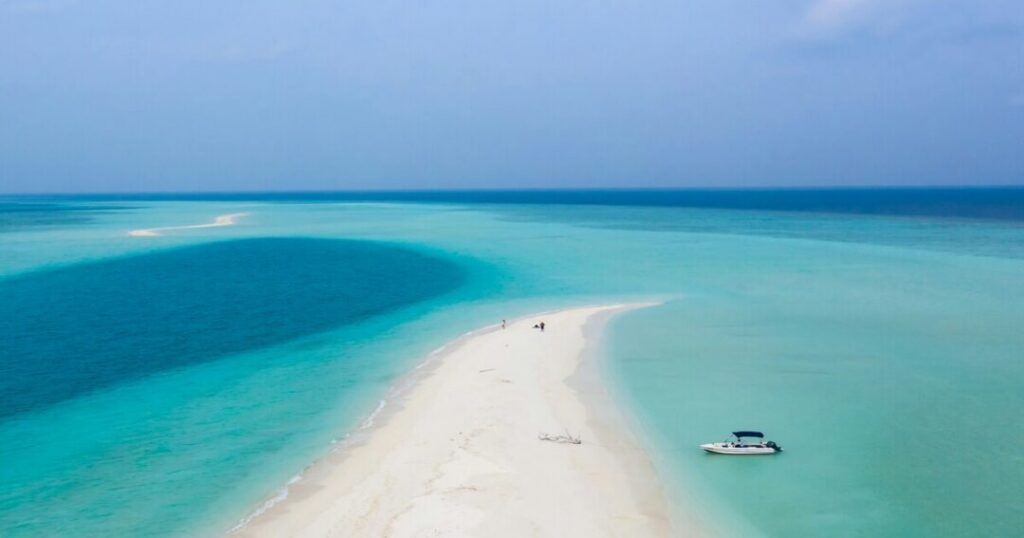
- Sandbanks (sandbars): Temporary strips of white sand that emerge from the ocean — perfect for a private picnic with no other soul in sight
- House reef beaches: Many resorts sit directly over living coral reefs, making snorkeling as simple as walking in from the beach
- Overwater bungalows: The iconic Maldives experience — glass-floor villas suspended over turquoise lagoons
Best time to visit the Maldives: November–April (dry season) for the best weather and underwater visibility. May–October can bring rain, but rates drop significantly and the diving remains excellent on the eastern atolls.
How to reach the Maldives:
- Nearest international airport: Velana International Airport, Malé — direct flights from Delhi, Mumbai, and Bengaluru (approx. 4–5 hours)
- Resort transfers: Speedboat (20–90 mins) or seaplane (15–45 mins) depending on resort location — seaplanes are only operational in daylight, so late arrivals connect via speedboat or a night on Malé
- Budget option: Stay on local islands (Maafushi, Dhigurah) and skip the resort transfer cost entirely
Verdict on beaches: Maldives for lagoon-style perfection and overwater experiences; Seychelles for dramatic, varied, and photogenic coastlines with a sense of wild nature.
Seychelles vs Maldives for Honeymoon — Romance Compared
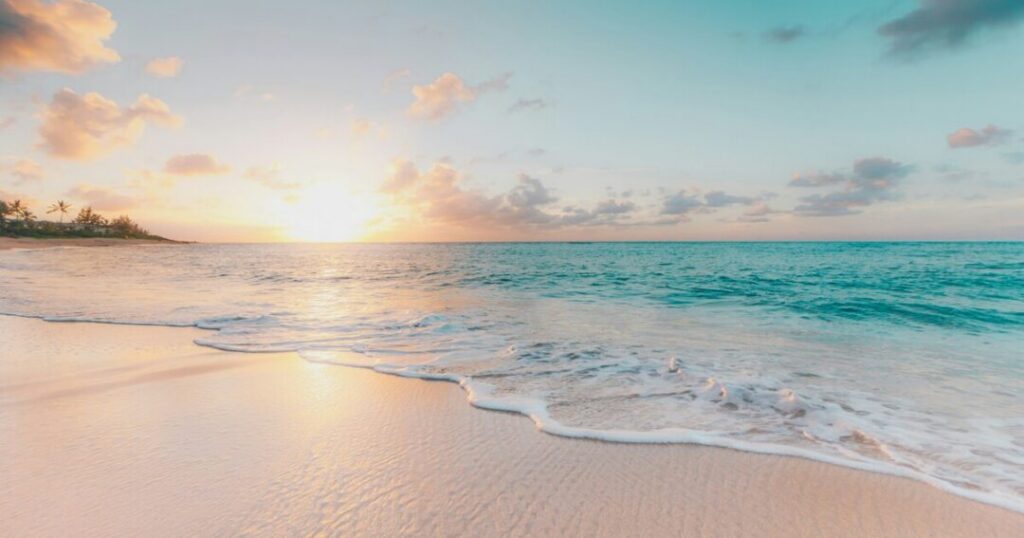
Both destinations are routinely ranked among the world’s top honeymoon spots. The difference lies in the kind of romance they offer.
Seychelles Honeymoon Vibe
Seychelles feels intimate and alive. You’re not just staying on an island — you’re inside a living, breathing tropical ecosystem. Expect:
- Hiking hand-in-hand through Vallée de Mai (a UNESCO World Heritage Site and habitat of the rare Coco de Mer palm)
- Exploring secluded coves accessible only by boat
- Spotting giant Aldabra tortoises and rare tropical birds
- Staying in hillside villas or beachfront chalets on Praslin or La Digue
The experience has a soft adventure edge — ideal for couples who want beauty and exploration, not just sun-lounger days.
Maldives Honeymoon Vibe
The Maldives is purpose-built for indulgence. Nearly every major resort here caters specifically to couples, with:
- Overwater villas with private plunge pools and direct ocean access
- Couples’ spa experiences with ocean views
- Private sandbank dinners under the stars
- [QUOTE: on Maldives as a honeymoon destination — suggested source: Condé Nast Traveller]
- Underwater dining at Ithaa or Subsix restaurants
There’s very little “to do” in the Maldives beyond pure relaxation, snorkeling, and water sports. That’s exactly what some couples want — and completely wrong for others.
Verdict for honeymoon: Maldives if you want maximum pampering and seclusion; Seychelles if you want romance blended with exploration and natural beauty.
Seychelles vs Maldives Cost — Budget Breakdown
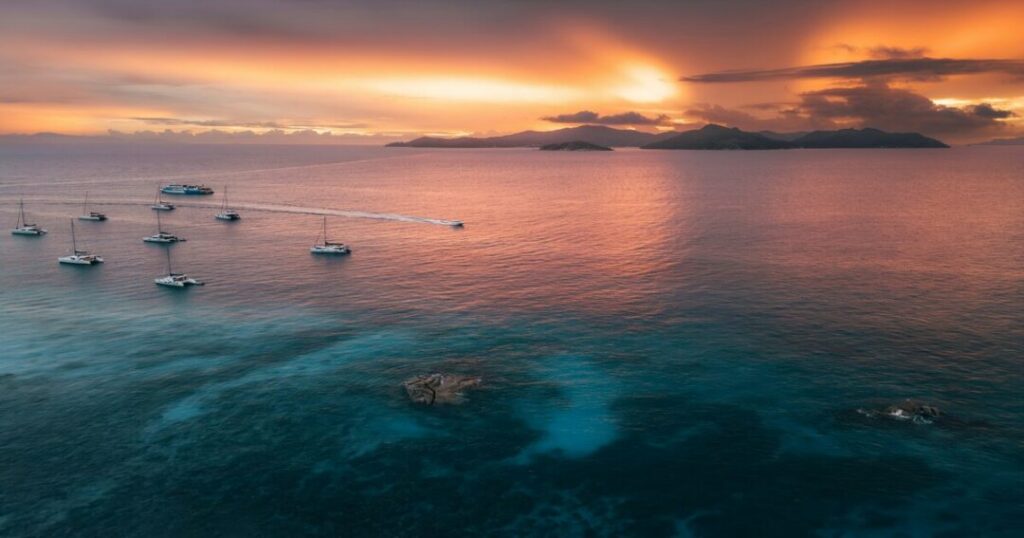
This is where the two destinations diverge most significantly.
Maldives: Luxury by Default
The Maldives resort model means most travellers are captive to their resort’s prices once they arrive. Food, activities, and transfers are all expensive.
| Category | Budget (Local Islands) | Mid-Range Resort | Luxury Resort |
| Accommodation/night | ₹5,000–₹10,000 | ₹25,000–₹60,000 | ₹1,00,000+ |
| Meals/day | ₹1,500–₹3,000 | ₹5,000–₹10,000 | ₹15,000+ |
| Snorkeling trip | ₹1,500–₹3,000 | Included | Included |
Budget hack: Stay on a local island like Maafushi or Ukulhas. You’ll get beaches, snorkeling, and a genuine local experience at a fraction of resort prices — but you’ll lose the overwater villa experience.
Seychelles: More Options, Still Not Cheap
Seychelles is not a budget destination, but it offers more range:
| Category | Guesthouse | Mid-Range Hotel | Luxury Resort |
| Accommodation/night | ₹8,000–₹15,000 | ₹20,000–₹50,000 | ₹80,000+ |
| Meals/day | ₹2,000–₹4,000 | ₹5,000–₹8,000 | ₹12,000+ |
| Island ferry/day trip | ₹1,500–₹3,000 | ₹3,000–₹5,000 | Included |
[STAT: The average cost of a week-long Maldives resort holiday for two Indians is estimated at ₹3–5 lakh, compared to ₹2–3.5 lakh for a comparable Seychelles trip — source: travel industry data]
Also read: 25 Best Countries to Visit in March 2026 from India
Verdict on cost: Seychelles offers more flexibility and slightly better value overall. The Maldives can be done on a budget via local islands, but the iconic overwater experience comes at a premium.
Things to Do — Activities & Experiences
In Seychelles
Seychelles punches well above its weight for activities beyond the beach:
- Hiking: Morne Blanc trail on Mahé for panoramic views; Veuve Reserve on La Digue for birdwatching
- Wildlife: Giant Aldabra tortoises roam freely on La Digue; the Vallée de Mai is home to the Coco de Mer — the world’s largest seed
- Island hopping: Praslin, La Digue, Silhouette, and Bird Island each offer a distinct personality
- Snorkelling and diving: Sainte Anne Marine National Park off Mahé; visibility up to 30 metres
- Creole culture: Local markets, fish curries, and the unique Seychellois Creole language
In Maldives
The Maldives experience is almost entirely water-based:
- Snorkelling: House reefs on most islands; encounter manta rays, reef sharks, and sea turtles
- Scuba diving: [STAT: The Maldives is home to over 1,000 species of fish and more than 200 species of coral — source: Maldives Marine Research Institute]
- Water sports: Jet skiing, surfing (South Malé Atoll is world-famous), parasailing, kayaking
- Sandbank excursions: Private-charter day trips to uninhabited sandbars
- Night snorkelling: Witness bioluminescent plankton lighting up the water after dark
Also read: Top 10 International Destinations to Explore from India in May
Verdict: Seychelles wins for variety; Maldives wins for underwater experience.
Which Is Better — Seychelles or the Maldives? (Final Verdict)
There is no universal answer — and anyone who tells you otherwise hasn’t thought it through. Here’s a traveller-type breakdown:
| Traveller Type | Go To |
| Honeymooners who want full luxury | Maldives |
| Honeymooners who want adventure + romance | Seychelles |
| Scuba divers / snorkelers | Maldives |
| Hikers and wildlife lovers | Seychelles |
| Travellers on a tighter budget | Seychelles (or local-island Maldives) |
| Ultra-luxury seekers | Maldives |
| Families with children | Seychelles (more activities, less isolating) |
| First-time Indian Ocean visitor | Maldives (iconic, easier logistics from India) |
Conclusion about Seychelles vs Maldives
Choosing between Seychelles vs Maldives ultimately comes down to the experience you want to take home.
- Choose the Maldives if you want an overwater villa, world-class diving, ultra-luxury pampering, and easier access from India
- Choose Seychelles if: you want variety, adventure, photogenic beaches, wildlife, and a slightly more flexible budget
- Choose either if romance, pristine beaches, and turquoise water are all you need — both will deliver
Both destinations are magical in their own right. The “wrong” choice is not choosing one over the other — it’s choosing without knowing what you’re walking into.
Your next Indian Ocean adventure starts here — download the Explurger app to discover real traveller stories, reviews, and trip inspiration from both destinations.
Start planning today, and make sure every moment of your trip counts.
FAQs about Seychelles vs Maldives
2: Which is cheaper — Seychelles or Maldives?
Neither is a budget destination, but Seychelles generally offers more price flexibility. Guesthouses on La Digue start from around ₹8,000–₹12,000 per night, whereas the Maldives resort experience starts at ₹25,000 per night for a mid-range property. The Maldives does have a budget option — local islands like Maafushi — where accommodation can be ₹5,000–₹10,000 per night, but you sacrifice the iconic overwater bungalow experience. When comparing like for like at the luxury level, costs are broadly similar.
3: What is the best time to visit Seychelles and Maldives?
For Maldives, the best time is November to April (dry season), with the clearest skies and calmest seas. For Seychelles, April–May and October–November are the sweet spots — these shoulder months fall between the two trade wind seasons and offer the most stable weather. Both destinations are year-round destinations, but visiting during peak season (December–January) will mean higher prices and more crowds at both.
4: Do Indians need a visa for Seychelles and Maldives?
Indian passport holders get visa-on-arrival at both destinations. For Maldives, a free 30-day visa on arrival is issued at Velana International Airport with a valid passport and confirmed hotel booking. For Seychelles, a Visitor's Permit is granted on arrival (valid up to 3 months, renewable) with proof of accommodation and onward travel. No pre-application is required for either.
5: How far are Seychelles and Maldives from India?
Maldives is much closer to India. Direct flights from Delhi, Mumbai, or Bengaluru take approximately 4–5 hours. Seychelles has no direct flights from India; you'll typically connect through Dubai, Nairobi, Doha, or Abu Dhabi, making total travel time 9–14 hours depending on layover. For Indian travellers who want minimal travel time, Maldives has a clear logistical advantage.
6: Which destination has better snorkeling and diving?
Maldives is widely considered one of the top 5 scuba diving destinations in the world. The density and health of its coral reefs, combined with regular sightings of manta rays, whale sharks, reef sharks, and sea turtles, make it exceptional. Seychelles also offers good snorkeling, particularly at Sainte Anne Marine National Park and around Praslin and La Digue, but the underwater biodiversity of Maldives is generally superior. If underwater experience is your primary reason for travel, choose Maldives.
7: Can you visit both Seychelles and Maldives on one trip?
It's possible but not particularly practical. The two destinations are roughly 4,000 km apart and there are no direct flights between them — you'd need to route through a hub like Dubai or Nairobi. Most travellers with 10–14 days choose one destination and explore it properly. If you have 3 weeks or more, a split trip can work: fly India–Maldives–Dubai–Seychelles or vice versa with a brief stopover. Budget an additional ₹30,000–₹50,000 per person for the connecting flights.