
428 Total Views
You’ve probably seen the photos. Mall Road on a Saturday. Kempty Falls is so packed that you can barely hear the water. The cable car queue at Gun Hill stretches past the ticket counter and around the corner.
Things to do in Mussoorie — the Queen of Hills — go far beyond what most travel itineraries suggest. The genuinely remarkable experiences here sit right next to the tourist trail, barely hidden, waiting for anyone willing to take a different turn.
This guide is for urban travellers who’ve done the hill station circuit before and want something more — deeper, quieter, and genuinely worth the journey. Expect offbeat walks, cultural detours, lesser-known Uttarakhand spots just beyond Mussoorie’s edges, and a practical weekend itinerary built around the real Mussoorie.
Things to Do in Mussoorie That Most Visitors Miss
1. Walk Landour Like You Live There
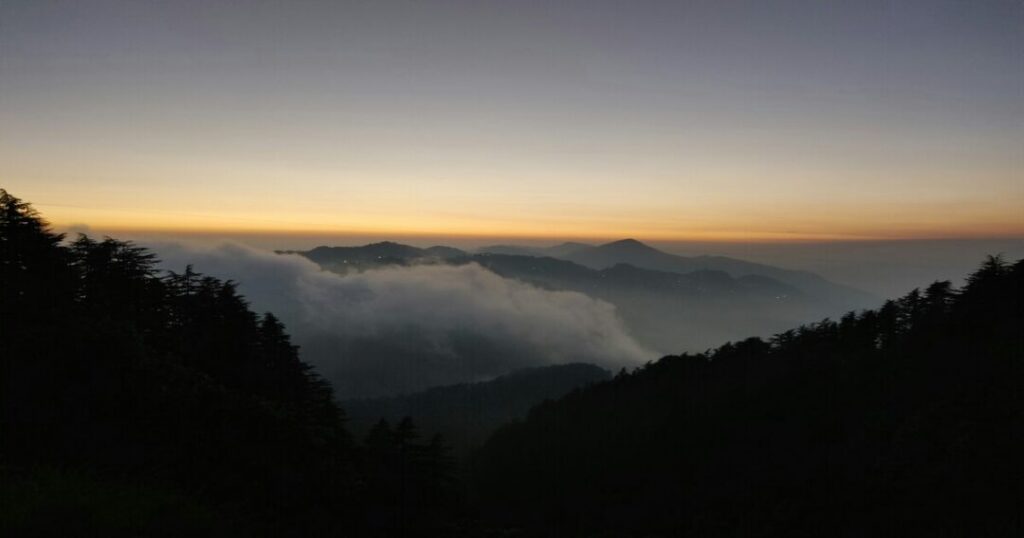
Most tourists come to Mussoorie and never go to Landour, the former British cantonment town 4 km away at a higher altitude. While Mussoorie is the hill station, Landour is the soul.
Wander the cobbled lanes around Char Dukan — a cluster of four old shops that open in the late morning for eggs, chai, and unhurried conversation. Ruskin Bond has lived in Landour for decades; the landscape he writes about is the one you’re standing in. The Sisters’ Bazaar stretch has colonial-era cottages draped in moss, military cantonment signage, and no tourist infrastructure whatsoever.
Don’t miss: The Camellia Walk — a quiet forest path above Landour that even many Mussoorie regulars haven’t found. Early morning, Doon Valley still in mist below — one of the best short walks in the western Himalayas.
The Cantonment Acts governing Landour have restricted new permanent construction here for decades. The built landscape has changed very little since the mid-20th century. What you see is largely intact colonial-era architecture — not a museum exhibit, just what was allowed to remain.
Key things to see in Landour: Char Dukan, Sisters’ Bazaar, St. Paul’s Church, Camellia Walk, and Lal Tibba — the highest point in Mussoorie at 2,275 metres — which sits within Landour.
2. Pari Tibba — The Hill Ruskin Bond Wrote About
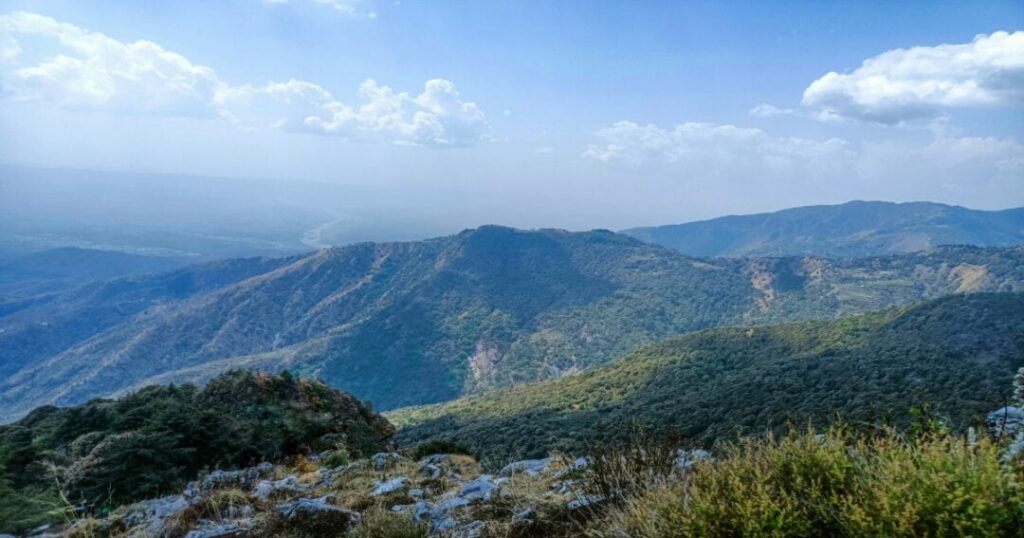
A few kilometres past Landour lies Pari Tibba — “Fairy Hill” — a peak that Ruskin Bond wrote about repeatedly as a place of mystery and sudden weather change. It receives almost no organised tourist traffic, making it the most genuinely quiet Mussoorie point of interest for those willing to walk.
The trail from Landour takes roughly 45 minutes. No ticket counter, no ropeway, no stall at the top. What there is: sweeping views of the Doon Valley and Shivalik range, sudden fog that rolls in from the north without warning, and silence that is genuinely hard to find in the Mussoorie-Dehradun corridor.
Practical note: Weather on Pari Tibba is unpredictable in any season — clear to dense cloud in 15 minutes is common. Go in the morning, carry a jacket, and do not attempt the trail in the monsoon.
Also read: Places to Visit in June in India: 22 Best Destinations for Every Traveller
3. Sir George Everest’s House — History With a View
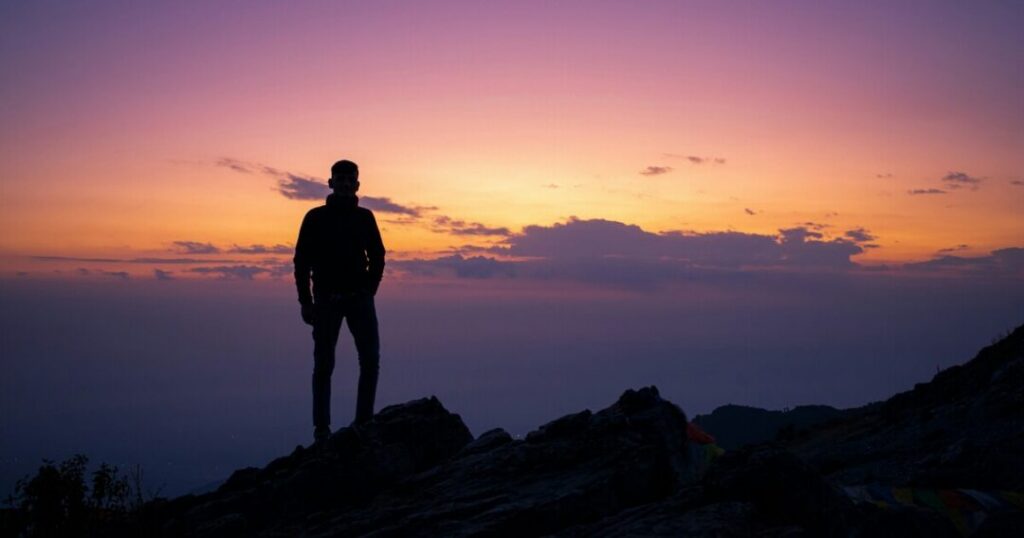
George Everest served as Surveyor General of India from 1830 to 1843 and was responsible for the Great Trigonometric Survey of India. The mountain was named after him in 1865 by the Royal Geographical Society — though Everest himself objected, having had no direct involvement in measuring it.
His house — built in 1832, known as Park Estate — sits on a cliff edge approximately 6 km west of Library Chowk. The ruins of the main building and observatory still stand, with views of the Doon Valley on one side and the Aglar River valley on the other. It is maintained by the Uttarakhand government, listed on Incredible India (the Government of India’s official tourism portal), and is open year-round.
The 20-minute walk from the road is on a rocky, sometimes steep path. Come early — morning visitors often have the site to themselves. No facilities on site; carry water.
4. Benog Wildlife Sanctuary — Birding in a Forgotten Forest

Benog Wildlife Sanctuary — formally the Mussoorie Wildlife Sanctuary — covers approximately 339 hectares of pine, oak, cedar, and rhododendron forest about 11 km from Library Point. It is part of the Rajaji National Park ecosystem, established as a protected area on 2 September 1993.
The sanctuary is named after the Mountain Quail (Pahari Bater) — last reliably recorded here in 1876, now considered functionally extinct. That context alone makes it one of the more unusual Mussoorie sightseeing places for anyone interested in conservation history. What you will see: Red-billed Blue Magpie, White-Capped Water Redstart, Khalij Pheasant, Cheer Pheasant, Himalayan Monal, Barking Deer, Goral, and occasionally Leopard at dawn.
For birding, arrive before 6 AM in October–November or March–April. Trails inside are quiet and well-shaded. No entry fee to the sanctuary itself — confirm any charges locally.
5. Jharipani Falls — Earn the View
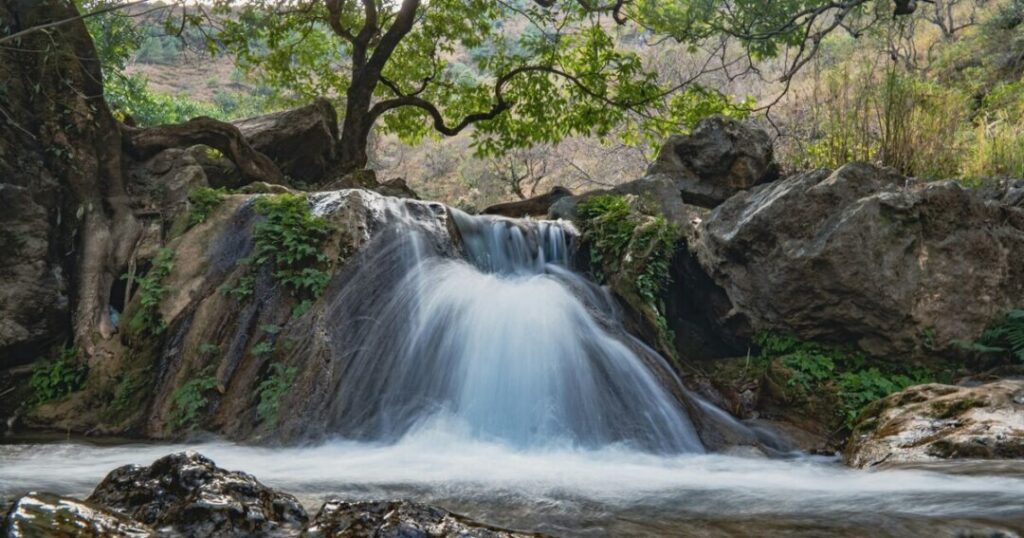
Nine kilometres south of Mussoorie, Jharipani requires a 1.5 km forest walk from the road — downhill in, uphill out. The falls are modest in size but set in completely undeveloped forest: no hawkers, no changing rooms, no boat rides. On weekdays, it is almost always empty.
The trail passes small streams, wildflower meadows in spring, and oak canopy with valley glimpses — it gives a sense of how quickly Mussoorie’s edges become genuinely wild. Kempty Falls, by contrast, delivers none of this.
Practical note: Jharipani Falls is closed on Sundays. The trail is slippery in the monsoon — avoid July to mid-September.
6. Lambi Dehar Mines — Industrial Ruin in the Jungle
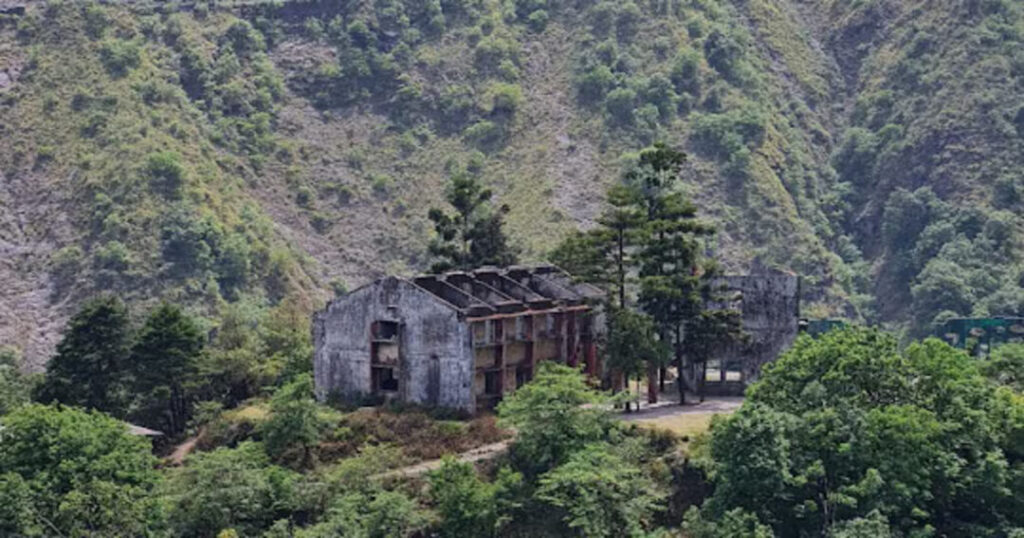
The limestone mines above Mussoorie’s northern ridge operated until the 1990s. Tragedies linked to silica dust exposure and unsafe conditions resulted in a large number of worker deaths. The mines were shut and never developed into anything.
What remains is abandoned machinery, collapsed tunnels, and jungle reclaiming industrial ruins — a genuinely unusual stop for travellers interested in the region’s history beyond scenic viewpoints. The site is not officially managed. The approach road is unpaved; approximately 30 minutes from Mussoorie town.
For travellers who want to understand Uttarakhand beyond its scenic surface — the labour history, the industrial period, the gap between what the hills look like and what happened inside them — Lambi Dehar is unrepeatable.
Important: Daytime visits only. Terrain around abandoned mine shafts is hazardous after dark.
Also read: Places to Visit in Uttarakhand: 12 Stunning Destinations for Every Traveller
7. Sainji Corn Village — Uttarakhand’s Most Photogenic Secret
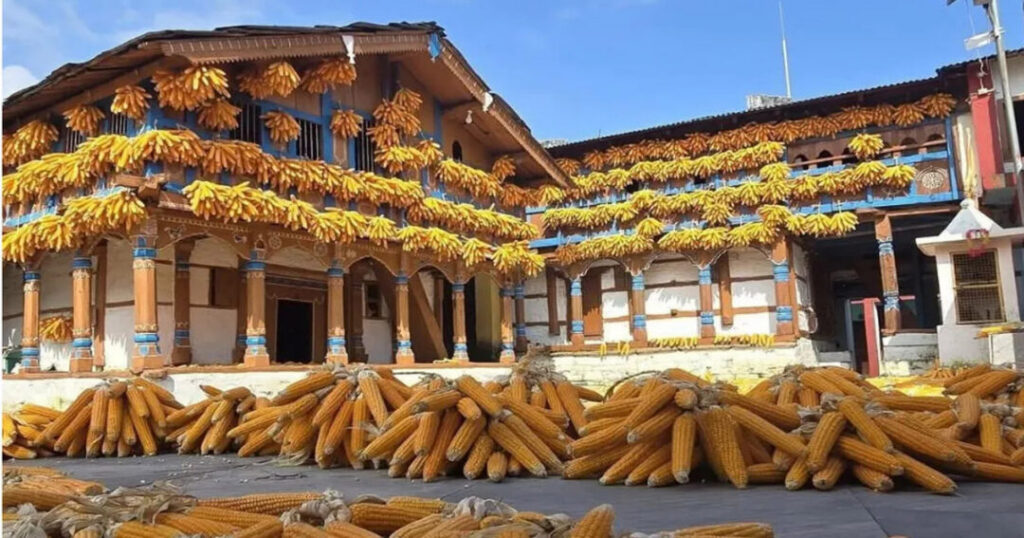
Approximately 18 km from Mussoorie in the Tehri Garhwal district, Sainji is a traditional Garhwali village where rows of golden corn hang from every facade. The tradition is functional (drying and storing grain) and cultural — a larger corn display traditionally indicates a household with surplus, enough for both family and guests.
In October–November, especially, the visuals are extraordinary. No equivalent exists in mainstream Himalayan tourism. No entry fee, no guides, no infrastructure. Walk in, explore on foot, treat the village respectfully — this is a working agricultural community.
Combined visit: The farmland terraces surrounding Sainji have clear views of the Yamuna valley that almost no Mussoorie places to go listing mentions.
Best Time to Visit Mussoorie
Recommended window: March–June and October–November
March–May Temperature: 8–30°C (day), 5–12°C (night). Humidity: 40–55%. Low rainfall. The best all-round window. Rhododendrons in flower through April, clear Himalayan views, good trail conditions. May gets warm in the afternoons — not uncomfortable, but noticeably less cool than March or April. Crowds begin building from late April. Recommended for: trekking, offbeat walks, photography.
June Temperature: 18–38°C (day), 14–18°C (night). Humidity: 55–70%. Pre-monsoon humidity builds. Peak tourist season — school holidays drive heavy footfall. Views can get hazy. Roads to Mussoorie from Dehradun are often badly congested on weekends. Not recommended unless you can arrive on a weekday.
July–September (Monsoon) Temperature: 17–24°C (day), 13–17°C (night). Humidity: 75–90% (August peaks at ~88%). The landscape is intensely green, and the light is dramatic. However, landslides are a genuine risk on the Dehradun-Mussoorie road, roads to Kempty Falls and Cloud’s End can close without notice, and outdoor trails are slippery. Trekking to Nag Tibba or Benog is not advisable. What you can do: Landour walks, café time, quiet forest walks close to town. Crowds drop sharply after July school holidays — late July through September is genuinely empty and atmospheric.
October–November Temperature: 8–20°C (day), 2–8°C (night). Humidity: 30–50%. Driest stretch of the year. The strongest season for views — post-monsoon clarity gives the sharpest sightlines to snow peaks. October in particular is excellent: light crowds, dry trails, crisp air, full trail access. November gets cold toward the end of the month. Recommended for: photography, Nag Tibba trek, and all offbeat walks.
December–February Temperature: 1–10°C (day), -2–4°C (night). Humidity: 40–60%. Snowfall possible, especially in January and February. Landour and the Nag Tibba trail are snow-covered and beautiful. Very few tourists. Some accommodation on the outskirts closes seasonally. The Dehradun-Mussoorie road can be temporarily cut by snowfall — always check conditions before departure. Recommended for: solo travellers wanting quiet, winter trekking, and a snowfall experience.
How to Reach Mussoorie?
Nearest railhead: Dehradun Railway Station, approximately 35 km from Mussoorie. Well-connected from Delhi, Mumbai, and Lucknow. Shared taxis and buses run frequently; the journey from the station takes approximately 1–1.5 hours.
Nearest airport: Jolly Grant Airport, Dehradun — approximately 55–60 km from Mussoorie. Connected to Delhi, Mumbai, and Bengaluru.
By road from Delhi: The Delhi–Dehradun Expressway, inaugurated in April 2026, reduces the Delhi-to-Dehradun drive to approximately 2.5 hours. Total road time from Delhi to Mussoorie is now approximately 4 hours under normal conditions — significantly less than the earlier 6–7 hours on the old highway.
Local tip: Book accommodation at the Library Chowk end rather than Kulri Bazaar — better positioned for Landour and the western attractions, quieter, and easier to park.
Also read: Rupin Pass Trek: The Wildest High-Altitude Adventure in the Indian Himalayas
Beyond Mussoorie: Adjacent Uttarakhand Worth the Drive
Dhanaulti (24 km — ~40 minutes)
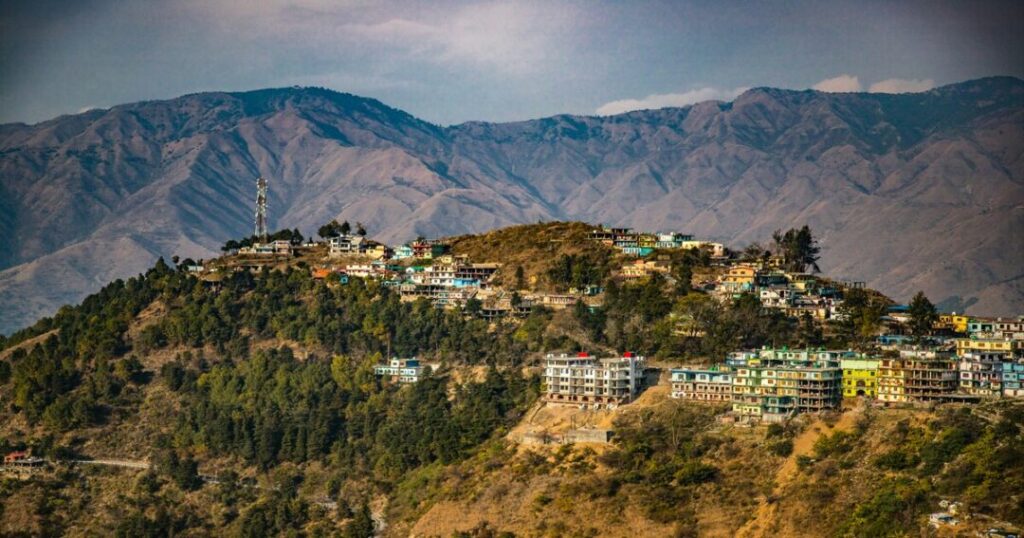
Dhanaulti sits at 2,286 metres on the Mussoorie-Chamba road. Known but significantly less crowded than Mussoorie. The Eco Park (Amber and Dhara zones) has walking trails and mountain views without the commercial overlay. The drive from Mussoorie — rhododendron forest with the Tehri reservoir appearing in the valley below — is itself one of the best Mussoorie sightseeing places experiences of the trip.
Kanatal (48 km — ~90 minutes)
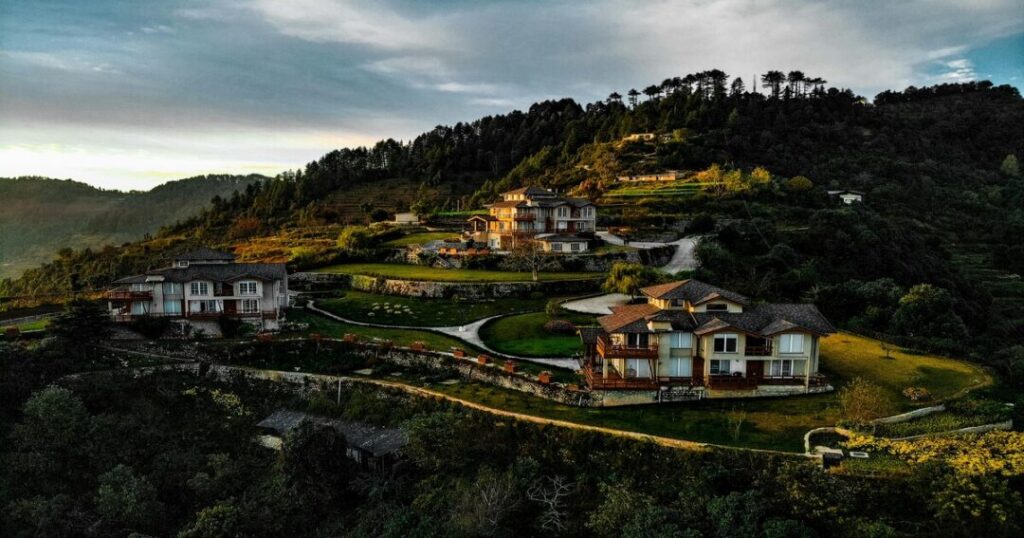
Kanatal sits at approximately 2,590 metres in Tehri Garhwal — higher than Mussoorie and substantially quieter. The Kodia Forest is accessible on foot with Barking Deer and occasional Leopard sign on the trails. Camping overnight under stars with the Surkanda Devi Temple ridge visible is one of the most rewarding nights near Mussoorie.
The Surkanda Devi Temple is a 2 km trek from the road at approximately 2,750 metres — a significant pilgrimage site in Garhwali Hindu tradition, rarely visited by non-local tourists. Views encompass a vast sweep of the Garhwal and Tehri Himalayan ranges.
Nag Tibba Trek (57 km to the trailhead — ~2 hours drive)
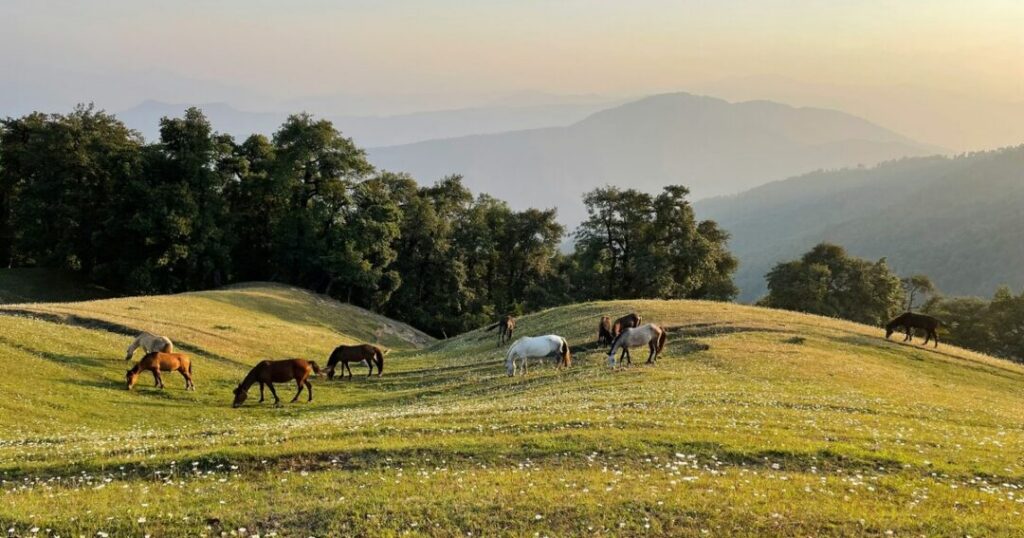
At 3,022 metres (9,915 feet), Nag Tibba — “Serpent’s Peak” — is the highest in the lesser Himalayan ranges of Garhwal Division (confirmed: Wikipedia, Britannica). The trailhead is at Pantwari village, 57 km from Mussoorie. Trek: 16 km return (8 km each way).
Route: oak and rhododendron forest → Nag Devta Temple → summit. Views include Bandarpoonch, Kedarnath range, and Gangotri peaks. In winter (December–February): snow-covered, crowd-free. Beginner-accessible in 1–2 days.
No food stalls or facilities above base — come self-sufficient. Overnight camping at the summit meadow is the recommended experience.
Weekend Itinerary: 3 Days in Real Mussoorie
Day 1 (Friday Evening) — Arrive, Settle, Breathe
- Arrive Mussoorie (~4 hours from Delhi via the new expressway). Stay at Library Chowk / Landour area.
- Evening: Camel’s Back Road at dusk — 3 km ridge walk, Doon Valley views. Low effort. Most visitors clear by 6 PM.
- Dinner: Look for kafuli (Garhwali spinach curry), chainsoo (black dal), or aloo ke gutke at a local restaurant near Library Chowk.
Day 2 (Saturday) — The Core Offbeat Day
6–8 AM: Benog Wildlife Sanctuary at dawn for birding — Red-billed Blue Magpie, Himalayan Monal, Cheer Pheasant. Arrive before the forest wakes up.
9–11 AM: Landour on foot — Char Dukan for breakfast (opens late morning), Sisters’ Bazaar, St. Paul’s Church, colonial lanes. Allow 2 hours unhurried.
11 AM–1 PM: Trek to Pari Tibba from Landour — 45 minutes each way. Go before mist sets in.
2–5 PM: Drive to George Everest’s House (6 km from Library Chowk). 20-minute walk from the road. Allow 1.5 hours total. Then drive to Sainji Corn Village (18 km). Afternoon light on the corn is excellent.
Evening: Return to Mussoorie. Lal Tibba at sunset — clear evenings give views of the Kedarnath and Badrinath ranges. Dinner in Landour or Library Chowk.
Day 3 (Sunday) — Day Loop Beyond Mussoorie
7 AM: Depart for Dhanaulti (24 km, 40 minutes). Morning walk through the Eco Park cedar forest before crowds arrive.
10 AM: Continue to Kanatal (48 km from Mussoorie, 90 minutes total). Kodia Forest walk or Surkanda Devi Temple trek (2 km, 45 minutes). Pack your own lunch or eat at a dhaba near the temple base.
2 PM: Begin return. Use a different road if possible — the Kanatal-Chamba-Mussoorie road gives different valley perspectives.
Return times: Mussoorie by 4 PM → Dehradun by 5:30 PM → Delhi by approximately 8 PM via expressway.
Optional Day 4 (Monday morning): Drive to Pantwari (57 km, 2 hours). Nag Tibba summit day trek — 16 km return, 6–7 hours. Return to Dehradun or Delhi by evening.
Traveller’s Notes
“I’ve been to Mussoorie four times. The first three times I did Mall Road, Kempty, and Gun Hill. My fourth time I stayed in Landour, walked to Pari Tibba alone, had chai at Char Dukan at 7 AM, and read Ruskin Bond with the valley in the clouds below. It’s a completely different place when you know where to look.” — Solo traveller, Bengaluru
“Sainji village in October — corn drying on every house, no other tourists, the smell of woodsmoke and mountain air. I had no idea it existed until I asked a driver on the way back from Dhanaulti. That’s the Mussoorie nobody writes about.” — Weekend traveller, Delhi
Final Thoughts: The Mussoorie Most Blogs Don’t Cover
Most Mussoorie travel content was written once and copied since. It tells you to ride the ropeway, photograph Kempty, and walk Mall Road. None of that is wrong — but it is the smallest possible version of what’s here.
Key takeaways:
- Landour is Mussoorie’s most valuable neighbourhood — a fraction of the footfall, all of the character
- Pari Tibba and George Everest’s House are Mussoorie points of interest on par with anything more famous, and usually empty
- Sainji Corn Village is one of the most visually and culturally distinctive short trips in the western Himalayas
- Benog Wildlife Sanctuary (339 ha, est. 1993, part of Rajaji NP) is a serious birding and nature site inside the town’s western boundary
- Nag Tibba at 3,022 m is the best weekend trek reachable from Mussoorie — a different league from any viewpoint in town
- Kanatal and Dhanaulti are 40–90 minutes away and feel like a different world
- October–November is the best season for views, trails, and low crowds; March–May is for mild weather and flora
- Delhi to Mussoorie is now approximately 4 hours via the new expressway (opened April 2026) — genuinely viable as a 2-night weekend trip
Log every trail, track every hidden gem, and build your real Uttarakhand story with the Explurger app — the mountains are waiting.
The things to do in Mussoorie that stay with you are the ones you find by walking slightly further than everyone else. That has always been true in the hills.
FAQs about Things to Do in Mussoorie
2. Which are the most offbeat Mussoorie tourist attractions that locals actually visit?
Locals rarely visit Kempty or Gun Hill. The Mussoorie tourist attractions with genuine local footfall include Landour bazaar and Char Dukan, Benog Wildlife Sanctuary forest trails, the Camellia Walk above Landour, and Pari Tibba. Sainji Corn Village is well-regarded locally as a must-see for visitors wanting authenticity. Day trips to Kanatal and Dhanaulti are common weekend outings for Dehradun families seeking forest and altitude without crowds.
3. What is there to do in Mussoorie during the monsoon?
The July–September monsoon brings humidity of 75–90% and heavy rainfall. Outdoor trekking — including Nag Tibba and the Benog trails — is not advisable due to slippery conditions and landslide risk. What remains viable: walking within Landour town, quiet café time, and short walks close to town. The Jharipani Falls trail should also be avoided after heavy rain. Late July to mid-September is the quietest tourist period of the year — empty and atmospheric if you can tolerate limited trail access.
4. Is Mussoorie worth visiting in winter?
Yes, particularly for solo travellers. Temperatures drop to 1–10°C in the day and -2–4°C at night from December to February. Landour is exceptional in winter — frost on the oaks, fires in small cafés, almost no tourists. Nag Tibba is snow-covered from December through February and is one of the best beginner winter treks in the region. The Dehradun-Mussoorie road can be temporarily closed by snowfall — always check road conditions before departure. Some outlying accommodation closes seasonally; book in advance.
5. What are the best Mussoorie places to go for nature lovers?
The strongest Mussoorie places to go for nature: Benog Wildlife Sanctuary (339 hectares, est. 1993, part of Rajaji NP, 11 km from Library Point), Jharipani Falls (forest trail, solitude, wildflower meadows in spring), Nag Tibba trek (3,022 m summit, oak-rhododendron forest, alpine meadows), Cloud's End (deodar forest, ridge-edge walks), and Kodia Forest in Kanatal. These are actual wildlife habitats, not manicured viewpoints.
6. What cultural places of interest in Mussoorie are worth visiting?
The most meaningful places of interest in Mussoorie for culturally curious visitors: Happy Valley — home to approximately 5,000 Tibetan refugees with the Shedup Choepelling Temple, an active community worth visiting respectfully; Sainji Corn Village for intact Garhwali agricultural tradition; Landour's colonial churches and cantonment architecture; George Everest's House (1832) as a heritage site maintained by the Uttarakhand government; and Surkanda Devi Temple near Kanatal — a significant Garhwali Hindu pilgrimage site rarely visited by non-local tourists.
7. How many days are enough to explore Mussoorie properly?
Three full days cover the offbeat Mussoorie without rushing. Day 1 (evening): arrive, Camel's Back Road walk, settle in the Landour area. Day 2: Benog birding at dawn, Landour walk, Pari Tibba, George Everest's House, Sainji Village. Day 3: Dhanaulti and Kanatal day loop, Surkanda Devi Temple. Add a 4th day for Nag Tibba trek from Pantwari (57 km from Mussoorie, 16 km return trek, 6–7 hours). Five days allows both the trek and a slower pace throughout.