
1,033 Total Views
Delhi is not one city. It never was. It is at least seven cities stacked on top of each other, each built by a different dynasty on the ruins of the last — Rajput, Sultanate, Khilji, Tughlaq, Mughal, British, Republic. The geological record of ambition and collapse runs 3,000 years deep here, and most of it sits two lanes off whatever road the standard tourist itinerary puts you on.
The tourist places in Delhi that appear on every list — Red Fort, India Gate, Qutub Minar — are genuinely worth seeing. But they are the surface. Beneath them: a perfumery run by the same family since 1816 that supplied the last Mughal emperor’s court. A flower market that opens at 3 AM and is gone before the city wakes. A qawwali performance in a dargah where the music has been played every Thursday for seven centuries. A museum that holds the largest archive of Partition testimonies in the world.
Tourist Places in Delhi Across Seven Civilisations
The most important thing to understand about Delhi’s heritage is its layering. The city has been built, sacked, abandoned, and rebuilt at least seven times on overlapping ground. Each era left monuments — many still standing, few on the tourist circuit.
The Seven Delhis in sequence:
- Lal Kot / Qila Rai Pithora (11th–12th century): Tomar Rajput and then Chauhan; remnants near Mehrauli
- Siri (early 14th century): Alauddin Khalji’s fortress city, built against Mongol invasions
- Tughlaqabad (1321): Ghiyas-ud-din Tughlaq’s massive stone fortress city, abandoned 1327
- Jahanpanah (1326): Muhammad bin Tughlaq’s ambitious but failed attempt to merge three cities
- Firozabad (1354): Feroz Shah Tughlaq’s city along the Yamuna; Feroz Shah Kotla
- Shergarh / Dinpanah (16th century): Humayun and Sher Shah Suri; Purana Qila
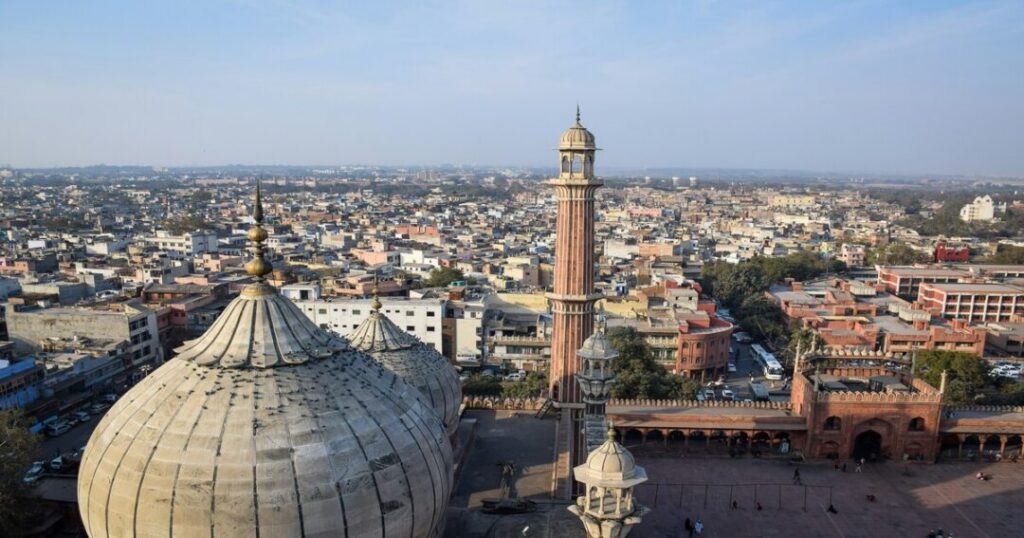
- Shahjahanabad (1639): Shah Jahan’s walled Mughal capital — Red Fort, Chandni Chowk, Jama Masjid
Walking between these layers in sequence is the single most illuminating thing you can do in Delhi. Most visitors — looking for famous places in Delhi — see only one or two, and almost always the youngest layers.
Also read: Delhi Weekend Getaway: 10 Quiet Places Near Delhi for Short and Long Breaks
Best Sightseeing Places in Delhi — The Historical Layers
Mehrauli Archaeological Park: 100 Monuments, Almost No Visitors
Two hundred acres. Over 100 historically significant structures. Almost nobody there.
Mehrauli Archaeological Park sits directly adjacent to the Qutub Minar complex — a five-minute walk from one of Delhi’s most-visited monuments — and yet most visitors never cross into it. Inside: the tomb of Balban (died 1287), notable as the site of the first true arch in Indian Islamic architecture; Rajon ki Baoli, a four-storey stepwell from the 15th century that descends into cool silence far below street level; the Jamali Kamali Mosque and twin tombs of the poet-saint Jamali (died 1535) and his mysterious companion Kamali, whose relationship and identity remain disputed by scholars.
The park also contains the ruins of Lal Kot’s original walls — rubble masonry bastions of the Tomar Rajputs from the 11th century, moss-covered and standing in the same spot they were built a thousand years ago.
What most blogs miss: Zafar Mahal — the last architectural monument built by the Mughals, a summer palace commissioned by the penultimate Mughal emperor. Standing 200 metres from the Dargah of Qutbuddin Bakhtiyar Kaki in Mehrauli village, it is both the endpoint of one of history’s greatest empires and completely absent from standard tourist maps.
Practical: Open sunrise to sunset. No entry fee. Go on a weekday morning.
Tughlaqabad Fort: The Abandoned Empire
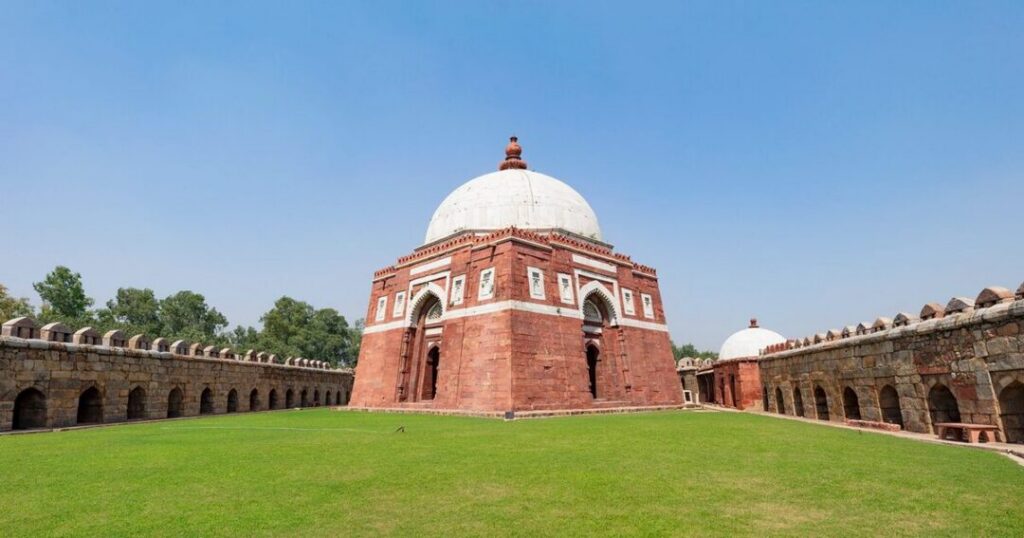
Built in 1321 by Ghiyas-ud-din Tughlaq, Tughlaqabad was designed as an impregnable fortress-city — 6.5 km of walls, 52 gates (13 survive), towers at every interval. It was abandoned within six years. The legend says Nizamuddin Auliya cursed it: Ya rahe ujjar, ya base Gujjar — “May it remain desolate or be inhabited by herdsmen.” It has been largely desolate ever since.
The ruins are one of the most dramatic and least-visited Delhi sightseeing places — enormous stone ramparts stretching across a ridge, barely maintained, almost entirely empty of tourists even on weekends. Ghiyas-ud-din’s tomb, connected to the fort by a causeway, sits in a geometric enclosure of red sandstone and white marble that anticipates Mughal architecture by two centuries.
Just 2 km away: Adilabad Fort, built by Muhammad bin Tughlaq as Tughlaqabad’s smaller twin. Even fewer visitors. Rarely mentioned.
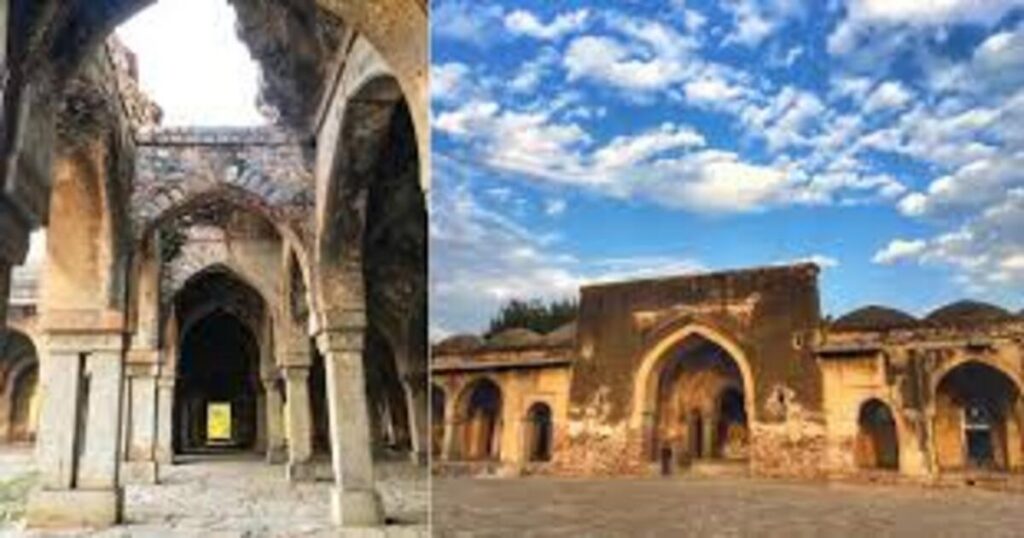
Begumpur Mosque (c. 1351, Muhammad bin Tughlaq) is a congregational mosque of remarkable severity — 84 arched cells surrounding a central courtyard, no decoration, nothing but load-bearing geometry. Almost always empty.
Khirki Mosque (c. 1375, Feroz Shah Tughlaq) is partially covered — unique among Delhi’s mosques — with 25 internal courtyards and a labyrinthine interior that feels more like a fortress than a place of worship. It sits in the middle of a residential colony. Locals use the courtyard as a shortcut.
Both are maintained by the Archaeological Survey of India and represent the fourth and fifth Delhi, respectively. Together, they form a half-day circuit that almost no Delhi sightseeing places guide mentions.
Also read: Top 5 Weekend Getaways From Delhi-NCR
Sacred Delhi — Across Every Faith
Delhi’s sacred geography does not belong to one religion. Among the most overlooked delhi places to see are not monuments at all but living places of worship — Sufi shrines, Sikh historical gurdwaras, ancient Hindu temples, and Jain centres — often within walking distance of each other. For anyone drawing up Delhi, seeing places beyond the standard heritage trail, this is where the city becomes genuinely surprising.
Hazrat Nizamuddin Dargah: Qawwali as Devotion
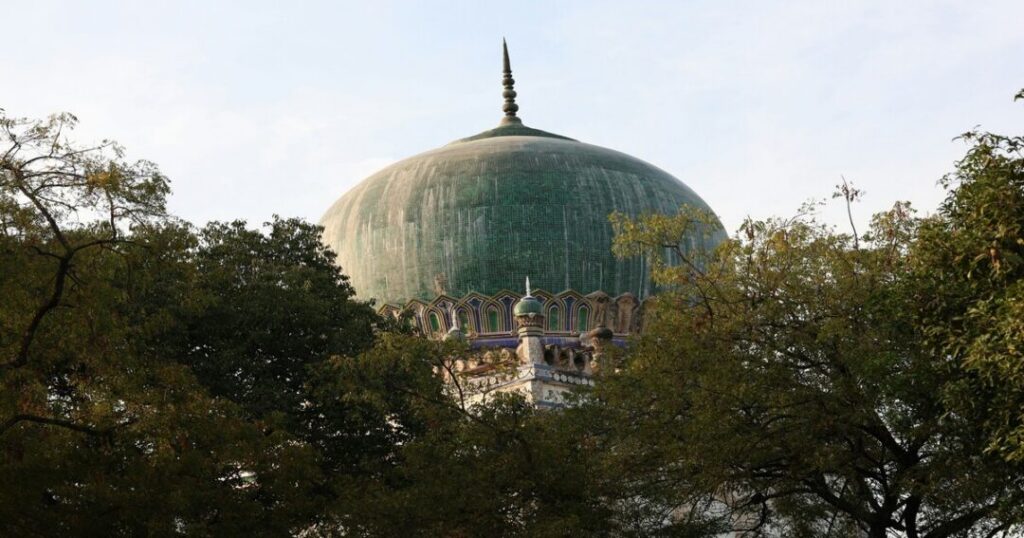
The dargah of Hazrat Nizamuddin Auliya (1238–1325) is one of the most significant Sufi shrines in South Asia. Every Thursday evening, qawwali performances take place here — a tradition maintained for seven centuries without interruption. These are not performances for tourists. They are devotional acts, participatory and alive.
The dargah complex contains the tombs of Amir Khusrau (regarded as the father of qawwali, 1253–1325), Jahanara Begum (Shah Jahan’s daughter), and several Mughal nobles — a layered sacred geography spanning six centuries. Dress modestly, cover your head at the tomb, and understand you are entering a space of living faith. The qawwali begins after Maghrib prayers, roughly 7–7:30 PM depending on the season.
Yogmaya Temple, Mehrauli: Delhi’s Oldest Continuously Worshipped Site
Directly adjacent to the Mehrauli archaeological complex sits the Yogmaya Temple — believed by many scholars to be one of the oldest continuously active temple sites in Delhi, with references in the Mahabharata and a recorded history stretching back centuries before the Sultanate ever arrived. The deity Yogmaya is the sister of Krishna in mythological tradition. The temple is simple, non-commercial, and deeply embedded in Mehrauli village life. It is overwhelmingly absent from tourist coverage.
Gurudwara Sis Ganj Sahib, Chandni Chowk: Where History Is Still Present
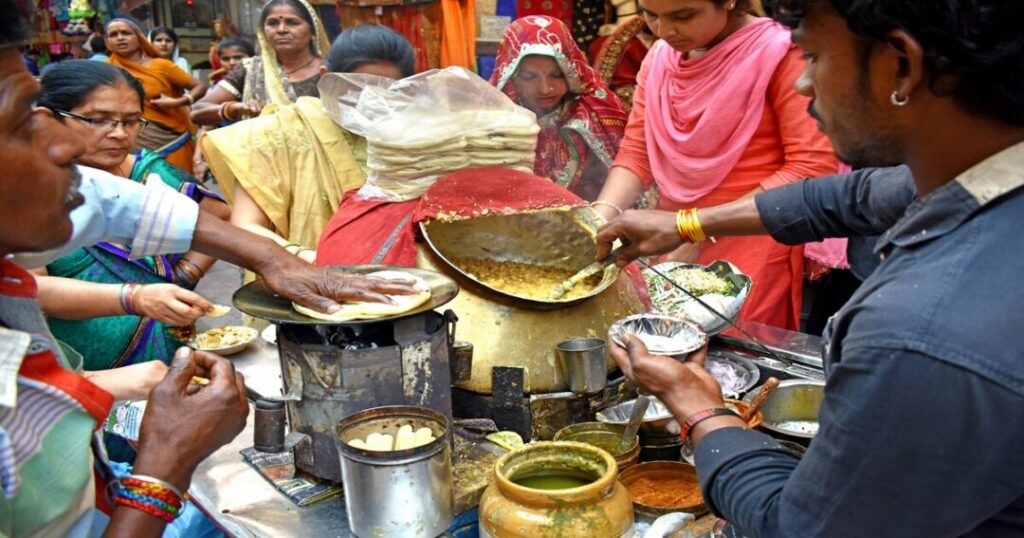
Built on the site where the ninth Sikh Guru, Guru Tegh Bahadur, was executed in 1675 on the orders of Emperor Aurangzeb for refusing to convert to Islam, Gurudwara Sis Ganj Sahib is both one of the most historically significant religious sites in India and one of the most welcoming to visitors of all backgrounds. The langar (community kitchen) serves free meals to anyone who visits, without distinction. It sits in the heart of Chandni Chowk, surrounded by the noise of the market, yet maintains a quality of stillness inside.
Jain Bird Hospital, Chandni Chowk: The City’s Most Unusual Sacred Space
Attached to the Lal Mandir — the oldest Jain temple in Delhi, directly facing the Red Fort — is a bird hospital run by the Jain community on the principle of ahimsa (non-violence). Injured birds are brought here from across the city, treated, and released. The hospital has operated for over a century. It is one of the more quietly extraordinary places to visit in Delhi — a functioning medical facility for birds, run as an act of religious devotion, in the shadow of a Mughal fort.
Museums, Galleries and Cultural Seasons
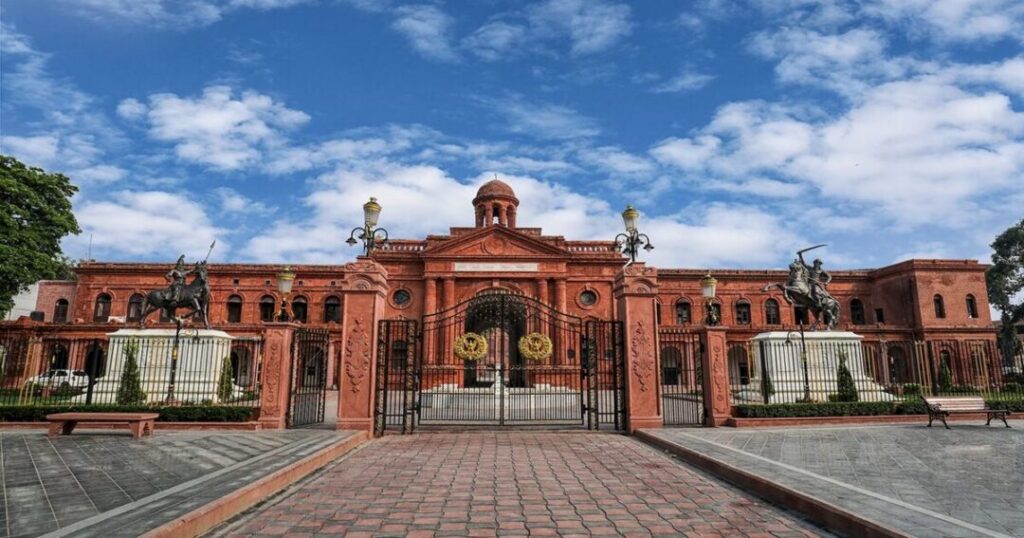
The Partition Museum, Kashmere Gate
Opened in 2023 in the historic Dara Shukoh Library building within Ambedkar University’s Kashmere Gate campus, the Partition Museum Delhi holds what is considered the largest publicly accessible archive of 1947 Partition testimonies and artefacts in India. Seven galleries trace the political decisions, the violence, the migration, and the aftermath of Partition through personal objects, oral histories, photographs, and documents donated by survivor families from both sides of the border.
This is not a casual visit. Allow at least two hours. For anyone — Indian, Pakistani, or international — with even a passing interest in the subcontinent’s 20th-century history, it is one of the most significant and affecting Delhi sightseeing places that has opened in years.
Art Galleries and Exhibitions
Delhi has a serious contemporary and modern art scene that most tourists miss entirely. The National Gallery of Modern Art in the India Gate area holds one of the country’s most significant collections of 20th-century Indian art. Beyond it, the gallery ecosystem in neighbourhoods like Lado Sarai and the Mehrauli-Badarpur belt supports dozens of independent and commercial galleries with rotating shows. Several also run artist-in-residence programmes open to the public.
The Crafts Museum near Pragati Maidan — run by the government — has one of the most comprehensive displays of traditional Indian craft forms, including working demonstrations by craftspeople from different states who stay in residence on the premises.
World Book Fair, January

Held annually at Bharat Mandapam (Pragati Maidan) in the second or third week of January, the World Book Fair is one of the largest book fairs in Asia, organised by the National Book Trust and ITPO. Publishers from across India and several international houses participate. For readers, the fair is a legitimate reason to plan a January trip around: deep discounts, rare regional language titles, and a concentration of literary culture that the city’s regular bookshops don’t replicate. The 2026 edition ran January 10–18.
This guide is for the cultural explorer, the history buff, and the foodie who wants to understand what Delhi actually is — not just photograph it.
Things to Do in Delhi Beyond Monuments
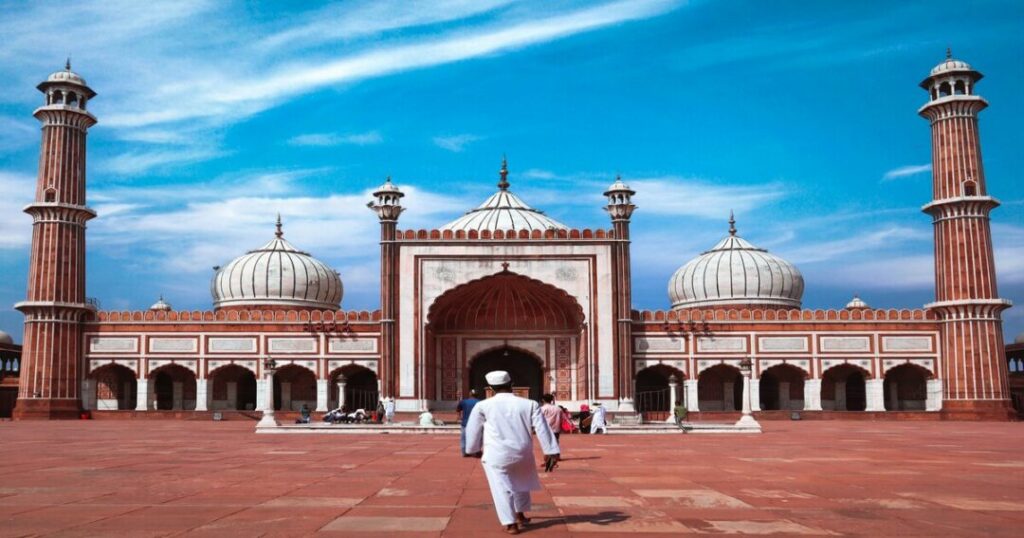
Heritage Walks
Several well-regarded heritage walk programmes operate in Delhi, covering different layers of the city’s history — the Walled City, the colonial cantonment areas, the Sufi geography of Nizamuddin, the step-well circuit, and the monuments of Mehrauli. These are among the most rewarding Delhi spots to visit for anyone who wants depth over distance. Some are run by organisations affiliated with the Indian National Trust for Art and Cultural Heritage (INTACH), which has won national tourism recognition for its Delhi programmes. Walks typically run 2–3 hours on weekend mornings, are led by trained guides, and access areas most self-guided visitors miss.
Craft Classes and Workshops
Delhi has a growing ecosystem of craft workshops open to visitors — block printing, zardozi embroidery, pottery, miniature painting, and natural dye work. These are typically half-day or full-day sessions run by artisan communities or cultural organisations, often in the older parts of the city. The Crafts Museum at Pragati Maidan periodically hosts demonstration sessions by craftspeople in residence. Organisations working in craft preservation regularly announce public workshops; asking at the museum is a good entry point.
Ghazipur Phool Mandi: The Flower Market at 3 AM
This is the largest wholesale flower market in Delhi and one of the most visually extraordinary experiences the city offers — if you are willing to show up between 3 and 6 AM. Ghazipur Phool Mandi floods with marigolds, roses, tuberose, lotus, and seasonal blooms offloaded from trucks arriving from Rajasthan, Maharashtra, and the hills. The scale is hard to describe: flowers in quantities that turn entire sections of road orange and yellow, traded by weight at a speed that makes the whole thing feel choreographed.
By 8 AM, it is over. The market dissolves as completely as if it never happened. This is one of those best Delhi tourist places experiences that requires no ticket, no guide, and no daylight — just the willingness to set an alarm.
Dariba Kalan and Kinari Bazaar: The Craft Lanes of Shahjahanabad
Dariba Kalan is Delhi’s silver street — a lane of silversmiths and jewellery workshops that has operated in the same location since the Mughal era. The work visible in open workshops ranges from fine silver filigree to meenakari enamel work on gold. Kinari Bazaar, adjacent, specialises in the embellishments of ceremony: zari borders, wedding accessories, decorative trims, and the materials that go into the elaborate costuming of festivals, weddings, and religious occasions. Neither street is a tourist attraction. Both are working commercial lanes where craft is still produced, not just sold.
Food in Delhi: Beyond Chandni Chowk
State Bhavan Canteens: The Most Underrated Dining in Delhi
Every Indian state maintains a government guesthouse or bhavan in Delhi. Most of them — including those of Andhra Pradesh, Bihar, Himachal Pradesh, Kerala, Odisha, and several others — run canteens open to the public that serve authentic regional food at subsidised prices. These are not tourist restaurants. They are functional canteens where government officials, students, and visitors from those states eat food prepared by cooks from the region itself.
The Andhra Pradesh Bhavan canteen is particularly well known for its thali — fiery, rice-forward, served in traditional style. Kerala Bhavan serves an authentic sadhya-style meal. Bihar Bhavan offers Bihari specialities rarely found in commercial Delhi restaurants. Himachal Bhavan and Odisha Bhavan each have their own regional character. This is the single most underrated food experience in the city for anyone interested in the diversity of Indian regional cuisine.
When to go: Lunch service, typically 12–3 PM. Arrive early — the food runs out.
Also read: When Creators Met in Purani Dilli: All About the Food Walk
Old Delhi: Timed, Seasonal, Unadvertised
The niche food of Old Delhi operates on its own schedule — and most of it is gone before the average tourist arrives.
Nihari before 7 AM: A slow-cooked mutton stew — shank meat simmered 8–10 hours overnight in spiced bone broth. Traditionally, a breakfast dish. The best counters near Jama Masjid open before 7 AM and sell out by 10. This is not a dish you plan around casually; it demands rearranging your morning.
Sutli Kebab at Chitli Qabar: In the lanes off Chitli Qabar Chowk, certain kebab makers produce seekh kebabs so tender — minced mutton worked with spices to near-liquefaction — that they must be held on the skewer with fine cotton string (sutli) to keep their shape. An evening-only preparation, available from specific street counters. One of the most technically demanding dishes in Delhi’s street food canon and almost entirely unknown outside the walled city.
Daulat ki Chaat in winter: Available only October–February, only in the mornings on Chandni Chowk streets, gone by 10 AM. Made by churning milk overnight under the open sky, the cold and morning dew are part of the preparation. Aerated sweetened cream, finished with saffron and crushed pistachios. It disappears on your tongue. A legend holds that the original recipe is over 500 years old and involved mare’s milk.
Hakim’s Halwas at Sheeren Bhawan (winter only): Near Jama Masjid in Bazaar Chitli Qabar, Sheeren Bhawan serves halwas made from ingredients prescribed by hakims — white carrot (winter only), aloe vera, and gond (edible gum). Food as medicine, prepared by a generations-old establishment that almost no food guide has recommended.
The Living Crafts of Old Delhi
Ittar Lanes: A Perfumery Tradition That Predates the Mughals
In the lanes off Dariba Kalan, attar makers maintain a tradition centuries old. Gulab Singh Johrimal, established in 1816 in Chandni Chowk — now in its eighth generation — supplied the court of Bahadur Shah Zafar, the last Mughal emperor, and continues to produce ittar using the deg-bhapka method: hydro-distillation through copper stills, botanical materials distilled into a sandalwood base, no synthetic materials, no alcohol. The process has not changed.
The same lanes contain zardozi embroidery workshops — gold thread worked into silk and velvet for wedding garments and ceremonial use. These are hereditary crafts passed within families for generations. The workshops are production spaces where you can watch work in progress, not showrooms.
Traveller’s Notes
“I’d been to Delhi four times and thought I knew it. Then someone took me to the Begumpur Mosque on a weekday morning. It was completely empty. Seven centuries of prayer in a space of total silence. I stood there for an hour and couldn’t leave.” — Cultural traveller, London
“The Thursday qawwali at Nizamuddin is one of the most moving things I’ve experienced anywhere. It’s not a show. It’s devotion. The music has been played in that exact spot for seven centuries.” — Music researcher, Mumbai
Final Thoughts: Delhi Is a Palimpsest
A palimpsest is a manuscript where old writing has been scraped away and written over, but where traces of the earlier text bleed through. Delhi is that city. Every era has written on top of the last — and the earlier text keeps bleeding through. An Ashokan pillar standing inside a 14th-century fort. A qawwali composition unchanged in 700 years. A flower market that appears at 3 AM and vanishes by sunrise. A perfumery using the same copper still, the last Mughal emperor’s court knew.
What makes tourist places in Delhi genuinely extraordinary is not any single monument. It is the density of the layering — the fact that you can stand in one neighbourhood and touch ten centuries simultaneously.
Key takeaways for the cultural explorer:
- Mehrauli Archaeological Park — 200 acres, 100+ monuments, almost always empty
- Nizamuddin Dargah on Thursday evenings — 700 years of unbroken qawwali devotion
- Sacred Delhi spans every faith — Sufi shrine, Sikh gurdwara, Hindu temple, Jain bird hospital, all within a few kilometres
- Partition Museum, Kashmere Gate — one of the most significant new cultural institutions in India
- State Bhavan canteens — authentic regional food from across India, almost no tourists, subsidised prices
- Ghazipur Phool Mandi, 3–5 AM — the most visually extraordinary free experience in Delhi
- Nihari before 7 AM, daulat ki chaat in winter, sutli kebab at Chitli Qabar — the food Delhi keeps for people who arrive at the right time
- Heritage walks, craft workshops, World Book Fair in January — the cultural calendar most visitors never know exists
Log every monument, every lane, every layer of this city with the Explurger app — because Delhi rewards the people who go deeper.
The best tourist places in Delhi are not the ones on every poster. They are the ones where the city is still telling its own story, uninterrupted, to anyone patient enough to listen.
FAQs about Tourist Places in Delhi
2. Which are the most underrated Delhi sightseeing places?
The most underrated delhi sightseeing places include Mehrauli Archaeological Park (200 acres, 100+ monuments, almost no visitors); Begumpur Mosque and Khirki Mosque (Tughlaq-era architecture of severe beauty in residential South Delhi); Zafar Mahal in Mehrauli (the last monument built by the Mughals); Tughlaqabad Fort (6.5 km of ruined walls, largely empty even on weekends); the Jain Bird Hospital at Lal Mandir in Chandni Chowk; and the Partition Museum at Kashmere Gate, which most visitors have still not discovered despite opening in 2023.
3. What places to visit in Delhi are not crowded?
Genuinely uncrowded places to visit in Delhi include Mehrauli Archaeological Park, Begumpur and Khirki Mosques, Tughlaqabad Fort (especially on weekdays), Adilabad Fort (seldom visited), Jamali Kamali Mosque in Mehrauli, and Zafar Mahal. The Partition Museum is serious and contemplative rather than crowded. The state bhavan canteens are busy at lunch but almost entirely free of tourist crowds. Ghazipur Phool Mandi at 3–5 AM is attended by traders, not tourists.
4. What is unique about Delhi's food culture beyond the usual recommendations?
Delhi's most distinctive food experiences are time-specific and often seasonal. The state bhavan canteens are the single best source of authentic regional Indian food in the city — subsidised canteens run by state government guesthouses serving Andhra, Kerala, Bihari, Odia, and Himachali food as it is actually eaten at home, not adapted for restaurant menus. In Old Delhi: nihari sells out before 10 AM; daulat ki chaat is available only in winter mornings; sutli kebab at Chitli Qabar is evening-only from specific street counters. Sheeren Bhawan's hakim-prescribed halwas are winter-only and virtually unknown outside the walled city.
5. What are the famous places in Delhi connected to the Mughal era beyond the Red Fort and Humayun's Tomb?
The Mughal layer in Delhi is deeper than the standard circuit suggests. The Hazrat Nizamuddin Dargah complex includes the tombs of Amir Khusrau (regarded as the father of qawwali), Jahanara Begum, and numerous nobles spanning six centuries. Zafar Mahal in Mehrauli is the last building commissioned by the Mughal dynasty. The ittar lanes of Dariba Kalan preserve the perfumery tradition that supplied the court of Bahadur Shah Zafar — Gulab Singh Johrimal has operated since 1816. The qawwali tradition at Nizamuddin Dargah traces directly to Amir Khusrau's compositions, performed without interruption for 700 years.
6. What are the best Delhi spots to visit for understanding the city's diverse religious heritage?
Delhi's sacred geography is one of the most diverse in any Indian city. The Nizamuddin Dargah is one of South Asia's most significant Sufi shrines. Gurudwara Sis Ganj Sahib in Chandni Chowk marks the martyrdom of the ninth Sikh Guru in 1675 and welcomes all visitors to its langar. The Yogmaya Temple in Mehrauli is believed to be one of Delhi's oldest continuously active temple sites, predating the Sultanate. The Jain Bird Hospital at Lal Mandir near the Red Fort is a functioning sacred institution running for over a century. These four sites — within a few kilometres of each other — represent four living traditions in continuous practice.